Patrice Lumumba: ’30 June 1960′ Independence Speech

Today, we will do a Memory recall… Please enjoy this great independence speech delivered by Patrice Lumumba in 1960 to the people of Congo, few months before his assassination. It is a pure jewel! The French version is here  LUMUMBA discours. Don’t forget to watch the video!!!

——————-

Men and women of the Congo,

Victorious fighters for independence, today victorious, I greet you in the name of the Congolese Government. All of you, my friends, who have fought tirelessly at our sides, I ask you to make this June 30, 1960, an illustrious date that you will keep indelibly engraved in your hearts, a date of significance of which you will teach to your children, so that they will make known to their sons and to their grandchildren the glorious history of our fight for liberty.

For this independence of the Congo, even as it is celebrated today with Belgium, a friendly country with whom we deal as equal to equal, no Congolese worthy of the name will ever be able to forget that is was by fighting that it has been won, a day-to-day fight, an ardent and idealistic fight, a fight in which we were spared neither privation nor suffering, and for which we gave our strength and our blood.

We are proud of this struggle, of tears, of fire, and of blood, to the depths of our being, for it was a noble and just struggle, and indispensable to put an end to the humiliating slavery which was imposed upon us by force.

This was our fate for eighty years of a colonial regime; our wounds are too fresh and too painful still for us to drive them from our memory. We have known harassing work, exacted in exchange for salaries which did not permit us to eat enough to drive away hunger, or to clothe ourselves, or to house ourselves decently, or to raise our children as creatures dear to us.

We have known ironies, insults, blows that we endured morning, noon, and evening, because we are Negroes. Who will forget that to a black one said “tu“, certainly not as to a friend, but because the more honorable “vous” was reserved for whites alone? Read the full speech here → Patrice Lumumba Independence speech


Beatrice of Congo: the African Priestess and Prophet

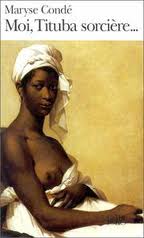
Beatriz Kimpa Vita
Beatriz Kimpa Vita

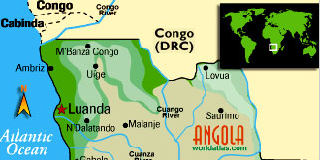
Beatriz Kimpa Vita, also known as Beatrice of Congo, or Dona Beatriz, or Tchimpa M’vita, was an African prophet (yeah… a female prophet) or priestess born around 1684 in the Kingdom of Kongo in a territory near Mt Kibangu which is in modern day Angola.  She created her own religious movement which used Christian symbols but revitalized traditional Kongo cultural roots. Born into a noble clan, the Mwana Kongo clan, she was baptized in her youth. In her childhood, Kimpa Vita was already having visions and dreams of playing with angels, and it is said that these as well as her high spirits caused her two youthful marriages to fail. This made her lean deeper into spiritual life. She was trained as a nganga marinda or as a person able to communicate with spirits (the supernatural world). However, she soon renounced that role to move closer to the catholic faith.

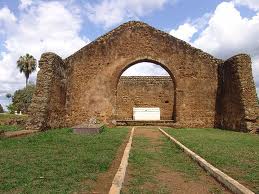
Church of Mbanza Kongo, ca 1549

She received visions of St Anthony of Padua, and believed to be a medium for his spirit. She started preaching soon after, in the city of Mbanza Kongo (which means ‘City of Kongo‘) or Sao Salvador. She occupied the old church of Mbanza Kongo. She said that God wanted Mbanza Kongo to be restored as the capital of the Kongo kingdom; she called it the biblical Bethlehem. She had direct revelations from God on her side; apparently, she died every Friday and spent each weekend in Heaven conferring with the Heavenly Father about the affairs of Kongo. From these sessions in Heaven she learned the stories of Jesus being born in Nsundi, baptized in Sao Salvador and Mary being a slave of a Kongo marquis. She basically made the catholic religion a Kongo religion based on Kongo’s rich culture for the Kongo people: she made God closer to the Kongo people! She healed people, and was able to make sterile women conceive.

Map of Angola showing Mbanza Kongo

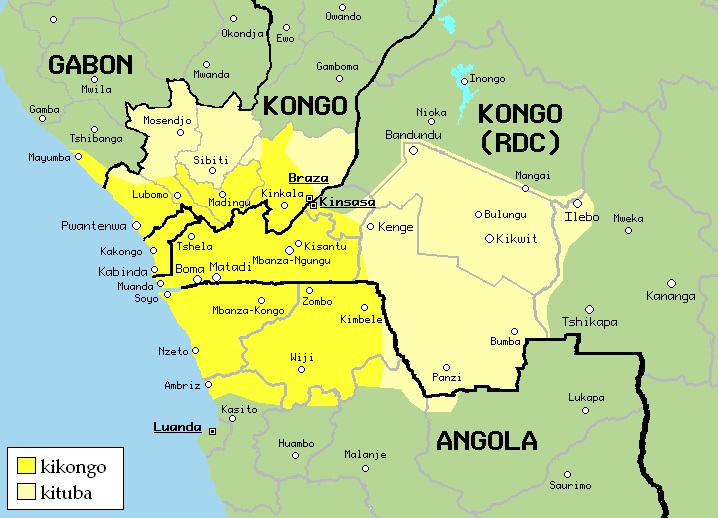
Her call to unity drew strong support among thousands of peasants, who flocked to the city. She told her followers that Jesus, Mary and other Christian saints were really Kongolese. In one of her visions, she saw that Kongo (which had been divided and under wars after the death of King Antonio I, with slave ships increasingly taking people to Brazil, Surinam, etc) must reunite under one king in order to prosper. She was ordered by God to build a specific Kongolese Catholicism and unite the Kongo under one king. Her message became so popular it could be called a Spiritual renaissance. This threatened the influence of the Catholic Church amongst the African people. Her Movement was called Antonian. Even though it integrated Kongolese culture with catholicism, the catholic priests drove the supporters of Kimpa Vita away. Some were imprisoned and beaten daily for their convictions. This is quite similar to the fate of the early apostles of Jesus Christ.

Kongo Kingdom map
Kongo Kingdom map

In 1706 Kimpa Vita gave birth to a son after two miscarriages. She continued to emphasize the closeness of God to the African people, which was a unifying factor amongst Antonians. The establishment of the Antonian movement and its consequent success led to the arrest of Kimpa Vita, her son and her followers. They were charged with heresy. The miracles performed by Kimpa Vita were denounced as “kindoki” or the use of supernatural powers. Kimpa Vita and her infant son were burned at the stake as a “witch” under the watchful eye of capuchin priests who had helped convicting her. The Antonian movement started by Kimpa lived throughout times and outlasted her. The Kongo king Pedro IV used it to unify and renew his kingdom. Her ideas remained among the peasants, appearing in various messianic cults until, two centuries later, it took new form in the preaching of Simon Kimbangu. It was also exported to the new world, in Brazil, Surinam, Haiti, Jamaica, and the US. It is said that the Haitian revolutionaries during their fights were screaming “Kanga Mundele, Kanga Ndoki” which are words used in the salva Antonina, one of Mama Kimpa Vita’s prayers.

Check out the writings of Norman C. Brockman, the book The Kongolese Saint Anthony: Dona Beatriz Kimpa Vita and the Antonian Movement, 1684-1706 by Pr. John K. Thornton and his very insightful interview to the website Execute Today, and R.S. Basi’s book “The Hand of God.” The article Kongo dia Ntotila posted on the website of ‘Le Front National Kongolais’ is a true jewel. The city of Mbanza Kongo which is the first church ever built south of the equator is now part of UNESCO World Heritage. There is piece of theatre made in Kimpa Vita’s great honor.

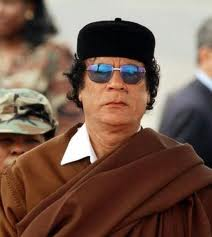
Message du Guide Libyen/ Message from the Libyan Guide

Traduit de l’arabe en anglais par le professeur Sam Hamod. English version sur The African Independent. Faites un tour sur le site Mathaba pour avoir la version libyenne des faits!

Au nom d’Allah, le Clément, le Miséricordieux… Depuis 40 ans, à moins que ce ne soit plus, je ne me souviens pas, j’ai fait tout mon possible pour donner aux gens des maisons, des hôpitaux, des écoles, et, quand ils avaient faim, je leur ai donné à manger. À Benghazi, j’ai même transformé le désert en terres arables, j’ai tenu tête aux attaques de ce cow-boy, Reagan, quand il a tué ma fille adoptive orpheline. Essayant de me tuer, il a tué à la place cette pauvre enfant innocente. Ensuite, j’ai épaulé mes frères et sœurs d’Afrique avec de l’argent pour l’Union africaine.

J’ai fait tout mon possible pour aider les gens à comprendre le vrai concept de démocratie, qui consiste en des comités populaires dirigeant leur pays. Mais ce n’était jamais assez, comme me l’ont dit certains. Même ceux qui possédaient une maison de 10 chambres, des costumes et du mobilier neufs, n’étaient jamais satisfaits. Ils étaient si égoïstes qu’ils en voulaient toujours plus. Ils ont dit aux Zuniens et aux autres visiteurs qu’ils avaient besoin de « liberté » de « démocratie » et n’ont jamais réalisé qu’il s’agit d’un système de panier de crabes, où le plus gros bouffe les autres. Ils étaient seulement ensorcelés par ces mots, sans réaliser jamais qu’en Zunie, il n’y a pas de médicaments gratuits, ni d’hôpitaux gratuits, ni de logement gratuit, ni d’enseignement gratuit, ni non plus de nourriture gratuite, sauf quand les gens sont obligés de mendier ou de faire longtemps la queue pour avoir de la soupe.

Non, peu importe ce que j’ai réalisé ! Pour certains ce n’était jamais assez. Mais les autres savaient que j’étais le fils de Gamal Abdel Nasser, le seul vrai leader musulman arabe que nous avons eu depuis Salah-al-Din. Nasser était sur ses traces quand il a exigé le canal de Suez pour son peuple, tout comme j’ai réclamé la Libye pour mon peuple. J’ai essayé de l’imiter pour garder mon peuple libre de la domination coloniale, des voleurs qui nous détroussent.

Maintenant, je suis attaqué par la plus grande force de l’histoire militaire. Obama, mon petit-fils africain, veut me tuer, priver notre pays de liberté, nous priver de la gratuité de nos biens : logements, médecine, éducation, nourriture, et remplacer tout ça par la grivèlerie à la zunienne appelée « capitalisme. » Or, nous tous, dans le tiers monde, savons ce que cela veut dire. Cela signifie que les multinationales dirigeront le pays, dirigeront le monde, et le peuple souffrira. Voilà pourquoi il n’y a pas d’autre solution pour moi, je dois prendre mes dispositions. Et si Allah le veut, je mourrai en suivant Sa Voie, la voie qui a rendu notre pays riche en terres arables, avec de quoi manger et la santé, et nous a même permis d’aider nos frères et sœurs africains et arabes en les faisant travailler ici avec nous, dans le Jamahiriya libyen.

Je ne désire pas mourir, mais si cela devait advenir, pour sauver cette terre, mon peuple, tous ces milliers de gens qui sont tous mes enfants, alors qu’il en soit ainsi.

Que ce testament soit ma voix dans le monde. J’ai tenu tête à l’agression des croisés de l’OTAN, résisté à la cruauté, contrecarré la trahison ; je me suis élevé contre l’Occident et ses ambitions colonialistes, et, avec mes frères africains, mes vrais frères arabes et musulmans, je suis dressé comme un phare de lumière. Quand d’autres construisaient des châteaux, je vivais dans une maison modeste et dans une tente. Je n’ai jamais oublié ma jeunesse à Syrte, je n’ai pas stupidement dépensé notre trésor national, et comme Salah-al-Din, notre grand leader musulman qui sauva Jérusalem pour l’Islam, je n’ai guère pris pour moi-même… En Occident, sachant pourtant la vérité, certains me qualifient de «fou» de «bizarre», ils continuent de mentir, ils savent que notre pays est indépendant et libre, et non pas sous emprise coloniale, que ma vision, ma conduite, est et a été sincère et pour mon peuple, et que je me battrai jusqu’à mon dernier souffle pour garder notre liberté.

Puisse Allah Tout-Puissant nous aider à rester fidèles et libres.

Colonel Kadhafi Mouammar, Guide de la Révolution, 5 avril 2011

Original : mathaba.net/news/?x=626396

Traduction copyleft de Pétrus Lombard

Traduit de l’arabe en anglais par le professeur Sam Hamod.

Note du traducteur : Les dirigeants occidentaux savent la valeur humaine de Kadhafi, et le danger d’éveil de conscience du public qu’elle représente. Voilà pourquoi elle est soigneusement cachée et pourquoi tous les grands médias diabolisent Kadhafi. On peut constater en creusant un peu que pratiquement tout ce dont la Libye a été accusée a été soigneusement tramé en Occident ou en Israël. Comme d’habitude, il s’agissait de coups montés. Comme l’ont démontré les pièces à conviction pipées dans les procès, il est très improbable que les attentats contre des avions de ligne étaient des complots libyens.

Cheikh Modibo Diarra: NASA’s First African Astrophysicist

Cheikh Modibo Diarra

NASA’s First African astrophysicist and key player in the exploration of Mars with the Pathfinder and Sojourner projects, Cheikh Modibo Diarra is without doubt a brilliant scientist.  As a physicist from similar background, this Malian scientist has inspired me by his intelligence and hard work.  Cheikh Modibo Diarra earned his baccalaureate in Mali; he then went on to study mathematics, physics and analytical mechanics at the Pierre and Marie Curie University in Paris.  After a while, he got bored by his classes (a sign of genius?) and went on an adventure exploring the world, and ended up in the USA at a friend’s invitation.  He then attended Howard University in Washington DC where he earned a PhD in aerospatial engineering. Later, he taught at Howard as a physics professor, until one day he met two recruiters from Jet Propulsion Laboratory (a NASA Lab) in the corridor of his building.  That’s when his career with NASA started.  Recruited as NASA’s first African researcher, Diarra participated in programs such as the Magellan probe to Venus, the Ulysses probe to the Sun, the Galileo spacecraft to Jupiter, the Mars Observer and the Mars Pathfinder.  He later became the director of NASA’s “Mars Exploration Program Education and Public Outreach.”

The Sojourner rover
The Sojourner rover

In 1999, he created the Pathfinder Foundation for the education and development of Africa.  Three years later, he founded the solar energy research laboratory of Bamako in Mali.  He is involved in programs for the development of Africa. On the 20th of February 2006, he was appointed the head of Microsoft Africa.  Cheikh Diarra is currently based in Johannesburg where he works with Microsoft South Africa and WECA (West , East and Central Africa).

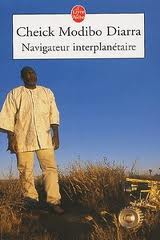
"Navigateur Interplanetaire" de Cheikh Modibo Diarra
“Navigateur Interplanetaire” de Cheikh Modibo Diarra

Please help me applaud this proud African scientist, hailing from Segou, in the heart of the Bambara kingdom!  If you have a chance, check out his book Navigateur Interplanétaire, which is available in French, and other languages.  Other sites such as Grioo.com, africansuccess.org, and Wikipedia will provide you with more biographical information about this world-renowned Malian scientist!

Lumumba’s death: Could we (Africans) have acted differently?

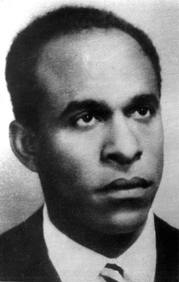
Frantz Fanon
Frantz Fanon

This is a great article by Frantz Fanon, which I published earlier in French.  (You will find the original here).  In view of all the events occurring in Africa (bombing of Cote d’Ivoire and Libya) with the UN approval, I thought that this article, published in 1964, was so important that I had to translate it into english for all to read! Enjoy…

—————————————————

The great success of the enemies of Africa is to have corrupted the Africans themselves.  It is true that these Africans had vested interest in the murder of Lumumba.  Heads of puppet governments, in a fake independence, faced everyday by massive opposition from their peoples, it did not take long to convince themselves that the real independence of the Congo would put them personally at risk.  And there were other Africans, a little less puppet, but who get frightened when it comes to disengaging Africa from the West.  It seems as if these African Heads of State are still afraid to face Africa.  These, also, though less actively, but consciously, contributed to the deterioration of the situation in Congo.  Little by little, we were reaching the agreement in the West that there was a need to intervene in Congo, we could not let things evolve at this pace.

Gradually, the idea of a UN intervention was taking shape. So we can say today that two simultaneous errors were committed by Africans.

Patrice Lumumba
Patrice Lumumba

And first by Lumumba when he sought the intervention of the UN.  He should have never called on the United Nations.  The UN has never been able to properly solve problems brought to man’s consciousness by colonialism, and whenever it has intervened, it was to actually come to the aid of the colonial power to the oppressed country.  Look at Cameroon.  What kind of peace do the subjects of Mr. Ahidjo kept in check by a French expeditionary force, which most of the time, made ​​its debut in Algeria, enjoy?  The UN, however, controlled the autodetermination of Cameroon and the French government has set up a “Provisional Executive” there.

Look at Viet-Nam.  Look at Laos.

It is not true to say that the UN fail because the causes are too difficult.

In reality the UN is the legal card used by imperialist interests when brute force has failed.  The sharing, the mixed controlled joint committees, under guardianship are international means of torture to break the will of the people, cultivating anarchy, banditry and misery.

Continue reading “Lumumba’s death: Could we (Africans) have acted differently?”

Samori Touré: African Leader and Resistant to French Imperialism!

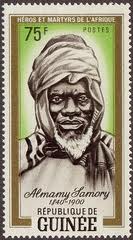
Samori Toure holding the Coran

One of the great kings, and fighters of African freedom was the great Samori Touré. Over 100 years ago, Samori Touré was captured by the French and deported to Gabon where he died of pneumonia.

But who was Samori Touré?

Well, Samori Touré was born in 1830 in Manyambaladugu (some texts mention Sanankoro instead), a village southeast of Kankan in present-day Guinea. Samori was a great warrior who fought imperialism in the 19th century such as many leaders today. He refused to submit to French colonization and thus chose the path of confrontation using warfare and diplomacy.

Until the age of 20, Samori was a trader. After his mother was captured in a slave raid by the king Sori Birama, he offered to serve in his army and excelled by his military prowess and skills.

Samori Touré had a vision of unity for the Malinké people, and thus started organizing his empire using traditional and innovative methods. He effectively organized Malinké chiefdoms into a single state under his authority, at the core of which was the army. He managed to increase loyalty to the state in the Malinké people who now thought as one united people… this intensified their allegiance to him. His state was well-organized and efficient. Samori’s army was powerful, disciplined, professional, and trained in modern day warfare. They were equipped with European guns. The army was divided into two flanks, the infantry or sofa, with 30,000 to 35,000 men, and the cavalry or sere of 3,000 men. Each wind was further subdivided into permanent units, fostering camaraderie among members and loyalty to both the local leaders and Samori himself. Talk about African organization and discipline… this was really a strong army! His empire reached his apogee between 1883 and 1887, and he took the title of Almami or religious leader of a Muslim empire.

"L'Almami Samori Toure" de Khalil Fofana

Samori Touré created the Mandinka empire (the Wassoulou empire) between 1852 and 1882. His empire extended to the east as far as Sikasso (present-day Mali), to the west up to the Fouta Djallon empire (middle of modern day Guinea), to the north from Kankan to Bamako (in Mali); to the south, down to the borders of present-day Sierra Leone, Liberia, and Cote d’Ivoire. His capital was Bisandugu, in present day Gambia.

In the 1850s, slavery being abolished, European powers decided to establish colonies in Africa, and could not tolerate strong states like the Mandinka empire, and strong leaders like Samori Touré. These African leaders had to be crushed!

In 1882, at the height of the Mandinka empire, the French accused Samori Touré of refusing to comply to their order to withdraw from an important market center, Kenyeran (his army had blockaded the market). They thus started war on him. This was an excuse to start war! From 1882 to 1885, Samori fought the French and had to sign infamous treaties in 1886 and then 1887. In 1888, he took up arms again when the French reneged on the treaty by attempting to foster rebellion within his empire. He defeated the French several time between 1885 and 1889. After several confrontations, he concluded several treaties with the French in 1889.

Stamp from the Republic of Guinea

In 1890, he reorganized his army, and signed a treaty with the British in Sierra Leone, where he obtained modern weapons. He re-organized his army so as to stress defense, and employed guerilla tactics.

In December 1891, French forces overran the major cities of the Mandinka empire, leaving death and desolation in their wake (sounds familiar? Côte d’Ivoire April 2011). These incursions into Touré’s empire led to exodus of the entire nation eastward. In 1893, Samori moved his capital east from Bisandugu to Dabakala. In 1894, the French assembled all their troops in western sudan (Senegal, Mali, Niger, etc…) to fight Samori.

Capture of Samori
Capture of Samori

Between 1893 and 1898, Samori’s army retreated eastward, toward the Bandama and Como (in modern day Cote d’Ivoire), conquering huge territories in the northern part of modern-day Cote d’ivoire. He led the scorched earth tactic, destroying every piece of land he evacuated. Although that tactic cut him from his new source of weapons in Liberia, he still managed to delay the French. He formed a second empire, and moved his capital to Kong, in upper Cote d’Ivoire. On May 1, 1898, the French seized the town of Sikasso and his army took up positions in the Liberian forests to resist a second invasion. This time Samori’s army fought valiantly but was no match to the power of the French arsenal. Samori forced to fight a total war against a foreign invader, and fighting against all odds, was captured on September 29, 1898, in his camp in Gué(lé)mou in present-day Côte d’Ivoire. He was exiled to Gabon where he died two years later on June 2, 1900.

Samori Touré was a warrior, a fighter, an empire builder, and one of the greatest African military leaders ever seen… he fought and won against the French army several times before his capture.

Interestingly enough, over 50 years later, the grandson of Samori, Sekou Touré, was the only one to say ‘NO’ to France, and to General De Gaulle: they preferred freedom over slavery under the European master… that was in Guinea!

Samori's empire
Samori’s empire

Please check out the work of Pr. Yves Person on WebMande.net who wrote a book on Samori Touré, BlackHistoryPages, and this article published by the New York Times in 1898 about the Capture of Samori Toure by the French. According to the New York Times, Samori, “for nearly 13 years, was the most dangerous antagonists Europeans had had to deal with“. I could not find a good map of Samori’s empire anywhere… so I made my own based on all the boundaries and main cities conquered and his capitals: Bisandougou, Kankan, Bamako, Sikasso, Kong, Dabakala, Guelemou, etc… some of the cities may not be the same today (or even exist after 100 years), particularly the city of Dabadugu: Samori Toure defeated the French at Dabadugu, was it the city of Dabadugu near Kankan, or was it the city of Dabadugu near Nzerekore? I used Google map and made my own, respecting all the information found in all the different books and atlases I read. This is the entire kingdom, without taking into account the first and second empires. If you have further information, I will be happy to hear more.

Sylvanus Olympio: Togo’s first president

Sylvanus Olympio
Sylvanus Olympio

Today I will be talking about Sylvanus Olympio, the first president of Togo, a small country in West Africa, which was once a German colony, and later became a French and British protectorate.  The story of Togo is a little bit like that of my country Cameroon which was once a German colony but was later divided between France and Great Britain as protectorates (this will be a story for another day).

Sylvanus Olympio really embodies what the singer Tiken Jah Fakoly said in one of his songs “They [Europeans] divided the world among themselves, nothing amazes me anymore: part of the Mandinka empire found its way in the Wolof empire, part of the Mossi empire found its way in the Ghana empire, part of the Soussou empire found its way into the Mandinka empire and part of the Mandinka empire found its way into the Mossi’s empire …” what do I mean by this? Sylvanus Olympio was from Dahomey (current day Benin) of Afro-Brazilian ancestry, born in Kpando in actual Ghana, and became president of Togo!  How was this possible? well because of the balkanization of Africa or rather the scramble for Africa which took place at the Berlin Conference in 1884 where Europeans split Africa among themselves dividing entire empires, people, villages, nations.  One of these people were the Ewe people in West Africa who found themselves split among three countries: Gold Coast (Ghana), Togoland (Togo), and Dahomey (Benin).

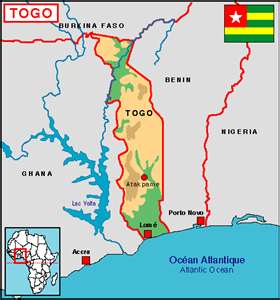
Map of Togo
Map of Togo

Sylvanus Olympio believed that the Ewe people should be reunited under one flag…. unfortunately he could never come to agreement with Kwame Nkrumah, his Ghanaian counterpart, and other powers at play.  Olympio tried to unite and educate the people about their new nation, and the needs for development.  From what a Togolese friend of mine once said, he used to ride a bike from villages to villages talking to people in their languages and educating them about politics, development, and patriotism, at a time when there was no radio (1950s) in most places.

Togo -- A History
Togo — A History

Sylvanus Olympio barely had a chance to execute anything politically.  He was assassinated in a military coup in the US embassy compound in Lomé in 1963, two years after Togo’s independence and his investiture as president.  The presidential palace was just next to the US embassy in Lomé.  When Olympio heard gunshots, he sent his family to safety, and climbed the wall that separated him to the American embassy.  Once there, he knocked at the door of the embassy to seek refuge… Unfortunately, the embassy was closed.  Sylvanus hid in one of the cars in the American compound.  The American Ambassador comes back to the compound and finds Olympio in the car who explains everything; the ambassador claimed not to have the keys to open the door… and asked him to wait while he would go find the keys.  Rumors says that the American ambassador probably called his French counterpart who then contacted the gunmen and sent them to the American compound.  Sylvanus was found in the car, and gunned by Eyadéma, one of Africa’s worst dictators backed by the West.  The Time magazine wrote an article on that day entitled Togo: Death at the Gate; JFK also had a statement about his death.  The journalist, Alain Foka, of RFI did a piece on Olympio.

Many wonder what Togo would have become under someone with such love, brilliance, and vision for his country.  No one will ever know.  Please enjoy this rare footage of an interview of Sylvanus Olympio to NBC in the US.

Don’t forget to watch the second part.

Nasser: the Upholder of Egyptian, African, and Arab Rights

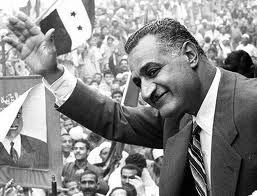
Gamal Abdel Nasser
Gamal Abdel Nasser

With this week’s event in Egypt, I thought that a trip down memory lane would be more than appropriate! One of the greatest political figures of modern Arab history and third world politics is the Egyptian president Gamal Abdel Nasser. Nasser was a pure political genius, and had great love and vision for his country, the Arab world, and developing countries in general. He was a strong player in the battle against imperialism in Africa, and in the Arab world. It was in Egypt that Um Nyobe and the UPC sought refuge to keep on working on Cameroon’s independence (this will be a story for another day).

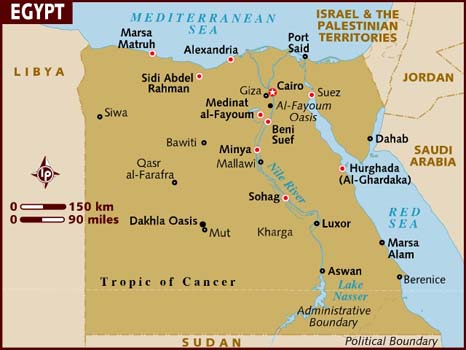
Map of Egypt
Map of Egypt

He was the first to negotiate the ownership/nationalization of the Suez Canal by Egyptians themselves. At its construction, as in most African countries, it belonged to the British since Egypt had been a British colony. He led the Egyptian Revolution of 1952 which overthrew the monarchy of Egypt and Sudan, and started a new period of modernization and socialist reforms. He was determined to wean Egypt of its dependency on Western Economies. He was one of the few leaders in the world to declare his neutrality in the Cold War, which was considered very ‘gutsy‘. He moved Egypt toward a socialist economic system and instituted huge land, education and health reforms. As president, he was determined to modernize and improve Egyptians’ standard of living.

Nasser
Nasser

After the humiliating Egyptian defeat during the Six-Day war against Israel, Nasser took responsibility for the debacle and resigned from the presidency (but thousands took to the street to demand that he returns to power). In his resignation speech he said: “I have taken a decision with which I need your help. I have decided to withdraw totally and for good from any official post or political role, and to return to the ranks of the masses, performing my duty in their midst, like any other citizen. This is a time for action, not grief…. My whole heart is with you, and let your hearts be with me. May God be with us—hope, light and guidance in our hearts.” You can read the entire speech on Al-Ahram Weekly. He died a couple of years later from a heart attack… many believe that the Six-day war defeat was a precursor.  More than 5 million people attended his funeral. Nasser always wanted the best for his people!

Flag of Egypt
Flag of Egypt

I wish more presidents, like Hosni Moubarak, in Africa could have the guts to resign from power, and could love their people so much as to want them to have the best. During an assassination attempt on Nasser’s life at a rally in Alexandria during the celebration of the British withdrawal from the Suez Canal, Nasser proclaimed: “If Abdel Nasser dies… Each of you is Gamal Abdel Nasser… Gamal Abdel Nasser is of you and from you and he is willing to sacrifice his life for the nation.” Moubarak today should learn from the past… like Dr. Zahi Hawass (world-renowned director of Egyptian Antiquities) said in a recent interview to BBC: “What will stay here after many years is Egypt… People will die, but Egypt will stay!” Moubarak should thus ask: “What would I be remembered by: those past few days of protests, or the love for my country?” If his answer is the second one, then he knows that he needs to pack his bags, and uphold Egypt’s liberty!

Check out the video below. To learn more about Nasser, click on Wikipedia, the Official Website of Nasser with speeches, pictures and documents, June 9 speech. I am probably missing many… if you find other good websites, feel free to send them to me.

Gamal Abdel Nasser Video

Patrice Lumumba: Fierce Guardian of Congolese and African Liberty

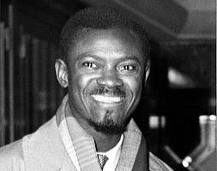
Patrice Emery Lumumba

This Monday marked the 50 year anniversary of the assassination of the great African giant Patrice Lumumba.  How could I pass on such an occasion to talk about him?  50 years later, his speech and his vision still  ring true.  Lumumba dared to defy the Belgian King Baudouin by telling him on independence day what he saw as the Belgian hold on Congo. He was blunt! He spoke the truth! He was not malleable… He could not be manipulated by Europeans! He was a menace because he was a free man proud to be Congolese.

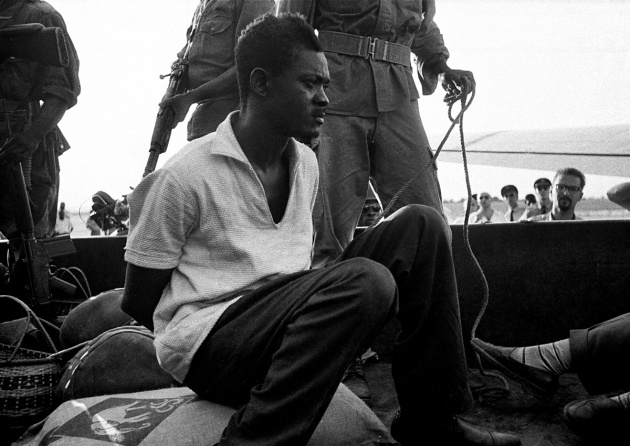
Lumumba detained
Lumumba detained

I always wondered what would have happened if Lumumba had not been so open about his ambitions for his country? What would have happened if he had played their game, and hidden his cards? Then we, Africans, would have never had our African hero! Someone had to say what we all felt: oppressed, hated, enslaved, diminished,… someone had to make us proud of being Congolese/African again… someone had to re-establish our dignity!  That someone happened to be Patrice Emery Lumumba!  Patrice died because he had great ideals, and because he trusted others.  For the problem in the Katanga province, he went to the United Nations; he trusted that establishment to resolve the conflict peacefully, and to help solve the Katanga secession…. Instead they, with all the interests they represented (US, Belgium,France, etc…), refused to help him… the US of Kennedy refused to help him out, and thus he turned to the USSR to keep his country united.  With the USSR, he was able to solve the rebellion in the Katanga and Kasai provinces… but the Americans and Belgians were mad that he had been helped by the Soviets; they decided to have him murdered after this affront (they used Mobutu, and Tshombe)! Once again, we Africans sold our own brother…  I wonder where the Maurice Tshombe, or Kibwe, or the Joseph Mobutu are today… History will remember them as tyrants, dictators, and puppets of the West!  Isn’t it interesting that history keeps repeating itself? Today the United Nations are starting a war in Ivory Coast in the name of installing a puppet-president in a soveraign country… Have you ever seen the UN so vehemently ask for war in a country?  Only in Africa could this be possible…  I used to dream that this was a peace organization! Actually, it is an organization to impose the will of the West on third world resource-rich countries.

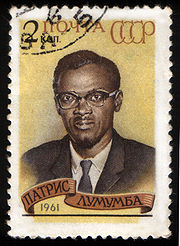
Lumumba on a USSR stamp in 1961
Lumumba on a USSR commemorative stamp in 1961

The following documentary will tell it all: how the Belgians did not like Lumumba because he was not a puppet, how they started the Katanga secession and supported it; how Lumumba went to the UN for help in keeping his country united and was refused help; how Lumumba went to the US to ask for help, and was not even received by president Kennedy; how he turned to the USSR to solve his problem in the Katanga and Kasai provinces; how that event precipitated his end.  50 years later, Lumumba’s ideals and vision are still actual. Lumumba is the symbol of aspirations of an entire continent. His spirit lives on, and his pride is ours!

Lumumba (2000)
Lumumba (2000)

I live you with an excerp from a letter he sent to his wife before his death: “… the future of the Congo is beautiful and [I] expect for each Congolese, to accomplish the sacred task of reconstruction of our independence and our sovereignty; for without dignity there is no liberty, without justice there is no dignity, and without independence there are no free men.”  You can find the Integral version of this letter on AfricaWithin.com, as well as his famous 30 June 1960 independence day speech.  Please don’t forget to check out: Wikipedia, The Guardian which deemed the assassination of Lumumba as the most important of the 20th century, The Daily Nation of Kenya deemed Lumumba the bright spark in a land of despair, and The New York Times which called it an assassination’s long shadow.  At last, the movie Lumumba (2000) is what finally got the Belgian admitting their part in the assassination of Lumumba.

Mariama Bâ: the First African Feminist Writer

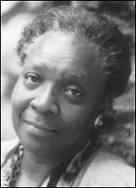
Mariama Bâ
Mariama Bâ

I have wanted to write about Mariama Bâ for the longest time. She is a writer from Senegal… she is the author of “Une Si Longue Lettre” [So Long a Letter], and “Chant Ecarlate[Scarlet Song]. Her book “Une si Longue Lettre” [So Long a Letter] is considered by many as being the first truly African feminist book, as it describes the woman’s condition in an African and Muslim society. It talks about the place of the woman in society, the effect on polygamy on women and society, and the clash between modernism and traditions. It is written as a letter from a widow Ramatoulaye to her best friend Aissatou who left her husband when he decided to marry a second wife. This book really describes the feminine condition in Africa, and was truly the first to address so overtly the woman’s hurdle in African society. Six months after the publication of “Une Si Longue Lettre,” Mariama Ba passed away… and her novel “Chant Ecarlate” was published posthumously.

Une Si Longue lettre

Chant Ecarlate [Scarlet Song] also deals with feminine conditions, but addresses more the clash between two different cultures the European (of the protagonist Mireille), and the African (of Mireille’s husband), and again polygamy. I always felt deeply connected to Bâ’s first book, and always wondered what a great loss African literature suffered when she left. She will always be an inspiration for many: orphan from her mother, raised by her father and grand-parents, mother of nine children, divorcée, professor, highly educated woman, she embodied the strength and determination that can so clearly be seen in African women. Today, “Une Si Longue Lettre” is an African classic, read in all schools across the continent, and translated in numerous languages. We are forever grateful for her work… she opened the door to many bold young African female writers.

Scarlet Song
Scarlet Song

The following is an interview that Mariama Bâ gave to Alioune Toure Dia for the magazine Amina in November 1979: Interview de Mariama Bâ à Amina. Relax and enjoy!