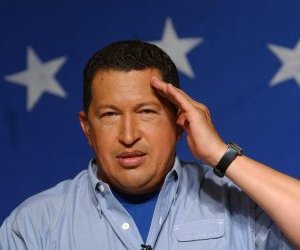
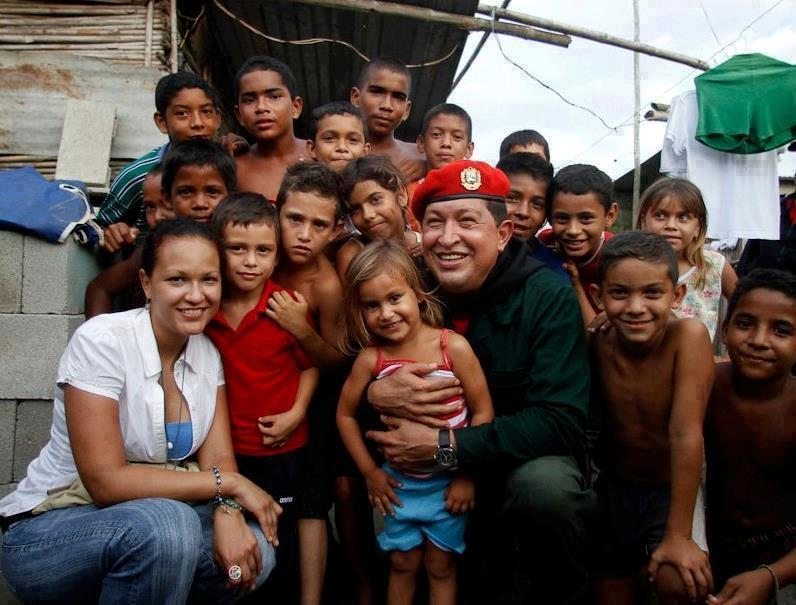
Words cannot express my extreme sadness at the loss of yet another one of our revolutionaries. ‘El Comandante‘, Hugo Chavez, has left us yesterday to join the land of his ancestors. I am extremely saddened at his passing, but I am also grateful to have lived in a time when I could see Hugo Chavez at work for his country, at a time when I could see what it meant for a leader of a poor country to have love and vision for his country. Few leaders in the world have fought against western imperialism as Hugo Chavez did. He led the bolivarian revolution against the US influence in Venezuela, and Latin America. He gave back hope to his people, emancipated millions of Venezuelans, regained control of the economy of Venezuela, and worked for world peace by openly opposing the US and its colonial wars. Millions of Venezuelans regained sight, were taught how to read, or just visited the doctor for the first time, because of Chavez’ laws. Those will remember him forever. Hugo Chavez was a bright star who gave hope to millions across the globe. He gave us the strength to believe that we, the oppressed of the world, could one day be free. He was often depicted in the Western media as a dictator (but then again, which progressist or revolutionary has ever been depicted otherwise in the western press?) because of his frankness and clear fight for the interest of the Venezuelan people. Chavez was a true sincere politician and loyal to his people.
El Comandante de la Revolucion, Hugo Chavez
El Comandante used to say: “Let the dogs of the empire bark, that’s their job. Our job is to fight to achieve the true liberation of our people.” You (Chavez) gone, who will fight again for us? who will voice our opinions? who will lead us? We have to keep true to your ideals, and keep our head up. Thank you Commandante, for showing us the way, for showing us beauty and hope in this world.
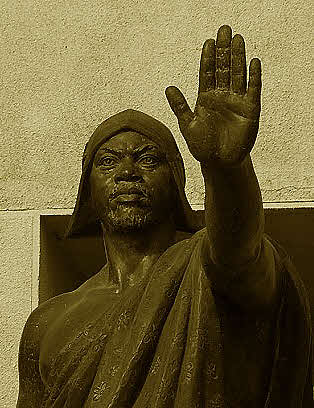
Hugo Chavez also said: “Love is the combustible of a revolution.” El Comandante gave us just that: love, hope, dignity, and peace. So long, brother. Like Franklin Boukaka said “your work is that of humanity“… you have now joined the greats of this world: Che Guevara, Patrice Lumumba, Thomas Sankara, Kwame Nkrumah, Mouammar Kadhafi, Amilcar Cabral, … Long live to your ideals!
Please enjoy this video “The revolution will not be televised” which shows the coup fomented by the US against Hugo Chavez in 2002 where Chavez was removed from power by American military; and for the first time in world history, a president was brought back to power by his people who refused to give into American threats. The people defeated the machine! This documentary was made possible because of the presence of some European journalists from Arte who were in the country at the moment of the coup.
Je viens de me rendre compte que le site djime.com qui était entièrement dedié au roi Béhanzin, n’est plus actif. J’ai donc decidé de poster ici, la version francaise, l’originale du discours d’adieu du roi Behanzin. J’avais deja traduit dans son intégralité ce discours du roi Behanzin en anglais. The English versionhere.
=============
« Compagnons d’infortune, derniers amis fidèles, vous savez dans quelles circonstances, lorsque les Français voulurent accaparer la terre de nos aïeux, nous avons décidé de lutter.
Nous avions alors la certitude de conduire notre armée à la victoire. Quand mes guerriers se levèrent par millier pour défendre leDanhomèet son roi, j’ai reconnu avec fierté la même bravoure que manifestaient ceux d’Agadja, deTegbessou, deGhézoet deGlélé. Dans toutes les batailles j’étais à leurs côtés.
Malgré la justesse de notre cause, et notre vaillance, nos troupes compactes furent décimées en un instant. Elles n’ont pu défaire les ennemis blancs dont nous louons aussi le courage et la discipline. Et déjà ma voix éplorée n’éveille plus d’écho.
An Amazon warrior ca 1890
Où sont maintenantles ardentes amazones qu’enflammait une sainte colère? Où, leurschefs indomptables : Goudémè, Yéwê, Kétungan? Où, leursrobustes capitaines : Godogbé, Chachabloukou, Godjila? Qui chantera leurssplendides sacrifices? Qui dira leurgénérosité ?
Puisqu’ils ont scellé de leur sang lepacte de la suprême fidélité, comment accepterais-je sans euxune quelconque abdication?Comment oserais-je me présenter devant vous, braves guerriers, si je signais le papier du Général ?
Non !A mon destin je ne tournerai plus le dos. Je ferai face et je marcherai. Car la plus belle victoire ne se remporte pas sur une armée ennemie ou des adversaires condamnés au silence du cachot.Est vraiment victorieux, l’homme resté seul et qui continue de lutter dans son cœur. Je ne veux pas qu’aux portes du pays des morts le douanier trouve des souillures à mes pieds. Quand je vous reverrai, je veux que mon ventre s’ouvre à la joie. Maintenant advienne de moi ce qui plaira à Dieu ! Qui suis-je pour que ma disparition soit une lacune sur la terre ?
Partez vous aussi, derniers compagnons vivants.Rejoignez Abomey où les nouveaux maîtres promettent une douce alliance, la vie sauve et, paraît-il, la liberté. Là-bas, on dit que déjà renaît la joie. Là-bas, il paraît que les Blancs vous seront aussi favorables que la pluie qui drape les flamboyants de velours rouge ou le soleil qui dore la barbe soyeuse des épis. Compagnons disparus, héros inconnus d’une tragique épopée, voici l’offrande du souvenir : un peu d’huile, un peu de farine et du sang de taureau. Voici le pacte renouvelé avant le grand départ. Adieu, soldats, adieu !…
Behanzin, the Last King of independent Dahomey
Guédébé…reste debout, comme moi, comme un homme libre. Puisque le sang des soldats tués garantit la résurrection duDanhomè, il ne faut plus que coule le sang. Les ancêtres n’ont plus que faire de nos sacrifices.Ils goûteront mieux le pur hommage de ces cœurs fidèles unis pour la grandeur de la patrie. C’est pour quoi j’accepte de m’engager dans la longue nuit de la patience où germent des clartés d’aurore. Guédébé, comme le messager de la paix, va àGhohooù campe le général Dodds.Va dire au conquérant qu’il n’a pas harponner le requin. Va lui dire que demain, dès la venue du jour, de mon plein gré, je me rends au village de Yégo. Va lui dire que j’accepte, pour la survie de mon peuple, de rencontrer dans son pays, selon sa promesse, le président des Français. »
extrait de – Kondo le requin – Jean PLYA – Ed. CLE
January 20th, 2013 marks 40 years since the murder of the Father of Bissau-Guinean and Cape-Verdean independence: Amilcar Cabral. Africa today is still mourning the loss of one of his greatest sons. I thought it would be nice to publish one his poems. Yes… Amilcar Cabral was not just an agronomic engineer, or an independentist, or a freedom fighter, he was also a nature lover and a great writer. Enjoy! One can already guess that the following poem is about the island of Cape Verde. (The English translation was taken from, ”AMILCAR CABRAL, Freedom fighter,1924-1973“, by Carlos Pinto Santos)
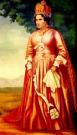
Today I will be talking about a great queen of Madagascar, Queen Ranavalona I who fought against French and British expansionism in Madagascar, and strongly believed in autarky (self-sufficiency).
Born by the name of Mavo(or Ramavo) around 1788, Ranavalona I will later be named Rabodonandrianampoinimerina(which means the smart grand-daughter of Andrianampoinimerina) in reverence to her uncle, the King Andrianampoinimerina. She became Queen of Madagascar after the death of her husband Radama I and was coronated on 12 August 1829. She was also designated by the title Ranavalo-Manjaka I (« Reigning Ranavalona »). She reigned over the Kingdom of Madagascar from 1828 to 1861.
Ranavalona I followed in the footsteps of her predecessors, with the territorial expansion of her kingdom, and led several expeditions to pacify conquered territories such as the meridional Menabe, the Boina, and the north-east regions of the island (Madagascar). Fervent nationalist, she fought against foreign influence, including that of Christian missionaries. During her reign, the power of some castes increased, like that of the andriana or the royal family, or that of the military chiefs, the hova.
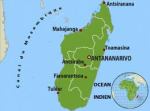
Madagascar
Ranavalona’s 33-year reign was distinguished by an ongoing struggle to preserve the political and cultural sovereignty of Madagascar in the face of increasing European influence and competing French and English bids for domination over the island. In the beginning of her reign, Ranavalona I tried to continue the work of modernization started by her predecessor. Very soon, she faced the hostility of the French, who in 1829, attacked different points on the oriental coast of the island. This unexpected aggression sharpened the queen’s distrust of European ambitions; especially since the British missionaries installed at the heart of the island since 1820 were converting many. Fearing the loss of the independence of her country, she denounced the anglo-malagasy treaty of 1820, and asked the British to give up on the religious extension in her country, and to focus only on the educational works she wanted for her people. However, the British refused, and in 1835, she had them expelled from the island. To counter-balance the European influence on the island, the monarchy created contacts between the ports of Majunga, and Zanzibar.
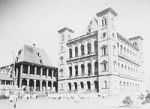
Manjakamiadana, the Royal compound built for Queen Ranavalona IManjakamiadana,encased in stone under the orders of Ranavalona II
Ranavalona I then hired the services of Jean Laborde who accomplished quite a lot of modern upgrades, the most important of these will be providing Madagascar with a metallurgic and chemical industry. He also built the queen a new residence known as the Manjakamiadana, which became the largest structure on the Rova grounds, the royal compound in Antananarivo. The residence was made entirely from wood and bore features of a traditional andriana home, including a central pillar (andry) to support the roof. The palace would eventually be encased in stone in 1867 by James Cameron of the London Missionary Society during the reign of Ranavalona II. The original wooden palace of Ranavalona I and virtually all other structures of the historic Rova compound were destroyed in a 1995 fire, leaving only the stone shell to mark where her palace had once stood. Renovation is on the way.
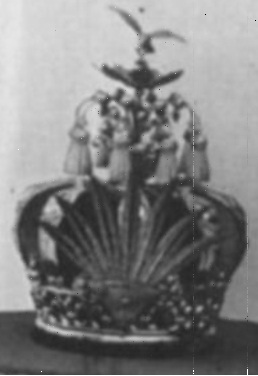
Royal Crown of Madagascar as worn by King Radama II, Ranavalona I’s successor (ca 1862)
Ranavalona pursued a policy of autarky (self-sufficiency) and isolationism, diminishing economic and political ties with European powers, repelling a French attack on the coastal town of Foulpointe, and taking vigorous measures to eradicate the small but growing Malagasy Christian movement initiated under Radama I by members of the London Missionary Society. She made heavy use of the traditional practice of fanompoana (forced labor in lieu of tax payments in money or goods) to complete public works projects and build a standing army of between 20,000 and 30,000 Merina soldiers, whom she deployed to pacify outlying regions of the island and further expand her realm.
Subsequently, to try to eradicate Christianity among her subjects, as she believed (and rightfully so) that this was a means of infiltration of the colonial ambitions of Europeans on the island, she had converts (considered as traitors) run off. As she declared in 1849: « Miala amiko ka mba ialako, mahafoy ahy ka mba foiko ! » (« they [christians] have denied me [ as a living symbol of their homeland], therefore I deny them as well; they have rejected me, I reject them! »).
Ranavalona I on the throne
She said in a letter addressed to the Europeans: “To all Europeans, British and French, in recognition for the good you have done to my country by teaching European wisdom and knowledge, I would like to express my thanks. … You can keep following your customs. Have no fear for I have no intention of modifying your habits. But if I see some of my subjects trying to change the rules established by the twelve great kings, my ancestors, I will not possibly consent: because I will not allow men to come and change anything to all the ideas I have received from my ancestors, which I had accepted without shame or fear. You are free to teach my people science and wisdom, but when it comes to touching our ancestors’ customs, it is a vain work, which I will fully oppose….”
Ranavalona I continued the works of Andrianampoinimerina and Radama I. In her country, she is seen as a great sovereign, true symbol of patriotic and national pride. However for Europeans, she has been described as a tyrant… but like her so many great African kings and queens defending their country against foreign invasion/colonization have been portrayed as cruel, and ignorant. Faced with the contempt of Christian converts, she proudly stated: ”ny fomban-drazako tsy mba mahamenatra ahy na mampatahotra ahy!” (“I do not feel any shame or fear about my ancestors’ customs”). Enjoy this great video, and honor one of Africa’s earlier nationalist and independentist: Queen Ranavalona I.
5. President Laurent Gbagbo‘s hearing at the International Criminal Court (ICC) was scheduled for June 18, 2012, but was postponed to August 13, 2012, and now has been postponed indefinitely. Apparently the ICC cannot find proofs of all their allegations against Laurent Gbagbo, and thus prefer stalling.
The VMK (Source: VMK)
6. Oussama Mellouli, of Tunisia, won Gold in the 10 km marathon open water, to become the first swimmer to ever win olympic medals in both the pool and open water (August 2012).
7. David Rudisha of Kenya, became the first man to break a record at the London Olympics, in the 800m (August 2012).
8. Alaeeldin Abouelkassem of Egypt won silver in fencing, becoming Africa’s first medal in fencing (August 2012).
2012 was a different year with a lot of disappointments, hurts, pains, coup d’etat, and all sorts of things in Africa. We said goodbye to quite a few people in 2012, including:
1. President John Atta Mills of Ghana, who joined his ancestors suddenly on 24 July 2012… So long Prof… May the land of Ghana hold you tight.
2. President Meles Zenawi of Ethiopia, who passed on 20 August 2012… leaving Ethiopia in turmoil.
3. President Bingu wa Mutharika of Malawi, who passed away on 5 April 2012… he is succeeded in power by the second woman president in Africa: Mrs. Joyce Banda.
4. Minister Paul-Antoine Bohoun Bouabre of Côte d’Ivoire left us on 10 January 2012; this is the man who single-handedly saved Cote d’Ivoire from a financial cliff.
5. Cameroonian legendary footballer Théophile Abega, nicknamed ‘The Doctor’, left us on November 15, 2012. He was voted as one of Africa’s top 200 players of the past 50 years.
6. Charles Taylor, former president of Liberia, was sentenced to 50 years for war crimes in May of this year.
7. A coup d’etat deposed the rightful president of Mali, President Amadou Toumani Toure (ATT) on 22 March 2012, one month before scheduled elections. This has left Mali in turmoil; the country is now going down the path of Cote d’Ivoire and Libya: split into two, and eventually … broken apart?
9. Abdoulaye Wade, the négrier of Senegal, was booted out of his presidency by the people of Senegal who voted for Macky Sall on 25 March 2012 (a true example of democracy in Africa).
10. Last but not least, the most hateful one of all: Nicolas Sarkozy, the ‘bourreau’ of Africa was booted out of the French presidency on 6 March 2012 … bye bye Sarko… you went for the recolonization and destruction of Cote d’Ivoire and Libya… and the deck of cards are still falling; now Mali… ? Sarko is gone… but his deeds are still going on.
Today, We will look at a poem by the most celebrated Ivorian writer Bernard Binlin Dadié. The poem below is titled “Dry your Tears Afrika” or “Sèche Tes Pleurs“. Published in 1967, this poem is basically about Africa and her sons and daughters returning home. It is about healing the wounds of slavery, colonialism, and neo-colonialism. This poem was actually translated into Mende, a language spoken by ~ 46% of Sierra Leone. It was also set to music by American composer John Williams for the Steven Spielberg movie, Amistad. Below is the original poem in French, written by Dadié. The English version can be found below. Enjoy the text, and the video of the poem sung in Mende with the English translation.
Sèche tes pleurs Afrique! Tes enfants te reviennent dans l’orage et la tempête des voyages infructueux. Sur le ris de l’onde et le babil de la brise, Sur l’or des levants Et la pourpre des couchants des cimes des monts orgueilleux Et des savanes abreuvées de lumière Ils te reviennent dans l’orage et la tempête des voyages infructueux. Sèche tes pleurs, Afrique Ayant bu À toutes les fontaines d’infortune et de gloire, Nos sens se sont ouverts à la splendeur de ta beauté à la senteur de tes forêts, à l’enchantement de tes eaux à la limpidité de ton ciel à la caresse de ton soleil Et au charme de ta verdure emperlée de rosée.
Sèche tes pleurs, Afrique! Tes enfants te reviennent Les mains pleines de jouets Et le coeur plein d’amour. Ils reviennent te vêtir De leurs rêves et de leurs espoirs.
Bee ya ma yee ah, bee len geisia bee gammah. Bee ya ma yee ah, bee len geisia tee yamanga. Baa wo, kah ung biah woie yaa. Baa wo, kah ung biah woie yah, yah. Oo be ya ma yee ah, bee len geisia tee yamanga. Mu ya mah mu yeh, Mu ya mah mu yeh, Mu ya mah mu yeh, Afrika. Mu ya mah mu yeh, Mu ya mah mu yeh, Mu ya mah mu yeh, Afrika.Bee ya ma yee ah, bee len geisia tee yamanga. Mu ya mah mu yeh, bee len geisia bee gammah. Oo bee ya mah yee ah Bee len geisia tee yamanga. Mu ya mah mu yeh, Mu ya mah mu yeh, Mu ya mah mu yeh, Afrika. Mu ya mah mu yah, Mu ya mah mu yah, Mu ya mah mu yeh, Afrika.
Be ya mah yee ah, bee len geisia tee yamanga. Be ya mah yee ah, bee len geisia bee gammah. Mu ya mah mu yeh, Mu ya mah mu yeh, Mu ya mah mu yeh, Afrika. Mu ya mah mu yeh, Mu ya mah mu yeh, Mu ya mah mu yeh, Afrika. Mu ya mah mu yeh, Mu ya mah mu yeh, Mu ya mah mu yeh, Afrika.
After “Les Immortels” by Franklin Boukaka, it is only normal that I would talk about Mehdi Ben Barka himself, and why he brought so much hope to people in Morocco, Africa, and the entire world. Yes, his work encompassed all the oppressed people of the globe.
Mehdi Ben Barka was a Moroccan politician born in January of 1920 in Rabat, Morocco. Although from a middle class background, Ben Barka was among the first to attend the French school (which was mostly for rich people), as he was always the best and brightest in his class. He was the first Moroccan to receive a degree in mathematics in an official French school in 1950. He then taught mathematics in a local Lycée (high school), and at the Royal College, where young Hassan II was one of his students. Working in parallel, Mehdi got involved in politics, and worked to challenge the French “Protectorate” on Morocco. In 1943, he got involved in the creation of the National Istiqlal Party. In 1955, Mehdi took part in negociations which culminated with the return of Sultan Mohammed V, who had been exiled by the French authorities to Madagascar. In 1956, Ben Barka’s other negociations culminated with the end of the French protectorate on Morocco. From 1956 to 1959, Mehdi Ben Barka was president of the consultative assembly of Morocco. In 1959, Mehdi broke off from the National Istiqlal Party after clashes with conservative opponents, and found l’Union Nationale des Forces Populaires – National Union of Popular Forces (UNPF).
King Hassan II
The future King Hassan II, then chief of the army, wanting to inherit his father’s trone as soon as possible, called for repression against subversion, against any opposition in the land. This forced Ben Barka to go on exile in Paris, as Ben Barka was King Hassan II’s principal opponent. After King Mohammed V’s death in 1961, Hassan II ascended to the throne, and claimed to want to make peace with his main opponent. Ben Barka returned from exile in May 1962. On 16 November 1962, Mehdi escaped an attack on his life (car accident, where his car was forced into a ravine by a police car), which had been fomented by the services of General Mohamed Oufkir and colonel Ahmed Dlimi. In June of 1963, Ben Barka was accused of plotting against the monarchy, and once again forced into exile; this was plot by King Hassan II, to dissolve the UNFP, the main opposition to his reign. On 22 November 1963, Ben Barka is sentenced to death in absentia, for conspiracy and attempt to assassinate the king. Some think that this was also caused by Ben Barka’s calling upon Moroccan soldiers to refuse to fight Algeria in the 1963Sand War. Ben Barka first went on exile in Algiers, Algeria, where he met with Che Guevara, Amilcar Cabral, and Malcolm X. Then he went to Cairo, Rome, Geneva (where he escaped several attacks on his life), and Havana, trying to unite the revolutionary movements of the Third World for the Tricontinental Conference to be held in January 1966 in Havana. As the leader of the Tricontinental, Ben Barka was seen as a major figure in the Third World movement, and supported revolutionary, and anti-colonial actions in various states, thus provoking the anger of the United States and France. Just before his death, he was preparing the first Tricontinental Conference scheduled to take place in Havana, Cuba, from 3 -13 January 1966.
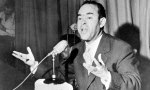
Mehdi Ben Barka during an address
On October 29, 1965, Mehdi Ben Barka was abducted (“disappeared”) in Paris by French police officers. He was never to be seen again. On Dec. 29, 1975, Time magazine published an article called “The Murder of Mehdi Ben Barka”, stating that three Moroccan agents were responsible for the death of Ben Barka, one of them former Interior Minister Mohammed Oufkir. Speculation persists as to CIA involvement. French intelligence agents and the IsraeliMossad were also involved, according to the article. Many believe that the abduction and removal of Mehdi Ben Barka on that cold day of October 29, 1965, was to give a blow to the impetus of the Tricontinental Conference,which was going to have effects on liberation movements across the globe, and thus hurt imperialist powers (US, France, UK, Portugal, Spain…).
Indeed Mehdi Ben Barka was a true hero, some refer to him as the Moroccan Che Guevara… To many, he was hope itself… His charisma, and his work went beyond Morocco’s borders and blessed the entire globe, countries which were oppressed by imperialist powers and which over 50 years later are still suffering from neo-colonialism, and ferocious capitalism/imperialism. You can read more on how the French government is still stalling on the “Ben Barka affair” at the Guardian, and check out this interview of Bachir Ben Barka, Mehdi’s son, who was aged 15 at the time of his father’s abduction. Watch this really good documentary below which details the life of Mehdi Ben Barka. 50 years after his disappearance, the “Ben Barka affair” still remains an open dossier. One can only sing, like Franklin Boukaka, ‘Mehdi nzela na yo na bato nyonso’ … Mehdi your work is that of humanity! So long brother, your work and vision will keep guiding us. ‘Oh O Mehdi Ben Barka, Mehdi nzela na yo na bato nyonso.’
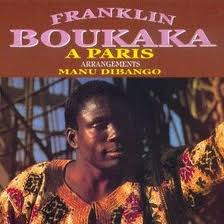
“Les Immortels” is a song written and composed by Franklin Boukaka, the great Congolese singer, to honor the great Moroccan leader Mehdi Ben Barka, African resistants, and world revolutionaries. Franklin Boukaka was a singer ahead of his time who loved his country, and had a passion for liberty. Franklin Boukaka was a freedom fighter, poet, composer, activist, and fought for African independence both politically, but above all by his great songs which today are still sung across Africa (you all have probably heard of “Aye Africa“). Born into music on 10 October 1940, with musician parents, he was murdered during the coup that deposed Ange Diawara during the night of 23-24 February1972. His greatest album was “Le Bucheron” realized with Manu Dibango, which contains “Les Immortels.” With all that is happening in Africa, with the coup against Laurent Gbagbo in Côte d’Ivoire, the crush of Libya and the guide of the revolution Mouammar Khadafi, and with the destruction of Mali, “Les Immortels” is still of actuality. Enjoy!
Today’s post will be dedicated to a great resistant and leader of Africa, the great Lalla Fadhma N’Soumer (also known as Lalla Fatma N’Soumer), an important figure of resistance against French invasion in Algeria. Lalla Fadhma N’Soumer has been seen as the embodiment of the Algerian struggle. The war of colonization in Algeria was one of the most brutal and repressive in Africa; it is said that Algeria lost 1/3 of its population between 1830 and 1872. The war was quite atrocious, and very often we are told of the courage and charisma of leaders such as the emir Abdel Kader, but often in history books, the names of heroines like Lalla Fadhma N’Soumer are forgotten or simply erased.
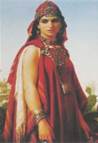
Fadhma N’Soumer
Lalla Fadhma N’Soumer was born in Werja, a village near Ain El Hammam in 1830, the year French occupation started in Algeria. She was from Kabylie. Lalla, the female equivalent of sidi, is an honorific reserved for women of high rank, or who are venerated as saints. Her real name was Fadhma Nat Si Hmed. The title, N’Soumer, was given to her because of her piety and strength and because she lived in the village of Soumer. Fadhma was the daughter of cheikh Ali Ben Aissi, who headed a Qur’anic school, which was linked with the Zawyia Rahmaniya of Sidi Mohamed Ibn Abderrahmane Abu Qabrein. Young Fadhma was extremely gifted, and memorized the Qur’an simply by listening to her father’s disciples when they chanted the various surats. After her father’s death, Fadhma directed the Qur’anic school with her brother Si Mohand Tayeb. She took special care of the children and the poor. She was known for her great piety, notable wisdom, piercing intelligence, and had an excellent reputation throughout the Kabylie region.
Battle of Somah in 1836 (by Horace Vernet)
Fadhma was only 16 when the French occupied Kabylie. In 1847, she joined the resistance leaders of the region: Si Mohamed El-Hachemi and Mohamed El Amdjed Ibn Abdelmalek (nicknamed Bou-Baghla). Bou-Baghla was probably an ex-lieutenant in the army of Emir Abdelkader, defeated for the last time by the French in 1847. Refusing to surrender, Bou Baghla retreated to Kabylie. From there, he began a war against the French armies and their allies, often employing guerilla tactics. He was a relentless fighter, very eloquent, and very religious. Fadhma and Bou-Baghla were kindred spirits fighting for the freedom of their people. After Bou-Baghla’s death in 1854, Fadhma was given command of combat by the great council of combatants and important figures of the Kabylie’s tribes.
She led a strong resistance against Marshal Jacques Louis Randon’s 13,000-strong French army. She gave them a lesson of courage, and determination. Armed with an unshakable faith, Fadhma threw herself in bloody battles to push back the enemy. During the battle of Tachekkirt, led by Bou-Baghla at the time, Randon was captured, but managed to escape later. During the famous battle of Oued Sebaou, Fadhma was only 24 years old, and headed an army of men and women; she took control, and led her people to victory, a victory heralded throughouth Kabylie. The mosques, zawiyas, and Qur’anic schools sang praises in honor of the heroine of the Djurdjura.
Lalla Fadhma N’Soumer during battle (in reality, it is said that she never used weapons)
Not willing to accept defeat, Randon asked for reinforcements, with his forces reaching 35,000 men. He asked the people of Azazga to help him reach Fadhma N’Soumer’s quarters, to end “her legend, and misdeeds.” The response to his emissary was “Go to the one who sent you, and tell him our ears cannot hear the language of him who asks us to betray.” Such was the loyalty and respect of the people for Fadhma. In response, Randon promised the people of Azazga constant exposure to his cannons. One can only imagine the brutality of the French against the Azazga people, which were later defeated. Fadhma did not give up, and mobilized her people to “fight for Islam, the land, and liberty. They are our constant, and they are sacred. They can neither be the object of concessions nor haggling.” Her strong personality and inspirational speeches had a strong influence in all of Kabylie, as shown by the sacrifice and determination of the people during all the battles, especially those of Icherridene and Tachkrit,where the enemy troops were greatly defeated. The latter took place on July 18 – 19, 1854, and resulted in a heavy death toll (over 800 dead) for the French troops.
Monument celebrating Lalla Fadhma N’Soumer, in Algiers
Defeated, Randon finally asked for a ceasefire, which Fadhma N’Soumer agreed to. She was planning to use the ceasefire period to improve her organization and reinforce her troops. Fields were plowed and sowed, and arms factories were installed in all corners of the region. However, just like with Samori Toure, or Behanzin, the French did not respect the ceasefire. In 1857, after only three years, they broke their word (as always) and launched offensives in all large cities which had been hard to overtake until then. History will record that the French were always people of no word during the colonization (and even today); they used every sneaky technique they could find to eliminate others… and even with all their ‘superior’ gunpower, and manpower, they could not have won against our great African leaders without using treachery, and treason.
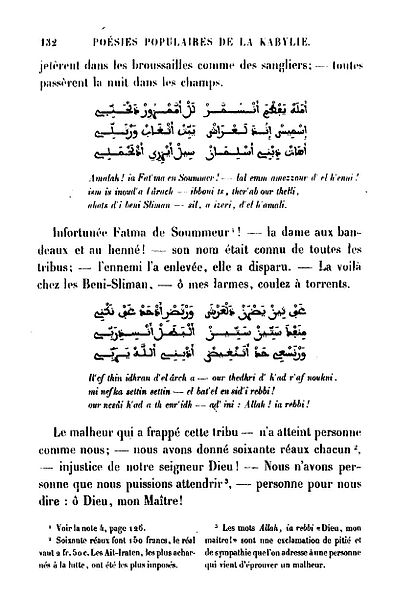
Poem dedicated to Lalla Fadhma N’Soumer (from Poésies populaires de la Kabylie du Jurjura, Paris 1867)
Fadhma N’Soumer, whose influence motivated the freedom fighters, appealed to the people for a last and supreme effort. Surrounded by women of the region, Lalla Fadhma directed the fight and encouraged remaining volunteers. However, they lost the battle, and Fadhma was arrested on 27 July 1857, in the village of Takhlijt Ath Atsou, near Tirourda. The French soldiers destroyed her rich library, which contained a rich source of scientific and religious works from the region. They also spent her fortune, which had been used toward caring for the disciples of her father’s zawiya. Lalla Fadhma N’Soumer died in 1863, from the hardship of incarceration in Béni Slimane, from the news of her brother’s passing, and the frustration from her inability to act against French aggression on her people. She was only 33 years old. The enemy (the French) nicknamed her, the Joan of Ark of theDjurdjura, a comparison that the religious Fadhma never accepted.
To read more about French invasion of Algeria, check out Mediapart. Watch the video below to learn more about Lalla Fadhma N’Soumer (It has 5 parts, and is very instructive). Whenever you think of resistance in Africa, please do remember Lalla Fadhma N’Soumer who by her courage, piety, strength, and charisma was able to defeat the mighty French army, and capture a French marshal/general. Remember that there was a woman who held a rich library of scientific and religious works which was destroyed by the French army (it must have been full of treasures for them to destroy). Remember that this woman served the people, and love them dearly to sacrifice her life for their freedom. Remember, yes, that a woman led men and women to battles, and actually won!