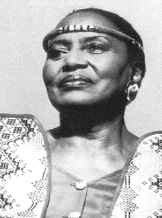
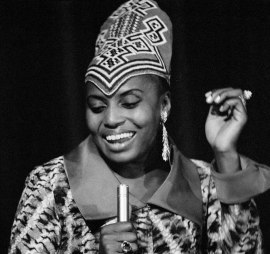
Le Message de Serena Williams aux Femmes

serena3_mirror
Serena Williams (The Mirror)

Sous l’insistance de mes nombreux amis, je publie ici le message très important de Serena Williams à toutes les femmes du monde. Ceci est de Yahoo News website.

==========

«A toutes les femmes incroyables qui aspirent à l’excellence,

Plus jeune, j’avais un rêve. Je suis sûre que vous en aviez un aussi. Mon rêve n’était pas celui d’un enfant normal, mon rêve était de devenir le meilleur joueur de tennis au monde. Pas la meilleure joueuse “femme” de tennis au monde. J’ai eu la chance que ma famille me soutienne et m’encourage à poursuivre ce rêve. J’ai appris à ne pas avoir peur. J’ai appris combien il est important de se battre pour ses rêves et, plus important encore, de rêver grand. Mon combat a commencé quand j’avais trois ans et je n’ai pas pris une seule pause depuis.

Mais toutes les femmes n’ont pas cette chance, ne sont pas assez soutenues ou sont découragées dans la voie qu’elles ont choisi. J’espère que toutes ensemble, nous pouvons changer ça. Pour moi c’est une question de résistance. Ce que les autres montraient de moi comme des défauts – ma couleur de peau, mon genre – je m’en suis servie pour mon succès. Je ne laisse rien ni personne définir ce que je suis ou mon potentiel. J’ai choisi mon futur. Alors quand le sujet de l’égalité salariale revient sur le tapis, cela me frustre car je sais que, comme vous, j’ai fait le même travail et les mêmes sacrifices que mes homologues masculins. Je ne voudrais pas que ma fille soit moins payée que mon fils pour le même travail. Vous non plus

Nous le savons, les femmes doivent abattre de nombreuses barrières pour sur la route qui mène au succès. L’une de ses barrières, c’est la manière dont on nous rappelle constamment que nous ne sommes pas des hommes, comme si c’était un défaut. On dit de moi que je suis “l’une des meilleures athlètes féminines”. Est-ce qu’on dit de LeBron [James] qu’il est “l’un des meilleurs athlètes masculins” ? Dit-on cela de Tiger [Woods] ? Ou de [Roger] Federer ? Pourquoi pas ? Ils ne sont pourtant certainement pas des femmes. Nous ne devrions jamais laisser ce genre de choses arriver. Nous devrions être jugés sur nos résultats, non sur notre sexe.

Pour tout ce que j’ai accompli dans ma vie, je suis profondément reconnaissante d’avoir eu des bas et des hauts, qui accompagnent toujours le succès. Et j’espère que mon histoire, et les vôtres, inspireront toutes les jeunes femmes, les encourageront à donner le meilleur d’elles-même, à suivre leur rêve avec une ténacité inébranlable. Nous devons continuer à rêver grand, et en faisant cela, nous encourageons la prochaine génération de femmes à être aussi audacieuses que leurs rêves. »

Serena Williams


Serena Williams Open Letter to All Women

serena2_forbes
Serena Williams (Forbes)

Serena Williams wrote a powerful open letter “to all incredible women who strive for excellence” about gender and sexism for the December issue of Porter magazine. The letter was part of the Incredible Women of 2016 issue reprinted by the Guardian.

==============

To all incredible women who strive for excellence,

When I was growing up, I had a dream. I’m sure you did, too. My dream wasn’t like that of an average kid, my dream was to be the best tennis player in the world. Not the best “female” tennis player in the world.

I was fortunate to have a family that supported my dream and encouraged me to follow it. I learned not to be afraid. I learned how important it is to fight for a dream and, most importantly, to dream big. My fight began when I was three and I haven’t taken a break since.

But as we know, too often women are not supported enough or are discouraged from choosing their path. I hope together we can change that. For me, it was a question of resilience. What others marked as flaws or disadvantages about myself – my race, my gender – I embraced as fuel for my success. I never let anything or anyone define me or my potential. I controlled my future.

So when the subject of equal pay comes up, it frustrates me because I know firsthand that I, like you, have done the same work and made the same sacrifices as our male counterparts. I would never want my daughter to be paid less than my son for the same work. Nor would you.

As we know, women have to break down many barriers on the road to success. One of those barriers is the way we are constantly reminded we are not men, as if it is a flaw. People call me one of the “world’s greatest female athletes”. Do they say LeBron is one of the world’s best male athletes? Is Tiger? Federer? Why not? They are certainly not female. We should never let this go unchallenged. We should always be judged by our achievements, not by our gender.

For everything I’ve achieved in my life, I am profoundly grateful to have experienced the highs and lows that come with success. It is my hope that my story, and yours, will inspire all young women out there to push for greatness and follow their dreams with steadfast resilience. We must continue to dream big, and in doing so, we empower the next generation of women to be just as bold in their pursuits.

Serena Williams


Fidel Castro: Ideas cannot be Killed!

 fidel-castro_4« ¡ Las ideas no se matan ! » « Ideas cannot be killed ! »

This is the sentence shouted out to the killing squad which was about to execute Fidel Castro on 26 July 1953, and this saved him. Indeed, El Commandante stood for ideas and above all for love: love of humanity, and planet earth. He understood that imperialism was nullifying the human being, and crushing people under its hands. He worked for the freedom of mankind. Fidel showed us that the size of a country or its people does not matter when fighting for great ideas and principles. Cuba is a small country, but its actions, its help, has been immense to Africa for the past 50 years. Even to this day, doctors across Africa are trained in Cuba, and Cuban doctors have vastly supported the health-care services of many countries including Ghana.

Nelson Mandela wrote from Robben Island, about Cuba: “It was the first time that a country had come from another continent not to take something away, but to help Africans to achieve their freedom.” Indeed, Cuba’s help to Africa has been selfless, and loving, and that of true brotherhood.

fidel-castro_2As a towering figure who stayed true to his Marxist-Leninist ideology even after the collapse of the Soviet Union, Fidel Castro has empowered countless Africans. The struggle for liberation from colonial powers by Africans benefited vastly from help from this little country in the western hemisphere.

When Africa cried, Cuba was there. When Portuguese were killing, subjugating, imprisoning Angolans, Bissau-Guineans, Cape Verdians, Mozambicans, Cuba was there. When Apartheid and the South African regime was oppressing (with support of the Western world) Black South Africans cried, and Fidel heed their calls. When Lumumba was killed, and Congo at lost, they called and Fidel answered. When Namibia was crushed, Fidel and Cuba helped free them from the Apartheid regime. When Ethiopians needed help, Fidel provided troops and expertise. When France was perpetrating a genocide in Algeria, Cuba helped free them.

Castro’s support for Africa’s liberation led him to meet with some of the continent’s leaders including Patrice Lumumba of Congo, Ghana’s Kwame Nkrumah, Sam Nujoma of Namibia, Nelson Mandela of South Africa, Muammar Gaddafi of Libya, and Robert Mugabe of Zimbabwe.

Amilcar Cabral
Amilcar Cabral

Responding to calls for help from the Angolan leader
Agostinho Neto who was trying to liberate his country from the Portuguese, Castro sent troops to Angola. Today, Angola is free of civil war thanks to the unfailing support of Fidel. Cuban soldiers are documented to have fought alongside Namibians and South Africans to prevent the apartheid regime from spreading all over southern Africa. They have also helped in Mozambique, and Guinea Bissau & Cape Verde supporting Amilcar Cabral. Between 1966 and 1974 a small Cuban force proved pivotal in the Guineans’ victory over the Portuguese. This time Cuba’s involvement also stretched to medical support (Cuban doctors) and technical know-how. Ultimately, Cuba’s successful battle against South Africa in Angola also hastened the Apartheid regime’s withdrawal from Namibia after 70 years of occupation, and led to that country’s subsequent independence.

Cuban troops have since the 1960s, served in Algeria, Guinea, Guinea Bissau, Equatorial Guinea, Sierra Leone and Libya. Cuba was a thorn for the imperialists in Africa, France in Algeria, Portugal, Great Britain, South Africa, etc.

Agostinho Neto
Agostinho Neto

In a 1998 speech, Fidel Castro told the South African Parliament (it was his first visit to the country) that by the end of the Cold War at least 381,432 Cuban soldiers and officers had been on duty or “fought hand-in-hand with African soldiers and officers in this continent for national independence or against foreign aggression.

Given this history, it was no surprise that one of Mandela’s first trips outside South Africa – after he was freed – was to Havana. There, in July 1991, Mandela, referred to Castro as “a source of inspiration to all freedom-loving people,” adding that Cuba, under Castro’s leadership “helped us in training our people, gave us resources to keep current with our struggle, trained our people as doctors.”  At the end of his Cuban trip, Mandela responded to American criticism about his loyalty to Castro and Cuba: “We are now being advised about Cuba by people who have supported the Apartheid regime these last 40 years. No honorable man or woman could ever accept advice from people who never cared for us at the most difficult times.”

fidel-castro_5Altogether fitting was Cuban President Raul Castro’s address at Nelson Mandela’s funeral in 2013. In Johannesburg, Raul reminded his audience: “We shall never forget Mandela’s moving homage to our common struggle when on the occasion of his visit to our country on July 26, 1991, he said, and I quote, ‘the Cuban people have a special place in the hearts of the peoples of Africa’.”

Upon arrival in Havana, Robert Mugabe of Zimbabwe said, “Fidel was not just your leader. He was our leader and the leader of all revolutionaries.

So in essence, many countries in Africa became independent thanks to Cuba and Fidel Castro, thanks to his ideals and his love of freedom. I am not sure that there is a single African country which has not benefited in some way shape or form from Cuba. We all owe Fidel our love, our lives, our freedom, and we salute him: So long El Commandante, thanks to you, we are free! Thanks to you, we fought a long battle and won! thanks to you, we started new chapters and became ‘free’ countries! Africa owes you so much!


Treaty of Wuchale: The Treaty which led to European Colonialism’s Defeat in Africa

Battle_of_adwa2
Edition of the Petit Journal of August 1896 titled: “Negus Menelik II at the Battle of Adwa”

In Africa, Ethiopia is the only country which was never colonized by a European power. This was the result of the famous Battle of Adwa on March 1, 1896, which marked the Ethiopian victory against Italian colonialism. The Battle of Adwa against Italy arose from the deceitful 1889 Treaty of Wuchale between the Ethiopian Empire and Italy, a treaty whose article 17 had two different meanings in Amharic and Italian versions: The Amharic version recognized the sovereignty of Ethiopia and its relationship with Italy as just a diplomatic partnership, while the Italian version made Ethiopia Italy’s protectorate The moment that discrepancy/trickery was uncovered, Empress Taytu Betul was the first to agitate Emperor Menelik II and other men to stand up for liberty, and dignity against Italian aggression. I am publishing here the Treaty of Wuchale. Special thanks to the Horn Affairs website for publishing the English version in its entirety. Some claim that Article 3 actually paved the way for Italians to claim Ethiopian lands (Eritrea). Well, here is the document of one of those treacherous treaties signed or rather forced upon Africans by European powers. Thank goodness for Taytu Betul, Menelik II, and their team of loyal and intelligent ministers and interpreters. I have attached the pdf version too.

===============

Treaty of friendship and trade between the kingdom of Italy and the Empire of Ethiopia (Treaty of Wuchale)

ethiopia
Map of Ethiopia before 1911

His Majesty King Umberto I of Italy and Menelik His Majesty The King of Kings of Ethiopia, in order to make meaningful and lasting peace between the two Kingdoms of Italy and Ethiopia have agreed to conclude a treaty of friendship and commerce .

And His Majesty the King of Italy having delegated as his representative, Count Pietro Antonelli, Commander of the Crown of Italy, Knight SS. Maurice and Lazarus, his extraordinary posted by His Majesty the King Menelik, whose full powers were found in good and due form, and His Majesty the King Menelik concluded in his name as King of Kings of Ethiopia, agreed and concludes the following Articles:

Article 1. There will be perpetual peace and friendship between His Majesty the King of Italy and His Majesty the King of Kings of Ethiopia and between their respective heirs, successors, servants and protected populations.

Article 2. Each Contracting Party shall be represented by a diplomatic agent accredited to I’altra and may appoint consuls, agents and consular officers in the other.
Such officials shall enjoy all the privileges and immunities according to the customs of the European governments.

Map of Eritrea
Map of Eritrea

Article 3. To remove any ambiguity about the limits of the territories over which the two Contracting Parties shall exercise sovereign rights, a special commission composed of two delegates and two Ethiopians will draw on Italian soil with special signals a permanent boundary line whose strongholds are established as below:
a) the line of the plateau will mark the Ethiopian-Italian border;
b) from the region Arafali Hala, Sagan and Asmara are villages in the Italian border;
c) Adi and Adi Nefas Joannes Bogos will be on the side of the Italian border;
d) by Adi Joannes a straight line extended from east to west will mark the border between Italy and Ethiopia.

Article 4. The monastery of Debra Bizen with all their possessions will remain the property of the Ethiopian government but will never use it for military purposes.

Article 5. The caravans from or to Massawa to Ethiopian territory pay on one single law of the customs entry of 8 per cent on the value of the goods.

Menelik_II_ethiopia
Emperor Menelik II, of Ethiopia

Article 6. The trade of arms and ammunition from or through Massawa to Ethiopia will be free for the only King of Kings of Ethiopia.
Whenever they want to get the passage of such kinds will make regular application to the Italian authorities, bearing the royal seal.
The wagons with load of weapons and ammunition will travel under the protection and cover of Italian soldiers until alconfine Ethiopia.

Article 7. The subjects of each of the two Contracting Parties will be free to enter, travel, go out with their merchandise and effects in the other country and will enjoy greater protection of the Government and its employees.
And, therefore, strictly forbidden to people on both sides armed contractors to meet many or few and pass their borders in order to impose itself on people and groped by force to provide food and livestock.

Article 8. The Italians in Ethiopia and Ethiopians in Italy or Italian possessions can buy or sell, take or lease and in any other manner dispose of their property no less than the natives.

Article 9. And fully guaranteed in both states the option for other subjects to practice their religion.

Article 10. Any disputes or quarrels between the Italians in Ethiopia will be defined by the Italian in Massawa or his delegate.
The fights between Italians and Ethiopians will be defined by the Italian in Massawa or his delegate and a delegate of the Ethiopian.

Taytu_Betul5
Empress Taytu Betul of Ethiopia

Article 11. Dying in an Italian in Ethiopia or an Ethiopian in Italian territory, the local authorities were carefully kept all his property and held at the disposal of government to which the deceased belonged.

Article 12. In any event, circumstance or for any Italians accused of a crime will be judged by the Italian.
That is why the Ethiopian authorities shall immediately deliver to the  Italians in Massawa accused of having committed a crime.
They also accused the Ethiopians of crime committed on Italian soil will be judged by the Ethiopian.

Article 13. His Majesty the King of Italy and His Majesty the King of Kings of Ethiopia is obliged to deliver criminals who may have become refugees, to escape punishment by the rulers of one on the other domains.

Article 14. The slave trade was against the principles of the Christian religion, His Majesty the King of Kings of Ethiopia is committed to prevent it with all his power, so that no caravan of slaves can cross its member.

Article 15. This Treaty shall be valid throughout the Ethiopian Empire.

Article 16. While in the present Treaty, after five years from the date of signature, one of two High Contracting Parties may wish to introduce some modifications to do so, but he must prevent the other a year earlier, while remaining firm and every single concession on territory.

Battle_of_adwa6
The Battle of Adwa, 1896

Article 17. His Majesty the King of Kings of Ethiopia can [1] use the Government of His Majesty the King of Italy for all treatments that did business with other powers or governments.

Article 18. If His Majesty the King of Kings of Ethiopia intends to grant special privileges to nationals of third state to establish businesses and industries in Ethiopia, will always be given, under equal conditions, preference to the Italians.

Article 19. This treaty being drafted in Italian and Amharic and the two versions agree with each other perfectly, both texts shall be deemed official, and will in every respect equal faith.

Article 20. This Treaty shall be ratified.

In witness whereof, Count Pietro Antonelli on behalf of His Majesty the King of Italy, His Majesty the King of King Menelik of Ethiopia, in his own name, signed and affixed their seal to this Treaty, at the camp Uccialli of 25 miazia 1881 corresponding to May 2, 1889.

Imperial Seal of Ethiopia
For His Majesty the King of Italy Pietro Antonelli

Ratification of MS, Monza, September 29, 1889

****************

[1] Article 17 has an obligatory sense in the Italian language version of the Treaty.

Thomas Sankara Speech on Debt and Unity

Thomas Sankara
Thomas Sankara a Ouagadougou

This past weekend saw the anniversary of Thomas Sankara’s assassination. In memory of this great man who graced our continent. I decided to repost his speech on African debt, which after almost 30 years is still very actual. His speech in one of unity. Imagine if we had been united, would there have been a Libya 2011, or Cote d’Ivoire 2011, or all the subsequent others? Unity does make us strong.

===========

Thomas Isidore Sankara, our African hero, was killed for his convictions, love of his people and his country. This great hero gave one of the greatest speech I have heard about the problem of the  African debt. Such an eloquence! Such Truth my Lord! Such humor! I do agree with him that the African debt cannot be entirely paid… and that the African nations who do not show up at the UA summit should not have favors extended to them the same as those who attend the meetings. Moreover, he talks about living and breathing African: his delegation and himself were entirely dressed by Burkinabés tailors with cotton from Burkina Faso. Please watch, listen, and celebrate one of the greatest man the African continent has ever seen! Don’t forget to watch part 2 as well.

Yaa Asantewaa or the Ashanti Cry for Freedom

asantewaa
Queen Yaa Asantewaa in Batakarikese (Ceremonial war dress)

On 17 October 1921, the great Ashanti warrior queen Yaa Asantewaa passed away. Her story is that of a queen who rallied masses to fight for their independence; hers is a story of courage, determination, and stamina. Yaa Asantewaa led a rebellion against the British at a time when the men surrounding her were low in spirit, afraid, and discouraged. She arose them to fight for their independence, and for their nation.  Her fight against British colonialists is a story woven throughout the history of Ghana.

asante_map-1800s
Ashanti Kingdom ca 1800s

Yaa Asantewaa was born in 1840 in the Gold Coast in the Kingdom of Ashanti. She was a successful farmer, mother, intellectual, politician, human right activist, Queen and leader. Yaa Asantewaa became famous for leading the Ashanti rebellion against British colonialism to defend the Golden Stool, symbol and soul of the Ashanti nation (19001901). She promoted women emancipation as well as gender equality. She was the sister of the Ruler of Ejisu (Ejisuhene) Nana Akwasi Afrane Okpase, an ethnic group in present-day Ghana.

ashanti_prempeh-124-palaver-and-submission_1896
January 1896: British formally annexing the Ashanti Kingdom – depiction of governor’s discussions with Prempeh I

During her brother’s reign, Yaa Asantewaa saw the Asante Confederacy go through a series of events that threatened its future, including civil war from 1883 to 1888. When her brother died in 1894, Yaa Asantewaa used her right as Queen Mother to nominate her own grandson as Ejisuhene. When the British exiled him in the Seychelles in 1896, along with the King of Asante Prempeh I and other members of the Asante government, Yaa Asantewaa became regent of the Ejisu-Juaben District. As seen earlier, this was the European’s way of dealing with African kings, as in Benin Kingdom. Sending a king to exile was usually followed by the looting of their land. This has led to the discovery of lots of Africa’s valued arts and crafts in Europe, which to this date have not been returned to their rightful owners.

ashanteewarcaptain_1834
Ashanti captain 1819

After the deportation of Prempeh I, the British governor-general of the Gold Coast, Frederick Hodgson, demanded the Golden Stool. This request led to a secret meeting of the remaining members of the Asante government at Kumasi, to discuss how to secure the return of their king. There was a disagreement among those present on how to go about this. Yaa Asantewaa the Queen Mother of Ejisu, was at the meeting. The chiefs were discussing how they should make war on the white men and force them to bring back the Asantehene. She saw that some of the chiefs were afraid. Some said that there should be no war. They should rather go to beg the Governor to bring back the Asantehene King(Nana) Prempeh.

Disgusted by the men’s behavior, Yaa Asantewaa stood up and addressed the members of the council with these now-famous words:

Now, I see that some of you fear to go forward to fight for our king. If it was in the brave days of Osei Tutu, Okomfo Anokye, and Opoku Ware I, chiefs would not sit down to see their king to be taken away without firing a shot. No European could have dared speak to chiefs of Asante in the way the governor spoke to you this morning. Is it true that the bravery of Asante is no more? I cannot believe it. It cannot be! I must say this: if you, the men of Asante, will not go forward, then we will. We, the women, will. I shall call upon my fellow women. We will fight! We will fight till the last of us falls in the battlefields.

ashanti_golden_stool_31_january_1935
The Golden Stool in 1935

With this, she took on leadership of the Asante Uprising of 1900, gaining the support of some of the other Asante nobility. She led the famous war knows as the War of the Golden Stool against the British. After several months, the British Gold Coast governor eventually sent a force of 1,400 to quell the rebellion. During the course of this, Queen Yaa Asantewaa and 15 of her closest advisers were captured, and they too were sent into exile to the Seychelles. She died there on 17th of October 1921. Three years later, on 27 December 1924, Prempeh I and the other remaining members of the exiled Asante court were allowed to return to Asante Kingdom. Prempeh I made sure that the remains of Yaa Asantewaa and the other exiled Asantes were returned home for a proper royal burial. She was buried with all the honors due a queen like her.

Yaa Asantewa’s War was the last major war led by an African woman. She embodied courage and strength when faced with the injustice of the European invader. She is honored with a school named after her, ‘Yaa Asantewaa Girl’s Secondary School’ In Kumasi in 1960. Many young girls in Ghana are proudly named after her.

ashanti-king-palace-being-burned-and-ransacked-by-british-in-1874-after-3rd-angloashanti-war
Ashanti King Palace being ransacked and burnt by the British in 1874 after the 3rd Anglo-Ashanti war

She is immortalized in the song:

Koo koo hin koo

Yaa Asantewaa ee!

Obaa basia

Ogyina apremo ano ee!

Waye be egyae

Na Wabo mmode

(“Yaa Asantewaa

The woman who fights before cannons

You have accomplished great things

You have done well”)

Prempeh I: The Last Asantehene Before British Colonization

prempeh_i
Asantehene Prempeh I

Prempeh I was the Asantehene (King) of the Kingdom of Ashanti. He was born as Prince Kwaku Dua III Asamu of the Kingdom of Ashanti, and he took the name of Prempeh I upon ascension on the throne at the young age of 16. His reign was a troubled one as it fell during the time of British invasion/colonization of the Gold Coast. In essence, he was the last king of the Kingdom of Ashanti before the Gold Coast fell under British protectorate.

Europeans were already installed in the region and had been trading on the coast since the 15th century for gold and slaves (as we saw with the slave castles of Elmina and Cape Coast). By the beginning of the 19th century, the British government decided to formalize its control of the Gold Coast. They dispatched a force to conquer the Ashanti. They only won the war against the disciplined Ashanti because of the superiority of their artillery and rifles over the traditional muskets of the Ashanti. Once in Kumasi, the capital, the British hastily looted the royal palace and burned the town to the ground. The defeated Ashanti had already released their prisoners and subsequently were forced into agreeing to a treaty to give up claims on coastal territories, to cease the practice of human sacrifice and to pay a huge indemnity of 50,000 ounces of gold. This was known as the Wolseley’s expedition. The Gold Coast was then declared a Crown Colony.

Elmina 16th century
16th Century map of West Africa with Fort Elmina

Having lost their invincibility in war, the Ashantis were now faced with rebelling neighboring tribes, and the Ashanti confederation was descending into civil war. The Ashanti had become so weak that, in 1888, they asked the British governor to send an arbitrator from the coast to decide who, amongst rival claimants, should be the next Asantehene. The governor’s delegate decided in favor of the 16 year-old Prempeh. But Prempeh I turned out to be no puppet and refused to agree that Ashanti should become a British Protectorate.

Asantehene Prempeh I began an active campaign of the Ashanti sovereignty. The British offered to take the Kingdom of Ashanti under their protection, but Asantehene Prempeh I of the Kingdom of Ashanti refused each request. Asantehene Prempeh I stated, “My Kingdom of Ashanti will never commit itself to any such policy of protection; Ashanti people and the Kingdom of Ashanti must remain an independent sovereign state as of old, and at the same time be friends with all white men“.

prempehi_1
Prempeh I and his suite in the Seychelles (taken by F.A.L. Ramseyer) ca 1900-1903

Still wary of the French in Ivory Coast and alarmed by a resurgent Ashanti, the British now (1894) “remembered” that the Wolseley indemnity had never been paid. Prempeh I tried to appeal directly to a fellow sovereign, Queen Victoria, and sent an embassy to London to plead his cause. But the British government refused to give his delegates an audience for almost a year and mounted another elaborate British army expedition to Kumasi. Prempeh I refused to allow the Ashanti to fight, partly because of the memory of the Wolseley expedition and partly because of the British support for him during the succession dispute. Instead, he diplomatically greeted the troops as his guests when they marched into Kumasi, in January of 1896. The British governor arrived and coldly received Prempeh I and his chiefs. Prempeh I desperately tried to placate the invaders and to the horror of his people, he demeaned himself by prostrating himself before the governor in a sign of submission. The governor’s only response was to demand the gold promised to Wolseley. Prempeh could not provide such a huge indemnity at once but offered to pay in instalments starting with 680 ounces as a down payment. This was refused and then, to the astonishment of the Ashantis, Prempeh and some of his main chiefs were suddenly arrested.

Prempeh I’s place was looted. His throne is still displayed in the Royal Signals Museum at Blandford in England. The abducted Asantehene, Prempeh I, some of his relatives and advisors were first taken to Elmina for about a year, then to Freetown in Sierra Leone until 1900 when, upon the outbreak of Yaa Asantewaa (story for another day), the British feared proximity and sent the royal party to the Seychelles, in the Indian Ocean.

Once there, Prempeh I spent time in his villa on Mahe, the largest of the Seychelles’ island in the Indian Ocean. Prempeh I’s villa, and 16 new wooden houses with sandy floors and roofed with corrugated iron-sheets were built in Seychelles and allocated to the various Asante’s nobles. The place was called the Ashanti Camp. Prempeh made an effort to educate himself in English and made sure that the children received education.

prempehi_back-in-kumasi
Prempeh I reinstated in Kumasi in 1926 (Source: thekingdomofAsante.com)

On 27 December 1924, Prempeh I and the other remaining members of the exiled Ashanti court were allowed to return to Ashanti Kingdom. Upon his return, and to appease the Ashanti people, the British created for Prempeh I the official position of Kumasehene in 1926, position which he held until his death in Kumasi, Ghana, on 12 May 1931. He was succeeded by his heir apparent Prempeh II of the Kingdom of Ashanti.

Prempeh I was definitely a king caught between trying to hold the sovereignty of his people, and keeping peace, while working with the British invader peacefully. Was his approach the correct one when faced with a greedy, heartless, and treacherous opponent? For more information, please check out Kreol magazine, The Kingdom of Asante, asantekingdom.org websites which are full of great articles.

Queen Abla Pokou

Pokou1Just to add a bit more to the story of Queen Abla Pokou, the outstanding queen who led a group of the Ashanti people who later became the Baoule people of Cote d’Ivoire, I leave you here with a snipet of the 3D movie: POKOU Princesse Ashanti.

Queen Abla Pokou and the Origin of the Baoule People

Abla Pokou
Baoule mask representing Queen Abla Pokou

The story of Queen Abla Pokou (Abla Poku in English) is the story of the creation of the Baoule people of Côte d’Ivoire. She was a strong and loving queen who made a profound sacrifice for the well-being of her people, and thus was granted their deep love.

In the 17th century, King Osei Kofi Tutu I founds the Ashanti Empîre of Ghana. Given that in the Ashanti culture the law is matrilineal, when King Oseï Tutu dies, his nephew succeeds him. However, when his nephew dies shortly after, a war for the throne starts in Kumasi, the capital of the kingdom; this war opposes an old uncle of the royal family named Itsa, and Dakon, the second brother of the future queen Abla Pokou (born at the beginning of the 18th century). Dakon will also die in this fratricide war. Quickly, Abla Pokou, understanding that she and her followers will be next to die, decides to flee. Led by her, they walk for several days and nights, fleeing from those threatening to kill them. They soon arrive on the shores of the Comoé River, located on the frontier between Ghana and Côte d’Ivoire. But the river is unsurmountable, its waters are dangerous, and their enemies are getting closer. After having overcome so many obstacles, and walked for days, it is impossible to stop there.

AblaPokou2Queen Pokou looks to her court wizard for advice, saying, “wizard, tell us what the genie of the river wants from us in order to cross its treacherous waters!” The wizard replies, “Queen, the river is quite irritated, and would only stop once an offering of what is most dear to us is made to it.” Thus, the women of the court start taking off their gold and ivory jewelry, and the men bring their cattle for offering. But the wizard, shaking his head sadly, states “What is most dear to us is our sons!

Looking upon her people, the queen decides to make the most difficult sacrifice ever: that of her toddler son wrapped on her back. After untying him, she says to him, “Kouakou(‘Kwaku’ in English), my only child, forgive me, but I have understood that I need to offer you to the river for the survival of our people. More than a woman or mother, a queen is first a queen!” She then stoically, without shedding a tear, offers her son as a sacrifice to the Comoé River.

Map of Cote d'Ivoire

Once the offering made, a path quickly appears within the waters of the Comoé river allowing the queen and her people to cross it. Once the river crossed, the queen finally cries, “BA OULI!” meaning “the child is dead.” This will become the name of the people “Baoulé”. Once they arrived in a good place, the tribe holds a funeral for the sacrificed child. In memory of this, the place will be called Sakassou, meaning “place of funerals.” Queen Abla Pokou will rule over her people for many years, and news of her good reign will travel very far. She will die around 1760.

Pokou1
Poster for the 3D movie: Pokou Ashanti Princess

Some historians claim that a big tree bent over to let the Queen and her people cross, while others maintain that a group of hippopotamuses lined up a path across the river for the queen. Either way, the story of the queen’s great courage remains the same. Queen Abla Pokou, the founder of the Baoulé people of Côte d’Ivoire, was a great queen and woman who sacrificed what she held most dear for the well-being of her people. Many African presidents would learn a lot from Queen Abla Pokou’s courage, determination, and love of her people. Today in Côte d’Ivoire, her story has just been made into a 3D movie: POKOU Princesse Ashanti. The Ivorian author Véronique Tadjo has also published a book Reine Pokou: concerto pour un sacrifice in 2005. The story of Queen Pokou and the Baoule was retold by Maximilien Quenum in his Légendes africaines. Check out the websites Naforo-Ba and Matricien.org to learn more about it.

Why Behanzin should stay in Blida

Statue of Behanzin in Abomey, Benin

The article below is from 1906 giving reasons why the French government refused to return Béhanzin to his country. The English translation is brought to you by Dr. Y., Afrolegends.com .

===========

Under this title, La Petite République published an article from which we extract the following conclusions:

What will be the effect of Béhanzin’s return in his country?

The Dahomeans, who in the old days, used to raid their neighbors have been transformed under 10 years, into a population of peaceful docile peasants and easy to be led. No troops are stationed in the ancient kingdom of Behanzin and the administration is working amazingly.

Do not for one instant believe that the negroes have forgotten their old master and here is what M. Francois, ancient chief of cabinet of the governor of Dahomey, says about this in the volume he published three months ago on this colony.

Behanzin_18 Juillet 1906
The original article from La Petite Republique, in French

The people of Dahomey have kept the memory of Kondo (Béhanzin). The name of our courageous adversary still exerts a magical power on his old subjects. The population remains certain of his return. They say, Kondo was defeated by the whites, Kondo is imprisoned on an island by his enemies and this despite the ancient law which guards the Kings of Abomey from seeing the sea, but anyhow, Kondo will transform himself into a small bird and will come back to his capital.

As for the chiefs, here is, from the same author, an anecdote which shows their state of mind:

“The old Alloan who used to command the Dahomean army when Béhanzin was not here, and who today is a worker on the Sudan railroad, was telling one of the engineers, “We know well that we could easily make you disappear, you and the other white people who are in the Dahomey. It would not even be necessary to kill you, it will suffice not to bring you any food for a few days. But what will be the point of this? You will come back, by the thousand, with guns which fire all at once and traverse palm trees. Moreover, if it wasn’t you, it will be the British or the Germans.” And he politely added, “better if it is the French.”

One can see that the loyalty of the chiefs holds onto a fine thread, an occasion, a possibility, to rid their land of the whites.

It is undeniable that the return of Béhanzin will provide this anticipated occasion.