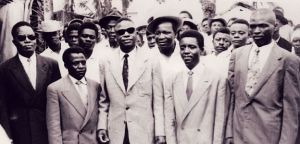
The great Senegalese filmmaker Ousmane Sembene made a movie about the Thiaroye massacre committed by French forces in Senegal during the night of 30 November – 1 December 1944! The movie, Camp de Thiaroye, was made in 1988. It took almost 20 years for a French president, Francois Hollande in 2012, to acknowledge it. A massacre which occurred because the Tirailleurs Senegalais asked to be given the pay they had been promised for services rendered, defending France in France against Hitler’s Nazi forces. Those Senegalese men were killed by French men for asking to be paid after defending France with their lives!
“We are not racists. We are fundamentally and deeply against any kind of racism. Even when people are subjected to racism we are against racism from those who have been oppressed by it.In our opinion – not from dreaming but from a deep analysis of the real condition of the existence of mankind and the division of societies – racism is a result of certain circumstances. It is not eternal in any latitude in the world. It is the result of historical and economic conditions. And we cannot answer racism with racism. It is not possible. In our country, despite some racist manifestations by the Portuguese, we are not fighting against the Portuguese people or whites. We are fighting for the freedom of our people – to free our people and to allow them to be able to love any kind of human being. You cannot love when you are a slave… In combating racism we don’t make progress if we combat the people themselves.We have to combat the causes of racism. If a bandit comes into my house and I have a gun I cannot shoot the shadow of this bandit. I have to shoot the bandit. Many people lose energy and effort, and make sacrifices combating shadows.”
Amilcar Cabral, 20 October 1972, New York, Pambazuka
Here is a documentary about Robert Mugabe and his history, his life, and his leadership. This video talks about him, the fight for independence, the loss of his first son while imprisoned by the British in Rhodesia, and the renaming of the country from Rhodesia to Zimbabwe, after the Great Zimbabwe Empire. I only recently found out that Mugabe had been influenced by Kwame Nkrumah: African Visionary and Ghana’s First President. He had lived and trained at the Takoradi Teacher Training College in Ghana, where he met his first wife Sally Hayfron Mugabe. It is sort of a short biography.
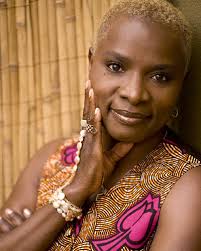
“It doesn’t matter what challenge you face, the most important thing is, when you fall, how you rise and how high you want to go, where you want to go from that, rise on.” Angélique Kidjo
Very often history books suffer from amnesia: they forget women’s contributions to revolutions. History acts as if the men had been all alone, as if only men were there, as if only men stood against injustice.
When people talk of the struggle for independence in Africa, and around the world, only the great men are cited. As one browses from country to country, only men are cited, as if women had been silent spectators. Do you think apartheid would have collapsed without the critical and vital input of women? Do you think without Winnie Mandela, Nelson Mandela’s name would have been anchored in our heads today? What do you think these women were doing while their husbands were in prison? History wants us to think that they were ‘just’ raising children as if that was not an enormous contribution already, but in the case of Winnie Mandela and countless others, they took up the fight, and were jailed, harassed, beaten, and humiliated by the system (some were even raped). Yet today, the world acclaims only the men! And when a woman raises too strong a voice, then she is vilified, told that she acts like a man, or is an ‘angry’ woman. How could you face injustice day after day, and just keep quiet? There comes a time when, as Bob Marley says, “You can fool some people some time, but you can’t fool all the people all the time…” people will rise up!”
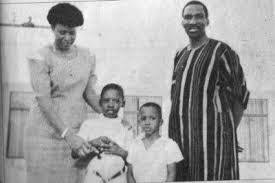
Mariam and Thomas Sankara, with their children
I am so sick of the saying, “behind every great man, there is a great woman.” I think it is again quite sexist, and should rather read, “ALONGSIDE EVERY GREAT MAN IS A GREAT WOMAN.” Raising children, and pumping somebody’s ego after a day’s fight, taking up the fights, and then keeping the men’s memory so that the world does not forget them, are no easy fit; these are extraordinaryfits. Alongside Nelson Mandela, there is Winnie Mandela. Alongside Thomas Sankara, there is Mariam Sankara. Alongside Patrice Lumumba, there is Pauline Lumumba. Alongside Felix Moumié, there is Marthe Moumié. Rosa Parks had to be defiant and sit in the front of the bus, for the movement to be taken over by Martin Luther King Jr.; without her part in the fight, there would have been no movement!
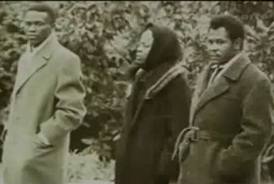
Ernest Ouandié, Marthe Moumié, and Abel Kingue in Geneva after Felix Moumié’s death
It is our duty to remember this, and to claim it. The world and history wants us to think that men are the only ones in the world, when we know that 50% of the world’s population is female; men are not the only ones fighting for independence, liberation, freedom, revolution, democracy, … Can one make a revolution without the remaining 50%? NO! It is our duty to remember Women’s contributions to history, and stop the global historical amnesia!
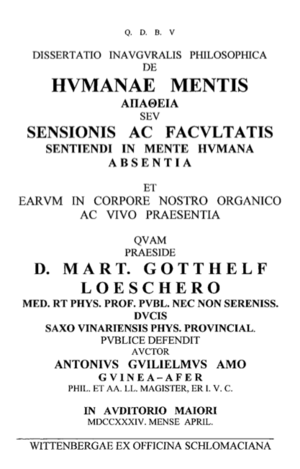
Amo Anton Wilhelm earned his doctorate degree in philosophy from the University of Halle in Germany. He was a respected Ghanaian German philosopher who taught at the Universities of Halle and Jena in Germany in the 1730s… That’s right… you read it well, 1730! His thesis was the rights of Africans in Europe! He is said to have been the first African person born in Africa to be awarded a doctorate degree from a European university, and to later teach there. Enjoy the Elikia M’Bokolo’s piece, on RFI, on Anton-Wilhelm Amo, also known as Amo Guinea Afer!
How many of you know that two great African queens have been cited in the Bible? Most people know about the Queen of Sheba who was the queen of a kingdom in modern-day Ethiopia, and gave birth to a son to the Great King Solomon (Solomon was taken by her beauty). The second queen, who most people ignore or forget, is the Candace, or queen, of Nubia, Amanitore. She is mentioned in the Bible, Acts8:26–40, or should we say her finance minister is, and so by ramification she is cited. So who was Amanitore, this African queen who was cited in the Bible?
Candace (queen) Amanitore is the daughter of the Nubian warrior queen Amanishakheto and grand-daughter to another warrior queen, Amanirenas. She descends from a long line of kings and queens who ruled over the ancient Kushitic Kingdom of Meroë, which also is referred to as Nubia in many ancient sources. In Egyptian hieroglyphics the throne name of Amanitore reads as Merkare. Like all her predecessors, she was a warrior queen who led forces to battle. Her rule extended over the area between the Nile and the Atbara rivers.
Amanitore’s pyramid in Meroe (Wikipedia)
Kandace Amanitore is often mentioned as co-regent with Natakamani although the evidence does not show whether she was his wife or his mother. Many believe that she might have been his mother. Images, on pyramids, of Natakamani frequently include an image of Amanitore. Her royal palace was at Gebel Barkal in modern-day Sudan, which is now a UNESCO heritage site.
Amanitore is mentioned in a number of texts as a ruler. These include the temple at the Nubian capital of Napata in present-day Sudan, in a temple in Meroë near Shendi, again in Sudan, and at the Naqa Lion Temple.
She was part of the Meroitic historical period and her reign began in 1 BC. The rule of her successor, Amanitaraqide, was complete by 50 AD. She is buried in her own pyramid in Meroë. The tomb is approximately 6 m square at its base, and not a pyramid in the mathematical sense.
Nubian pyramids at Meroe (Wikipedia)
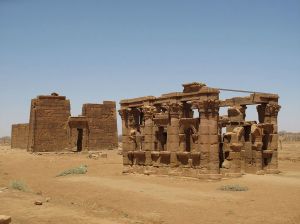
Amanitore was among the last great Kush builders. She, and Natakamani, were involved in restoring the large temple of Amun at Meroë and the Amun temple at Napata after it was demolished by the Romans. Reservoirs for the retention of water also were constructed at Meroë during her reign. The two rulers also built Amun temples at Naqa and Amara. At Naqa, the great centre of the steppe-country south of Meroe: the frontal approach to the temple of Amun became a pylon whose decoration combines Egyptian influences and purely Meroitic features, while the most famous building is the Naqa lion temple whose reliefs are among the most representative examples of Meroitic art.
The quantity of buildings that was completed during the middle part of the first century indicates that she led the most prosperous time in Meroitic history. More than two hundred Nubian pyramids were built, most plundered in ancient times.
She led a wealthy country, with large resources of gold, and exported jewelry, exotic animals, and textiles.
Sculpted palace? on the facade of the temple in the background, a king and queen – could this be King Natakamani and Queen Amanitore? (Wikipedia – UNESCO)
The pyramids of the king, the queen and the princes have been identified at Meroë. The king and queen liked to be portrayed with one of the royal princes, Arikankharor, Arikakhatani or Sherkaror, varying according to the monument; perhaps the princes were viceroys of the provinces in whose principal temples they were pictured. Sherkaror seems to have ascended the throne in succession to his parents shortly after the opening of the Christian era; a rock carving at Gebel Qeili in the south of Butana shows him triumphing over innumerable enemies under the protection of a solar deity.
As I already told you about Nubia, and the Meroitic civilization which dominated Egypt for over 3 centuries, I also have to add that there are more pyramids in Nubia, modern-day Sudan, than in the whole of Egypt. Remember the great queen Amanishakheto and King Taharqa who ruled over Egypt.
Sphinx of King Taharqa (Wikipedia)
Enjoy the video below, made by a BBC journalist to get acquainted with Sudan’s rich history and pyramids!
“We are heirs of the revolution” by Thomas Sankara
“If you take a walk around Ouagadougou and make a list of the mansions you see, you will note that they belong to just a minority. How many of you who have been assigned to Ouagadougou from the farthest corners of the country have had to move every night because you’ve been thrown out of the house you have rented? To those who have acquired houses and land through corruption we say: start to tremble. If you have stolen, tremble, because we will come after you”. March 26, 1983
“Aid to Burkina Faso must serve to strengthen not undermine, our sovereignty.” August 1984
“Any African Head of State who comes to New York must first pass through Harlem. This is why we consider that our White House is in Black Harlem.” October 2, 1984
Our ancestors in Africa were actively committed to a certain form of development. We do not want these great African wisemen to be assassinated. 2 octobre 1984 à Harlem
“We propose that the structures of the UN be changed to put an end to the scandal surrounding the right to veto” October 4, 1984
“The greatest difficulty we have faced is the neocolonial spirit that exists in this country. We were colonized by a country, France that left us with certain habits. For us, being successful in life, being happy, meant trying to live as they do in France, like the richest of the French.” March 17, 1985
“We have to work at decolonizing our mentality and achieving happiness within the limits of sacrifice we should be willing to make. We have to recondition our people to accept themselves as they are, to not be ashamed of their real situation, to be satisfied with it, to glory in it, even.” 1985
We need the new school and the new teaching to concur with the birth of patriots and not stateless people. Putting a child in school should stop being conceived as a simple accounting investment, if indeed the ongoing transformation of societies which fall on successive generations has quantifiable elements and non-quantifiable.17 october 1986 Appel de Gaoua on the quality of education. “We too are actors in the international arena, and we have the right to choose a political and economic system true to our aspirations. We have the duty to fight for a more just and more peaceful world, regardless of the fact that we have neither large industrial cartels nor nuclear weapons”. August 27, 1987
“It is always at the side of a woman that we become men again, and every man is a child for every woman.” March 8, 1987
“There are no true social revolution until the woman is liberated. May my eyes never see a society where half of the people is maintained under silence. I hear the racket of this silence of women, I suspect the roar of their storm, I feel the fury of their revolt. I wait and hope for the fertile irruption of the revolution for which they will translate the force and rigorous righteousness coming from their oppressed bowels.”8 mars 1987, Ouagadougou
Thomas Sankara a Ouagadougou
“The people’s democratic revolution needs a people that is confident and not defeated, a people of conviction and not a subjected people who suffer their fate.”4 août 1987
“I have told myself, either I’ll finish up an old man somewhere in a library reading books, or I’ll meet with a violent end, since we have so many enemies. Once you’ve accepted that reality, it’s just a question of time. It will happen today or tomorrow.” October 8th, 1987
One week after Thomas Sankara made this last remark, he was murdered.
Homeland or death, we will triumph!
These quotes can be found in the book “Thomas Sankara speaks” by Pathfinder Press (1988).
Thomas and Mariam Sankara with their children (Source: MyAfricanow.com)
I can only imagine how hard it must have been for Mrs. Mariam Sankara to write this letter, and for her family as well; but to think of the joy they must have felt when Compaoré was booted out of power brings satisfaction, and not tears; to think of the joy they must have felt to know that the Burkinabe people are now rising up, and that a light might now be shed about their husband, father, son, and brother’s assassination to bring them closure. I raise my hat to them, and I thank Mariam Sankara and her entire family, for having lent us Thomas Sankara, for our enlightenment. They made so much sacrifice while he was alive, and now that he is gone, the least we can do, is to express our profound gratitude and support: THANK YOU, and AFRICA will always be with you, and cherish the memory of one of his greatest sons, Thomas Sankara.
Below is the declaration made by Mariam Sankara on the 15 October 1987, this is from ThomasSankara.net. Enjoy!
=========
Thomas Sankara a Ouagadougou
Mesdames, Mesdemoiselles, Messieurs, Chers amis,
L’assassinat du Président Sankara et de ses compagnons, le 15 Octobre 1987, a interrompu une expérience de développement originale et prometteuse de l’histoire de l’Afrique contemporaine.
Je tiens à vous remercier pour votre soutien à toute la famille Sankara et à moi-même ainsi que pour votre fidélité à la mémoire du Président Thomas Sankara.
A travers sa politique, Thomas a défendu, en donnant lui-même l’exemple, les valeurs essentielles telles que l’intégrité, l’honnêteté, l’humilité, le courage, la volonté, le respect et la justice. En mobilisant les différentes composantes de la société, il s’est battu, de façon acharnée, contre la dette, pour le bien être de tous les burkinabè, la promotion du patrimoine culturel burkinabè et l’émancipation de la femme. Il a incité ses concitoyens à se prendre en charge pour vivre dignement. Bref, il a refusé la soumission au diktat des plus puissants de ce monde, a pris la défense des plus faibles et des plus défavorisés.
Imprégnés de ces valeurs et de ces idées, vous avez, à travers l’insurrection populaire des 30 et 31 octobre 2014, mis fin au régime dictatorial de Compaoré. Cette insurrection a permis au peuple de reprendre la parole pour exiger, entre autres, la fin de l’impunité, la réouverture du dossier de justice sur l’assassinat de Thomas Sankara et ses compagnons, celui de Norbert Zongo et tant d’autres.
Flag of Burkina Faso
La décision prise au Burkina Faso par les autorités de la transition de rendre enfin justice à Thomas Sankara a suscité un immense espoir au Burkina, en Afrique en général et dans le monde. Mais on est toujours dans l’attente de la justice.
La requête de la société civile et des familles est claire. Nous voulons connaître au plus vite les commanditaires et les exécutants de cet assassinat et ceux des autres crimes.
Retarder la quête de vérité, c’est jouer le jeu des assassins de Thomas Sankara et de ses compagnons. Ne pas rendre justice, c’est refuser une sépulture digne pour Thomas Sankara et ses compagnons, c’est empêcher les familles de faire leur deuil.
C’est la raison pour laquelle, le peuple burkinabè et ses amis doivent rester mobilisés et relancer la campagne pour que trente ans après, justice soit enfin rendue à Thomas Sankara et à ses compagnons.
Chers compatriotes, notre famille salue votre initiative visant à ériger un mémorial à la mémoire de Thomas Sankara.
Thomas and Mariam Sankara on their wedding day (Source: Africanglobe.net)
Nous sommes attachés, comme nombre de nos compatriotes, à la défense et à la sauvegarde de la mémoire de Thomas Sankara. Je tiens à saluer cette initiative de la société civile, conduite par l’association CIMTS (Comité International pour le Mémorial Thomas Sankara). Ce projet de Mémorial bénéficie du soutien populaire. Une démarche consensuelle et inclusive devrait permettre de réaliser un ouvrage de qualité qui témoignera de la vitalité des idées de Thomas et de ses fidèles compagnons de la révolution du 4 Août 1983. Toutefois, la famille tient à ce que ce mémorial ne soit pas construit dans l’enceinte du Conseil de l’Entente qui rappelle de douloureux souvenirs en raison des assassinats et des tortures qui ont marqué ce lieu.
“We are heirs of the revolution” by Thomas Sankara
Avec toutes ces volontés de valorisation de la mémoire de Thomas observées à travers le monde, on se rend compte avec le temps que Thomas Sankara était un visionnaire. Conscient des actions des détracteurs de la révolution, il savait qu’il était incompris parce qu’il était en avance sur son temps. Il dira alors : « tuez Sankara, des milliers de Sankara naîtront ». Ceci est devenu une réalité. On constate aujourd’hui que la jeunesse s’imprègne de ses idées progressistes pour transformer la société.
Trente après sa disparition, la pensée de Thomas reste vivante et d’actualité.
Encore une fois, je vous félicite pour votre mobilisation et pour votre fidélité à la mémoire du Président Thomas Sankara.
30 ans de résistance !
30 ans d’impunité !
Rendez enfin justice à Thomas Sankara et ses compagnons ainsi qu’à toutes les victimes des crimes impunis !