Burkinabe Woman Turns Water Hyacinth Into Gold Mine

Burkina Faso - Mariama Mamane1
Mariama Mamane (Source: UNEP)

In Ouagadougou, the capital city of Burkina Faso, a young scientist, Mariama Mamane who won the Young Champion of the Earth in the year 2017, is turning water hyacinth, an invasive species, into fertilizer, bio-gas and energy.

Mariama’s pilot program prevents desertification, creates food security and converts a problem into a livelihood opportunity for people in Burkina Faso. Her project, “JACIGREEN”, offers an innovative eco-solution introducing a plant-based purification mechanism to help manage fresh water and improve access to drinking water. It simultaneously implements a system to produce organic fertilizer (via anaerobic composting) and electricity (from biogas recovered from the water hyacinth transformation process). Her goal is to “Improve living conditions of population through sustainable agriculture and renewable energy for energy deficient rural communities in West Africa.”

Lake Victoria1
Water hyacinth invasion in Lake Victoria (Source: Lilian Ochieng, The East African)

Recall that Achenyo Idachaba of Nigeria has been exploring other alternatives making arts and craft products with the Water hyacinth (Jacinthe des eaux) in Nigeria. For those who do not know what the water hyacinth is, it is a plant which has been suffocating rivers around the globe, and has proliferated in places such as Lake Victoria (Africa’s largest body of fresh water) not only depriving the lake of its oxygen thus reducing nutrients for fishes, blocking water ways, and breeding all sorts of new diseases. This plant is not native of Africa.

Please help me applaud the work of Mariama Mamane. She was featured in this UN video below turning plant to power in Burkina Faso. Enjoy!

Amanishakheto, Warrior Queen of Nubia

Nubia_Stele of Amanishakheto from the temple of Amun in Naqa
Stele of Amanishakheto (center) from the temple of Amun in Wad ban Naqa (Wikipedia)

Amanishakheto was a great queen of Nubia and is known as a great warrior and pyramid builder; she built numerous pyramids and temples at Meroë. She is also the daughter of Amanirenas, the fearless and one-eyed queen who defeated the Romans, and the mother of Amanitore, another great queen. Today, vestiges of her palace which had been destroyed and plundered by the Italian explorer Giuseppe Ferlini can still be seen at Wad ban Naqa, and her jewelry (looted by the same Italian), are now on display at the Egyptian Museum of Berlin, and at the Egyptian Museum of Munich.

Dr. Y.'s avatarAfrican Heritage

Candace Amanishakheto on a mural Candace Amanishakheto on a mural

Great women are often left out of history.  Rarely do we hear or read about African queens.  It is already hard enough to read about great African men and leaders in history books, but as for African women… it is more like impossible.  How many have heard of the great warrior queen of Nubia, Amanishakheto, who defeated a Roman army?  Who has heard of this great queen whose pyramid/tomb was leveled to the ground by an Italian treasure hunter, Giuseppe Ferlini, in 1832? Who has heard of this woman who led her people with a strong arm, and built pyramids in Meroë?  Who has heard of this great candace, whose daughter Amanitore, also queen of Nubia, is mentioned in the Bible (Acts 8:27) … yeah the Queen of Sheba is not the only African…

View original post 379 more words

Adinkra Symbols and the Rich Akan Culture

Sankofa symbol
The Sankofa symbol

This is another all-time favorite… The second-most popular post on Afrolegends.com: the history of Adinkra symbols and the Rich Akan culture of the Akan people of Ghana and Côte d’Ivoire. Enjoy!
As we revisit this favorite, please let us know if there are other things you would like to learn on the topic, and we will try to add more.

Dr. Y.'s avatarAfrican Heritage

Adinkra in 1817 Adinkra in 1817

Today, we will talk about Adinkra symbols of the Akan people of Côte d’Ivoire and Ghana.

The Adinkra symbols are believed to originate in Gyaman, a former kingdom in modern day Côte d’Ivoire.  According to an Ashanti (Asante) legend, Adinkra was the name of a king of the Gyaman kingdom, Nana Kofi Adinkra.  King Adinkra was defeated and captured in a battle.  According to the legend, Nana Adinkra wore patterned cloth, which was interpreted as a way of expressing his sorrow on being taken to Kumasi, the capital of Asante.  He was finally killed and his territory was annexed to the kingdom of Asante.  The Asante people, around the 19th century, took to painting of traditional symbols of the Gyamans onto cloth, a tradition which has remained to this day.

Adinkra work, 1825 Adinkra work, 1825

The arrival of the…

View original post 610 more words

Toni Morrison : First Black Woman to Win a Nobel Prize in Literature

Toni Morrison_1
Toni Morrison (Source: OvationTV.com)

Nobel laureate and Pulitzer Prize-Winning Author Toni Morrison, the first Black woman to win a Nobel prize in literature, has passed away at the age of 88. I have read some of her books: “The Bluest Eye” which was part of my Dad’s collection and which I devoured, “Beloved” (I saw the movie, and was left with a ‘What just happened?’ feeling at the end of it), “Song of Solomon,” and “Sula“… I have to admit that I started “Jazz” but never finished it for lack of time. To be honest, Toni Morrison and I did not jive… I read the books, but I always felt like I needed to read them more than once to actually understand them. I believe that was her signature: her books were no cookie-cutter type-literature, but profound, heartbreaking, and conscience shakers; they had this earth-shattering effect, where you really walked a mile in the protagonist’s shoes. They also always had this musical and poetic feel to them, … maybe that’s why I kept coming for more?


Toni Morrison_Beloved_3
‘Beloved’ by Toni Morrison

Toni Morrison had an outstanding career. She started late as a writer at age 39 and was editor of textbooks at Random House before fiction: she was the first African American editor there. She then became one of the world acclaimed writer, and professor at some of the best universities in the world: Cornell University and Princeton University. She won the Nobel laureate in Literature in 1993, thereby becoming the first and only Black woman to win it to date. She was even on the cover of Time Magazine in 1998, only the second female writer of fiction and second black writer of fiction to appear on one of the most significant U.S. magazine covers of the era. And … she of course, benefited from the Oprah effect!


Her writing was not just beautiful but meaningful — a challenge to our conscience and a call to greater empathy,” President Obama wrote Tuesday on his Facebook page. “She was as good a storyteller, as captivating, in person as she was on the page.”

Narrative has never been merely entertainment for me,” she said in her Nobel lecture. “It is, I believe, one of the principal ways in which we absorb knowledge.”

She also said, “If there is a book that you want to read, but it hasn’t been written yet, you must be the one to write it.”  So get ready… it’s your turn to carry Toni Morrison’s torch!


Samori Touré: African Leader and Resistant to French Imperialism!

Samori
Samori Touré

This post on Samori Touré has been an all-time favorite post on Afrolegends.com . I am reblogging it here, because on this 10-year anniversary of the African Heritage Blog, it has been the most viewed and loved article. As you know, Samori Touré, grandfather to the African president Sekou Touré (another resistant to French imperialism – Guinea: the country who dared say ‘NO’ to France), was a leader and ruled over a vast empire which spanned big areas of West Africa from Guinea all the way to modern-day Côte d’Ivoire. He was a strong fighter to France imperialism in Africa, and opposed a great resistance to the French several times. This is to one of Africa’s great kings, warriors, and resistant.

Dr. Y.'s avatarAfrican Heritage

Samori Toure holding the Coran

One of the great kings, and fighters of African freedom was the great Samori Touré. Over 100 years ago, Samori Touré was captured by the French and deported to Gabon where he died of pneumonia.

But who was Samori Touré?

Well, Samori Touré was born in 1830 in Manyambaladugu (some texts mentionSanankoro instead), a village southeast of Kankan in present-day Guinea. Samori was a great warrior who fought imperialism in the 19th century such as many leaders today. He refused to submit to French colonization and thus chose the path of confrontation using warfare and diplomacy.

Until the age of 20, Samori was a trader. After his mother was captured in a slave raid by the king Sori Birama, he offered to serve in his army and excelled by his military prowess and skills.

Samori Touré had a vision of unity for the Malinké people, and…

View original post 935 more words

Farewell to Beji Caïd Essebsi, Tunisia’s First Democratically Elected President

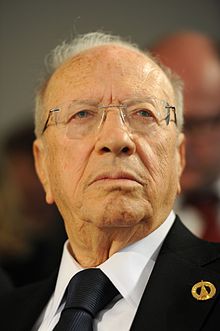
Tunisia_Essebsi_1
Mohamed Beji Caid Essebsi (Wikipedia)

This past Saturday, July 28 2019, millions of Tunisians bid farewell to their first democratically elected president Mohamed Béji Caïd Essebsi at a state funeral attended by numerous foreign leaders including French President Emanuel MacronQatari Emir Sheikh Tamim bin Hamad Al Thani, Palestinian President Mahmoud Abbas and Felipe VI of Spain. Essebsi passed away this past Thursday, July 25 at 92 years old. His was a great life of public service, and determination to serve the Tunisian people to the best of his ability.

Essebsi was a seasoned politician whose career spanned over six decades. His first involvement in politics started in 1941, when he joined the Neo Destour youth organization in Hammam-Lif. He was known for his integrity, exceptional public service, and served under Tunisia’s first president Habib Bourguiba, at different positions, including chief of the regional administration, general director of the Sûreté nationale, Interior Minister, Minister-Delegate to the Prime Minister, Defense Minister, and then Ambassador to Paris. The coincidence of him dying on the anniversary of the republic reminded people of the role he played in nation-building since independence.

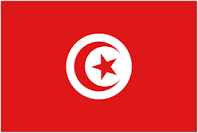
Tunisia_Flag
Flag of Tunisia

In recent years, Essebsi rose to prominence after the overthrow of veteran autocrat Zine El Abidine Ben Ali, which was followed by “Arab Spring” revolts against authoritarian leaders across the Middle East and North Africa, including in Libya and Egypt. He was seen as a unifying figure. He founded the Nidaa Tounes political party, which won a plurality in the 2014 parliamentary election. In December 2014, he won the first regular presidential election following the Tunisian Revolution, becoming Tunisia’s first freely elected president.

Tunisia_Essebsi_2
Essebsi in 2011 (Wikipedia)

Hours after Essebsi’s death, parliament speaker Mohamed Ennaceur was sworn in as interim president in line with the constitution in a smooth transition of power. The presidential election is scheduled for Sept. 15, as stated in the constitution which gives 90-days after the death of the president for new elections to take place; this comes two months earlier than scheduled.

The interim President stated, “[Mohamed Beji Caid Essebsi] spent his life in the service of Tunisia, preserving its gains and defending its values.”  “He was a man of consensus, dialogue and national unity.” Don’t we all need dialogue and national unity?

Please take some time to read the good article The Arab Weekly wrote on the life of this great man who always put the interest of the Tunisian people first.

Cape to Cairo: Trekking 10,000 km for the African Cup of Nations

Cape to Cairo_Alvin Zhakata_1
Alvin Zhakata in Khartoum, Sudan (Source: Alvin Zhakata)

What would you do for the love of football? How far would you go for a chance to watch the biggest continental football event of the year? Will you cross mountains, rivers, plains, and valleys? Well, Alvin Zhakata, a Zimbabwean man, trekked 10,000 km to cheer for the Zimbabwean warriors at the Africa Cup of Nations 2019 in Cairo this past month. He traveled from Cape Town to Cairo by road enduring visa delays, internet blackouts and revolutionary protests all for the love of football. It took him a total of 44 days; he missed his team who were eliminated in the first round, but the CAF president gave him a VVIP ticket to the final between Algeria and Senegal last Friday.

Cecil Rhodes with his transafrican train project from Cairo to Cape Town - the most imperialist ever
Cecil Rhodes with his transafrican train project from Cairo to Cape Town – the most imperialist ever

What Zhakata did, is no simple feat. He did what even the infamous Cecil Rhodes could not achieve: go from Cape Town at the tip of Africa, to Cairo at the very top of the continent. For those who do not know: the words Cape to Cairo immediately bring to mind the European Scramble for AfricaCecil Rhodes and his ambition for Great Britain to control the whole of Africa from Cape to Cairo, and of course to link all British colonies via the Cape to Cairo Railway crossing Africa from south to north by rail. The Cape to Cairo Road was also planned to roughly connect the same countries; however, it is not praticable today, and has remained more of a dream or rather a possibility, which needs revamping.

What Zhakata did is not just a show of undying love of a fan for football, but also a political statement to all African leaders: we need roads to connect each other; we need better visa system, or rather a borderless Africa for better and safer travel, increased trade among each other: we need a united Africa. Zhakata’s statement is one of Unity,… African Unity. Enjoy the excerpt below from BBC.

====

CAN 2019
Africa Cup of Nations 2019 in Cairo, Egypt

A Zimbabwean nurse travelled from Cape Town to Cairo by road enduring visa delays, internet blackouts and revolutionary protests all for the love of football.

Alvin “Aluvah” Zhakata had intended to make it to Egypt for the opening match of the Africa Cup of Nations on 21 June, when Zimbabwe’s Warriors took on the hosts.

But he missed the match because his epic journey took much longer than expected.

Yet thanks to those following his adventures on Twitter, he has now become a celebrity – and the African football boss has presented him with a ticket to this Friday’s final between Algeria and Senegal.

When the 32-year-old arrived in the Egyptian capital last week, completing his 44-day 10,000km (6,200-mile) trip, he said it was well worth it despite some nerve-wracking experiences.

Cape to Cairo_Alvin Zhakata_4
Cape to Cairo (Source: BBC)

His other more sobering discovery was that “Africa is not friendly to Africans” – in terms of visas and borders. “And some of the visa fees for African countries, they are actually more expensive than visa fees when you want to go to Europe – and the waiting period takes too long. “I believe we need a borderless Africa.”

The journey began on 27 May on a route passing through South Africa, Zimbabwe, Zambia, Tanzania, Kenya, Ethiopia, Sudan and Egypt.

Cape to Cairo_Alvin Zhakata_2
CAF president recognizing Alvin Zhakata for his feat, and presenting him with a VVIP ticket to the AFCON 2019 final

[…] His one disappointment has been the performance of the Warriors, who crashed out in the first round – amidst rows over pay.

But he says his achievement – which has become one of the biggest stories of this Africa Cup of Nations tournament – shows it pays to “dare to dream“.

If you have a passion for something, go for it. Pursue it until you get it. It may be delayed, but delay is not denial – be patient and be strong, because the harder the battle, the sweeter the victory,” he says.

The Fennecs of Algeria Win the African Cup of Nations 2019

CAN 2019_Algeria
The Fennecs of Algeria celebrate winning AFCON 2019 (The Guardian)

This past Friday, the Fennecs of Algeria defeated the Lions of Teranga of Senegal 1-0 to become Africa’s new champions. This was their second title since 1990.  Even though the final was not the desert foxes’s best game, they clearly were the best team of the tournament. Baghdad Bounedjah‘s early goal propelled Algeria to a first Africa Cup of Nations title in 29 years with a fiery 1-0 victory over Senegal in Friday’s final in Cairo.


CAN2019_4
Algeria’s coach Djamel Belmadi and Senegal’s coach Aliou Cisse

I would like to salute both coaches.  The 2019 Africa Cup of Nations was the first time in over 20 years when both finalists were led by African coaches: Algeria by Djamel Belmadi and Senegal by Aliou Cissé. This should be the norm, rather than the exception. Coincidentally, both coaches grew up in the same suburb of Paris, are the same age only separated by one day, and played against each other at youth level. They came head-to-head in a league game between Marseille and Paris Saint-Germain in February 2001, and then with their national teams two months later. Again African teams should be led by Africans… No wonder Egypt performed so poorly at the AFCON 2019 (this is the first time, they were not led by a local).

Madagascar
Flag of Madagascar

The revelation of this tournament was the Barea of Madagascar which for their first participation ever to the African Cup of Nations, performed extremely well, and went as far as the quarter finals. For their successful performance, their country’s president knighted the whole team.

Overall, AFCON 2019 brought us a lot of joy and tears, and we applaud the winners of this year’s tournament Algeria.

South African Woman wins Prize for Water-Saving Toilet

Toilet
Toilet bowl

I always wondered why the toilet design used today in almost all bathrooms around the world is 400 years old. So many things have gone through innovation, reinvention, re-design, etc, yet the toilet design has survived 400 years! In the end, I thought it was because the subject was not particularly attractive: I mean who wants to look into toilet bowls, or even think about it, or talk about it? Yuck…! Just do the business and be gone, right? Well, one young lady from South Africa came up with a toilet design which uses 400 milliliters (0.4 L – 0.11 gallons) instead of the usual 13 litres (13 L – 3.4 gallons) consumed in regular toilets. People, this is more than a 300% reduction in water… think about your water bills savings or drought areas! Please help me applaud the work of Monni Mokwena. Her invention is appropriately called the Swallowing Toilet. The excerpt below is from Briefly where the full article is found.

Just a note on July 30, 2019: Monni Mokwena emphasized in the comment section below that her design uses a flexible S-shape design which not only reduces water consumption, but also takes care of the smell: “My toilet have a flexible s- shape compared to the traditional toilet…So when it’s inoperative it has that S shape that help to prevent water for flowing and also to prevent the smell to come back into the bowl…

======

South Africa_Monni Mokwena
Monni Mokwena (Source: Sowetan Live)

Monni Mokwena is the epitome of black excellence. The 25-year-old designed a toilet that does not only save underprivileged people money, but it also preserves water. Mokwena pitched her idea at the Engen Pitch and Polish competition and she was crowed the regional winner.The young inventor was inspired by her upbringing in Bakenberg village in Mokopane, Limpopo. Mokwena was one among many living in rural areas who did not have the pleasure of flushing toilets. According to The Sowetan, Mokwena also saw her gogo spend a lot of money to pay someone to fetch water.

I am a rural girl. Toilets are a serious problems in our community. My grandmother still spends a substantial amount of money of her pension to pay people who get her water from far,” she said. 

She started doing research and found that the everyday toilet was invented over 400 years ago. Briefly.co.za gathered she came up with plans and her invention uses less than a litre of water.

I realised that the mountain of the s-shaped pipe at the back of the toilet is the one that makes the toilet to use a lot of water. This was created to prevent the smell from coming back to the house. We’ve cut that ‘mountain’,” Mokwena said.

Mokwena’s new “swallowing toilet” uses a flexible pipe instead of the s-shaped one and because it swallows the waste, the toilet only requires 400 millilitres of water – opposed to the 13 litres of water a normal toilet uses. Taking to social media, Mokwena gushed about the competition where she pitched her idea before walking away the winner.

Just imagine, a poor girl like me with my poor English, from the village pitching and competing with/to the most sophisticated people. And, I made to the top. Bafowethu – Let’s keep pushing but never forget to pray hey…. the competition is too much there,” she wrote on Facebook. 

Patrice Lumumba’s 1960 Address to the Congolese Youth

Patrice Emery Lumumba

For the celebration on 30 June 1960 of the independence of Congo, we will do a trip down memory lane with this speech Patrice Lumumba addressed to the Congolese youth in August of 1960. In 1960, Patrice Lumumba was elected the first prime minister of the  Democratic Republic of the Congo (DRC). Assassinated by Belgian colonialists and the CIA in 1961Lumumba was a founding member of the Movement National Congolais (MNC), which led Congo to independence. Today, Patrice Lumumba is the symbol of aspirations for an entire continent, and he continues to serve as an inspiration to contemporary Congolese and African politicians. His message here to the Congolese youth is really a message to the African youth. Enjoy! The full speech can be found in Patrice Lumumba: Fighter for Africa’s Freedom, Moscow, Progress Publishers, 1961, p 33-36, by Patrice Lumumba (transcribed by Thomas Schmidt) here .

=======

Map of the DRC
Map of the DRC

Today I am addressing the youth, the young men and women of the Republic of the Congo.

In speaking to them, I am addressing these words to future generations because the future of our beloved country belongs to them.

We are fighting our enemies in order to prepare a better and happier life for our youth.

If we had been egoists, if we had thought only about ourselves we would not have made the innumerable sacrifices we are making.

I am aware that our country can completely liberate herself from the chains of colonialism politically, economically and spiritually only at the price of a relentless and sometimes dangerous struggle. Together with the youth of the country, we have waged this struggle against foreign rule, against mercantile exploitation, against injustice and pressure. 

DRC_flag
Flag of the Democratic Republic of Congo

Young people who have been inactive and exploited for a long time have now become aware of their role of standard-bearer of the peaceful revolution.

The young people of the Congo have fought on our side in towns, villages and in the bush. Many of our young men have been struck down by the bullets of the colonialists. Many of them left their parents and friends in order to fight heroically for the cause of freedom. The resistance that the young people offered the aggressors in Leopoldville on January 4 and in Stanleyville on October 30, 1959, deserves every praise.

With deep emotion I bow in memory of these courageous patriots, these fighters for African freedom.

The time is not far distant when large numbers of young men and women were driven out of schools by their white teachers and instructors on the suspicion of having nationalist ideas. Many brilliantly gifted young people turned down the opportunity to receive a higher education for the simple reason that they no longer wished to be indoctrinated by the colonialists, who wanted to turn our young men and women into eternal servants of the colonial regime.

DRC_First_Congolese_government
Patrice Lumumba (center left) with his first government after his investiture outside the Palais de la Nation, 23 June 1960

During the heroic struggle of the Congolese nationalists, the young people, even those who were still sitting at school desks, resolutely opposed all new forms of colonialism, whether political, social, spiritual or religious.

Their only dream was national liberation. Their sole aim was immediate independence. Their only resolve was to wage an implacable struggle against the puppets and emissaries of the colonialists.

Thanks to the general mobilisation of all the democratic youth of the Congo, the Congolese nationalists won independence for the nation. We received this independence at the price of a grim struggle, at the price of all sorts of privations, at the price of tears and blood.

After independence was solemnly proclaimed on June 30, 1960, the colonialists and their black emissaries started a barbarous war in the young Republic of the Congo. They began this perfidious aggression because the nationalist Government now in power did not want them to continue exploiting our country as they did prior to June 30, the historic day when the people of our country said Adieu to the Belgian colonialists.

Not having any support whatever, particularly among the working class, who have had their fill of colonial exploitation, the colonialists and their henchmen now want to force certain sections of the youth to serve them in order to be able to propagandise the revival of colonialism. That is why a certain part of the youth, luckily not a very numerous part, have plunged into national defeatism.

Happily, the vast majority of the young people saw through this last attempt of the imperialists, who are turning into account the dissatisfaction of some malcontents, of those who failed in the elections because they did not have the confidence of the people.

This nationalist youth recently held demonstrations in various towns in the Republic to show their absolute and total opposition to imperialist intrigues.

DRC_Republic_of_the_Congo_(Léopoldville)_-_Commemoration_Independence_Stamp
Stamp commemorating the independence of Congo on 30 June 1960

Young people, I salute you, and congratulate you on your civic and patriotic spirit. Young people, specially for you I have created a Ministry for Youth Affairs and Sports under the Central Government. It is your Ministry. It is at your disposal. Many of you, without any discrimination, will be called upon to direct this Ministry, its different services and activities.

Today, in the free and independent Congo we must not have a Bangala, National Unity Party, Association of Bakongo, Mukongo, Batetela or Lokele youth but a united, Congolese, nationalist, democratic youth. This youth will serve the social and economic revolution of our great and beloved country.

You must energetically combat tribalism, which is a poison, a social scourge that is the country’s misfortune today. You must combat all the separatist manoeuvres, which some of the preachers of the policy of division are trying to pass off to young and inexperienced people under the name of federalism, federation or confederation.

In reality, young people, these names are only a new vocabulary brought by the imperialists to divide us in order the better and more conveniently to exploit us. Your entire future will be threatened if you do not oppose these manoeuvres, this new, disguised colonisation.

Lumumba on a USSR stamp in 1961
Lumumba on a USSR commemorative stamp in 1961

You must be proud that you belong to a great nation, a great country, a mighty power. This power, which the imperialists envy today, is embodied in national unity. This unity must be the heritage that you, in your turn, shall leave to your children.

The Government will soon send 300 young people to study in the U.S.A., 150 in the Soviet Union and 20 in Guinea, not to mention other countries.

The Congo is no longer a national reservation, a national park, a zoo which we could not leave. Tomorrow you shall go everywhere to study, to learn a speciality, and to get to know the world. Workers, working people will have an equal share in these study missions.

You shall go everywhere, to all the parts of the world. These contacts with the outside world, this direct confrontation with the reality of life will make you experienced people, whom the free and independent Congo needs today.

You will go there not as representatives of Association of Bakongo, National Unity Party, Congo National Movement or African Regroupment Centre youth. You will be Congolese citizens, simply Congolese. And by your behaviour, devotion, intelligence and political maturity you must be a credit to your Congolese motherland.

Patrice_Lumumba_official_portrait
Official portrait of Patrice Lumumba

Young people, the Congo belongs to you. The national Government, the people’s Government will do everything in its power to prevent the Congo from being torn away from you.

Long live the Republic of the Congo!

Long live the people’s, democratic youth!