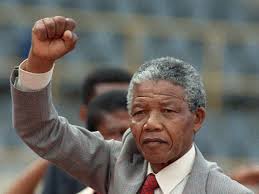
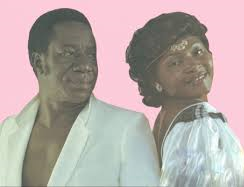
Nelson Mandela raising the freedom fistTabu Ley Rochereau and M’bilia Bel
M’bilia Bel and Tabu Ley Rochereau once sung for the liberation of Nelson Mandela. As we are celebrating both the king of Rumba, Tabu Ley Rochereau, and one of the greatest freedom fighters of our time, Nelson Mandela, I only saw fit to share with you Sisi Mandelasung by the greats to celebrate another Great!
In view of recent events in Mozambique between Renamo and Frelimo, and the possibility of war again in that country which has suffered so many years of civil war, I thought of ‘Ancien Combattant’ by the Congolese singer Casimir Zoba also known as Zao. This song used to be sung across Africa when we were children. It is a clear hymn against war. As the song says, when the war is global, everybody dies, … when there is war, there is no pity, … the bomb, the atomic bomb, does not choose, it kills everybody… why war… war is not good. Like he says at the end, plant seeds of peace,let us be friends, let us hold our hands, friendship is more important than war. We can all greet people from across the globe in their own language to foster peace: “… if you see German – Guten tag, if you see Spanish – Buenos dias, … if you see Chinese – Hi ho, … if you see Senegalese – Nangadef, … if you Zairois – Mboté Na Yo, etc…” is what Zao says. What particularly characterizes the song, is the humor and the provocative nature of the message. This is a clear ‘NO’ to war in any shape or form. So let us all sing ‘Ancient Combattant’ and refuse war in any country of this world. We need peace, not war!
The group “Y’en a Marre” with their shirts “Faux pas Force”
Today, I would like to talk about the “Y’en a Marre” (“Fed Up“), a Senegalese group which influenced change in the presidential election of 2012 in Senegal, by forcing President Abdoulaye Wade (and his son, Karim Wade) out of office. Y’en a Marre decided to stop complaining and to start acting, to make the changes they wanted implemented. It is a group of Senegalese rappers and journalists, created in January 2011, to protest ineffective government and register youth to vote. They are credited with helping to mobilize Senegal’s youth vote and oust incumbent President Abdoulaye Wade, though the group claims no affiliation with Macky Sall, Senegal’s current president, or with any political party.
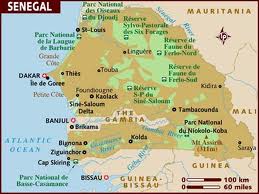
Map of Senegal
The group was founded by rappers Fou Malade (“Crazy Sick Guy“, real name: Malal Talla), Thiat (“Junior“, real name: Cheikh Oumar Cyrille Touré), Kilifeu (both from celebrated rap crew “Keur Gui of Kaolack“) and journalists Sheikh Fadel Barro, Aliou Sane and Denise Sow. The movement was originally started in reaction to Dakar‘s frequent power cuts, but the group quickly concluded that they were “fed up” with an array of problems in Senegalese society. “One day, there was 20 hours of cuts,” said Fadel Barro, whose dimly lit apartment served as the place where the movement took shape. “I said: ‘Guys, everyone knows you. But you’re not doing anything to change the country.’ ”[from NYT interview – see link below]. Those words energized the musicians.
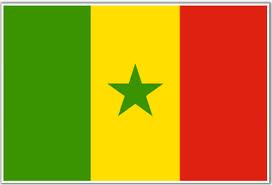
Flag of Senegal
Their goal was to incite Senegalese to vote, to renew the political personnel, to fight against corruption and to promote a sense of civic responsibility. Their most famous quote is: « L’heure n’est plus aux lamentations de salon et aux complaintes fatalistes face aux coupures d’électricité. Nous refusons le rationnement systématique imposé à nos foyers dans l’alimentation en électricité. La coupe est pleine. » [The hour is no longer to ballroom lamentations and fatalistic complaints in the face of power cuts. We refuse the systematic rationing imposed on our homes in the power supply. Our cup is full to the rim.]
Through recordings, rallies and a network of regional affiliates, called “the spirit of Y’en a Marre“, the group advocates for youth to embrace a new type of thinking and living termed “The New Type of Senegalese” or NTS. In late 2011, the collective released a compilation titled “Y’en A Marre“, from which the single “Faux! Pas Forcé” (“Don’t force it”) emerged as a rallying cry for youth frustrated with President Wade and his son and presumed successor. They followed with a single, “Doggali” (“Let’s finish”), which advocated for cleansing the country of Wade and son.
“Y’en a Marre” at a public demonstration in 2012
From April to August 2011, the group and their members campaigned door to door to register young Senegalese to vote at the Presidential election of 2012, and they claimed more than 300,000voters registered. During 2011, they organized manifestations, called “foires aux problèmes” (“problem fairs”), and sit-ins in Dakar’s Obelisk Square. On 15 February 2012, these manifestations were prohibited by Wade’s government, leading to 3 members of Y’en a Marre’s arrest on the 16th. This did not stop the group which continued manifesting until the election of Macky Sall as President. Today, even though Macky Sall has been elected president, Y’en a Marre remains active, hosting meetings, and shows, urging the new government to implement all the promised reforms.
So we can all choose to be the change we want to see, stop complaining, and start acting like Y’en a Marre. If there is anything wrong bothering you in your community, it is possible to work at it, to act upon it, and change it the way you want it to be. Our countries all need it, our continent needs it. Read the article the New York Times did on Y’en a Marre, as well as the UNRIC, and the article on NPR. So let’s us be “fed up” like the Y’en a Marre, and let us act and be the change we want to see.
Since we are on the subject of Soweto 1976, and since last week Madiba (Nelson Mandela) gave us a scare, I decided to publish the song ‘Asimbonanga’ by Johnny Clegg. ‘Asimbonanga‘ or ‘We have not seen him’ was released by Johnny Clegg and Savuka, in the album Third World Childin 1987, and called for the release of Nelson Mandela, and also gave homage to three martyrs of the anti-apartheid struggle: Steve Biko, Victoria Mxenge, and Neil Aggett. I have posted the song with lyrics below (translation of the Zulu words to English is in italics). Enjoy, and don’t forget to visit Johnny Clegg’s website: johnnyclegg.com.
I remember listening to this song on one of the Putumayo‘s CDs. Here is ‘So Long’ by Majek Fashek. This is a song to all Africans, and children of Africa, to arise and awake from their sleep. This is a song about unity, and remembrance of our great heritage. I had to share it with you all. Enjoy! and remember what Majek Fashek says: “Arise from your sleep Africa … There’s work to be done Africa … if we unite, we will be free … we’ve been sitting down for so ooo long …”
Arise from your sleep Africa Arise from your sleep America
There’s work to be done Africa There’s work to be done America
if we unite, we will be free so long, for too long so long, for too long
we’ve been sitting down for so oooo long we’ve been fooling round for too oooo long we’ve been sitting down for so oooo long
so long, so long for too long, for too long
Oh Lord, can you hear me now Oh Lord
Remember, remember, long long time ago when we used to live like prince and princess
Remember, remember, the pyramids of Egypt when we used to live like prince and princess
Remember, remember, Who had a dream for you Africa
Remember, remember, Martin luther King Who had a dream for you America
They say you are black, they say you are brown They say dem white, they say you are brown
But only the Angels of God is white But only the Angels of God is white
so long, so long for too long, for too long we’ve been sitting down for so oooo long we’ve been fooling round for too oooo long
Arise from your sleep Africa Arise from your sleep America
There’s work to be done Africa There’s work to be done America
if we unite, we will be free so long, for too long so long, for too long
Remember, remember, Who had a dream for you Africa
Remember, remember, Martin luther King Who had a dream for you America
Remember, remember, King Selassie Who was betrayed by his people
Remember, remember, Lord Jesus Christ Who died for you and I for salvation
They say you are black,[do you believe?] they say you are brown [do you believe?]
But only the Angels of God is white But only the Angels of Jah is white
we’ve been sitting down for so oooo long we’ve been fooling round for too oooo long
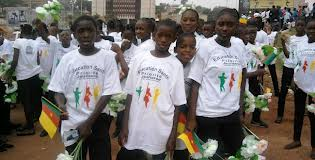
Youths during the parade celebrating Cameroon’s National Youth Day
February 11th marked the celebration of the Cameroonian Youth Day. Growing up, I always wondered what it really meant, apart from the day-off from school, the school parades, and the presidential speech, what does it really mean? What is the purpose of a youth day?
For starters, Cameroon’s National Youth Day is a national holiday, meant to mark the importance of the youth, and youth rights in the country. On that day, several parades occur throughout the country led by different schools. It was a priviledge to be chosen to attend these parades. For a child, it is one of those few events where one can stand proudly, and march for the country (that is, if you were part of the parade). The true essence of a national youth day, and the reason why it was created, is to empower the youth, and give them a greater sense of their country, and what it meant to be part of that great country. It is also a way for the government to let the youths or the young-at-heart know that they are valued as the future of the nation, and an essential segment of the population. Sadly today, the government does not care about inspiring the youth, or protecting the youth; sadly today, few youths are proud of being Cameroonian, many run abroad looking for better tomorrows, when yesterday all dreamt of returning home.
I thought of introducing a song celebrating the youth, ‘ma revolution’by Didier Awadi dedicated to all revolutionaries, all the youths, all the patriots, and all those who want to affect real good change in Africa. Most importantly, this song leans on all the great Africans who have inspired the youths and the people of their countries or kingdoms. Enjoy!
Do you celebrate youth day in your country? And what does it mean to you? How do we influence the youth towards a true awakening of the society?
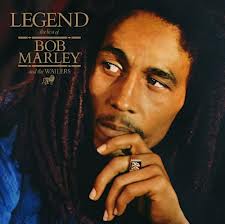
“How long shall they kill our prophets…?”as Bob Marley said, “… while we stand aside and look?”Sir Bob Marley said it all: How long shall we let these conquerors beat us down? bombard us? kill our prophets? What were Lumumba, Sankara, Cabral, Um Nyobé, Ouandié, Khadafi, Ben Barka, or Gbagbo’s sins? To love their country: to want to save their countries from western greed. What were we doing when they were all killed? Why on earth are we, Africans, just looking (and sometimes applauding) while some countries, Côte d’Ivoire, Libya, and now Mali are being bombed? Why and how long are we going to look while our prophets are being killed?
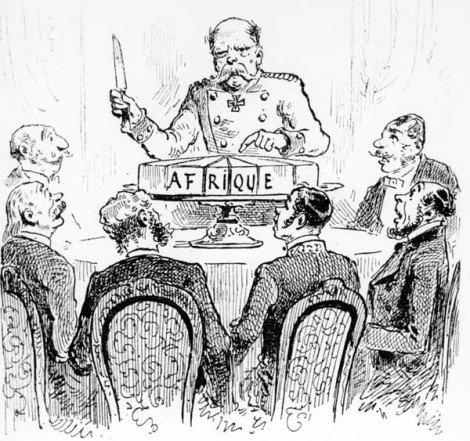
Le partage de l’Afrique a la Conference de Berlin de 1884
I just heard of Charles Blé Goudé being arrested. My heart is broken as I hear some Africans applaud… yes my heart is shattered when I hear people say “oh he deserved it.” Deserved what? Deserve being beaten to death because he stood up for his country while external forces were invading it? Deserve being humiliated because he dared walk out in the streets of Abidjan bare-handed to fight external forces, because he brought the youth together, because he woke Ivorians and Africans to their rights to respect, independence, and fairness? Yes… as Sir Marley said: “Emancipate yourself from mental slavery [slavery of the mind; slavery mentality: ignorant mentality]”… “Have no fear for atomic energy.” Some African head of states said when Côte d’Ivoire and Libya were being bombed ” It is better not to say anything; we will just agree with these westerners otherwise they will bomb us too!” now peaceful Mali is under attack; peaceful and desertic Mali is being bombed. Which other peaceful African country will be next? It is better to rise, save our prophets, and talk… than to drink the milk of cowardice, fear, treachery, and ignorance. Have no fear for atomic energy, just stand against injustice… that is way better than treachery or the cancer of betrayal as Amilcar Cabral called it. Enjoy Sir Marley, and remember that the milk of cowardice never saved our ancestors, and will never save us; our ancestors thought that they were sparing themselves from harm, but 50, 100, 500 years later their children are still fighting the battles they should have fought in the first place. History repeats itself… are we still going to stand aside while our prophets are being killed? are we going to fear atomic energy, and run as cowards? No matter how far we run, or how much we hide, they are coming for us… we might have seeming peace for 20 years, but our children will still have to fight our battles!
I had to share this video… Although it is a satirical video, ‘ Africa for Norway ‘ raises such interesting points, points I have always thought about: what if Africa was the one sending aid to other continents? What if during hurricane Katrina, Africans had sent buckets of food? Truthfully, African resources have been feeding countries around the world, and saving some like France, from financial disasters … isn’t this video just reflecting that? After all, our resources keep many countries stuck in their ‘superiority’ complex: do westerners know that the wars waged in Cote d’Ivoire allow them to have cheap chocolate for Valentine day? that the war in Libya, is keeping automobiles in the US running at $3.40 a gallon when the rest of the world is suffering from oil scarcity? that the coltane from the Democratic Republic of Congo keeps everybody’s cell-phones running, etc… do they know? do people know? what if Africa was coming to the rescue of everybody (as it already is)? Enjoy ‘Africa for Norway.’
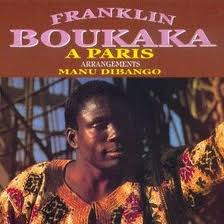
Ici sont les lyriques de la chanson “Les Immortels” de Franklin Boukaka. Lorsqu’on lit ces paroles, on se dit “quelle beauté! Quelle grandeur, quel amour de l’Afrique!”
Africa mobimba e … L’Afrique toute entière
Tokangi maboko e … A croisé les bras
Tozali kotala e … Nous observons impuissants
Bana basili na kokende … La perte de ses enfants
Bana basili na kotekama e … Le trafic de ses enfants
Na banguna a ……………… Auprès des ennemis
Tolati mokuya ata maloba te … Silencieux, nous avons porté un voile noir de deuil
Congo na bana Africa baleli … Le Congo et l’Afrique fondent en larmes (2X)
“Les Immortels” is a song written and composed by Franklin Boukaka, the great Congolese singer, to honor the great Moroccan leader Mehdi Ben Barka, African resistants, and world revolutionaries. Franklin Boukaka was a singer ahead of his time who loved his country, and had a passion for liberty. Franklin Boukaka was a freedom fighter, poet, composer, activist, and fought for African independence both politically, but above all by his great songs which today are still sung across Africa (you all have probably heard of “Aye Africa“). Born into music on 10 October 1940, with musician parents, he was murdered during the coup that deposed Ange Diawara during the night of 23-24 February1972. His greatest album was “Le Bucheron” realized with Manu Dibango, which contains “Les Immortels.” With all that is happening in Africa, with the coup against Laurent Gbagbo in Côte d’Ivoire, the crush of Libya and the guide of the revolution Mouammar Khadafi, and with the destruction of Mali, “Les Immortels” is still of actuality. Enjoy!









 African Heritage