Cameroonian Musical Genius : Ekambi Brillant

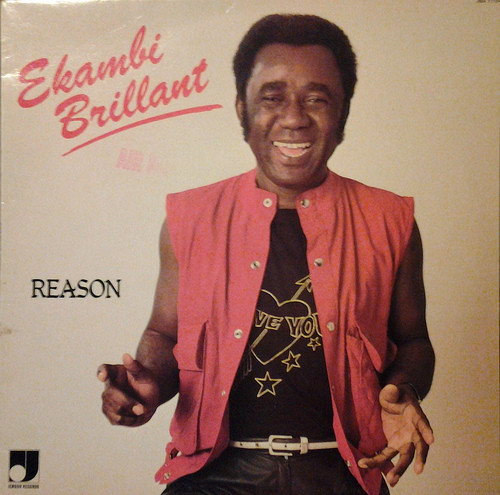
Ekambi Brillant on the cover of his 1987 album Reason (Source: RhythmConnection.Blogspot.com)

Ekambi Brillant was without doubt one of Cameroon’s greatest artists and one of the great African musicians. Originally from Dibombari, a village close to Douala, Brillant spent his youth with his maternal grandparents in Jebale, a suburban island of Douala. Per the words of Cameroonian author Elolongue Epanya Yondo, Jebale is known as the “emerald island, flamboyant jewel” on the Wouri estuary; no wonder, it served as the inspiration to a young Ekambi!  His passion for music was born from ancestral roots and from watching and listening to fishermen singing on their way back home from the sea.

Wouri river and the Djebale island seen on the other side

In 1962, Brillant was admitted to the 6th grade in the prestigious Lycée Général Leclerc (General-Leclerc High School) of Yaoundé. It was there, under the careful attention of Mr. Daniel Zane, his French music teacher, that he learned to play music, particularly the guitar. In 1971, at the age of 23, he stopped his studies and moved to Douala, where he joined the band The Crack’s as a guitarist. He applied for and won the music contest launched by the Office of French Broadcasting Television (ORTF), judged by some of the continent’s great musical personalities such as Manu Dibango and Francis Bebey. Thanks to this prize, he was able to release his first 45 rpm record, Jonguèlè la Ndolo, which sold 20,000 copies.
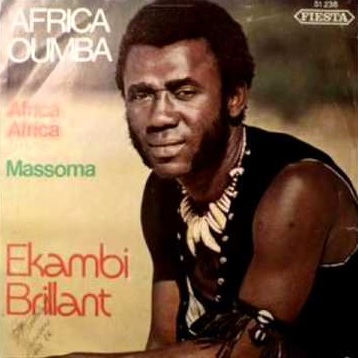
Ekambi Brillant’s album ‘Africa Oumba’

In 1972, he flew to France, where, with the support of Jean Dikoto Mandengue, a Cameroonian bassist, he produced and released his second 45 rpm record with Phonogram. The album was a major success and sold 25,000 copies. As stated before, Ekambi Brillant’s love for his country, his people, and music can be felt in every single note!

In 1975, he ended his deal with Phonogram and began a collaboration with Slim Pezin, with whom he released the album Africa Oumba, which included the major hit song “Elongui.” The song became an incredible source of inspiration for several other artists, both African and European, including the Greek singer Demis Roussos, who sang it as “L.O.V.E. Got a Hold of Me.” Roussos’ version used the exact melody of Ekambi Brillant’s original makossa hit, but he never acknowledged Ekambi Brillant—not even with a tribute. It was only later that African fans (including yours truly) loudly affirmed that this was Brillant’s original work. In the past, African compositions have often been adapted/plagiarized without formal credit, especially when entering European or American markets. Roussos earned millions from Ekambi’s song, without giving him a penny. This is reminiscent of Andre Marie Tala, Cameroon’s Blind Musical Virtuoso, and his song Hot Koki which was plagiarized by  James Brown, or more recently Shakira with “Waka Waka (This Time for Africa)” “adapting” the “Zamina mina (Zangaléwa)” song and claiming in an interview to have gotten inspiration while walking on a beach. The album Africa Oumba reached a record of about 4 million sales (diamond disk). Further collaborations with Slim Pezin as producer yielded titles such as Soul Castel and Musunguédi. In 1976, Ekambi Brillant formed his band known as The Ebis (Ekambi Brillant Show).
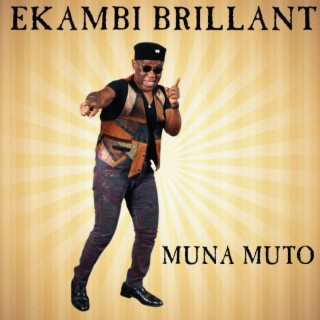
Ekambi Brillant ‘Muna Muto’

Over the course of his career, Brillant released nearly 20 albums. Brillant passed away on 12 December 2022 in Douala at the age of 74, after a battle with a long-term illness. Unfortunately, like many in Cameroon, he was a brilliant soul who barely received the recognition his genius deserved. He was from a generation of outstanding Cameroonian artists.

Ekambi Brillant remained an inspiration to generations of artists, propelling several careers and guiding many musicians—both Cameroonian, such as Marthe Zambo, Valery Lobe, and Alhaji Touré, and African, such as Cella Stella and Angelique Kidjo. He was so advanced, brilliant, and inspired … going through his music portfolio is filled with great sounds and a great source of inspiration. Cameroonians should get inspired from his work and celebrate his genius. 

.

Muna Muto (My Love, my Darling) by Ekambi Brillant

Ekambi Brillant on the cover of his 1987 album Reason (Source: RhythmConnection.Blogspot.com)

Today we will celebrate a song, Muna Muto, and particularly a singer who has touched generations of musicians on the African continent, Ekambi Brillant. Brillant is a Cameroonian singer who has contributed to the emergence of outstanding African singers, such as the Beninese-French singer Angelique Kidjo, first African singer to get a Star on the Hollywood walk of fame , Cella Stella, Marthe Zambo, and countless others. To me, just like his name, he is one of the most brilliant Cameroonian singers ever, with a great voice, bass mastery, and a great teacher.

Muna Muto is a love song which focuses on deep affection, longing, and devotion. It is a love so deep that you wonder what life could have been before meeting that special one.

Just with the first note, you can tell that Ekambi is deeply patriotic, and loving of his country. He tells you that he comes from a place of abundant love “O nin mboa su nya bwam wuma ndolo mo nye no.” He further tells you that it is a place where people greet each other with warmth, a place filled with beautiful music, sounds, and dances, where joy and happiness are omnipresent (Wuma mongele mam mese ma nanga no na pi. Na ma senga so bobe mulema mu monya weya. Nyola mabola mongo na londi na isom). That sounds like a description of Africa!

Coeur
Coeur / Heart

He tells his lover that she is his everything, the love they share grows stronger every day. She is his everything and he cannot bear to be without her. “Muna Muto, Na petane nde ndolo po, o bola oa mo … Bo bunya mo bo poï tenge, a makusane mba mo.”

The most touching part is that he has searched far and wide, and found no one like her: he has found his center, his person, his backbone.  “Na si bi ka bo bunya bo mende te nde o po, Na ma nanga nde ndoti, bulu na bulu te … Bwanga to bo bo titi, ye nde welisane” (I have searched far and wide but found no one like you. You are the only one who understands me, heart and soul. … And our love will last forever, as we journey through life together.) So deep! All this on such a deep, dancing tune, and the chorus makes you want to sing “Muna Muto” for the rest of your life!

As you go on to celebrate Valentine’s day, please sing Muna Muto to your special one, that one you have searched far and wide for, the only one, the one who understands your heart and soul, a love that will be immortal. Enjoy Mot’a Muenya love song!

So Long to Jimmy Cliff, the Author of Many Rivers to Cross

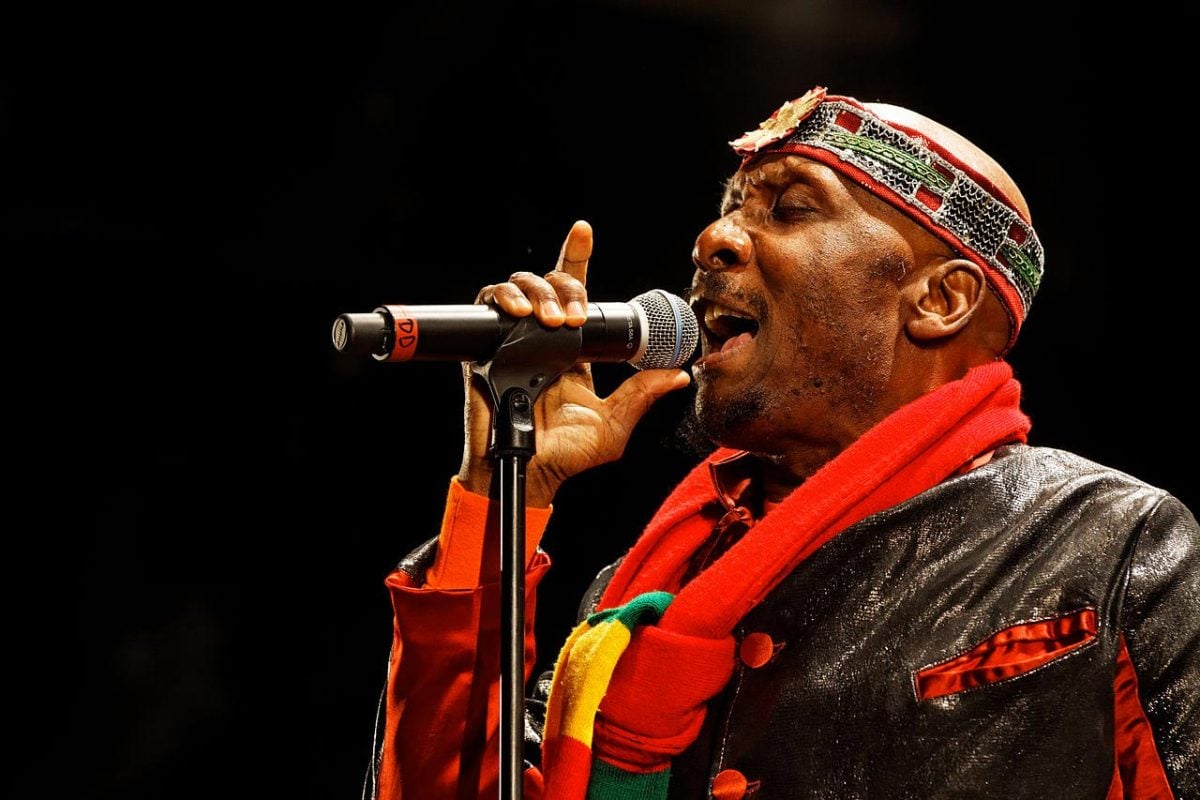
Jimmy Cliff (Source: Dancehallmag.com)

One of Reggae’s greatest known artists, Jimmy Cliff, passed away yesterday. The author of Many Rivers to Cross, I can see Clearly Now, or The Harder They Come, or Vietnam, and many more, has joined the ancestors… they must be all singing today. My favorite of Cliff’s songs has always been “I can See Clearly Now”, for it is a deep message of hope and renewal; it was the cover of the 1993 movie Cool Runnings soundrack.

Jimmy Cliff was born James Chambers in 1944 in St James parish in Jamaica in a family of nine children; he was the eighth child. In terms of music, he was self-taught, started singing at age 6 in the church choir, later started writing his own songs, and wrote his first song, I Need a Fiancée, on a guitar made with bamboo. By the age of 14, he moved to Kingston, the capital, and took the surname Cliff to express the heights he intended on reaching. In 1965, he moved to London, where it took a while for his music to take off, until his 1969 single Wonderful World, Beautiful People, and then the politically charged Vietnam, which Bob Dylan called “the best protest song ever written.” In 1986, he told Reggae archivist Roger Steffens, “The essence of my music is struggle. What gives it the icing is the hope of love.”

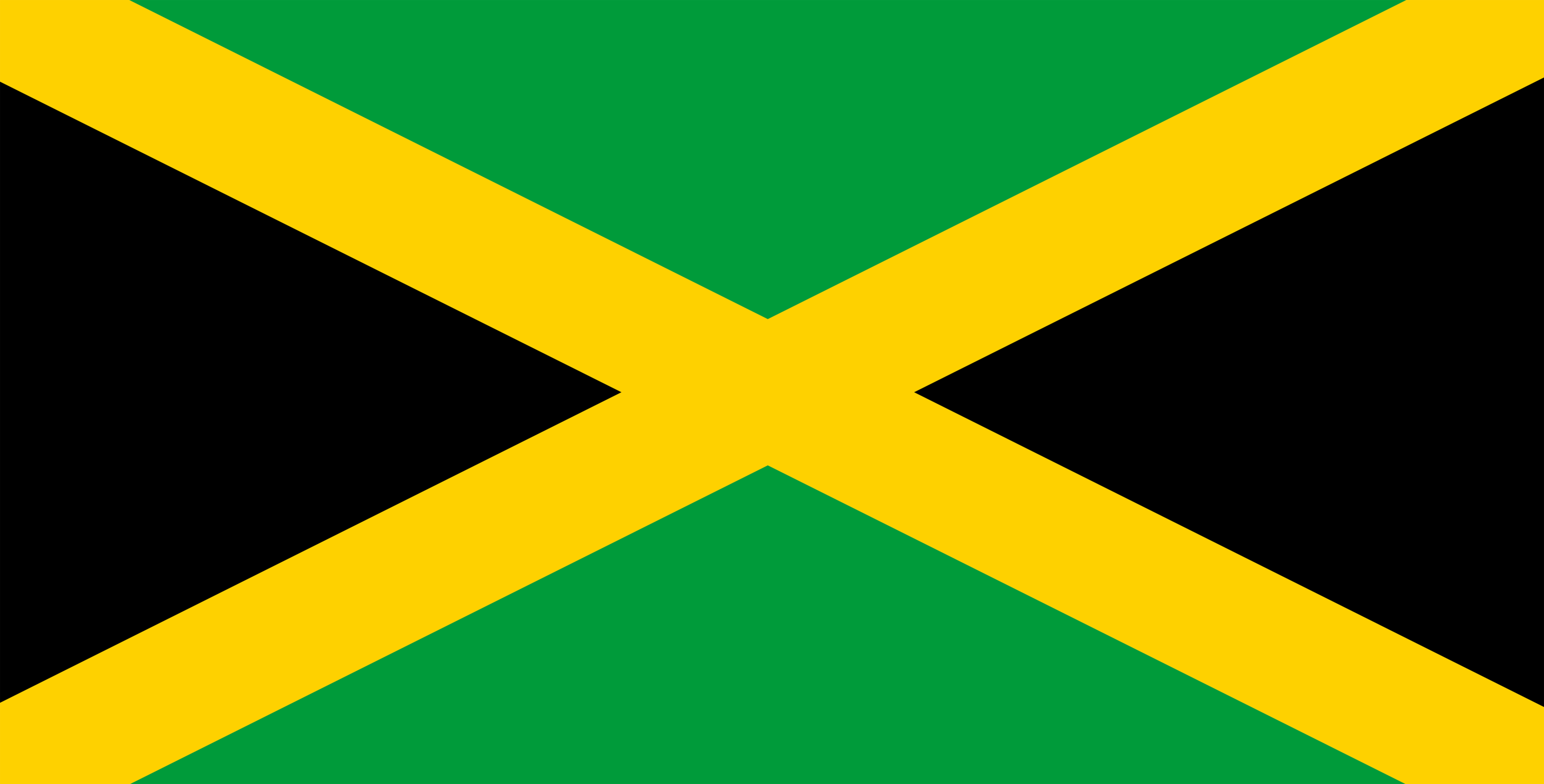
Flag of Jamaica

Over the years, Cliff has collaborated with some of the greatest artists of this earth, from Bob Marley, The Rolling Stones, Bruce Springsteen, Sting, Elton John, UB40, Kool & the GangElvis CostelloWyclef Jean, and countless others. He is the only other Jamaican, after Bob Marley, to have been inducted in the Rock and Roll Hall of Fame.

Throughout his career, Cliff expressed his deep love for Africa which he described as his ancestral home, and his music inspired generations of musicians in Africa and beyond. His themes of liberation, struggle, and hope mirrored African struggles against colonialism and apartheid. He also always valued African culture singing on stage and showcasing African clothing with style.

Below are the lyrics of my favorite, I can see clearly now

I can see clearly now the rain is gone

I can see all obstacles in my way

Gone are the dark clouds that had me blind

It’s gonna be a bright (bright) 

Bright (bright) sunshiny day

It’s gonna be a bright (bright)

Oh, yes, I can make it now the pain is gone

All of the bad feelings have disappeared

Here is the rainbow I’ve been praying for

It’s gonna be a bright (bright)

Bright (bright) sunshiny day

(Ooh) Look all around, there’s nothing but blue skies

Look straight ahead, there’s nothing but blue skies

So Long to Malian Singer, Member of Duo Amadou & Mariam

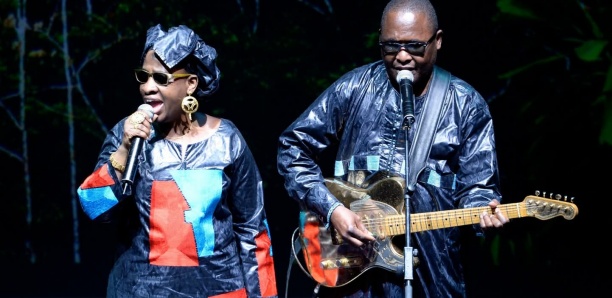
Amadou et Mariam (Source: Seneweb.com)

Je pense à toi, mon amour, ma bien-aimée, Ne m’abandonne pas, Je pense à toi, Mon amour Ma chérie” … [“I am thinking of you, my love, my beloved. Do not abandon me, my love, my dear …“]

Those are the words of the song that propelled the blind Malian duo Amadou & Mariam onto the international scene, beyond West Africa. Those words rocked the lives of millions of African children as a lullaby in some cases. Sadly, Amadou, from the duo, is no longer. 

Map of Mali with its capital Bamako

The duo Amadou & Mariam was made up of singer and guitarist, Amadou Bagayoko, and his wife Mariam Doumbia. The Grammy-nominated duo Amadou & Mariam was a blind duo from Mali. They both met at the Institute for the young blind in Bamako in 1976, in the capital of Mali. Bagayoko became blind at the age of 15, while Mariam was at age 5. Mariam started singing at weddings from a young age, while Amadou played instruments. At the institute, they joined the Eclipse Orchestra and quickly became a couple both on stage and in real life. They got married in 1980. Their music blend their traditional Malian sounds emanating from the kora or balafon, with the rock guitars and Western blues. This iconic couple became a source of inspiration to countless artists from Bamako to Dakar, to Abidjan or Conakry. Their music has been anchored in the rich tradition of griots of West Africa [The Griot, the Preserver of African Traditions].

Amadou & Mariam went on to sell millions of albums across the world. They composed the official song for the 2006 football World Cup in Germany, and played at the closing ceremony concert for the 2024 Paris Olympics. They even played for Barack Obama, at the concert marking the US president’s Nobel Peace prize award, and were nominated for a Grammy award in 2010. So long Amadou, and courage to Mariam and the family. Please check out this really good eulogy from Seneweb.com


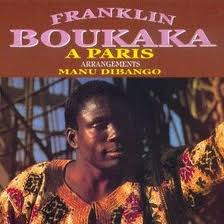
“Le Bucheron”/”The Woodcutter” by Franklin Boukaka

Franklin Boukaka
Franklin Boukaka

As stated earlier in the week, Franklin Boukaka was a visionary ahead of his time, and his songs are very politically engaged. His most acclaimed song is “Le Bûcheron” / “The Woodcutter” which has been timeless and covered by many singers over the years. Most know the song as “Aye Africa”.  “Le Bûcheron” (the woodcutter; the Kenyan version of the single was titled “Le Bûcheron (Africa)”), is a complaint about the state of Africa and its poor, the refrain lamenting “Oh, Africa, where is your independence? … where is your liberty?” Boukaka even goes further, showing that the politicians of today who have replaced yesterday’s colonizers cannot really be differentiated from them. He laments the fact that some he believed in, have turned their back on the people and instead developed greed for power, only showing good sides during election times (isn’t this true of politicians around the globe, who only remember the people come election time with empty promises?), ” Some to whom I gave my voice, have developed the greed of power and cars; When the elections come I become important then in front of them.” Lastly, it is impossible to hear the saxophone notes coming from Manu Dibango.

As you read the lyrics and listen to the song, why do you think Franklin Boukaka titled his song The Woodcutter?

Ayé Africa eh                                      … Ayé Africa eh
Eh Africa oh Lipanda                          … Eh Africa oh where is your independence?
Ayé Africa eh                                      … Ayé Africa eh
Eh Africa oh liberté                             … Ayé Africa eh where is your freedom? 

Ko kata koni pasi                                … Cutting firewood is hard work
Soki na kati, ko teka pasi                    … To sell this wood is another
Na pasi oyo ya boye                           … With this lot of misfortunes and children
Ngaï na bana mawa na koka te          … I’m far from getting out

Basusu oyo na ponaka                       … Some to whom I gave my voice
Bawela bonkonzi mpe na ba voituresHave developed the greed of power and cars
Ba voti tango e komaka                      … When the elections come
Ngaï na komi moto mpo na bango      … I become important then in front of them

Na ko mituna mondele a kende          … I wonder: has the colonizer gone,
Lipanda to zuaka, oh ya nani eh?       … For whom did we obtain independence?
Africa eh                                              … Oh Africa

Ayé Africa eh                                       … Ayé Africa eh
Oh Africa oh Lipanda                          … Eh Africa oh where is your independence?
Ayé Africa eh                                      … Ayé Africa eh      
Oh Africa oh liberté                             … Ayé Africa eh where is your freedom?

“The Immortals” by Franklin Boukaka

Franklin Boukaka
Franklin Boukaka

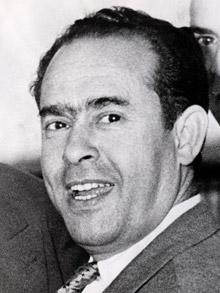
Let’s do a trip down memory lane. Several years ago we published a post on the song Les Immortels” / “The Immortals written and composed by the late Congolese singer Franklin Boukaka. The song honored the great Moroccan leader Mehdi Ben Barka, African resistants, and world revolutionaries. For those who do not know or remember Franklin Boukaka, you have probably heard his song “Aye Africa” which has been repeated by so many singers on the continent (one of my favorite renditions is the one by the group Bisso na Bisso). Franklin Boukaka was a freedom fighter, a poet, composer, activist, and fought for the independence of Africa both politically and in all his songs. He was ahead of his time, and a new patriot. So sad that he was murdered during the coup that deposed Ange Diawara during the night of 23-24 February 1972. He was clearly a threat to many.

Mehdi Ben Barka
Mehdi Ben Barka

As the title says it all, The Immortals honors our great leaders of the past, those who fought for our liberties, and who have become martyrs. They are now immortal. The song was so popular in those days that it was sung in schools. No wonder Boukaka was murdered for this. Please find below, the English version. Enjoy!

« The Immortals » by Franklin Boukaka

Africa mobimba e ……… The whole of Africa
Tokangi maboko e …….. crossed her arms
Tozali kotala e …….. We observed powerless
Bana basili na kokendeThe loss of her children
Bana basili na kotekama eThe traffic of her children
Na banguna a ……………… near ennemies
Tolati mokuya ata maloba teSilent, we have carried the black veil of mourning
Congo na bana Africa baleliCongo and Africa burst into tears
(2X)
Oh O Mehdi Ben BarkaOh ! Mehdi Ben Barka
Mehdi nzela na yo ya bato nyonsoMehdi, your way is that of all humanity
Mehdi nzela na yo ya LumumbaMehdi, your way is that of Lumumba
Mehdi nzela na yo ya Che GuevaraMehdi, your way is that of Che Guevara
Mehdi nzela na yo ya Malcolm XMehdi, your way is that of Malcolm X
Mehdi nzela na yo ya Um NyobéMehdi, your way is that of Um Nyobé
Mehdi nzela na yo ya Felix MoumiéMehdi, your way is that of Felix Moumié
Mehdi nzela na yo ya Nguyen Van ChoiMehdi, your way is that of Nguyen Van Choi
Mehdi nzela na yo ya TsorokiMehdi, your way is that of Tsoroki
Mehdi nzela na yo ya Camilo CienFuegosMehdi, your way is that of Camilo CienFuegos
Mehdi nzela na yo ya Hoji Ya HendaMehdi, your way is that of Hoji Ya Henda
Mehdi nzela na yo ya Camilo TorresMehdi, your way is that of Camilo Torres
Mehdi nzela na yo ya Abdel KaderMehdi, your way is that of Abdel Kader
Mehdi nzela na yo ya CoulibalyMehdi, your way is that of Coulibaly
Mehdi nzela na yo ya André MatsouaMehdi, your way is that of André Matsoua
Mehdi nzela na yo ya Simon KibanguMehdi, your way is that of Simon Kibangu
Mehdi nzela na yo ya Albert LuthuliMehdi, your way is that of Albert Luthuli
Mehdi nzela na yo ya BogandaMehdi, your way is that of Boganda
Oh ya Tiers-mondeOh ! Third world
Oh ya libération ya ba peupleOh ! that of the liberation of the people

Words: An old man, whom I consider always young, said to me one day : « My son, all men
should die one day ; but not all deaths have the same meaning »

Mehdi Ben Barka (XXX)

Syllart Records – A Classic from Pépé Kallé & Empire Bakuba

On Monday, we talked about Syllart Records: The African Equivalent to Motown Records, a label which owns some of the largest African music catalog in the world. Let us pray it remains so, and they can be remunerated at their right One of African’s legends is incontestably Pépé Kallé. Enjoy this rare pearl of Pépé Kallé and Empire Bakuba… this is one is from the Syllart Records Youtube channel.

Syllart Records: The African Equivalent to Motown Records

Syllart Records
Syllart Records

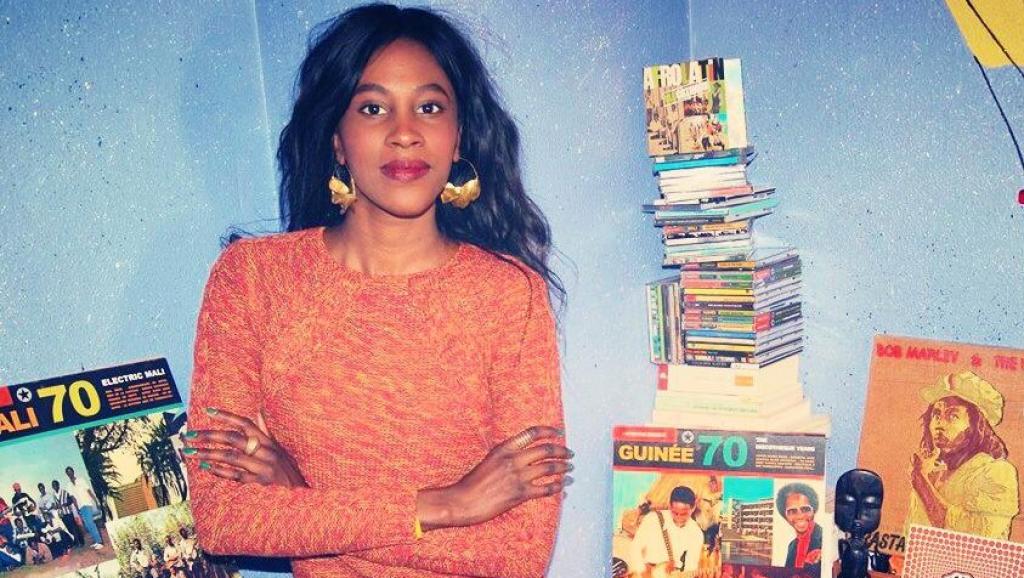
I recently heard about the Syllart Records, a music records label which many considered to be the equivalent of the African continent’s Motown records. The record label leader is Binetou Sylla, the daughter of the founder, the late Senegalese producer Ibrahima Sory Sylla. The label owns the largest African music catalog in the world, spanning the last sixty years of music creation. Its founder, Sylla’s impact on African pop music and its global influence is really wide. Imagine the hard work, the quality, the authenticity, and innovation that went on in his studios! Yet, I had never heard of his name. However, I had heard about some of the artists produced under his label, and danced to their music, such as Ismael Lo, Salif Keïta, Empire Bakuba, Sam Mangwana, Gadji Celi, M’Pongo Love, Tshala Muana, M’bilia Bel, Oumou Sangare, Pépé Kallé, Miriam Makeba, Papa Wemba, or Africando, and so many others.

Syllart Records_Binetou Sylla
Binetou Sylla of Syllart Records (Source: Panafricanspacestation.org.za)

Today, his daughter is working on digitizing all that hard work, and trying to find ways to give rights to the musicians. She says of her father on OkayAfrica, “[My father] preferred to let his work, his music speak for him. He was an ambassador for African music. … [He] excelled at scouting new talent and used Syllart as a launching pad for many who would rise to global stardom.” Enjoy her recent interview to BBC. Check out the Syllart Records YouTube channel.

Congolese Rumba Wins UNESCO Protected Status

Rumba_putumayo-african-rumba
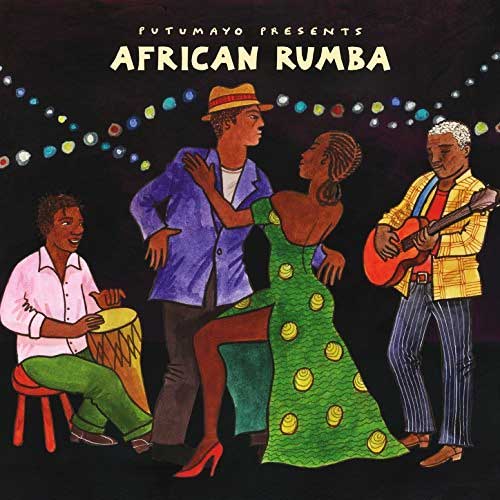
Putumayo cover of African Rumba disc (Source: Putumayo)

Two months ago, the 2 Congos, the Republic of Congo and the Democratic Republic of the Congo (DRC), filed jointly for the Congolese Rumba to be recognized as a UNESCO World Heritage (The 2 Congos Seek to have the Rumba Recognized as a World Treasure). I hope that this is a start for both Congos to transcend their differences to rise together more often, and join efforts. Isn’t it Unity nice? Enjoy this article from the BBC.

====

One of the most influential genres of African music and dance, Congolese rumba, now has Unesco-protected status.

Congo_Brazzaville_Flag
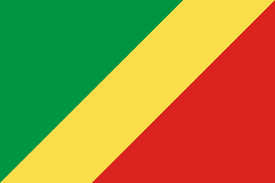
Flag of the Republic of Congo

It is the culmination of campaigning by two countries – the Democratic Republic of the Congo and neighbouring Congo-Brazzaville.

They both occupy what was once the ancient kingdom of Kongo – where the sinuous dance originated according to the two nations’ joint application.

The word “rumba” itself comes from the Kikongo word for navel, “nkumba“.

DRC_flag
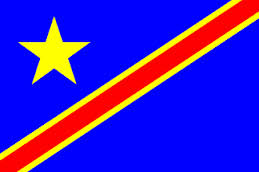
Flag of the Democratic Republic of Congo

Congolese rumba joins other living traditions such as Jamaican reggae music and Singaporean hawker food on Unesco’s “intangible cultural heritage of humanity” list. The UN’s cultural body says bestowing this status helps to “maintain cultural diversity in the face of growing globalisation”.

… Rumba “has been part of our identity, descendants of Africa and all of us, throughout the ages,” said DR Congo’s Culture minister Catherine Kathungu Furaha earlier this year. “We want rumba to be recognised as ours. It is our identity.

When our ancestors who were taken abroad wanted to remember their history, their origin, their memory, they danced the navel dance.”

Papa Wemba1
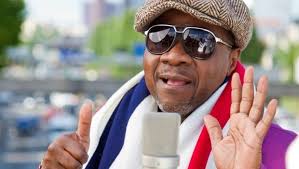
Papa Wemba

Among the earliest heroes of Congolese rumba were Wendo Kolosoy, Paul Nkamba, Franco and TPOK Jazz, Tabu Ley Rochereau and Dr Nico. As African nations fought for independence from their colonial rulers, The Independence Cha Cha by Le Grand Kallé galvanised many and is seen as the first truly pan-African hit song. … Later that decade saw the arrival of Zaïko Langa Langa and its breakout star Papa Wemba. Among his many protégés was Koffi Olomidé, who remains popular today along with younger stars such as Fally Ipupa.

… There is no doubt that rumba’s influence is felt across the world, and its champions say it is only right that this be recognised by Unesco and benefit the next generation of musicians.


The 2 Congos Seek to have the Rumba Recognized as a World Treasure

Putumayo cover of African Rumba disc (Source: Putumayo)

There is no doubt that the Rumba has gone global, or that it has influenced other musical types throughout the world. To those who do not know, Rumba is a music style that originates from Kongo … and here I mean the whole area that is encompassed by both Congos, the Republic of the Congo and the Democratic Republic of the Congo (DRC), and in the olden days it was even bigger including areas of Angola, Central African Republic and Gabon. The rumba was born in Cuba from the enslaved Africans who had been taken there from the Kongo.

Flag of the Republic of Congo

Today, authorities in both Kinshasa and Brazzaville, the capitals of the DRC and the Republic of Congo, have submitted a joint bid to add Congolese Rumba to the UNESCO list of Intangible Cultural Heritage. Don’t you wish both countries could join together more often on other topics as well?

Flag of the Democratic Republic of Congo

The submission will help showcase the diversity of the heritage and raise awareness about its importance. If Congolese rumba were to be added, it would join the Budima dance of Zambia, hawker food of Singapore, sauna culture of Finland, handmade weaving in Upper Egypt, traditional pomegranate festivity and culture of Azerbaidjan, Traditional Thai massage, and traditional irrigation systems in the United Arab Emirates, among countless other customs on the list.

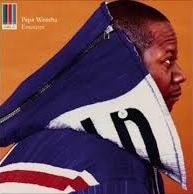
Papa Wemba, the king of Congolese Rumba, on his cover of Emotion

The word Rumba derives from “nkumba,” meaning belly button in the local Kikongo language, a dance originating in the ancient kingdom of Kongo.

The music style was born of the melting pot of 19th century Cuba, from the enslaved Africans, combining their drumming and dancing with their melodies and those of the Spanish colonizers. The African slaves who were taken to the Americas created the rumba as a way to stay connected to their inner beings, their histories, cultures, and probably also as a way to escape the daily grind of slavery, the inhumane practice that ripped them of their dignity of human beings.

It was re-exported to Africa in the early 20th century on vinyl, where it found a ready audience in the two Congos who recognized the rhythms as their own.

Catherine Kathungu Furaha, the DRC’s minister of art and culture, said, “when our ancestors who were taken abroad wanted to remember their history, their origin, their memory, they danced the navel dance.”… “We want rumba to be recognized as ours. It is our identity.”

Cuban rumba has been inscribed in the UNESCO list of Intangible Cultural Heritage since 2016. It only makes sense that its counterpart, the mother-source, the origin, the Congolese Rumba be inscribed in the list as well. We will know in November when the committee will decide.