I have to do a recap of the year 2014. You already know that the number one person we said goodbye to was the dictator and murderer Blaise Compaoré, who was booted out of office the tail between his legs.
1. Blaise Compaoré, booted out of office in 2014. Thomas Sankara‘s murderer taught that he will be eternal in power, and on October 30th 2014, the people of Burkina Faso said ENOUGH!
2. Michael Sata, the President of Zambia, passed on in office on October 28, 2014. He was replaced by Guy Scott, the first white president (albeit interim president) of Zambia since independence.
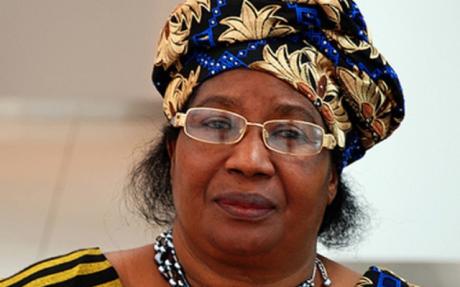
President Joyce Banda
3. Joyce Banda, President of Malawi, who lost the elections this year. She became president of Malawi after Bingu wa Mutharika passed away in 2012. She is succeeded in office by Peter Mutharika. She had been Africa’s second female Head of State.
4. Nadine Gordimer, South Africa’s first Nobel prize of literature, passed away at the age of 90, on 13 July 2014. She was called the one of the great “guerilla of imagination” by poet Seamus Heaney.
Lapiro de Mbanga
5. Lapiro de Mbanga, the voice of the voiceless, the great Cameroonian musician, and activist, left us this year, in March. Lapiro sang for the people, talked about the youth’s shattered dreams, the division, the tribalism, the corruption, the decadence, and the ills of the country. So long Ndinga Man!
6. Abel Eyinga and Charles Ateba Eyene, both of Cameroon, passed away. These were strong outspoken voices of Cameroon, and will forever be remembered.
7. King Kester Emeneya, the king ofla Rumba, passed away on 13 February 2014. I had just recently gotten reacquainted with his music, and danced to Nzinziagain. So long King.
8. Mama Gbagbo, the mother of Laurent Gbagbo, passed away this year. Gbagbo who is currently detained by the CPI at the Hague was refused the opportunity to bury his mother. She was over 90 years old.
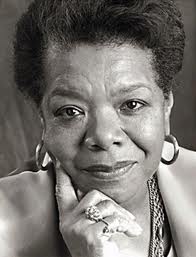
Maya Angelou
9. The world said goodbye to Maya Angelou in May of this year. Dr. Maya Angelou was one of the world’s best poets. My two favorite poems by Dr. Angelou are ‘Phenomenal Woman‘ and ‘Still I Rise.’ Her African roots are very deep as she was a journalist in Egypt and Ghana. Her life was an embodiment of Truth, and passion.
10. More than 160 immigrants were feared dead after a boat carrying about 200 African immigrants sank off the coast of Libya. How many Lampedusa shipwrecks are we going to have until the world realizes that feeding and destabilizing countries does not help global equilibrium?
Elmina Castle (Source: Ghana.nl)Inner courtyard at Elmina Castle (Source: Ghana.nl)
The Elmina Castle is one of the 30 slave forts along the coasts of Ghana. It was built in 1482 by Portuguese traders on the site of a town called Amankwaor Amankwakurom. It was the first European slave-trading post in all of sub-saharan Africa. The Portuguese gave it the name of São Jorge da Mina, or St. George’s of the mine, or simply “Elmina” (the mine). At four storeys high, it was one of the most imposing coastal forts, and for many years the largest one. It was originally build by the Portuguese as a warehouse to protect the gold trade, but later it became the center of the Dutch slave trade, after its capture by the Dutch in 1637. The British attacked the city in 1782, but it remained in Dutch hands until 1872, when the Dutch Gold Coast was sold to the British.
16th Century map of West Africa with Fort Elmina
Slaves were typically captured inland, and then brought to the fort on an arduous journey that often lasted many days. Half of all captives did not even make it to the coast. Once at the fort, the slaves would wait, often for a long period of time ranging from 3-9 months, until a ship arrived. Imagine waiting in crammed conditions, packed in cells like sardines for 3 or more months!
Painting of Elmina Castle in 1668; notice the ships and sea in the front
Elmina, like other West African slave fortresses, housed luxury suites for the Europeans in the upper levels. The slaves were kept in cramped and filthy cells below, each cell often housing as many as 200-600 people at a time, without enough space to even lie down. Staircases led directly from the spacious governor’s chambers on the third level to the women’s cells below, making it easy for him to select personal concubines from amongst the women to “service him” every night.
There was also a discipline cell for “freedom fighters” : those who disobeyed were shut in this cell until they suffocated or starved to death. Ironically, Elmina also held Christian church services for the Europeans, on the second floor of the castle.
Slave holding cell in Elmina (Wikimedia Commons – KD)
On the seaboard side of the castle was the Door of No Return, the infamous portal through which slaves boarded the ships that would take them on the treacherous journey across the Atlantic ocean known as the Middle Passage. At Elmina, the door of no return was a child-size window that slaves squeezed through to board the ship.
British bombing of Elmina – 13 June 1873
By the 18th century, at least 30,000 slaves on their way to the Americas had passed through Elmina each year. That is 30,000 slaves each year for at least 250 years: about 7.5 millions! Appalling!!
Today, Elmina’s economy is sustained by tourism and fishing. Elmina Castle is preserved as a Ghanaian national museum and the monument was designated as a World Heritage Monument under UNESCO in 1979. It is a place of pilgrimage for many African Americans seeking to connect with their long lost heritage. Enjoy the video below which is very educational!
I am going to start a series on reclaiming our history. I will be talking about slave forts across Africa. There were over 30 slave forts in Ghana only. How many in other countries?We will find out through this exercise. These fortified trading posts were built between 1482 and early 1800s by Portuguese, British, Swedish, English, Danish, Dutch, and French traders that plied the African coast. Initially, they had come in search of gold (in Ghana), ivory (in Ivory Coast), pepper (along the Pepper Coast) and then later, they discovered cheap labor: thus was born the slave trade. There was intense rivalry between those European powers for the control of the West African coast from Senegal, to as far south as Angola.
Slaves marching after capture
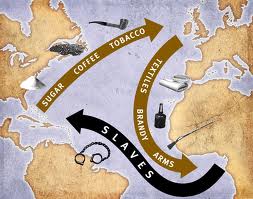
It is estimated that over 20 million Africans were sold into slavery during the Atlantic slave trade; this does not account for those who died during the trip aboard the ship (about 1/3), and those who were killed during the capture. Slaves were taken to North America, the Caribbeans, and Brazil. Moreover, this is an estimate for the transatlantic slave trade only, but did you know that slaves were also taken by Arabic sailors from the East Coast of Africa, to places like Saudi Arabia and as far as India?
The Transatlantic slave trade
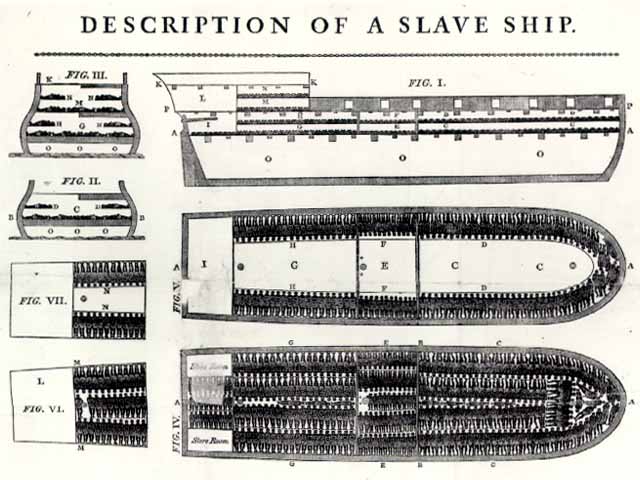
The Portuguese began dealing in black slaves from Africa in the 15th century. Initially, they purchased slaves from Islamic traders, who had established inland trading routes to the sub-Sahara region. Later, as the Portuguese explored the coast of Africa, they came upon the Senegal River, and found that they could purchase slaves directly from Africans. The European slave trading activity moved south along the African coast over time, as far south as Angola. On the east coast of Africa and in the Indian Ocean region, slaves were also taken from Mozambique, Zanzibar and Madagascar. Many of the slaves were from the interior of Africa, having been taken captive as a result of tribal wars, or else having been kidnapped by black slave traders engaged in the business of trading slaves for European goods. These slaves would be marched to the coast to be sold, sometimes traveling hundreds of miles. Many perished along the way. The captured Africans were held in forts or slave castles along the coast. They remained there for months crammed in horrible conditions inside dungeons for months before being shipped on board European merchant ships chained at the wrists and legs with irons, to North America, Brazil, and the West Indies.
Slaves on board a ship
Some African rulers were instrumental in the slave trade, as they exchanged prisoners of war (rarely their own people) for firearms which in turn allowed them to expand their territories. The slave trade had a profound effect on the economy and politics of Africa, leading in many cases to an increase in tension and violence, as many kingdoms were expanding.
Inspection of slave for sale
The slave trade was responsible for major disruption to the people of Africa. Women and men were taken young, in their most productive years, thus damaging African economies. The physical experience of slavery was painful, traumatic and long-lasting. We know this from the written evidence of several freed slaves. Captivity marked the beginning of a dehumanizing process that affected European attitudes towards African people. Can you imagine losing 1/3 or more of your active population? It is hard to fathom what crippling effect that will have on any country’s progress. That is why, in upcoming months, I will be talking and trying to identify slave forts in Africa, in an attempt to reclaim our history. I know this is a touchy subject, but it is history: the bad, the ugly, the beautiful, the joyous. It is important to know history in order to be able to claim the future fully, without any baggage.
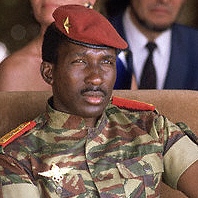
15 jours et 27 ans, après avoir fait assassiner Thomas Sankara, Blaise Compaoré est à son tour forcé ou plutot jeté dehors. En effet, c’était le 15 Octobre 1987 que Thomas Sankara était assassiné par des hommes de Compaoré. Donc le fameux Compaoré est tombé le 30 Octobre 2014. Comme on le dit si bien, quiconque se sert de l’épée perira par l’épée. Maintenant, notre voeu le plus cher est que cette révolution populaire ne soit pas confisquée par l’armée qui est constituée d’hommes de Compaoré, et des bras de la France. Bye Bye Compaoré.
==========
Flag of Burkina Faso
15 days and 27 years, after having murdered Thomas Sankara, Blaise Compaoré is in his turn forced to resign or rather booted out of office. On 15 Octobre 1987 that Thomas Sankara was murdered by men of Compaoré. Now, Compaoré himself fell on 30 October 2014. As it so well said, anyone who uses the sword, will die by the sword. Now, our hope is that the people’s revolution will not be hijacked by the army who are Compaoré’s men and France’s men. Bye Bye Compaoré.
Here is the complete text of a hand-written speech that the revolutionary Burkina Faso President and African statesman Thomas Sankara was set to deliver on the evening of the day he was assassinated, October 15, 1987. Enjoy this rare jewel! The original in French is on ThomasSankara.net, while the translated English version appeared on Pambazuka.
=========
Dear Comrades,
The Revolution’s prestige, and the confidence with which the masses have devoted themselves, has suffered a serious shock. The consequences are a remarkable decline in enthusiasm for the revolution amongst activists, a serious decrease in the commitment, determination, and mobilization of our grassroots base; finally, distrust and suspicion everywhere and factionalism amongst our leadership.
What are the causes of this?
Burkina Faso
There are, on one hand, significant questions which could divide us pertaining to the operating structures and the internal functioning of the CNR based on ideological positions. On the other hand, there are questions regarding the relationships between the principal actors, as each of us is a leader. However, as important as ideological and organisational questions are, they are shown to be less important in our current situation. Indeed, at the soul of any organisation, there is a clash of opposites followed by union of these same opposites. The unity of these opposites is always academic, it is never absolute; it is both relative and temporary. “The unity of opposites is consequently an absolute, exactly as development and motion are absolutes”. This is why balance itself is temporary. It can be questioned at any time. It is our responsibility to preserve it as long as possible, to restore it each time it has been threatened or broken. In the case of organizational and ideological questions, we have benefited each time that someone considered it necessary to raise an opinion different from mine, to defend a position different than mine; you did this with freedom and confidence. These I have adopted and implemented, along with advice, suggestions, and recommendations. Moreover, resolution of disputes between men is always simple when trust exists. This means that as long as the revolution is governed by principles, open debate, criticism and self-criticism, it will succeed in resolving any misunderstandings, provided that trust is maintained. Continue reading “Thomas Sankara: the Speech he would have given on 15 Oct 1987”→
I would like to share with you some quotes by Steve Biko himself. When I read Biko’s words, I realize that he was a true African leader who wanted good for all; he was really ahead of his time. I have also added, at the end, a documentary ‘The Return of Biko‘ by Jeff Ogola. Enjoy!
==========
“The greatest weapon in the hand of the oppressor is the mind of the oppressed.”Speech in Cape Town, 1971
“It is better to die for an idea that will live, than to live for an idea that will die.”
“At the time of his death, Biko had a wife and three children for which he left a letter that stated in one part: “I’ve devoted my life to see equality for blacks, and at the same time, I’ve denied the needs of my family. Please understand that I take these actions, not out of selfishness or arrogance, but to preserve a South Africa worth living in for blacks and whites.”
“The basic tenet of black consciousness is thatthe black man must reject all value systems that seek to make him a foreigner in the country of his birth and reduce his basic human dignity.”From Steve Biko’s evidence given at the SASO/BPC trial, 3 May 1976
“In time, we shall be in a position to bestow on South Africathe greatest possible gift – a more human face.“
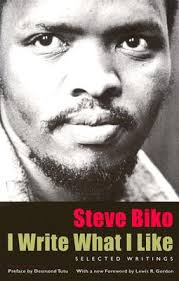
‘I Write What I Like’ by Steve Biko
“Merely by describing yourself as black you have started on a road towards emancipation, you have committed yourself to fight against all forces that seek to use your blackness as a stamp that marks you out as a subservient being.”The Definition of Black Consciousness, I Write What I Like, 1978.
“Black man, you are on your own.”Slogan coined by Steve Biko for the South African Student’s Organization, SASO.
“We do not want to be reminded that it is we, the indigenous people, who are poor and exploited in the land of our birth. These are concepts which the Black Consciousness approach wishes to eradicate from the black man’s mind before our society is driven to chaos by irresponsible people from Coca-cola and hamburger cultural backgrounds.”The Quest for a True Humanity, I Write What I Like, 1978.
“It becomes more necessary to see the truth as it is if you realize thatthe only vehicle for change are these people who have lost their personality. The first step therefore is to make the black man come to himself; to pump back life into his empty shell; to infuse him with pride and dignity, to remind him of his complicity in the crime of allowing himself to be misused and therefore letting evil reign supreme in the country of his birth.“We Blacks, I Write What I Like, 1978.
Black Consciouness Movement flag
“You are either alive and proud or you are dead, and when you are dead, you can’t care anyway.”On Death, I Write What I Like, 1978
“Black Consciousness is an attitude of the mind and a way of life, the most positive call to emanate from the black world for a long time. Its essence is the realization by the black man of the need to rally together with his brothers around the cause of their oppression – the blackness of their skin – and to operate as a group to rid themselves of the shackles that bind them to perpetual servitude.“The Quest for a True Humanity, I Write What I Like, 1978.
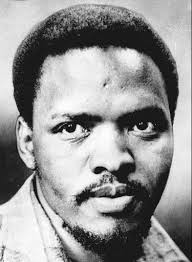
Stephen (Steve) Bantu Biko was born on 18 December 1946 in Ginsberg township, in present-day Eastern Cape, in South Africa. Biko was the third of 4 children, and belonged to the Xhosa ethnic group. He was orphaned at the tender age of 4, after his father passing. As a child, he attended Brownlee Primary School and Charles Morgan Higher Primary School. He was sent to Lovedale High School in 1964, a prestigious boarding school in Alice, Eastern Cape, where his older brother Khaya had previously been studying. During the apartheid era, with no freedom of association protection for non-white South Africans, Biko would often get expelled from school for his political views. He was influenced by Frantz Fanon‘s and Aime Cesaire‘s works, and like Fanon, he first started as a medical doctor, before turning to politics.
Black Consciouness Movement flag
Steve Biko was not alone in forging the Black Consciousness Movement. He was nevertheless its most prominent leader, who with others, guided the movement of student discontent into a political force unprecedented in the history of South Africa. Can you imagine that: all alone they created a force that scared the apartheid regime, and started it on its end. Biko and his peers were responding to developments that emerged at the height of the hideous apartheid regime. This culminated with the Soweto uprising of 1976.
The Black Consciousness movement argued that blacks had to overcome the feelings of inferiority instilled into them by 300 years of domination, the “oppression within“, before they could deal with whites as equals. “It [BC] seeks to infuse the black community with a new-found pride in themselves, their efforts, their value systems, their culture, their religion and their outlook to life,” Biko explained in 1971.
Steve Biko was a very charismatic, tall, handsome, and articulate man. Once asked by a judge “Why do you call yourself black, when your skin is brown?” Biko replied “Why do you call yourself white, when you are actually pink?” – he bore himself with rare confidence that showed no hint of any “oppression within.” Remember his famous phrase “Black is Beautiful“, which was an inspiration to the civil rights movement in the USA, and to many other movements across the globe.
‘I Write What I Like’ by Steve Biko
In order for Black People to achieve their freedom being political and economical, Steve Biko believed that they should rally together; hence he said: “The realization by the Black man of the need to rally together with his brothers around the cause of their oppression – the blackness of their skin – and to operate as a group in order to rid themselves of the shackles that bind them to perpetual servitude.”
Biko understood that the system we are facing is not just a matter of laws and policies that suppresses us, he knew that the system seeks to undermine our thinking, ideas, values and beliefs, thus he said: “The most potent weapon in the hands of the oppressor is the mind of the oppressed.”
On 18 August 1977, Steve Biko was arrested at a police roadblock under the Terrorism Act No 83 of 1967 and interrogated by officers of the Port Elizabeth security police including Harold Snyman and Gideon Nieuwoudt. This interrogation took place in the Police Room 619 of the Sanlam Building in Port Elizabeth. The interrogation lasted twenty-two hours and included torture and beatings resulting in a coma. He suffered a major head injury while in police custody at the Walmer Police Station, in a suburb of Port Elizabeth, and was chained to a window grille for a day. On 11 September 1977, police loaded him in the back of a Land Rover, naked and restrained in manacles, and began the 1100 km drive to Pretoria to take him to a prison with hospital facilities. He died shortly after arrival at the Pretoria prison, on 12 September. The police claimed (and the apartheid government) his death was the result of an extended hunger strike, but an autopsy revealed multiple bruises and abrasions and that he ultimately succumbed to a brain hemorrhage from the massive injuries to the head, which many saw as strong evidence that he had been brutally clubbed by his captors.
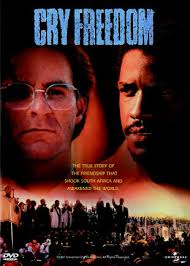
‘Cry Freedom’ the movie on Steve Biko
Biko believed in the unity of the oppressed, he also knew we should constantly educate each other on what is happening in our society. Today, Biko’s views could be applied to almost every society where there are oppressed people, oppressed by unfair laws, unfair economics that favors extreme greed, forced into poverty, and dehumanization.
I watched the movie Cry Freedom which talked about Biko’s life, and also about his journalist friend Donald Woods who published the pictures of Biko’s beaten body after his death, thus showing to the entire world that he had been brutally murdered by the South African police. I do recommend it, the main actor is none other than Denzel Washington. To learn more about Biko, you could read his own book I Write What I Like, or the autobiographic book Biko by Donald Woods. In 1980 the singer Peter Gabriel had a world hit titled Biko, in which he sang: “You can blow out a candle/ But you can’t blow out a fire/ Once the flames begin to catch/ The wind will blow it higher.” Let us all, keep the fire of Steve Biko. Enjoy this rare video of Steve Biko talking!
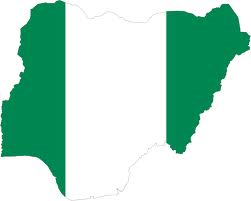
The 2014 FIFA World Cup has brought a lot of surprises thus far: the sharp exit of the defending champions Spain, the exit of Italy and England, the advances of countries like Costa Rica, Belgium, Colombia, or Switzerland into the last round of 16. Above all, what has brought joy to me, a fellow African, is the advance of two African countries for the first time in the history of the FIFA World Cup into the last round of 16: namely, Nigeriaand Algeria(never mind that their names both finish with ‘geria‘). I am glad to see that my predictions of seeing Algeria move forward into the round of 16 came true, and agreed with Maradona’s. I am also thrilled to see Nigeria (whom I had thought were in a good group and had big chances of advancing) progress.
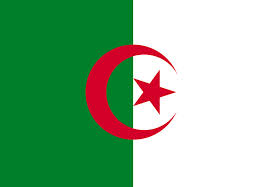
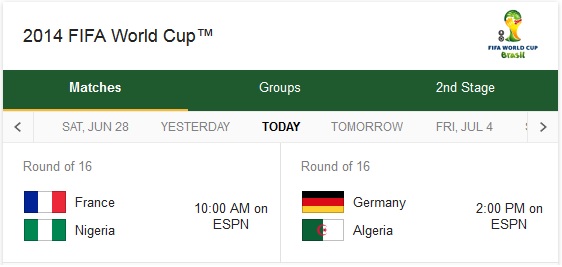
Flag of AlgeriaSchedule for 30 June 2014, FIFA World Cup Round of 16
Today, both countries will face France and Germany respectively (France – Nigeriaand Germany – Algeria). We wish them the very best as they carry the hopes of the entire continent up, and we hope to be elated by the strength of the Super Eagles of Nigeria, and the dexterity and perseverance of the Fennecs of Algeria. May the best teams win!
Tomorrow, the world will vibrate to the rhythm of samba, carnivals, and Copacabana… Yes tomorrow, the 2014 FIFA World Cup will start in Brazil, and 32 of the best soccer nations will compete at this great planetary event. This will one month of soccer, pure joy, fun, and above all talent; Talent expressed by players from around the globe. Legends will be made, new faces discovered, and dreams will take off.
Five African teams will grace the tournament: Algeria, Cameroon, Cote d’Ivoire, Ghana, and Nigeria.
We do hope that at least one African team will advance into the round of 16, and beyond. Here are some of the African stars to watch out for.
2014 FIFA World Cup groups
The Desert Foxes of Algeria are a good team to contend with, in another relatively easy group with Russia, South Korea, and Belgium. This should hopefully be an easy one. Maradona predicts Algeria “will cause a surprise”, while Rivaldo says “the possibilities of reaching the second round are abundant”.
Samuel Eto’o Fils, captain of Cameroon’s Indomitaple Lions, is incontestably one of the best forwards on the planet, and one of the greatest strikers of his generation. This might be his last world cup, and Cameroon’s first in 8 years. The Pichichi, and winner of several honors including African Ballon d’Or, will have to be ready to affront Brazil, the host country, Mexico, and Croatia in group A.
Didier Drogba, captain of Cote d’Ivoire’s Elephants, like Eto’o is also one of the best on the planet. After playing for Chelsea and winning countless trophies, he is now in Turkey with Galatasaray FC. This will probably be his last world cup. We wish him, and the Ivorian team the very best. They qualified with gusto to this competition. They have a relatively easy group with Colombia, Japan, and Greece. I will put my money on them moving to the next round in the tournament.
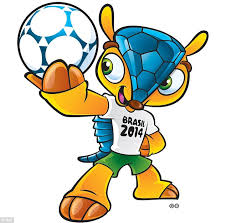
Armadillo, the 2014 FIFA World Cup mascot
Relying on their strength at the back, with captain and goalkeeper Vincent Enyeama, Nigeria will have to face Argentina, Bosnia & Herzegovina, and Iran. The Super Eagles have undergone a radical transformation under Stephen Keshi, which has made them win last year African Cup of Nations‘ tournament. With good discipline, they should be able to advance in the competition as well.
The Black Stars of Ghana were fancied to repeat, or even improve on, their run to the quarter-finals in 2010 in South Africa. That was until the draw was made and they were pitted with the world’s second and third-ranked sides. Asamoah Gyan and his teammates will play against Germany, Portugal, and the United States. This is the “group of death”. Ghana is a very good team; if they manage to make it to the round of 16, then they will quite far at the World Cup. We wish them the very best in the competition.
Brazil 2014 World Cup
Throughout the years, I have placed high hopes on African teams and have always been disappointed. I might once again be disappointed. However, this is planetary tournament, and the fun of it makes one root for any good team. For the world cup winner, I believe Brazil, the host country has home court advantage, as well as a pool of great talents. Let us hope that will be enough to make them winners. I also think Argentina of Lionel Messi will be a really great contender, as well as Spain, the last world cup winners. Overall, let the world cup start, with all the fun, and may the best team win!!!
I have to say a few things about the latest presidential elections in Malawi. Mrs. Joyce Banda lost the presidential elections in Malawi, coming out a distant third in the elections. She had become interim president of Malawi after her predecessor Bingu wa Mutharika died in office in 2012. Peter Mutharika, a former foreign minister and brother of the predecessor, won with 36.4% of the vote, Lazarus Chakwera came 2nd with 27.8%, while Mrs Banda came third with 20.2%. Peter Mutharika was sworn into office on Saturday. Mrs. Banda had denounced serious irregularities, and wanted the whole election to be annulled; the high court rejected her request to block the release of results. Mrs. Banda then issued a statement congratulating Mr. Mutharika on his “victory in a closely contested election” and said she was “leaving office a happy person.” We are all happy that Mrs. Banda is conceading victory, even though we are not quite sure how 36.4% vs. 20.2% can be called a “closely contested election.” She leaving office “peacefully” is to be saluted.
President Banda of Malawi kneeling to President Kikwete of Tanzania?
However, Mrs Banda lost my respect the day I saw a picture of her kneeling in front of President Jakaya Kikwete of Tanzania: she claimed that she was a custodian of Malawian culture which made Malawian women kneel down when greeting men as sign of respect. That was the day, she went down in history for me: how can the president of a country kneel in front of other presidents?Are they not equal?Is she saying her country is kneeling to all the others?Did she forget that Malawi’s population also comprises men, who, following her logic, should not be made to kneel to greet other men?Mrs Banda was named 71st most powerful woman on earth by Forbes magazine in 2012, and 47th in 2013! Even Mr. Kikwete could not boast such a ranking. Just because Malawi is small does not mean that its head-of-state should bow to neighboring countries’ presidents. Did she see Angela Merkel of Germany or Cristina Fernandez of Argentina kneel down to anybody? If not, men should be kneeling down at Angela’s feet as she is the strongest leader in the euro-zone.
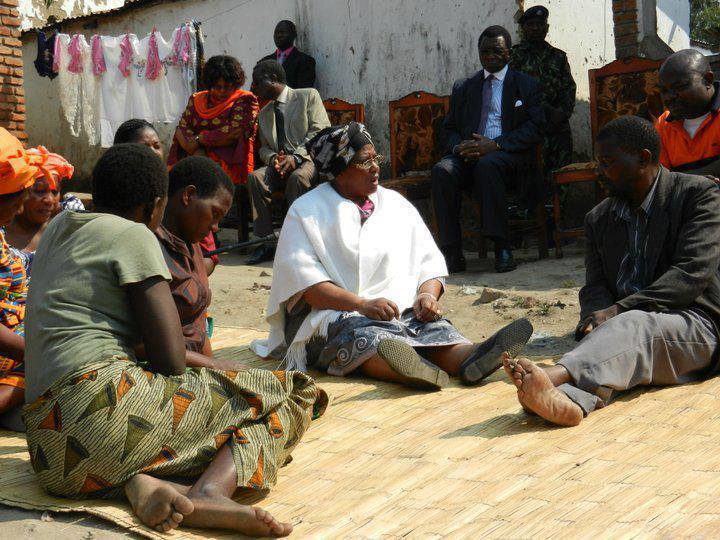
Mrs Banda on the floor
I decided to give her the benefit of the doubt, and listen to those who said the picture had been ‘photoshopped’. That was until I saw other images of Mrs. Banda carrying buckets of water on her head, trying to “help” village women with their tasks of fetching water. Why not provide free water so that these women will never have to carry buckets of water on their heads again?Another image was of Mrs Banda seating on a floor mat in the dust at a village gathering, while her security guards (all men) were seating in chairs around her in three-piece suits. What in the world was that? Was that the position of the African woman? Was that “humility”? Somehow, I never heard of Queen Nzingha, or Ranavalona I, or Queen Amina, or Amanishakheto kneeling down to anybody. In fact, Queen Nzingha had one of her servant form a human bench so that she could sit in a position of equality with the Portuguese governor of Luanda (who had refused her a chair). So who was Mrs. Banda mimicking then?
President Banda carrying a bucket of water
As head-of-state, one should represent the nation, not seat in the dust and claim “humility”, or “closeness” to the people. The job requirement for president is not gender-specific: the job is not for a woman or a man, but for a leader. Once a leader, nobody cares how “humble” you are, but people care about you providing good healthcare, electricity, water, the minimum to lead a decent life, and negotiating at the table of nations in their best interest. Whoever is head-of-state, male or female, represents the sovereignty of the people of the country. I heard people saying “she is a quality African woman, well-trained by her culture.” Goodness gracious: she can stay a quality African woman in her house, but not as head-of-state, as she represents ALL the people of Malawi, not just women.
In all fairness, higher pressures are put on women when they become presidents. They are singled out, and their mistakes overblown… but as presidents, they should represent their ENTIRE constituency, and serve ALL fairly… not fetch water on their heads, or kneel down to greet men, or sit in the dust. This was (and still is) her time to teach, educate, and elevate women in the Malawian society. The time is for thinkers, and leaders, not paraders!


















 African Heritage