‘We Should All Be Feminists’ by Chimamanda Ngozi Adichie

Chimamanda Ngozi Adichie (Source: The Guardian)

What is the definition of feminism? Is it the same when applied to African women? Is there such a thing as African, or Asian, or European feminism? Why should feminism be dismissed as something only good for women, and not men as well? The condition of the woman is closely linked to that of the man, and as a woman is empowered, as she is given her rightful place in society, then are we ALL empowered as a human species. I live you here with a TED speech by Chimamanda Ngozi Adichie, the Nigerian author of the Top New York Times Bestseller book of the year 2014. Yes, she talks about feminism, but in reality, she talks about the reason why ALL of us should be feminists: including MEN. Imagine for instance a working couple, where the woman in the couple is paid lower than men doing the same job, imagine the impact of that salary on the entire family budget if she was paid the same as a man, the opportunities for her children, healthcare, vacation, well-being, etc. Enjoy! Adichie’s speech ‘We Should All Be Feminists‘ has now been made into a book, which is going to be thought in schools in Norway and Sweden (The Guardian article). And yes feminism is not about angry females or beating men out of the world, it is about girls being given the same chances as boys, women being recognized for their impact on society, being allowed to rise, being intelligent and bright.

Happy 2016!

Fellow readers, I wish you all an AMAZING new year, may the year 2016 be the year of all great achievements, joys, successes, and awesomeness. I would like to express my sincere gratitude to all those who visited my blog, reblogged articles, and to all future visitors. 2015 was a beautiful year: the number of subscribers on Afrolegends.com has tripled, with over 200,000 new visitors viewing the blog, and many articles getting reblogged on multiple sites. For 2016, I wish you wonders without borders, peace, grace, and love. May there be peace and happiness in the world.

The 5 top posts of 2015 can be seen below. For the first time in 3 years, the article on Samori Toure was surpassed as the top post for the blog Afrolegends.com; the article on Adinkra symbols was also particularly loved. Keep trusting, reading, sharing, and liking. Keep your heads up, and may your year be as beautiful as the petals of this flower!

Happy 2016
Happy 2016

1.  ‘Love Poem for My Country’ by Sandile Dikeni

2. Samori Toure: African leader and Resistant to French Imperialism

3. Adinkra Symbols and the Rich Akan Culture

4.  ‘My Name’ by Magoleng wa Selepe

5. ‘Femme Noire/Black Woman’ by Leopold Sedar Senghor

The Faso Dan Fani: Woven Cloth of the Homeland

Flag of Burkina Faso

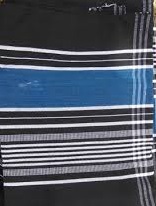
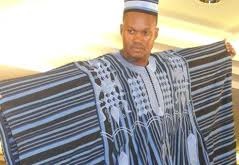
Today we will be talking about the Faso Dan Fani, known as Burkina Faso‘s national cloth. For starters, the Faso Dan Fani means “woven cloth of the homeland” (pagne tissé de la patrie). All the words are Dioula: Fani = cloth/wrapper (pagne), Dan = woven (tissé), Fasohomeland (patrie). It is known locally as FDF. As you have probably guessed, the Faso Dan Fani is a handwoven cotton cloth. The weaving style and patterns differ depending on the ethnic group. As you all know, weaving cotton is an ancient African tradition (African textiles): in the old days, the spinning was done by women, while the men were left with weaving the cotton threads into cloth. With time, women took over the weaving business as well.

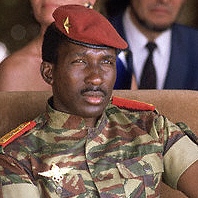
Thomas Sankara
Thomas Sankara a Ouagadougou

In 1986, the President of the Faso, Thomas Sankara, declared that it was important to “produce and consume Burkinabé“. Thus, he declared “In all the villages of Burkina Faso, we know how to grow cotton. In all villages, women know how to spin cotton, men know how to weave it into cloth, and other men know how to sew those threads into clothes... [Dans tous les villages du Burkina Faso, l’on sait cultiver le coton. Dans tous les villages, des femmes savent filer le coton, des hommes savent tisser ce fil en pagnes et d’autres hommes savent coudre les pagnes en vêtements …]” and further “We should not be slave of what others produce [Nous ne devons pas être esclave de ce que les autres produisent].” For the president, “wearing the Faso Dan Fani is an economic act, cultural, and political to challenge imperialism [porter le Faso Dan Fani est un acte économique, culturel, et politique de défi à l’impérialisme].”

Faso Dan Fani
Faso Dan Fani

Thus under Thomas Sankara’s revolution, the traditional attire was imposed in work places. … Many were not pleased with it, to the extent that some had nicknamed the FDF, “Sankara is coming [Sankara arrive] since the PF was known to do impromptu visit of his ministries. Under him, the FDF had become the signature of Burkinabé outside the country. Sankara even made a speech at the United Nations where all the members of his delegation and himself were dressed with the Faso Dan Fani entirely made by local Burkinabé artists to be consumed by Burkinabe.

Model wearing Faso Dan Fani (Ecodufaso.com)

Today, the Faso Dan Fani is seen as a symbol of national pride, and people are starting to wear it again. Check out ThomasSankara.net to learn more about it, and this article “Faso Dan Fani: what if Thomas Sankara was right?” and this article on AfriqueFemme.com. Enjoy!

Thomas Sankara’s Speech at the United Nations / Discours de Thomas Sankara aux Nations Unies

Thomas Sankara
Thomas Sankara a Ouagadougou

On October 4th, 1984, Thomas Sankara addressed the General Assembly of the United Nations. It was a historical speech, as only he, the great orator, could speak. It was moving, it was strong, and it was good. Below is an extract of his speech. For the whole speech, go to thomassankara.net. Enjoy!!!

============

“I speak on behalf of the millions of human beings … thrown out of work by a system that is structurally unjust and periodically unhinged, who are reduced to only glimpsing in life a reflection of the lives of the affluent. I speak on behalf of women the world over, who suffer from a male-imposed system of exploitation. … Women who struggle and who proclaim with us that the slave who is not able to take charge of his own revolt deserves no pity for his lot. This harbors illusions in the dubious generosity of a master pretending to set him free. Freedom can be won only through struggle, and we call on all our sisters of all races to go on the offensive to conquer their rights.

Sankara_Women's liberationI speak on behalf of the mothers of our destitute countries who watch their children die of malaria or diarrhea, unaware that simple means to save them exist. The science of the multinationals does not offer them these means, preferring to invest in cosmetics laboratories and plastic surgery to satisfy the whims of a few women or men whose smart appearance is threatened by too many calories in their overly rich meals, the regularity of which would make you—or rather us from the Sahel—dizzy. We have decided to adopt and popularize these simple means, recommended by the WHO and UNICEF.

I speak, too, on behalf of the child. The child of a poor man who is hungry and who furtively eyes the accumulation of abundance in a store for the rich. The store protected by a thick plate glass window. The window protected by impregnable shutters. The shutters guarded by a policeman with a helmet, gloves, and armed with a billy club. The policeman posted there by the father of another child, who will come and serve himself—or rather be served—because he offers guarantees of representing the capitalistic norms of the system, which he corresponds to.

"We are heirs of the revolution" by Thomas Sankara
“We are heirs of the revolution” by Thomas Sankara

I speak on behalf of artists—poets, painters, sculptors, musicians, and actors—good men who see their art prostituted by the alchemy of show-business tricks.

I cry out on behalf of journalists who are either reduced to silence or to lies in order to not suffer the harsh low of unemployment.

I protest on behalf of the athletes of the entire world whose muscles are exploited by political systems or by modern-day slave merchants.

Burkina Faso
Burkina Faso

My country is brimming with all the misfortunes of the people of the world, a painful synthesis of all humanity’s suffering, but also—and above all—of the promise of our struggles. This is why my heart beats naturally on behalf of the sick who anxiously scan the horizons of science monopolized by arms merchants. My thoughts go out to all of those affected by the destruction of nature and to those 30 million who will die as they do each year, struck down by the formidable weapon of hunger. As a military man, I cannot forget the soldier who is obeying orders, his finger on the trigger, who knows the bullet being fired bears only the message of death. …. I protest on behalf of all those who vainly seek a forum in this world where they can make their voice heard and have it genuinely taken into consideration. Many have preceded me at this podium and others will follow. But only a few will make the decisions. Yet we are officially presented as being equals. Well, I am acting as spokesperson for all those who vainly see a forum in this world where they can make themselves heard. So yes, I wish to speak on behalf of all “those left behind,” for “I am human, nothing that is human is alien to me.”

Flag of Burkina Faso

Our revolution in Burkina Faso embraces misfortunes of all peoples. It also draws inspiration from all of man’s experiences since his first breath. We wish to be the heirs of all the world’s revolutions and all the liberation struggles of the peoples of the Third World. Our eyes are on the profound upheavals that have transformed the world. We draw the lessons of the American Revolution, the lessons of its victory over colonial domination and the consequences of that victory. We adopt as our own the affirmation of the Doctrine whereby Europeans must not intervene in American affairs, nor Americans in European affairs. Just as Monroe proclaimed “America to the Americans” in 1823, we echo this today by saying “Africa to the Africans,” “Burkina to the Burkinabè.”

“Misfortune to those who gag the people!” / “Malheur à ceux qui baîllonnent le people!”

Flag of Burkina Faso

This is what Thomas Sankara uttered on April 21, 1982 in opposition to the regime’s anti-labor drift: “Misfortune to those who gag the people (Malheur à ceux qui baîllonnent le peuple)”. Funny how 33 years later, general Diendéré, one of those complicit of killing Sankara himself, had to face the people’s wrath. Indeed, Diendéré‘s coup and presidency lasted 7 days: 7 days when he took and gagged the people of Burkina Faso. At the beginning of the week when he took over, many ‘international’ newspapers (as usual, supporters of coups against the liberty of the African people) were writing about him, praising him as

Thomas Sankara
Thomas Sankara a Ouagadougou

one of Compaoré‘s boys, very calm, charismatic, courageous, etc. At the end of the 7 days, after the people of Burkina Faso, backed up by their army, rose up as a single man against the ugly coup, the same newspapers were calling him a ‘stupid’ general. Diendéré thought he could gag the people again and again and again. That time is long gone, because the people of Burkina Faso have decided against it, and have said, like Sankara: “Homeland or death, we shall overcome!” I used to wonder, sadly, why the people of Burkina Faso, who had had the great Sankara, could not rise against Compaoré… well it took them 27 years to overtake the tyrannical system, but they overtook it and now they are rising as a single man! “La patrie ou la mort, nous vaincrons!”

La Patrie ou la mort, nous vaincrons! / Homeland or death, we shall overcome!

Thomas Sankara
Thomas Sankara

In view of recent events in Burkina Faso, and to continue our fight for democracy, for equal rights, for the right of a nation to choose its leaders without military/external forces dictating it, I live you with a quote by President Thomas Sankara, president of Burkina Faso. It was previously published in a “prayer for Cote d’Ivoire.” As the quote goes:

================

La patrie ou la mort nous vaincrons!

Telle était la devise de Thomas Sankara, notre grand Che africain, ce grand maitre de la révolution Burkinabé, le president du Faso. Telle est la devise que nous nous devons de garder dans nos coeurs en ce moment pour le Burkina Faso: savoir que nous nous battons pour notre liberté, pour notre patrie, pour la seule terre que le bon Dieu a bien voulu nous donner! Amandla!… Ngawethu!

Flag of Burkina Faso

Homeland or death, we shall overcome!

Such was the motto of Thomas Sankara, our great African Che, this great master of the Burkinabe revolution, the president of Burkina Faso. This is the motto that we must keep in our hearts for Burkina Faso right now: to know that we are fighting for our freedom, for our country, for the only land God ever gave us! Amandla! …Ngawethu! Power to the People!

Patria o muerte, venceremos!
Tal era el lema de Thomas Sankara, nuestro gran Che de África, este gran maestro de la revolución de Burkina Faso, el presidente de Burkina Faso. Este es el lema que debemos tener en nuestros corazones para Burkina Faso en este momento: saber que estamos luchando por nuestra libertad, para nuestro país, por la tierra sólo Dios nunca nos dio! Amandla!… Ngawethu!

Burkina Faso
Burkina Faso

Pátria ou morte, venceremos!
Esse foi o lema de Thomas Sankara, o nosso grande Africano Che, este grande mestre da revolução burkinabe, o presidente do Burkina Faso. Este é o lema que devemos ter em nossos corações para Burkina Faso agora: saber que estamos lutando por nossa liberdade, para o nosso país, para a única terra que Deus já nos deu! Amandla!… Ngawethu!

http://www.dailymotion.com/video/x13ne25_la-patrie-ou-la-mort-nous-vaincrons-anthologie-des-discours-de-thomas-sankara-version-1_news

1850s Correspondence of Ndate Yalla Mbodj to the French Governor of Senegal

Queen Ndate Yalla Mbodj

I would like to share with you letters from Ndate Yalla Mbodj, the last Lingeer (Queen) of the Waalo, addressed to the French Governor of Senegal in the 1850s. These are treasures from history, and I thought it very interesting to translate them from French to English. Reading these letters, one can see the duplicity of the French who would take lands from the Waalo people without asking, and will treat the people of the Waalo with great disdain. These are from the National archives of Senegal. For the French version, visit: Seneweb.

=========

National Archives of Senegal 13 G 91

Correspondence of the Kings of the Waalo

Letter number 85 received by the governor

of Saint Louis on May 23rd, 1851


Ndatte Yalla to Mr. the Governor,

The goal of this letter is to let you know that the island of Boyo* belongs to me, from my grandfather down to me today. There is nobody who can claim that that country belongs to them; it belongs to me only. I did not sell this country to anybody. I did not entrust it to anybody, nor to any white person. The people to whom I entrusted my land have to right to do anything to it, I will have nothing to say. Nobody can take this land without their authorization; to prove to you that this letter comes from me, when the dispute had been settled in Lampsar, you went back to the fort. There I came to see you with my husband, you were accompanied by Mr. Alsace and de Bamar, you told me that you wanted to see me alone to talk, I told you that there was only my husband and brother present.

You also asked me who was the King of the Waalo today. I replied that the King of the Waalo was me. If this is true, and this letter comes from me, I desire that no one should take possession of my territory.

The island of Boyo is located in Mauritania, 15 km north of Saint-Louis in Senegal. It houses the village of N’Diago. It is the cradle of the Boye family of Saint-Louis.

Continue reading “1850s Correspondence of Ndate Yalla Mbodj to the French Governor of Senegal”

“We must ALL fight Rape Culture” by Teju Cole

Teju Cole
Teju Cole

I really liked what Nigerian writer Teju Cole had to say about fighting rape culture, and how it should be a fight for all mankind, because when women are dehumanized, the entire society is. The author of Open City reacts to the Bill Cosby’s controversy in a very articulate manner, and we should all take the time to read it. Enjoy! For the entire text, visit the New Inquiry website, where it is titled ‘Improving on Silence’ by Teju Cole.

=========

Last night, reading the accounts by women who had been assaulted by Cosby, I was overcome with sorrow.

Tricky to say anything about this, but silence is simply not an option. This is everybody’s business. But I’ll say some things to the men who are reading.

"Open City" by Teju Cole
“Open City” by Teju Cole

We men benefit, all of us men benefit, from rape culture. We benefit from the pain it causes women because we sprint ahead obliviously; we benefit from the way it knocks them off circuit and opens space for us; we benefit from the way it dehumanizes them so that our own humanity can shine more greatly; and we benefit from the aura of power it gives us as perpetrators or as beneficiaries. And because we benefit, explicitly or implicitly, we are not vociferous enough in our opposition to it. […]

We must fight rape culture, even in its allegedly mild manifestations, we must be grieved with the grief of those who commit the crime and those who benefit from a world built on such crimes, we must oppose men who wade in with stupid explanations and caveats and distractions, we must surrender the poisonous sentimentality that makes us believe a “great artist” over a less well-known woman. Indeed, we must be willing to let anyone go—think of any man you admire, any man at all, alive or in history, close to you or far away, and think to yourself that you must be willing to let him go—if such things are true of him too. And understand that such things can be true of any of them, of any of us. […]

Listen2And above all we must listen, to women, and to the significant but vastly smaller number of men who have also been assaulted. So that, gradually, we can collectively begin to slough off this wretched state of affairs in which the first thing someone who has been assaulted thinks is “no one will believe me.”

That’s to men.

And to women: I believe you. And I’m heartbroken about the many ways in which I fail to live up to that belief.

“Raising up a Super-Humanity” by Puno Selesho

I really enjoyed South African law student, humanitarian, and poet Puno Selesho‘s TEDx Pretoria 2015 speech on “raising up a super-humanity”. I simply loved the way she recited her poem, full of energy, and emotions, and above all ready to empower humanity. Enjoy and rise up to be the Super-human you are meant to be!


African Stylists Designing for the Greats of this World

Rihanna rocking a Stella Jean's creation
Rihanna rocking a Stella Jean’s creation (allthingsankara.com)

I couldn’t help but notice the African influence seeping its way through the wardrobe of some of the world’s celebrities. Last fall, Rihanna stunned the world by wearing Ankara fabric at the White House. She was sporting Haitian designer Stella Jean‘s creation, and she was stunning.

Wax Hollandais
Wax Hollandais

I also recently heard about Zimbabwean designer Farai Simoyi, the one behind Nicki Minaj‘s fashion line. Before that Farai Simoyi was a Senior designer at the House of Dereon, the clothing house by mega-artist Beyoncé and her mother Tina Knowles.

So watch out: next time you shop, you may be unconsciously buying some African designs. Enjoy this video about some of the up and coming African designers on the international scene.