Ernest Ouandié: Cameroonian Freedom Fighter and Leader

Ouandié1
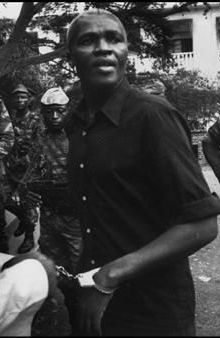
Ernest Ouandie on the day of his execution

A while back, I published an interview of Ernest Ouandié: A Cameroonian and African Hero and Martyr,  on the murder of  Félix Moumié. In this Rare Interview, which he gave with Marthe Moumié, the wife of Félix Moumié, in 1960, he said:

When you have chosen the struggle, the path of struggle, for a true independence, you must necessarily expect to receive anytime the hard knocks that the imperialists will give you. But we are used to say that it is because the imperialists are beating us so much that we have become and are becoming stronger in our daily struggle.” [“Lorsque vous avez choisi la lutte, la voix de la lutte, pour une indépendance véritable, vous devez nécessairement vous attendre à tout moment aux coups durs que vous portent les impérialistes.  Mais nous avons l’habitude de dire que c’est parce que les impérialistes nous portent beaucoup de coups que nous sommes devenus et nous devenons chaque jour un peu plus aguerris pour la lutte.”] Ernest Ouandié.

Ghana to Withdraw from the IMF

Children begging
Children begging

The president of Ghana has recently announced that Ghana will be getting off from the IMF. Based on the progress of the Ghanaian economy, Ghana expects to be able to pay all its loan, and get off from the 3-year IMF financial aid program. This is very good, as any country in this world, when they are well, need not be on financial aid forever, but should aspire to become more independent. I raise my hat to them, and hope that other African countries will aspire to work on being more financially independent! Now, let’s pray for President Nana Akufo Addo’s well-being, and pray for his vision to be completed.


Another Speech by President Nana Akufo-Addo of Ghana for Africans Rising

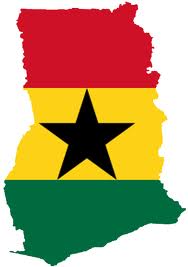
Map and Flag of Ghana

The president of Ghana, Nana Akufo-Addo, has delivered yet another good speech on Africa’s independence or rather on Africa taking its own future in hands. This is the second speech he delivers, in front of Emmanuel Macron, the French president, where he clearly states that Africa does not need his charity, but rather him [France] leaving Africa to its own hands [and its own money]. The first speech he delivered was in Accra, Ghana, during Macron’s visit to Ghana last December. There he had asked Africans to take their future in their own hands, and had almost humiliated the French president in public! So, enjoy!

Africa at the South Korea Winter Olympics 2018

Pyeongchang 2018We have evolved since the days of the 2010 Vancouver and 2014 Sochi Winter Olympics. The African and Black presences at the 2018 Pyeongchang Winter Olympics has more than quadrupled: 8 African countries are represented at these Olympics with a total of 13 athletesNigeria is featuring its First Bobsleigh Team ever, and it is all female! We also note that the Togolese athletes Alessia Afi Dipol, and  Mathilde Amivi Petit Jean have come back from 2014 Sochi Winter Olympics to compete at the PyeongChang 2018 Olympics; we applaud their endurance. I guess some of our brothers and sisters have lived in Northern countries, and enjoy these winter sports to the point of competing in them. We raise our hats to them. Below are the African athletes to watch for, and cheer for this year.

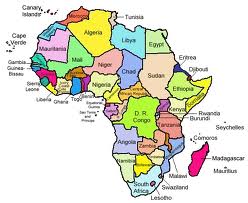
Africa
Africa

EritreaShannon Adeba – Alpine skiing

GhanaAkwasi Frimpong – Skeleton

KenyaSabrina Simader – Alpine skiing

MadagascarMialitiana Clerc – Alpine skiing

MoroccoAdam Lamhamedi – Alpine skiing

                   Samir Azzimani – Cross-country skiing

NigeriaAkuoma Omeoga – Bobsleigh

                Moriam Seun Adigun – Bobsleigh

                Ngozi Onwumere – Bobsleigh

                Simidele Adeagbo – Skeleton

South AfricaConnor Wilson – Alpine skiing

TogoAlessia Afi Dipol – Alpine skiing

           Mathilde-Amivi Petit Jean – Cross-country skiing

There are more brothers and sisters of African descent competing at these Olympics as well: 7 from the United States (with the multiple champion Shani Davis who has been a joy to watch in speed skating since the 2006 Turin Olympics), 4 from France (including 2 in figure skating), 3 from Brazil (all in bobsleigh),  5 from Canada (all in bobsleigh), 3 from Jamaica (with Jamaica first female bobsleigh team ever) and 5 from Great Britain (all in bobsleigh). I may have missed some, and if you see one I did not account for, let me know. We raise our hats to those athletes proudly representing their nations, and cheer them to victory!

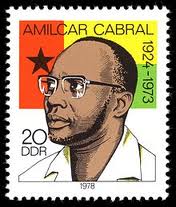
Amilcar Cabral on Reclaiming African History

Amilcar Cabral on a stamp with the flag of Guinea Bissau

The colonists usually say that it was they who brought us into history: today we show that this is not so. They made us leave history, our history, to follow them, right at the back, to follow the progress of their history. Today, in taking up arms to liberate ourselves, in following the example of other peoples who have taken up arms to liberate themselves, we want to return to our history, on our own feet, by our own means and through our own sacrifices.” Amilcar Cabral

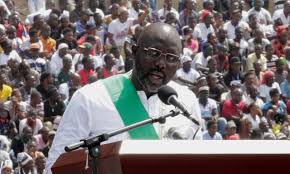
George Weah Sworn in as President of Liberia

George Weah6
George Weah delivering his inaugural speech at the Samuel Doe stadium

On Monday, January 22nd, Former Football star and Ballon d’Or George Weah  was sworn in as the 25th President of Liberia, in the country’s first democratic transfer of power in over 70 years. Weah, a decorated football star, took over from Africa’s first female president, Ellen Johnson Sirleaf. Liberians of all ages formed long lines outside the Samuel Kanyon Doe Stadium, near the capital, Monrovia, to watch Weah’s inauguration.

Moved by the population’s love, Weah said in his inaugural speech, “I have spent many years of my life in stadiums, but today is a feeling like no other. I am overwhelmed with the crowd and the energy here today, … Today, we all wear the jersey of Liberia, and the victory belongs to the people, to peace, and to democracy.”

Liberia_flag
Flag of Liberia

He added: “I promise to do everything in my power to be the agent of positive change. But I cannot do it alone. … […] And so, My Fellow Citizens, I want to admonish you, that the foundation of the New Liberia must be reinforced by the steel of integrity. We need men and women, boys and girls, whose integrity provides the foundation of the trust that is required for Liberian society to benefit her people.

Brother Weah, we wish you the very best in governing the beautiful country of Liberia. We know that your getting there stems for your great love of your country, and our prayers will carry you throughout this journey! 

For the full speech, watch the video below, and read The Patriotic Vanguard Patriotic Vanguard for the full transcript of President George Weah’s inaugural speech. Enjoy!

Rare Interview of Ernest Ouandié on the Assassination of Felix Moumié

Ernest Ouandié, Marthe Moumié, and Abel Kingue in Geneva after Felix Moumié's death
Ernest Ouandié, Marthe Moumié, and Abel Kingue in Geneva after Felix Moumié’s death

Here is an interview of Ernest Ouandié, leader of the UPC, on the Assassination of a fellow leader of the UPC, Félix Moumié. As you can see, this was a brilliant man who was fighting for the independence of Cameroon from foreign colonial powers; he was fighting for One Kamerun! One can also watch Marthe Moumié, the wife of the deceased Felix Moumié, and watch her dedication not just to her husband, but to the great cause of the freedom of her country. Enjoy!

The Timkat Festival: Ethiopian Festival of Epiphany

Timkat1_G
Priests walking with the Tabot, the Ark of the Covenant, in a procession through Gondar (Carl Court, Getty Images/ The Guardian)

Today we celebrate the Timkat Festival, the Ethiopian celebration of Epiphany.  This year, it takes place on 19 January, while on leap years it is on 20 January (which is the 10th day of the TerrEthiopian calendar).  It is a celebration of the baptism of Jesus Christ on the Jordan River by John the Baptist (Matthew 3:13–17; Mark 1:9–11; Luke 3:21–23).  For the celebrations, pilgrims come from around the country to enact the baptism, celebrating the Epiphany, which lasts 3 days.

Timkat3_G
Pilgrims at Fasilides’ Castle in Gondar (Carl Court / Getty Images/ The Guardia)

The best place for the celebration is in Gondar at the Fasilides Castle: a Pure Gem of Ethiopia’s Rich History. During the ceremonies of Timkat, a procession headed by the most senior priest is led to the river, carrying the Tabot, a model of the Ark of the Covenant, reverently wrapped in rich cloth. Once the water is blessed, many jump into the water to partake into the renewal of the baptismal vows. It is a great joy, for many believe that the sick are cured. It is a feast of celebration, and processional crosses of varying size and elaboration as well as various Ethiopian artifacts can be seen on the occasion.  Participants wear the traditional shamma, which is a thin, white cotton wrap worn like a toga and as headdress.  The best places to attend the event are in Lalibela, Gondar, or Addis Ababa.

Timkat4_G
Female drummers during the festival (Carl Court / Getty Images / The Guardian)

Here are photojournals from The Guardian, the Huffington Post, and the BBC on the Timkat Festival; my favorite one is from the Guardian, by Carl De Souza, and the other one by Carl Court. I also liked this article on the wildjunket. Enjoy!!!

Timkat2_G
Ladies posing near trees during the Timkat celebration (Carl Court / Getty Images / The Guardian)

Ernest Ouandié: People tell the story of his last days

Ouandié1
Ernest Ouandie, a few minutes before his execution in Bafoussam

On 15 January 1971, Ernest Ouandié, the leader of the UPC, was publicly executed in the capital of the Western region, Bafoussam, his natal province.

In reality, three people had been executed. Those 3 were: Gabriel Tabeu, aka “Wambo, the electricity“, Raphaël Fotsing, and Ernest Ouandié. The three were tied to a pole, facing a firing squad. The first two fell first. Ernest Ouandié, who had been accused of attempting to create a revolution, the organization of an armed bands, assassinations and other things, refused to be blindfolded. This led to a dispute between the authorities and him. Finally, they granted him his final wish, and as he was falling through the weight of the bullets, he shouted “Others will continue the struggle” staring death in the eye.

Up until the last minute, we did not think that the government was going to execute Ernest Ouandié and his comrades. People thought that they could be condemned for life. It was for us a big surprise. They made us get out of school to go watch the execution of the nationalists. In the crowd, we disapproved of what was going to happen, even kids like us. There was in reality, a strong current of sympathy for the rebels. That is why as soon as Ernest Ouandié and his companions were shot, it was as if I had been wounded in the depths of my heart.  The gust had wounded the head of a person who was at the parish of the evangelical church,”  says Wanko Tchonla, a trader in Bafoussam. On the day of the event, he was a student at the Saint Joseph school of the cathedral.  He still keeps in memory that sad day of 15 January 1971.” [“Jusqu’à la dernière minute, nous ne croyions pas que le gouvernement allait faire exécuter Ernest Ouandié et ses camarades. Les gens pensaient qu’on pouvait les condamner à vie. C’était pour nous une grande surprise. On nous a fait sortir de l’école pour voir l’exécution des nationalistes. Dans la foule, on désapprouvait ce qui allait se passer, même les enfants comme nous. Il y avait en réalité un fort courant de sympathie pour les rebelles. C’est pour cela que dès que l’on a tiré sur Ernest Ouandié et ses compagnons, c’est comme si j’avais reçu une blessure au fond de mon cœur. La rafale avait blessé la tête d’une personne qui se trouvait au niveau de la paroisse du plateau de l’église évangélique ”, raconte Wanko Tchonla, commerçant à Bafoussam. Au moment des faits, il est élève à l’école Saint Joseph de la cathédrale. Il garde en souvenir la triste journée du 15 janvier 1971.]

Ouandie2
Ernest Ouandie, on his way to his execution

It is no coincidence that the government of Ahmadou Ahidjo had decided to execute Ernest Ouandié in Bafoussam even though his conviction had been pronounced by the military court of Yaoundé. It is was important to create a collective psychosis in the minds. That is why people are always afraid to demonstrate for their rights. People are even afraid to join a political party by fear of being killed.” [“Ce n’est pas par simple hasard que le gouvernement d’Ahmadou Ahidjo avait décidé de faire exécuter Ernest Ouandié à Bafoussam alors que sa condamnation avait été prononcé par le tribunal militaire de Yaoundé. Il fallait créer une psychose collective dans les esprits. C’est pour cela que vous voyez que les gens ici ont peur de manifester pour revendiquer leurs droits. Les gens ont même peur de s’engager dans un parti politique parce qu’ils craignent d’être tués.”] Jean Michel Tékam, candidate for the Cameroonian Social Democratic Party (Parti social démocrate camerounais) in 1996.

Map of Cameroon from 1919 to 1960, including both Cameroons (French in Blue, and British in red)
Map of Cameroon from 1919 to 1960, including both Cameroons (French in Blue, and British in red) – Ouandie was fighting for One Cameroon and its freedom from colonial powers

Martin Kapnang, retired communal agent, remembers the staging around Ouandié’s execution. “ We knew that they had arrested the rebel chiefs. The administration had brought people, even from surrounding villages, to watch the execution of rebels. But the conditions under which their trial had unfolded always seemed very confusing. Because as soon as the arrest of Ernest Ouandié and others had been announced, we knew that they will be executed even if the greatest attorneys in the world intervened in their favor.” [“Nous savions que l’on avait arrêté les chefs maquisards. L’administration avait fait venir les gens même des villages environnants pour voir comment on devait tuer les maquisards. Mais les conditions dans lesquelles leur procès s’était déroulé semblaient toujours floues. Car dès que l’on avait annoncé l’arrestation de Ernest Ouandié et autres on savait qu’ils devaient être exécutés même si les plus grands avocats du monde intervenaient en leur faveur.”]

As soon as the first salvo is fired, he shouts: “Long live Cameroon” and then falls to the ground. A European officer detaches himself from the group of spectators, walks toward the dying man, puts his hand on his holster, leans forward and shoots…
[cited in Jean Ziegler, Les Rebelles: Contre l´Ordre du Monde: Mouvements Armes de Liberation Nationale du Tiers Monde, Published 1983, Editions du Seuil ]

Ernest Ouandié: A Cameroonian and African Hero and Martyr

UPC Leaders (L. to R.) front row: Castor Osende Afana, Abel Kingué, Ruben Um Nyobé, Felix Moumié, and Ernest Ouandié

15 January 1971 marks the day of the execution of a Cameroonian and African hero: Ernest Ouandié! Outspoken, and brilliant, Ernest Ouandié is considered by many in Cameroon as a national hero. However, he has never been celebrated the way a hero should. He was a martyr! Ouandié was the last leader of the Union des Populations du Cameroun (UPC). The other renowned leaders of the UPC were Ruben Um NyobéFelix-Roland Moumié, Abel Kingué , and Castor Osendé Afana who, except Abel Kingué, were all assassinated by France or its puppets.  Like those three, Ernest Ouandié was also assassinated, and paid with his life for his passion for the freedom of Cameroon, and Africa, from colonialism.  So who was Ernest Ouandié?

Ouandie3
Ernest Ouandie, during an interview, talking about the assassination of Felix Moumie in 1961

Ernest Ouandié was born in 1924 in Badoumla, Bana district in the Haut-Nkam region of the Western province of Cameroon . He attended public school in Bafoussam, and then l’Ecole Primaire Supérieure de Yaoundé where he obtained a Diplôme des Moniteurs Indigènes (DMI) in November 1943 and began work as a teacher. In 1944 he joined the Union of Confederate Trade-Unions of Cameroon, affiliated with the French General Confederation of Labour (CGT). From 1944 to 1948, Ernest Ouandié taught in Edéa. On 7 October 1948, he was posted to Dschang. A month later, he was posted to Douala as director of the New-Bell Bamiléké public school.

Flag of the UPC
Flag of the UPC

In 1948 Ouandié became a member of the Union of the Peoples of Cameroon (Union des Populations du Cameroun – UPC), and 4 years later, was elected vice-president of the UPC. In September 1953 he was assigned to Doumé and Yoko in Mbam-et-Kim. In December 1954 he was posted to Batouri, then Bertoua. Finally, in January 1955 he was assigned to Douala again. He attended the World Congress of Democratic Youth in China in December 1954, and also traveled to Paris and Moscow.

UmNyobe_Moumie_Ouandie
Les leaders de l’UPC: Ruben Um Nyobe, Felix Moumie, et Ernest Ouandie

In April and May 1955 the UPC held a series of militant meetings, circulated pamphlets and organised strikes. On 20 June 1955 the UPC leader, Ruben Um Nyobé, was sentenced in absentia to six months in prison and a large fine. On 13 July 1955 the French government dissolved the UPC by decree. Most of the UPC leaders moved to Kumba in the British-administered Southern Cameroons to avoid being jailed by the colonial power. Armed revolution broke out in Cameroon. The UPC nationalist rebels conducted a fierce struggle against the French, who fought back equally ruthlessly. The insurgents were forced to take refuge in the swamps and forests. Ruben Um Nyobé was cornered in the Sanaga-Maritime area and killed on 13 September 1958.

Ahidjo3
Ahmadou Ahidjo, first president of Cameroon

Ouandié had taken refuge in Kumba in 1956. In July 1957, under pressure from the French, the British authorities in western Cameroon deported Ernest Ouandié and other leaders of the UPC to Khartoum, Sudan. Ouandié then moved in turn to Cairo, Egypt, to Conakry, Guinea and finally to Accra, Ghana. After Cameroon gained independence in 1960, UPC rebels who had been fighting the French colonial government continued to fight the government of President Ahmadou Ahidjo, whom they considered to be a puppet of the French. Ahidjo had asked the French to lend troops to keep peace during and after the transition to democracy. What followed is a campaign of pacification of the Bamiléké territory, and some regions in the Centre and Littoral provinces; this is one of the greatest genocides committed by France, with the death toll in the hundreds of thousands (French President Acknowledges French Genocide in Cameroon)!

Ernest Ouandié, Marthe Moumié, and Abel Kingue in Geneva after Felix Moumié's death
Ernest Ouandié, Marthe Moumié, and Abel Kingue in Geneva after Felix Moumié’s death

In 1960 Ouandié, Félix-Roland Moumié, Abel Kingué and other UPC leaders were exiled, isolated and desperate. Moumié was poisoned by French agents using thallium on 13 October 1960 and died on 4 November 1960, leaving Ouandié as head of the UPC. On 1 May 1961 the military tribunal in Yaoundé condemned Ouandié and Abel Kingué (in absentia) to deportation. That year, Ouandié secretly returned from Accra to Cameroon to work towards the overthrow of the Ahidjo regime. The Southern Cameroons (now the Southwest and Northwest regions) gained independence from the British and joined a loose federation with East Cameroon on 1 October 1961. Abel Kingué died in Cairo on 16 June 1964, leaving Ouandié the last member of the original leadership. President Ahidjo then declared Ouandié public enemy number one.

A post-colonial struggle by UPC rebels opposing the new Cameroon army (trained and armed by France) continued until August 1970 when the last battalion of the UPC, commanded by Ernest Ouandié, was arrested.  Ouandié was sentenced to death and was shot by a death squad in the market on 15 January 1971, in Bafoussam.  That day was a historic day in Bafoussam, as the populations were forced to witness the execution of their leader: my mother witnessed the event, she was just a child. The civil war, resulting in the destruction of villages and use of napalm is estimated to have resulted in at least 30,000 to 500,000 deaths.  It has been conveniently removed from official history, both in Cameroon and in France (French President Acknowledges French Genocide in Cameroon).

Ouandie2
Ernest Ouandie, on the day of his execution

On that fateful day, 15 January 1971, three people were executed in Bafoussam, the capital of the Western region. The three were Gabriel Tabeu, alias “Wambo, the electricity“, Raphael Fotsing (condemned to capital punishment 10 days prior, by a military tribunal) and Ernest Ouandié. The three were tied to a pole, facing a firing squad. The first two fell first. Ernest Ouandié, who had been accused of attempting to create a revolution, the organization of armed bands, assassinations and other things, refused to be blindfolded. This led to a dispute between the authorities and him. Finally, they granted him his final wish, and as he was falling through the weight of the bullets, he shouted “Others will continue the struggle” staring death in the eye.

Check out the website Grioo.com where there is a good biography on Ernest Ouandie’s life. Don’t forget to check out the website of Dibussi Tande. The great Cameroonian writer Mongo Béti wrote the book Main basse sur le Cameroun, autopsie d’une décolonisation (about the Cameroonian resistance led by the UPC) which was banned in France in the 70s, which led to him to write Remember Ruben in honor of Ruben Um Nyobé’s memory, in which he describes the firing squad to Ouandié’s execution.