I just learned of the story of the Thiaroye massacre by French forces on African troops which occurred during the night of 30 November to 1 December 1944. African soldiers who had fought alongside French people to liberate France of the Nazi menace, were shot by Frenchmen, for asking for their pay! Can you believe it! They were promised a pay, they fought for France in France to liberate France, and when they got back to Senegal they were not paid; so they asked for their pay, and they were shot! Even the French president François Hollande in October 2012 had to acknowledge this atrocity… of course, he just acknowledged it, and never apologized! As you can see, France has committed some of the greatest atrocities in this world, but no one says a word, well because it is against Africans, so ‘it does not count’? Even today, they continue, with the FCFA, impoverishing and living off of Africans’ sweat! The great Senegalese filmmaker Ousmane Sembene made a movie about it!
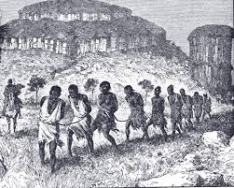
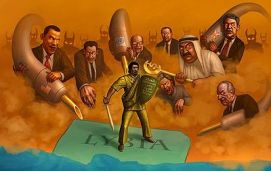
For several weeks now, we have seen many people scream loud about the enslavement of Black people in Libya. I have seen Claudy Siar, whom I love, stand up outraged about the treatment of Black people in Libya, yet, I did not see him outraged when Libya was being bombed by NATO; I did not see him this outraged when migrants drowned in the Mediterranean Sea; I have not seen him outraged because Martinique, Guadeloupe (where his family is from), and French Guiana, have been deprived of independence and are still Overseas territories of France today. I saw Samuel Eto’o and other footballers come out outraged, yet… I never saw Eto’o outraged that there are no roads to go to his village in Cameroon, I never saw him outraged that international companies exploit huge plantations in Cameroon without paying taxes (was he outraged when Lapiro de Mbanga was imprisoned for asking those companies to pay some little taxes?). I never saw these big footballers outraged that African youths are unemployed largely due to their presidents working hand-in-hand with European interests. Faure Gnassingbé, president of Togo even raised his voice against the enslavement of Africans in Libya, and was outraged! Are you serious, when he inherited the throne, presidency of Togo, after 38 years of Gnassingbé Eyadéma, his father’s reign? Alpha Blondy never said a word when Côte d’Ivoire was being bombed by France in 2011, yet today he opens his mouth for Libya, and wants the migrants to take up arms! Seriously?
Libya, the Prey of the West
I do not understand why we always act like sheep without a shepherd! Back in the middle of the 2000s, we were served with the genocide in Darfur, when Hollywood stars such as George Clooney came out in numbers claiming to care about the plight of the Black man, and saying that the Black people of DarfurSudan were enslaved by their lighter skinned Sudanese brothers. This led to the creation of South Sudan, and Darfur, well… nothing happened in Darfur… so it had all been a scheme to split Sudan into 2, and take away its rich southern oil fields from the nation itself!
Children begging
Do you think that African youths, if they had jobs in their countries, will not stay home? Do you think that if the FCFA was not this tax imposed on African countries (The 11 Components of the French Colonial Tax in Africa), they will not be developed? This outrage I hear should not be taken out on Libyans who had no say when their country was bombed by the Coalition that is NATO, but rather against our presidents who continue to stay in the FCFA zone (FCFA: France’s Colonial Tax on Africa), who continue to give at least 50% of our economies to France! France gets $500 Billions every year from 14 countries in Africa just from the currency, plus of course the free uranium of Niger, the free gold of Mali, the free plantations of Cameroon, the free cocoa of Côte d’Ivoire, etc. This has to stop! Our outrage cannot be taken out on Libyans, but rather on NATO, and now more than ever on those puppets that we call our presidents, who serve the interests of the Hexagon. Get out of the FCFA zone, and create jobs! Stop importing pencils, pens, and food, when you can grow and make your own and become sustainable economies to serve your youths! Africa is the continent with the youngest population, and with so many resources, and thus so much to develop! Africa is the future!
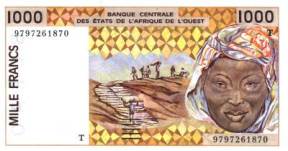
500 Fcfa_BEAO
Yesterday, I heard a talk by Robert Bourgi who was the adviser to so many African presidents, good servants of Imperialist forces: Mobutu, Omar Bongo, etc; and he said that, what Africans were asking for was governmental alternance, i.e. election of new presidents. NO, we do not need new presidents who are just puppets of the West like Macky Sall or Alassane Ouattara who will sign off our future to the IMF and World Bank. We need a definite change, we want to be in charge of our economic destiny; we want to have our own currency, we do not want to pay a colonial tax when our forefathers died in WWI and WWII to liberate the French and the whole of Europe, when our ancestors were taken into slavery by Europeans to the Americas where their sweat was used to build Western economies. We want economic freedom to decide on our own terms whether we live or die. We will rather be poor with our own currency, than be a happy slave with a fake currency pegged to the Bank of Paris, which used to take 85% of our revenues and now takes 50%. All the same, We have had enough! So our outrage should not be at our Libyan brothers, because we do know that our true Libyan brothers will never do that, Khadafi fought for us Africans to be free from imperialist forces, but to our presidents, to our elites, who refuse to free us, who refuse to stand up and seize the moment! We, the people, want freedom, economic freedom!No More FCFA!
“We are not racists. We are fundamentally and deeply against any kind of racism. Even when people are subjected to racism we are against racism from those who have been oppressed by it.In our opinion – not from dreaming but from a deep analysis of the real condition of the existence of mankind and the division of societies – racism is a result of certain circumstances. It is not eternal in any latitude in the world. It is the result of historical and economic conditions. And we cannot answer racism with racism. It is not possible. In our country, despite some racist manifestations by the Portuguese, we are not fighting against the Portuguese people or whites. We are fighting for the freedom of our people – to free our people and to allow them to be able to love any kind of human being. You cannot love when you are a slave… In combating racism we don’t make progress if we combat the people themselves.We have to combat the causes of racism. If a bandit comes into my house and I have a gun I cannot shoot the shadow of this bandit. I have to shoot the bandit. Many people lose energy and effort, and make sacrifices combating shadows.”
Amilcar Cabral, 20 October 1972, New York, Pambazuka
Here is a documentary about Robert Mugabe and his history, his life, and his leadership. This video talks about him, the fight for independence, the loss of his first son while imprisoned by the British in Rhodesia, and the renaming of the country from Rhodesia to Zimbabwe, after the Great Zimbabwe Empire. I only recently found out that Mugabe had been influenced by Kwame Nkrumah: African Visionary and Ghana’s First President. He had lived and trained at the Takoradi Teacher Training College in Ghana, where he met his first wife Sally Hayfron Mugabe. It is sort of a short biography.
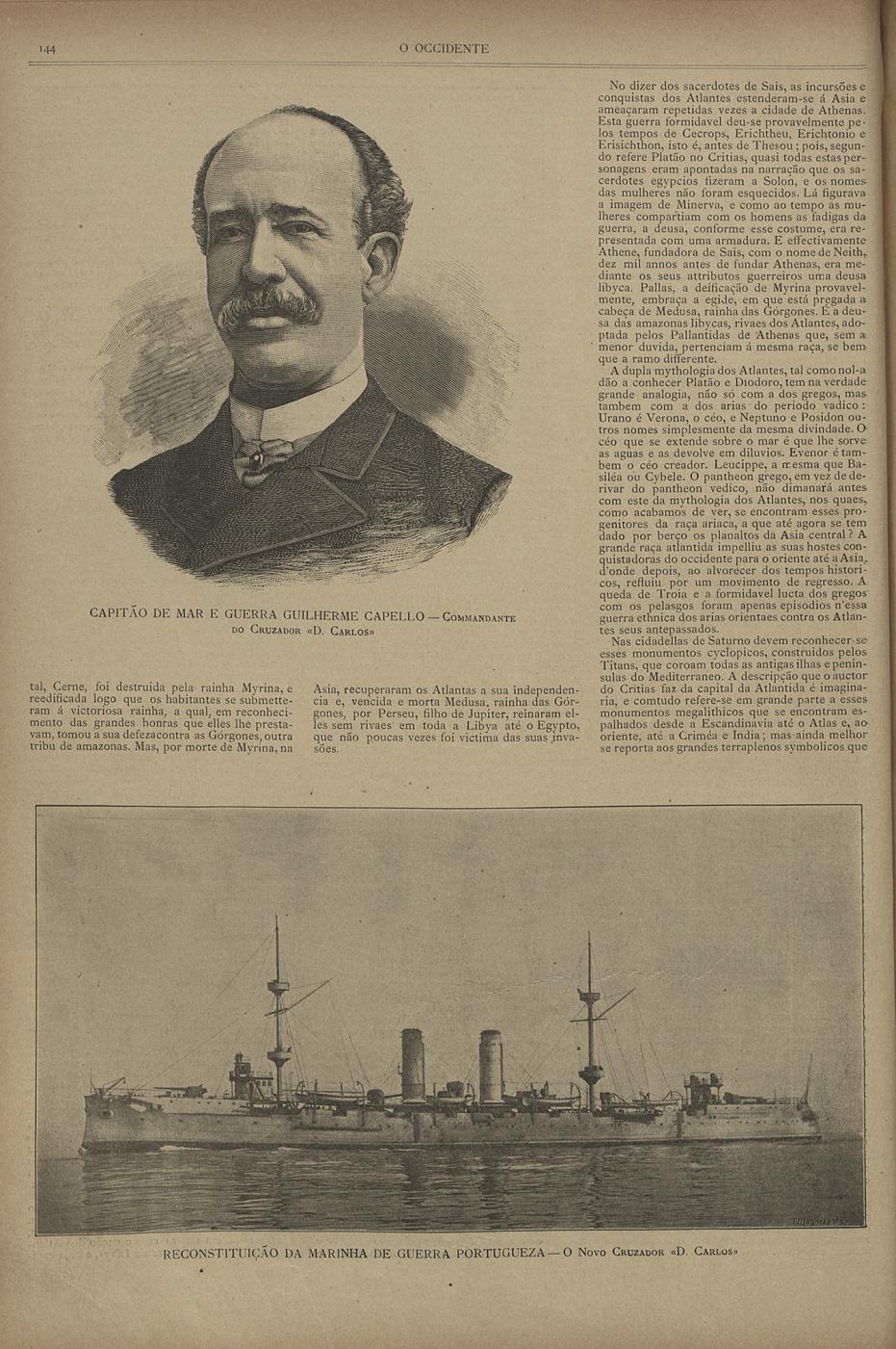
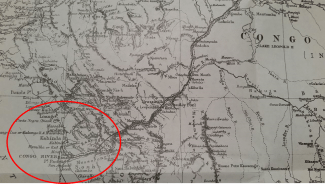
Here is another treaty which led to the Treaty of Simulambuco between Portugal and the people of Cabinda, namely the Treaty of Chinfuma. This one was signed on the hill of Chinfuma, at Lândana, on 29 September 1883, between Guilherme Augusto de Brito Capelo and the local Princes. The original in Portuguese can be found here: Angola, Cabinda, Tratado de Chinfuma. The river Chiloango referred to in the treaty can be seen on the attached map, as well as the city of Cacongo. Again, the website, Cabinda.net has a lot of these treaties.
========
On the 29th day of the month of September, in the year of Our Lord 1883, on the hill of Chinfuma, at Lândana, on the western coast of Africa, were present on one side, for the Portuguese Government, the Lieutenant-Captain of the Navy, Guilherme Augusto de Brito Capelo, commanding the corvette Rainhade Portugal, and on the other side, for the people inhabiting both banks of the River Kacongo, the Princes and other Notables, now Chiefs and Governors of said people and tribes, who by all present were recognized as the true and identical parties, together with the Portuguese and foreign merchants owning commercial houses at Landana, Chiloango, and on the banks of said river, who volunteered to be present at this meeting as witnesses to all that may be enacted in the premises; being also present Robert F. Hammick, Commander of the English gun-boat Flirt, and the agent of the house Hatton and Cookson, R. E. Dennet; the above mentioned Commander (of the Portuguese corvette) declared that as several Chiefs had expressed the wish of demanding the protection of Portugal, under whose sovereignty they wanted to remain, as being the nation with whom they maintained the most intercourse commercially, as well as in customs and language, ever since Europeans have trod African soil south of the Equator, he, the Commander, now came fully empowered by the Government of His Majesty the King of Portugal to frame a Treaty, which, after being ratified and signed by both Contracting Parties, should establish the future intercourse between Portugal and the countries governed by the subscribing Chiefs. And the Princes and other Notables having formally declared that they wanted to make good, with their signatures, a document by which the Protectorate and sovereignty of Portugal should be clearly authenticated over all the territory lying between the River Massabe (Luiza Loango on the English maps) and the Molembo, 11 Articles were discussed and adopted in a Treaty which, after having been read and duly explained both in Portuguese as well as in the language of the country, was signed by all parties with the sign of a cross, not knowing how to write. And in order that the measures adopted in this solemn meeting might in future be duly authenticated, this statement was made and signed by all parties and attached to the Treaty, which was copied and duly certified and sealed with the seal used on all official documents of the corvette Rainha de Portugal, and copies given to the chief Princes, Tali-e-Tali, Prince Regent of the Kingdom of Kacongo; Mancoche, King of Encoche Luango; Antonio Thiaba da Costa, Regent of the Kingdom of Cinchôcho, representing the Queen of Samano; Mangoal, Prince Regent of Mambuco Manipolo; Antonio Thiaba da Costa, Governor of Massabe, representative of the Chiefs of that place; who also received the Portuguese flag to be hoisted at their Settlements and on the lands that may be ceded to the Portuguese Government, to be kept and defended as the symbol representing the sovereignty and Protectorate of Portugal over the lands governed by them.
ACHILLE DE ALMEIDA NAVARRO, Naval Doctor of the 1st Class.
JOÃO JOSÉ RODRIGUEZ LEITÃO SOBRINHO,
Merchant in Landana.
WILLIAM RATTRAY, Chiloango.
PEDRO BERGNO, Marine Guard.
FIDEL DEL VALLE.
ANTONIO NUÑES SERRA E MOURA, Officer of Fazenda in the Navy.
————————————
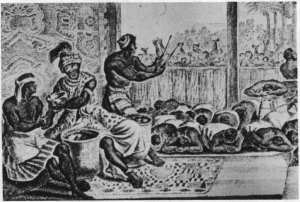
Royal court of N’Gangue M’voumbe Niambi in Loango ca 1668
Guilherme Augusto do Brito Capello, Lieutenant-Captain of the Navy, Knight Commander of the Order of Aviz, and Knight of various Orders, Commander of the corvette Rainha do Portugal, commissioned by the Government of His Majesty the King of Portugal, has concluded with the Princes Tali-e-Tali, Regent of the Kingdom of Kacongo; Mancoche, King of Encoche Luango; Antonio Thiaba da Costa, Regent of the Kingdom of Chinchôcho, Representative of the Queen Samano; and Mangoal, Regent of Mambuco, and their successors; as well as the other Chiefs of the hind lying between the Rivers Massabe and Molembe, on the Westem Coast of Africa, the following Treaty:—
Art. I. The Princes and other Chiefs of the country, and their successors, do voluntarily acknowledge the sovereignty of Portugal, and place under the Protectorate of that Government all the lands governed by them.
II. Portugal recognizes the present Chiefs, and will confirm all those that in future may be elected by the people according to their laws and customs, assuring them assistance and protection.
lII. Portugal obliges herself to maintain the integrity of the territories placed under its Protectorate.
IV. To the Chiefs of the land and their inhabitants will be maintained the direct ownership of the lands belonging to them, with the right of selling or alienating them in any manner whatever, to establish trading factories, or any private undertaking, on paying the customary fees, and marking clearly and exactly the lands transferred or ceded, to avoid future difficulties; these contracts to be ratified by the Commanders of the Portuguese ships of war.
V. The greatest liberty will be conceded to all merchants of every nationality to settle on these lands, the Portuguese Government holding itself obliged to protect these establishments, retaining, however, the right of proceeding as it may think proper whenever it may be proved that any attempt is made to overthrow the dominion of Portugal.
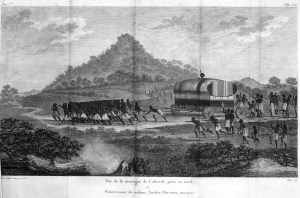
Burial of King Andris Poncouta, Macaye, and view of the Cabinda mountain 1786-87
VI. The Princes and other native Chiefs bind themselves not to make any Treaties, nor to give up any lands to the Representatives of foreign nations in an official capacity, and not with the object mentioned in Article IV.
VII. They likewise bind themselves to protect the commerce of the Portuguese as well as that of the foreigners and of the natives, prohibiting all interruptions in the intercourse with the interior, using their authority to keep open the roads, assisting and protecting the relations between buyers and sellers, religious and scientific Missions that may be temporarily or permanently established on their lands, as well as the development of agriculture.
§. They bind themselves further to prohibit the Traffic in Slaves within the boundary of their dominions.
VIII. Any difficulty arising between Europeans and natives will be settled in the presence of the Commander of the Portuguese ship of war, who on such occasions may be in possible communication with the shore.
IX. Portugal will respect and will cause to be respected the usages and customs of the country.
X. The Princes and Chiefs cede and transfer to Portugal the entire right and title to portions of land in Landana, Chinchôcho, and Massabe, which will be marked conjointly with the Chiefs of those districts duly authorized by the Princes to give possession. The Deed of Possession will be drawn up in duplicate, one of which will remain in the hands of the Portuguese Delegate, and the other with the native Chief.
XI. The present Treaty, signed by the Princes and Chiefs of the country, as also by the Lieutenant-Captain Commander of the corvette Rainha de Portugal, will take effect from the day of its signature. It cannot, however, be considered definite until it be approved by the Government of His Majesty the King of Portugal.
Chinfuma, at Landana, September 29, 1883.
GUILHERME AUGUSTO DE BRITO CAPELLO,
Commander of the corvette Rainha de Portugal.
Their marks
Map of Congo by Henry Stanley, with parts of Cabinda and Congo in red: Landana, Chiloango, Massabe, the kingdoms of Kacongo and Malemba, can all clearly be seen on this map
x TALI-E-TALI, Regent of the Kingdom of Kacongo.
x MAMBUCO, Vice-King of Kacongo.
x A. THIABA DA COSTA, Representative of Queen Samano.
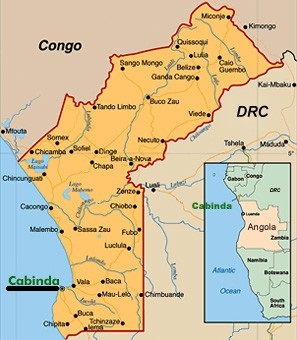
Map of the province of Cabinda: is the city of Chicamba the same as the one where this treaty was signed?
Here is another treaty of Portugal signed in Cabinda, Angola, this time in Chicamba which is near the border with the modern-day Republic of the Congo. Now at the time, this area was much bigger as delineated in the text. This treaty was signed on the 26th of December 1884 in Chicambo. I am not sure if the name ‘Treaty of Chicamba‘ is not just a ‘typo’ from a Portuguese person from that era, and that maybe it should have been ‘Treaty of Chicambo‘ instead, since the treaty clearly states that it was signed in Chicambo? The original version in Portuguese can be found here: Tratado de Chicamba 26 Dec 1884. The website Cabinda.net has even more treaties signed by Portugal in Cabinda. Note that this treaty did not make Cabinda a Portuguese protectorate yet; The Treaty of Simulambuco signed the following February is the one which officially made Cabinda a Portuguese protectorate. On the map to the left, is the city of Chicamba the same as the one where the treaty was signed in 1884? is the lake Massabi (Lago Massabi) the one referred to in this treaty as Massabe? Is the Luema River referred to in the text, the same as the Loémé River in the modern-day Republic of the Congo?
=====
Flag for the province of Cabinda
On the 26th day of December of the year of the birth of Our Lord Jesus Christ of 1884, in Chicambo, the left bank of the LuemaRiver, 30 miles or so from Massabe, meeting as representatives of the government Portuguese, the delegate of the same government in Kakongo and Massabe, José Emilio dos Santos Silva and the captain of 2. ‘ António Thiaba daCosta, head of the civilization station in Kakongo and Massabe, and the secretary of the civilization station in Kakongo and Massabe, José António da Conceição, and by the Peoples that extend along the left bank of the Luema River from N’Cula.
To the embouchure extending a little more than 60 miles, spanning N’Geba, Chicambo and Buamongo, the Princes and Gentlemen who presently govern them, who by all present were recognized as their own, was by the delegate of the declared government: That these Princes and Gentlemen, Governors of these territories, had manifested their desire to be included in the Protectorate which Portugal had established in Kakongo and Massabe, under its sovereignty, since it was the Nation with which they maintained more constant relations, both commercial and of habits and language, since the Europeans had trod on land from Africa to the south of Ecuador, he delegated as a representative of the Portuguese government, was authorized to grant to the natives the requested annexation, making a treaty that, once approved and signed, established the Relations between Portugal and the countries governed by the Heads that signed it.
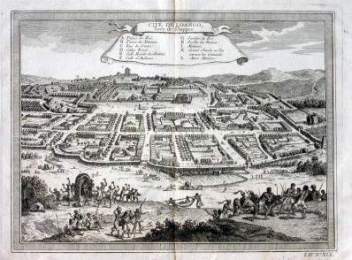
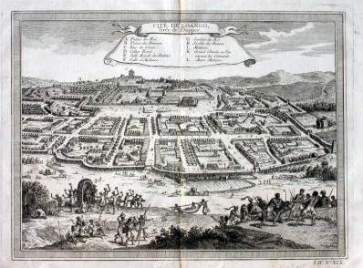
The city of Loango in 1668 (between Cabinda and the Republic of Congo)
And having the Princes and more Gentlemen formally declared that they wished to sign a document by which the Protectorate and sovereignty of Portugal on all the territories of the Massabe to the left bank of the river Luema were authenticated, were authenticated and approved twelve articles of ‘A treaty which, after being explained in good and due form, both in Portuguese and in the language of the country, was signed by all (with a sign of the cross because they could not write).
And, in order to be authenticated in the future, the resolutions adopted at this solemn meeting were drawn up and signed by all those who signed the treaty, from whom they obtained duly certified copies and delivered to Princes Machamba, Governor of Buamongo, Mai-Sexo, Governor of Guamon-o, N’Ganza-Camba, Governor of Chicambo, Mangemba, Governor of N’Geba, Mancuta, Governor of N’Cula, who also received the Portuguese flag to have them hoist in their villages and in places that conveniently Then designate, in order to conserve and defend it as a representative symbol of the sovereignty and Protectorate of Portugal.
Chicambo, December 26, 1884:
Burial of King Andris Poncouta, Macaye, and view of the Cabinda mountain 1786-87
José Emílio dos Santos Silva, delegate of the Portuguese government
A. Thiaba da Costa, Captain of 2. ‘ line.
José António da Conceição, Secretary of the civilizing station
Signal of King Machimba.
Signal of Cutoto.
Signal de Massanza.
Signal of Bolamba.
Signal of Gangacaca.
Signal of the King Mai-Sex.
Signal of Pita da Praia.
Signal of Bivumbi.
Signal of Mambuco Mani Luemba.
Signal of the Macai King.
Signal de Chibilongo.
Signal of Mamboma N’Cusso.
Signal of Macacata.
Signal of Manganda-Cai.
Signal of King Ganga-Misi.
Signal of Culombo.
Signal of Machichita.
Signal of the King Mangalola.
Signal of Ganga Camba Bona.
Signal of Mafuca N’Gali.
Signal of Machanzi-Monzo.
Signal of Prince Muene Tati
Signal of Luangili.
Signal of Command.
Signal of Mafuca Macosse.
Signal of Machienzi Zuela.
Signal of Mafuca Naungi.
Signal of Mamboma Issambo.
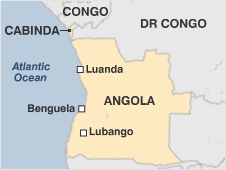
Map of Angola with the province of Cabinda
Signal of N’Bundo Pubo.
Signal Mafuca N’Goma.
Signal of N’Coti Cuanda Poáti.
Signal of Calumbo.
Signal of Massongo.
Signal de Mamando.
Signal de Mansalisi Chibaza.
Signal of Chimbi Chianga.
Signal of Maconde Bitumbo.
Signal of Cibanza.
Signal of Lingster Pandi Numtoto-Ola.
Signal Michienzi Buanga.
Signal of Mafuca Mavingo.
Signal of Mambuco M’Paca.
Signal of Mafuca Pambo.
Signal of Chibuqueli Muene Pambo.
Signal by Muene Banza Pambo.
Signal of Mangofo Panzo.
Signal of Muene N’Zau.
Signal by Lingster Filipe.
Signal of Mafuca N’Buia.
Signal de Massavi N-Cambo.
Signal of Mafuca Chiluemba.
Signal of Ganga N’Zomongo.
Signal of N-Combe.
Sign of Mambuco Mani-Macambo.
Signal of Chibuquila Mani-Muto.
Signal by Macaia Chintomo.
Signal of Mamona Chibua.
Signal of Ganga Luti.
Signal of Benze Mongofo N’Poáti.
Signal of Bungo Michivata.
Signal of Mamboma N’Bungo.
Signal of Ganga Lamongo.
José Emilio dos Santos Silva, second lieutenant of West Africa, delegate of the Portuguese government and head of the civilizing station in Cacongo and Massabe, concludes with Princes Malhambo, Mai-Sexo, Ganga, Camba, Mangeba and Mancala, Governors and Regents of the Peoples of Buamongo , Guamongo, Chicambo, N’Geba and N’Cula, as well as the most Chiefs of the territories that of the Massabe extend to the N’Culo, the NE of Massabe, West Coast of Africa, the following treaty … Note: The treaty is textually the same as that of Chinfuma plus one more article.
As follows: “Article 12.- Any treaties shall be declared null and void, which contain clauses and, contrary to previous articles (Cfr. João de Matos e Silva, Contribuição para o Estudo da Região de Cabinda, cit., pp. 146-147).
Portugal had a few colonies in Africa: Cape Verde, São Tomé and Príncipe, Guinea-Bissau, Angola, and Mozambique. Since 1885, the State of Cabinda has been a Portuguese Protectorate according to the Luso-Cabindan Treaties of Chifuma, Chicamba, and Simulambuco. Today, it is an exclave and province of Angola, a status that has been disputed by several political organizations in the territory. The capital city is also called Cabinda. Modern Cabinda is the result of a fusion of three kingdoms: N’Goyo, Loango and Kakongo.
Logo of the province of Cabinda
On February 1,1885, the Treaty of Simulambuco established Cabinda as a protectorate of the Portuguese Empire, and the Cabindan independence movements consider the occupation of the territory by Angola illegal. The Treaty of Simulambuco was signed between the emissaries of the Portuguese Crown and the princes and notables of Cabinda, giving rise to three territories within the Portuguese protectorate of Cabinda: Cacongo, Loango, and N’Goyo. The original in Portuguese can be found here: Cabinda_Tratado de Simulambuco.
============
Treaty of Simulambuco between the Portuguese Crown and the Princes of Cabinda
Guilherme Augusto de Brito Capelo, captain-lieutenant of the fleet, commander of the Corvette Queen of Portugal, Commander of Avis and Knight of several orders, authorized by the government of his most faithful Majesty King of Portugal, satisfying the wishes expressed by the princes of Cabinda in Duly signed by them in a large foundation, concluded with their respective Princes, Governors and Heads, their Successors and heirs, the following:
Article I – The princes and chiefs of the country, and their successors, declare, voluntarily, to recognize the sovereignty of Portugal, placing under the Protectorate of this nation all the territories governed by them.
Article II – Portugal recognizes the current Chiefs and confirms those who are elected by the Peoples in accordance with their laws and practices, promising them aid and protection.
Article III – Portugal undertakes to maintain the integrity of the territories placed under its Protectorate.
Article IV – The Landlords of the Country and their Inhabitants shall be kept directly from the lands belonging to them, and may sell or dispose of them in any way for the establishment of business factories or other private industries, by paying customs, marking a Clear and precise the area of land granted in order to avoid future complications, and the contracts must be ratified by the commanders of Portuguese warships or by the authority in which the government of his Majesty delegates his powers.
Burial of King Andris Poncouta, Macaye, and view of the Cabinda mountain 1786-87
Article V – The greatest freedom will be granted to traders of all nations to establish themselves in these territories, the Portuguese government being obliged to protect these establishments, reserving the right to proceed as it deems most convenient, if it proves that an attempt is being made to destroy the domain of Portugal in these regions.
Article VI – The princes and more indigenous chiefs undertake not to make treaties nor to assign lands to the representatives of foreign nations when this transfer is of an official character and not for the purpose mentioned in article 4.
Article VII – It is also obliged to protect the commerce of both the Portuguese and foreigners and indigenous people, not allowing interruption in communications with the interior and making use of its authority to unravel the paths, facilitating and protecting relations between buyers and sellers, missions Religious and scientific organizations that establish themselves temporarily or permanently in their territories, as well as the development of agriculture.
Article VII.1 – They force themselves not to allow trafficking in slavery within the confines of their domains.
Article VIII – Any and all questions between Europeans and natives shall always be resolved with the assistance of the Portuguese ship’s war commander who may be able to communicate with the land on that occasion, or who has duly legalized powers.
Article IX – Portugal will respect and respect the customs and customs of the country.
Flag of Portugal
Article X – The Princes and Chiefs ceded to Portugal the whole and complete ownership of portions of land for the payment of their respective amounts, in order that the Portuguese Government may have them build their military, administrative or private establishments.
Article XI – The present treaty signed by the Princes and Chiefs of the Country, as well as by the captain-lieutenant commander of the corvette Queen of Portugal, shall begin execution from the day of its signature, but may not be considered definitive until after it has been approved by Government of his majesty.
Simulambuco, in Cabinda, February 1, 1885
(A) Guilherme Augusto de Brito Capelo, commander of the corvette Queen of Portugal.
De Neto do Prince Gime, Viceroy. (A) Guilherme Augusto de Brito Capelo, commander of the corvette queen of portugal.
De Neto do Prince Gime, Viceroy.
De Ibiála, Mamboma do Rei and representative of the Regency.
Muanafumo Mahundo, son of the late King.
For Mangove Dangoio Puata Puna.
From Princess Maria Gimbe, Mambuko. (A) Barão de Cabinda, Manuel José Puna.
Sambo Franque, Governor of Chinga.
Machimbi, Mafuca Franque.
Mavungo Mangombe, Governor of Samona. (A) Manuel Bonzola Franque, Governor of Puerto Rico and Mutamba. (A) Francisco R. Franque, Governor of Pernambuco and Vitória.
Fernando Sonsa, Governor of Povo Grande.
Pucuta Caetano, Iinguist de Porto Rico.
Manichuvula, Prince, Mambuko de Buco-Sinto.
King Jack, Prince of Ponta do Tafe.
King Taine, Prince of Ponta do Tafé.
Fenando Mingas, son of Prince Jack do Buco-Sinto.
Mangove Velho, Don of Povo Grande.
Son of Prince Bette Jack, Governor of Caio,
Manissabo, Governador de Chobo.
Perico Franque, linguist of Mambuco.
Puata Puna.
Luemba Franque, irmão do Príncipe Sambo, Governor of Chinga.
Very often history books suffer from amnesia: they forget women’s contributions to revolutions. History acts as if the men had been all alone, as if only men were there, as if only men stood against injustice.
When people talk of the struggle for independence in Africa, and around the world, only the great men are cited. As one browses from country to country, only men are cited, as if women had been silent spectators. Do you think apartheid would have collapsed without the critical and vital input of women? Do you think without Winnie Mandela, Nelson Mandela’s name would have been anchored in our heads today? What do you think these women were doing while their husbands were in prison? History wants us to think that they were ‘just’ raising children as if that was not an enormous contribution already, but in the case of Winnie Mandela and countless others, they took up the fight, and were jailed, harassed, beaten, and humiliated by the system (some were even raped). Yet today, the world acclaims only the men! And when a woman raises too strong a voice, then she is vilified, told that she acts like a man, or is an ‘angry’ woman. How could you face injustice day after day, and just keep quiet? There comes a time when, as Bob Marley says, “You can fool some people some time, but you can’t fool all the people all the time…” people will rise up!”
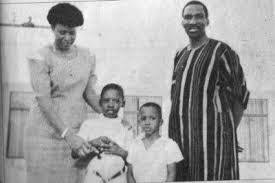
Mariam and Thomas Sankara, with their children
I am so sick of the saying, “behind every great man, there is a great woman.” I think it is again quite sexist, and should rather read, “ALONGSIDE EVERY GREAT MAN IS A GREAT WOMAN.” Raising children, and pumping somebody’s ego after a day’s fight, taking up the fights, and then keeping the men’s memory so that the world does not forget them, are no easy fit; these are extraordinaryfits. Alongside Nelson Mandela, there is Winnie Mandela. Alongside Thomas Sankara, there is Mariam Sankara. Alongside Patrice Lumumba, there is Pauline Lumumba. Alongside Felix Moumié, there is Marthe Moumié. Rosa Parks had to be defiant and sit in the front of the bus, for the movement to be taken over by Martin Luther King Jr.; without her part in the fight, there would have been no movement!
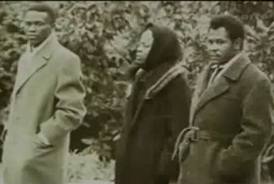
Ernest Ouandié, Marthe Moumié, and Abel Kingue in Geneva after Felix Moumié’s death
It is our duty to remember this, and to claim it. The world and history wants us to think that men are the only ones in the world, when we know that 50% of the world’s population is female; men are not the only ones fighting for independence, liberation, freedom, revolution, democracy, … Can one make a revolution without the remaining 50%? NO! It is our duty to remember Women’s contributions to history, and stop the global historical amnesia!
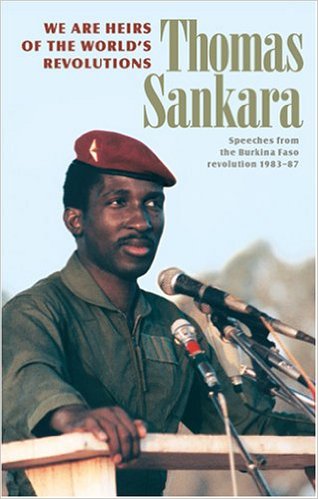
“We are heirs of the revolution” by Thomas Sankara
“If you take a walk around Ouagadougou and make a list of the mansions you see, you will note that they belong to just a minority. How many of you who have been assigned to Ouagadougou from the farthest corners of the country have had to move every night because you’ve been thrown out of the house you have rented? To those who have acquired houses and land through corruption we say: start to tremble. If you have stolen, tremble, because we will come after you”. March 26, 1983
“Aid to Burkina Faso must serve to strengthen not undermine, our sovereignty.” August 1984
“Any African Head of State who comes to New York must first pass through Harlem. This is why we consider that our White House is in Black Harlem.” October 2, 1984
Our ancestors in Africa were actively committed to a certain form of development. We do not want these great African wisemen to be assassinated. 2 octobre 1984 à Harlem
“We propose that the structures of the UN be changed to put an end to the scandal surrounding the right to veto” October 4, 1984
“The greatest difficulty we have faced is the neocolonial spirit that exists in this country. We were colonized by a country, France that left us with certain habits. For us, being successful in life, being happy, meant trying to live as they do in France, like the richest of the French.” March 17, 1985
“We have to work at decolonizing our mentality and achieving happiness within the limits of sacrifice we should be willing to make. We have to recondition our people to accept themselves as they are, to not be ashamed of their real situation, to be satisfied with it, to glory in it, even.” 1985
We need the new school and the new teaching to concur with the birth of patriots and not stateless people. Putting a child in school should stop being conceived as a simple accounting investment, if indeed the ongoing transformation of societies which fall on successive generations has quantifiable elements and non-quantifiable.17 october 1986 Appel de Gaoua on the quality of education. “We too are actors in the international arena, and we have the right to choose a political and economic system true to our aspirations. We have the duty to fight for a more just and more peaceful world, regardless of the fact that we have neither large industrial cartels nor nuclear weapons”. August 27, 1987
“It is always at the side of a woman that we become men again, and every man is a child for every woman.” March 8, 1987
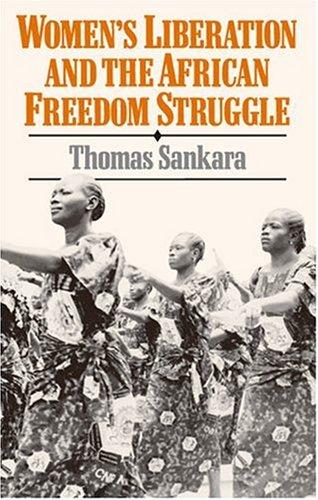
“There are no true social revolution until the woman is liberated. May my eyes never see a society where half of the people is maintained under silence. I hear the racket of this silence of women, I suspect the roar of their storm, I feel the fury of their revolt. I wait and hope for the fertile irruption of the revolution for which they will translate the force and rigorous righteousness coming from their oppressed bowels.”8 mars 1987, Ouagadougou
Thomas Sankara a Ouagadougou
“The people’s democratic revolution needs a people that is confident and not defeated, a people of conviction and not a subjected people who suffer their fate.”4 août 1987
“I have told myself, either I’ll finish up an old man somewhere in a library reading books, or I’ll meet with a violent end, since we have so many enemies. Once you’ve accepted that reality, it’s just a question of time. It will happen today or tomorrow.” October 8th, 1987
One week after Thomas Sankara made this last remark, he was murdered.
Homeland or death, we will triumph!
These quotes can be found in the book “Thomas Sankara speaks” by Pathfinder Press (1988).
Thomas and Mariam Sankara with their children (Source: MyAfricanow.com)
I can only imagine how hard it must have been for Mrs. Mariam Sankara to write this letter, and for her family as well; but to think of the joy they must have felt when Compaoré was booted out of power brings satisfaction, and not tears; to think of the joy they must have felt to know that the Burkinabe people are now rising up, and that a light might now be shed about their husband, father, son, and brother’s assassination to bring them closure. I raise my hat to them, and I thank Mariam Sankara and her entire family, for having lent us Thomas Sankara, for our enlightenment. They made so much sacrifice while he was alive, and now that he is gone, the least we can do, is to express our profound gratitude and support: THANK YOU, and AFRICA will always be with you, and cherish the memory of one of his greatest sons, Thomas Sankara.
Below is the declaration made by Mariam Sankara on the 15 October 1987, this is from ThomasSankara.net. Enjoy!
=========
Thomas Sankara a Ouagadougou
Mesdames, Mesdemoiselles, Messieurs, Chers amis,
L’assassinat du Président Sankara et de ses compagnons, le 15 Octobre 1987, a interrompu une expérience de développement originale et prometteuse de l’histoire de l’Afrique contemporaine.
Je tiens à vous remercier pour votre soutien à toute la famille Sankara et à moi-même ainsi que pour votre fidélité à la mémoire du Président Thomas Sankara.
A travers sa politique, Thomas a défendu, en donnant lui-même l’exemple, les valeurs essentielles telles que l’intégrité, l’honnêteté, l’humilité, le courage, la volonté, le respect et la justice. En mobilisant les différentes composantes de la société, il s’est battu, de façon acharnée, contre la dette, pour le bien être de tous les burkinabè, la promotion du patrimoine culturel burkinabè et l’émancipation de la femme. Il a incité ses concitoyens à se prendre en charge pour vivre dignement. Bref, il a refusé la soumission au diktat des plus puissants de ce monde, a pris la défense des plus faibles et des plus défavorisés.
Imprégnés de ces valeurs et de ces idées, vous avez, à travers l’insurrection populaire des 30 et 31 octobre 2014, mis fin au régime dictatorial de Compaoré. Cette insurrection a permis au peuple de reprendre la parole pour exiger, entre autres, la fin de l’impunité, la réouverture du dossier de justice sur l’assassinat de Thomas Sankara et ses compagnons, celui de Norbert Zongo et tant d’autres.
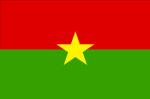
Flag of Burkina Faso
La décision prise au Burkina Faso par les autorités de la transition de rendre enfin justice à Thomas Sankara a suscité un immense espoir au Burkina, en Afrique en général et dans le monde. Mais on est toujours dans l’attente de la justice.
La requête de la société civile et des familles est claire. Nous voulons connaître au plus vite les commanditaires et les exécutants de cet assassinat et ceux des autres crimes.
Retarder la quête de vérité, c’est jouer le jeu des assassins de Thomas Sankara et de ses compagnons. Ne pas rendre justice, c’est refuser une sépulture digne pour Thomas Sankara et ses compagnons, c’est empêcher les familles de faire leur deuil.
C’est la raison pour laquelle, le peuple burkinabè et ses amis doivent rester mobilisés et relancer la campagne pour que trente ans après, justice soit enfin rendue à Thomas Sankara et à ses compagnons.
Chers compatriotes, notre famille salue votre initiative visant à ériger un mémorial à la mémoire de Thomas Sankara.
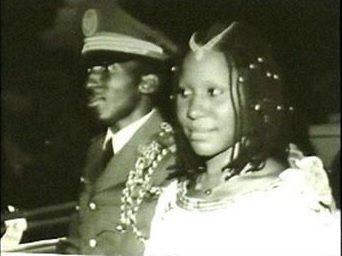
Thomas and Mariam Sankara on their wedding day (Source: Africanglobe.net)
Nous sommes attachés, comme nombre de nos compatriotes, à la défense et à la sauvegarde de la mémoire de Thomas Sankara. Je tiens à saluer cette initiative de la société civile, conduite par l’association CIMTS (Comité International pour le Mémorial Thomas Sankara). Ce projet de Mémorial bénéficie du soutien populaire. Une démarche consensuelle et inclusive devrait permettre de réaliser un ouvrage de qualité qui témoignera de la vitalité des idées de Thomas et de ses fidèles compagnons de la révolution du 4 Août 1983. Toutefois, la famille tient à ce que ce mémorial ne soit pas construit dans l’enceinte du Conseil de l’Entente qui rappelle de douloureux souvenirs en raison des assassinats et des tortures qui ont marqué ce lieu.
“We are heirs of the revolution” by Thomas Sankara
Avec toutes ces volontés de valorisation de la mémoire de Thomas observées à travers le monde, on se rend compte avec le temps que Thomas Sankara était un visionnaire. Conscient des actions des détracteurs de la révolution, il savait qu’il était incompris parce qu’il était en avance sur son temps. Il dira alors : « tuez Sankara, des milliers de Sankara naîtront ». Ceci est devenu une réalité. On constate aujourd’hui que la jeunesse s’imprègne de ses idées progressistes pour transformer la société.
Trente après sa disparition, la pensée de Thomas reste vivante et d’actualité.
Encore une fois, je vous félicite pour votre mobilisation et pour votre fidélité à la mémoire du Président Thomas Sankara.
30 ans de résistance !
30 ans d’impunité !
Rendez enfin justice à Thomas Sankara et ses compagnons ainsi qu’à toutes les victimes des crimes impunis !












 “
“


 African Heritage