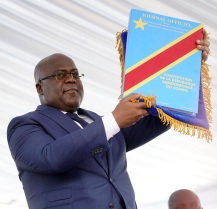
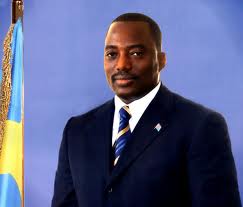
During the last elections held on 30 December 2018 in the Democratic Republic of the Congo (DRC), Félix Tshisekedi was pronounced winner . He defeated another opposition leader, Martin Fayulu, as well as Emmanuel Ramazani Shadary, who was supported by term-limited outgoing president Joseph Kabila. Immediately, the ‘international community (I.C.)’ pounced on Tshisekedi claiming that he could not have won, and that it was but Martin Fayulu the second who had won. There were even threats by the ‘international community’ via the French government through her Ambassador to the Congolese government. Tshisekedi’s victory has since then been upheld by the constitutional court of the DRC, and he was installed as president on 24 January 2019.

In Cameroon, the story is a fair tale. After the 7 October 2018 presidential elections, opposition candidate Maurice Kamto, from all indications, came out winner of the elections against outgoing president, Paul Biya, who has been in power for the past 37 years… It was total silence by the I.C., in the case of Cameroon, who saw nothing wrong with a man who had been in power 37 years! They clapped and called those elections a standard of democracy! In the western media, there was no mention of Maurice Kamto, and the international community saw nothing wrong with the results of a presidential election being read 2 weeks after polling took place! This is the same international community that was so eager to get the results out in a timely manner in other countries such as the DRC, Madagascar, etc. Yet, Maurice Kamto won the elections and no mention of what happened to him took place. For Kabila in the DRC, the international community, via its medias, spent long time telling the world how Kabila had been in power for 18 years, and how anti-democratic that was. Yet in Cameroon, Paul Biya has been in power for 37 years, and they are clapping and calling the electoral hold-up democratic!

Since then, Cameroon has further descended into the abyss that it slipped into 37 years ago. Not only is the Cameroon territorial integrity in question: Boko Haram in the North has cut off the 2 northernmost regions from the rest of the country, the 2 English-speaking regions are cut off from the country ; in the East of the country, armed bands coming from the Central African Republic (CAR) are terrorizing the population, and in the Adamawa Region, armed groups coming from CAR are kidnapping people for ransom including traditional chiefs and stealing cattle; there are refugees both inside and outside the country, and post-electoral violence has ushered in a profound exacerbation of tribalism leading to the politics of divide-and-conquer. It looks like the ultimate objective is dividing Cameroon, like in Sudan, with an exacerbation of ethnic differences with a further push toward chaos for better exploitation of the country’s resources and emptying it of its youths.

If the I.C. can scream for DRC, and publish articles about Martin Fayulu being the winner in its media the day after publication of results, with the catholic church complaining about results, why does it not show any indignation or some concern for Cameroon? How can a 37-year-old rule in Cameroon be applauded and referred to as being democratic by the I.C., while an 18-year rule in DRC is called a dictatorship? Why is 85-year-old Paul Biya’s 37-year rule being applauded when Mugabe in Zimbabwe was vilified? How can Biya, with nothing to show for his stewardship, not even the integrity of his territory, not even roads, but total chaos and backwardness, be applauded by BBC, RFI, The Guardian, and France 24? How can a president purposely destroy its country including its resources and be applauded by this so-called democratic I.C.? Well, because he serves the interests of the I.C., and has been a good student and puppet in helping the I.C. pillage the resources of his country. Cameroon is so rich in natural resources: oil, cocoa (6th producer), coffee, natural gas, gold, diamond, etc. In the robbery that is so synonymous with France’s predatory behavior in Africa (particularly in its so called “pré-carré”), why should this be a surprise? France’s nature in Africa, and the I.C.’s in general, has been and remain predatory.
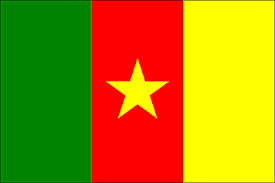
In Cameroon today, there is a strong dictatorship. The mafia that is synonymous with this regime has been repressing in blood all peaceful demonstrations and marches for the upholding of the genuine electoral results. All protest marches calling for the electoral records to be published are either banned or have seen the winner of the elections Maurice Kamto and his team arrested, including many innocents who have been screaming for a change, for a chance to have better life, roads, jobs, better healthcare, etc. People in the English-speaking provinces have been, hurt, beaten or killed, for simple claims which are basic human rights. A lot of them are currently displaced… people in the north provinces have been displaced, and hurt by Boko Haram… yet BBC, RFI, and the likes of them say nothing! Instead they applaud a government which refuses to negotiate with its own people. We do not ask them to intervene, but if those medias are supposed to be impartial, then they should be impartial, otherwise they should clearly state their agenda: portrayal of Africa as poor and in need of help, pillaging of African resources, promotion of wars on the African continent to help their cronies those western multinationals destroy and get all resources for nothing.

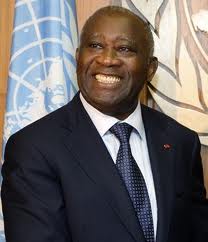
We, Africans, should recognize that we are not, and never were independent. We should protest and fight pacifically like this is our last fight. A mother sending her child to school, a father being able to feed his family, university graduates finding jobs in countries where everything is yet to be built, roads, water, electricity, basic human rights to respect, all of that are rights… and it looks like we will have to earn them ourselves. Like Thomas Sankara said, “the slave who is not capable of assuming his rebellion does not deserve that we feel sorry for him. This slave will respond only to his misfortune if he is deluding himself about the suspect condescension of a master who claims to free him. Only struggle liberates… [ … l’esclave qui n’est pas capable d’assumer sa révolte ne mérite pas que l’on s’apitoie sur son sort. Cet esclave répondra seul de son malheur s’il se fait des illusions sur la condescendance suspecte d’un maître qui prétend l’affranchir. Seule la lutte libère …(Discours de Sankara à l’ONU le 4 octobre 1984 (texte intégral) Speech delivered on October 4, 1984 during the UN general Assembly)].” DO NOT trust this condescending I.C., DO NOT trust their media that is very partial, and were all against Laurent Gbagbo, who today has been acquitted from crimes invented by this I.C. and its cronies. We have to fight for our own rights, our own freedom, acknowledge that we are in charge of our own destinies, and never expect some partial Western media to report on the truth!