
In recent months, racial and social justice, and systemic racism have been at the forefront of the battle for human equality. A few days ago, Mrs. Gisele Yitamben wrote a piece for the World Economic Forum (WEF) where she addressed a very important point in the battle against systemic racism, namely the fact that the history of the victim needs to be told accurately in all its glory and entirety for the healing process to start. There is a saying that “until the lion tells its story, the hunter will always be the hero.” Mrs Yitamben has been most gracious to share with us her ideas on ways to address systemic racism, and expand on her WEF article here. Enjoy!
======
History of Histories is Needed to Address Systemic Racism
By Gisele Yitamben*

“Systemic racism” is used to talk about all of the policies and practices entrenched in established institutions that harm certain racial groups and help others. “Systemic” distinguishes what’s happening here from individual racism or overt discrimination, and refers to the way this operates in major parts of society: the economy, politics, education, and more.
Systemic racism is also a form of racism that is embedded as normal practice within society or an organization. It can lead to such issues as discrimination in criminal justice, employment, housing, health care, political power and education, among other issues.
“Systemic racism has its roots in extractive capitalism”

It is “a deeply rooted prejudice, combined with institutional power and systemic oppression of certain groups of people.” continuing inequalities in education, housing, employment, wealth, and representation in leadership positions are rooted in humanity’s shameful history of slavery and systemic racism.
In the case of African and people of African descent, it is a direct consequence of doctrine patiently distilled, policies developed and communications put in place to downgrade the blacks with the end results of taking their wealth, their souls.
To support the Portuguese expansion, Pope Nicholas V issued a Papal bull on 18 June 1452 authorizing Afonso V of Portugal to conquer Saracens (Africans) and pagans and consign them to “perpetual servitude”. Successive popes reiterated the Bull: Pope Callixtus III in 1456 with Inter Pope Sixtus IV in 1481 and Pope Leo X in 1514 with precise denotations.
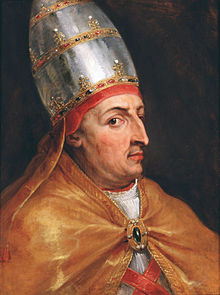
This position of the Catholic Church, accompanied by the legend of Shem in the Bible, that the noble institution disseminated without being encumbered with its real textual and theological foundation, too happy to have new territories of crusades, of evangelization, would be authority sweeping the reluctance herding slave traders and neophyte traders.
The position of the Catholic Church in relation to the slave trade was not going to be an epiphenomenon, far from it, its encouragements to enslavement would continue throughout the Negro period, like doctrinaire activism of the eminent French theologian Bellon de Saint Quentin, who used the “Holy Scriptures” to free the conscience of those who relied on his science.
All sorts of means will be used to dehumanize races, as a matter of policy to seek to assimilate cultures, for example, US and Canada, established boarding schools, prevented native language speaking, and separated children from their parents to put them in foster homes.
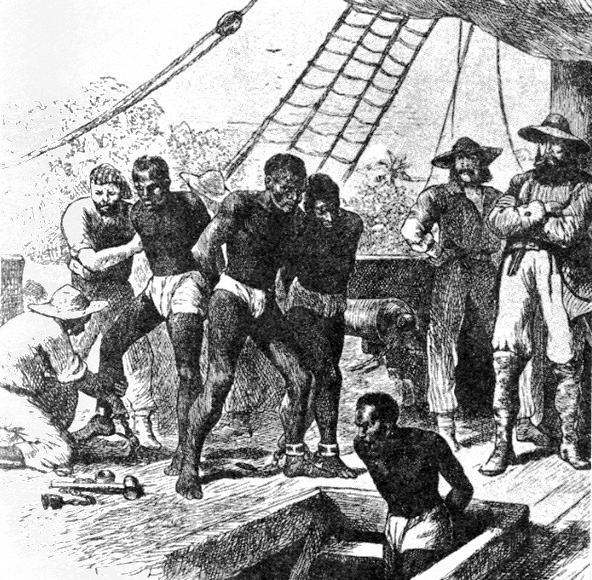
“People went as far as exhibiting Africans in Zoos”
Human zoos
Paris, the capital of lights celebrated 100 years of freedom, equality and fraternity in 1989 with a “Universal Exhibition”. In addition to the brand new Eiffel Tower, the main attraction offered to the 28 million visitors to the “Universal Exhibition is the “Negro village” and its 400 Africans, exhibited on the Esplanade des Invalides, in the middle of the colonial pavilions. For ten years, these indigenous villages have been present in most of the major exhibitions, and they continued to be so for much of the 20th century in Hamburg, London, Brussels, Chicago, Geneva, Barcelona, Osaka. Senegalese, Nubians, Dahomeans, Egyptians, Lapps, Amerindians, Koreans, and other so-called exotic peoples were thus presented in an environment evoking their countries, often in junk costumes and alongside wild beasts. More than 1 billion visitors rushed to these exhibitions between 1870 and 1940.
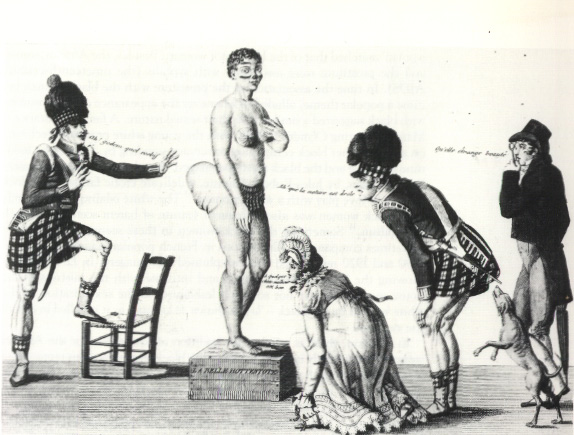
One of the most pathetic cases, of those human zoos, is that of Sarah Baartman, who was put on display around Europe as a sexual freak, paraded naked on runways by a keeper who obliged her to walk, sit or stand so that audiences could better see her protruding backside
Even when she died, destitute and diseased, the ”Hottentot Venus,” as she was called, did not get a decent burial. Napoleon Bonaparte’s surgeon general made a plaster cast of her body before dissecting it. He preserved her skeleton and pickled her brain and genitals, placing them in jars displayed at Paris’s Museum of Man. Her brain, skeleton, and sexual organs remained on display in a Paris museum until 1974. Her remains weren’t repatriated and buried until 2002.
It was President Nelson Mandela who took up the cause of trying to get the young woman’s remains a proper resting place. Nelson Mandela sought the intervention of President François Mitterrand for his help in the matter when the two men met in South Africa in 1994. It took 8 more years to finally get Sarah buried.
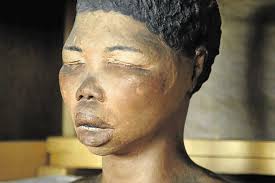
For more than five centuries, the Doctrine of Discovery and the laws based upon it have legalized the theft of land, labour and resources from Indigenous Peoples across the world. This has regrettably rendered indigenous peoples to be seen as dolls (see history of Sarah Baartman) that appeared not to have made any contribution to the evolution of mankind. Research has proven that modern day medicine took roots from traditional medicines practised by indigenous people. It is the same with other domains of social science.
Addressing the root causes of systemic racism and bias
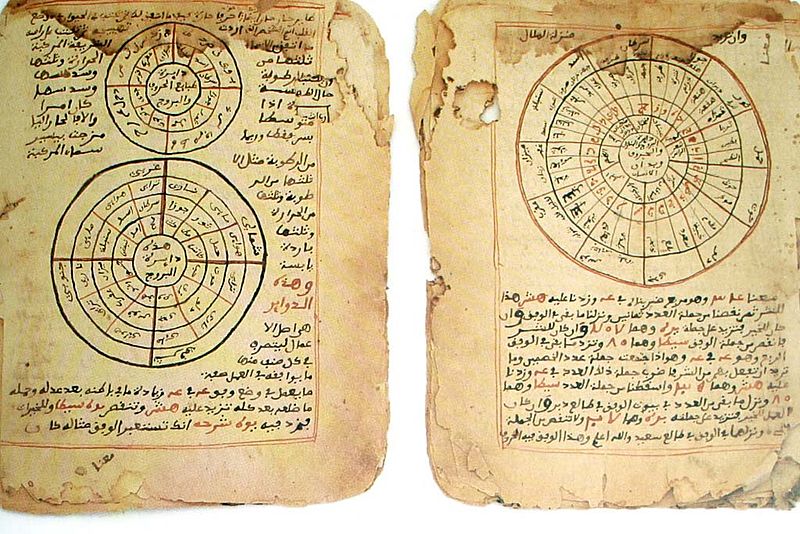
As a Black woman in Africa, I am living the reality that the “deep roots” of systemic racism lie in extractive capitalism on this continent. Slavery, the colonization of Africa and the economic exploitation and speculation that continues today, are driven by greed for profit which is underpinned by cheap replaceable labour and raw materials seemingly at any cost, using obnoxious cooperative accords inherited from the colonial era [The Charter of Imperialism]. Ultimately, it is greed that has led all European to the systematic and methodical devaluation of all Africans. For centuries, African peoples have been discounted and devalued as the colonizers sought to maximize profits and focused on their own needs and “happiness”. This mindset continues to drive racist attitudes today. What is amazing is that the exploitation of African resources have been going on for 500 years and the minerals are showing no signs of depletion [The Lost Libraries of Timbuktu]!!! This should have called in a big change of the system’s approach.
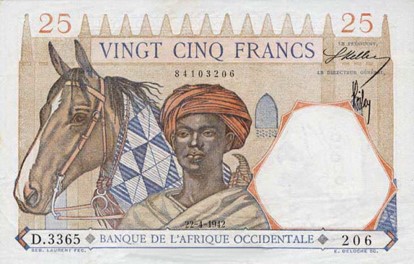
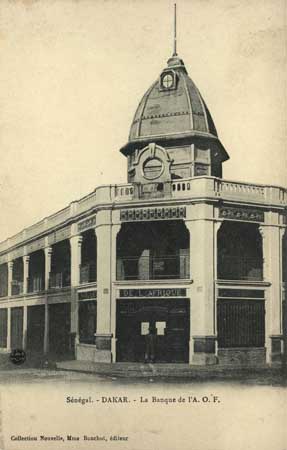
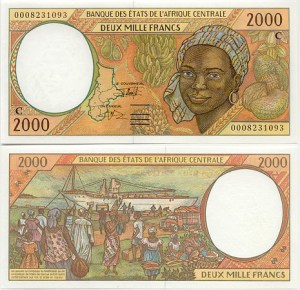
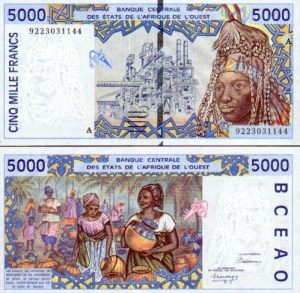
Current approaches to addressing racism have failed for the most part because they have addressed the symptoms but not the root causes of racism. We see this when we consider that while slavery and colonialism were officially abolished, the system of oppression merely transitioned into Central banks serving slave owners [The Bank of Senegal: Ancestor to the FCFA – producing Bank], but not former slaves [Reclaiming History: Britain’s Forgotten Slave Owners], and police forces serving elected officials rather than ordinary citizens. In Liberia for instance, a country populated by ‘freed’ slaves, plantations enslave the rural populace.
If we want to end systemic racism we need to get beneath the surface and understand what’s really going on, especially on an unconscious or subconscious level. And to do this, we need to go beyond campaigns, slogans and figureheads—important as these are—and re-write the real stories of each race and its contribution to humanity.
Writing the history as it happens

It has always been curious to me that the “black pharaohs” of Egypt – powerful Kushite leaders that ruled all of Egypt from Nubia to the Mediterranean Sea from about 760 B.C. to 650 B.C. – have been largely forgotten by history [The forgotten kingdom of Nubia]. This dynasty of leaders embarked on an ambitious building program up and down the Nile, including the construction of pyramids in modern-day Sudan [Africa’s Forbidden Pyramids: Meroe, Nubia, and Sudan], under which their kings are buried. Yet the average person – black and white alike – if you mention pyramids, they think of those in Cairo first, and are not even aware that such structures exist further down the Nile in Sudan because this southern country is mostly a Black country.
“Black people need to start telling their stories”
In confronting racial stereotypes we need to tell the story as it happens and show how the development of the world is made of interwoven efforts; that will rebuild respect. There’s a reason why the Black Lives Matter activists are targeting statues of colonial and slave oppressors – because they recognize that there is power in these stories and symbols that have kept people trapped for centuries. As David Adjaye – lead designer of the Smithsonian Museum’s National Museum for African American History and Culture in Washington DC –once wrote: “there is a direct relationship between symbols and systems and that people are starting to seek complex truths in new symbols that don’t ignore the losers or the forgotten underbelly of history”.

For many years, the narratives about Africa have been about misrule, corruption, poverty and hunger, yet it remains one of the richest continents in terms of mineral wealth and agricultural potential. This is not to discount the reality of poor governance and corruption, which I must stress out is being encouraged and promoted by developed countries within the frame work of the exploitation strategy.; Many people lose their lives each year trying to cross dangerous waters into Europe in search of a better life largely because of these factors [Francis Bebey, Fatou Diome, and Immigration]. But there are positive stories we can tell too.
“When we really know each other, their contribution to common history and see that their solutions also hold value, we may start to shift systems”
Africa needs to take the lead in telling her stories to shape a new perception. This new perception will be positively shaped if truth is told. It is not about begging to be accepted. We need to tell the stories that make visible the things we value, the beauty and the power that have been written out of history. We have a saying – “Until the lioness tells her side of the story, the tale of the hunt will always glorify the hunter.”
Driving systems change at the local level
By telling real Africa’s stories (victories and downfalls) and making Black history more visible we can start the work of unraveling the systems that hold racism and oppression in place, but this alone will not be enough. Systemic racism has also to be tackled at structural, institutional and political levels. A system that has historically devalued a whole group of people is by definition exclusionary; we need to therefore re-design systems that value inclusiveness. In this, solutions cannot be imposed from outside. Those that need change most must be involved in bringing it about.

The COVID-19 pandemic may ironically be showing us a way here. In Cameroun working in remote areas with social entrepreneurs – lockdown measures have effectively cut us off from our usual means of trade; incomes have collapsed and we’ve been forced to create new systems to ensure that people can attend to their basic needs. This has included creating a local currency to allow people to trade during this time and setting up of new localized trade routes. While driven in this instance by necessity, there is power in this approach in that it starts with what is under the control of the beneficiaries and needed and what is valued and then builds around that.
Going forward, we can seek to apply this principle of localization more broadly. When we start to respect others and see that their solutions also hold value, we can start to shift systems. These systems are built on mutual trust.
I believe social entrepreneurs will have a central role to play in this regard by driving localized solutions, for example, creating access to affordable finance for initiatives that can improve livelihoods for future generations of Africans. In this way we can build out a new narrative for the continent and create systems that value people, and their happiness and well-being, over profits.
We are at a historic moment in the fight against systemic racism. There is a wider moral recognition that some things in our society are fundamentally wrong and a broader understanding of the need to address the root causes of these ills. We have an opportunity to uproot systemic racism and it starts with rediscovering what has been forgotten and revaluing what has been systematically devalued.
Gisele Yitamben is the Founder and President of Association pour le Soutien et l’Appui à la Femme Entrepreneur (ASAFE) a social enterprise that provides business training and development services, alternative financing and access to e-commerce to support thousands of women entrepreneurs in Cameroon as well as in Guinea, Benin, Chad and the Democratic Republic of the Congo. She can be reached on myitamben@yahoo.fr



















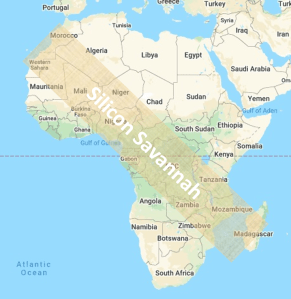 American venture capital and private equity is dominating Africa, but it’s mostly funding other white foreign founders as black entrepreneurs struggle to raise financing.