For the past few years, we have been told about Silicon Valley sponsoring African startups and promoting technology in Africa. Like many, we were happy. However, a recent article by the Guardian sheds lights on the fact that even though Silicon Valley is sponsoring African Startups, it is sponsoring African startups owned by non-Africans!!! Interesting right? That means Silicon Valley is not actually sponsoring “African”-owned startups but non-African owned startups… so much for that! For the full article, go to The Guardian.
====
American venture capital and private equity is dominating Africa, but it’s mostly funding other white foreign founders as black entrepreneurs struggle to raise financing.
… North America-headquartered investors accounted for 42% of all African venture capital deals in the last five years, according to theAfrican Private Equity and Venture Capital Association. Only 20% of venture cash came from Africa-based investors, forcing the continent’s entrepreneurs to seek support from westerners.
Of the top 10 African-based startups that received the highest amount of venture capital inAfricalast year, eight were led by foreigners, the Guardian’s analysis of public data revealed.
In Kenya, for instance, only 6% of startups that received more than $1m in 2019 were led by locals, aViktoria Ventures analysis found. In Nigeria, 55% of the big money deals went to local founders and 56% for South Africa.
Silicon Savannah
Global heavyweights such as Goldman Sachs, Stanford University, Chan Zuckerberg Initiative, Andreessen Horowitz and Sequoia Capital have all invested in startups started by white founders in Africa more frequentlythan they have invested in firms led by black Africans.
… A white founder is 47,000% more likely to be funded in Kenya than in the US, the Seattle-based author and entrepreneur Roble Mussecalculated based on 2018 disclosures. White people make up less than 1% of the population. He discovered that 65% of expatriate founders – mainly from the US, the UK, Italy, Denmark and Germany – had not even lived in Kenya before they started their companies. …
On the eve of Christmas last year, the Côte d’Ivoire President, Alassane Ouattara, and the French president Emmanuel Macron announced the “end” of the FCFA and the introduction of a new currency, the ECO, to replace the treacherous FCFA currency. Many have applauded the announcement, but to me, it looks more like a coup perpetrated by France on African countries to colonize even the countries it never colonized, … simply by using currency.
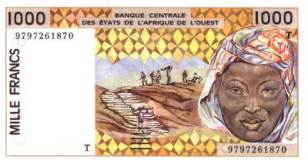
The FCFA is a colonial tax imposed by France on its former colonies which amounts to at least 500 billion Euros every year in the coffers of France without having to raise a finger, as African countries which are part of this FCFA zone deposit 50-60 % (at one point it was 85 %) of their foreign reserves into France central bank.
A few things were already fishy with the Ouattara-Macron announcement:
2. Also, France says the new currency’s value will be pegged to the Euro, similar to the way the FCFA‘s value was pegged to the French Franc, and now to the Euro. The ECO will remain fixed to the Euro, though the required deposits from these nations into French coffers are now eliminated (how true is this?) and France will no longer hold a seat on the UEMOA-linked West African central bank; it will instead send its puppets like Ouattara.
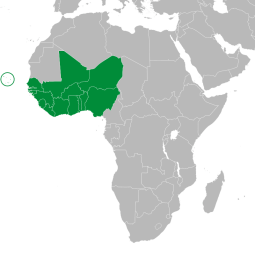
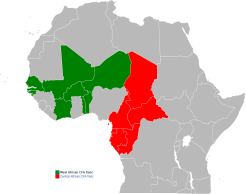
FCFA Map
Why do I call this a coup? The ECO is the currency that the Economic Community of West African States (ECOWAS), 15 members of the West African union, had been working on for years, to be rolled on the entire territory of their union to facilitate exchanges between countries. Thus the name ECO stems from ECOWAS. The 15 member states of the ECOWAS are Benin, Burkina Faso, Cape Verde, Ivory Coast, The Gambia, Ghana, Guinea, Guinea-Bissau, Liberia, Mali, Niger, Nigeria, Senegal, Sierra Leone, and Togo. Out of these 15 countries, 6 are not part of France’s pré-carré, and thus do not use the FCFA: Nigeria, Ghana, Gambia, Cape Verde, Liberia, and Sierra Leone. As you can see, Africa’s second biggest economy, Nigeria with its Naira is part of the ECOWAS, as well as Ghana with its Ghanaian cedi. This is also the reason why only the West African Franc zone countries will move to the ECO while the Central African Franc zone will not: because France is simply stealing the ECOWAS idea! Given the protests in recent years asking for France to step away from the FCFA and to leave African countries alone, France had no real choice but to act as if they had taken into considerations the requests. Now, France is trying to stage a coup on stable economies such as Nigeria and Ghana which have been fighting so hard to re-create President Kwame Nkrumah‘s dream of a common currency in the region and in Africa as a whole.
ECOWAS Flag
In essence, France is simply hijacking the idea of the ECO. More importantly and this is cause for serious action, France is trying to colonize some of Africa’s biggest economies simply by using the currency! This is extremely deceitful, and we pray that Nigeria, Ghana, Gambia, Cape Verde, Liberia, and Sierra Leone, will not fall for this. France is simply trying to harvest where it never sowed (as always), with the help of its puppet, Ouattara!
As a last note, it is about time that we, Africans, those who are still in the FCFA zone, those from whom France collects 500 billions Euros every year, it is high time to awaken, and to break the chains of slavery. Thomas Sankara said in his 1984 speech at the UN, “the slave who is not capable of assuming his rebellion does not deserve that we feel sorry for him. This slave will respond only to his misfortune if he is deluding himself about the suspect condescension of a master who claims to free him. Only struggle liberates …!” AFRICA MUST UNITE and FREE ITSELF!!!
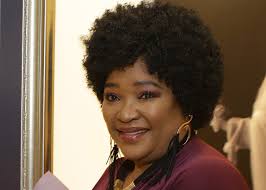
It is with sadness that I learnt of the passing of Zindziswa Mandela, daughter of Winnie Madikizela-Mandela and Nelson Mandela, this past Monday in a hospital of Johannesburg at the tender age of 59. Last child of her parents, she was affectionately called Zindzi. She grew up at the height of the anti-apartheid struggle in South Africa, of which her parents were at the forefront as revolutionaries: she was only 18 months old when her father was thrown in jail for 27 years. She was projected into the spotlight at the age of 16, when her mother was banished to Bramburg, and later on at 25 when her father Nelson Mandela was offered a conditional release in 1985 by the then-State President, P. W. Botha. Her father’s reply could not be delivered by either one of her parents. Consequently, Zindzi was chosen to read his refusal at a public meeting on 10 February 1985.
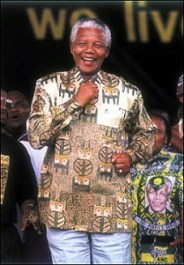
Nelson Mandela clothed in a Pathe’O shirt
In a statement, the Nelson Mandela Foundation said of her legacy, “Zindzi will be remembered for a rich and extraordinary life, marked by many iconic moments. The years she spent banished with Mama Winnie Madikizela-Mandela to the small town of Brandfort. That summer’s day in February 1985 at Jabulani Stadium when she read to the world Madiba’s rejection of President Botha’s offer of a conditional release from prison. Her own courageous work in underground structures. Public service as South African Ambassador to Denmark. We will also remember her as a special soul.”
Winnie Madikizela Mandela
Zindzi was a very strong woman who went through the struggles of her mother, Winnie, when she was banished and tortured during the apartheid regime; one could say that she was her mother’s closest companion. She had to grow up fast. In his personal archive, Nelson Mandela spoke of Zindzi’s strength, as well as to the nature of their relationship. In a 1969 letter from prison, Madiba noted that Zindzi’s “heart is sore because I am not at home and wants to know when I will come back.” In a 1987 letter to Zindzi, Madiba told her that he had heard from an acquaintance that she was as strong as a rock. He went on: “That is just the kind of remark a father would like to hear about his beloved child. I literally swelled with pride and satisfaction. That remark reached me at the right time, shortly after you had just gone through a rather harrowing experience.” He ended the letter: “Tons and tons of love darling, and a million kisses.”
I leave you here with Zindzi reading her father’s letter of rejection in 1985. You must admit that for a young woman, reading that letter must have required a lot of courage, determination and strength to defy the apartheid regime and stand in front of such a crowd (a full stadium) thirsty for words of encouragement, and hope from their leaders to keep facing the injustices of an inhumane regime. Bold!
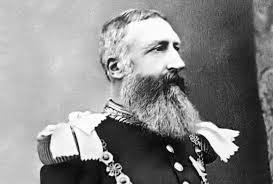
It took over 100 years for a Belgian King to finally ‘express his deepest regrets‘ for Belgium’s colonial past in Congo. As we recall, King Leopold II of Belgium perpetrated a genocide in Congo. Leopold II took Congo, a country at least 10 times the size of Belgium, as his private property and killed millions of Congolese. It is said that he must have executed and maimed over 15 million people!
So now, Belgian King Philippe wrote a letter to the president of Congo Felix Tshisekedi, on 30 June 2020, the anniversary of the Independence of the Democratic Republic of Congo, stating: “During the time of the Congo Free State [1885-1908], acts of violence and brutality were committed that weigh still on our collective memory. The colonial period that followed also caused suffering and humiliations. I would like to express my deepest regrets for the wounds of the past, the pain of today, which is rekindled by the discrimination all too present in our society.” His remarks fell short of an apology! Should we applaud for this?
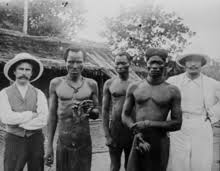
Picture of men holding cut-off hands (image by Alice S. Harris in Baringa 1904)
I say NO! To the Belgian King, I say you can eat your “deepest regrets”! Many are calling this progress, but I call this arrogance to wake up one day, and finally say, “I regret the past. Yes…, my grandfather committed acts of violence and brutality, killed your fathers, mothers, brothers, and sisters, … maimed your forefathers, decapitated so many of you … instilled fear into your psyche… destroyed your livelihood, your culture, and the entire foundation of your society.”
And so what? That’s it? Should we clap for you? where is the apology? Didn’t you think we knew that already? Where is the reparation? Don’t you know that Belgium is nothing without Congo? Coincidentally, King Philippe forgot to include the period following that time, from 1908 to the independence of Congo,and then to nowadays with the treacherous role played by Belgium in the assassination of the Congolese Prime Minister Patrice Lumumba, and countless others, and the unrest in the region to this day.
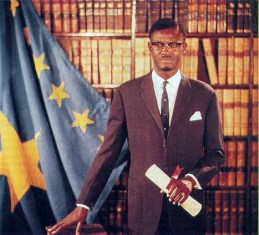
Official portrait of Patrice Lumumba, Prime Minister of Congo
And to stand up there, and say I “express my deepest regrets for the wounds of the past”… it’s like Hitler waking up today, and telling Holocaust survivors and their descendants, “I killed you, jailed your parents, forced you into exile, brought fear into your souls, and decimated every part of you… I regret it. What can you about it? ” It is simply arrogant! … It is just too easy. Until there is a clear “I am sorry”, until there is a clear “here is what we will do to right the wrongs,” until there is a clear “correction and inclusion in the history textbooks, opening of all classified documents”…. until there is a clear “respect for those killed, and for those living today” until then, there will be no respect for arrogant kings who claim to have been awaken by George Floyd’s killing in the USA and not the atrocities they themselves committed in Congo!
We, the people of Congo, cannot forget… we cannot forget that the unrest in Congo today is a direct result of the atrocities committed by Belgium in the region. We cannot forget the souls of our ancestors who still cry to us for justice today.
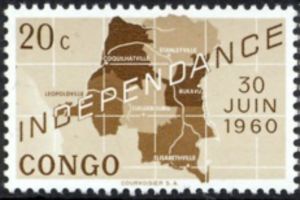
Today, we will do a Memory recall… Please enjoy this great independence speech delivered by Patrice Lumumba in 1960 to the people of Congo, few months before his assassination. It is a pure jewel! The French version is here →LUMUMBA discours. Don’t forget to watch the video!!!
——————-
Men and women of the Congo,
Victorious fighters for independence, today victorious, I greet you in the name of the Congolese Government. All of you, my friends, who have fought tirelessly at our sides, I ask you to make this June 30, 1960, an illustrious date that you will keep indelibly engraved in your hearts, a date of significance of which you will teach to your children, so that they will make known to their sons and to their grandchildren the glorious history of our fight for liberty.
For this independence of the Congo, even as it is celebrated today…
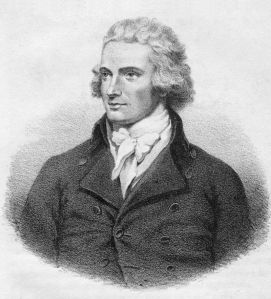
Below is a description of the great city of Ségou (pronounce Segu) in Mali by the Scottish explorer Mungo Park in 1795. Here he describes the city’s population density, dynamism, architecture, and even their ways of life. He amply describes the roominess and surprised sturdiness of Ségou’s canoes which could host 4 horses. Mungo Park is simply astounded by the greatness of the civilization he encounters there, and concludes, “the crowded population and the cultivated state of the surrounding country, formed altogether a prospect of civilization and magnificence, which I little expected to find in the bosom of Africa.” Note that the city is surrounded by high mud walls probably similar to the Tata of Sikasso: an African Fortifying Wall.
=====
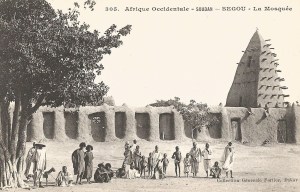
The Mosque in Segou at the beginning of the 20th century
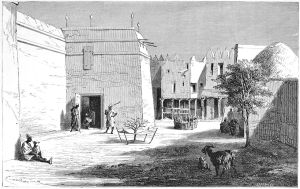
Sego, the capital of Bambarra, at which I had now arrived, consists, properly speaking, of four distinct towns ; two on the northern bank of the Niger, called Sego Korro, and Sego Boo and two on the southern bank, called Sego Soo Korro and Sego See Korro. They are all surrounded with high mud walls ; the houses are built of clay, of a square form, with flat roofs ; some of them have two storeys, and many of them are whitewashed.
Entrance to Ahmadu’s palace in Segou-Sikoro published in the 1868 edition of the book by Eugene Mage Voyage dans le Soudan occidental (Sénégambie-Niger), Paris: Hachette
Besides these buildings, Moorish mosques are seen in every quarter ; and the streets, though narrow, are broad enough for every useful purpose, in a country where wheel-carriages are entirely unknown. From the best enquiries I could make, I have reason to believe that Sego contains altogether about thirty thousand inhabitants. The king of Bambarra constantly resides at Sego See Korro ; he employs a great many slaves in conveying people over the river, and the money they receive (though the fare is only ten cowrie shells for each individual) furnishes a considerable revenue to the king in the course of a year. The canoes are of a singular construction, each of them being formed of the trunks of two large trees, rendered concave, and joined together, not side by side, but end ways ; the junction being exactly across the middle of the canoe ; they are therefore very long and disproportionably narrow, and have neither decks nor masts ; they are, however, very roomy ; for I observed in one of them four horses, and several people crossing over the river. When we arrived at this ferry, with a view to pass over to that part of the town in which the king resides, we found a great number waiting for a passage ; they looked at me with silent wonder, and I distinguished, with concern, many Moors among them. There were three different places of embarkation, and the ferrymen were very diligent and expeditious ; but, from the crowd of people, I could not immediately obtain a passage ; and sat down upon the bank of the river, to wait for a more favourable opportunity The view of this extensive city ; the numerous canoes upon the river ; the crowded population and the cultivated state of the surrounding country, formed altogether a prospect of civilization and magnificence, which I little expected to find in the bosom of Africa.
*The four cities mentioned here are actually on the southern shore, but there are on the northern shore some neighborhoods to which Mungo Park attributed excessive importance.
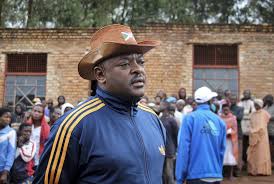
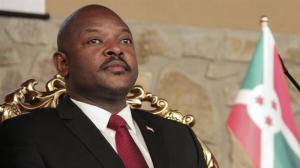
Pierre Nkurunziza during a community event (Source: PressHerald.com)
Given all the negative rhetoric played by the foreign media, I thought it will be good to remind all of Pierre Nkurunziza‘s achievements. I will focus mostly on his work within his country of Burundi. As we saw earlier, internationally he helped broker peace in Somalia.
A popular president
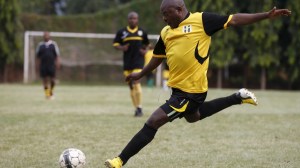
A president in office doing manual work, taking part in soccer games, had never been seen before. This president, Pierre Nkurunziza, was not a “traditional” president in his white marble castle, but was seen rather as a simple man, a man of the people, a man like the people he served. He was seen cycling, and taking part in community work. He was also an avid soccer player and lover; he owned a soccer team and trained them.
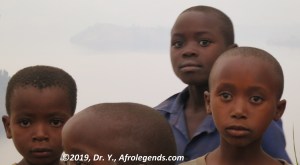
Some children
Free education and health
During his investiture, some of his first adopted measures were free primary school education (i.e. from Kindergarten through 6th grade), free childbirth, and free health for all children under 5. This might not be seen as much, but in a poor country such as Burundi, free primary school education definitely increases the literacy of the people and offers parents very needed help. Similarly, free health services for women during childbirth, and for children under 5 is a tremendous help. This is an achievement not seen in many places in the world, not even in Western countries.
A religious president
Nkurunziza was not afraid to show his faith. He was deeply religious. For each public event, or manual work, prayers were said at the beginning and at the end of these events. This led him to put God first in the constitution of the country, as well as establishing a day of national solidarity.
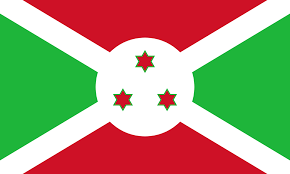
Flag of Burundi
A Patriot
He deeply loved his country Burundi and his people. He pushed for ancient local cultures and values long forgotten to be re-instated and taught in schools. He established the national day of the commune which is celebrated in the old fashion.
The works
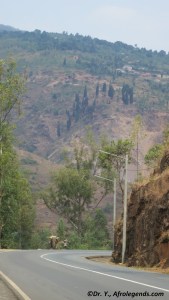
During his tenure, from 2007 to 2014,5200 schools were built, compared to 1900 schools from 1962 to 2007. Several roads were asphalted and created RN12, RN13, RN15, RN18, RN19, … Hospitals and community universities, classrooms, stadiums, modern markets, including the new Ntare Rushatsi presidential palace were erected.
Most importantly, he is the first president of Burundi to have ruled the country without a civil war.
So long Pierre Nkurunziza: we, the people, salute your patriotism, love of your country, and people. You will be remembered for your great achievements.
This past Monday, the relatively young (55 years-old) president of Burundi, Pierre Nkurunziza, died of a heart attack. It deeply saddened me. Why? Because of what he stood for, and his will to give decency to his own people or rather to govern his country without foreign involvement in their affairs. Pierre Nkurunziza was the first president of Burundi to have ruled without civil war.
With this global ‘pandemic,’ It has finally been understood that whatever the West calls democracy is not really democracy, but rather the government of the entirepopulation by a few. In the past, people have said that Pierre Nkurunziza was not a democrat and was holding onto power. Yet… he had been in power 15 years due to step down in August, and I did not hear the West complain about his neighbor Kagame in power for over 20 years. It is as if democracy is a word or rather a card pulled out of a bucket by Western powers to threaten those who prefer to do the bidding of the people rather than their bidding.
Flag of Burundi
Given that he had asked the UN to get out of his country last year, and then last month the WHO, and was one of the few countries to get out of the WHO because of their compromising and virulent tendencies in his country… is it a surprise that he died so suddenly?
Nobody talks about his achievements. What were Pierre Nkurunziza’s achievements?
Upon assuming office in 2005, Nkurunziza faced the significant challenges of maintaining peace and stability in the country, as well as rebuilding its war-battered economy. Burundi was emerging from over 10 years of civil war and unrest when he took over.
He united the country and brought in peace, during his first 10 years.
He rebuilt the infrastructures of his country, and oversaw the disarmament of several armed groups in Burundi.
He helped foster peace in the region: in 2007, he sent troops to Somalia as part of an African Union peacekeeping mission to prevent al-Shabab, an al-Qaeda-linked armed group, from overrunning the Horn of Africa country’s government.
Pierre Nkurunziza was an avid footballer (Source: Al-Jazeera)
The East African Community, a regional bloc, said in a statement: “Nkurunziza’s contribution to the re-establishment of constitutional order, peace, ethnic tranquility, rights and equality for all since his ascendancy to power in 2005 in Burundi cannot be overemphasised.”
“His commitment to security and rights for all irrespective of social, ethnic, religious or political background remains a beacon on which Burundians can build on to further their development objectives,” it added.
In 2015, Nkurunziza made the controversial decision to seek a third term in office. A coup was launched in May 2015 while Nkurunziza was abroad, but it was swiftly foiled. Despite several delays, an opposition boycott, and ‘international’ pressure (we know what that means), polls were held and Nkurunziza won a third term. After the 2015 elections, the situation took a turn for the worse, when donors cut off funding and placed sanctions on Burundi (similar to Côte d’Ivoire when France was bombing it in 2010, or Libya with the NATO coalition in 2011, or Zimbabwe). History repeats itself, we now know that when a country is placed under ‘international’ sanctions, it is usually because the leader might be serving his people.
In 2017, Nkurunziza formally withdrew Burundi from the International Criminal Court (ICC) – the first country to do so – amid accusations the court was focusing too much on the continent. Every African country should withdraw from that sham called ICC which only prosecutes African (Black) leaders. Later the UN left (remember ONUCI taking sides in Côte d’Ivoire?), and BBC and VOA were kicked out of the country for inciting violence, and spreading false news.
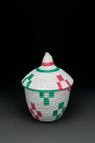
Burundi basket
In the streets of Bujumbura, “some residents said they would remember the former leader [avid football player], a born-again Christian known for his preaching, for the good things he did for their country.”
“I will remember him for the advice he gave us. He always told us to love our country. He always put God first and someone who does that will not face hardships in life,” Achel Niyongere told Al Jazeera.
Patrick Harakandi added: “He is the first president to govern Burundi until he finished his term. He made history. He ruled Burundi for 15 years without a civil war.” (Al Jazeera)
Thanks to my blogging friend petrel41, of The Dear Kitty. Some Blog blog, for the Vincent Ehindero Blogger Award! It is a new award for me. I ‘d like to say “a big thank you” for the consideration and kindness. Please check out The Dear Kitty. Some Blog for amazing images and videos of wildlife and more…
The RULES of this award are:
Thank the blogger who nominated you and provide a link to their blog.
Post the award logo.
Post the rules.
Nominate up to 20-30 other bloggers and notify them.
After notifying Vincent, he’ll check out your blog, follow and give you your unique award for the good work on your blog.
Like Kim said in her original post, we’re not sure if we are supposed to add a list of questions the nominees are supposed to answer, but I guess I’ll do it.
Here are petrel41’s questions and my answers:
1. Do you have long or short hair? At the moment, short.
2. Fantasy or Historic Fiction? fantasy.
3. What book do you like a lot, but you dislike the author, because of background, etc.
Not sure…
4. Have you ever watched a movie that was better than the story that it was based on?
No.
5. If you could visit one place in the world right now where would it be?
Greenland – I don’t understand how a country which is covered in ice half of the year can be called ‘green land’. Apart from that, I would love to visit each of the countries of my many blogging friends.
My questions to my nominees are the same as petrel41’s questions.
My nominees are: I have so many bloggers’ friends and I am sure I might have left out some… but below are some of the few, and there is no particular order… ultimately, I would like to nominate all my friends here on WordPress. So I’ll welcome any blogger who wants to participate on this Award. Please answer the same questions above.
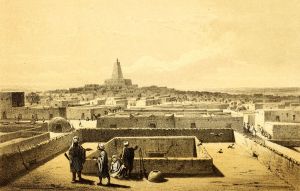
View of Timbuktu in 1858 by explorer Heinrich Barth
As you all know Timbuktu was a great center of knowledge in search for for many centuries starting at least in the 12th century. It was visited by people from around the world, in search of knowledge.
Timbuktu was one of the world’s first and oldest thriving universities! Students came from all over the world to study at Timbuktu. Imagine that, students from the middle east, and Europe coming to study in Africa! There are over 700,000 manuscripts at the great Sankore University in Timbuktu, and many more at other libraries including the Ahmed Baba Institute, Al-Wangari Library, and others.
Enjoy this documentary about the lost libraries of Timbuktucommented by the Scottish/Sierra Leonean writer Aminatta Forna. Enjoy, and discover with me the treasures of Africa.


 American venture capital and private equity is dominating Africa, but it’s mostly funding other white foreign founders as black entrepreneurs struggle to raise financing.








 During his tenure, from



 African Heritage