Patrice Lumumba’s Remains Land in Congo and His Last Letter to His Wife

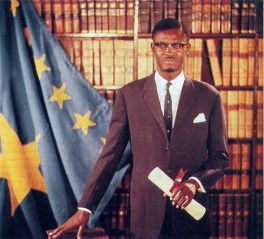
Patrice Lumumba

As the remains, the golden tooth, of Patrice Lumumba is finally getting returned to his family and his nation after over 60 years, I felt it was necessary to share here Patrice Lumumba’s beautiful letter to his wife which happens to be his last letter. Although it is a sad letter, it is full of hope at the thought that one day Congo will be free. Roland Lumumba, his son, said in his interview to France24, “Only the dead can forgive, the living do not have the right to forget.” Entirely true… Lumumba would not allow us to forget his fight for the Congolese freedom, just as he would not want us to forget those who died at the hands of King Leopold II in the rubber plantations of Congo (King Leopold II and the Congolese genocide)… it is part of our history. As we fight for our freedom, we need to remember, and get inspired from the fight of those who came before us.

Almost a decade ago, I published the letter here on Afrolegends.com, and it has gained in significant popularity since then. La Dernière Lettre de Patrice Lumumba / Patrice Lumumba’s Last Letter. Enjoy!

Ma compagne chérie, Je t’écris ces mots sans savoir s’ils te parviendront, quand ils te parviendront et si je serai en vie lorsque tu les liras.  Tout au long de ma lutte pour l’indépendance de mon pays, je n’ai jamais douté un seul instant du triomphe final de la cause sacrée à laquelle mes compagnons et moi avons consacré toute notre vie.  Mais ce que nous voulions pour notre pays, son droit à une vie honorable, à une dignité sans tache, à une indépendance sans restrictions, le colonialisme et ses alliés occidentaux—qui ont trouvé des soutiens directs et indirects, délibérés et non délibérés, parmi certains hauts fonctionnaires des Nations, cet organisme en qui nous avons placé toute notre confiance lorsque nous avons fait appel à son assistance—ne l’ont jamais voulu.

Ils ont corrompu certains de nos compatriotes. Ils ont contribué à déformer la vérité et à souiller notre indépendance.  Que pourrai je dire d’autre ? 

Que mort, vivant, libre ou en prison sur ordre des colonialistes, ce n’est pas ma personne qui compte.  C’est le Congo, c’est notre pauvre peuple dont on a transformé l’indépendance en une cage d’où l’on nous regarde du dehors, tantôt avec cette compassion bénévole, tantôt avec joie et plaisir.  Mais ma foi restera inébranlable.  Je sais et je sens au fond de moi même que tôt ou tard mon peuple se débarrassera de tous ses ennemis intérieurs et extérieurs, qu’il se lèvera comme un seul homme pour dire non au capitalisme dégradant et honteux, et pour reprendre sa dignité sous un soleil pur.

Nous ne sommes pas seuls.  L’Afrique, l’Asie et les peuples libres et libérés de tous les coins du monde se trouveront toujours aux côtés de millions de congolais qui n’abandonneront la lutte que le jour où il n’y aura plus de colonisateurs et leurs mercenaires dans notre pays.  A mes enfants que je laisse, et que peut-être je ne reverrai plus, je veux qu’on dise que l’avenir du Congo est beau et qu’il attend d’eux, comme il attend de chaque Congolais, d’accomplir la tâche sacrée de la reconstruction de notre indépendance et de notre souveraineté, car sans dignité il n’y a pas de liberté, sans justice il n’y a pas de dignité, et sans indépendance il n’y a pas d’hommes libres.

Ni brutalités, ni sévices, ni tortures ne m’ont jamais amené à demander la grâce, car je préfère mourir la tête haute, la foi inébranlable et la confiance profonde dans la destinée de mon pays, plutôt que vivre dans la soumission et le mépris des principes sacrés.  L’histoire dira un jour son mot, mais ce ne sera pas l’histoire qu’on enseignera à Bruxelles, Washington, Paris ou aux Nations Unies, mais celle qu’on enseignera dans les pays affranchis du colonialisme et de ses fantoches.  L’Afrique écrira sa propre histoire et elle sera au nord et au sud du Sahara une histoire de gloire et de dignité.

Ne me pleure pas, ma compagne.  Moi je sais que mon pays, qui souffre tant, saura défendre son indépendance et sa liberté.

Vive le Congo !  Vive l’Afrique !

Patrice Lumumba

My beloved companion, I am writing these words not knowing whether they will reach you, when they will reach you, and whether I shall still be alive when you read them.  All through my struggle for the independence of my country, I have never doubted for a single instant the final triumph of the sacred cause to which my companions and I have devoted all our lives.  But what we wished for our country, its right to an honourable life, to unstained dignity, to independence without restrictions, was never desired by the Belgian imperialists and their Western allies, who found direct and indirect support, both deliberate and unintentional, amongst certain high officials of the United Nations, that organization in which we placed all our trust when we called on its assistance.

They have corrupted some of our compatriots and bribed others.  They have helped to distort the truth and bring our independence into dishonour.  How could I speak otherwise? 

Dead or alive, free or in prison by order of the imperialists, it is not myself who counts.  It is the Congo, it is our poor people for whom independence has been transformed into a cage from whose confines the outside world looks on us, sometimes with kindly sympathy, but at other times with joy and pleasure But my faith will remain unshakeable.  I know and I feel in my heart that sooner or later my people will rid themselves of all their enemies, both internal and external, and that they will rise as one man to say No to the degradation and shame of colonialism, and regain their dignity in the clear light of the sun.

We are not alone.  Africa, Asia and the free liberated people from all corners of the world will always be found at the side of the millions of Congolese who will not abandon the struggle until the day when there are no longer any colonialists and their mercenaries in our country.  As to my children whom I leave and whom I may never see again, to be told that the future of the Congo is beautiful and that their country expects them, as it expects every Congolese, to fulfill the sacred task of rebuilding our independence, our sovereignty; for without justice there is no dignity and without independence there are no free men.

Neither brutality, nor cruelty nor torture will ever bring me to ask for mercy, for I prefer to die with my head unbowed, my faith unshakable and with profound trust in the destiny of my country, rather than live under subjection and disregarding sacred principles.  History will one day have its say, but it will not be the history that is taught in Brussels, Paris, Washington or in the United Nations, but the history which will be taught in the countries freed from imperialism and its puppets.  Africa will write its own history, and to the north and south of the Sahara, it will be a glorious and dignified history.

Do not weep for me, my dear wife.  I know that my country, which is suffering so much, will know how to defend its independence and its liberty.

Long live the Congo!  Long live Africa!

Patrice Lumumba

The Only Remain of Lumumba Finally Returned, 61 years after His Assassination

Patrice_Lumumba_official_portrait
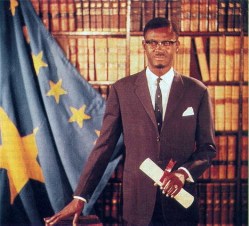
Patrice Lumumba

In 2020, Patrice Lumumba’s Children asked the Belgian King Philip for their Father’s Remains in an open letter. Today, Lumumba‘s golden tooth has been returned to his family and country 61 years after his assassination. For the history, Patrice Lumumba was the prime minister of Congo in 1960, and was assassinated by a coalition led by Belgium, and the US in 1961. At the time of his assassination, it was decided that no trace would be left of his body; thus Belgian officer Gerard Soete and his team dug up and, with a saw dismembered the corpse of Lumumba and his comrades Joseph Okito and Maurice Mpolo, and dissolved them in sulfuric acid while the bones were ground and scattered. We know this from a documentary which aired in 2000 where Soete showed two teeth which he said had belonged to Lumumba. He had taken Lumumba’s teeth as souvenir.  In 2016, Ludo De Witte, author of the book “The assassination of Lumumba,” lodged a legal complaint against Soete’s daughter after she showed a gold tooth, which she said had belonged to Lumumba, during an interview with a newspaper. De Witte’s work has been essential in shattering the official Belgian government silence regarding the assassination of Lumumba.

I cannot imagine what Lumumba’s children, grandchildren, and great grandchildren and all children of mother Congo must feel… it is so painful! It is like the beginning of some closure for the family. Is what was done to Lumumba not considered a crime against humanity? Is returning Lumumba’s tooth supposed to be enough?

Below are some excerpts from the BBC article, “Patrice Lumumba: Why Belgium is returning a Congolese hero’s golden tooth.”

=====

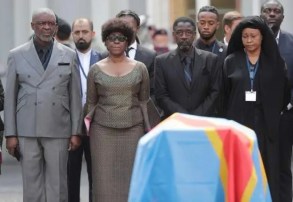
DRC_Lumumba_Children_tooth returned 20220620
Lumumba’s Children during the return of his tooth in Belgium (Source: TheBusinessExecutive.net)

A gold-crowned tooth is all that remains of assassinated Congolese independence hero Patrice Lumumba.

Shot dead by a firing squad in 1961 with the tacit backing of former colonial power Belgium, his body was then buried in a shallow grave, dug up, transported 200 km (125 miles), interred again, exhumed and then hacked to pieces and finally dissolved in acid.

The Belgian police commissioner, Gerard Soete, who oversaw and participated in the destruction of the remains took the tooth, he later admitted.

He also talked about a second tooth and two of the corpse’s fingers, but these have not been found.

The tooth has now been returned to the family at a ceremony in Brussels.

Soete’s impulse to pocket the body parts echoed the behaviour of European colonial officials down the decades who took remains back home as macabre mementoes.

For Lumumba’s daughter, Juliana, the question is whether the perpetrators were human. What amount of hatred must you have to do that?” she asks.

This is a reminder of what happened with the Nazis, taking pieces of people – and that’s a crime against humanity,” she told the BBC.

Nevertheless, there seemed to be a personal element to the way Lumumba was vilified and pursued. The total destruction of the body, as well as a way to get rid of the evidence, seems like an effort to obliterate Lumumba from the memory. There would be no memorial, making it almost possible to deny that he existed at all. It was not enough just to bury him.

But he is still remembered.

[Juliana Lumumba] recognises that her father “belongs to the country, because he died for Congo… and for his own values and convictions of the dignity of the African person.

She acknowledges that the handing over of the tooth in Belgium and bringing it back to the Democratic Republic of Congo is symbolic “because what remains is not really enough. But he has to come back to his country where his blood was shed.”

The tooth will be taken around the vast country before being buried in the capital.

….

The Need for Countries to Protect What is Theirs : How a Dutch Patented the Ethiopian National Grain

Ethiopia_Teff3
Teff (Source: Huffington Post)

I am furious and shocked to learn that it is possible for a Dutch man to patent an Ethiopian national food! Seriously? I know about the greed of patents… but some things should be off-limit or not even allowed! Teff has been a staple food in Ethiopia for at least the past 2000 years. It is a gluten-free cereal high in protein, iron and fibre, which is considered a super-food. It is the essence of Ethiopian and Eritrean cuisines as it is ground into flour to make injera. Truly, there is no Ethiopian food without injera, thus without teff! Imagine my surprise when I learnt that a Dutchman had patented teff in the Netherlands! First of all, I am stunned that someone can patent a natural growing food, or grains, in another country! Is there no end to greed? And then a few hundred years down the line, they will write in history books that teff originated in the Netherlands, not Ethiopia… ! This is how the falsification of history starts! Africa wise up!

Ethiopia_Doro wot
Doro wot on Injera (Injera is made from teff)

For the story, back in 2003, a dozen varieties of teff seeds were sent to Jan Roosjen, a Dutch agronomist in the Netherlands, through a partnership with the Ethiopian Institute of Biodiversity Conservation for research and development. 4 years later, the European Patent Office granted a patent to his company. Later on, when his company went bankrupt, he continued to sell teff products, and then tried to sue another Dutch company that was marketing teff baked goods. This is when it made headlines, and his patent was declared void in the Netherlands, but it is still valid in the rest of Europe; Ethiopia has gotten lawyers to fight for this. Why should Ethiopia even need lawyers for a case that is so obvious? Teff is Ethiopian, end of story! Now the country has to find lawyers to fight… it is like a never-ending cycle made to impoverish the already disadvantaged countries. Is there nothing in international law that stops this? … all these people who study international law don’t see loopholes like this? What if a country is so poor that it cannot afford lawyers, or what if the story had never made international headlines… then Roosjen would have kept benefiting from something that should go to Ethiopian farmers? Should natural food even be allowed to be patented? I leave you here with excerpts and quotes from several Ethiopians about this from the article in BBC Travel… but note that this is not the first time that Ethiopia has fought for its food treasures,  it sued Starbucks for its coffee names in 2007.

====

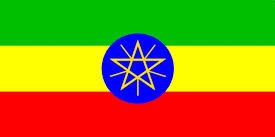
Ethiopia_flag
Flag of Ethiopia

… The dispute over who owns teff made international headlines earlier this year after Roosjen tried to sue another Dutch company that was marketing teff baked goods for patent infringement, and his patent was declared void in the Netherlands. When the deadline for an appeal expired in February 2019, many Ethiopians hailed it as a victory on social media.

Ethiopian diplomat Fitsum Arega tweeted that it was great news. “I hope we can learn from this that our national assets must be protected by Ethiopians & friends of #Ethiopia,” he wrote.

But with Roosjen’s patent still in place in other parts of Europe, the war continues. In February [2019], Ethiopia’s attorney general Berhanu Tsegaye tweeted that the government was determined to defend Ethiopia’s legal rights related to teff. “Ethiopia has already deployed a law firm to fight the teff case internationally,” he wrote.

Ethiopia_Coffee map 1
Ethiopia coffee map showing Harar, Sidamo, and Yirgacheffe (Source: Coffeemaven.com)

It is not the first time Ethiopia has had to protect one of its biggest products, with the country previously going into battle against Starbucks over the use of three premium coffee names. After intense talks, the world’s largest coffee chain and the Ethiopian government reached a licencing agreement allowing Starbucks to sell and market Harrar, Sidamo and Yirgacheffe coffee in 2007. According to a report by the World Intellectual Property Organization, the high-profile dispute greatly increased the value of Ethiopian coffee.

Dr Bula Wayessa, who is an expert in indigenous crops, believes the Dutch teff patent stripped millions of Ethiopian farmers of their rights. “It represents a manifestation of global power relations in which multi-million-dollar corporations based in the global north excise cultural appropriation in Third World countries,” he said. “The flaws in the international legal system that give private companies patent ownership without thorough investigation are disproportionally affecting developing countries such as Ethiopia.”

Dr Wayessa, visiting assistant professor at the State University of New York, New Paltz, was born into a teff-farming family in the Oromia Regional State, which is one of Ethiopia’s nine ethnically based regions. He grew up eating injera twice a day and helped cultivate, tend to and harvest the crop after school and in the summer holidays. … He said teff is not just a crop; it is part of Ethiopia’s cultural heritage. “Teff injera is a major common identity marker across more than 80 ethnic groups living in the country,” he said. “It frames Ethiopians’ indigenous food technology and informs their social and national identities by helping to chart social relationships through gathering around the plate and sharing.”

… Sofonias Melese, head of operations at New Ethiopia Tours, said … “Teff is the backbone of our kitchen. We eat it every day – sometimes three times a day – in almost all regions and tribes.”

King Philippe of Belgium’s Visit to the Democratic Republic of Congo (DRC)

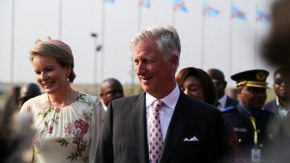
DRC_King Philippe and Queen Matilde visit in Kinshasa
King Philippe and Queen Matilde visit in Kinshasa (DRC) last week (Source: BBC)

Last week marked King Philippe of Belgium’s first visit to the Democratic Republic of Congo (DRC) since his ascension to the throne. He visited with his wife, Queen Matilde. This visit comes two years after the king expressed regret for the monarchy’s colonial record in the DRC [Belgian King Expresses ‘Deepest Regrets’ for Colonial Past in Congo]. Recall that  King Leopold II of Belgium perpetrated a genocide in Congo,  ruling DRC like his personal property and committing some unspeakable atrocities, executing and maiming over 15 million Congolese during that time, in pursuit of the money that rubber (and other things) could bring.

DRC_King Philippe - Mask
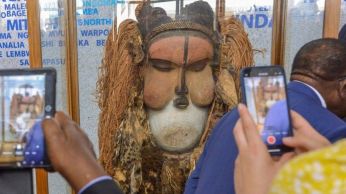
Suku mask known as Kakuungu returned by King Philippe to the DRC during his visit (Source: AFP/BBC)

Some ‘visible’ highlights of King Philippe’s visit last week were: 1) The Belgian king returned a giant mask known as Kakuungu used during healing ceremonies by the Suku people from the southwest region of the DRC; the king said the object was on “indefinite loan” to the DRC… The monarch said, “I wanted, during our visit at the National Museum and in your presence, to return to you this exceptional work in order to allow Congolese to discover and admire it. …It marks the symbolic beginning of the reinforcement of the cultural collaboration between Belgium and Congo.” 2) King Philippe acknowledged the last surviving Congolese World War II veteran soldier, 97 year-old Corporal Albert Kunyuku, who served for Belgium; at a memorial of former fighters a wreath was laid, and King Phillipe presented Corporal Kunyuku with a medal. 3) King Philippe lamented the racial colonial past; the monarch said, “On the occasion of my first trip to Congo, here, in front of the Congolese people and those who still suffer from it today, I wish to reaffirm my deepest regrets for these wounds of the past.”

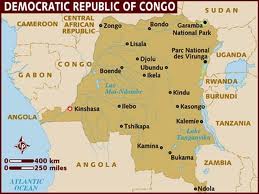
Map of the Democratic Republic of Congo

Honestly, this is so pathetic! First can we all stop and imagine how much this 1-week visit of the Belgian Sovereign must have cost  the people of the DRC? How much were taken from the country’s coffers to accommodate the King and Queen of Belgium? How many hospitals/schools/roads will not be built because of his majesty’s visit? Then the king comes and gives one mask! One mask! Seriously? One? Of all the masks that fill up the Royal Museum of Central Africa as an example, only one? Why that one in particular? Then the mask is given as an “indefinite loan”, the height of disdain! Then, he acknowledges the last surviving soldier to have given his blood and sweat to Belgium… Although we are happy for Corporal Kunyuku, how convenient for the Belgians to wait for all of those they needed to pay pensions to die to have a ceremony with only one survivor left? … What about the families of others who served, did they get recognition from the King, medals, pensions?

Patrice_Lumumba_official_portrait
Patrice Lumumba

Oh how I wish Patrice Lumumba was alive… he would have told the king to shove it! And actually we should all be telling his majesty just that! Keep your fake visit! Instead, tell us the true reasons of your visit: the needs for Belgium to reinforce economic partnership (get free deals from the old colony) amidst the Ukraine/Russia war; isn’t it easier to come sign and make sure all the diamonds, cobalt, and other minerals continue to flow to Belgium (let’s not forget the other European nations and the US) … Will we really want the mighty Belgium to starve without energy from Ukraine/Russia? And more importantly make sure that the DRC, the reservoir of minerals used in all electronics in the world, does not start a friendship with Russia and much more… O poor Africa, you that the King of Belgium visits with one of your masks in hand and expresses regrets without actions… O poor Congo, after getting maimed, and dying on the frontline for Belgium, you get one little medal… the metal of which is not even as pure as what comes out of your own soil!

Rwanda and UK Asylum Seekers, or the £120 million Deal

Rwanda_FlagLast month, Rwanda and the UK signed a deal to repatriate all African migrants that will come to the United Kingdom (UK) in search of a better tomorrow to Africa, and more precisely to Rwanda. The UK will pay Rwanda an “economic transformation and integration fund” amounting to £120 million, and will also fund each immigrant between £20,000 and £30,000 for their relocation and temporary accommodation in the scheme. Where do they find the money? I thought times were hard! Upon arrival in Rwanda, migrants will be temporarily accommodated in the capital Kigali as their claims for asylum are processed. If successful, migrants will then receive permanent residency in the country and be offered permanent accommodation. It is expected that all claims will, at most, take three months to be processed. Once in Rwanda, migrants will not be allowed to return to the United Kingdom to seek asylum. As a skeptic, I wonder how that will work, given that we hear often about over-population in the city of Kigali… Certainly, as I have said countless times, Africa is the richest continent on this planet, and it is about time that we, Africans, stay home to make it work, and get rid of those governments (puppets of the West) that are seated on our destinies instead of risking our lives in the Sahara desert, the Mediterranean Sea, or the English Channel. As a side note, when we know that the Rwandan army is deployed in Mozambique (among other places) to watch over the interests of Total, I doubt that those asylum seekers will really be integrated in Rwandan society as Rwandans, but maybe as extras in the army to be sent out to protect foreign interests in other African countries? Hey, if I were the government of Rwanda, it is a really good deal! Enjoy the article below from AfricaNews.

=====

UK_Flag
Flag of the United Kingdom

Hotels and guest houses in Rwanda are being prepared to accommodate asylum-seekers illegally arriving into the UK.

It’s part of a controversial deal, signed by Rwanda and Britain, to deport illegal migrants to Kigali.

The plan aims to discourage desperate migrants from attempting to cross the English Channel by flying them some 6,400 kilometres to Rwanda where they are expected to stay for good.

Both Britain and Rwanda have faced criticism at home and with at least two UN agencies speaking out about the controversial plan.

Migrants arriving illegally in the UK – often in small boats crossing the English Channel – will have their asylum claims processed in Kigali.

We will welcome these migrants with open arms, we will try to make them forget the problems that made them leave their country,” said Denis Bizimungu, general manager of the Desire Resort Hotel which is being refurbished and renovated to accommodate the migrants.

We want to make sure that the idea of crossing the Mediterranean never comes back to their hearts, we want their hearts to be filled with joy in this country,” he added.

UN officials and other critics – particularly in the two countries – have raised human rights concerns and warned that such a move goes against the Refugee Convention.

… According to Rwanda’s deputy government spokesperson Alain Mukurarinda “the contract between Rwanda and the United Kingdom is clear.”

All the expenses are taken care of by the British government,” he said.

World’s First Set of Nonuplets is 1-year Old!

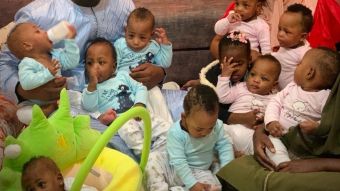
Mali_Nonuplets
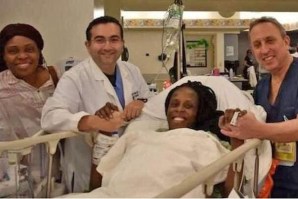
Halima Cisse, mother of nonuplets and the medical team in Morocco (Source: Africafreedomnetwork.com)

Can you imagine trying for one baby and ending up with 9 at once? It has been one year since the birth of the world’s first set of nonuplets. Conceived naturally, a first in the world, the 5 girls and 4 boys have all survived and are healthy and growing well. The parents, Abdelkader Arby and Halima Cissé, are from Mali. The babies have been taken care of by a full medical team in a hospital in Morocco. Initially, the medical teams both in Mali and then later in Morocco thought Halima Cissé was expecting septuplets, and so they were all surprised to find 9 babies in the end. Again, I salute the wisdom of the Malian government who saw fit to have the mother transferred to Morocco for more advanced specialist care; and I salute the immense dedication of the Moroccan team and government to the well-being of the babies. Excerpts below are from an article on the BBC website.

=====

Mali_Nonuplets_BBC
The nonuplets (Source: BBC)

The world’s only nonuplets – nine babies born at the same time – are “in perfect health” as they celebrate their first birthday, their father has told the BBC.

They’re all crawling now. Some are sitting up and can even walk if they hold on to something,” said Abdelkader Arby, an officer in the Malian army.

They are still in the care of the clinic in Morocco where they were born.

He said their mother Halima Cissé, 26, was also doing well.

It’s not easy but it’s great. Even if it’s tiring at times, when you look at all the babies in perfect health, [in a line] from right to left we’re relieved. We forget everything,” he told BBC Afrique.

He has just returned to Morocco for the first time in six months, along with their elder daughter, Souda, aged three.

They will just have a small birthday celebration with the nurses and a few people from their apartment building, Mr Arby said.

Nothing is better than the first year. We will remember this great moment …”

The babies broke the Guinness World Record for the most children delivered in a single birth to survive.

Mrs Cissé and the children are currently living in what their father described as a “medicalised flat” that belongs to the owners of the Ain Borja clinic in Casablanca where the babies were born.

There are nurses who are here, in addition to my wife, who help to take care of the children,” Mr Arby said.

… [The] boys are called Mohammed VI [in honor of the Moroccan king], Oumar, Elhadji, Bah [in honor of the Malian president at the time], while the girls are named Kadidia, Fatouma, Hawa, Adama and Oumou.

Each one has a unique personality, their father said.

They all have different characters. Some are quiet, while other make more noise and cry a lot. Some want to be picked up all the time. They are all very different, which is entirely normal.”

Mr Arby also thanked the Malian government for its help. The Malian state has put everything in place for the care and treatment of the nine babies and their mother. It’s not at all easy, but it’s beautiful and something that is comforting,” he said.

Everyone [in Mali] is very keen to see the babies with their own eyes – their family, friends, our home village, the whole country.”

Mali Rescinds France Defense Agreements

Map of Mali with its capital Bamako

On Monday May 2, 2022, Mali rescinded the defense treaties linking it to France. Remember that, as part of the colonial tax forced upon the Malian people by France (and all other 14 past French colonies in Africa), there is one rule which links Mali to France via defense agreements where France is supposed to help Mali in case of external attacks. As we have seen, France has not held its part of the bargain, instead funding and letting jihadists proliferate on the Malian territory and committing abuses against the local populations. Thus, the government of Mali decided to break off from its defense accords with former colonial ruler France, condemning “flagrant violations” of its national sovereignty by the French troops there. “For some time now, the government of the Republic of Mali notes with regret a profound deterioration in military cooperation with France,” spokesman Colonel Abdoulaye Maiga said in a televised statement.

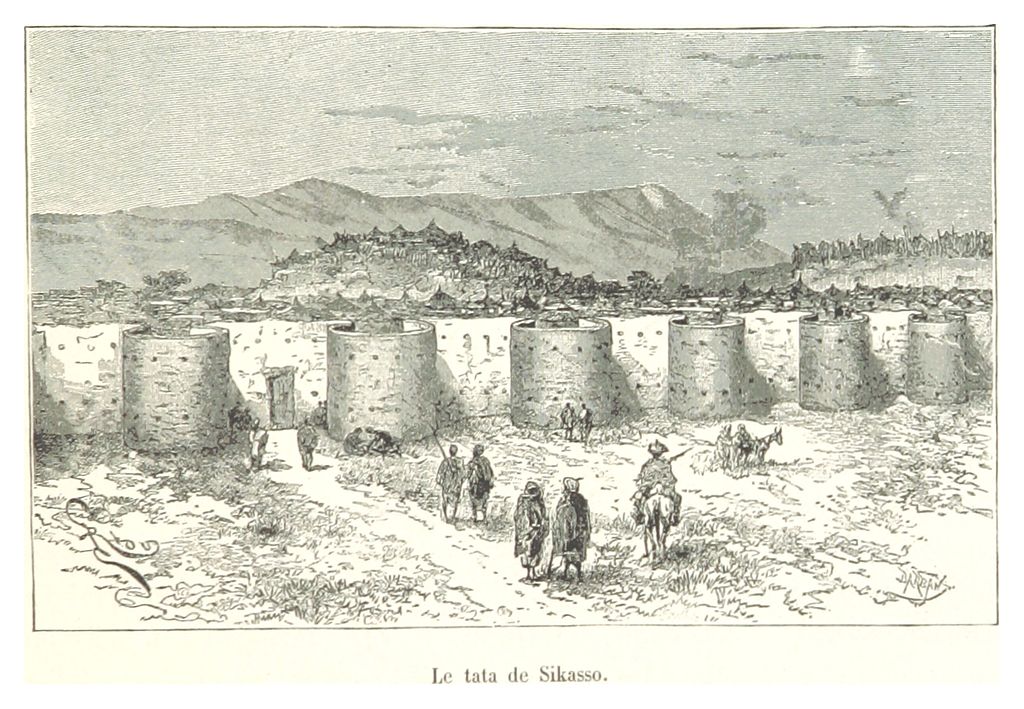
The tata of Sikasso, illustration by Édouard Riou published in Du Niger au golfe de Guinée, Hachette, 1892, by L.G Binger, p. 95

What might have further exacerbated the already tense relationship might have been the finding, about two weeks ago, of a mass grave near an army base which had been occupied by French forces. Although France has denounced these accusations, given the history of France abuses in Mali, and the region, it is hard not to believe. We all remember the French capture of the Tata of Sikasso on May 1, 1898 with Colonel Audéoud‘s troops and the destruction and desecration that followed. Even though it has been over a century, French abuses in Africa are numerous, from the genocide in Cameroon, Algeria, Madagascar, and countless other places.

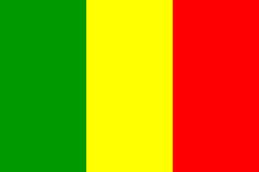
Flag of Mali
Flag of Mali

The decision to rescind the French defense agreements is an awesome decision, and it is about time! The remaining 14 countries still held under the rule of France via the colonial tax should rise up to say NO!… stand up as one man to say NO MORE!… ENOUGH is ENOUGH! … and stand alongside Mali.

The 11 Components of the French Colonial Tax in Africa – Component at the heart of the tension today:

#6. Right for France to pre-deploy troops and  intervene military in the country to defend its interests

Under something called “Defense Agreements” attached to the Colonial Pact, France had the legal right to intervene militarily in the African countries, and also to station troops permanently in bases and military facilities in those countries, run entirely by the French….

Verdict Guilty: Blaise Compaoré Guilty of the Murder of Thomas Sankara

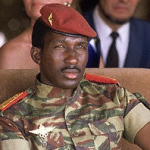
Thomas Sankara

On Wednesday 06 April 2022, a court in Ouagadougou in Burkina Faso (Who killed Thomas Sankara? The Trial starts in Burkina Faso) has found the former president Blaise Compaoré guilty of the murder of president Thomas Sankara. In reality, it was no secret that Compaoré had killed Sankara, his former friend and companion of arms. We all knew who did it, but during Compaoré’s 27-year reign, Sankara’s demise was taboo, plus the French government’s complicity in it did not help either. Given that Compaoré is now in exile in Ivory Coast, the condemnation is in absentia, and the sentence is life imprisonment. Two of Compaoré’s former top associates, Hyacinthe Kafando and Gilbert Diendéré, were also sentenced to life imprisonment. Compaoré will probably never set foot in Burkina Faso again, especially given that as the coward that he is, he now has Ivorian nationality so as not to get extradited. It took over 34 years to begin to bring some sense of closure to the family of Thomas Sankara and to all of us. Sankara’s widow, Mariam Sankara said at the courthouse, that she was relieved, and stated, ” … the people of Burkina Faso and the public opinion know now who is Thomas Sankara, … the man, … the politician, … what he wanted and what those who assassinated him wanted too.”

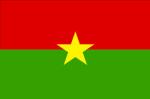
Flag of Burkina Faso

This is a monumental decision not just for Burkina Faso, but for the whole of Africa. It also shows that we, Africans, do not need the Hague Court to judge our own, and that we can make correct decisions. As such the lawyer for the Sankara family, Guy Hervé Kam stated to Reuters, “Today I am very proud to see the culmination of a legal battle of almost 30 years, proud to have a country where justice works.”

Below are excerpts from the BBC.

====

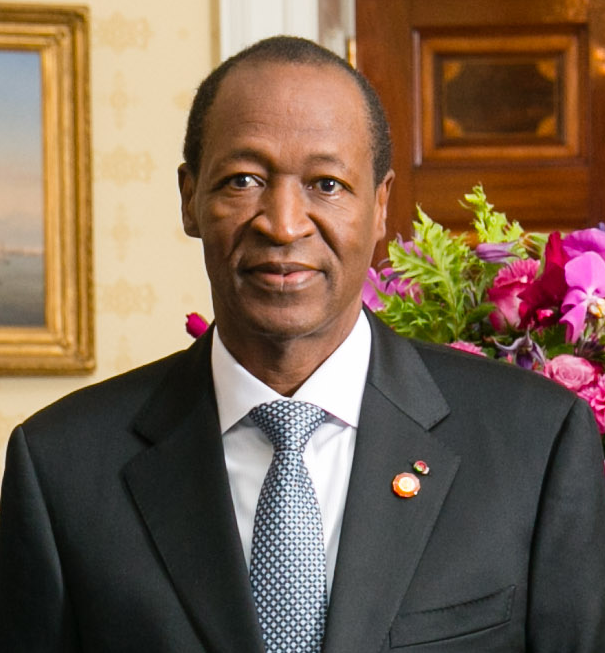
Blaise Compaoré

Burkina Faso’s former President Blaise Compaoré has received a life sentence in absentia for his role in the assassination of his charismatic predecessor, Thomas Sankara.

Sankara, 37, was gunned down along with 12 others during the 1987 coup d’état that brought Compaoré to power. The pair had been close friends and had jointly seized power in 1983. 

Sankara remains a hero for many across Africa because of his anti-imperialist stance and austere lifestyle. …

He was shot in the chest at least seven times, according to ballistics experts who testified during the trial.

… the verdict was greeted by applause in the courtroom following the six-month trial that came after years of campaigning for justice by his family and supporters.

However, there is little prospect that Compaoré will serve his sentence any time soon. He has lived in exile in Ivory Coast since he was removed from office following mass protests in 2014, and has taken up Ivorian nationality. He previously denounced the trial by a military court as a political sham. …

Ten others were also found guilty, including Compaoré’s security chief Haycinthe Kafando, who was accused of leading the hit squad that killed Sankara. He has been on the run for several years and was also tried in absentia. He too received a life sentence. They had both denied the charges.

Gilbert Diendéré, one of the commanders of the army during the 1987 coup and the main defendant who was actually present at the trial, was also sentenced to life. He is already serving a 20-year sentence for a coup attempt in 2015.

… Eight other defendants received sentences ranging from three to 20 years, while three defendants were acquitted.

Timbuktu Manuscripts now Available Online

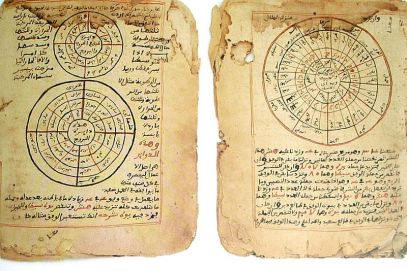
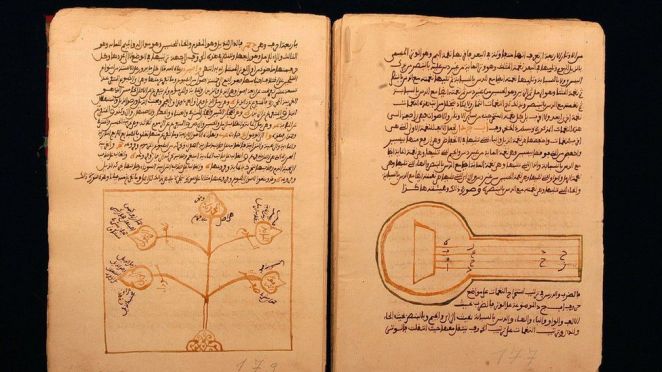
Manuscripts a Tombouctou (Mali) montrant de l'astronomie et mathematique
Manuscripts a Tombouctou (Mali) montrant de l’astronomie et mathematique

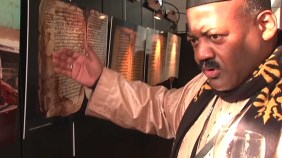
I am happy to announce that the Timbuktu manuscripts are now available online. Can you imagine that? Treasures of our ancestors, writings, judgments, mathematical concepts, architectural findings, from those great scribes of ancient times. Up to 40,000 pages will now be available online, covering wide topics from biology to music to religion. 

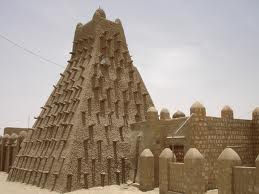
Sankore Mosque in Timbuktu

With the Islamic attacks on Mali, Timbuktu has been under occupation since 2012 (Tensions Escalating in Mali). As you all know Timbuktu was a great center of knowledge in search for many centuries starting at least in the 12th century. It was visited by people from around the world, in search of knowledge. There were over 700,000 manuscripts at the great Sankore University in Timbuktu, and many more at other public and private libraries including the  Ahmed Baba InstituteAl-Wangari Library, and others (Lost Libraries of Timbuktu, Timbuktu under Attacks: Arise to save African Treasures). Many families smuggled the manuscripts to safety from Timbuktu to the capital of Bamako. The manuscripts contain centuries of African knowledge and scholarship on topics ranging from mathematics to astrological charts, biology, geography, laws, etc. They were written on various materials ranging from ancient paper, goat, sheep and even fish skins. Some were written in verse, poetic meter, while others in narrative styles using dialogues, stories of kings, scribes, noblemen, fables, anecdotes. They were renowned in the world for their physical beauty and outstanding wisdom.

Timbuktu_Abdel Kader Haidara
Dr Abdel Kader Haidara talking about the manuscripts of Timbuktu

In 2014, Dr Abdel Kader Haidara known for his work on the protection and preservation of the Timbuktu manuscripts and who smuggled over 350,000 manuscripts out of the city away from the jihadists, called on Google and invited the company to visit Mali and see the renowned manuscripts and join in the digitization of these treasures. Thus the collection Mali Magic was born as a collaboration between Google, local, and international partners. It took several years of combined efforts from Mali’s traditional leaders, historians, and digital archaeologists to digitize these ancient manuscripts, some dating back to the 11th century

Enjoy this article on the BBC website, and do not forget to visit the amazing work Mali Magic. The Library of Congress has also placed some manuscripts online. 

Timbuktu_Manuscript
Manuscript of Timbuktu (Google Arts and Culture)


Diébédo F. Kéré : First African to Win Prestigious Architecture Prize

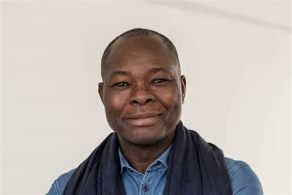
Burkina Faso - Diebedo Kere_1
Diébédo Francis Kéré (Source: Azuremagazine.com)

Diébédo Francis Kéré, an architect from Burkina Faso, has just won the prestigious Pritzker prize which some call the Nobel prize of Architecture. With this, Kéré is the first African to ever win such a prestigious award. He has held professorships at the Harvard Graduate School of DesignYale School of Architecture and the Swiss Accademia di Architettura di Mendrisio. In 2017 he accepted the professorship for “Architectural Design and Participation” at TU München in Germany where he has been living since 1985.

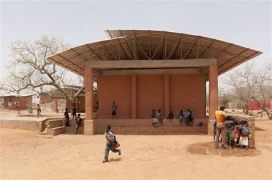
Burkina Faso - Diebedo Kere_4
Opera Village in Burkina Faso – Diébédo Francis Kéré’s work (Source: arquitecturaviva.com)

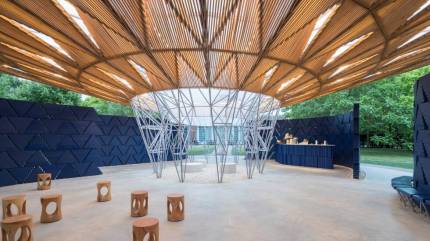
A lot of Kéré’s work is focused on the African continent: parliament buildings in Burkina Faso and Benin, schools and health center in Burkina Faso, and the National Park of Mali. He has also worked on projects in Germany, the United States, and Great Britain among which is the Serpentine Pavilion in London. Light is at the center of his designs because growing up in Burkina Faso, sometimes in the classroom, it was very hot from the weather (Burkina Faso has few rains due to the proximity to the Sahel) and from so many children all bunched together, but there was not much light inside; plenty sunlight outside, no light and too hot inside. Growing up Kéré thought that he could improve the designs and make the life of children in his village and beyond better.

Kéré Architecture is currently working on a new parliamentary building inspired by the palaver tree. It is, he told NPR, a West African symbol of consensus building, and he hopes the building will reflect a commitment both to tradition and democratic process. “Literally speaking, it is a tree under which people come together to make decisions, to celebrate,”…

Burkina Faso - Diebedo Kere_Interior of the Serpentine Pavilion_KereArchitecture_PhotobyIwanBaan
Interior of the Serpentine Pavilion in London – Diébédo Francis Kéré (photo by Iwan Baan – Kerearchitecture.com)

He told the Pritzker prize that, “I grew up in a community where there was no kindergarten, but where community was your family. Everyone took care of you and the entire village was your playground. My days were filled with securing food and water, but also simply being together, talking together, building houses together. I remember the room where my grandmother would sit and tell stories with a little light, while we would huddle close to each other and her voice inside the room enclosed us, summoning us to come closer and form a safe place. This was my first sense of architecture.

The Pritzker Prize website, the LA Times, BBC, and NPR all had really good articles on him. Take the time to read and enjoy!