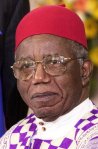
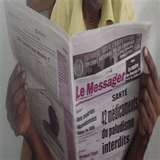
Le 3 Mai est la journée internationale de la liberté de presse. Pour moi, quand je grandissais à Douala, la liberté de presse avait toujours été symbolisée par Pius Njawe et son journal ‘le Messager‘. Qui au Cameroun n’a pas lu ‘le Messager’? Qui n’a pas souri sous les caricatures du ‘Messager Popoli‘? Je dévorais assidument chaque page de son journal… Au debut, quand j’étais toute petite, la rubrique ‘Takala et Muyenga‘ était la seule qui m’interessait car elle était amusante et il y avait de très belles carricatures (oui j’admets… j’aimais les dessins). Petit à petit, j’ai commencé à lire l’éditorial écrit par Pius Njawe lui-même, et puis finalement le journal tout entier. Mon père étais un abonné hors-pair, et c’est grâce à lui que le ‘Messager’ est devenu presque synonyme de ‘vraies‘ nouvelles (i.e. non contrôlée par l’etat) dans mes pensées. Pius Njawe avait un don, une passion: il aimait la vérité! Il était à la recherche de la vérité et du bien-être de la société civile. Il n’avait pas peur d’aller en prison pour avoir publier des articles poignants contre le gouvernement en place; il avait d’ailleurs été arrêté plus de 126 fois. En 2000, Njawe est nommé parmi les 50 heros de la liberté de la presse des derniers 50 ans.
Quand je pense que Njawe avait créé ‘le Messager’ à l’age de 22 ans en 1979, sans même avoir fait d’études avancées… C’est surprenant!… non, impressionant! Il avait toujours était guidé par sa passion, et c’est certainement pour cela que ‘Le Messager’ était si différent de tous les autres journaux de la place: il était authentique, mû entièrement par la passion et la recherche de la vérité impartiale… bref par le journalisme à l’état pur! Que puis-je dire? La perte de Pius Njawe est comme la perte d’une perle precieuse, car Pius Njawe était effectivement une perle rare pour le Cameroun. Il avait résisté pendant 30 ans, et avait payé de cela par ses détentions arbitraires en prison, le saccage de ses bureaux par le gouvernement, l’exil au Benin (qui avait duré 1 an), la fausse-couche de sa femme (qui avait été battue en prison), la mort de sa femme, et ensuite lui-même. Il a payé de sa vie son amour de sa patrie, de la vérité, et du journalisme. Une chose est sûre et certaine, il a touché chacun d’entre nous, et son oeuvre continuera à jamais. Hasta la vista Pius, tu nous a ouvert les yeux à la cause de la démocratie et de la liberté. Tu resteras dans nos memoires comme étant le plus grand combattant, et opposant camerounais, car tu t’es opposé au népotisme, à la dictature, à l’injustice, et à la gabegie. Comme disait si bien Agostinho Neto: “La lutte continue et la victoire est certaine!”
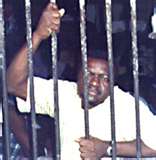
May 3rd is the World Press Freedom Day. Pius Njawe and his journal ‘le Messager’ have come to symbolize this day to me. Pius Njawe’s pioneering work as the head of le ‘Messager‘ has marked me for as long as I can remember. His journal was not only the first true alternative to Cameroon Tribune (state-owned newspaper), but the real way to find news about what was truly going on in the country. In 2000, the Austria-based International Press Institute listed Mr. Njawe among its 50 world press freedom heroes of the past half-century. The institute called Mr. Njawe “Cameroon’s most beleaguered journalist and one of Africa’s most courageous fighters for press freedom.” Yes… Njawe was the quintessential freedom fighter in a country where the press was constantly controlled and held under the sword of Damocles by the regime. He was arrested over 126 times, most of the time simply for telling the truth and keeping the government under constant check. He embodied what true journalism is all about: the impartial search for truth. While resisting the regime for over 30 years, he had come to symbolize the true voice of the people, the voice of those who could not speak, those who had no one, the people of Cameroon. We salute you Pius, you were indeed a true freedom fighter, and the true representant of the people! You will sorely be missed!
Check out the website of his newspaper: Le Messager, articles by the Thomson Foundation, The Washington Post and the International Press Institute.
I am posting here a video of him giving a conference about Francafrique in 2009.
Pius Njawe: Cameroun et la Francafrique