Chinua Achebe in His Own Words

Chinua Achebe
Chinua Achebe

Africa just lost a giant… the world just lost a literary genius.  Chinua Achebe was made of the cloth of kings.  He was the emperor of words and just made reality seems so funny.  He wrote in English, but yet made it his own; he made it African.  Please hear the maestro in his own words.

Age was respected among his people, but achievement was revered.  As the elders said, if a child washed his hands he could eat with kings.”  – Things Fall Apart.

The white man is very clever.  He came quietly and peaceably with his religion.  We were amused at his foolishness and allowed him to stay. Now he has won our  brothers, and our clan can no longer act like one.  He has put a knife on the  things that held us together and we have fallen apart,” –  Things fall Apart.

Achebe was a man of character, who could not be corrupted by honors.  He twice turned down the offer of a title Commander of the Order of the Federal Republic, once in 2004 from Nigeria’s then President Olusegun Obasanjo and again in 2011 from President Goodluck Jonathan. He explained on the BBC: “What’s the good of being a democracy if people are hungry and despondent and the infrastructure is not there,” … “There is no security of life. Parts of the country are alienated. Religious conflicts spring up now and again. The country is not working.” Declining the honor, he wrote that “for some time now I have watched events in Nigeria with alarm and dismay.  I have watched particularly the chaos in my own state of Anambra where a small clique of renegades, openly boasting its connections in high places, seems determined to turn my homeland into a bankrupt and lawless fiefdom.  I am appalled by the brazenness of this clique and the silence, if not connivance, of the presidency …  Nigeria’s condition today under your watch is, however, too dangerous for silence.  I must register my disappointment and protest by declining to accept the high honour awarded me in the 2004 honours list.”
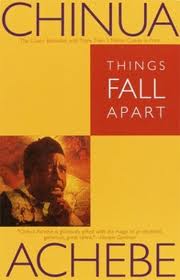
'Things Fall Apart' by Chinua Achebe
‘Things Fall Apart’ by Chinua Achebe

He wrote: “You see we, the little people of the world, are ever expendable.”

It is sometimes good to be brave and courageous, but sometimes it is better to be a coward.  We often stand in the compound of the fool and point at the ruins where a brave man used to live.  He who has never submitted to anything will one day submit to his burial mat.” – Things fall apart.

While we do our good works let us not forget that the real solution lies in a world in which charity will have become unnecessary.”  – Anthills of the Savannah.

To me, being an intellectual doesn’t mean knowing about intellectual issues; it means taking pleasure in them.”

Nobody can teach me who I am. You can describe parts of me, but who I am – and what I need – is something I have to find out myself.”

One of the truest tests of integrity is its blunt refusal to be compromised. ”

We cannot trample upon the humanity of others without devaluing our own. The Igbo, always practical, put it concretely in their proverb Onye ji onye n’ani ji onwe ya: “He who will hold another down in the mud must stay in the mud to keep him down.”  – The Education of a British-Protected Child: Essays.
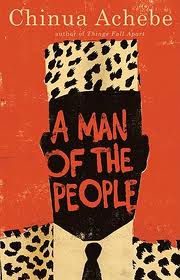
'A Man of the People' by Chinua Achebe
‘A Man of the People’ by Chinua Achebe

‘It’s true that a child belongs to its father.  But when a father beats his child, it seeks sympathy in its mother’s hut.  A man belongs to his fatherland when things are good and life is sweet.  But when there is sorrow and bitterness he finds refuge in his motherland.  Your mother is there to protect you.  She is buried there.  And that is why we say that mother is supreme.” – Things fall Apart.

Unfortunately, oppression does not automatically produce only meaningful struggle.  It has the ability to call into being a wide range of responses between partial acceptance and violent rebellion.  In between you can have, for instance, a vague, unfocused dissatisfaction; or, worst of all, savage infighting among the oppressed, a fierce love-hate entanglement with one another like crabs inside the fisherman’s bucket, which ensures that no crab gets away.  This is a serious issue for African-American deliberation…. To answer oppression with appropriate resistance requires knowledge of two kinds: in the first place, self-knowledge by the victim, which means awareness that oppression exists, an awareness that the victim has fallen from a great height of glory or promise into the present depths; secondly, the victim must know who the enemy is.  He must know his oppressor’s real name, not an alias, a pseudonym, or a nom de plume!” The Education of a British-Protected Child: Essays.

Women and music should not be dated.”  – No Longer at Ease

A man who pays respect to the great, paves the way for his own greatness.

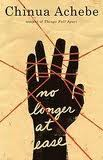
'No Longer at Ease' by Chinua Achebe
‘No Longer at Ease’ by Chinua Achebe

I would be quite satisfied if my novels (especially the ones I set in the past) did no more than teach my readers that their past – with all its imperfections – was not one long night of savagery from which the first Europeans acting on God’s behalf delivered them.”

Procrastination is a lazy man’s apology.”  – Anthills of the Savannah

About his gift of writing, he said: “There is that great proverb — that until the lions have their own historians, the history of the hunt will always glorify the hunter. … Once I realized that, I had to be a writer. I had to be that historian.”… “It’s not one man’s job.  It’s not one person’s job.  But it is something we have to do, so that the story of the hunt will also reflect the agony, the travail — the bravery, even, of the lions.”

Tributes are pouring out from all corners of the world.  Truly to have written a book which has been translated in over 50 languages is a great achievement for an African, and for anybody in this world.  To boast over 20 literary works is amazing.  As the Igbo proverb says: ” it is simply impossible for an iroko tree to fall and the forest to remain quiet.” A giant left us today, but his fingerprints will remain forever.

If the nobel prize was made to celebrate excellence, Chinua Achebe, should have certainly gotten it.  Today his work is celebrated in every corner of the world!

Chinua Achebe, the Maestro is no Longer

Chinua Achebe
Chinua Achebe

This morning, I woke up to the horrible news of Chinua Achebe’s passing.  Weird, how just yesterday I had ordered his latest book “There was a Country”, a memoir on the Biafran war.  My goodness, how can Achebe be gone?  I have all his books in my home library.  Just yesterday, I was talking about how great his sense of humor was.  My goodness, I was dreaming about reading more books from Achebe.  What kind of thing is this?Chinua Achebe, you have inspired me… you have made me want to be a blogger… You have made me want to be a writer, an activist, and a truth speaker … hopefully, one day I will write books as funny as you did.

A friend’s dad went to school with Chinua Achebe, and he had this moral story to tell about Achebe: ” You can never be who you are not and never force your child to be what they were NOT meant to be.  Achebe’s parents always wanted him to be a medical doctor.  While in school, science was a struggle for him.  But once he got back into himself and did what God had planned for him, the sky became his limit.”

So long to the Father of African literature, the inspiration to generations of writers, the maestro himself.  Today, I truly felt like ‘things were falling apart.’

Here is a peace I wrote about him back at the very beginning of my blog: see… he was the first article I published in my ‘Great Literature’ section. Chinua Achebe: A Writer like No Other.

“Ilha” de Amilcar Cabral / “Island” by Amilcar Cabral

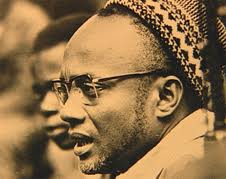
Amilcar Cabral
Amilcar Cabral

January 20th, 2013 marks 40 years since the murder of the Father of Bissau-Guinean and Cape-Verdean independence: Amilcar Cabral.  Africa today is still mourning the loss of one of his greatest sons.  I thought it would be nice to publish one his poems.  Yes… Amilcar Cabral was not just an agronomic engineer, or an independentist, or a freedom fighter, he was also a nature lover and a great writer.  Enjoy! One can already guess that the following poem is about the island of Cape Verde. (The English translation was taken from, ”AMILCAR CABRAL, Freedom fighter,1924-1973“, by Carlos Pinto Santos)

ILHA

Tu vives — mãe adormecida —

nua e esquecida,

seca,

batida pelos ventos,

ao som de músicas sem música

das águas que nos prendem…

Ilha

teus montes e teus vales

não sentiram passar os tempos,

e ficaram no mundo dos teus sonhos

— os sonhos dos teus filhos —

a clamar aos ventos que passam,

e às aves que voam, livres

as tuas ânsias!

Ilha:

colinas sem fim de terra vermelha

— terra bruta —

rochas escarpadas tapando os horizontes

mas aos quatro cantos prendendo as nossas ânsias!


ISLAND

Mother, in your perennial sleep,

You live naked and forgotten

and barren,

thrashed by the winds,

at the sound of songs without music

sung by the waters that confine us…

Island:

Your hills and valleys

haven’t felt the passage of time.

They remain in your dreams

– your children’s dreams –

crying out your woes

to the passing winds

and to the carefree birds flying by.

Island :

Red earth shaped like a hill that never ends

– rocky earth –

ragged cliffs blocking all horizons

while tying all our troubles to the winds!


“Ôde à la Guinée” de Aimé Césaire

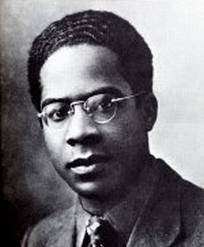
Aimé Césaire
Aimé Césaire

Aimé Césaire, le grand écrivain et poète Martiniquais, présente ici son Ôde à la Guinée… ce chant qui s’élève et embrasse la Guinée, ce pays si cher qui était le premier en Afrique francophone à reclamer son indépendance à la France, ce pays-là qui nous a montré à tous Africains, que comme disait si bien Sékou Touré: ‘nous préférons la pauvreté dans la dignité à l’oppulence dans l’esclavage.‘ C’est bien pour cela que Aimé Césaire a chanté pour la Guinée!

=========

Ôde à la Guinée

Et par le soleil installant sous ma peau une usine de force et d’aigles
et par le vent sur ma force de dent de sel compliquant ses passes les mieux sues
et par le noir le long de mes muscles en douces insolences de sèves montant
et par la femme couchée comme une montagne descellée et sucée par les lianes
et par la femme au cadastre mal connu où le jour et la nuit jouent à la mourre des eaux de sources et des métaux rares
et par le feu de la femme où je cherche le chemin des fougères et du Fouta-Djallon
et par la femme fermée sur la nostalgie s’ouvrant
JE TE SALUE
Guinée dont les pluies fracassent du haut grumeleux
des volcans un sacrifice de vaches pour mille faims
et soifs d’enfants dénaturés
Guinée de ton cri de ta main de ta patience
il nous reste toujours des terres arbitraires
et quand tué vers Ophir ils m’auront jamais muet
de mes dents de ma peau que l’on fasse
un fétiche féroce gardien du mauvais oeil
comme m’ébranle me frappe et me dévore ton solstice
en chacun de tes pas Guinée
muette en moi-même d’une profondeur astrale de méduses.

Aimé Césaire

======

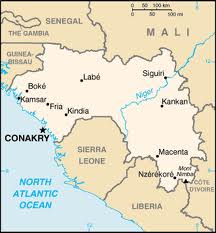
Guinea-Conakry
Guinea-Conakry

Ode to Guinea” by Aimé Césaire

And by the sun installing a power and eagle fac­tory under my skin
and by the wind elab­o­rat­ing the passes it knows best over my power of tooth of salt
and by the black ris­ing along my mus­cles in sweet sap-like effron­ter­ies
and by the woman stretched out like a moun­tain unsealed and sucked by lianas
the woman with the lit­tle known cadas­tre where day and night play mora for spring­head waters and
rare met­als
and by the fire of the woman in which I look for the path to ferns and to Fouta Jal­lon
and by the closed woman open­ing on nostalgia

I HAIL YOU

Guinea whose rains from the cur­dled height of vol­ca­noes shat­ter a sac­ri­fice of cows for a thou­sand
hungers and thirsts of dena­tured chil­dren
Guinea from your cry from your hand from your patience
we still have some arbi­trary lands
and when they have me, killed in Ophir per­haps and silenced for good,
out of my teeth out of my skin let the make
a fetish a fero­cious guardian against the evil eye
as your sol­stice shakes me strikes me and devours me
at each one of your steps Guinea
silenced in myself with the astral depth of medusas

from The Col­lected Poetry of Aimé Césaire, trans­later by Clay­ton Esh­le­man and Annette Smith.

“Seche Tes Pleurs” de Bernard Binlin Dadié / “Dry your Tears Afrika” by Bernard B. Dadié

Bernard Dadie (Abidjan.net)

Today, We will look at a poem by the most celebrated Ivorian writer Bernard Binlin Dadié.  The poem below is titled “Dry your Tears Afrika” or “Sèche Tes Pleurs“.  Published in 1967, this poem is basically about Africa and her sons and daughters returning home.  It is about healing the wounds of slavery, colonialism, and neo-colonialism.  This poem was actually translated into Mende, a language spoken by ~ 46% of Sierra Leone. It was also set to music by American composer John Williams for the Steven Spielberg movie, Amistad. Below is the original poem in French, written by Dadié.  The English version can be found below.  Enjoy the text, and the video of the poem sung in Mende with the English translation.

Sèche tes pleurs Afrique!
Tes enfants te reviennent
dans l’orage et la tempête des voyages infructueux.
Sur le ris de l’onde et le babil de la brise,
Sur l’or des levants
Et la pourpre des couchants
des cimes des monts orgueilleux
Et des savanes abreuvées de lumière
Ils te reviennent
dans l’orage et la tempête des voyages infructueux. Sèche tes pleurs, Afrique
Ayant bu
À toutes les fontaines
d’infortune
et de gloire,
Nos sens se sont ouverts
à la splendeur de ta beauté
à la senteur de tes forêts,
à l’enchantement de tes eaux
à la limpidité de ton ciel
à la caresse de ton soleil
Et au charme de ta verdure emperlée de rosée.

Sèche tes pleurs, Afrique!
Tes enfants te reviennent
Les mains pleines de jouets
Et le coeur plein d’amour.
Ils reviennent te vêtir
De leurs rêves et de leurs espoirs.

Bee ya ma yee ah,
bee len geisia bee gammah.
Bee ya ma yee ah,
bee len geisia tee yamanga.
Baa wo, kah ung biah woie yaa.
Baa wo, kah ung biah woie yah, yah.
Oo be ya ma yee ah,
bee len geisia tee yamanga.
Mu ya mah mu yeh,
Mu ya mah mu yeh,
Mu ya mah mu yeh, Afrika.
Mu ya mah mu yeh,
Mu ya mah mu yeh,
Mu ya mah mu yeh, Afrika.Bee ya ma yee ah,
bee len geisia tee yamanga.
Mu ya mah mu yeh,
bee len geisia bee gammah.
Oo bee ya mah yee ah
Bee len geisia tee yamanga.
Mu ya mah mu yeh,
Mu ya mah mu yeh,
Mu ya mah mu yeh, Afrika.
Mu ya mah mu yah,
Mu ya mah mu yah,
Mu ya mah mu yeh, Afrika.

Be ya mah yee ah,
bee len geisia tee yamanga.
Be ya mah yee ah,
bee len geisia bee gammah.
Mu ya mah mu yeh,
Mu ya mah mu yeh,
Mu ya mah mu yeh, Afrika.
Mu ya mah mu yeh,
Mu ya mah mu yeh,
Mu ya mah mu yeh, Afrika.
Mu ya mah mu yeh,
Mu ya mah mu yeh,
Mu ya mah mu yeh, Afrika.

‘African Woman’ by Swabi Mnisi

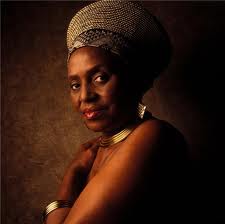
A true African beauty: Mama Africa, Miriam Makeba

I stumbled across this poem which praises the African beauty, that of: our mothers, our sisters, our daughters, and our wives.  It is true that the African standard of beauty has now become the world standard of beauty.  Women around the world want to have lips like Angelina Jolie, when we, Africans were blessed with real luscious lips.  Western media emphasize J-Lo‘s big butt, when the African woman was naturally born bootylicious.  Men love women with nice curves like Halle Berry … well, I guess God was truly showing off when He created the Black woman.  Enjoy ‘African Woman’ by Swabi Mnisi.

You, with big butt and small waist
Those goodies wrapped in unequalled curves
Fat lips that produce a mouth watering kiss
With that black face and woolly hair
You are my African queen

The she-hero, Saartjie Bartman stood her ground
In the mist of derogation, she remained proud
Her bums defied western notions
Big became beautiful and Africa a fishing pond
Thanks to the African queen

Africa is blessed to have you, don’t disappoint
You are the only species with big booty
The only one with resilient black skin
So please do not bleach, you are a queen

by Swabi Mnisi

Interview de Thomas Sankara par Mongo Beti

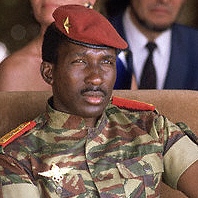
Thomas Sankara
Thomas Sankara a Ouagadougou

Je n’ai pu m’empêcher de partager avec vous ce pur joyau d’un autre temps: une interview du President Thomas Sankara par Mongo Beti.  Cette interview n’avait jamais été publiée auparavant, jusqu’à ce que l’épouse de Mongo Beti, Odile Tobner, la mette sur le site de la Société des Amis de Mongo Beti (SAMBE).  En 1985, Mongo Beti eut une entrevue privée avec notre ‘Che’ africain, Thomas Sankara, à la fin de laquelle, il lui envoya d’autres questions auxquelles Thomas répondit.  Ci-dessous, vous trouverez quelques extraits de cet entretien, où j’ai mis les questions de Mongo Beti sous formes de thèmes, et les réponses de Sankara suivent juste après (en bleu).  Pour l’intégrale, prière de visiter SAMBE.

==========

Sur les attaques ennemies:Il y a partout aujourd’hui, aux quatre coins du continent, des N’Krumah, des Lumumba, des Mondlane, etc. Que Sankara soit éliminé aujourd’hui physiquement, il y aura des milliers de Sankara qui relèveront le défi face à l’impérialisme. …Toutefois, pour mille et une raison, notre peuple et la jeunesse révolutionnaire africaine restent attachées à Sankara et ne souhaitent jamais que le moindre malheur lui arrive.

Sur la corruption: “Sans être un sociologue averti, ni un historien des sociétés précapitalistes africaines, je ne pourrai pas affirmer que la corruption est propre aux sociétés africaines. C’est un phénomène lié avant tout au système capitaliste, système socio-économique qui ne peut véritablement évoluer sans développer la corruption. Elle est donc incontestablement un héritage maudit de la colonisation. Ainsi, logiquement, pour combattre valablement la colonisation, le colonialisme et même le néocolonialisme, il faut aussi s’attaquer à la corruption.

Alexandre Biyidi Awala, a.k.a. Mongo Beti

Sur les traditions africaines et la place de la femme (polygamie, excision): “On ne fait pas de révolution pour régresser dans le temps. C’est pour aller toujours de l’avant. La Révolution ne peut qu’étouffer tous les aspects négatifs de nos traditions. C’est cela notre combat contre toutes les forces rétrogrades, toutes les formes d’obscurantisme, combat légitime et indispensable pour libérer la société de toutes les emprises décadentes et de tous les préjugés, dont celui qui consiste à marginaliser la femme ou à la chosifier. … Nous luttons pour l’égalité de l’homme et de la femme, pas d’une égalité mécanique, mathématique, mais en rendant la femme l’égale de l’homme devant la loi et surtout devant le travail salarié. L’émancipation de la femme passe par son instruction et l’obtention d’un pouvoir économique. Ainsi le travail au même titre que l’homme, à tous les niveaux, la même responsabilisation et les mêmes droits et devoirs sont des armes contre l’excision et la polygamie, armes que la femme n’hésitera pas à utiliser pour se libérer elle-même et non par quelqu’un d’autre.”

Sur la cooperation, et la conference au sommet des chefs d’Etats francophones: “Lutter pour son indépendance face au colonialisme ne veut pas dire que l’on se prépare, une fois celle-ci obtenue, à quitter la terre pour aller s’isoler
quelque part dans le cosmos.  Quant aux conférences au sommet des chefs d’État francophones, ils servent, chaque fois que nous avons l’occasion d’y prendre part, de tribune, de tremplin pour notre révolution, pour la faire connaître, de dire ouvertement ce qu’elle pense de ces conférences ou instances politiques. Y participer pour dénoncer ce qui ne va pas dans l’intérêt des peuples africains est une stratégie beaucoup plus payante que les sarcasmes envoyés de l’extérieur.

Sur le franc CFA: “le franc CFA, lié au système monétaire français est une arme de la domination française. L’économie française et, partant, la bourgeoisie capitaliste marchande française bâtit sa fortune sur le dos de nos peuples par le biais de cette liaison, de ce monopole monétaire.

Sur le panafricanisme et Nkrumah: “Tout le monde constate aujourd’hui avec amertume, face aux méfaits et autres exactions de l’impérialisme en Afrique, que N’krumah avait très bien raison d’aller de tous ses voeux à l’unité du continent. Néanmoins l’idée demeure et il nous appartient, il appartient aux patriotes africains, de lutter partout et toujours pour sa concrétisation. Il appartient à tous les peuples panafricanistes de reprendre le flambeau de N’Krumah pour donner espoir à l’Afrique.

Sur le parti unique: “Ce qui est discrédité c’est le parti unique bourgeois, parce que obéissant à une idéologie d’injustice, donnant le premier rôle à une minorité au détriment de la majorité. Un parti unique démocratique, c’est-à-dire un parti du peuple, ne peut en aucun cas être discrédité, parce qu’au service d’un peuple, des intérêts de la majorité. C’est sur une telle base qu’il faut voir la question du parti unique, qui est aussi une vision des masses.

Sur la privatisation de certains secteurs: “La révolution burkinabé considère l’initiative privée comme une dynamique qu’elle prend en compte dans l’étape actuelle de la lutte du peuple burkinabé. … L’État ne peut pas s’engager dans une étatisation tous azimuts, même si le contrôle d’un certain nombre de secteurs vitaux de notre économie s’avère indispensable.

Au camarade Mongo Beti, 3/11/85
La patrie ou la mort, nous vaincrons !

Mongo Beti, One of Africa’s Greatest Writers

Alexandre Biyidi Awala, a.k.a. Mongo Beti

Today I will be talking about a writer of the caliber of Chinua Achebe and Ngugi wa Thiong’o, a writer often forgotten, a writer who fought with his writings for independence, a Cameroonian writer who wrote about Cameroon’s first freedom fighter Ruben Um Nyobé, and whose writings were banned… you have probably guessed it, I am talking about the great Mongo Beti.

Mongo Beti was born Alexandre Biyidi Awala, on 30 June 1932 in Akométan, near Mbalmayo, south of Yaoundé, the capital of Cameroon.  From a young age, Mongo Beti was already exposed to the currents of independence and freedom that were shaking Cameroon, and was exposed to Um Nyobé.  He would eventually get expelled from the local missionary school at 14, for being outspoken. As he himself said “At the time, I was very shocked by the idea of confessing my sins to someone else.” He would eventually attend the Lycee Leclerc in Yaoundé, and then move to the Sorbonne in Paris, France, for further studies.

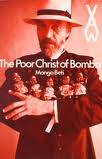
'The Poor Christ of Bomba' by Mongo Beti
‘The Poor Christ of Bomba’ by Mongo Beti

Mongo Beti claimed that he entered writing through writing political tracts.  His first piece was a short story published by Alioune Diop in 1953 in Présence Africaine, “Sans haine et sans amour” (Without hatred or love). He first started writing under the pen name Eza Boto, by fear of retaliation from the French colonial regime. His first book “Ville Cruelle” or “Cruel City” published in 1954, was actually on the school program in all high schools of Cameroon for many years in the 80s to late 90s. His second novel “Le Pauvre Christ de Bomba” (“The Poor Christ of Bomba“) was published under the pseudonym Mongo Beti, to distance himself from his previous piece.  The name Mongo Beti means in Ewondo, ‘Son of the Beti people’.  This new novel created a scandal because of its satirical and biting description of the missionary and colonial world.  Under pressure from the religious hierarchy, the colonial administrator in Cameroon banned the novel in the colony.  This novel was followed by “Mission Terminée” in 1957 (winner of the Prix Sainte Beuve 1958), and Le Roi Miraculé, 1958.  All three books were translated into English and many other languages, which gave Beti a lasting international reputation. During this time, he also worked for the review Preuves, for which he reported from Africa, as well as a substitute teacher at the lycée of Rambouillet. He later on taught at the Lycee Pierre Corneille of Rouen until his retirement in 1994.

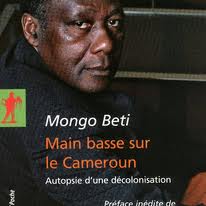
"Main basse sur le Cameroun..." de Mongo Beti
“Main basse sur le Cameroun…” de Mongo Beti

‘Wanted’ in the colony because of his sharp writings, and his connections to the UPC of Ruben Um Nyobé, Mongo Beti stayed in France. Ruben Um Nyobe’s murder by the colonial administration in 1958, truly shook Beti to his core; he fell silent and did not publish any book for the following decade. In 1971, he finally wrote “Main Basse sur le Cameroun, autopsie d’une décolonisation” (Cruel hand on Cameroon, autopsy of a decolonization) which was censored upon its publication by the French Ministry of the Interior Raymond Marcellin on the request, brought forward by Jacques Foccart, of the Cameroon government, represented in Paris by the ambassador Ferdinand OyonoThis essay perhaps sprang from frustration and rage at the collapse of the UPC rebellion and the public execution of its last leader, Ernest Ouandié, in 1970.  It was a devastating critique of the authoritarian regime of Cameroon, and asserted that Cameroon and other colonies remained under French control in all but name, and that the post-independence political elites had actively fostered this continued dependence.  The 1970s also saw two of his most passionately political novels, “Remember Ruben and “Perpetue et l’Habitude du Malheur,” both published in 1974.

In 1978 he and his wife, Odile Tobner, launched the bimonthly review Peuples Noirs. Peuples Africains (‘Black People. African People‘), which was published until 1991.  This review chronicled and denounced tirelessly the evils brought to Africa by neo-colonial regimes. During this period were published the novels La Ruine presque Cocasse d’un Polichinelle (1979), Les deux mères de Guillaume-Ismael Dzewatama (1983), La revanche de Guillaume Ismaël Dzewatama (1984), also Lettre ouverte aux Camerounais ou la deuxième mort de Ruben Um Nyobé (1984) and Dictionnaire de la Negritude (1989, with Odile Tobner). Frustrated by what he saw as the failure of post-independence governments to bring genuine freedom to Africa, Beti adopted a more radical perspective in these works.

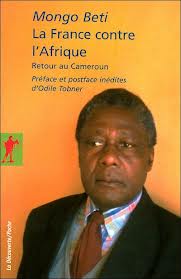
'La France contre l'Afrique' de Mongo Beti
‘La France contre l’Afrique’ de Mongo Beti

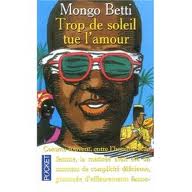
Mongo Beti returned to Cameroon in 1991 after 32 years of exile.  In 1993 he published La France contre l’Afrique, Retour au Cameroun, a book chronicling his visits to his homeland.  After retiring from teaching in 1994, he returned to Cameroon permanently.  He opened the Librairie des Peuples noirs (Bookstore of the Black Peoples) in Yaoundé and organized agricultural activities in his village of Akométam.  However, his return did not leave the government silent: he was subjected to police aggression in January 1996 in the streets of Yaoundé, and was subsequently challenged at a demonstration in October 1997.  In response he published several novels: L’histoire du fou in 1994 then the two initial volumes Trop de Soleil tue l’Amour (1999) et Branle-bas en noir et blanc (2000), of a trilogy which would remain unfinished.  He was hospitalized in Yaoundé on October 1, 2001 for acute hepatic and kidney failure which remained untreated for lack of dialysis.  Transported to the hospital in Douala on October 6, he died there on October 8, 2001. Some critics noted the similarity of his death to that of his heroine Perpetua, who also died while awaiting treatment in one of the country’s overburdened hospitals.

'Trop de Soleil tue l'Amour' by Mongo Beti
‘Trop de Soleil tue l’Amour’ by Mongo Beti

As I write about him today, I feel very sad that we, in Cameroon, don’t honor our heroes.  No one can even fathom the depth of Mongo Beti’s work.  It is immense, and his service to Cameroon’s history is beyond our imagination.  At a time when everybody was scared of the regime (and rightly so, after the ‘maquis‘ years), he dared to write.  From afar, yes, one might say from the safety of France and not Cameroon, he continued his mission of informing, and enlightening us.  How many contributed like Mongo Beti to our knowledge of Ruben Um Nyobé?  I am sure Mongo Beti’s book “Main basse …” is one of the rare written accounts of Ernest Ouandié.  The African writer, Boubacar Boris Diop wrote: “Sans jamais se courber devant personne, il [Mongo Beti] a réussi à faire d’un simple pseudonyme un cri de ralliement. Sa vie durant, il a haï l’hypocrisie, le vain folklore et les faux-fuyants. Il est resté fidèle, jusqu’au martyre, à sa passion de la liberté.” (Without ever bending to nobody, he [Mongo Beti]  succeeded in turning a pseudonym into a rallying cry.  Throughout his life, he hated hypocrisy, vain folklore, and subterfuge. He remained faithful, up to martyrdom, to his passion for freedom.)   Your work, O Mongo, is a true treasure in the archives of Cameroon.  Peace be with you Mongo, you are not just a son of the Beti, but rather a son of Cameroon… Peace to you Mongo Cameroon.

Celebrating Angola’s National Heroes Day

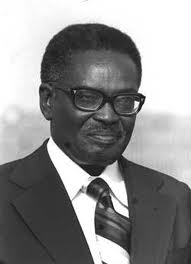
Agostinho Neto
Agostinho Neto
Flag of Angola
Flag of Angola

Angolans are marking this  Monday the National Heroes’ Day, in homage to the country’s first president, the late Dr. Agostinho Neto, who was born on 17 September 1922 in Kaxicane locality.  Celebrate with me Angola’s National Heroes’ Day by enjoying a poem by Angola’s greatest poet, and its first president.

Criar

Criar criar
criar no espírito criar no músculo

criar no nervo
criar no homem criar na massa
criar
criar com os olhos secos
Criar criar
sobre a profanação da floresta
sobre a floresta impúdica do chicote
criar sobre o perfume dos troncos serrados
criar
criar com os olhos secos
Criar criar
gargalhadas sobre o escárneo da palmatória
coragem nas pontas das botas do roceiro
força no esfrangalhado das portas violentadas
firmeza no vermelho sangue da insegurança
criar
criar com os olhos secos

Criar criar
estrelas sobre o camartelo guerreiro
paz sobre o choro das crianças
paz sobre o suor sobre a lágrima do contrato
paz sobre o ódio
criar
criar paz com os olhos secos
Criar criar
criar liberdade nas estradas escravas
algemas de amor nos caminhos paganizados do amor
sons festivos sobre o balanceio dos corpos em forcas simuladas
criar
criar amor com os olhos secos.


Create

Create create
create in mind create in muscle

create in nerve create in man create in the masses
create
create with dry eyes
Create create
over the profanation of the forest
over the shameless fortress of the whip create over the scent of sawn trunks

create
create with dry eyes
Create create
laughter over the scorn of the palmatoria courage in the tips of the planter’s boots strength in the splintering of battered-in doors firmness in the red blood of insecurity
create
create with dry eyes
Create create
stars over the warrior’s sledge-hammer peace over children’s weeping peace over the sweat the tears of forced labour peace over hatred
create
create peace with dry eyes

Create create
create freedom on slave highways
manacles of love on the paganised

paths of love
festive sounds over bodies swinging on simulated gallows create
create love with dry eyes.


‘No More’ by Kelvin Karani

Children begging
Children begging

I was talking to a friend the other day about the suffering in Cote d’Ivoire and Libya, and my friend said “hush, we should be grateful that this is not happening in our country.”  I was dumbfounded, as I was thinking, how could somebody just rejoice for their lot, instead of helping the others? instead of doing something?  the least we can do is talk about it, cry, do something, not just watch and rejoice about our silly existence which could go down in flames in a day as in Cote d’Ivoire or Libya which were under fire from France and NATO (the mighty armies of the world) for their oil, cocoa, and gold. Then I found this really good poem by Kelvin Karani, talking about the things we all see in Africa, the things that hurt, and the things that tire. Enjoy “No More.”

=======

No more
Taking of silly slogans
Of change from the corrupt politicians
We need statesmen and stateswomen
People who see beyond elections

No more
Sitting back as others suffer
Saying that we are blessed
Happy that we are not in pain
In common bond united
We’ll rise or fall as a people

No more
Taking the aid of Aids
Which makes sick and
In perpetual need.

No more
Class divisions in Africa
Imperialism of whatever nature
White evils or black ones either
For time has come
For Africa, my Africa-our Africa
To dust herself and move on
Undeterred, unhindered
To show the rest of the world
What humanity truly is.

 Kelvin Karani