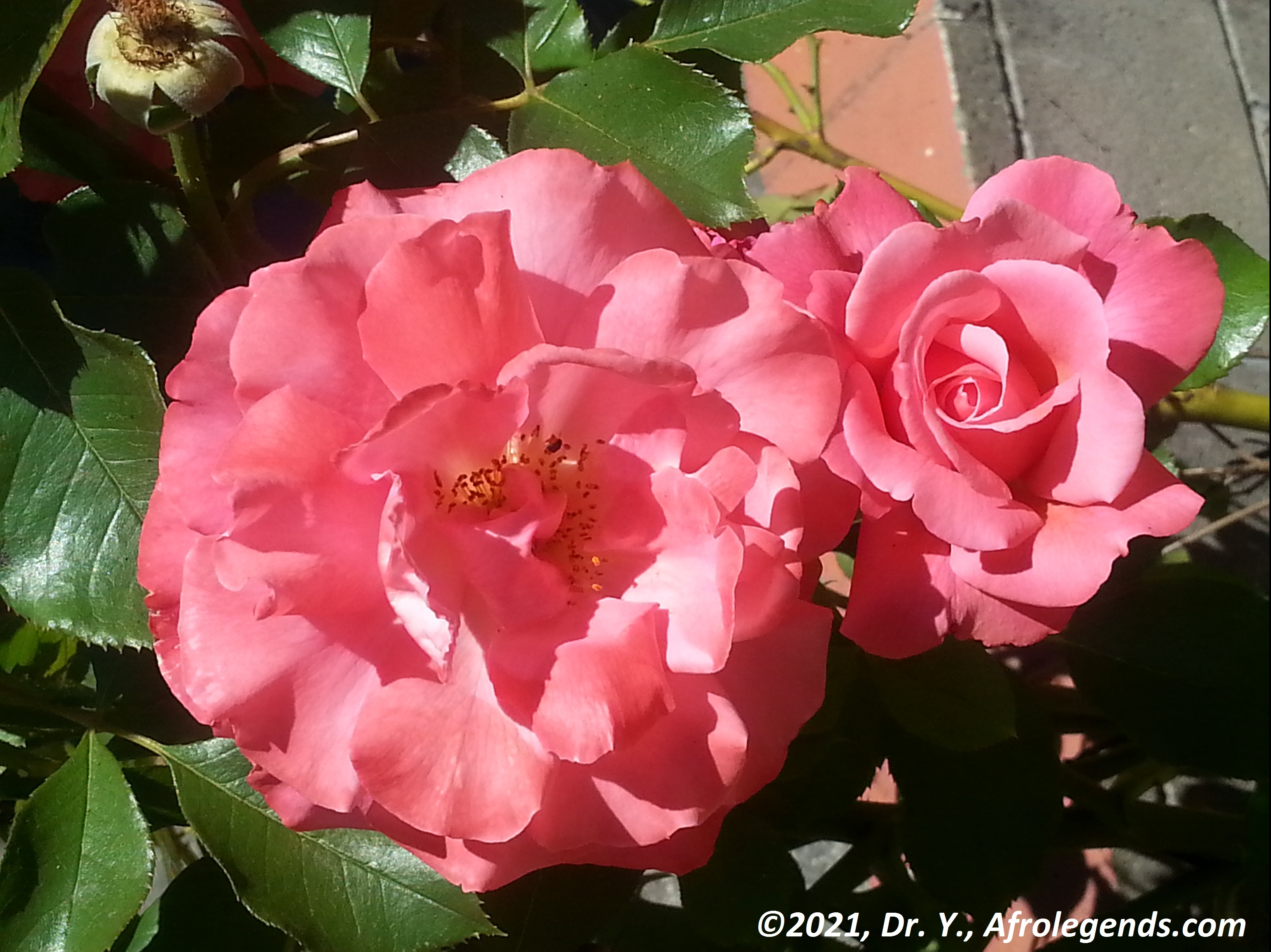
Te rappelleras-tu ? / Will You Remember ? by Richard Dogbeh

Flower – Smile

Today is a day of remembrance. I love this poem by Beninese author Richard Dogbeh, Te rappelleras-tu ? (Will You Remember?) published in Cap Liberté, Edition Clé, 1969. This poem is not only a love poem, but also a friendship poem, a hardship poem, and above all a future poem. Beyond the battles that a couple goes through in life, there are joys, wishes, and visions. Further, as one reads this poem, there is also a vision for the country, in this case Benin, for the development of the country which is struggling; this could be applied to the continent as a whole. 

For love, the sentence “Will you remember friend that formidable night when love took us by surprise?” says it all. The deep friendship is highlighted by the togetherness and vision, “We will build our lives with faithfulness and pride” or “Look friend of the deadly shores .” One can see hardship in the journey with unity, “we will fight jealousy and envy that destroys the future, the injustice that divides…“. The future is highlighted in “In your eyes, the prophecy shone“… or “the future will be beautiful in our difficult roads…

Enjoy! This is brought to you by Dr. Y., Afrolegends.com. Te rappelleras-tu ? (Will You Remember?) by Richard Dogbeh published in Cap Liberté, Edition Clé, 1969. Love, love, love…

=====

Te rappelleras-tu ? / Will You Remember by Richard Dogbeh

Te rappelleras-tu amie ce soir redoutable

Où l’amour nous a surpris tous les deux

Dans tes yeux la prophétie scintillait

Comme dans toutes les chansons

Le bonheur dépendait de nous deux

Tout simplement


Dans la tourmente de notre pays

Nous combattrons la jalousie et l’envie qui déciment l’avenir l’injustice qui divise

Nous combattrons la paresse et la routine

Nous bâtirons notre vie fidèle et fière.


Regarde

Amie des rives mortelles

Impatiente de charité

L’harmonie jaillit dans le pays

De Cotonou à Malanville


Dans nos jardins et nos maisons

Croissant des fleurs aux mille couleurs

J’ai lu dans le ciel de nos villes

Que l’avenir sera beau

Sur nos routes difficiles


Au bord de la mer en furie

Il pleuvait ce soir-là et le vent froid nous fouettait le visage

Comment se peut-il qu’un flot de bonheur naisse d’une cité d’angoisse

Ainsi va la vie

Il faut nous armer

Il faut nous cacher (…)


Will you remember my friend this formidable evening

Where love surprised us both

In your eyes the prophecy was shining

As in all songs

Happiness depended on both of us

Simply


In the turmoil of our country,

We will fight the jealousy and envy that are decimating the future and the injustice that divides us.

We will fight against laziness and routine.

We will build our lives with faithfulness and pride.


Look

Friend of the deadly shores

Impatient for charity

Harmony springs forth in the land

From Cotonou to Malanville


In our gardens and our homes

Flowers of a thousand colors are blooming

I read in the sky above our cities

That the future will be beautiful

On our difficult roads


On the edge of the raging sea

It was raining that evening and the cold wind was lashing our faces

How is it possible that a wave of happiness can arise from a city of anguish?

That’s how life is.

We must arm ourselves.

We must hide (…)


The Importance of the Timbuktu’s Manuscripts and their Return

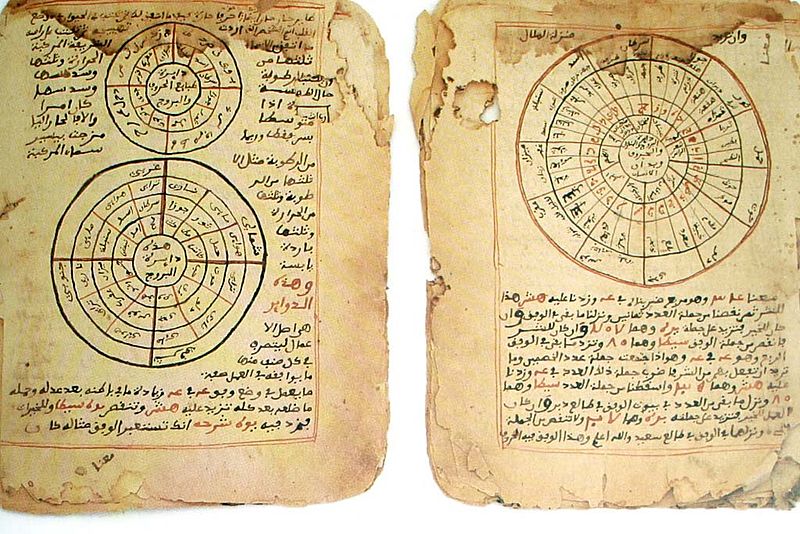
Manuscripts a Tombouctou (Mali) montrant de l'astronomie et mathematique
Manuscripts a Tombouctou (Mali) montrant de l’astronomie et mathematique

The Timbuktu’s Manuscripts are Returning Home to their rightful owners, after over 10 years away. It is so beautiful that the families who own these multi-centennial parts of African history get to have them back as it is not only part of their heritage, but ours also, and we are thankful for them to have protected throughout the centuries.

At the Ahmed Baba Institute in Bamako, people have been actively working on digitalizing all the manuscripts for humanity’s sake. These challenge the eurocentric views that “Africans have not entered enough in history” as the former French president Sarkozy said, even though many scholars from around the world used to travel to Timbuktu to find the best teachers. Through these manuscripts, we discover brilliant scholars, doctors, lawmakers, astronomers, mathematicians, geologists, and much more. After all, Timbuktu, was one of the world’s first and oldest university.

Excerpts below are from Africanews, and check out the Google Arts & Culture (Timbuktu Manuscripts now Available OnlineThe Lost Libraries of Timbuktu).

=====

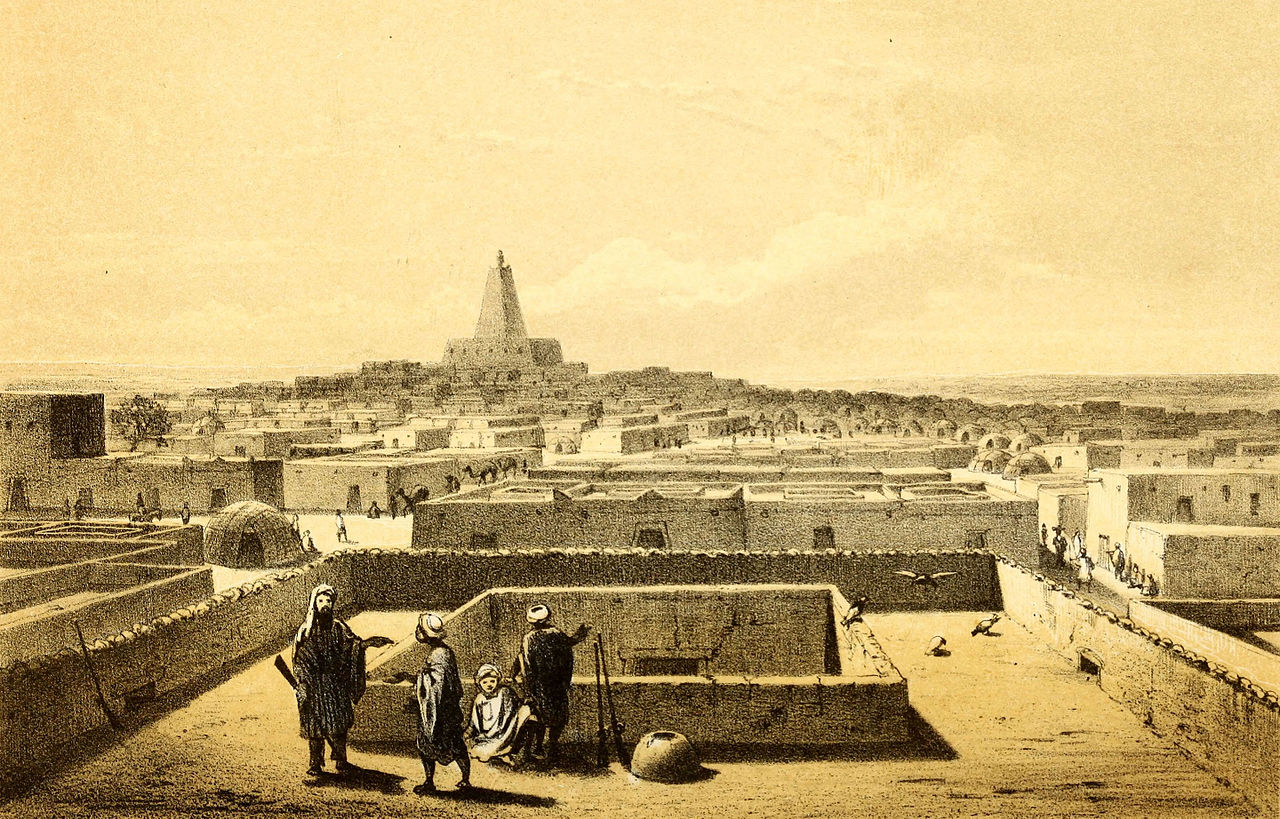
Timbuktu from a terrace by Heinrich Barth 1858

Among the manuscripts are medical texts, legal rulings, letters, astronomical notes and chronicles of West African empires.

In some pages, scholars debate whether smoking tobacco was moral or forbidden.

In others, officials urge reducing dowries so poorer men could marry.

Marginal notes record earthquakes and local events long forgotten elsewhere.

Sane Chirfi Alpha is the founding member of SAVAMA DCI, which is a local nonprofit organisation dedicated to the safeguarding, preservation, and promotion of the ancient Timbuktu manuscripts. He says the collection reveals a depth of scholarship that challenges assumptions about the region’s past.

According to old documents, there were doctors here in Timbuktu who performed surgery to treat cataracts. The same manuscript also says that a doctor from Timbuktu saved the French throne. The crown prince was sick, and French doctors could not cure him. It was the doctor from Timbuktu who cured him.”

…  One important tradition still documented in many manuscripts is the chain of teaching, where scholars recorded who taught whom through generations.

Dr Mohamed Diagayaté, general director of the Ahmed Baba Institute says: “When a student finishes studying with a scholar, that scholar gives him a certificate saying he has taught him a subject, which the student has mastered. The certificate also says that the student learned it from a certain scholar, and that this scholar learned it from another scholar, going right back to the person who wrote the original document.

Bamako! By Agostinho Neto

Map of Mali with its capital Bamako

In 1954, Agostinho Neto, Angola’s first president (before he became president) wrote a chez d’oeuvre titled Bamako, after the capital of the country of Mali. The poem appeared in his collection Sagrada Esperança (Sacred Hope), in 1974. The poem is an ode to African unity, resilience, and rebirth, all based on the rich history of the great Empire of Mali, and the continent as a whole. Neto refers to Africa’s tallest mountain, Mt Kilimanjaro. In his poem, he weaves in the great rivers of the continent, Niger and Congo, particularly focusing on the soil’s fertility from the abundant flow of the river Niger, and the tantalizing immensity of the river Congo. Above all, he highlights the warmth of its people, their friendship, their resilience (‘strong roots’), and their kindness. He builds on the pain of slavery and centuries of hurt to offer hope, the living fruit of Africa’s future; in Bamako, he says, we will conquer death! Why Bamako, one may ask? Bamako is special as it was part of the great Empire of Mali, where the oldest constitution in the world saw the light (Kouroukan Fouga, la Constitution de l’Empire du Mali – la plus vieille constitution republicaine au monde?), and is also known as the crossroad of West Africa, where germinated centuries’ old history of great West African kingdoms in Mali, and its rich traditions.

Below is Bamako! by Agostinho Neto, published in Sagrada Esperança, in 1974. You can find it on AgostinhoNeto.org

======

Bamako by Agostinho Neto

Bamako!

ali onde a verdade gotejante sobre o brilho da folha

se une à frescura dos homens

como as raízes fortes sob a tépida superfície do solo

e onde crescem amor e futuro

fertilizados na generosidade do Níger

sombreados na imensidão do Congo

ao sabor da aragem africana dos corações


Bamako!

ali nasce a vida e cresce

e desenvolve em nós fogueiras impacientes de bondade


Bamako!

ali estão os nossos braços

ali soam as nossas vozes

ali o brilho esperança dos nossos olhos

se transforma imenso numa força irrepreensível da amizade


secas as lágrimas choradas nos séculos

na África escrava de outros dias

vivificado o sumo nutritivo do fruto

o aroma da terra

em que o sol desencanta kilimanjaros gigantes

sob o céu azul da paz.


Bamako!

fruto vivo da África de futuro

germinado nas artérias vivas de África


Ali a esperança se tornou árvore

e rio

e fera

e terra


ali a esperança se vitoria amizade

na elegância da palmeira

e na pele negra dos homens


Bamako!

ali vencemos a morte

e o fruto cresce – cresce em nós

na força irresistível do natural e da vida

connosco viva em Bamako.


Bamako!

There, where the dripping truth on the leaf’s shine

unites with the freshness of men

like strong roots beneath the warm surface of the soil

and where love and future grow

fertilized in the generosity of the Niger

shaded in the immensity of the Congo

to the taste of the African breeze of hearts


Bamako!

there life is born and grows

and develops within us impatient fires of kindness


Bamako!

There are our arms

There our voices sound

There the hopeful glow of our eyes

Immensely transforms into an irrepressible force of friendship


dry the tears cried for centuries

in the enslaved Africa of other days

vivified the nutritious juice of the fruit

the aroma of the earth

where the sun disenchants giant Kilimanjaros

under the blue sky of peace.


Bamako!

living fruit of Africa’s future

germinated in the living arteries of Africa


There hope became tree

and river

and beast

and earth


There hope triumphs over friendship

in the elegance of the palm tree

and in the black skin of men


Bamako!

There we conquer death

and the fruit grows – it grows within us

in the irresistible force of nature and life

living with us in Bamako.


Ngũgĩ wa Thiong’o in His Own Words

The wizard of crow
“The wizard of crow” by Ngũgĩ wa Thiong’o

On the black woman. “I believe that black has been oppressed by white; female by male; peasant by landlord; and worker by lord of capital … the black female worker and peasant is the most oppressed. She is oppressed on account of her color like all black people in the world; she is oppressed on account of her gender like all women in the world; and she is exploited and oppressed on account of her class like all workers and peasants in the world. Three burdens she has to carry.” Wizard of the Crow

On unity. In A Grain of Wheat, Ngũgĩ stressed the importance of unity of resisting tyranny, “Our fathers fought bravely. But do you know the biggest weapon unleashed by the enemy against them? It was not the Maxim gun. It was division among them. Why? Because a people united in faith are stronger than the bomb.” 

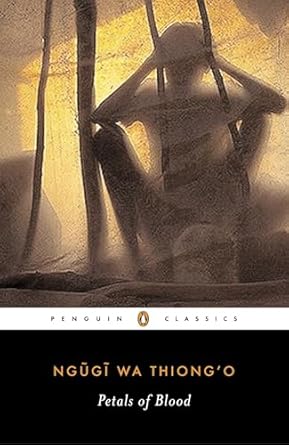
Petals of Blood by Ngũgĩ wa Thiong’o

Like Sengat-Kuo in his poem “Ils sont venus, Ngũgĩ highlighted in Petals of Blood the holy trinity of the Bible, the guns, and commerce to conquer and oppress Africans, “He carried the Bible; the soldier carried the gun; the administrator and the settler carried the coin. Christianity, Commerce, Civilization: the Bible, the Coin, the Gun: Holy Trinity.

Language as a weapon. In his groundbreaking book Decolonising the Mind: The Politics of Language in African Literature, he championed the use of the mother tongue, arguing, “To speak one’s language is to celebrate one’s identity, … but to impose a language is a way to divide people – it is to practice tribalism of another kind.”

Dreams in a Time of War: A Childhood Memoir by Ngũgĩ wa Thiong’o 

On Women condition. In Wizard of the Crow, Ngũgĩ said, “The condition of women in a nation is the real measure of its progress.

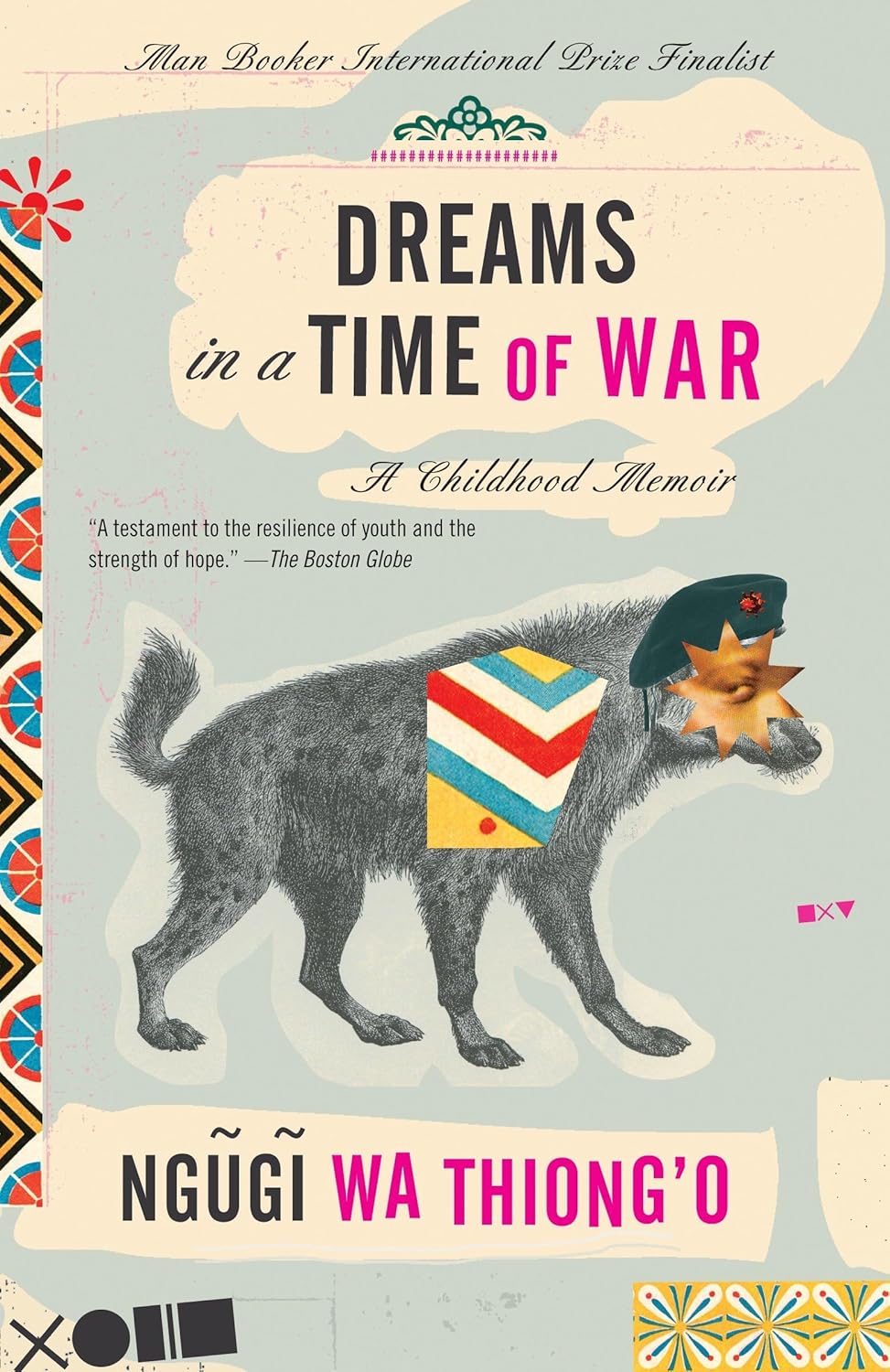
On self-validation. in Dreams in a Time of War, he added “Belief in yourself is more important than endless worries of what others think of you. Value yourself and others will value you. Validation is best that comes from within.


Ngugi wa Thiong’o, Kenyan Literary Baobab, is no Longer

Ngugi wa Thiong'o
Ngugi wa Thiong’o

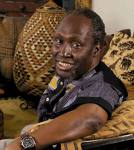
World acclaimed Kenyan writer Ngũgĩ wa Thiong’o is no longer. Millions of school children in Africa grew up reading his first books Weep not child (1964), the first novel in English published by an East African, followed by The river between (1965) and A Grain of Wheat (1967). A Cameroonian friend of mine used to love reading The river between, and could recite almost every line. Weep not child explored the impact of the Mau Mau rebellion on a young boy’s family and education, The river between focused on the cultural clash between traditional Gikuyu society, while A Grain of Wheat focused on the disillusionment of the post-independence era.

Chinua Achebe (Source: AP Photo)

Like the venerated Chinua Achebe, Ngũgĩ wa Thiong’o was counted among the baobabs of modern African literature, as the author of several novels, plays, short stories, critical pieces, and children books. Like Achebe, he was tipped several times to win the Nobel Prize for Literature, leaving fans dismayed each time the medal slipped through his fingers. We are counted among those fans who each time hoped, but were always disappointed… it’s like the real African authors never get rewarded. This is a lesson for all that we need to reward our own, create awards and celebrate our own, instead of waiting for others to celebrate them. His daughter Wanjiku wa Ngũgĩ who announced his passing on May 28, 2025, said, “He lived a full life, fought a good fight. As was his last wish, let’s celebrate his life and his work.”

“Weep not Child” by Ngugi wa Thiong’o

Ngũgĩ reached fame writing in English, and then decided to write in Gikuyu, his mother-tongue. Today, his books are written in Gikuyu, and then translated into English; he was a strong proponent of African languages and was adamant about expressing his art in Gikuyu. Like so many East African leaders, he attended the prestigious Makerere University in Uganda, and later the University of Leeds in the UK. Upon his return to Kenya, he taught at the University of Nairobi where he worked to “decolonize the minds,” campaigning to decolonize the curriculum by prioritizing African literature and languages. He was instrumental in the abolition of the English Literature Department in favor of a broader, African-centered literary program. The 1970s decade also saw him drop his patronym James Ngugi, to be fully known as Ngũgĩ wa Thiong’o.

The wizard of crow
“The wizard of crow” by Ngugi wa Thiong’o

His work spanned over six decades, documenting the transformation of his country, Kenya, from a colony of Great Britain to a democracy with all its issues. He fought the government and was arrested several times, and spent a year at a maximum security prison where he wrote his novel Devil on the Cross (Caitaani mũtharaba-Inĩ), the first modern novel in Gikuyu, written on prison toilet paper. Once out of prison, faced with constant harassment from the government, he went into exile and taught at some of the world’s best universities, including Yale University, New York University, Northwestern University, and the University of California, Irvine where he was a Distinguished Professor of English and Comparative Literature and served as first director of the International Center for Writing and Translation.

Ngugi wa Thiong’o (Source: TTbook.org)

His was a unique voice, a voice which never stopped to urge for the decolonization of the minds. To this effect, he wrote Decolonising the Mind: The Politics of Language in African Literature (1986) which advocates for linguistic decolonization of Africa; the book became one of his best known non-fiction work. In his speech at Wits University in Johannesburg in 2017, titled ‘Secure the base, decolonise the mind, Ngũgĩ spoke about the ‘power relationship between the language of the conqueror and the language of the vanquished’, and asked whether, after fifty years, we have ‘regained the cultural and intellectual independence that we had lost to colonialism’, adding ‘I have always argued that each language, big or small, has its unique musicality; there is no language, whose musicality and cognitive potential, is inherently better than another,’ he said [The Johannesburg Review of Books]. Ngũgĩ is survived by 9 children of whom 4 are also authors like himself.

To learn more, please check out The Johannesburg Review of Books, Nyakundi Report, Pulse Kenya, and the BBC. So long to our Kenyan giant of literature… we will not weep, but keep celebrating Ngũgĩ wa Thiong’o ‘s life!

The “Greatest Active Playwright in the English-Speaking World”, South African Athol Fugard is no Longer

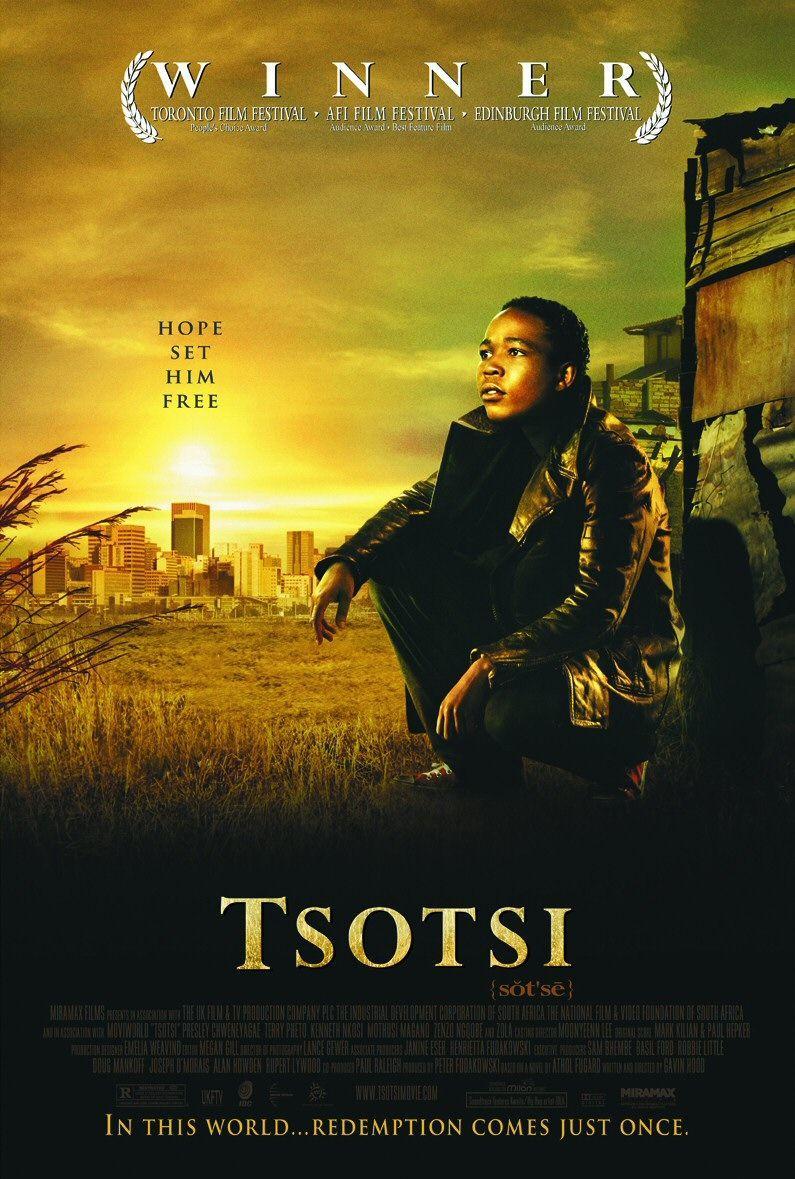
Theatrical poster of “Tsotsi”

Have you by any chance watched the South African movie “Tsotsi”? In 2006, it was the first South African film and first African film not made in French to win an Oscar for foreign language film and numerous international awards. It tells the story of a ruthless gang leader who steals a car, only to find a baby in the back seat. The movie is based off the novel by the same name “Tsotsi” by South African playwright, novelist, actor, and director widely regarded as South Africa’s greatest playwright Athol Fugard.

This past Saturday, Athol Fugard, who in 1985 was acclaimed as “the greatest active playwright in the English-speaking world” by Time, passed away at the age of 92. His work confronted apartheid and spanned over 7 decades with over 30 playwrights. He was a critic of apartheid and very early broke the rules and included all as in his 1961 breakthrough play, Blood Knot, which featured for the first time in South African history a black and white actor played by Fugard himself, and was played in front of a multiracial audience. 

Excerpts below are from the BBC. Enjoy!

=====

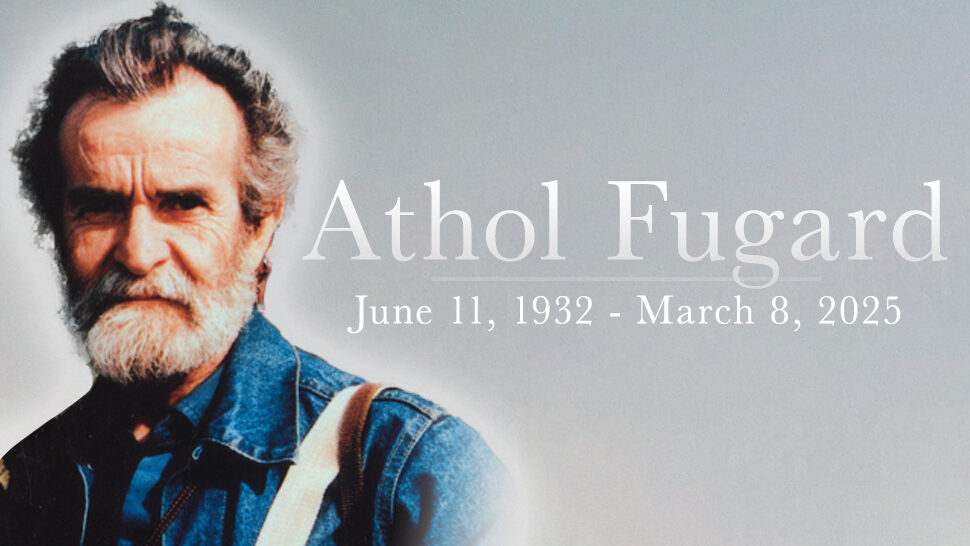
Athol Fugard (Source: Playbill.com)

Athol Fugard, who has died aged 92, was widely acclaimed as one of South Africa’s greatest playwrights.

The son of an Afrikaner mother, he was best known for his politically charged plays challenging the racist system of apartheid.

… Fugard wrote more than 30 plays in a career that spanned 70 years, making his mark with The Blood Knot in 1961. It was the first play in South Africa with a black and white actor – Fugard himself – performing in a front of a multiracial audience, before the apartheid regime introduced laws prohibiting mixed casts and audiences. The Blood Knot catapulted Fugard onto the international stage – with the play shown in the US, and adapted for British television. The apartheid regime later confiscated his passport, but it strengthened Fugard’s resolve to keep breaking racial barriers and exposing the injustices of apartheid. He went on to work with the Serpent Players, a group of black actors, and performed in black townships, despite harassment from the apartheid regime’s security forces.

Fugard’s celebrated plays included Boesman and Lena, which looked at the difficult circumstances of a mixed-race couple. Having premiered in 1969, it was made into a film in 2000 starring Danny Glover and Angela Bassett.

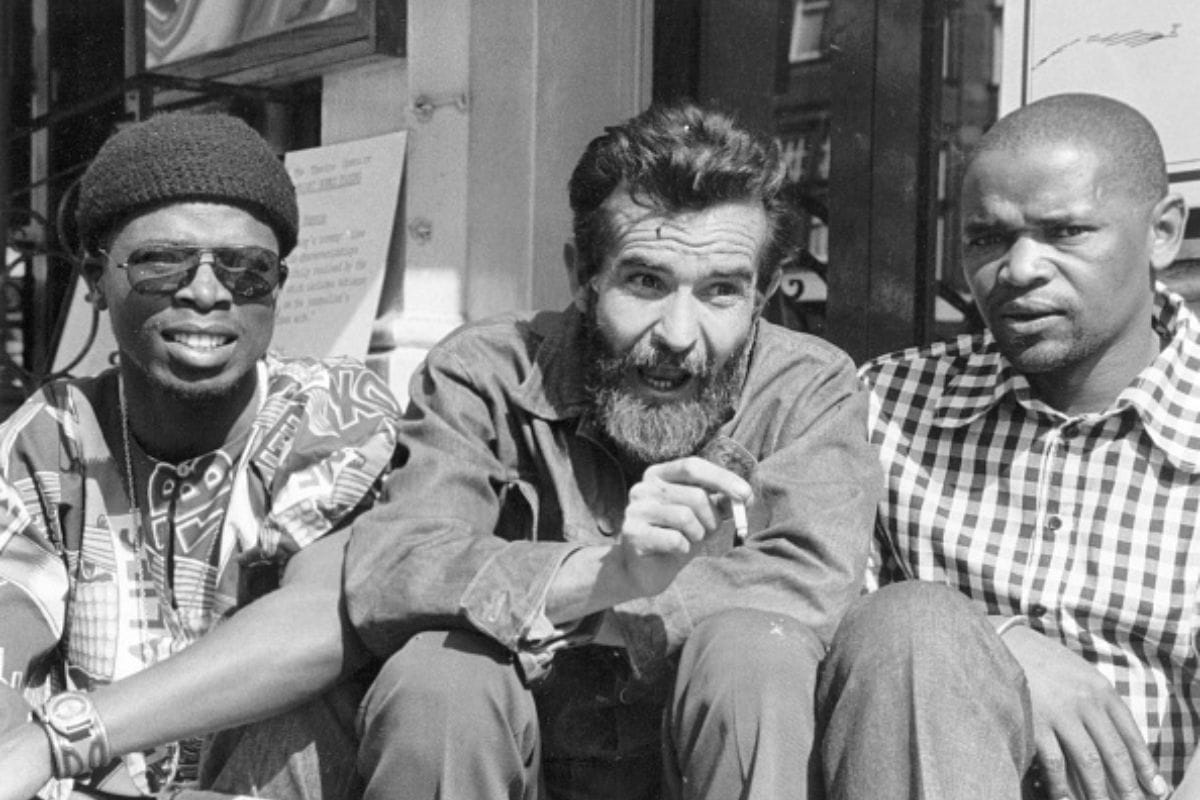
John Kani (left), Athol Fugard (center) and Winston Ntshona at the Royal Court Theatre in 1973. Picture: Evening Standard/Getty Images

His novel, Tsotsi, was also made into a film, winning the 2006 Oscar for best foreign language movie.

… Other well-known plays by Fugard include Sizwe Banzi Is Dead and The Island, which he co-wrote with the actors John Kani and Winston Ntshona, in a powerful condemnation of life on Robben Island, where anti-apartheid icon Nelson Mandela was imprisoned.

… Fugard won several awards for his work, and received a lifetime achievement honour at the prestigious Tony awards in 2011, while Time magazine described him in 1985 as the greatest active playwright in the English-speaking world.

Apartheid defined me, that is true… But I am proud of the work that came out of it, that carries my name,” Fugard told the AFP news agency in 1995.

Who / What did We Celebrate in Africa in 2024 ?

There was a lot to celebrate in Africa this year. Below are just a few:

  1. Alliance des Etats du Sahel (AES) (Source: Alliance-sahel.org)
    In January, Mali, Burkina Faso, and Niger left the ECOWAS creating a major seismic shift in the organization. Mali, Burkina Faso, and Niger all leave the ECOWAS. This came as no surprise given that the coup to topple puppet governments in their respective countries, the ECOWAS had suffocated these countries by suspending all three countries and imposing heavy sanctions on Mali and Niger that exacerbated the populations’ sentiments that it is a puppet organization serving foreign interests. Niger even tried to amend the situations by inviting ECOWAS representatives to the country, but only the member from Togo showed up. Why should anybody remain in an organization that punishes its member populations? 
  2. In January, Ghanaian artifacts were returned home for the first time in 150 years, on a “loan”. Ghana Artefacts “Return” Home 150 years later … on Loan. It is a disappointment that African governments can only get “loans” for what is dutifully theirs from those institutions which have amassed millions over the year from the exhibition of stolen African artefacts.
  3. The Elephants are winners of the Africa Cup of Nations 2023 (Source: CAFonline.com)
    In February, the Elephants of Cote d’Ivoire gave us a thrill from being redeemed in the knockout stage with 2 defeats (among which a 4-0 loss against Equatorial Guinea) that left them open to elimination, and a redemption that came from being one of the four best 3rd-placed team, a coach sacking, and a coach change, to lift the trophy of the Africa Cup of Nations. It was a real “Coup du Marteau” (Tam Sir, we are talking about your special song!) The Ivorians added to their previous Nations Cup wins of 1992 and 2015 (Côte d’Ivoire wins the 2015 Africa Cup of Nations) and became the first tournament hosts to triumph since Egypt lifted the trophy in 2006. CAN 2023: the Elephants of Côte d’Ivoire are the New Champions
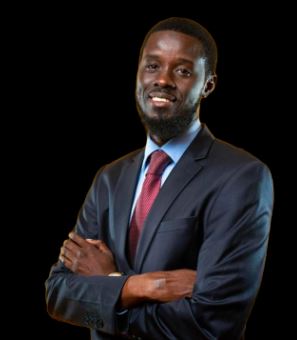
  4. Bassirou Diomaye Faye (Source: Seneweb.net)
    In March, Bassirou Diomaye Faye was elected president of Senegal, making him the youngest African president at 44. This was a joyous moment for the Senegalese people who stood to have their democratic system and constitution upheld. Faye is very unconventional, as the youngest with no political background (he was previously a tax officer), he is also the first Senegalese president to openly have two wives. With his friend and Prime Minister Ousmane Sonko, we hope for better governance for Senegal. Senegal Presidential Elections: Bassirou Diomaye Faye is set to be the next president. Either way, the Senegalese have demonstrated once again, that although their democracy is young, it is not to be messed with!
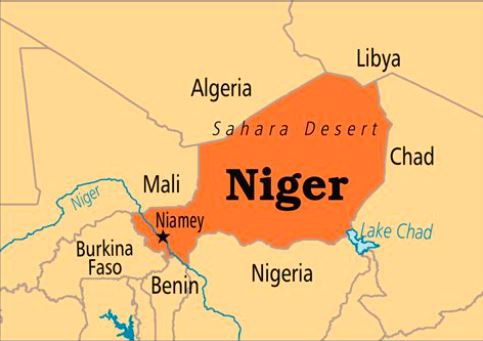
  5. Map of Niger
    In mid-March, Niger suspended military “cooperation” with the USA, with immediate effect. Operating from years of condescending treatments of those deemed inferior, particularly of Africans, the Americans had decided to dictate their will, like the French before, to Niger people and deny their sovereign rights to choose their own partnerships in their fight against terrorism. The spokesman of Niger’s government, Colonel Amadou Abdramane, exposed the fact that the military “cooperation” with the US was not even a real one, i.e. the US had installed their largest drone base in Africa, and possibly in the world, in Niger via a verbal agreement only, and the Niger people had to pay for the American base in their country, while the Americans never raised a hand to help Niger fight against terrorist attacks that were maiming their citizens [Bye Bye to French Troops in NigerFrance set to Withdraw Troops and Ambassador from Niger]. Niger suspends military “cooperation” with the US, effective immediately.
  6. Alliance des Etats du Sahel (source: linfodusahel.com)
    Mali, Niger, and Burkina Faso’s leaders met on July 6, 2024 in Niamey, Niger, as part of the first summit of the Alliance des Etats du Sahel (AES – Alliance of the Sahel States). During the summit, the three leaders signed a confederation treaty aimed at strengthening the links between the three nations in terms of defence, and other aspects such as the economy, infrastructures, and more. They reinforced their mutual defence pact.
  7. Right before the Paris Olympics, brother Biniam Girmay of Eritrea made history by becoming the first African to win a stage at the Tour de France, and two more stage victories which helped him capture the green jersey for the highest points scorer – a first for anyone from the continent.
  8. Faith Kipyegon winning historic 3rd gold medal at the Paris 2024 Olympics (source: Kelly Ayodi for Olympics Kenya – EastleighVoice.co.ke)
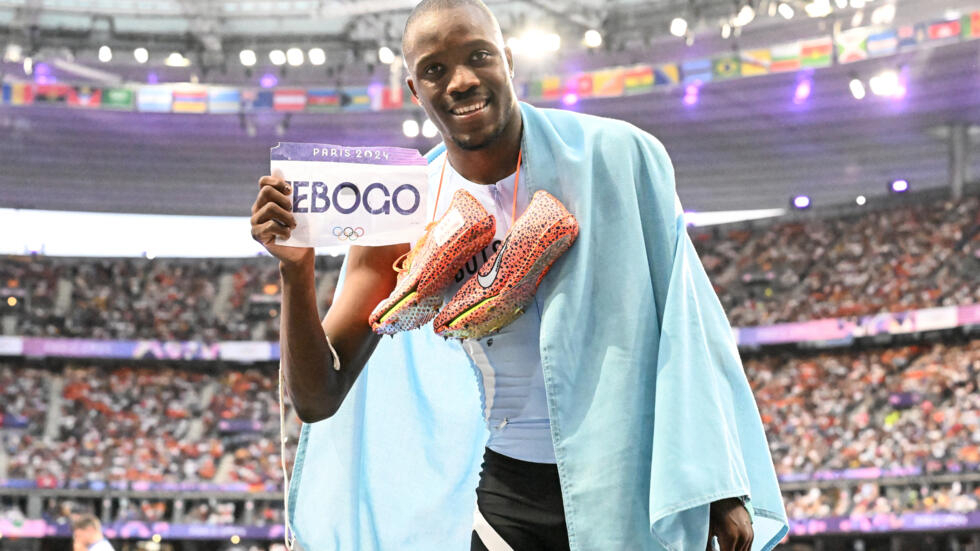
    The Paris 2024 Olympics ended with a strong show from African athletes who shined in various  disciplines, and represented many countries including outside of Africa. They made us proud and served us joy, endurance, and passion. We will list just a few. We had a lot of firsts, like our Kenyan sister Faith Kipyegon who won her 3rd successive Olympic gold in the women’s 1500 m, making her the first African athlete to ever win gold in the same event 3 times in a row. Our brother Letsile Tebogo of Botswana earned the top most place in the Men’s 200 m thus giving Botswana and Africa as a whole its first ever olympic gold medal in the 200 m; Tebogo also led the Botswana’s team to a silver medal in the
    Letsile Tebogo after winning gold in 200m (Source: Onuaonline)
    Men’s 4x400m relay, again a first for any African country ever. Ugandan brother Joshua Cheptegei delivered on his promise for his last Olympics to be memorable by winning gold in the Men’s 10,000 m, and landing Uganda its first gold at the games. Tatjana Smith of South Africa made her country proud by winning gold and silver medals in the Women’s 200m and 100m breaststroke events. Akani Simbine and South African track team delivered us silver in the Men’s 4 x 100 m relay, again a first for South Africa, and for Africa as a whole.  Kaylia Nemour gave Algeria and Africa its very first victory ever in gymnastics with a gold in the Women’s Uneven bars in artistic gymnastics. Tamirat Tola, who was just added to the Ethiopian Olympics’s team 2 weeks prior, took home the gold medal in the Men’s Marathon. Ahmed Elgendy won the first gold medal for Egypt at any Olympics, becoming the first African and person to win in the new discipline of Men’s Modern Pentathlon. Cabo Verde got its very first medal at the Olympic games through David de Pina who won bronze in the Men’s 51 kg Boxing. Zambian Muzala Samukonga won the bronze medal in the Men’s 400m, giving his country its very first Olympic medal.
  9. Aliko Dangote, Africa’s richest man, has built one of the world’s largest oil refineries in Nigeria, Africa. The refinery opened its doors last year, and in May shipped out its first boat of refined jet fuel to the Netherlands. Since then, the refinery has gotten into agreements with the Nigerian governments and neighboring ones as well.
  10. Paris Paralympics 2024 (Source: https://www.paralympic.org/paris-2024)
    Africa shone at the Paralympics, winning 64 medals, with Morocco getting the most medals with 15 medals, but Algeria topped the continent’s medal table thanks to its 6 gold medals vs. 3 gold for Morocco. Most medals were won in para-athletics and para-powerlifting disciplines. Veteran Raoua Tlili of Tunisia cemented her place as a legend in the F41 discus throw and shot put, winning 2 gold medals this year, giving her a total of 8 gold medals for her country, having competed in each Olympics since
    Raoua Tlili (Source: Outlook India)
    Beijing 2008. Nigeria’s Mariam Eniola Bolaji became the first African to win an Olympic or Paralympic medal in Badminton. Yovanni Philippe gave Mauritius its first medal ever by securing a bronze medal in the men’s T20 400m; while Annaba native, Brahim Guendouz won gold in para-canoeing’s KL3 class over 200m, giving Algeria its first ever medal in a discipline outside of para-athletics, para-judo, and para-powerlifting. 
  11. Gael Faye and his book Jacaranda
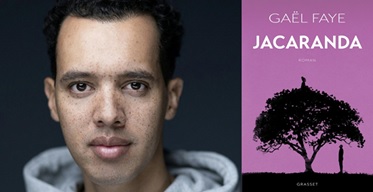
    African authors made great wins and firsts: they won the most important literary awards in French literature: the Goncourt prize, which was awarded to Kamel Daoud for his third novel titled «Houris», and the Renaudot prize awarded to Gaël Faye for «Jacaranda». Daoud’s novel is currently in a controversy. Africans win the Goncourt and Renaudot 2024 Literary Prizes.
  12. Zimbabwe’s new currency, the ZiG (Source: France24)
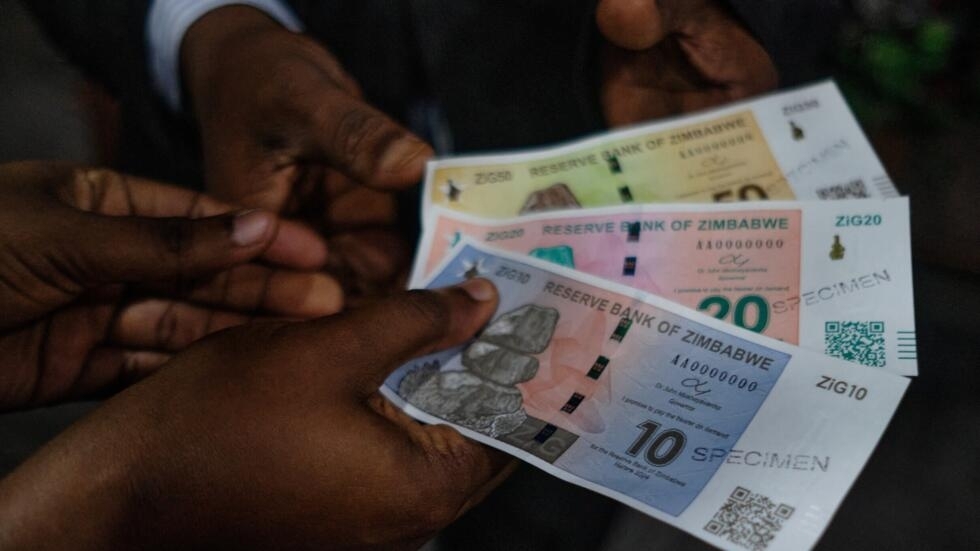
    Niger took control of its uranium when Orano has been suspended by the Niger government, while Mali inaugurated the construction of a lithium extraction plant (recall that Zimbabwe also inaugurated a lithium processing plant last year), and is working towards nationalizing its gold. Resolute Mining, has agreed to pay Mali’s government $160 millions to settle a tax dispute (Mali wins $160m in Gold Mining Dispute).  Zimbabwe Gold-Backed Currency was introduced in April; the ZiG, which stands for Zimbabwe Gold, was created as an effort to try to alleviate inflation, and stabilize the economy; thus far, it has not been successful, but it is only the beginning.
  13. Andakia
    A Senegalese startup, Andakia, has just introduced the very first African AI: AWA.  AWA is a Wolof-speaking artificial intelligence system; it is the brainchild of Alioune Badara Mbengue.  In an interview to TRT Afrika, Mbengue said, “AWA is the first AI that understands and speaks perfect Wolof. Our vision is to extend AWA to other African languages, enabling Africa to become a leader in digital innovation and ensure technological sovereignty tailored to its needs.” Users need to simply engage in a spoken exchange with the AI interface in Wolof, seeking general information or asking it to perform tasks such as ordering a taxi, ordering a meal, or carrying out financial and other transactions. This is revolutionary as it addresses the needs of the population. We applaud the amazing work of our brother and his team, and truly the sky is the limit. 

Africans win the Goncourt and Renaudot 2024 Literary Prizes

Goncourt Prize

This month, African authors made great wins and firsts: they won the most important literary awards in French literature: the Goncourt prize, which was awarded to Kamel Daoud for his third novel titled «Houris», and the Renaudot prize awarded to Gaël Faye pour «Jacaranda». These two books focus on some of the dark periods in the histories of Algeria in one, and Rwanda in the 1990s.

Kamel Daoud and his book Houris (Source: entrevue.fr)

Algeria writer and journalist Kamel Daoud wrote the novel Houris about Algeria’s 1990 civil war. The novel has been banned in his home country of Algeria. In 1994, he entered journalism working for the French daily newspaper Quotidien d’Oran, where he wrote a popular column “Raïna Raïkoum” (Our Opinion, Your Opinion). In parallel, he started writing novels, publishing his first one in 2013, The Meursault, Investigation, a retelling of  Albert Camus‘ famous novel The Stranger, which tells the story from the standpoint of the previously nameless Arab victim killed by Meursault; this first novel won the 2015 Goncourt first novel prize, the 2014 Prix François-Mauriac and the 2014 Prix des cinq continents de la Francophonie. The current book, Houris is a story which focuses on themes such as religion, freedom and identity; the Algerian government sees it as a political gesture amid the current heightened tensions between Algeria and France. A couple of days ago, a woman in Algeria, Saada Arbane accused Daoud of using her personal story without her consent in the award winning novel Houris; thus, she is suing him. Like the heroine of the book, she survived one of the massacres, and had her throat cut in an Islamic attack that wiped out her family. She uses a tube to talk, and was in 2015 one of the patient of Daoud’s wife, psychiatrist Aicha Dahdouh. She said that many details in the heroine’s life – “her speaking tube, her scars, her tattoos, her hairdresser” – came directly from her confidences to Ms. Dahdouh during sessions.  Are these accusations founded? What will happen to this year’s Goncourt novel?

Gael Faye and his book Jacaranda

The winner of the Renaudot prize this year is Gaël Faye for his second novel “Jacaranda” which centers around the dark years of Rwanda. Gaël Faye, is a Franco-Rwandan author, French by his father and Rwandan by his mother, who used to be a London financier, before quitting and returning to live in Rwanda to focus on music, and whose first novel Petit Pays (Small Country) set in Burundi won, among others, the Goncourt prize in 2016.  This time, his comeback novel Jacaranda is set in Rwanda, as a powerful narrative exploring the effects of the 1994 genocide and impacts on current and future generations and the need to the keep the memory. The story encompasses 4 generations, and tells the terrible story of this country which slowly emerges from darkness to light.


Africa: Think Ahead, Strategize!

Charles Onana

A few years ago, after the horrors of the electoral crisis in Cote d’Ivoire and the bombing of its presidential palace with the capture of President Laurent Gbagbo and First Lady Simone Gbagbo, I watched a video interview of the Franco-Cameroonian journalist Charles Onana who was talking about his book “Côte d’Ivoire : le coup d’État, Duboiris, 2011 (with a preface by Thabo Mbeki).” At the end of the interview, Onana stated, “… Quand vous avez un pays riche qui est convoité par des multinationales, par des groupes mafieux, par des états, etc, vous devez décupler votre intelligence pour défendre votre pays. … En face vous avez des équipes de think-tanks qui sont là pour penser comment destabiliser le pays, donc les Africains ne peuvent pas faire l’économie d’un travail acharné, d’un travail surhumain pour s’en sortirPendant que la crise se calme ou s’apaise, les autres continuent de travailler pour vous destabiliser, ils refléchissent à d’autres stratégies, mais il faut que [les Africains] apprennent à refléchir à differentes stratégies de manière à ce que le Président de la République ne se retrouve pas toujours seul à penser à tout, seul à reflechir à tout, …” [When you are a rich country that is coveted by multinationals, by mafia groups, by states, etc, you must increase your intelligence tenfold to defend your country. …  On the other side, you have think-tank teams that are thinking ways to destabilize the country, so Africans cannot avoid hard work, superhuman work to be freeWhen the crisis calms down or subsides, others continue to work to destabilize you, they think other strategies, but Africans too need to think different strategies so that the President of the Republic does not always find himself thinking not the only one think all by himself, …]

The New Scramble for Africa (Source: Source: Dr Jack & Curtis for City Press, National Institute African Studies (NIAS))

With the New Scramble for Africa, African countries should have think-tanks, the enemy has think-tanks strategizing over decades, how come we, Africans, do not? Even in times of peace, we should be strategizing… as we heard the French general, it is clear that they are already planning the defeat of Africa, and the return of Africans into their fold in 10 years… how come? When Sekou Toure said NO to the General De Gaulle and Guinea gained independence, not only were the French busy destabilizing his regime politically, militarily, arming his local opponents, but they even flooded his economy with fake currency to destroy his own free Guinean Franc (as he had said NO to the slave currency that is FCFA); the attacks were non stop for several decades, and honestly, are still going on. Thus, Africans, we need to gain our independence, and for our independence to be complete, we need to have strategies for the immediate day-to-day events, but also long-term, over 20-50 or even 100 years. It took China 100 years to get back Hong-Kong and Macau from Great Britain and Portugal… that happened because of a clear vision and strategy of defense against the enemy and reclaiming of lands.

A Trip down Memory Lane : Lumumba’s death: Could we (Africans) have acted differently?

Patrice Lumumba

As always, ahead of June 30, the ‘independence’ day of the Democratic Republic of Congo (DRC), we write about  Patrice Emery Lumumba, the first Prime Minister of Congo. This time, we will take a trip down memory lane with the great article by the prominent anti-colonial thinker, activist and writer, Frantz Fanon, which was published earlier here on Afrolegends in French in 2011.  (You will find the original here).  In view of all the events occurring in Africa (The New Scramble for Africa, Creation of the AES and destabilization attempts) with the United Nations (UN) approval, I thought that this article, published in 1964, was so important that I had translated it into English for all to read! In the article, Fanon talks about the kind of Africans who betray their people, and the uselessness (to us, Africans) of the UN which only serves Western interests. The scenario is the same and has not changed over the past 6 decades: wherever the UN lands in a country, all of sudden there are troubles, tensions, massacres, (ONUCI, MINUSMA, MONUSCO, …), etc.  Enjoy… For the full article, check out: Lumumba’s death: Could we (Africans) have acted differently?

—————————————————

Frantz Fanon
Frantz Fanon

The great success of the enemies of Africa is to have corrupted the Africans themselves.  It is true that these Africans had vested interest in the murder of Lumumba.  Heads of puppet governments, in a fake independence, faced everyday by massive opposition from their peoples, it did not take long to convince themselves that the real independence of the Congo would put them personally at risk.  And there were other Africans, a little less puppet, but who get frightened when it comes to disengaging Africa from the West.  It seems as if these African Heads of State are still afraid to face Africa.  These, also, though less actively, but consciously, contributed to the deterioration of the situation in Congo.  Little by little, we were reaching the agreement in the West that there was a need to intervene in Congo, we could not let things evolve at this pace.

Gradually, the idea of a UN intervention was taking shape. So we can say today that two simultaneous errors were committed by Africans.

Patrice Lumumba
Patrice Lumumba

And first by Lumumba when he sought the intervention of the UN.  He should have never called on the United Nations.  The UN has never been able to properly solve problems brought to man’s consciousness by colonialism, and whenever it has intervened, it was to actually come to the aid of the colonial power to the oppressed country.  Look at Cameroon.  What kind of peace do the subjects of Mr. Ahidjo kept in check by a French expeditionary force, which most of the time, made ​​its debut in Algeria, enjoy?  The UN, however, controlled the autodetermination of Cameroon and the French government has set up a “Provisional Executive” there.

Look at Viet-Nam.  Look at Laos.

It is not true to say that the UN fail because the causes are too difficult.

Map of the Democratic Republic of Congo

In reality the UN is the legal card used by imperialist interests when brute force has failed.  The sharing, the mixed controlled joint committees, under guardianship are international means of torture to break the will of the people, cultivating anarchy, banditry and misery.

… Lumumba’s fault was then initially to believe in the impartiality of the UN. He forgot that the UN, particularly in the current state, is only a reserve assembly established by the Greats to continue, between two armed conflicts, the “peaceful struggle” for the balkanization of the world. …

Africans should remember this lesson.  If outside help is necessary to us, let us call on our friends.  Only they can truly and fully help us achieve our goals precisely because the friendship between us is a friendship of struggles.

… Our mistake, as Africans, is to have forgotten that the enemy never backs down sincerely.  He never understands.  He surrenders, but is not converted.

Our mistake is to have believed that the enemy had lost its militancy and its harmfulness.  If Lumumba disturbs, Lumumba should disappear.

Hesitation in commiting murder has never been a feature of imperialism.