Mali Recovers over a Billion $ for its Miners

Map of Mali 

Imagine being able to recover money from multinationals? Imagine putting the well-being of your people so much at the forefront that you are not afraid of uncovering or exposing corruption or injustice, and of taking on major world multinationals! This is what the Malian government has just done, and as a result has uncovered a billion dollar in arrears! Remember how Pascal Lissouba, the former president of the Republic of Congo, admitted that the Congolese government had no idea how much oil Elf (now Total Energies) was pumping out of its soil, and that they were at the mercy of whatever the company wanted to pay them, which was pennies; when he tried to renegotiate contracts or find better partners, he was deposed by Denis Sassou Nguesso, the Western puppet. Remember Jean Bedel Bokassa of the Central African Republic who admitted that he had no visibility on the amount of diamonds or uranium that French and Swiss companies were extracting from his country. Now, imagine being in your sovereign state, i.e. no Western puppet at your helm, the well-being of your people at the forefront?
AES Logo

Mali (and the other countries of the AES) has been working tirelessly on nationalizing their resources, and renegotiating correctly contracts with multinationals that are extracting their resources. Thus, such an exercise is fruitful in the sense that now, they can audit accounts, and compensate or fight for better compensation for their people better. Today, it was announced that Mali has recovered over a billion dollar in arrears from mining companies! Isn’t this a beautiful Christmas /end of year present? This also makes us pray further for the safety of such governments who place the restoration of their people’s dignity and well-being at the forefront of their efforts. Now, more than ever, they will be the target of the foreign corporations and bandits! Now, more than ever, they need each of us to stand in solidarity with them!

Excerpts below are from Africanews.

=====

Mali has recovered more than a billion dollars in arrears from mining companies after a sweeping audit, its finance minister, Alousséni Sanou, said on Tuesday.

It’s one of the country’s biggest ever clawbacks from its lucrative mining sector.

The military-led government launched an audit of the sector in early 2023 and uncovered massive shortfalls for the state. That paved the way for a new mining code that raises royalties, boosts the state’s ownership in mining companies and scraps stability clauses.

A recovery commission was set up after an audit flagged financial irregularities and shortfalls for the state estimated at between half a billion and a billion dollars.

Who / What did We Celebrate in Africa in 2024 ?

There was a lot to celebrate in Africa this year. Below are just a few:

  1. Alliance des Etats du Sahel (AES) (Source: Alliance-sahel.org)
    In January, Mali, Burkina Faso, and Niger left the ECOWAS creating a major seismic shift in the organization. Mali, Burkina Faso, and Niger all leave the ECOWAS. This came as no surprise given that the coup to topple puppet governments in their respective countries, the ECOWAS had suffocated these countries by suspending all three countries and imposing heavy sanctions on Mali and Niger that exacerbated the populations’ sentiments that it is a puppet organization serving foreign interests. Niger even tried to amend the situations by inviting ECOWAS representatives to the country, but only the member from Togo showed up. Why should anybody remain in an organization that punishes its member populations? 
  2. In January, Ghanaian artifacts were returned home for the first time in 150 years, on a “loan”. Ghana Artefacts “Return” Home 150 years later … on Loan. It is a disappointment that African governments can only get “loans” for what is dutifully theirs from those institutions which have amassed millions over the year from the exhibition of stolen African artefacts.
  3. The Elephants are winners of the Africa Cup of Nations 2023 (Source: CAFonline.com)
    In February, the Elephants of Cote d’Ivoire gave us a thrill from being redeemed in the knockout stage with 2 defeats (among which a 4-0 loss against Equatorial Guinea) that left them open to elimination, and a redemption that came from being one of the four best 3rd-placed team, a coach sacking, and a coach change, to lift the trophy of the Africa Cup of Nations. It was a real “Coup du Marteau” (Tam Sir, we are talking about your special song!) The Ivorians added to their previous Nations Cup wins of 1992 and 2015 (Côte d’Ivoire wins the 2015 Africa Cup of Nations) and became the first tournament hosts to triumph since Egypt lifted the trophy in 2006. CAN 2023: the Elephants of Côte d’Ivoire are the New Champions
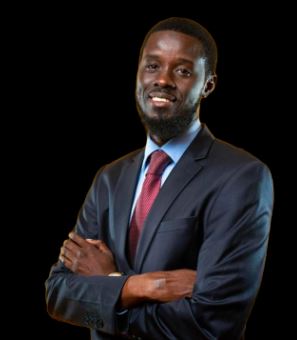
  4. Bassirou Diomaye Faye (Source: Seneweb.net)
    In March, Bassirou Diomaye Faye was elected president of Senegal, making him the youngest African president at 44. This was a joyous moment for the Senegalese people who stood to have their democratic system and constitution upheld. Faye is very unconventional, as the youngest with no political background (he was previously a tax officer), he is also the first Senegalese president to openly have two wives. With his friend and Prime Minister Ousmane Sonko, we hope for better governance for Senegal. Senegal Presidential Elections: Bassirou Diomaye Faye is set to be the next president. Either way, the Senegalese have demonstrated once again, that although their democracy is young, it is not to be messed with!
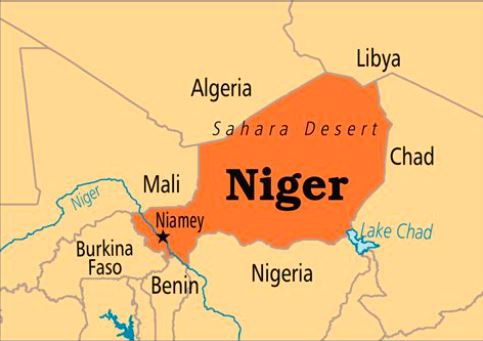
  5. Map of Niger
    In mid-March, Niger suspended military “cooperation” with the USA, with immediate effect. Operating from years of condescending treatments of those deemed inferior, particularly of Africans, the Americans had decided to dictate their will, like the French before, to Niger people and deny their sovereign rights to choose their own partnerships in their fight against terrorism. The spokesman of Niger’s government, Colonel Amadou Abdramane, exposed the fact that the military “cooperation” with the US was not even a real one, i.e. the US had installed their largest drone base in Africa, and possibly in the world, in Niger via a verbal agreement only, and the Niger people had to pay for the American base in their country, while the Americans never raised a hand to help Niger fight against terrorist attacks that were maiming their citizens [Bye Bye to French Troops in NigerFrance set to Withdraw Troops and Ambassador from Niger]. Niger suspends military “cooperation” with the US, effective immediately.
  6. Alliance des Etats du Sahel (source: linfodusahel.com)
    Mali, Niger, and Burkina Faso’s leaders met on July 6, 2024 in Niamey, Niger, as part of the first summit of the Alliance des Etats du Sahel (AES – Alliance of the Sahel States). During the summit, the three leaders signed a confederation treaty aimed at strengthening the links between the three nations in terms of defence, and other aspects such as the economy, infrastructures, and more. They reinforced their mutual defence pact.
  7. Right before the Paris Olympics, brother Biniam Girmay of Eritrea made history by becoming the first African to win a stage at the Tour de France, and two more stage victories which helped him capture the green jersey for the highest points scorer – a first for anyone from the continent.
  8. Faith Kipyegon winning historic 3rd gold medal at the Paris 2024 Olympics (source: Kelly Ayodi for Olympics Kenya – EastleighVoice.co.ke)
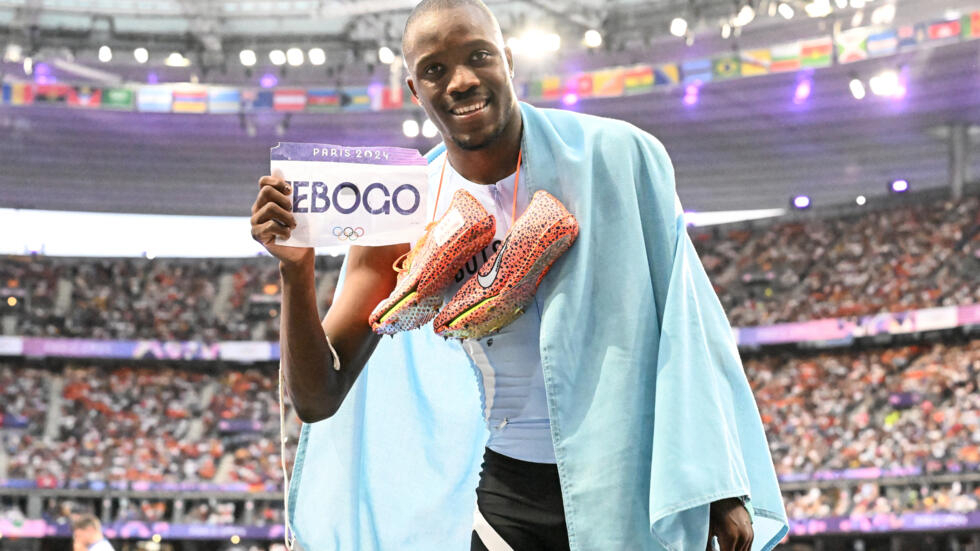
    The Paris 2024 Olympics ended with a strong show from African athletes who shined in various  disciplines, and represented many countries including outside of Africa. They made us proud and served us joy, endurance, and passion. We will list just a few. We had a lot of firsts, like our Kenyan sister Faith Kipyegon who won her 3rd successive Olympic gold in the women’s 1500 m, making her the first African athlete to ever win gold in the same event 3 times in a row. Our brother Letsile Tebogo of Botswana earned the top most place in the Men’s 200 m thus giving Botswana and Africa as a whole its first ever olympic gold medal in the 200 m; Tebogo also led the Botswana’s team to a silver medal in the
    Letsile Tebogo after winning gold in 200m (Source: Onuaonline)
    Men’s 4x400m relay, again a first for any African country ever. Ugandan brother Joshua Cheptegei delivered on his promise for his last Olympics to be memorable by winning gold in the Men’s 10,000 m, and landing Uganda its first gold at the games. Tatjana Smith of South Africa made her country proud by winning gold and silver medals in the Women’s 200m and 100m breaststroke events. Akani Simbine and South African track team delivered us silver in the Men’s 4 x 100 m relay, again a first for South Africa, and for Africa as a whole.  Kaylia Nemour gave Algeria and Africa its very first victory ever in gymnastics with a gold in the Women’s Uneven bars in artistic gymnastics. Tamirat Tola, who was just added to the Ethiopian Olympics’s team 2 weeks prior, took home the gold medal in the Men’s Marathon. Ahmed Elgendy won the first gold medal for Egypt at any Olympics, becoming the first African and person to win in the new discipline of Men’s Modern Pentathlon. Cabo Verde got its very first medal at the Olympic games through David de Pina who won bronze in the Men’s 51 kg Boxing. Zambian Muzala Samukonga won the bronze medal in the Men’s 400m, giving his country its very first Olympic medal.
  9. Aliko Dangote, Africa’s richest man, has built one of the world’s largest oil refineries in Nigeria, Africa. The refinery opened its doors last year, and in May shipped out its first boat of refined jet fuel to the Netherlands. Since then, the refinery has gotten into agreements with the Nigerian governments and neighboring ones as well.
  10. Paris Paralympics 2024 (Source: https://www.paralympic.org/paris-2024)
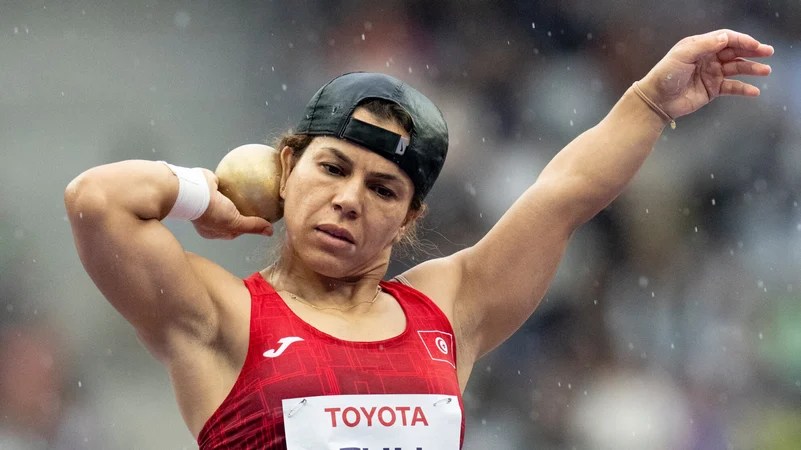
    Africa shone at the Paralympics, winning 64 medals, with Morocco getting the most medals with 15 medals, but Algeria topped the continent’s medal table thanks to its 6 gold medals vs. 3 gold for Morocco. Most medals were won in para-athletics and para-powerlifting disciplines. Veteran Raoua Tlili of Tunisia cemented her place as a legend in the F41 discus throw and shot put, winning 2 gold medals this year, giving her a total of 8 gold medals for her country, having competed in each Olympics since
    Raoua Tlili (Source: Outlook India)
    Beijing 2008. Nigeria’s Mariam Eniola Bolaji became the first African to win an Olympic or Paralympic medal in Badminton. Yovanni Philippe gave Mauritius its first medal ever by securing a bronze medal in the men’s T20 400m; while Annaba native, Brahim Guendouz won gold in para-canoeing’s KL3 class over 200m, giving Algeria its first ever medal in a discipline outside of para-athletics, para-judo, and para-powerlifting. 
  11. Gael Faye and his book Jacaranda
    African authors made great wins and firsts: they won the most important literary awards in French literature: the Goncourt prize, which was awarded to Kamel Daoud for his third novel titled «Houris», and the Renaudot prize awarded to Gaël Faye for «Jacaranda». Daoud’s novel is currently in a controversy. Africans win the Goncourt and Renaudot 2024 Literary Prizes.
  12. Zimbabwe’s new currency, the ZiG (Source: France24)
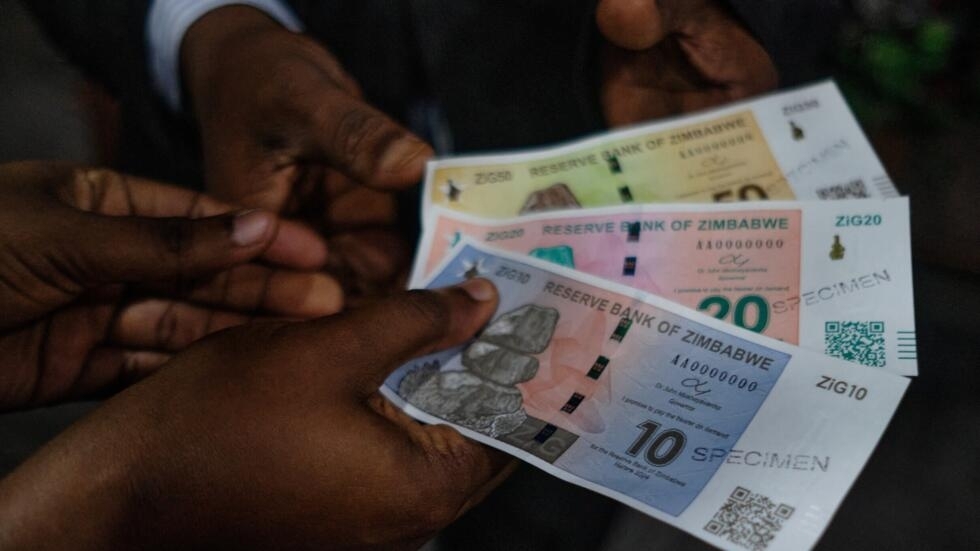
    Niger took control of its uranium when Orano has been suspended by the Niger government, while Mali inaugurated the construction of a lithium extraction plant (recall that Zimbabwe also inaugurated a lithium processing plant last year), and is working towards nationalizing its gold. Resolute Mining, has agreed to pay Mali’s government $160 millions to settle a tax dispute (Mali wins $160m in Gold Mining Dispute).  Zimbabwe Gold-Backed Currency was introduced in April; the ZiG, which stands for Zimbabwe Gold, was created as an effort to try to alleviate inflation, and stabilize the economy; thus far, it has not been successful, but it is only the beginning.
  13. Andakia
    A Senegalese startup, Andakia, has just introduced the very first African AI: AWA.  AWA is a Wolof-speaking artificial intelligence system; it is the brainchild of Alioune Badara Mbengue.  In an interview to TRT Afrika, Mbengue said, “AWA is the first AI that understands and speaks perfect Wolof. Our vision is to extend AWA to other African languages, enabling Africa to become a leader in digital innovation and ensure technological sovereignty tailored to its needs.” Users need to simply engage in a spoken exchange with the AI interface in Wolof, seeking general information or asking it to perform tasks such as ordering a taxi, ordering a meal, or carrying out financial and other transactions. This is revolutionary as it addresses the needs of the population. We applaud the amazing work of our brother and his team, and truly the sky is the limit. 

Zimbabwe Gold-Backed Currency is Here

Flag of Zimbabwe
Flag of Zimbabwe

After almost 2 years of talking, the Zimbabwe gold-backed currency is finally upon us. Inflation is everywhere at the gas pump, at the food store, rent, prices are going up and up, affecting everyone and making the poor even poorer. In Zimbabwe, it has been going up for years given that the country has been under economic embargo for over 2 decades now. The traitors who toppled Robert Mugabe thought that by getting rid of him, the West would finally lift the embargo… alas, it has not been the case, and the country is still under embargo from the UK, US, and EU. Just at the beginning of March, the US slapped fresh sanctions against President Mnangagwa and some of his cronies, even though Mnangagwa has signed all sort of deals with the westerners upon his arrival in power [Is Zimbabwe the New Haiti?] and returned land [Zimbabwe to Return Seized Land to Foreigners].

Zimbabwe’s new currency, the ZiG (Source: France24)

As stated earlier, it is no secret that inflation is particularly high in Zimbabwe and has been for many years. Last week, the government of Zimbabwe has introduced a new gold-backed currency called ZiG, which stands for Zimbabwe Gold, in an effort to try to alleviate inflation, and stabilize the economy. The currency has been rolled out on Monday, and will replace the Zimbabwean dollar immediately; companies will be made to pay at least half of their taxes in ZiG. We hope that this will help the Zimbabwean economy to stay afloat. In honesty, isn’t this the way every currency should be: backed by gold and not just thin air? Upon its launch on Monday, the ZiG has fared well, and the hope is that it continues.

Excerpts below from the BBC. For a good read, check out also Business Insider.

=====

John Mushayavanhu, Governor of the Reserve Bank of Zimbabwe, presents the new national currency Zimbabwe Gold, or ZiG. (Source: Columbus Mavhunga/picture alliance/Getty Images; Business Insider)

Zimbabwe has introduced a new gold-backed currency called ZiG – the name stands for “Zimbabwe Gold”.

It is the latest attempt to stabilise an economy that has lurched from crisis to crisis for the past 25 years.

Unveiling the new notes, central bank governor John Mushayavanhu said the ZiG would be structured, and set at a market-determined exchange rate. The ZiG replaces a Zimbabwean dollar, the RTGS, that had lost three-quarters of its value so far this year. Annual inflation in March reached 55% – a seven-month high.

Zimbabweans have 21 days to exchange old, inflation-hit notes for the new currency. However, the US dollar, which accounts for 85% of transactions, will remain legal tender and most people are likely to continue to prefer this. 

The new ZiG banknotes come in denominations of between 1 and 200. Coins will also be introduced to overcome the shortage of US coins, which has seen people receive change in sweets, small chocolates and pens.

Mr Mushayavanhu said the new currency was being rolled out with immediate effect and banks must convert current Zimbabwe dollar balances to the ZiG. He committed to ensuring that the amount of local currency in circulation was backed by equivalent value in precious minerals – mainly gold – or foreign exchange, in order to prevent the currency losing value like its predecessors.

DRC and Zambia Sign Over Cobalt and Copper Resources Rights to the United States?

Flag of the Democratic Republic of Congo

I was stunned by the recent signing of the DRC and Zambia cobalt and copper mines to the USA!!! You heard me right! Last month during the US-Africa summit, the puppets that are the African leaders, leaders of Zambia and DRC, Hakainde Hichilema and Felix Tshisekedi, signed the total surrender of the supply chain and production of cobalt and copper. Hello? Is this 2023 or what? Did Tshisekedi or Hilema ask the people of their countries before signing these treaties? Was this discussed at the parliament? Not that the parliament is any better, but still, is it not my country? We know that these countries are deep in debt (Zambia Sovereign Debt Crisis), but shouldn’t the citizens know that their lives and resources are being signed away to foreigners? Shouldn’t they have a say? As you know, the DRC supplies 70% of the world’s cobalt, while Zambia supplies 70% of the world’s copper. In the west we are being told that the future is the electric car, which everyone should embrace with the Teslas and all those car brands, but none of this is possible without the DRC resources. The claim is that the agreement is to manufacture electric batteries near the mines or rather facilitate the development of value chain in electric battery and clean energy… but in a place where there are no roads, how much of it will be done on the ground? How much of it is real? It’s like the signing of the trade agreements between the EU and Africa in recent years, where the idea on ‘paper’ was the opening of African markets to Europe and vice versa, but instead the reality is that Africa is submerged with uncontrolled European products, and the local farmers/industries suffer, while there is no real export of African products to Europe.

Zambian flag
Zambian flag

The worst part is that these big multinationals will make billions, but will not even build roads in these countries, not even a single road or hospital! In some countries, when the locals asked for roads or hospitals (Niger, Guinea, etc) they were beaten up, imprisoned, killed, and more. When one learns about the 999-year lease in Kenya (Did You Know about the 999-year Lease granted to Europeans in Kenya ?), one thinks, it happened over a century ago, the locals were illiterate, or not versed in European languages, or in the particular case of the 999-year lease the locals were not even present at the signing table; but today… what is the excuse? Except that maybe we have a lot of traitors, spineless leaders, corrupt leaders, and puppets in our ranks? It is unacceptable!

For the press release of the document, go to the state department website; more articles can be found here, and check out the article by Conor Gallagher via NakedCapitalism on Markets Insider about the race for resources in Congo.

@lesothotribune

MoU was signed that will have the governments of DRC & Zambia surrender the supply chain and production of copper and cobalt to American control for EV market #lesothotribune #zambiantiktok🇿🇲 #drctiktok

♬ original sound – LesothoTribune

The Geological Scandal that is the Democratic Republic of Congo (DRC)

Democratic Republic of Congo (DRC) mineral map (Source: Atlas du continent africain, Jeune Afrique et editions Jaguar, 2000)

Last week, a reader asked us why the Democratic Republic of Congo (DRC) is often referred to as a “geological scandal” of nature. For starters, the DRC is one of the world’s richest countries in natural resources, with the richest concentrations of precious metals and minerals on earth, with large deposits of gold, diamonds, uranium, copper, cobalt, tungsten, coltan, bauxite, cassiterite, and much more. According to the United Nations Environment Program (UNEP), it has about 75% of the world’s coltan, the material at the heart of the mobile phone revolution; about 70% of the world’s cobalt reserves, over 30% of diamond, 10% of copper. The uranium used for the bombs that detonated over Hiroshima and Nagasaki came from the DRC. The electrical car battery revolution is all based on Congo’s wealth; there is no way the West can sustain an electrical car industry without Congo and its reserves. Apart from mineral wealth, the DRC is also one of the most biodiverse areas in the world.

Unfortunately, this abundance of internationally valued minerals and natural resources has however failed to bring any kind of prosperity to the country. It began with colonial exploitation of the land and its people by King Leopold II (King Leopold II and The Congolese Genocide), and continued in bloody civil war; the Congolese have harvested nothing from their country’s natural riches but misery and poverty. The world’s bloodiest conflict since World War II is still going on today on Congo soil, and has made over five million deaths…

For more, check out the article by Colette Braeckman, The Looting of the Congo, BBC – DR Congo: Cursed by its natural wealth and the extensive articles written by a fellow blogger at WiPoKuli Schluter. We had found a good documentary a while back about Congo’s resources, but somehow it is no longer available. So I live you instead with The Race for Africa by Gravitas Plus, which actually helps to understand the importance of Africa (and Congo) today, and the race for its resources. Enjoy!

Egusi Ice Cream Anyone? Caterpillar Ice Cream? … What about African Flavors in Ice Cream?

Tapiwa Guzha, founder of Tapi Tapi (Source: sossegodaflora.blogspot.com)

Can you imagine having Egusi ice cream? or dried fish or edible clay or caterpillar or Chin Chin ice cream? … well… think no further! In 2020, Zimbabwean postdoctoral student Tapiwa Guzha who emigrated to South Africa for studies, had the idea of creating an ice cream parlor that represented African foods, flavors, and cultures. He thought of sharing his love of science, his specialty being plant biotechnology, to educate others with flavors from the continent. Thus was born Tapi Tapi, which means sweet sweet in the Shona language of Zimbabwe. Guzha mixed in typical traditional African flavors from all over the continent into his ice cream. To date, he has made over 900 different flavors from some of the most amazing African spices, nuts, seeds, fruits, flowers, clay, and even caterpillar. Tapi Tapi‘s sugar cones are made with millet, cassava, sorghum, maize, and plantain flour.. Enjoy, and if you are ever in Cape Town, don’t be shy… go and try out these amazing African flavors! Excerpts below are from the Guardian! Please also check out this very good article from TravelEssenceMag, and another from CNN.

======

Baobab ice cream (Source: Tapi Tapi)

Caterpillars, dried fish and clay are not what you would expect to find in ice-cream, but one Cape Town cafe with a mission to celebrate African foods and culture has used all three as ingredients in its frozen desserts.

Handcrafted, authentic African ice-cream,” reads a sign at the entrance to Tapi Tapi. Inside, the counter is filled with ice-creams in various shades of beige and brown. They look underwhelming, but the blackboard listing the flavours suggests differently.

Tshego Kale, a 22-year-old student and part-time worker in the cafe, explains the menu. “First up is prekese and kei-apple jam. Prekese is a spice from west Africa, sometimes used in soups,” she says. “Kei apple is a sour fruit, but the ice-cream is sweet with a bitterness coming through.” Rooibos, fermented pineapple and lime is next: “It’s sweet, not as dense; good for hot days.”

There are three ice-creams containing chin chin – a fried snack from west Africa. One is paired with African bird’s eye chilli, and has “a kick that comes towards the end”. Another one features clay as the second ingredient: “It has an earthy flavour, very mellow and smooth with a biscuity texture.”

Egusi, a combination of seeds used in west African cuisine, is mixed with pumpkin, cinnamon and nutmeg in another ice-cream. “People from overseas have said this one tastes like Christmas,” says Kale.

Rooibos

Tapi Tapi and its African ice-cream is the brainchild of Tapiwa Guzha, who first came to Cape Town as a student from Zimbabwe. In the two years since it opened, he has created about 900 flavours.

Each tub he makes is unique and never repeated. His aim is to use ice-cream as a vehicle for educating and inspiring people about African flavours. When making a new flavour, Guzha thinks of an ingredient and what he wants to achieve by using it.

He explains: “What point am I trying to make by creating that flavour? Am I trying to showcase something new that people don’t know about? Am I trying to teach people about a cooking technique that turns out certain dishes or flavours? Or am I looking at a cultural icon?”

The idea for Tapi Tapi came in 2018, when Guzha was doing post-doctoral research in plant biotechnology but wanted a change. “I was looking for ways of communicating about science without having to rely on the scientific process – journal publishing, conferences and keeping knowledge in academic spaces,” he says.

Guzha had been making ice-cream for 10 years with dry ice that was delivered to his research labs, after seeing how it was done on a cookery show. One day, it dawned on him that he had never made a specifically African ice-cream. “I realised there was something faulty in the system. The moment you taste a flavour that connects you to home, your culture, your land – it’s a different experience.”

African Countries move ahead with New Currencies: The Case of Gold as Currency in Zimbabwe

Flag of Zimbabwe
Flag of Zimbabwe

It is no secret that prices are high everywhere: at the gas pump, at the food store, rent, prices are going up and up, affecting everyone and making those who are poor even poorer. Many African countries are trying to find ways to alleviate inflation. Zimbabwe is one such country.

Robert Mugabe, president of Zimbabwe

It is no secret that Zimbabwe has been going through an economic embargo for many years. Many thought, the traitors who toppled Robert Mugabe, that by getting rid of him, the economy would be better and all the embargo restrictions placed by the UK, US, and EU would be lifted… Lesson to traitors: it never works as planned! Five years on, and Zimbabwe is no better, even though Mnangagwa has signed all sorts of deals with the westerners [Is Zimbabwe the New Haiti?]and returned land [Zimbabwe to Return Seized Land to Foreigners]. Well, as I was saying, it is no secret that inflation is particularly high in Zimbabwe and has been for many years. This week, the government of Zimbabwe has announced that it will issue gold coins as legal tenders, thus trying to alleviate inflation. Not sure that I trust Mnangagwa’s government to do anything right… particularly given that the price of gold is particularly high and exacerbated by the problems in Mali [France had become 4th world producer of gold from Mali’s gold mines; Mali Rescinds France Defense AgreementsFrance confirms it will withdraw from Mali … moving to neighboring countries and beyondTensions Escalating in Mali].  Excerpts below are from the AfricaNews; for more, read also this Guardian article.

=====

Zimbabwe’s central bank says it will start issuing gold coins as legal tender in late July, as the country battles to control soaring inflation that has considerably weakened the local currency.

The gold coin is named ‘Mosi-oa-Tunya‘, after Victoria Falls, and can be converted into cash according to the apex bank.

The latest measure comes as the country’s inflation rate more than doubled last month to 191%, bringing back memories of the hyperinflation of the 2000s that saw the Zimbabwean dollar redenominated three times. The local currency would later be abandoned in 2009.

Governor of the central bank, John Mangudya in a statement released Monday, said that the gold coins will be available for sale to the public in both local currency and US dollars and other foreign currencies at a price based on the prevailing international price of gold and the cost production”.

The coins are expected to act as a ‘store of value and to reduce the demand for US dollars’ – something that has been blamed for the weakening value of the local currency.

There have been mixed feelings over the news as Zimbabweans experience with the central bank’s policies is often of concern and uncertainty. Many Zimbabweans are known to have lost their savings including pensions when the Zimbabwean dollar crashed in 2009.

African Countries move ahead with New Currencies: The Case of the Sango Coin of CAR

Central African Republic (CAR) flag

As the economy everywhere appears to be in free-fall, with high inflation all over the world, many African countries are taking measures that will help their citizens deal with and hopefully solve some of their internal issues.

President Faustin-Archange Touadera of the Central African Republic (CAR) (Source: ConnecterLeMonde.com)

One such example is that of the Central African Republic (CAR) which adopted Bitcoin as a National Currency last April. This past Sunday, CAR President, Faustin-Archange Touadéra, announced in an online event the creation of the Sango Coin and a zero-taxation “crypto-hub“, the first in Africa. The currency is named Sango after the main African language spoken in the country. This currency will, via the a platform called Crypto Island, allow the country to trade in its vast natural resources (diamonds, uranium, gold, and other minerals). Until now, CAR has been, like 14 other African countries, enslaved by the French colonial tax that is the FCFA which served at one point to ‘siphon’ up to 75% of the countries’ resources directly back to France [Africa is funding Europe!]. It is clear that those African nations need new currencies, and we salute CAR for having the courage to start, even though crypto seems to be unsteady at the moment (like everything else at the moment); it is always scary to be a pioneer, but it is rewarding as well! As a side note, the west tends to overlook, or vilify some of our leaders who try to stand up or do things right for their people. President Touadéra is one of those African leaders who has been demonized for his want to free his country from the French chains, turning to Russia for help in stopping a war in his country which benefited France and its croonies. Rarely do the Western media highlight the fact that President Touadera is also a trained mathematician, and in his free time still teaches students at the University of Bangui in his country.

Excerpts below are from Barron’s. For more, check out articles on Bloomberg, and AfricaNews.

====

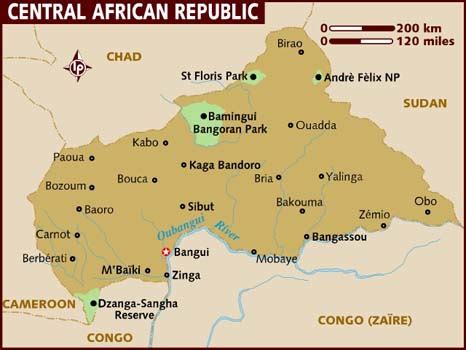
Map of Central African Republic

Undeterred by the turmoil hitting crypto, the Central African Republic (CAR) — one of the poorest and most troubled countries in the world — has unveiled plans to launch its own digital currency.

President Faustin Archange Touadera, in an “online event” on Sunday, announced CAR would create the Sango Coin and a zero-taxation “crypto-hub“, the first in Africa.

The currency is named after Sango, which with French is one of the two official languages in the landlocked country, rated the world’s second poorest nation under the UN’s Human Development Index.

Through a platform called Crypto Island, the Sango will become “the catalyst for tokenising (CAR’s) vast natural resources,” Touadera declared, providing no timeline or other details.

He hailed Sango and Crypto Island as “a new digital system fed by blockchain,” the internet-based ledger that underpins crypto currencies.

Sango Coin will give the whole world direct access to our resources,” attracting investors and “getting the engines of the economy going,” he enthused.

On April 27, Touadera’s office abruptly announced that the CAR had adopted Bitcoin as legal tender alongside the CFA franc, a currency the country shares with five other central African economies.

It became the first country in Africa to embrace Bitcoin as a national currency, and the second in the world after El Salvador last September.

Touadera on Sunday said 57 percent of Africa’s population does not have access to a bank.

The solution,” he said, was “the smartphone, the alternative to the traditional bank, cash and financial red tape“.

On Twitter, he said, “gold served as the engine of our civilisation for ages! In this new age, digital gold will serve the same for the future.”

Central African Republic (CAR) adopts Bitcoin as a National Currency

Central African Republic (CAR) flag

An African country, the Central African Republic (CAR), becomes the second country in the world, after El Salvador, to adopt Bitcoin as a national currency. As its name says it, CAR is a country in Central Africa. The country of the late Jean-Bedel Bokassa is rich in diamonds, gold, uranium, and other precious minerals; yet it is one of the poorest countries in the world (when you have the FCFA as a currency, can it be any different?).

On Wednesday, a bill to adopt Bitcoin as the country’s legal tender was passed unanimously by the parliament. The office of CAR president, Faustin-Archange Touadera, claimed the move would “improve the conditions of Central African citizens” and distinguish CAR as “of the world’s boldest and most visionary countries.” I couldn’t have said it any better… it is about time to get rid of the FCFA [The 11 Components of the French Colonial Tax in Africa] anyways, why not do it in style? Excerpts below are from the BBC.

====

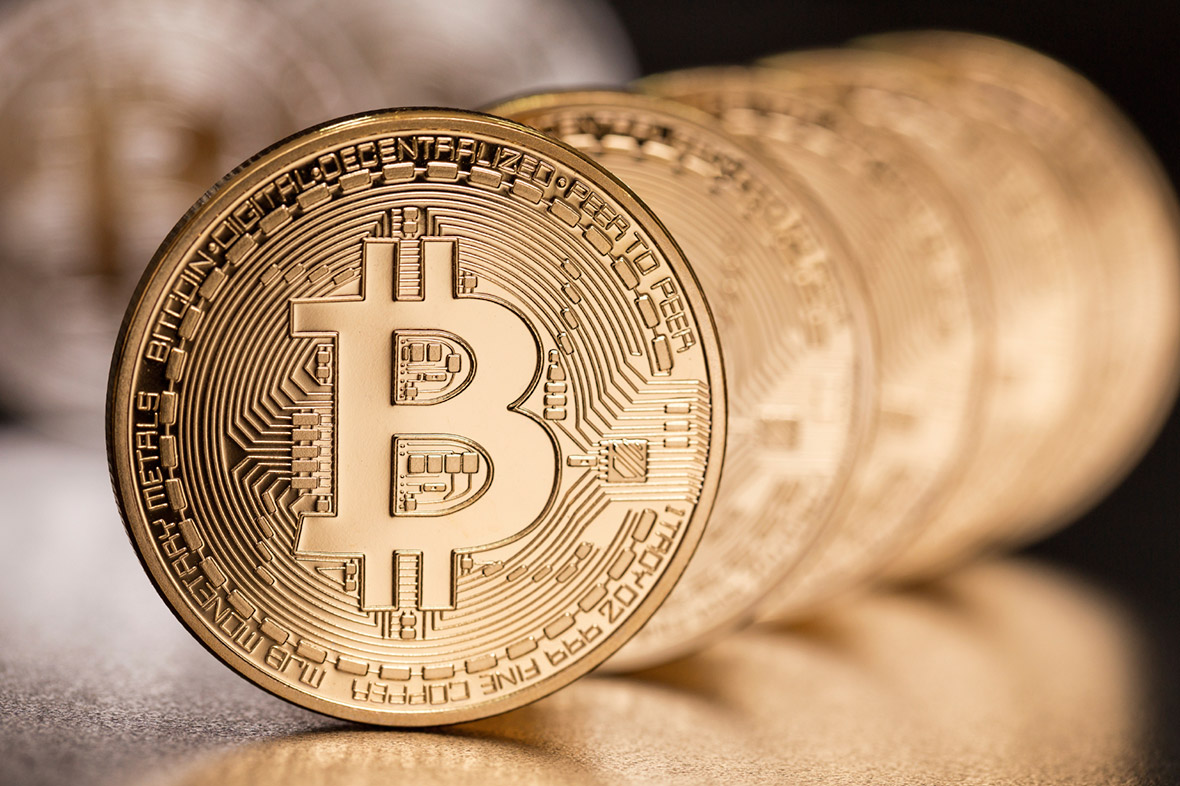
Bitcoin (Source: IBTimes)

The Central African Republic (CAR) has approved Bitcoin as legal tender – just the second country to do so.

CAR is one of the world’s poorest countries, but is rich in diamonds, gold and uranium. It has been wracked by conflict for decades and is a close Russian ally, with mercenaries from the Wagner Group helping fight rebel forces. Lawmakers voted unanimously to adopt Bitcoin as legal tender, said a statement from the CAR presidency. The move puts CAR “on the map of the world’s boldest and most visionary countries“, it said.

Others have raised fears that cryptocurrencies such as Bitcoin could make it easier for criminals to launder money, and that they are environmentally damaging because they use so much electricity to generate [as if exploiting uranium was eco-friendly! could they possibly be happy when the golden hen is going away?]. The internet is needed to use any cryptocurrency but in 2019, just 4% of people in CAR had access to the web, according to the WorldData website.

Map of Central African Republic

The country currently uses the French-backed CFA franc as its currency, along with most other former French colonies in Africa. Some see the adoption of Bitcoin as an attempt to undermine the CFA, amid a contest for influence over the resource-rich country between Russia and France. The context, given the systemic corruption and a Russian partner facing international sanctions, does encourage suspicion,” French analyst Thierry Vircoulon told the AFP news agency [of course, France will be suspicious of former slave colonies finding friendship elsewhere].

In the capital, Bangui, the response was mixed. Economist Yann Daworo told BBC Afrique it would make life easier, as transactions can be made with smartphones and it was easy to convert Bitcoin to any other currency. Businessmen will no longer have to walk around with suitcases of CFA francs that will have to be converted into dollars or any other currency to make purchases abroad,” he said.

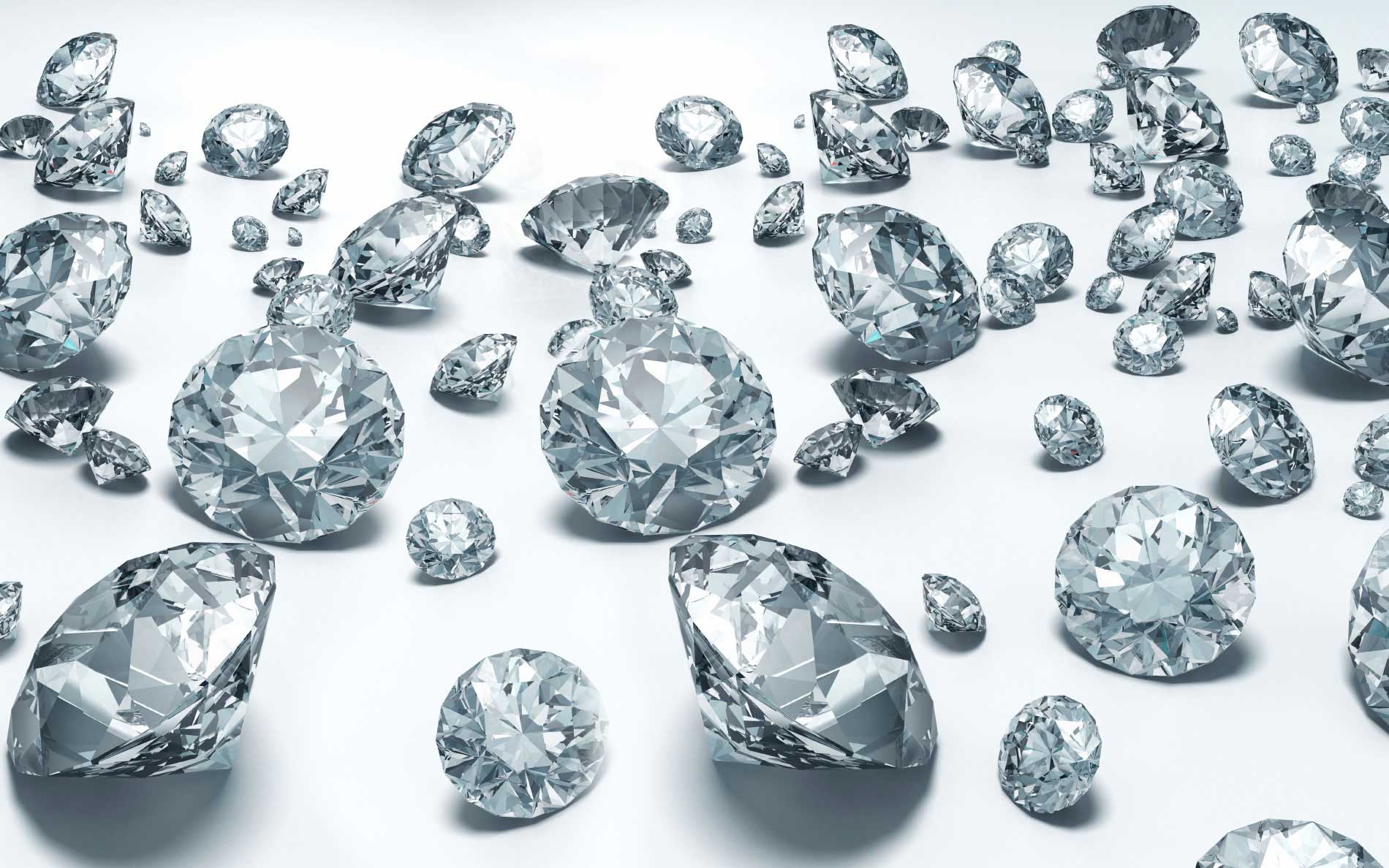
Diamonds

He also argued that the CFA was not being used “to benefit Africa” [preach cousin]. There are growing calls in several countries for the currency to be dropped by those who see it as a relic of the colonial era, enabling France to continue to exercise economic control.

However, computer scientist Sydney Tickaya said he thought the adoption of the cryptocurrency was “premature” and “irresponsible“. Internet access is still underdeveloped in the country while Bitcoin depends entirely on the internet,” he said, adding that the CAR had more pressing issues such as security, education and access to drinking water [sure… but after over 100 years of dealing with France and the FCFA, and not even getting simple roads or education or water, while your diamonds are exploited without you getting a dime, isn’t it time to try something different? when will it be mature enough, or responsible enough to take a leap?] .

….

How Africa Copes with The War in Ukraine: Alternatives to Wheat – Ancient Grains?

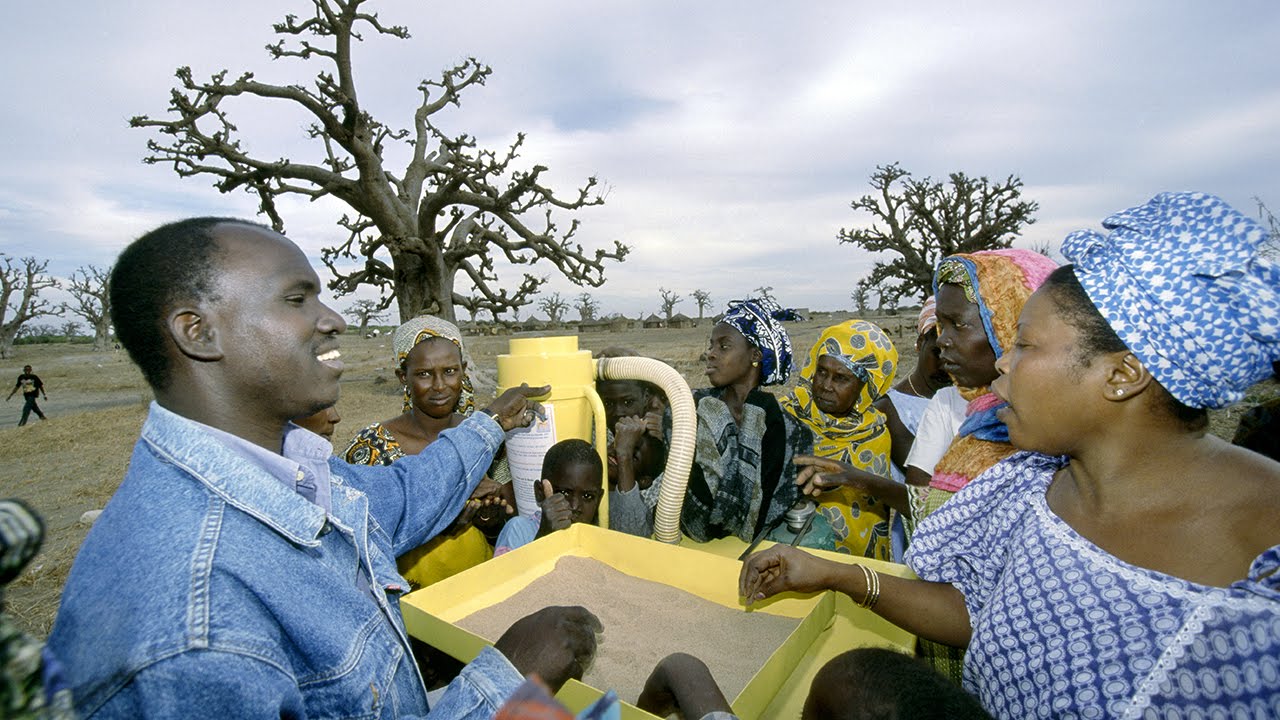
Sanoussi Diakite demonstrating the capabilities of the Fonio husker to women (Source: RolexAwards.com)

Today, I would like to highlight the work of yet another African who has been working on alternatives, this time bringing back ancient grains to the forefront. Meet Senegalese Sanoussi Diakite, professor of mechanical engineering, who has invented a fonio husker machine. Diakite has been working tirelessly for several years to find ways to husk fonio. For those who know it, fonio is a cereal that has been cultivated for centuries if not millennia in at least 16 African countries from Cape Verde to Chad. Fonio is nutritious, gluten-free, high in dietary fiber, and drought resistant. It grows anywhere and does not need fertilizers. It is one of the fastest-growing cereals, reaching maturity in as little as 6 to 8 weeks. Unfortunately, it is very labor intensive to husk. It takes about 2 hours to pound (yes you heard it right, women pound the fonio) to get 2 kg of fonio. It could easily take a woman the whole day to pound the fonio if she has a large family (not including the preparation of the meal afterwards), and this is one of the reasons many have shied away from the ancient grain in their nutrition. Diakite’s husking machine produces 5 kg of fonio in 8 minutes. Talk of a revolution! 

The Fonio Husker Machine has been patented, and effectively husks and cleans the fonio grains as they pass through the shifting and flexible paddle which is set on a vertical axis and on top of a fixed plate. The separation of grain and husk is done simultaneously. To learn more, take a look at the article on MyHero, Kumatoo, and and his bio as he was awarded the Rolex Awards for Enterprise. It might have taken time, but like he says himself to BBC, everything is endurance and perseverance; at the core, he wanted to help women and reinstate the millennial grain.