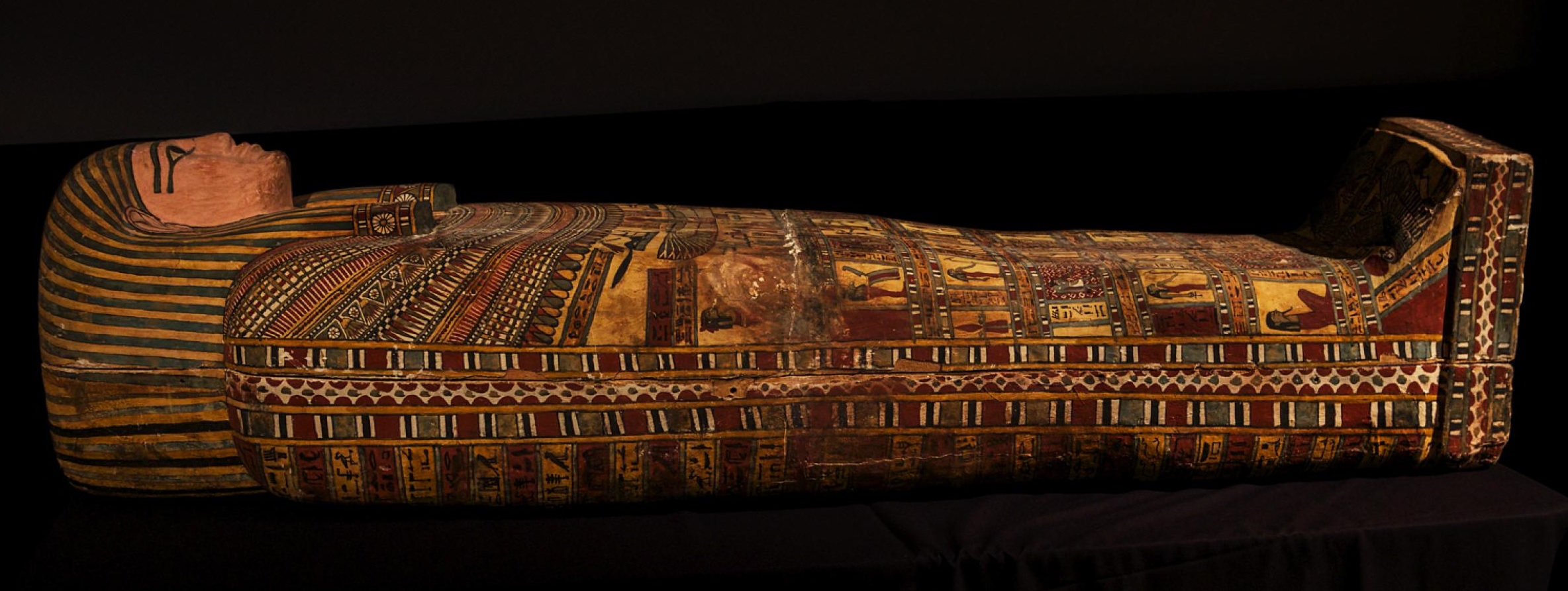
Coffin of Shesepamuntayesher, mummified 2600 years ago (Source: National Geographic)
It is true: some ancient Egyptian artifacts smuggled into the US are returning home. For many years, people looted the graves of pharaohs in Egypt and smuggled their finds by express shipping to the US (and other countries – particularly in Europe). Excerpt of an article in National Geographic reads:
“Some 2,600 years ago, an Egyptian woman named Shesepamuntayesher was mummified and laid to rest in an elaborate three-part coffin to ensure the continuation of her life force and the beginning of an eternal afterlife.
Stylized face of Shesepamuntayesher depicted on her coffin (Source: National Geographic)
Shesepamuntayesher’s afterlife has unfortunately included a trip to Dubai, in the United Arab Emirates, and an ignominious stop in a garage in Brooklyn, New York. On Wednesday, thanks to a five-year investigation by U.S. Homeland Security Investigations (HSI) and Immigration and Customs Enforcement (ICE), the empty sarcophagus that once cradled her mummy is being returned to Egypt, where it will be housed in the Grand Egyptian Museum in Cairo.”
The damages done to Egyptian culture, and many African cultures, by art smugglers and looters cannot be quantified. It is important to fight to preserve these ancient cultures which tell us so much more about some of the world’s greatest civilizations, and about humanity in general. So it feels good to see art going back to their land of origin: like the looted art from Benin Kingdom which was returned to its people, or the great Obelisk of Axum, which was stolen by the Italians in 1935, and later returned after countless demands from the Ethiopian government in 2005. Please do check out the rest of the article on National Geographic.
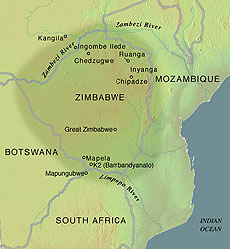
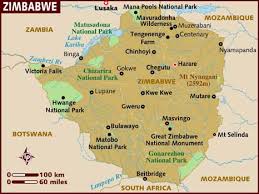
Map of the area including the Kingdom of Mapungubwe and Great Zimbabwe to the north- and the whole Kingdom of Zimbabwe (sahistory.org.za)
After talking about the origin of the name of the country Zimbabwe, named after Great Zimbabwe, the capital of the Kingdom of Zimbabwe which flourished in southern Africa from the 13th to 17th century, I thought it only wise to talk about some of the kingdoms that flourished in that area, starting with the Kingdom of Mapungubwe, a predecessor to the Kingdom of Zimbabwe. The Kingdom of Mapungubwe was a rich iron age civilization that flourished in the area of modern-day Zimbabwe, Botswana, and South Africa, from the 10th to the 13th century AD. It was a pre-colonial state located at the confluence of the Shashe and Limpopo rivers. The kingdom’s development culminated in the creation of the Kingdom of Zimbabwe in the 13th century, as a normal evolution of itself, and with gold trading links to Rhapta and Kilwa Kisiwani on the African east coast.
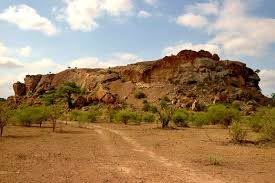
Mapungubwe Hill (Wikipedia)
From archaeological searches, the people of Mapungubwe were of the Venda and Kalanga people ancestry, and were attracted to the Shashe-Limpopo area because of its fertile soils for agriculture, and also because it was an area rich with elephants, thus rich with ivory. The area of Mapungubwe was also rich in gold, and the people traded in gold and ivory, snail shells, pottery, wood, and ostriches’ eggs (eggshells), with places as far as Egypt, Persia, India, and China.
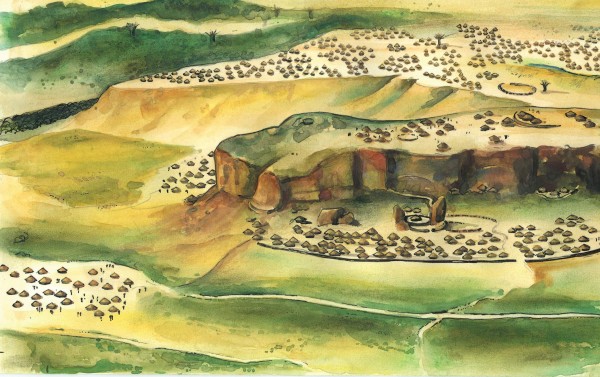
An artist impression of Mapungubwe (Source: newhistory.co.za)
Stone walls were used to demarcate important areas, and important residences were built with stone and wood. Life in Mapungubwe was centered around family and farming. The kingdom, as well as the way people lived, was divided into a three-tiered hierarchy, with the commoners inhabiting low-lying sites, district leaders occupying small hilltops, and the kingdom’s elites residing at the capital at Mapungubwe hill as the supreme authority. Important men maintained prestigious homes on the outskirts of the capital.
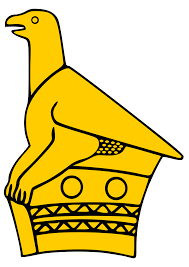
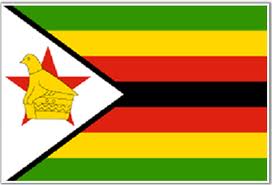
Bateleur Eagle on the flag of Zimbabwe
The kingdom was named after its capital city, the city of Mapungubwe. Several theories have been put forward for the meaning of the name itself. For some, Mapungubwe means “place of Jackals,” or “place where jackals eat,” or “hill of jackals.” In Shona, the language spoken by the majority of people in Zimbabwe, Mapungubwe means “rocks of the Bateleur eagle,” a bird which has deep spiritual connotations in the Shona culture (ma= many; pungu=suffix for chapungu= bateleur eagle, the massive bird which once graced the entrance of the royal complex of Great Zimbabwe; bwe= diminutive for ibwe= stone).
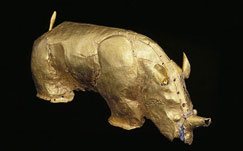
Mapungubwe’s famous gold foil rhinoceros (Source: Univ. of Pretoria)
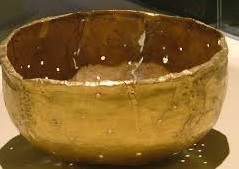
The site was rediscovered in 1932. At the top of Mapungubwe, they found many golden objects: bangles, beads, nails, miniature buffalo, rhino, a skeleton, and gold anklets, about 2.2 kg of gold and many other clay and glass artifacts. Between 1933 and 1998, the remains of about 147 individuals were excavated from the Mapungubwe Cultural Landscape. These findings were kept quiet for a long time, as they provided contrary evidence to the racist ideology of black inferiority underpinning apartheid.
Golden bowl found at Mapungubwe (golimpopo.com)
So any time you think about southern Africa only being populated by pastoralists, nomadic peoples, think again. There were very rich, and strong empires, such as the kingdom of Mapungubwe which was the first major iron age kingdom in Southern African, and traded with places as far as Egypt, Persia, India and China. For more information, check out the very rich Mapungubwe National Park website, South Africa.info, the Metropolitan Museum (MET) article, South African History Online, the Mapungubwe Kingdom website, and the UNESCO World Heritage website as Mapungubwe is listed. Enjoy the video below!
One of my very first articles on this blog was on Great Zimbabwe, the capital city of the Kingdom of Zimbabwe, a kingdom which flourished from approximately 1220 to about 1420 in Southern Africa. The modern-day country of Zimbabwe is named after this great kingdom, and it is only befitting that we explore together the origin of its name. Why would a country which was named Southern Rhodesia change its name to Zimbabwe? Why bother changing names?
Flag of Zimbabwe
Well, for starters, I find it a bit sad for a country to only be known as ‘Southern something’ without no real name of its own… I know, … things happen (like countries splitting apart). Secondly, Rhodesia was named after Cecil Rhodes, the British man who committed the greatest atrocities in Southern Africa, while establishing British rule over the different African countries in the late 19th century. Therefore, once the people of Southern Rhodesia became independent from British rule, it was only normal to claim a name that was theirs, and not the name of some foreign oppressor who committed the worst atrocities in their country. It’s like seeing yourself through someone else’s lens; you only become free once you can look through your own lens, and appreciate and value yourself.
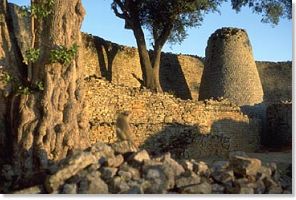
Great Zimbabwe ruins
Thus the name Zimbabwe was chosen. The name “Zimbabwe” is a Shona term for Great Zimbabwe, an ancient ruined city in the country’s south-east whose remains are now a protected site, in the modern-day province of Masvingo. There are two theories on the origin of the word. The first theory holds that the word is derived from dzimba–dza–mabwe, translated from the Karanga dialect of Shona as “large houses of stone” (dzimba= plural of imba, “house“; mabwe= plural of bwe, “stone“). The second theory claims that “Zimbabwe” is a contracted form of dzimba-hwewhich means “venerated houses” in the Zezuru dialect of Shona, and is usually applied to chiefs’ houses or graves. In your opinion, which of these two theories is closer to the truth?
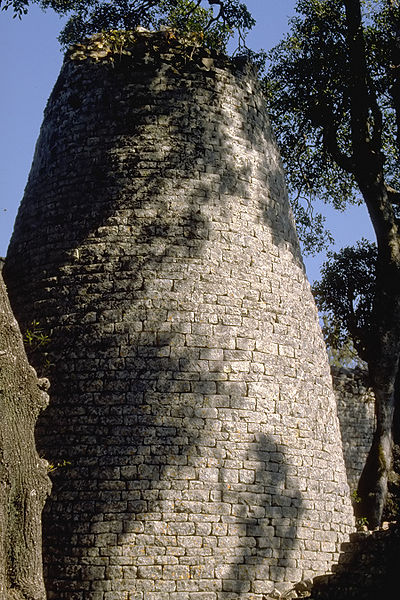
A Conical tower
Zimbabwe was formerly known as Southern Rhodesia (1898), Rhodesia (1965), and Zimbabwe Rhodesia (1979). The first recorded use of the name “Zimbabwe” as a term of national reference was in 1960, when it was coined by the black nationalist Michael Mawema, whose Zimbabwe National Party became the first to officially use the name in 1961. According to Mawema, black nationalists held a meeting in 1960 to choose an alternative name for the country, and the names Machobana and Monomotapa were proposed before his suggestion, Zimbabwe, prevailed. I am so glad the name Zimbabwe was chosen. Enjoy this video about Zimbabwe, the country which held the great civilization of stones. I will talk about the different great kingdoms and civilizations that flourished in the area in later posts.
Today, I would like to talk about the richest man planet earth has ever seen… yes, you heard me right, the richest man whose fortune was estimated to be over 400 billion dollars, or 310 billion euros. Did you guess who that was ? If you thought Bill Gates, I am sorry to disappoint you. It is the great Emperor of Mali, Kankan Musa, also written Kankan Moussa, or Mansa Musa, or MansaMoussa, or KankouMoussa.
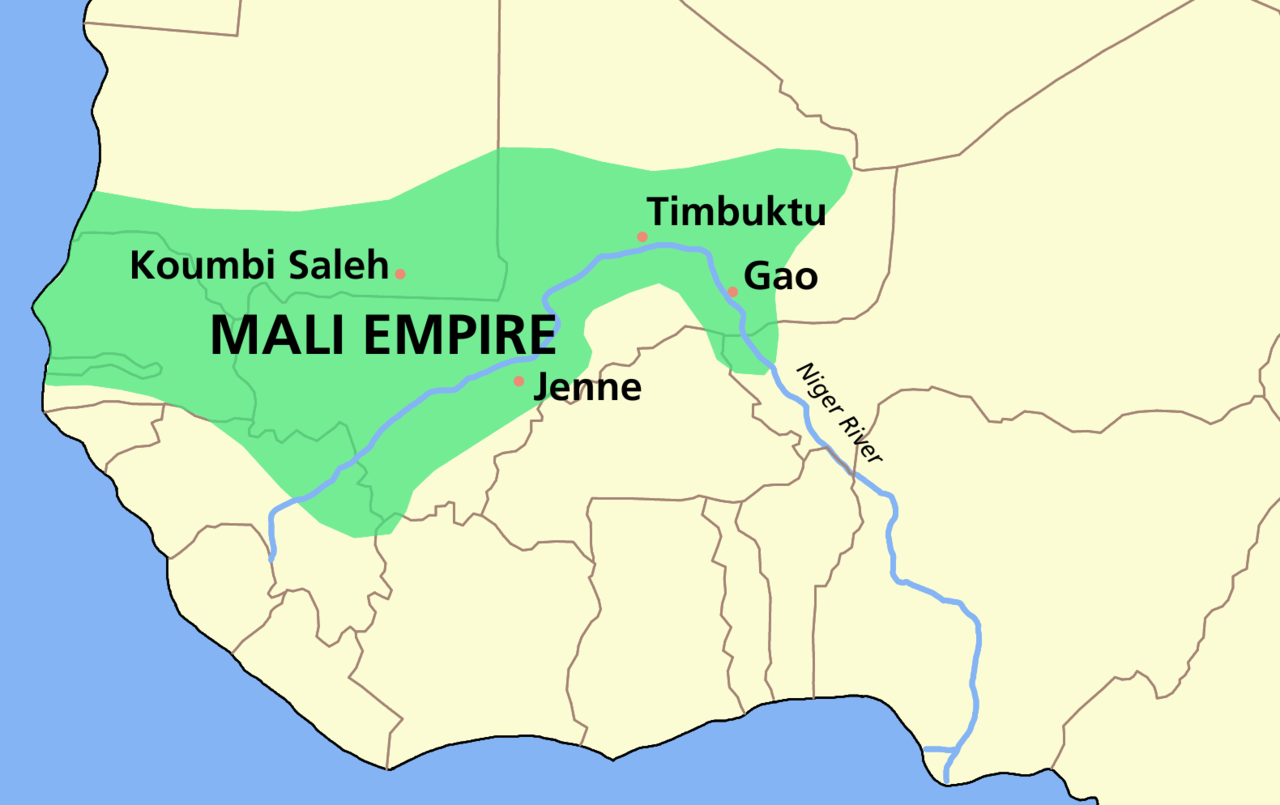
Kankan Musa was the tenth Mansa, King of Kings, or Emperor of the great Empire of Mali from 1312 to 1337. At the time of Musa’s accession to the throne, the Empire of Mali consisted of territories which had belonged to the Empire of Ghana and Melle, and surrounding areas.
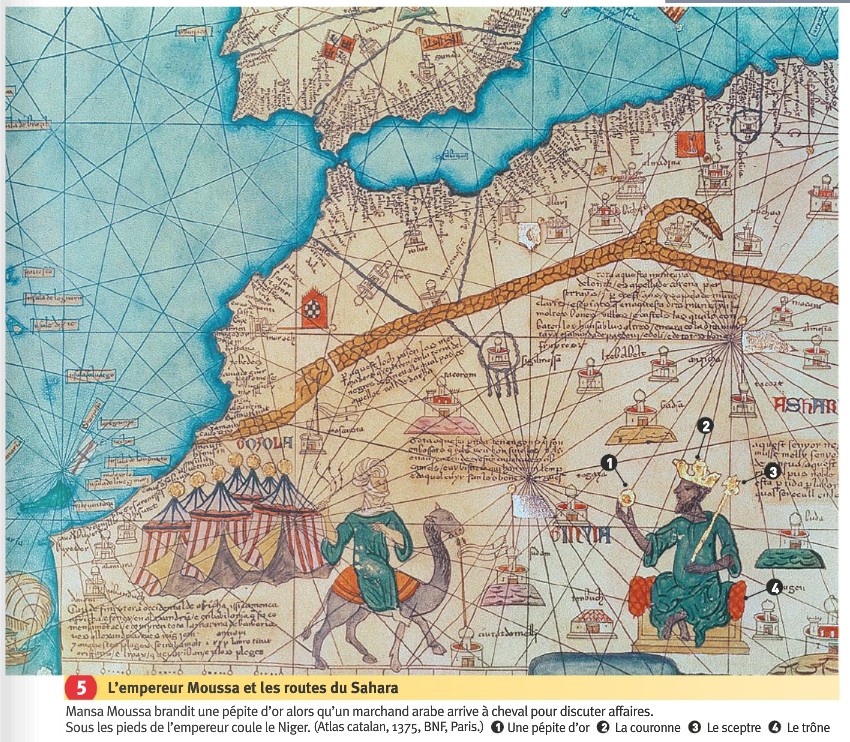
Emperor Kankan Musa
His name, Kankan Musa or Kanga Musa meant « Musa, son of Kankou Hamidou », in reference to his mother (In those days, the Mandinka people were a matriarcal society). Kankan Musa is often referred to, in literature, as Mali-koy Kankan Musa, Gonga Musa, and Lion of Mali. He had lots of titles, including Emir of Melle, Lord of the Mines of Wangara, Conqueror of Ghanata, Fouta Djallon (also written Futa Jallon), and at least a dozen other areas.
Empire of Mali (Wikipedia)
He took the Empire of Mali to its peak, from the Fouta Djallon to Agadez (in northern Niger), including the ancient Ghana, and Songhai Empires. He established diplomatic relationships with Portugal, Morocco, Tunisia, and Egypt. His reign corresponds to the golden era of the Malian Empire.
Assemblée constitutive de l’empire du Mandé (Source: Wikipedia.fr)
Kankan Musa’s pilgrimage to Mecca made him popular in North Africa, and in the Middle East. Musa made his pilgrimage to Mecca in 1324, with a procession of 60,000 men, 12,000 servants who each carried four pounds of gold bars, heralds dressed in silks who bore gold staffs, organized horses and handled bags. Also in the train, were 80 camels, which carried between 50 and 300 pounds of gold dust each (Gold was the currency in Mali). He gave away gold to the poor along his route. Musa not only gave gold to the cities he passed on his way to Mecca, includingCairoandMedina, but he also traded gold for souvenirs. Moreover, he would also build a new mosque every Friday in any city he so happened to pass by. Musa’s journey was documented by several eyewitnesses along his route, who were in awe of his wealth and extensive procession, and records exist in a variety of sources, including journals, oral accounts and histories. Musa’s visit with the Mamluk sultanAl-Nasir Muhammad of Egypt in July 1324 is well-recorded.
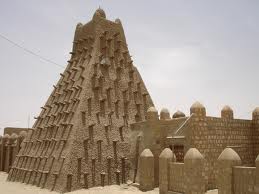
Sankore Mosque in Timbuktu
Musa’s generosity, however, inadvertently devastated the economy of the region. In the cities of Cairo, Medina and Mecca, the sudden influx of gold devalued the metal for the next decade. Prices on goods and wares greatly inflated. To rectify the gold market, Musa borrowed all the gold he could carry from money-lenders in Cairo, at high interest. This is the only time recorded in history that one man directly controlled the price of gold in theMediterranean. Imagine a single man controlling the economy of not only one country, but of an entire region!
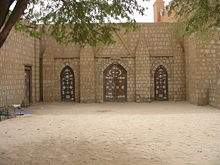
Sankore University in Timbuktu
Mansa Musa was a great builder. He had several mosques and madrasas built in Timbuktu and Gao. The most important of its constructions is the University of Sankore. In Niani, his capital, he built an Audience Hall, a building communicating directly with the royal palace through an interior door. It was “an admirable Monument” surmounted by a dome, adorned with arabesques of striking colours. The windows of the upper floor were plated with wood and framed with silver, while those of a lower floor were plated with wood, framed in gold. This palace no longer exists. Like the Great Mosque, the Hall was built in cut stone. The Italian art and architecture scholar Sergio Domian said: “At the height of its power, Mali had at least 400 cities, and the interior of theNiger Deltawas very densely populated.” Can you imagine that? In this day and age, how many countries in this world can boast 400 densely populated cities? Yet, the Mali of Kankan Musa claimed it all.
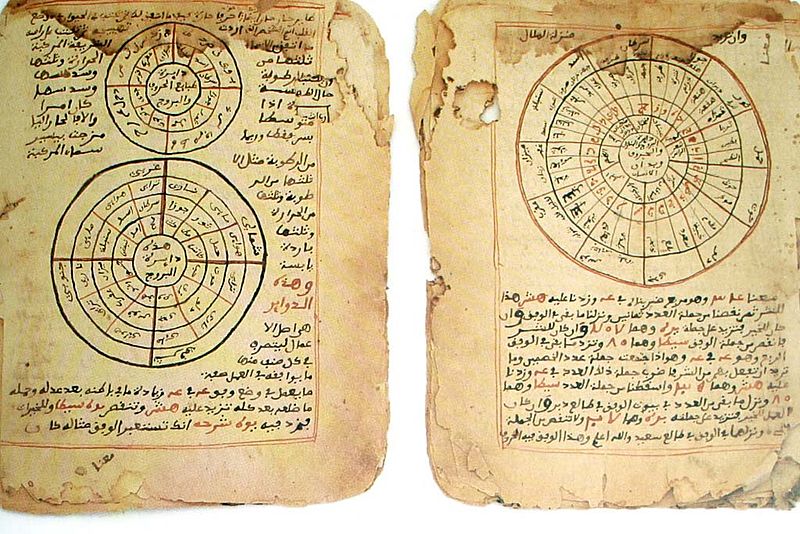
Manuscripts a Tombouctou (Mali) montrant de l’astronomie et mathematique
At the end of his life, in 1332 or 1337, the Empire of Mali limits were from the Atlantic Ocean to the Eastern shores of the Niger River, and to the forests of Taghaza in the middle of the Sahara. Kankan Musa was not only a rich man who gave to all, built mosques, and great places of worship, he was also a just conqueror, and a great builder. He took the Empire Mali to its peak, and made it the talk of places as far as the Middle East and Europe. Many Europeans and Middle Easterns would send delegations of architects, merchants, writers, astronomers, mathematicians and teachers, to study in his great university at Timbuktu. So next time someone asks you who was the richest man on planet earth, remember to tell them that before Bill Gates, there was Kankan Musa!
Growing up, the prominent option for dolls in the market were European dolls with European features, like Barbie dolls. The only other option was to make our own dolls with wool, bamboo, wood, raffia, and other materials. For a parent looking to offer his daughter, or niece, a “hip” doll, he/she basically had to get these European dolls that looked nothing like us (nothing wrong with that, but self-love starts with seeing one’s likeness in the most basic daily toy). Some of my friends resorted to coloring those dolls chocolate, so that the doll would look just like them, or braiding their hairs, and dressing them with left-over fabric from their Mommy’s wrappers or Boubou. I was quite pleased by the work of entrepreneur’s Taofick Okoya who created two lines of dolls: the Naija Princess, and the Queens of Africa. The Naija princess is more affordable for the average Nigerian family, and the Queens of Africa is the ‘haut-de-gamme’ of his collection.
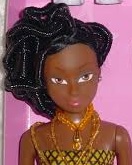
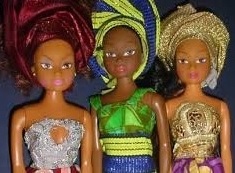
Queens of Africa dolls
His dolls basically have ‘African’ features, and are from three of the main tribes of Nigeria: Nneka is from the Igbo region, Azeezah is Haussa, while Wuraola is Yoruba. The dolls all wear African clothing from their particular regions, and have their hairs in braids, Afro, or plated. It is simply beautiful. As Mr. Okoya said himself, he first started because his daughter was getting confused about her skin color wishing hers to be just like that of her doll. See… how, even as kids, we get brainwashed? This is where we teach young girls to love and appreciate who they are, their skin colors, and the gorgeous hair they were endowed with naturally and divinely. I am so proud of Okoya’s dolls, which has beaten Mattel’s Barbie on the Nigerian market, and are now sold around the globe. I raise my hat to him, and wish for him to keep up the work, and for others to make dolls more representative of our different cultures: i.e. having Maasai dolls, Bushmen dolls, Bamileke dolls, or making them more “hip” for our daughters. Please do check out the website of Taofick Okoya, Queens of Africa Dolls.
Pendant Ivory mask representing Queen Idia, Iyoba of Benin City (16th Century)
A British man recently decided to return looted art that his grandfather had taken (stolen?) away during the 1897 Benin City Massacre. The article about the art returning is on BBC. I do salute the man for doing it; and I wish the British museums and museums around the world will return art looted by Europeans in African countries and countries around the world. True, the man excuses his grandfather’s acts by saying: “We are taught from a very young age that the killing of enemy combatants under the umbrella of statehood is a regrettable necessity of life.” And excuses the art looting by saying, “To him [his grandfather], it was probably no more than picking up stuff that’s washed up on the beach, because people had fled and nobody owned them any longer.” But he is happy they are now back in Benin City. “These objects are part of the cultural heritage of another people… to the people of Benin City, these objects are priceless.”
I also decided to link back to the story I wrote a while ago about the Benin City Massacre.
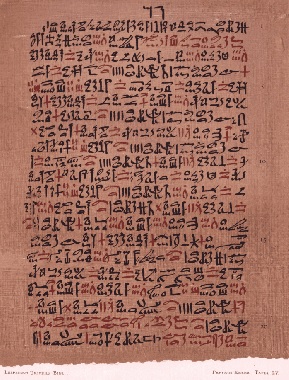
Today, we will be talking about the Papyrus Ebers or Ebers Papyrus, which is among the oldest and mostimportantmedicalpapyri of Ancient Egypt and of the world. This papyrus is a medical papyrus of herbal knowledge, and dates back to c.1550 BC. It is believed to have been copied from earlier texts. It is 110-page scroll, and is about 20 m long. It is among the world’s oldest preserved medical documents.
From c. 33rd century BC until Persian invasion in 525 BC, Egyptian medicine remained one of the world’s most advanced, and was used in some non-invasive surgery, setting of bones, and an extensive set of pharmacopeia. Even Homer of the Odyssey recognized this when he said, “In Egypt, the men are more skilled in medicine than any of human kind” and “the Egyptians were skilled in medicine more than any other art“.
Georg Ebers
The Papyrus Ebers is one of the oldest medical papyri still well-preserved. It was given the name Ebers, after the man who purchased it in Luxor (Thebes) in the winter of 1873-74, Georg Ebers, a German Egyptologist and novelist. It is written in hieratic Egyptian writing and preserves the most voluminous record of ancient Egyptian medicine known. It contains about 700 magical formulas and remedies, for things such as asthma, evacuation of belly, bowels, birth control, guinea worms (this remedy is still the standard practice today, over 3500 years later), and even cancer. There is also a chapter titled Book of Hearts, which deals with mental disorders such as depression and dementia.
Ebers Papyrus – remedy for asthma
One of the most common remedies described in the papyrus is ochre, or medicinal clay, which was prescribed for intestinal and eye complaints. Yellow ochre was prescribed as a remedy for urological complaints.
The Papyrus Ebers is currently kept at the Leipzig University‘s library (Ebers was chair of the Egyptology department there) in Germany. If you are in Leipzig, go visit. Please check out the Ancient Egyptian Medicine website, which talks in details not only about the Ebers Papyrus, but also about other famous Papyri such as the Edwin Smith Papyrus (c. 1600 BC), the Kahun Gynecological Papyrus (c. 1800 BC), and herbal remedies, and nutrition of Ancient Egypt.
I had to share with you this Feb. 16, 1959 Time Magazine gem of an article on President Sekou Toure of Guinea, the first country to say ‘NO’ to France. As you will see, even the so-called ‘dictators’ of the world have graced the cover of Time Magazine when they were still ‘deemed’ good. Some of the article is a bit a mockery of Africans for wanting independence from their colonial masters, as it is referred to as ‘haste’ in the article (could you really have faulted Africans for wanting freedom?). Enjoy! The full article can be found at: WebGuinee.net. Below are a few words.
==============
Finally, Sékou Touré, 37 President of the new Republic of Guinea, a trim figure in a European busine suit, rose and raised his arm. “Vive l’indépendance!” he shouted, and three times the crowd roared back, “Vive l’indépendance!” “Vive l’Afrique!”he shrieked in a voice close to frenzy. Once again, the cry was three times repeated. There was no reason for Touré to do more. The crowd had seen and heard him, and that was enough.
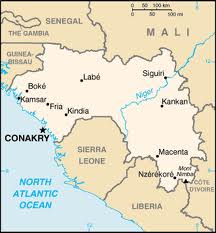
Guinea-Conakry
Broad-shouldered and handsome. Sékou Touré is as dynamic a platform performer as any in all Black Africa. He is the idol of his 2,500.000 people, and the shadow he casts over Africa stretches far beyond the borders of his Oregon-sized country. As the head of the only French territory to vote against De Gaulle‘s constitution and thus to choose complete independence, he has been suddenly catapulted into the forefront of the African scene. ….
Part dedicated idealist and part ruthless organizer-perhaps the best in Black Africa-Guinea’s Touré should have problems enough just coping with the disruption that inevitably came with independence. But he, too, has dreams as wide as a continent. “All Africa,” says he, “is my problem.”
Samori Toure holding the Coran
In a sense, he was born in the right place and with the right ancestry to favor a big role. Though Africa was, until the Europeans came, the continent that could not write, it had known its times of glory. Guinea was once part of the powerful Mali Empire that stretched from the French Sudan, on the upper reaches of the Niger, to just short of West Africa’s Atlantic Coast. When its 14th century ruler, the Mansa (Sultan) Musa, made his pilgrimage to Mecca, he traveled with a caravan of 60,000 men, and among his camels were 80 that each bore 300 lbs. of gold. … he turned the fabled city of Timbuktu into a trading center and a refuge for scholars. … But the legend lived on of the warrior Samory, whom Sékou Touré claims as his grandfather.
Sekou Toure, one of Samori Toure’s grandson
When De Gaulle stopped off at Conakry on his swift tour of Africa before the referendum, Touré thundered in his presence: “We prefer poverty in liberty to riches in slavery.” Angrily, De Gaulle canceled a diner in time he was to have had with Touré, and the split was final. A few weeks later, 95% of the people of Guinea voted no to the De Gaulle constitution.
The Cape Coast Castle is one of the 30 slave forts of Ghana. In 2009, the US president Barack Obama and his family, made a point to visit the Cape Coast Castle. So why should you learn about it?
Well, it took 50 years to build the three-story building that forms today’s Cape Coast Castle. It was originally built by the Swedes (the Swedish Africa Company), starting in 1653 (it was then known as Fort Carlsborg or Carolusborg) for timber and mineral exportation, and then taken over by the Dutch before the British wrestled it away. The original cannons, cannon balls, and mortars used to defend the fort can still be seen today, facing the Atlantic Ocean.
Cape Coast Castle in 1682
The brick courtyard of the castle, which Ghanaians commonly refer to as Cape Coast Dungeon, has two 18-foot water wells and four graves. The first grave is for the Rev. Phillip Quarcoo, the first black Anglican pastor in the area. Beside him lies C.B. Whitehead, 38-year old British soldier who was killed by a Dutch soldier in the courtyard. Besides them are the graves of Letitia Elizabeth Landon, and her husband George MacLean, the British governor of Cape Coast from 1830 to 1844. I am not sure how a woman could possibly live next to such atrocities; maybe by rationalizing that the people being imprisoned, were not human beings?
The open auditorium on the top floor of the former administration building now hosts an exhibit chronicling the history of slavery on Ghanaian shores.
Cape Coast Castle in 1890 (National Archives UK – Wikimedia)
During the 17th and 18th centuries, the Cape Coast slave fort imprisoned about 1000 men and 300 women for any given 3 months period, before they were crammed into ships bound for a life of slavery in the Americas. Its corridors are full of dungeons where only dim light coming from tiny windows let the light and air in. 200 males will be kept in space meant for 50 people or less, where they will spend over 23h a day for three months, and will only be brought briefly out to eat. Ironically, Christian services were held in the fort while these poor souls were screaming for their lives underneath.The majority of captives ranged between 15 and 35 years of age.
Women were locked in 2 similar dungeons, 150 of them per chamber. They will be raped daily by the British soldiers, who would come into the cells and select the ones to spend the night with. Any slave who challenged the authorities was thrown into the condemned cell, which held 30 – 50 in a room no bigger than most walk-in closets. There, they would die deprived of food, water, light, and oxygen, clawing the brick walls and floors as they suffocated.
Cape Coast Castle (WZM – Wikipedia)
To descend into the exposed brick castle feels like entering the depth of the underworld (I can only imagine how those captives felt going through there). There are five dungeon chambers for men. The strongest ones were separated during branding, when hot iron rods were used to mark their chests, and then chained and shackled together in the first chamber. The last cell has a hole in the wall, which leads into a deep dark tunnel which was used to take slaves underneath the castle’s courtyard, leading them to the “door of no return.” Cape Coast Castle was once the most active slave trading hub in West Africa.
Slavery was not just a European affair, but an African one as well, since many African chiefs traded slaves (rarely their own people – but people from other nations) to the Europeans in exchange for goods. Thus, the Ghana House of Chiefs – a body comprising all the country’s traditional kings and chiefs- has placed a plaque on one of Cape Coast castle’s walls, asking for forgiveness to the souls of those who were sold. When will European nations also ask for forgiveness?
Last week, an exhibition organized by the Schomburg Center for Research in Black Culture of The New York Public Library, in Delhi recently showcased the “forgotten” stories of Africa’s role in India’s history. The exhibition reminded me a lot of the article I wrote about the Siddis, a tribe of Indians of African descent.
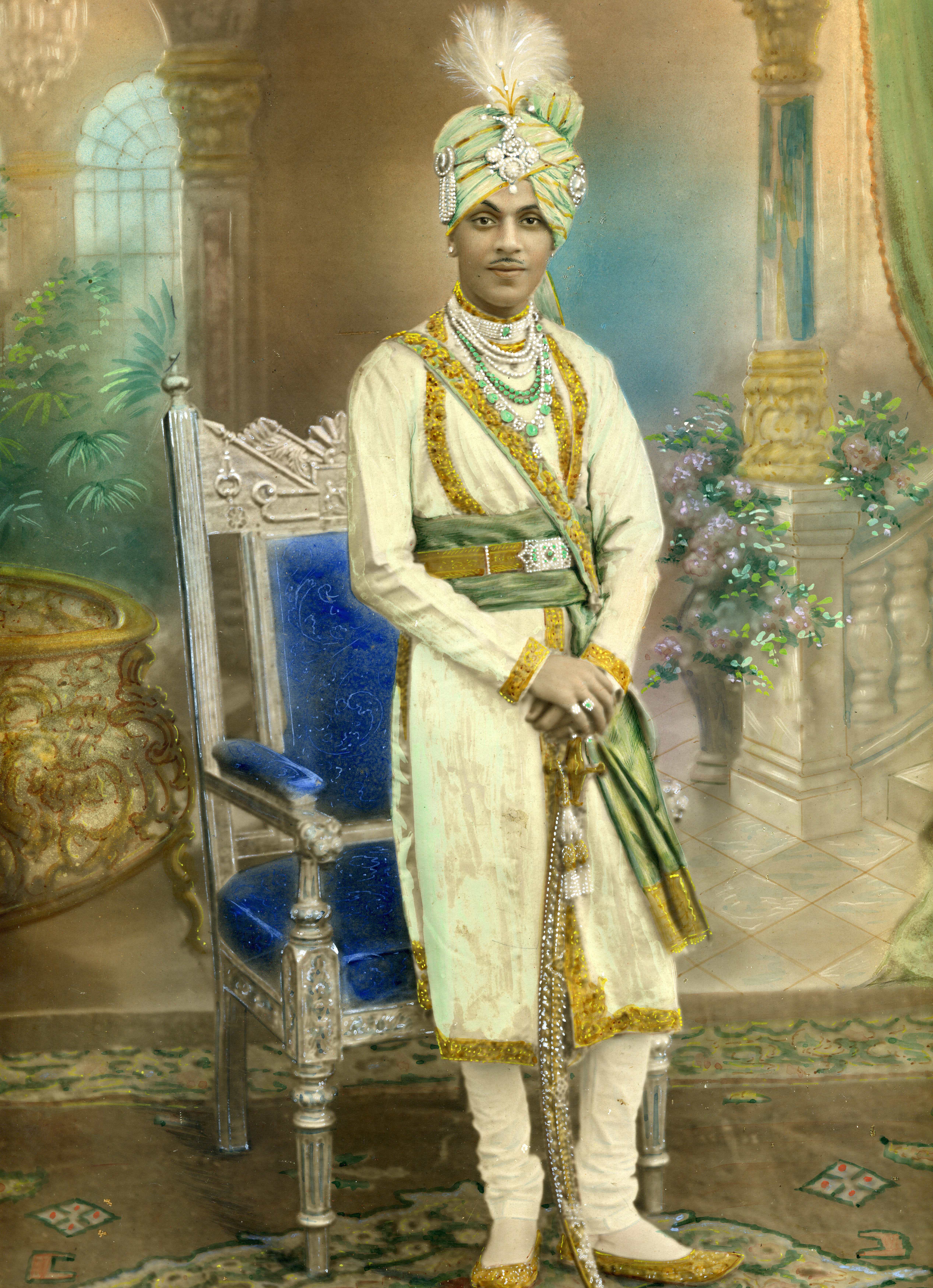
Nawab Sidi Mohammed Haider Khan (Source: The Kenneth and Joyce Robbins Collection)
Well it turns out, that many Africans travelled to India either as traders or as slaves centuries ago; their presence dates as far back as the 4th century AD. They mostly came from the horn of Africa and were referred to as Abyssinians, Siddis, or Habshis (Ethiopians), or Zangis (East Africans). They really flourished as traders, artists, rulers, architects and reformers between the 14th Century and 17th Century. They played an important role in India’s history or kingdoms, conquests, and wars, and rose through the ranks of society, some becoming generals or rulers. Due to their fighting prowess, many became soldiers in the armies of conquerors and sultans all over India’s princely states. The most important one of them is Malik Ambar (1548-1626) of Ahmadnagar, in Western India, who was an important ruler, and military strategist. His mausoleum still exists in Khuldabad, near the Aurangabad district; somehow, Indian history forgot to mention that he was African. There was also Nawab Sidi Haidar Khan, ruler of the African-ruled state of Sachin established in 1791 in Gujarat; the state had its own cavalry and state band which included Africans, its own coat of arms, currency, and stamped paper.
Ibrahim Rauza Tomb, designed by architect Malik Sandal
Other Africans flourished as artists, reformers, and architects, such as Malik Sandal who designed a funerary complex after 1597 in Bijapur, the Ibrahim Rauza tomb (in present-day southern Karnataka state).
Painting of a Sidi couple of Bombay (by M.V. Dhurandhar, from the book ‘By-Ways of Bombay’, 1912)
Africans not only rose to prominence in the Deccan Sultanates of southern India, but also on the western coast of India. They sometimes seized power for their group like they did in Bengal – where they were known as the Abyssinian Party – in the 1480s; or in Janjira and Sachin (on the western coast of India) where they established African dynasties. They also took power on an individual basis, as Sidi Masud (also written Siddi Masud) did in Adoni (in southern India), or Malik Ambar in Ahmadnagar (in western India).
The main African figures of the past have not been forgotten but their ethnicity (as in many places in the world) has been erased, consciously or unconsciously. How many more prominent Africans are there in Indian history, whose ethnicity was erased? Please enjoy this photojournal of the Schomburg exhibition from the BBC, Africans in India: From Slaves to Rulers, and if you get a chance, do attend the exhibition, the pictures are simply amazing.
















 African Heritage