Germany Returns Skulls of Namibians Genocide Victims

Herero
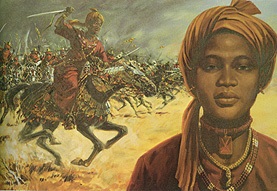
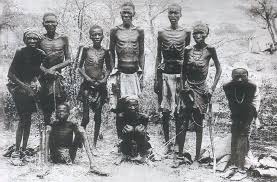
Survivors of the Herero and Namaqua genocide

I know this dates from last August, 2018, but I had to share. Note that out of the hundreds of skulls taken by Germany, only a bit over 25 were returned; if the German racial study has been discredited, why not return all of them? The excerpt below is from the BBC; for the full article, go to the BBC. As a reminder, the first genocide of the 20th century occurred in Namibia, on African soil. It was perpetrated by Germans on the Herero and Nama people of Namibia. It was extremely brutal and almost wiped out all Herero people. It was a campaign of racial extermination and collective punishment that the German Empire undertook in German South-West Africa (modern-day Namibia) against the Herero and Nama people. It took place between 1904 and 1907 during the Herero Wars. Today it is known as the Namibian genocide or the Herero and Namaqua genocide.

======

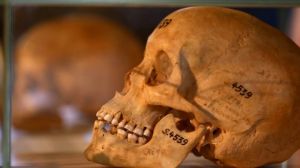
Namibia_Skulls
Namibian skulls (Reuters)

Germany has handed back the human remains of indigenous people killed during a genocide in colonial Namibia (German South-West Africa) more than 100 years ago.

… The bones had been sent to Germany for now-discredited research to prove the racial superiority of white Europeans. 

Tens of thousands of Herero and Nama people were murdered in response to an anti-colonial uprising.

Their descendants are still waiting for an apology from the German government.

The genocide began in 1904 after a Herero and Nama rebellion in response to the German expropriation of their land and cattle.

The head of the military administration in what was then known as German South West Africa, Lothar von Trotha, issued an extermination order in October 1904.

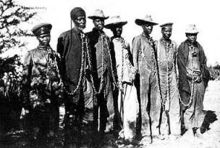
Herero_chained
Chained Herero men

The Herero and Nama were forced into the desert and any who were found trying to return to their land were either killed or put into concentration camps.

There is no agreed figure of how many died but some estimates have put it as high as 100,000.

It is thought that 75% of the Herero population and half of the Nama population died.

… There are thought to be hundreds of Namibian skulls in Germany and on Wednesday more than 25 remains were handed back.

Skulls from Germany’s other African colonies, including modern day Cameroon, Tanzania, Rwanda and Togo, were also used in the discredited studies.

In 2016, Germany said it was prepared to apologize in principle but it is still negotiating with the Namibian government over the form of the apology and how to deal with the legacy of the genocide. [Funny how, when it was time to kill, they never negotiated]

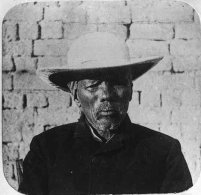
Namibia_Hendrik Witbooi
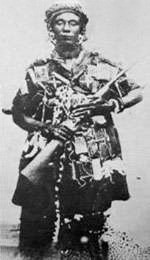
Hendrik Witbooi, Namaqua Chief and freedom fighter

… Germany has argued that it has given Namibia millions of dollars in development aid to support all people in the country. [They forget to tell you that they are still benefiting from the mines and resources of Namibia]

… But descendants of the victims are angry that there has been no apology and no agreement of reparations. They are also unhappy that they are not part of the negotiations. …

Great Warrior Queen of Nubia: Amanirenas

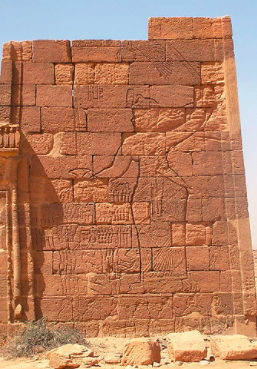
nubia_amanirenas
Sculpture of Candace Amanirenas on a pyramid wall in Barwa, Sudan

Amanirenas was a great Candace, queen, of the Nubian kingdom, mother to queen Amanishakheto, and grandmother to queen AmanitoreAmanirenas was a great warrior queen.  She built considerable pyramids and temples at Wad Ban Naqa, where she was buried with great treasures.

Her full name and title was Amnirense qore li kdwe li (“Ameniras, Qore and Kandake“). She reigned from about 40BC to 10BC, and is one of the most famous Kandakes, because of her role leading Kushite armies against the Romans in a war that lasted five years, from 27 BCE to 22 BCE. After an initial victory when the Kushites attacked Roman Egypt, they were driven out of Egypt by Gaius Petronius and the Romans established a new frontier at Hiere Sycaminos (Maharraqa). Amanirenas was described as brave, and blind in one eye. Some say that her name means Amani is her name. Amani is the Nubian name for Imana/Amon, Unique God of Africa.

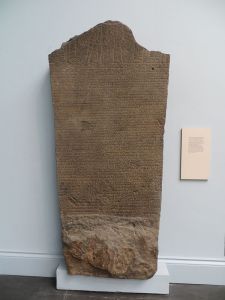
nubia_hamadab stela showing amanirenas and akinidad
Hamadab stela showing Queen Amanirenas and Prince Akinidad facing various Egyptian deities Amun and Mut

Meroitic inscriptions give Amanirenas the title of qore as well as Kandake suggesting that she was a ruling queen. She is usually considered to be the queen referred to as “Candace” in Strabo‘s account of the Meroitic war against the Roman Empire. Her name is associated with those of Teriteqas and Akinidad. King Teriteqas died shortly after the beginning of the war. She was succeeded by Akinidad (possibly the son of Teriteqas) who continued the campaign with his mother Amanirenas. Akinidad died at Dakka c. 24BC. The loss of one eye during battle made Amanirenas even stronger and braver. She despised death, and her fearlessness forced the admiration of Strabo, the Greek historian, who said, “this queen has a courage above that of her gender.”

When Aelius Gallus, the Prefect, or chief magistrate, of Egypt, was absent on a campaign in Arabia in 24 BC, the Kushites launched an attack on Egypt. Amanirenas and Akinidad defeated Roman forces at Syene and Philae, and drove the Jews from Elephantine Island. They returned to Kush with prisoners and loot, including several statues of Emperor Augustus ; the Queen buried a bronze likeness of the Emperor beneath the entranceway to her palace so that she and all who came and went could tread on the head of her enemy. The head, found in Meroë in 1912, now resides in the British Museum

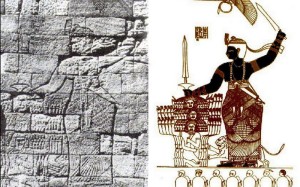
nubia_amanirenas - 1
Stela showing Candace Amanirenas crushing Roman enemies. This also appears in Cheikh Anta Diop’s book cited below

The Kushites were driven out of Syene later in the year by Publius Petronius, who now held the office of Roman Prefect in Egypt. According to a detailed report made by Strabo, the Roman troops advanced far into the Kingdom of Kush, and finally reached Napata. Although they withdrew again to the north they left behind a garrison in Qasr Ibrim (Primis), which now became the border of the Roman Empire. The Kushites made a renewed attempt to seize Primis, but Petronius forestalled this attempt.

A peace treaty was signed between the Meroites and Augustus in the year 21/20 BC, which  continued until the end of the third century AD, with relations between Meroë  and Roman Egypt remaining generally peaceful during this time. However, the Kingdom of Kush had begun to fade as a power by the first or second century AD.

nubia_africa in 400 bc_location of kush
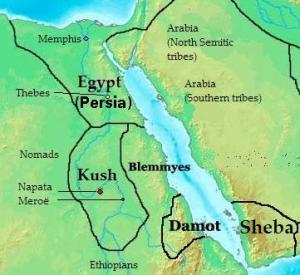
Nubia or the Kingdom of Kush in 400BC

Thereafter a preponderant place falls to two queens, Amanirenas and
Amanishakheto. Their husbands remain forgotten and we do not even know the name of Amanishakheto’s. The throne was also occupied for some years by a king, the former prince Akinidad, son of Queen Amanirenas and King Teriteqas. Nevertheless, it is important which of these two queens came first, both of them ‘Candace’, which is the transcription of the Meroitic title Kdke according to the tradition of the classical authors.

To learn more, check out the UNESCO funded book General History of Africa Vol.2, Ancient Civilizations of Africa, P. 307-308Nations Negres et Culture by Cheikh Anta Diop , Presence Africaine 1979 p. 216-217, 50 Greatest Africans — Pharaoh Natakamani and Queen Amanitore & Ngola Ann Nzinga , The Kingdom of Kush by László Török, P. 198 and 461, ISBN 90-04-10448-8. Also check out the Rejected Princess website, Lisayapokama.org, and Face2FaceAfrica.com

France urged to change heritage law and return looted art to Africa

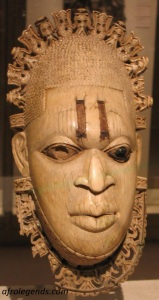
Pendant Ivory mask representing Queen Idia, Iyoba of Benin City (16th Century)
Pendant Ivory mask representing Queen Idia, Iyoba of Benin City (16th Century) – exposed at the MET

France, like so many European countries, is being urged to return looted art to Africa. Below is the article. For the full article, go to the Guardian.

=====

A report commissioned by Emmanuel Macron will call for thousands of African artworks in French museums taken without consent during the colonial period to be returned to the continent.

Unless it could be proven that objects were obtained legitimately, they should be returned to Africa permanently, not on long-term loan, said the authors of the report, the Senegalese writer and economist Felwine Sarr and the French historian Bénédicte Savoy.

They have recommended changing French law to allow the restitution of cultural works to Africa, after Macron announced that he wanted it to begin within five years.

… “I cannot accept that a large part of the cultural heritage of several African countries is in France,” the French president said last year in Ouagadougou, the capital of Burkina Faso. “There are historical explanations for this but there is no valid, lasting and unconditional justification. African heritage cannot be only in private collections and European museums – it must be showcased in Paris but also in Dakar, Lagos and Cotonou. This will be one of my priorities.” [Politicians always make promises, but never deliver. Let’s wait and see if Macron can do anything. In 2015, Francois Hollande, then French President Acknowledged French Genocide in Cameroon while in visit in Cameroon, without ever apologizing!]

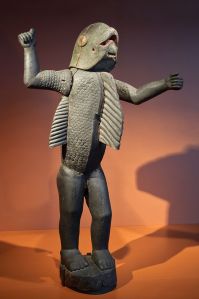
Benin_Fon statue symbolizing Behanzin Man shark
Fon statue symbolizing King Behanzin, the Man-Shark by Sossa Dede (c. 1890) – currently exposed at the Musee du quai Branly in Paris

The extent to which France, Britain and Germany looted Africa of its artefacts during colonialism is not known, but according to the report, which will be released this Friday, about 90% of Africa’s cultural heritage currently lies outside the continent.

The report’s authors travelled to Mali, Senegal, Cameroon and Benin and looked through the works held by the Musée du quai Branly, a museum focused on non-European cultures in Paris, and found that about 46,000 of its 90,000 African works were “acquired” between 1885 and 1960 and may have to be returned.

… To start with, they [the researchers] have recommended that palace doors, thrones and statues stolen from Abomey be returned – something the modern-day country of Benin has long requested [especially given that Béhanzin, the King of Dahomey, was one of the last African Resistant to French Colonization, and had been deported to Martinique and then Algeria – Deportation of African Heads of States]….

Europe’s Largest Museums to “Loan” Looted Benin (Nigerian) Artifacts back to Nigeria

Queen from Benin kingdom
Cast Bronze figurine from Benin City at the MET museum

Unbelievable! I had to share this article about European museums loaning looted African artifacts back to Africans. It sounds so mind-boggling! How can someone steal from you, steal your cultural work, the work of your ancestors, your sweat, and then several years later loan it back to you, not even return it? and they call that progress! For the entire article, go to  Europe’s Largest Museums Will Loan Looted Benin Bronzes to Nigeria and What do you know about Africa’s looted art treasures.

=======

Major museums across Europe have agreed to loan important artifacts back to Nigeria for a new museum the country plans to open in 2021. The African nation’s Royal Museum will house a rotating display of artifacts, including the Benin bronzes that were looted during the Benin Expedition of 1897. The agreement marks a significant step after years of negotiations among European institutions and Nigerian authorities.

Art from Benin kingdom (18th century)
Benin City art exposed at the MET Museum, NYC

… Together, museum leaders from Austria, Germany, the Netherlands, Sweden, and Britain agreed to facilitate a display at the planned institution within three years. Further specifics—including which objects will be loaned over what period of time—have yet to be confirmed.

… The objects in question were looted by the British army during a so-called “punitive expedition” in 1897. The army took around 4,000 intricate sculptures, including bronze works now known as the Benin bronzes, from the king’s palace in the former Kingdom of Benin.

A century later, the vast majority of these bronzes have ended up in some of the world’s most important museums, including the British Museum in London and the Metropolitan Museum of Art in New York. …

Benin City-Cast_brass_plaques_from_Benin_City_at_British_Museum-1024x721
Cast brass plaques from Benin City at the British Museum. Photo: Andreas Praefcke

Ancient Lost African City Uncovered Thanks to Laser Technology

South Africa_Kweneng
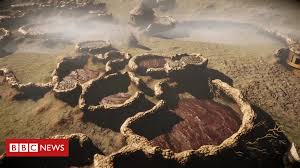
The Ancient city of Kweneng, in South Africa (Source: BBC)

A few days ago, the ancient lost city of Kweneng in modern-day South Africa was uncovered using LIDAR (light detection and ranging) technology. LIDAR is a surveying method that measures the distance to a target by illuminating the target with pulsed laser light and measuring the reflected pulses with a sensor. Differences in laser return times and wavelengths can then be used to make digital 3-D maps of the targeted area. A few months back, scientists and archaeologists had unearthed an ancient Mayan megalopolis the size of New York City or Mexico City (Hidden Kingdoms of the Ancient Maya Revealed in a 3-D Laser Map),  buried under Central American jungles using LIDAR.

Now, Archaeologists using the same technology have rediscovered the ancient city of Kweneng, just outside Johannesburg in South Africa. The settlement dates back to the 15th Century, and was home to up to 10,000 people from the Tswana ethnic group. This is an amazing step forward, and I am sure many more ancient cities around the globe, and in Africa in particular, will be uncovered!

The Wassoulou Anthem: to the Glory of the Great Samori Touré

Samori
Samori Touré

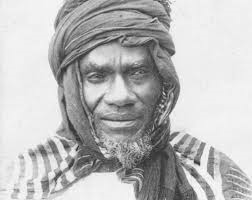
The beautiful words of the anthem below were composed by the Griots of the Wassoulou empire (or Mandinka empire) which went from 1852 to 1898, to the glory of the then Fama (King), the Almamy Samori Touré. The words are quite deep and celebrate courage, vigor, and righteousness. Enjoy! In recent times, this anthem was sung by the Bembeya Jazz National.


If you cannot organize, lead, and defend the country of your fathers, call upon the most valiant men;

If you cannot say the truth, at all times and all places, call on the most courageous men ;

If you cannot be impartial, give the throne to righteous men;

If you cannot protect the iron to face the enemy, give your sword of war to women who would point you to the path of honor;

If you cannot courageously express your thoughts, give the floor to the griots talk.

Oh Fama ! The people trust you, it trusts you because you embody its virtues.

From the journal l’Autre Afrique N° 01, juillet 2001, new version. Translated to English by Dr. Y., Afrolegends.com


Yaa Asantewaa, the Great Ashanti Queen fighting for Freedom

asantewaa
Queen Yaa Asantewaa in Batakarikese (Ceremonial war dress)

With the liberation of Simone Gbagbo last week, it is good to explore other strong women in African history. I would like to talk about the great queen Yaa Asantewaa who was a queen in the neighboring country of Ghana, when it was still called Gold Coast, and fought against the European colonizers. I explored her story amply in the article: Yaa Asantewaa or the Ashanti Cry for Freedom.

ashanti_golden_stool_31_january_1935
The golden stool in 1935

At a time when the British exiled many of the Ashanti leaders to the Seychelles, including the King of AsantePrempeh I, and other members of the Asante government, Yaa Asantewaa became regent of the Ejisu-Juaben District. After the deportation of Prempeh I, the British governor-general of the Gold CoastFrederick Hodgson, demanded the Golden Stool. This request led to a secret meeting of the remaining members of the Asante government at Kumasi, to discuss how to secure the return of their king. Many of the men were afraid, undecided, and unwilling to take any action. Yaa Asantewaa said these strong words to them: “Now, I see that some of you fear to go forward to fight for our king. If it was in the brave days of Osei TutuOkomfo Anokyeand Opoku Ware Ichiefs would not sit down to see their king to be taken away without firing a shot. No European could have dared speak to chiefs of Asante in the way the governor spoke to you this morning. Is it true that the bravery of Asante is no more? I cannot believe it. It cannot be! I must say this: if you, the men of Asante, will not go forward, then we will. We, the women, will. I shall call upon my fellow women. We will fight! We will fight till the last of us falls in the battlefields.

The BBC recently made a very short cartoon of the story of the great Queen Yaa Asantewaa. Although I applaud the effort, it is at best a very flimsy take on such a great historical moment in Ghanaian history, and I await the day when Ghanaians and Africans will undertake to tell her story properly for all Ashanti, Ghanaian, and African children around the globe. As you watch the cartoon, remember that before the BBC, you first read her story here on Afrolegends.com! Enjoy!

African Traditional Medicine: the case of Lantana and Hot Fever

When I was younger, in my village, in some cases when someone had a high fever, the person will be given a hot tea with Lantana flowers (infused) to drop the fever; it was very efficient. Now, not all Lantana plants were used, there was a particular species of it… but I love the idea of using our own medicinal herbs for our use. So it is a mistake today, after having had the Kahun Gynecological Papyrus, or the Ebers papyrus centuries ago, to assume or act as if African traditional medicine is all bogus or full of charlatanism, and that the only alternatives for us Africans, are the pills that we buy in pharmacy made abroad in some laboratories in the Western hemisphere to address mostly their needs with no respect for our environments and realities. I am not saying to go out and cut all the plants out there, or not to buy drugs in pharmacies, but I am saying that African traditional medicine is rich, and we should also cherish and enhance it. I am sure there is so much that African herbs and medicine could add to the world. We just have to develop it, and to develop it, we need to start cherishing and valuing what we have, not leaving that to Western tourists on visit to claim to have discovered something that was ours and was there all along! African, start loving who you are, appreciating what you have, and enhancing what nature gave you (when it is good, of course)!

Lantana

African Ancient Medicine: The Kahun Gynecological Papyrus

Kahun gynaecological papyrus_1
Kahun Gynecological Papyrus: Page 1 and part of Page 2

Today, we will be talking about the Kahun Papyrus, which is among the oldest and most important medical papyri of Ancient Egypt and of the world. This is a papyrus dealing with women’s health – gynecological diseases, fertility, pregnancy, and contraception; it dates back to the Twelfth Dynasty of Egyptc. 1800 BCE. It is a three page document, 1 m long and about 33 cm wide. The name Amenemhet III was written in the right upper corner behind third page name. The document was torn in places and patched with gum and papyrus.

Sobekneferu_1
Head of Pharaoh Sobekneferu. British Museum

It was found at El-Lahun (FaiyumEgypt) by Flinders Petrie in 1889 and first translated by F. Ll. Griffith in 1893 and published in The Petrie Papyri: Hieratic Papyri from Kahun and Gurob. The later Berlin Papyrus and the Ramesseum Papyrus IV cover much of the same ground, often giving identical prescriptions.  ‘Kahun’ is the name Petrie gave to the Lehun town site, which in 1825 BC had been a thriving, prosperous town; the name was probably a misspelling from this European in contact with a foreign language (see Abidjan). The papyrus had been so heavily used that its ancient owner had to repair it, with a patch bearing an administrative fragment visible at one point on the back. This gynecological papyrus originates from the Middle Kingdom (Twelfth Dynasty of Egypt) to the reign of the childless female-king Sobekneferu, whose interest in gynecology might have been sparked by her elder sister dying at an early age.

The text is divided into thirty-four sections, each section dealing with a specific problem and containing diagnosis and treatment; no prognosis is suggested. Treatments are non-surgical, comprising of the application of medicines to the affected body part or swallowing them. The womb is at times seen as the source of complaints manifesting themselves in other body parts.

Kahun gynaecological papyrus_2
Kahun Gynecological Papyrus, part of page 2 and Page 3

The first seventeen parts have a common format starting with a title and are followed by a brief description of the symptoms, usually, though not always, having to do with the reproductive organs. The second section begins on the third page, and comprises eight paragraphs which, because of both the state of the extant copy and the language, are almost unintelligible. Despite this, there are several paragraphs that have a sufficiently clear level of language as well as being intact which can be understood.

Paragraph 19 is concerned with the recognition of who will give birth; paragraph 20 is concerned with the fumigation procedure which causes conception to occur; and paragraphs 20-22 are concerned with contraception. Among those materials prescribed for contraception are crocodile dung, 45 ml of honey, and sour milk.

The third section (paragraphs 26-32) is concerned with the testing for pregnancy. Other methods include the placing of an onion bulb deep in the patients flesh, with the positive outcome being determined by the odor appearing to the patients nose.

isis-horus1
Isis and Horus: Mother and child

The fourth and final section contains two paragraphs which do not fall into any of the previous categories. The first prescribes treatment for toothaches during pregnancy. The second describes what appears to be a fistula between bladder and vagina with incontinence of urine “in an irksome place.”

To learn more about it, check out “The Kahun Gynaecological Papyrus: Ancient Egyptican Medicine” by L. Smith, J Fam Plann Reprod Health Care 37 (2011) 54. University College London also has an extensive page on the manuscript with its translation, as the manuscript for the health of mother and child.

Description of Djenné’s Market in 1825

Timbuktu_René_Caillié
René Caillié

Here is a description of the Market of the city of Djenné, another one of the crown jewels of the Empire of Mali, by the French explorer René Caillié. Bear in mind that René Caillié was the first westerner to return from TimbuktuMali. Also note the description of Suya by a European in 1825!

====

The Kola merchants stand at one end of the market, placed in two lines, each having in front of them a small basket of Kola nuts that they sell in retail,  eight or ten cowries* each : the low price came from the large quantity of these fruits found in the entire country ; but they are normally worth fifteen to twenty cowries.

La grande mosquee de Djenne (Mali - heritage du grand empire du Mali)
La grande mosquee de Djenne (Mali – heritage du grand empire du Mali)

A few Butchers were established in the market; they lay their meat like in Europe: they also put in skewers small pieces of meat that they dry with smoke, and which they sell in retail. There is in this market a lot of fresh fish and dry ; earthen pots, calabashes, mats, and salt which is sold in retail, because that which is sold wholesale stays in shops.

Timbuktu_Rene Caille House 1905-06
René Caillié’s house in Timbuktu

We see an infinite number of merchants in the streets carrying their merchandise and yelling like it is done in Europe : these are fabrics of the country, things homemade, kola nuts, honey, vegetable butter and animal, milk, firewood. This last item is rare here; women bring it from 12 to 15 miles around. Millet stubble is also sold in the market; during my stay in this city,  every night I saw negro women who had bought this fuel for 10 cowries, to cook their supper …

René Caillé, Journal d’un voyage à Tombouctou et à Jenné dans l’Afrique centrale. Tome 2, P. 199 et s. English translation by Dr. Y., Afrolegends.com

*Cowry: small white sea shells used as trade money in Africa up until a recent times.