Praising an African King: Lobengula’s Praise Poem

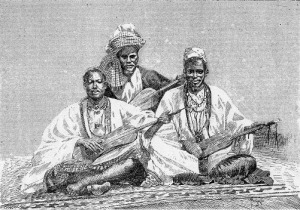
Senegal_Wolof griot 1890
Wolof griot from Senegal, ca 1890

Last month, we talked about the griot tradition of West Africa. This African tradition of long lineages of storytellers, historians, and history repositories of the society, extends beyond West Africa, to all over the continent. For the Ndebele of Zimbabwe, the griot is known as the imbongi.

Below is a praise poem celebrating the Ndebele King Lobengula. The poem was recited in Ndebele by imbongi (griot/poet) Mtshede Ndhovu to T.J. Hemans around c.1970. Mtshede Ndhlovu was born when Mzilikazi (Lobengula’s father) was still on the throne, that is, before 1868, making him some 105 years old. His son, Bova Ndhlovu, acted as interpreter, assisting Hemans with the translation.

For the entire poem, with the Ndebele version, please check out African Poems .

====

Lobengula1
King Lobengula of Matabeleland

Praise Poem for Lobengula

It roared like a calf. (1)
He who has books is at the river crossing. (2)
The cumulus cloud which rains from overcast sky. (3)
The words of a mountain, King of Mgabi Ndwandwe. (4)
The bird that builds with its beak pointing to a pool of water,
some say catch it some say leave it that it the way it builds. (5)
The black lion of Mabindela.
Grass does not burn in the Kalahari, some burns and bends. (6)
He was furious and then the tribes and commissioners were angry. (7)
Spoor of the leopard that disappears in rivers. (8)
The bush buck that strikes with its hooves and damaged the stones. (9)
Watch him, the destroyer, because he destroyed the commoners. (10)
He who is food they feed from for many many years,
when he dies where will they feed from,
they will eat jackals and roots.
He whose majesty is like that of his father Matshobana.
Cattle have popularity, they are lowing and attract afar.
He whose path is winding like that of ants.
The small bird of the spear, so small it can sit on the spear.

Praises Given to the Kings of the Amandebele,
T.J. Hemans,
Nada X, 3 (n.p., 1971).

Zimbabwe_Rudd_Concession between Cecil Rhodes and Lobengula 1880s
The Ruud Concession

(1) This praise-poem was recorded c.1970, when a new war for Zimbabwe was in progress. Lobengula is contrasted with Mzilikazi for failing to protect the nation. He is a calf compared to a bull and his roaring is not impressive.

(2) Lobengula signed the Rudd Concession in 30 October 1888, granting mining rights to the British South African Company. He assumed the miners would accept his kingship, but it was soon evident that the BSA were coming as colonizers. He who has books is Charles Rudd, the treaty bearer, and the river crossing is the Limpopo, the southern border to Ndebele territory.

(3) A reference to Lobengula’s responsibility as rainmaker. Later in praise [line] 12, he comes food they feed from.

(4) Unlike Mzilikazi, Lobengula drew his legitimacy as chief from his ancestry. See also praises 6 and 13.

(5) Lobengula’s succession was controversial, and his performance as king was disputed.

(6) Mzilikazi was called the tall grass in the Kalahari desert that will burn with men’s leather loin cloths (praise 6). Lobengula is the grass that does not burn.
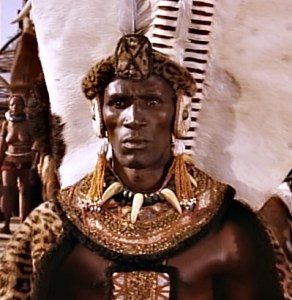
Shaka-Zulu
King Shaka of the Zulu people

(7) The signing of the Rudd Concession led to anger on all sides, culminating the war of 1893.

(8) Lobengula’s policies were difficult to follow. See also praise 15, where his course is winding like that of ants.

(9) Again, this contrasts with Mzilikazithe bush buck that steps carefully on the rocks, implying diplomatic skills such as wariness.

(10) Mzilikazi’s victories, starting with Shaka, were against enemies of stature. Lobengula is credited with no military virtues and his anger is directed at commoners.

A TEDx Talk on the Griot Tradition of West Africa

Sibo Bangoura is a griot from Guinea, West Africa, now living in Australia. In this TEDx talk, he shares the traditions of his musical heritage with people from all over the world. While playing the Kora, a musical instrument from West Africa, Sibo sang a traditional West African song, Nan Fulie, about the importance of the Griot people – the West African musicians, storytellers, custodians and teachers of tradition through music and dance. Enjoy!

The Griot, the Preserver of African Traditions

Senegal_Wolof griot 1890
Wolof griot in Senegal, c 1890

Africa has a strong, deep, and rich oral tradition. In many countries across West Africa, this tradition is often preserved by the griots, who are historians, storytellers, praise singers, poets, and/or musicians. Often, the griot is the preserver of the history of a family, a clan, and sometimes of the nation. This is done by narrating how the family/clan/tribe/nation was founded and its outstanding achievements. In essence, the griot is a repository of the oral tradition, and is often seen as a societal leader due to his or her traditional position as advisor to kings and leaders.  The griot’s praises centers around the leader of the clan, of the tribe, and of the nation. Thus, great kings throughout history had griots: Sundiata KeitaKankan Musa, and many others.

The Mali Empire (Malinke Empire), at its height in the middle of the 14th century, extended from central Africa (today’s Chad and Niger) to West Africa (today’s Mali and Senegal). The empire was founded by Sundiata Keita, whose exploits remain celebrated in Mali today. In the Epic of Sundiata, King Naré Maghann Konaté offered his son Sundiata a griot, Balla Fasséké, to advise him in his reign. Balla Fasséké is considered the founder of the Kouyaté line of griots that exists to this day.

MALI_empire
Mali Empire (Wikipedia)

Each aristocratic family of griots accompanied a higher-ranked family of warrior-kings or emperors, called jatigi. Moreover, most villages and prominent clans also had their own griot, who told tales of births, deaths, marriages, battles, hunts, affairs, and hundreds of other things.

The Cameroonian author Francis Bebey writes about the griot in his book African Music, A People’s Art (Lawrence Hill Books): “The West African griot … knows everything that is going on… He is a living archive of the people’s traditions… The virtuoso talents of the griots command universal admiration. This virtuosity is the culmination of long years of study and hard work under the tuition of a teacher who is often a father or uncle. The profession is by no means a male prerogative. There are many women griots whose talents as singers and musicians are equally remarkable.

Mali_Griots of Sambala king of Medina Fula people 1890
Griots of Sambala with the King of Medina (Fula people of Mali) c.1890

In Mande society, the jeli was an historian, advisor, arbitrator, praise singer (patronage), and storyteller. Essentially, these musicians were walking history books, preserving their ancient stories and traditions through song. Their inherited tradition was passed down through generations. Their name, jeli, means “blood” in Mandinka language. They were said to have deep connections to spiritual, social, or political powers as music is associated as such. Speech is said to have power as it can recreate history and relationships.

Youssou NDour_1
Youssou N’Dour (Source: fanart.tv)

In addition to being singers and social commentators, griots are often skilled musicians. Their instruments include the kora, the khalam (also spelled xalam), the goje (called n’ko in the Mandinka language), the balafon and the ngoni.

Griots can be found throughout Africa and bear different names from country to country. A world-renowned singer and grammy award winner descending from a family of griots is Senegalese singer, Youssou N’Dour. Below is the trailer to the movie Griot. Enjoy!

Looted Ethiopian Treasures in UK could be returned on Loan

Ethiopia_Crown looted
A crown from the Maqdala exhibition at the V&A in south-west London. (Source: V&A Museum)

I was stunned by the title of this article on the Guardian, and the preposterous thought that a country whose treasure it is, Ethiopia, would have to be loaned its own treasures which were looted by the British and taken to Great Britain. It is just so outrageous that such a thought could even be uttered! Below are snippets of the article. For the full article, go to The Guardian.

===

Victoria and Albert Museum director says artefacts could be sent to Africa on long-term loan.

Treasures including a gold crown and a royal wedding dress, which were taken from Ethiopia by the British 150 years ago, could be returned to Africa by the Victoria and Albert Museum on long-term loan.

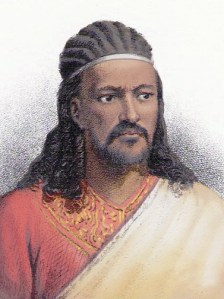
Téwodros_II_-_2
Emperor Tewodros II

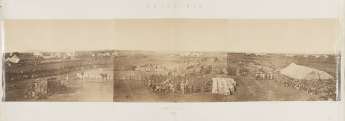
Ethiopia lodged a formal restitution claim in 2007 for hundreds of important and beautiful manuscripts and artefacts being held by various British institutions, all plundered after the 1868 capture of Maqdala, the mountain capital of Emperor Tewodros II in what was then Abyssinia.

That request has been refused. But in the run-up to a Maqdala display opening this week at the V&A, a compromise has been offered by the museum’s director, Tristram Hunt, who said: “The speediest way, if Ethiopia wanted to have these items on display, is a long-term loan … that would be the easiest way to manage it.”…

The British Museum has about 80 objects from Maqdala, including a number of tabots – believed by Ethiopian Christians to be the dwelling place of God on earth, a symbol of the Ark of the Covenant.

Ethiopia_British loot of Magdala
British Camp at Zoola, Abyssinia expedition 1868-9 (Source: Victoria and Albert Museum, London)

They have never been on public display because of their religious importance and can only be seen, even by a curator, with the agreement of the Ethiopian Orthodox church.

Other objects are on display but the British Museum argues the value of them being seen by the public is in a global context. A spokeswoman said the museum would consider any loan request from Ethiopia.

Tutu, the African Mona Lisa?

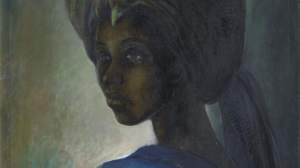
Ben Enwonu_Tutu
‘Tutu’ by Ben Enwonu (Source: CNN, Bonhams)

Tutu is what people have recently termed the African Mona Lisa. It is the portrait of a Yoruba princess made by the renowned Nigerian painter Ben Enwonwu. The brainchild of Enwonu, who created it during the aftermath of Nigeria’s bloody civil war, “Tutu” is the painting of an Ile Ife princess Adetutu Ademiluyi (“Tutu”); it is said that he met her as he was driving . It had disappeared right after being painted in 1974, and resurfaced over 40 years later in a flat in London.  On March 1st 2018, it fetched $1.6M in auction and has been celebrated by Nigerians around the world. The London auction house initially predicted a price tag of between £200,000 and £300,000 ($275,000 to $413,000), less than a quarter of the final bid. It sold for $1.6 million (£1,205,000), and has been dubbed the “African Mona Lisa.” So good to know that the princess whose painting it is, is still alive in Nigeria today, so maybe Mona Lisa may not be the appropriate name after all.

Please check out The Ben Enwonwu Foundation, and these articles on CNN (Ben Enwonwu’s ‘Tutu’ painting sells for $1.6M), BBC (Ben Enwonwu’s Nigerian masterpiece ‘Tutu’ sold at auction), and The Guardian (‘African Mona Lisa’ fetches £1.2m at auction in London). The Nigerian Booker prize-winning novelist Ben Okri said last month that “He [Ben Enwonu] wasn’t just painting the girl, he was painting the whole tradition. It’s a symbol of hope and regeneration to Nigeria, it’s a symbol of the phoenix rising.”

African Hair Sculpture?

LaetitiaKy_1
Laetitia Ky, with one of her creations, on her head

I would like to share with you the work of Laetitia Ky, an Ivorian artist who makes hair sculptures with her own hair, on her head. What do I mean? Well, just watch the video below. Laetitia has always loved hair braiding and began working with hair from a young age. She started doing hair sculptures last year, and has a big following on Instagram. She uses coat hangers, wires, needles, pins, and threads to make her creations. I knew our hair was special, with the Mathematics of CornrowsAfro Hair: Crown Jewel of African Women and Men, but my goodness, she makes it amazing! The original is on BBC (I updated it on 12/11/2019 with the video from The Art Insider instead). Enjoy creativity at his best!

African Art has inspired Great 20th Century Artists

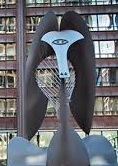
Picasso_Chicago_1
Picasso art work on Daley Plaza in Chicago, US

I already knew that the great Pablo Picasso had been inspired by African art (just a look at his sculpture on the Chicago plaza reminds you vividly of a Fang mask of Cameroon, Gabon, or Equatorial Guinea), but this is the first time I read it clearly in the BBC, an international magazine. It is about time that the world knew how much Africa has inspired the world, and this throughout the ages from ancient Egypt to modern-day Congo as in the case of Picasso, Matisse, and others. See… and then we are told that our ancestors were not savvy: have you ever looked at an African mask? The geometry, symmetry, symbolism, and emotions are amazing! Enjoy! This is just an excerpt of the article by Fisun Güner of the BBC. For the full article go to the BBC.

=========

A small seated figurine from the Vili people of what is now the Democratic Republic of the Congo was instrumental in the lives of two of the greatest artists of the 20th Century. The carved figure in wood, with its large upturned face, long torso, disproportionately short legs and tiny feet and hands, was purchased in a curio shop in Paris by Henri Matisse in 1906. The French artist, who liked to fill his studio with exotic trinkets and objets d’art, objects that would then appear in his paintings, paid a pittance for it.

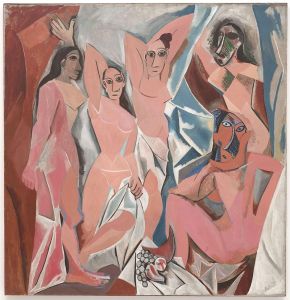
Picasso_Les_Demoiselles_d'Avignon
‘Les Demoiselles d’Avignon’ by Pablo Picasso (Source: Wikipedia)

Yet when he showed it to Pablo Picasso at the home of the art patron and avant-garde writer Gertrude Stein, its impact on the young Spaniard was profound, just as it was, though to an arguably lesser extent, on Matisse when the compact but powerful figure had fortuitously caught his eye.

For Picasso, his appetite whetted, visits to the African section of the ethnographic museum at the Palais du Trocadéro inevitably followed. And so precocious was the 24-year-old artist that it seemed that he had already absorbed all that European art had to offer. Hungry for something radically different, something almost entirely new to the Western gaze that might provide fresh and dynamic impetus to his feverish creative energies, Picasso became captivated by the dramatic masks, totems, fetishes and carved figures on display, just as he had with the Iberian stone sculptures of ancient Spain which he also sourced as material. Here, however, was something altogether different, altogether more dynamic and visceral.

….

artists were struck by a directness, a pared-down simplicity and a non-naturalism that they discovered in these objects. But no thought was given to what these artefacts might actually mean, nor to any understanding of the unique cultures from which they derived. The politics of colonialism was not even in its infancy.

Picasso_2
Pablo Picasso (Source: WikiArt.org)

The Trocadéro museum, which had so impressed Picasso, had opened in 1878, with artefacts plundered from the French colonies. Today’s curators, including those of the Royal Academy’s Matisse exhibition in which African masks and figures from the artist’s collection appear, at least seek to acknowledge and redress this to a small extent. A similar effort was made earlier this year for Picasso Primitif at the Musée du Quai Branly, Paris, an exhibition exploring Picasso’s life-long relationship to African art. The sculptures, from West and Central Africa, were given as much space and importance as Picasso’s own work and one could appreciate at first hand the close correspondence between the works.

Paul Gauguin, perhaps the quintessential European artist to ‘go native’, …, had long felt a disgust at Western civilisation, its perceived inauthenticity and spiritual emptiness.

….

“Pleure, Ô Noir Frère Bien-Aimé” de Patrice Lumumba / “Weep, Beloved Black Brother” by Patrice Lumumba

Patrice Emery Lumumba

The 30 June 1960 marks the independence of the then Congo-Belge (Democratic Republic of the Congo (DRC)) from Belgium. We will celebrate DRC’s independence today with a poem by one of Congo’s proud sons, none other than its first democratically elected Prime Minister Patrice Lumumba, “Pleure, Ô Noir Frère bien-aimé (Weep, beloved black brother)”. This poem was published in the journal INDEPENDANCE, organe du M.N.C., en septembre 1959 (Cf. La pensée politique de Patrice LUMUMBA, textes et documents recueillis par Jean VAN LIERDE, Présence Africaine, 1963, p. 69-70). Translated to English by Lillian Lowenfels and Nan Apotheker.


Pleure, O Noir Frère bien-aimé

O Noir, bétail humain depuis des millénaires
Tes cendres s’éparpillent à tous les vents du ciel
Et tu bâtis jadis les temples funéraires
Où dorment les bourreaux d’un sommeil éternel.
Poursuivi et traqué, chassé de tes villages,
Vaincu en des batailles où la loi du plus fort,
En ces siècles barbares de rapt et de carnage,
Signifiait pour toi l’esclavage ou la mort,
Tu t’étais réfugié en ces forêts profondes
Où l’autre mort guettait sous son masque fiévreux
Sous la dent du félin, ou dans l’étreinte immonde
Et froide du serpent, t’écrasant peu à peu.
Et puis s’en vint le Blanc, plus sournois, plus rusé et rapace
Qui échangeait ton or pour de la pacotille,
Violentant tes femmes, enivrant tes guerriers,
Parquant en ses vaisseaux tes garçons et tes filles.
Le tam-tam bourdonnait de village en village
Portant au loin le deuil, semant le désarroi,
Disant le grand départ pour les lointains rivages
Où le coton est Dieu et le dollar Roi
Condamné au travail forcé, tel une bête de somme
De l’aube au crépuscule sous un soleil de feu
Pour te faire oublier que tu étais un homme
On t’apprit à chanter les louanges de Dieu.
Et ces divers cantiques, en rythmant ton calvaire
Te donnaient l’espoir en un monde meilleur…
Mais en ton cœur de créature humaine, tu ne demandais guère
Que ton droit à la vie et ta part de bonheur.
Assis autour du feu, les yeux pleins de rêve et d’angoisse
Chantant des mélopées qui disaient ton cafard
Parfois joyeux aussi, lorsque montait la sève
Tu dansais, éperdu, dans la moiteur du soir.
Et c’est là que jaillit, magnifique,
Sensuelle et virile comme une voix d’airain
Issue de ta douleur, ta puissante musique,
Le jazz, aujourd’hui admiré dans le monde
En forçant le respect de l’homme blanc,
En lui disant tout haut que dorénavant,
Ce pays n’est plus le sien comme aux vieux temps.
Tu as permis ainsi à tes frères de race
De relever la tête et de regarder en face
L’avenir heureux que promet la délivrance.
Les rives du grand fleuve, pleines de promesses
Sont désormais tiennes.
Cette terre et toutes ses richesses
Sont désormais tiennes.
Et là haut, le soleil de feu dans un ciel sans couleur,
De sa chaleur étouffera ta douleur
Ses rayons brûlants sécheront pour toujours
La larme qu’ont coulée tes ancêtres,
Martyrisés par leurs tyranniques maîtres,
Sur ce sol que tu chéris toujours.
Et tu feras du Congo, une nation libre et heureuse,
Au centre de cette gigantesque Afrique Noire.


Weep, Beloved Black Brother

O black man, beast of burden through the centuries,
Your ashes scattered to the winds of heaven,
There was a time when you built burial temples
In which your murderers sleep their final sleep.
Hunted down and tracked, driven from your homes.
Beaten in battles where brute force prevailed.
Barbaric centuries of rape and carnage
That offered you the choice of death or slavery.
You went for refuge to the forest depths,
And other deaths waylaid you, burning fevers,
Jaws of wild beasts, the cold, unholy coils
Of snakes who crushed you gradually to death.
Then came the white man, more clever, tricky, cruel,
He took your gold in trade for shoddy stuff,
He raped your women, made your warriors drunk,
Penned up you sons and daughters on his ships.
The tom-toms hummed through all the villages,
Spreading afar the mourning, the wild grief
At news of exile to a distant land
Where cotton is God and the dollar King.
Condemned to enforced labor, beasts of burden,
Under a burning sun from dawn to dusk,
So that you might forget you are a man
They taught your to sing the praises of their God,
And these hosannas, tuned in to your sorrows,
Gave you the hope of a better world to come.
But in your human heart you only asked
The right to live, your share of happiness.
Beside your fire, your eyes reflect your dreams and suffering,
You sang the chants that gave voice to your blues.
And sometimes to your joys, when sap rose in the trees
And you danced wildly in the damp of evening.
And out of this sprang forth, magnificent,
Alive and virile, like a bell of brass
Sounding your sorrow, that powerful music,
Jazz, now loved, admired throughout the world,
Compelling the white man to respect,
Announcing in clear loud tones from this time on
This country no longer belongs to him.
And thus you made the brothers of your race
Lift up their heads to see clear, straight ahead
The happy future bearing deliverance.
The banks of a great river in flower with hope
Are yours from this time onward.
The earth and all its riches
Are yours from this time onward.
The blazing sun in the colorless sky
Dissolves our sorrow in a wave of warmth.
Its burning rays will help to dry forever
The flood of tears shed by our ancestors,
Martyrs of the tyranny of the masters.
And on this earth which you will always love
You will make the Congo a nation, happy and free,
In the very heart of vast Black Africa.


“Havemos de Voltar”/ “We Shall Return” by Agostinho Neto

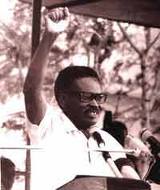
Agostinho Neto
Agostinho Neto

Today, I would like to share a poem by one of Angola’s most prolific writer and its first president, Agostinho Neto. This poem, Havemos de Voltar” / “We Shall Return, speaks to all people, and all times.

field_champBack when this was written from his prison cell in Lisbon, the poem symbolized the return of lost sons, of exiles, of freedom fighters, and the return to their homeland, their loved ones, and the re-attribution of their resources back to them. Today, the message means pretty much the same: a return to liberty (African countries’ freedom from the oppressors), economic freedom (FCFA, the slave currency), and even freedom to all immigrants around the globe who run away from their country because of poverty, war, etc. So to all those seeking a return to peace, to love, a return home, here is Agostinho Neto‘s message.

Havemos de voltar

Às casas, às nossas lavras
às praias, aos nossos campos
havemos de voltar

ÀS nossas terras
vermelhas do café
brancas de algodão
verdes dos milharais
havemos de voltar

Às nossas minas de diamantes
ouro, cobre, de petróleo
havemos de voltar

Aos nossos rios, nossos lagos
às montanhas, às florestas
havemos de voltar

À frescura da mulemba
às nossas tradições
aos ritmos e às fogueiras
havemos de voltar

À marimba e ao quissange
ao nosso carnaval
havemos de voltar

À bela pátria angolana
nossa terra, nossa mãe
havemos de voltar

Havemos de voltar
À Angola libertada
Angola independente

We shall return

To the houses, to our crops,
to the beaches, to our fields
we shall return

To our lands
Red with coffee
White with cotton
Green with maize fields
we shall return

To our mines of diamonds
Gold, copper, oil
we shall return

To our rivers, our lakes
our mountains, our forests
we will return

To the shade of the mulemba
To our traditions
To the rhythms and bonfires
we shall return

To the marimba and the quissange
to our carnival
we shall return

To our beautiful Angolan homeland
our land, our mother
we shall return

We shall return
to liberated Angola
independent Angola.

From Sacred Hope – Poems by Agostinho Neto, published by the Angolan Writers Union, 1986, sponsored by the National Bank of Angola. Translated to English by Marga Holness.

African Love Anthem: ‘Malaika’

A box of Valentine's day chocolate
A box of Valentine’s day chocolate

Who has not heard of the famous African love song ‘Malaika?’ The best known version of this song is the one sung by Mama Africa, Miriam Makeba. It is a Swahili song written by Tanzanian Adam Salim in 1945, who composed “Malaika” for his very beautiful girlfriend Halima Ramadhani Maruwa. Their parents disapproved of their relationship, and Halima was forced by her parents to marry an Asian tajir (wealthy man). The song is sung by a poor young man who wishes to marry his beloved ″Angel″ or ″Little bird″ but is defeated by the bride price.

A true African beauty: Mama Africa, Miriam Makeba

This song is the most famous of all Swahili love songs in Tanzania, Kenya and the entire East Africa, as well as being one of the most widely known of all Swahili songs in the world; again, it was made popular around the globe by Miriam Makeba. Malaika means “angel” in Swahili, and this word has always been used by the Swahili speakers to refer to a beautiful girl. So this is to all the angels out there for this Valentine day.


Malaika

Malaika, nakupenda Malaika

Malaika, nakupenda Malaika

Nami nifanyeje, kijana mwenzio

Nashindwa na mali sina, we,

Ningekuoa Malaika

Nashindwa na mali sina, we,
Ningekuoa Malaika

Kidege, hukuwaza kidege

Kidege, hukuwaza kidege

Nami nifanyeje, kijana mwenzio

Nashindwa na mali sina, we,

Ningekuoa Malaika

Nashindwa na mali sina, we,
Ningekuoa Malaika

Pesa zasumbua roho yangu

Pesa zasumbua roho yangu

Nami nifanyeje, kijana mwenzio

Ningekuoa Malaika

Nashindwa na mali sina, we,
Ningekuoa Malaika

Angel

Angel, I love you angel

Angel, I love you angel

and I, what should I do, your young friend

I am defeated by the bride price that I don’t have

I would marry you, angel

I am defeated by the bride price that I don’t have
I would marry you, angel

Little bird, I think of you little bird

Little bird, I think of you little bird

and I, what should I do, your young friend

I am defeated by the bride price that I don’t have

I would marry you, angel
I am defeated by the bride price that I don’t have
I would marry you, angel

The money (which I do not have) depresses my soul
and I, what should I do, your young friend

I would marry you, angel

I am defeated by the bride price that I don’t have
I would marry you, angel