Ici sont les lyriques de la chanson “Les Immortels” de Franklin Boukaka. Lorsqu’on lit ces paroles, on se dit “quelle beauté! Quelle grandeur, quel amour de l’Afrique!”
Africa mobimba e … L’Afrique toute entière
Tokangi maboko e … A croisé les bras
Tozali kotala e … Nous observons impuissants
Bana basili na kokende … La perte de ses enfants
Bana basili na kotekama e … Le trafic de ses enfants
Na banguna a ……………… Auprès des ennemis
Tolati mokuya ata maloba te … Silencieux, nous avons porté un voile noir de deuil
Congo na bana Africa baleli … Le Congo et l’Afrique fondent en larmes (2X)
I stumbled across this poem which praises the African beauty, that of: our mothers, our sisters, our daughters, and our wives. It is true that the African standard of beauty has now become the world standard of beauty. Women around the world want to have lips like Angelina Jolie, when we, Africans were blessed with real luscious lips. Western media emphasize J-Lo‘s big butt, when the African woman was naturally born bootylicious. Men love women with nice curves like Halle Berry … well, I guess God was truly showing off when He created the Black woman. Enjoy ‘African Woman’ by Swabi Mnisi.
You, with big butt and small waist Those goodies wrapped in unequalled curves Fat lips that produce a mouth watering kiss With that black face and woolly hair You are my African queen
The she-hero, Saartjie Bartman stood her ground In the mist of derogation, she remained proud Her bums defied western notions Big became beautiful and Africa a fishing pond Thanks to the African queen
Africa is blessed to have you, don’t disappoint You are the only species with big booty The only one with resilient black skin So please do not bleach, you are a queen
Here is the classic version as written by Enoch Sontonga, with added verses by Samuel Mqhayi. Enjoy the good old version, or the classic version, and compare it to the more modern version which I posted earlier.
I was talking to a friend the other day about the suffering in Cote d’Ivoire and Libya, and my friend said “hush, we should be grateful that this is not happening in our country.” I was dumbfounded, as I was thinking, how could somebody just rejoice for their lot, instead of helping the others? instead of doing something? the least we can do is talk about it, cry, do something, not just watch and rejoice about our silly existence which could go down in flames in a day as in Cote d’Ivoire or Libya which were under fire from France and NATO (the mighty armies of the world) for their oil, cocoa, and gold. Then I found this really good poem by Kelvin Karani, talking about the things we all see in Africa, the things that hurt, and the things that tire. Enjoy “No More.”
=======
No more Taking of silly slogans Of change from the corrupt politicians We need statesmen and stateswomen People who see beyond elections
No more Sitting back as others suffer Saying that we are blessed Happy that we are not in pain In common bond united We’ll rise or fall as a people
No more Taking the aid of Aids Which makes sick and In perpetual need.
No more Class divisions in Africa Imperialism of whatever nature White evils or black ones either For time has come For Africa, my Africa-our Africa To dust herself and move on Undeterred, unhindered To show the rest of the world What humanity truly is.
”La sape” (pronounced sap) is La Societe des Ambianceurs et Personnes Elegantes, or the Society of Atmosphere Setters and Elegant People. The ‘Sapeurs’ adhere to a culture of high fashion at all costs. Most are very well-dressed men who strut in Versace, Gucci, Prada, or Ralph Lauren’s attires. They pay extreme attention to the quality or their clothing, and are extremely refined. The word sapeur comes from two Lari words “Lunkété” and “tsi Muntu” or ‘beauty’ and ‘human.’ A true sapeur is one who symbolizes beauty and humanity through the clothes he wears, in his outlook, his words, and his actions. In other words, he is someone who embodies and expresses the beauty of the mind and soul in harmony with the colors of his wardrobe, expresses love for his neighbor (luzolo), and is an apostle of peace.
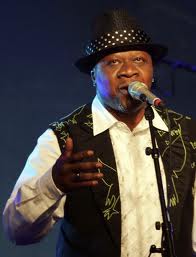
Papa Wemba
The roots of the movement can be traced as far back as in the 1920s and 1930s when the first privileged Congolese returned from France with wardrobes of expensive suits. However the culture, and its name ‘la societe des ambianceurs et personnes elegantes’ took off thanks to the great musician and singer Papa Wemba who developed a flamboyant and sometimes exaggerated style. His style was in direct opposition to Mobutu-approved uniform, the dreaded style-less ‘abacost’ (from the French “a bas le costume” or “down with the suit”) a dull Zairean version of the three-piece suit. Papa Wemba called his new style Ungaru, and it was a throwback to the elegance of the 1930s—complete with tapered trousers, brogues, neatly trimmed hair and tweed hats worn at a rakish angle. For Congolese all over the world, the look was irresistible: SAPE was born. Sape became almost like a religion: fashion at all cost, elegance, and setting the atmosphere, creating the spectacle. Elegance at all costs is its motto. In the old days, sapeurs would often spend months or years saving up for outfits; they would start out by renting or borrowing suits from their more established peers. Like in any movement, there are rivalries and affiliations within the SAPE movement: Paris vs Brussels, Brazzaville vs Kinshasa, Bacongo vs Moungali. It is a total fashion warfare. Sapeurs from Brazzaville follow the three colors rule, while the Kinshasa crowd is all about going overboard.
Hector Mediavilla, a flamboyant sapeur
One important trait of the ‘sapeur’ is uniqueness: one cannot look like the common man, and so there is a constant urge to look different, unique, and elegant. And the cost of the ‘sape’ is quite high… but very important. Isn’t a person unique anyways? then why not exert that uniqueness in fashion? There used to be weekly defilés (shows/catwalks) of sapeurs in the streets of Kinshasa or Brazzaville, to find and elect the most ‘sapé‘ man. These were known as “Fight days”, weekly events, and the combat arenas were the local outdoor bars on Avenue Matsoua, the most famous place of Brazzaville, Congo. Today, the sape culture has extended throughout Africa, and particularly French Africa. In the video below, you will see how sape is redefined in Cameroon, a neighbor to Congo… and how there is a difference between being ‘hip‘ and being ‘sapé‘. ‘Hip‘ is just having the latest trends: the pants down on the floor, the pierced jeans, etc… while ‘sapé‘ means having elegance, class, and uniqueness…. Enjoy!
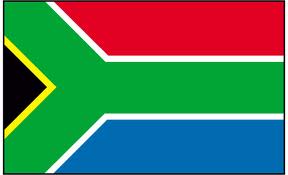
Today I would like to talk about the great ode to Africa, ‘Nkosi Sikelel’ iAfrika‘ or ‘God Bless Africa‘ which used to be the national anthem of five African countries. Little did Enoch Sontonga, a simple school teacher in Johannesburg, know that his hymn praising his love for his country and land of ancestors would become one of the most known African national anthems when he wrote it in 1897, in his mother tongue Xhosa. This song became a pan-African anthem to the countries of Zambia, South Africa, Zimbabwe, Namibia and Tanzania … Zimbabwe and Namibia have since then adopted new anthems. At its creation, it was sung to the 1879 tune ‘Aberystwyth‘ by Joseph Parry. In 1927, seven more Xhosa stanzas were added by poet Samuel Mqhayi. In 1996, under President Nelson Mandela, a shortened version of ‘Nkosi Sikelel’ iAfrika‘ was added to the national anthem of South Africa, and Sontonga’s grave was dedicated as a national monument. In Zimbabwe, after independence in 1980, it was sung in Shona language as ‘Ishe Komborera Africa‘; in Tanzania, it is still the national anthem and is sung in Kiswahili as ‘Mungu ibariki Afrika‘. In Zambia, it is ‘Stand and Sing of Zambia, Proud and Free‘ or ‘Lumbanyeni Zambia‘. Enjoy… sing… and feel it… as God blesses Africa. Watch Miriam Makeba, Hugh Masekela, Ladysmith Black Mambazo, and Paul Simon sing it… and reap the blessings.
Nkosi Sikeleli Africa Malup hakanyiswu phando lwayo Yiswa imithanda zo yethu Nkosi Sikelela Thina lusapo lwayo
Nkosi Sikeleli Africa Malup hakanyiswu phando lwayo Yiswa imithanda zo yethu Nkosi Sikelela Thina lusapo lwayo
Morena boloka sechaba sa heso (sa heso) O fedise dintwa le matswenyeho Morena boloka sechaba sa heso O fedise dintwa le matswenyeho O seboloke (O se boloke) O seboloke morena O seboloke sechaba, Sechaba sa Heso Sechaba sa Africa
God bless Africa May her glory be lifted high Hear thou our prayers God bless us Us Your children
God bless Africa May her glory be lifted high Hear thou our prayers God bless us Us Your children
Come Spirit Come Spirit Come Spirit Holy God bless us Us Your children
Lord, we ask you to protect our nation Intervene and end all conflicts Lord, we ask you to protect our nation Intervene and end all conflicts Protect us Protect us Lord Protect us, Protect our nation Protect Africa
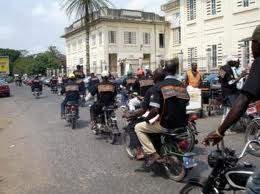
Commonly called Bend-Skin (pronounce ‘bend-sikin‘) in Cameroon, motorcycle taxis occupy a special place in many African countries, as one of the key forms of public transportation. Yes… you heard me right! In the big traffic jams of Douala, in the potholes of African capitals, or in the remotest villages, the motorcycle taxis are the quickest, and most economical way to get to one’s destination. In Cameroon, they are dearly called bend-skin because people actually have to ‘bend their skin’ as they go through the potholes, holding tightly their belongings and their hearts even tighter. They are ‘technically’ supposed to carry only one passenger, but often can be seen carrying 2 or even more. They became prominent in the streets of Douala in the late1990s after the economic crisis following the CFA franc devaluation, and particularly after the government left the streets of Douala degrade to the point where driving through giant potholes in a car became almost dangerous and extremely costly for car owners. Moreover, many college graduates who could not find jobs started taking to moto-taxis as a mean to make ends meet. The moto-taxis form queues outside office buildings, public markets, and near the corners of residential streets. Bend-skin are affordable and readily available: one can hardly wait too long for one to come around. They do not wear helmets, and tend to be aggressive drivers, leading to a rise in road-accidents in recent years. Today they have their own unions, and bike wash. Enjoy watching a moto-taxi or bend-skin wash in Cameroon. (A note:if they are called bend-skin in Cameroon, how are moto-taxis called in your country?)
==========
Bend-Skin
Communément appelés Bend-Skin (prononcer ‘Bend-sikin‘) au Cameroun, les moto-taxis occupent une place spéciale dans un grand nombre de pays africains, car ils sont un moyen de transport en public très répandu. Oui… vous m’avez bien entendu! Dans les grands embouteillages de Douala, dans les nids de poules des capitales africaines, ou même dans les villages les plus reculés, les moto-taxis sont le moyen le plus rapide et économique d’arriver à bon port. Au Cameroun, ils sont appelés bend-skin, car l’on doit effectivement se ‘plier la peau‘ et solidement tenir ses affaires, pour éviter de se retrouver dans des nids de poules sur la route. Ils sont supposés transporter un seul client, mais on peut souvent les voir transportant 2 ou même plus. La présence des moto-taxis sur les routes de Douala s’est developpée dans les années 1990 après la crise économique qui a suivi la dévaluation du FCFA; et particulièrement après que le gouvernement ait delaissé les rues de Douala qui se sont delabrées au point de former des trous béants sur la chaussée trop dangereux et extrêmement coûteux (le prix des reparations) pour les propriétaires de voitures. De plus, beaucoup de jeunes licenciés, diplômés de l’enseignement supérieur, sans boulot s’y sont mis pour afin de joindre les deux bouts. Les moto-taxis s’alignent à l’extérieur de bâtiments administratifs, marchés publiques, et au coin des rues résidentielles, pour attendre les clients. Le prix du moto-taxi est bon prix et à la portée de tout le monde. Par dessus tout, ils sont ‘versés’ partout: nul besoin d’attendre trop longtemps pour voir un arriver. Ils ne mettent pas de casques, et ont tendance à être des conducteurs très aggressifs; ce qui conduit a une augmentation d’accidents routiers ces dernières années. De nos jours, les bend-skin ont leurs propres syndicats de travailleurs, et leurs propres laveries. Regardez cette vidéo d’une laverie de Bend-skin au Cameroun. (Une note: s’ils sont appelés Bend-skin au Cameroun, comment les moto-taxis sont-ils appelés chez vous?)
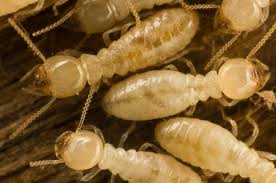
Have you ever tried termites for lunch? Hmmmmhhhh it is so delicious, you will keep asking for more! Termites are a delicacy sold in Cameroon, and other countries in West, Central, and Southern Africa. Termites are delicious, nutricious, with a good store of fat and proteins. They are quite tasty with a nutty flavor, and have a crunchiness when grilled. Termites are usually gathered at the beginning of the rainy seasons as they are attracted to the light, and swarm to it; once there, a net is set… and voilà! Delicacy for dinner! The wings are then shed by winnowing, and then they are grilled/roasted. I remember having some termites in the village, as we, the children, will gather around the fire and listen to grandfather tell us ancient tales or stories of his youth. We will have these alongside some grilled corn, or safou… These memories bring water to my mouth. Please enjoy watching a termite seller at work in the mountainous region of Western Cameroon; she will go through the set up, and yes even the painful experience of blowing the smoke from the little charcoal oven and having her eyes itch after it… you might want to try some termites! Have you ever tried termites before? Where, and what was the feeling? What kind of memories does this bring?
=============
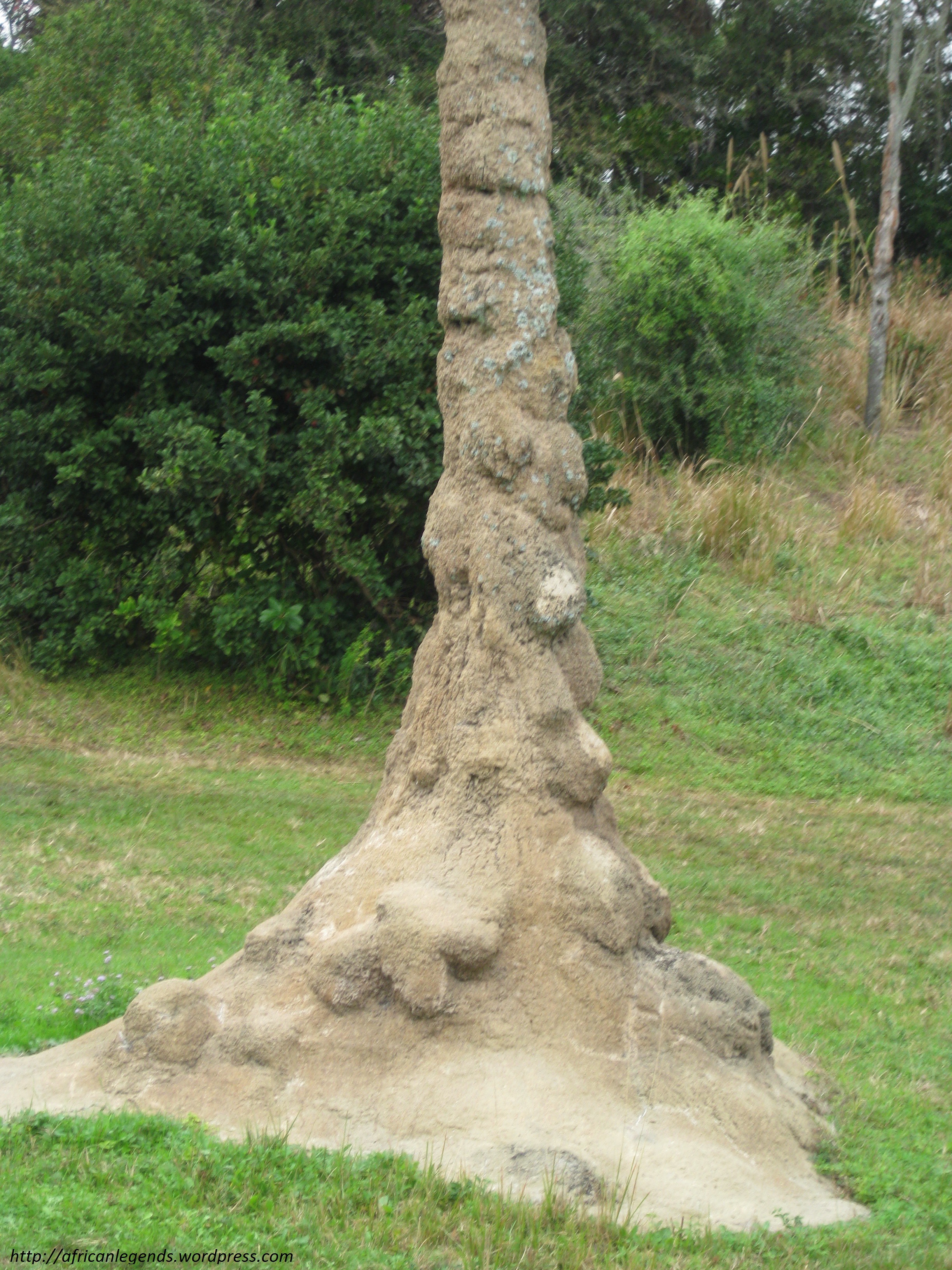
Une termitière (A termite mound)
Avez-vous déjà savouré des termites au déjeuner? hhhhmmmmmmmhhhhh, c’est si délicieux, que vous en demanderez encore plus. Les termites sont une délicatesse consommée au Cameroun, en Afrique de l’Ouest, Centrale et méridionale. Elles sont délicieuses, nutricionelles, et pleines de lipides et protéines. Une fois sur le palais, elles ont un goût de noisette, et sont croustillantes une fois grillées. Les termites sont attrapées au debut de la saison des pluies, et comme elles sont attirées par la lumière, il suffit de préparer son filet juste au dessus d’une lampe… et hop! délicatesses à gogo! Les ailes des termites sont enlevées par l’utilisation d’un tamis, et les termites sont ensuite grillées sur un feu de bois. Je me souviens d’avoir savourer des termites autour du feu au village, quand nous étions enfants, tout en écoutant grand-père raconter des légendes anciennes ou des histoires de son enfance. Les termites étaient généralement dégustées avec du maïs grillé ou du safou grillé. Ces mémoires me donnent l’eau à la bouche. Regardez cette vidéo d’une vendeuse de termites dans les régions montagneuses de l’Ouest du Cameroun; vous verrez tout en détail, et même la pénible experience d’allumer un feu de bois lorsque la fumée vous picote les yeux. Avez-vous jamais goûté aux termites? Où, et qu’avez-vous ressentis? Quelles genres de souvenir cela évoque-t-il?
In the past I have always wished that we, Africans, could be patriotic. I came across this beautiful poem ‘Love poem for my country‘ by South African writer Sandile Dikeni. I really enjoy the way the author describes his country, the valleys, the birds, the ancient rivers, and its beauty. He feels the peace, the wealth, and the health his country brings. He is one with hiscountry.He is at home! His country is not just words or food, or friends, or family, it is more, it is his essence! That is true patriotism, the bond that links us to the bone to our motherland. Enjoy!
My country is for love so say its valleys where ancient rivers flow the full circle of life under the proud eye of birds adorning the sky.
My country is for peace so says the veld where reptiles caress its surface with elegant motions glittering in their pride
My country is for joy so talk the mountains with baboons hopping from boulder to boulder in the majestic delight of cliffs and peaks
My country is for health and wealth see the blue of the sea and beneath the jewels of fish deep under the bowels of soil hear the golden voice of a miner’s praise for my country
My country is for unity feel the millions see their passion their hands are joined together there is hope in their eyes
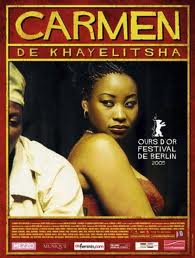
All praise to the 2005 South African version of Carmen of Bizet: U-Carmen e-Khayelitsha. This operatic is set entirely in a South African township, in Cape town, Khayelitsha, and it is entirely in Xhosa, one of South Africa’s main languages! Thrilled is a word that cannot explain my joy… In all honesty, I was amazed to see an entire opera entirely set in Africa, with African actors. A modern-day Carmen, the film carries the energy known to belong to South African singers. These authentic voices shed a new light on opera, and bring in a full South African touch. It brings out the dynamic heat of township life through the exciting combination of a violent gangster tale intertwined with an almost supernatural love story. As it unfolds, it explores the issue of the position of a strong woman in a male-dominated society, the issue of wealth and fame, and abuser and victim. I am sure Georges Bizet himself would have been stunned by director Mark Dornford-May’s rendition of his work. It definitely deserved all the awards it got, among which the 2005 Golden Bear at the Berlin film festival.














 African Heritage