Charité bien ordonnée commence par soi-même / Charity starts at home

Leopard

On ne prête pas la porte de sa maison au voisin, quand le léopard est aux alentours (Proverbe Burundais – Burundi). – On cherche quand même à se protéger d’abord soi-même.

You do not lend your door to the neighbor, when the leopard is nearby (Burundi proverb – Burundi). – We try to protect ourselves first.

African Countries are Uniting to Pass a Resolution to have Colonial Era Crimes Recognized

Algerian War Collage (Source: Wikipedia)

This is a recurring issue, but this time, African countries, are uniting to challenge the status quo, and ask for justice and reparation for victims of colonialism. They met in Algiers, the capital of Algeria this past week to pass a resolution to recognize the colonial era hurts. The choice of Algeria as a summit holder is no coincidence, as French forces committed some of the worst atrocities in the country during the colonial era, including nuclear tests which decimated entire villages; Algerians fought a bloody war which lasted 8 years between 1954 to 1962 to win independence. The death toll is estimated at over 1.5 million Algerians who lost their lives due to the barbary of France.

As stated before, African countries need to become stronger for their voices to be heard, and one way for this to happen is to present a strong united front. 

Excerpts below are from The Guardian.

=====

Under British guns, during the Mau Mau rebellion in Kenya
Under British guns, during the Mau Mau rebellion in Kenya in the 1950s

African leaders are pushing to have colonial-era crimes recognised, criminalised and addressed through reparations.

At a conference in the Algerian capital, Algiers, diplomats and leaders convened to advance an African Union resolution passed at a meeting earlier this year calling for justice and reparations for victims of colonialism.

Algerian foreign minister Ahmed Attaf said Algeria’s experience under French rule highlighted the need to seek compensation and reclaim stolen property.

A legal framework, he added, would ensure restitution is seen as “neither a gift nor a favour”.

Africa is entitled to demand the official and explicit recognition of the crimes committed against its peoples during the colonial period, an indispensable first step toward addressing the consequences of that era, for which African countries and peoples continue to pay a heavy price in terms of exclusion, marginalisation and backwardness,” Attaf said.

Hanging of Chagga men by the German Colonial Government ca 1890s – 1900 (Source: Wikipedia)

… [At] the African Union’s February summit, … leaders discussed a proposal to develop a unified position on reparations and formally define colonisation as a crime against humanity [about time!].

The economic cost of colonialism in Africa is believed to be staggering, with some estimates in the trillions. European powers extracted natural resources often through brutal methods, amassing vast profits from gold, rubber, diamonds and other minerals, while leaving local populations impoverished.

… Earlier in November, … Caribbean governments have also been calling for recognition of the lasting legacy of colonialism and enslavement, and for reparative justice from former colonisers, including a full formal apology and forms of financial reparations.

So Long to Jimmy Cliff, the Author of Many Rivers to Cross

Jimmy Cliff (Source: Dancehallmag.com)

One of Reggae’s greatest known artists, Jimmy Cliff, passed away yesterday. The author of Many Rivers to Cross, I can see Clearly Now, or The Harder They Come, or Vietnam, and many more, has joined the ancestors… they must be all singing today. My favorite of Cliff’s songs has always been “I can See Clearly Now”, for it is a deep message of hope and renewal; it was the cover of the 1993 movie Cool Runnings soundrack.

Jimmy Cliff was born James Chambers in 1944 in St James parish in Jamaica in a family of nine children; he was the eighth child. In terms of music, he was self-taught, started singing at age 6 in the church choir, later started writing his own songs, and wrote his first song, I Need a Fiancée, on a guitar made with bamboo. By the age of 14, he moved to Kingston, the capital, and took the surname Cliff to express the heights he intended on reaching. In 1965, he moved to London, where it took a while for his music to take off, until his 1969 single Wonderful World, Beautiful People, and then the politically charged Vietnam, which Bob Dylan called “the best protest song ever written.” In 1986, he told Reggae archivist Roger Steffens, “The essence of my music is struggle. What gives it the icing is the hope of love.”

Flag of Jamaica

Over the years, Cliff has collaborated with some of the greatest artists of this earth, from Bob Marley, The Rolling Stones, Bruce Springsteen, Sting, Elton John, UB40, Kool & the GangElvis CostelloWyclef Jean, and countless others. He is the only other Jamaican, after Bob Marley, to have been inducted in the Rock and Roll Hall of Fame.

Throughout his career, Cliff expressed his deep love for Africa which he described as his ancestral home, and his music inspired generations of musicians in Africa and beyond. His themes of liberation, struggle, and hope mirrored African struggles against colonialism and apartheid. He also always valued African culture singing on stage and showcasing African clothing with style.

Below are the lyrics of my favorite, I can see clearly now

I can see clearly now the rain is gone

I can see all obstacles in my way

Gone are the dark clouds that had me blind

It’s gonna be a bright (bright) 

Bright (bright) sunshiny day

It’s gonna be a bright (bright)

Oh, yes, I can make it now the pain is gone

All of the bad feelings have disappeared

Here is the rainbow I’ve been praying for

It’s gonna be a bright (bright)

Bright (bright) sunshiny day

(Ooh) Look all around, there’s nothing but blue skies

Look straight ahead, there’s nothing but blue skies

Experience

Les oreilles grandissent, mais jamais plus haut que la tête (Proverbe Dogon – Mali).

The ears grow, but never higher than the head (Dogon proverb – Mali).

The Importance of the Timbuktu’s Manuscripts and their Return

Manuscripts a Tombouctou (Mali) montrant de l'astronomie et mathematique
Manuscripts a Tombouctou (Mali) montrant de l’astronomie et mathematique

The Timbuktu’s Manuscripts are Returning Home to their rightful owners, after over 10 years away. It is so beautiful that the families who own these multi-centennial parts of African history get to have them back as it is not only part of their heritage, but ours also, and we are thankful for them to have protected throughout the centuries.

At the Ahmed Baba Institute in Bamako, people have been actively working on digitalizing all the manuscripts for humanity’s sake. These challenge the eurocentric views that “Africans have not entered enough in history” as the former French president Sarkozy said, even though many scholars from around the world used to travel to Timbuktu to find the best teachers. Through these manuscripts, we discover brilliant scholars, doctors, lawmakers, astronomers, mathematicians, geologists, and much more. After all, Timbuktu, was one of the world’s first and oldest university.

Excerpts below are from Africanews, and check out the Google Arts & Culture (Timbuktu Manuscripts now Available OnlineThe Lost Libraries of Timbuktu).

=====

Timbuktu from a terrace by Heinrich Barth 1858

Among the manuscripts are medical texts, legal rulings, letters, astronomical notes and chronicles of West African empires.

In some pages, scholars debate whether smoking tobacco was moral or forbidden.

In others, officials urge reducing dowries so poorer men could marry.

Marginal notes record earthquakes and local events long forgotten elsewhere.

Sane Chirfi Alpha is the founding member of SAVAMA DCI, which is a local nonprofit organisation dedicated to the safeguarding, preservation, and promotion of the ancient Timbuktu manuscripts. He says the collection reveals a depth of scholarship that challenges assumptions about the region’s past.

According to old documents, there were doctors here in Timbuktu who performed surgery to treat cataracts. The same manuscript also says that a doctor from Timbuktu saved the French throne. The crown prince was sick, and French doctors could not cure him. It was the doctor from Timbuktu who cured him.”

…  One important tradition still documented in many manuscripts is the chain of teaching, where scholars recorded who taught whom through generations.

Dr Mohamed Diagayaté, general director of the Ahmed Baba Institute says: “When a student finishes studying with a scholar, that scholar gives him a certificate saying he has taught him a subject, which the student has mastered. The certificate also says that the student learned it from a certain scholar, and that this scholar learned it from another scholar, going right back to the person who wrote the original document.

Great Britain and South Africa hand back Ghanaian Royal Artefacts

Asantehene Otumfuo Osei Tutu II (Source: Ghanaweb.com)
Over 130 Ghanaian royal artefacts were returned this week to the rightful owner, the Asantehene (king) Otumfuo Osei Tutu II of the Asante people from Ghana. These were returned by Great Britain and South Africa. The 130 objects include gold and bronze artefacts, drums, royal regalia and ceremonial gold weights, some of which were looted during colonial times by Great Britain, while others were bought on the open market. The items date from the 19th and early 20th centuries. The handover took place at the Manhyia Palace in Kumasi, the seat of power of the Asante kingdom. Unlike the last time, these appear to be a ‘real‘ return and not a loan (UK Museums “Long-term Loan” looted Asante Gold Artifacts to Ghana)!!! Let’s pray it is a real return with no hidden clause!

Excerpts below are from BBC.

=====
Map and Flag of Ghana
Ghana’s Asante king has welcomed the return of 130 gold and bronze artefacts from the UK and South Africa some of which were looted during colonial times and others bought on the open market. The items included royal regalia, drums and ceremonial gold weights, dating back to the 1870s – and reveal the cultural role gold played in Asante society. Twenty-five of the pieces were donated by British art historian Hermione Waterfield and the rest by South African mining company AngloGold Ashanti. Handing over the pieces at a ceremony at the Manhyia Palace, in the city of Kumasi, officials from AngloGold Ashanti said the gesture was made as an act of cultural respect and reconciliation. … gifts included a wooden drum looted during the 1900 siege of Kumasi by British colonial forces. … British soldiers were involved in a series of conflicts in the late 19th Century in what were called the Anglo-Asante wars. The palace of the king, or Asantehene, was plundered twice. The call by African countries for the return of looted items has been met with some success in recent years – though some items are only on loan. Last year, 32 looted artefacts went on display at the Manhyia Palace Museum as part of a three-year loan agreement between two British museums – the Victoria & Albert Museum (V&A) and British Museum – and the Asante king. …

Les colibris dans la sagesse Sotho / Hummingbirds in Sotho Wisdom

Là où il y a des colibris, il y a aussi de l’eau (Proverbe Sotho -Lesotho, Afrique du Sud). – Pas de fumée sans feu.

Where there are hummingbirds, there is also water (Sotho proverb – Lesotho, South Africa). – No smoke without fire. 

African Countries are Among the Most Vulnerable to Land Grabbing

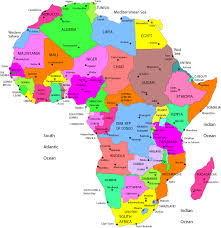
Map of Africa

The German platform Statista published a study titled, “Countries Most Vulnerable to Land Grabbing.” Land grabbing refers to a large-scale acquisition of land, often by powerful entities, multinationals, corporations, governments, usually foreigners and frequently involving unethical or exploitative practices. They involve the purchase or lease of massive lands mostly in developing countries. These land-grabs often raise high human issues, such as lack of compensation of the locals, removal of local populations from their lands, and environmental degradation.

Map of the DRC
Map of the DRC

From Statista’s study, the countries most at risk of land grabs are, no surprise, in Africa and Asia. Out of the 13 countries on the top list, 8 out of the 13 are African. The Democratic Republic of Congo (DRC) tops the list, followed by Cameroon, the Republic of Congo, Mozambique and South Sudan. Liberia and Cameroon have sold the most: 14.6 % of the country of Liberia is in the hands of foreigners, while 8.5% of Cameroon is, so about 1.6 million hectares and 4 million hectares respectively. For countries like DRC or South Sudan, one could understand as there were wars in the country. But what about Cameroon? To be 3rd on the list, and have 4 million hectares (40,000 km²) of the country in the land of foreigners is crazy… To put it in perspective, 4 million hectares is roughly the size of Netherlands, Switzerland, or Denmark (excluding Greenland). Thus, the government of Cameroon has ceded land the size of the Netherlands to foreign interests between the years 2000 and 2024. This is without counting the ones ceded since independence… This is all done without the populations’ consent, and the countries almost get nothing, if not pennies? In Cameroon, majority of the companies are French, but there are also Chinese, American and more. As we saw in the case of Niger, or Cameroon with Safacam for instance, which has been there 130 years, but the road there is impracticable – they can grab everything, without even giving simple things like roads to the locals!

Map of Cameroon, with the capital Yaoundé

The Statisca survey goes on to indicate that the land acquired by foreign investors in Cameroon is primarily used for logging, mining, and industrial agriculture, such as palm oil production.

This is why African governments should be transparent, and expose every contract that they sign in our names and our children’s names so we know what is going on. African Governments should make Contracts Public to their Populations! They should take example on King Moshoeshoe I who banned the sale of the land of his ancestors to foreign investors. We should have a thing similar to the DOGE website to see all contracts!!! Moreover, if there is a call for contracts, how about our governments also open the call to locals? There are many Africans with great ideas!

Most Vulnerable Countries to Land Grabbing (Source: Statista – Banque Mondiale, Land Matrix)
 

Foreign Access to Property Prohibited in Lesotho in 1859

King Moshoeshoe I of Basutoland

As I see the sale of African lands to multinationals for pennies, or in some cases loans for 20-30-50 years and even 100 years, or like in Kenya (and certainly many other places) for 999 years (Did You Know about the 999-year Lease granted to Europeans in Kenya ?), I cannot help but think of King Moshoeshoe I of Lesotho who, in 1859, prohibited the sale of Sotho land to foreigners. This was a big NO. No ancestral lands could be sold to foreigners. Our current African leaders should learn from our forefathers; they, like Moshoeshoe I of Lesotho, or Gungunyane: the Lion of Gaza or the Last African King of Mozambique, or Mirambo: the Black Napoleon of Tanzania, understood the importance of our lands!  The law below also gives a glimpse on the justice system as implemented in the Sotho kingdom under its first king. This is a historical document set in its time to be read with the protection of the integrity and protection of Sotho land in mind.

Below is the access to property law signed by King Moshoeshoe I in 1859 on his homeland of Lesotho. The original can be found in Les Africains, Tome 8, p. 254, ed. Jaguar. Translated to English by Dr. Y., Afrolegends.com

======

Map of Lesotho

Access to property: prohibited for traders, “White or colored”, 1859 law

I, Moshoeshoe, for any trader, whoever he may be, already present in my country, and for anyone who might come to trade with the Basutos ; my word is this :

Trading with me and my tribe is a good thing, and I hope it will grow.

Any merchant who wants to open a shop must first obtain my permission. If he builds a house, I do not give him the right to sell it.

Moreover, I do not give him the freedom to plow fields, but only to cultivate a small vegetable garden.

The merchant who imagines that the place where he stays belongs to him, must abandon this idea, otherwise he will leave; for there is no place on my soil that belongs to the Whites, and I have never given a place to a White, whether verbally or in writing.

Furthermore, any merchant who comes here with a debt, or who contracts one while he is on my soil, whatever his debt may be, if he is brought to me, I will make an inquiry into him in our court of justice in order to be able to settle the matter ; and the debt will be repaid in the way the Basutos repay their debts. But the plaintiff must appear before me, and the debtor as well, so that justice may be done. […]

Meta Bows to Nigeria and Pays for Privacy Infraction

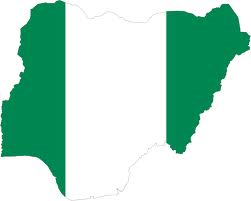
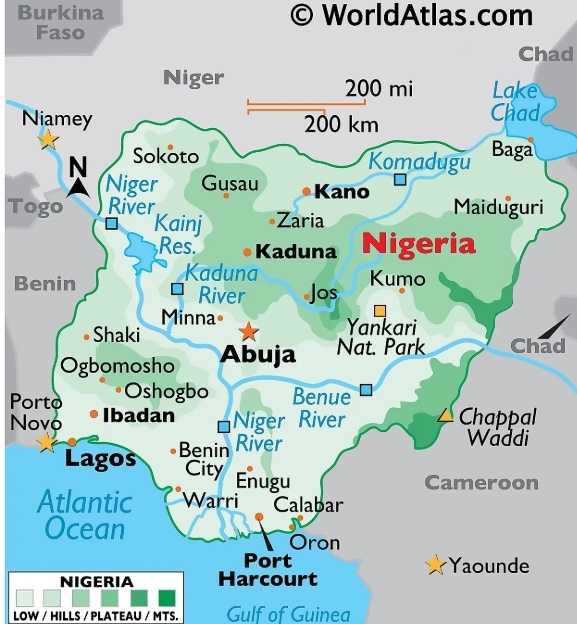
Flag and map of Nigeria

Another news which has almost gone unnoticed is the fact that the Nigerian government has fined Meta, the American tech giant, for breaching privacy laws; and Meta has decided to settle out of court to the fine!!! This is a major development for an African country, and then in general in an era where these giants own our data and dispose as they see fit. Last year, the Nigerian government had handed Meta a fine of $220 million, saying its investigations found “multiple and repeated” violations of the country’s data protection and consumer rights laws on Facebook and WhatsApp. Meta was accused of using Nigerians’ data for ads without their clear permission, collecting data from people who don’t even use its platforms, failing to file required reports, and sending user data abroad without proper approval.

This October, after months of legal battles, Meta Platforms Inc., the company that owns Facebook, Instagram, and WhatsApp, has agreed to settle the case out of court and to pay $32.8 million to Nigeria’s Data Protection Commission for breaking the country’s data privacy rules. In all honesty, the sum is meagre … but it is a step forward (?). The Data Protection Commission has now ordered Meta to update its privacy policy, carry out local reviews of how it uses data, and always get user consent before using personal data for targeted advertising.

It’s like the Tech-giant thought that it was the usual far west in Africa, and business as usual for them and the way they treat Africans with the usual condescending; they thought they could do as they pleased with Nigerians’ information. Many experts think that this case sets a precedent and could influence how big tech companies handle user data across Africa as more countries introduce stronger privacy laws.

Enjoy excerpts below from Africanews.

=====

Meta Platforms Inc., the parent company of Facebook and Instagram, is set to settle a $32.8 million data privacy fine with the Nigerian government, marking a significant moment for digital rights enforcement in Africa.

The fine was imposed by Nigeria’s Data Protection Commission (NDPC) in February 2025 for alleged violations of the Nigeria Data Protection Act. Meta was accused of using Nigerian users’ data for behavioural advertising without explicit consent, processing personal data of non-users, failing to file mandatory compliance audits, and transferring user data abroad without authorisation.

The settlement, expected to be finalised by the end of October 2025, comes after months of legal disputes. Meta initially challenged the fine and the process but moved toward an out-of-court agreement, signalling willingness to comply with Nigeria’s growing regulatory demands.

This case highlights Nigeria’s assertiveness in regulating global tech companies and could set an influential precedent for data privacy enforcement across African markets.

….