A blog about African history, and heritage, through audio and video files.
Author: Dr. Y.
I am an African in love with the history of the world, and particularly that of Africa. I am a child of love, an artist, a scientist, a lover, a friend, a human.
I am in love with nature and beautiful things, art, history, geography, travel, dance, food, science, and technology, and much more.
Cote d’Ivoire wins the African Cup of Nations 2015 (Source: BBC)
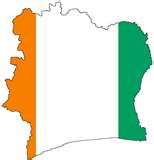
Yesterday’s final was the culmination of years of hard work for the so-called golden generation of Ivorian footballers. Yes, yesterday, Cote d’Ivoire defeated Ghana in the finals of the Africa Cup of Nations in penalty kicks. The Elephants of Côte d’Ivoire had been a strong team on the African continent for many years, and this generation was meant to win at some point. This was the last chance for many members of the Elephants team. So sad that Didier Drogba, one of its key players for so many years, could not be amongst his teammates to raise that trophy as well, for he made us proud for so long. My hat goes out to Yaya Touré, Kolo Touré, Gervinho, Boubacar Barry, Wilfried Bony, and all the other team players. The hero of the game for Côte d’Ivoire, was their goalkeeper Boubacar Barry who had replaced the regular keeper, was in pain throughout, but scored the winning penalty after making a crucial save from the Ghanaian keeper.
African Cup of Nations’ Trophy
Truly, Ghana was the better of both teams for the first 120 minutes with more chances of scoring, but penalty kicks decided otherwise. It was actually quite a disappointing final to watch: no real outstanding moments from both sides. However, we raise our hats to all members of the Ghanaian squad, and hope to see them again at the next CAN, and in the finals. Thanks for a good cup.
If Ghana wins, this will be their fifth trophy, and they will be the second most titled winner of the CAN, after Egypt; right now, they are tied with Cameroon having won the trophy 4 times since its creation. If Côte d’Ivoire wins, this will be their second win in the history of the cup. Will Sunday’s final be a remake of 1992? Or will the Black Stars of Asamoah Gyan and the two Ayew brothers claim victory over the Elephants of Côte d’Ivoire?
There will be some Brazzaville–Kinshasa rivalry as the two Congos are set to face each other in the first quarter final on Saturday, while the host Equatorial Guinea will take on Tunisia. Ghana and Guinea will face each other in the third quarter final, while Côte d’Ivoire will meet Algeria in the last one.
African Cup of Nations’ Trophy
In soccer, all teams have the same chances, but very often, experience and/or good discipline/organization always pays. Algeria, as Africa’s top team in the FIFA world ranking, is a big name this year; even though they did not perform so well in the first round, they are expected to do better. However the Elephants of Cote d’Ivoire have the most experience at this stage of the competition. That will be a good game to watch. The same story applies between Ghana and Guinea: Ghana has been the better of the two teams and also has a more experienced squad with Asamoah Gyan at their helm. Between the two Congos, a slight edge is given to DRC with their secret weapon in the person of Yannick Bolasie. Between Equatorial Guinea and Tunisia, any guess is a good one, even though having the host nation advance further in a competition is always a good thing. With this said, which team do you think will advance to the semi-finals, and which team will lift this year’s African Cup of Nations’ trophy?
ONCE there was a man who had an old dog, so old that the man desired to put him aside. The dog had served him very faithfully when he was still young, but ingratitude is the world’s reward, and the man now wanted to dispose of him. The old dumb creature, however, ferreted out the plan of his master, and so at once resolved to go away of his own accord. After he had walked quite a way he met an old bull in the veldt.
“Don’t you want to go with me?” asked the dog.
“Where?” was the reply.
“To the land of the aged,” said the dog, “where troubles don’t disturb you and thanklessness does not deface the deeds of man.”
Bull
“Good,” said the bull, “I am your companion.”
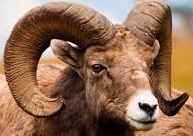
The two now walked on and found a ram. The dog laid the plan before him, and all moved off together, until they afterwards came successively upon a donkey, a cat, a cock, and a goose. These joined their company, and the seven set out on their journey.
Ram
Late one night they came to a house and through the open door they saw a table spread with all kinds of nice food, of which some robbers were having their fill. It would help nothing to ask for admittance, and seeing that they were hungry, they must think of something else. Therefore the donkey climbed up on the bull, the ram. On the donkey, the dog on the ram, the cat on the dog, the goose on the cat, and the cock on the goose, and with one accord they all let out terrible (threatening) noises (crying). Continue reading “The World’s Reward”→
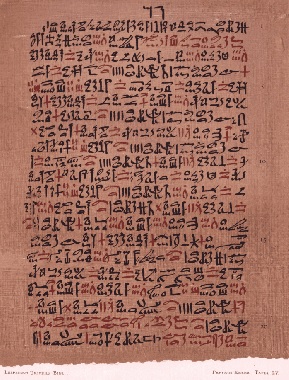
Today, we will be talking about the Papyrus Ebers or Ebers Papyrus, which is among the oldest and mostimportantmedicalpapyri of Ancient Egypt and of the world. This papyrus is a medical papyrus of herbal knowledge, and dates back to c.1550 BC. It is believed to have been copied from earlier texts. It is 110-page scroll, and is about 20 m long. It is among the world’s oldest preserved medical documents.
From c. 33rd century BC until Persian invasion in 525 BC, Egyptian medicine remained one of the world’s most advanced, and was used in some non-invasive surgery, setting of bones, and an extensive set of pharmacopeia. Even Homer of the Odyssey recognized this when he said, “In Egypt, the men are more skilled in medicine than any of human kind” and “the Egyptians were skilled in medicine more than any other art“.
Georg Ebers
The Papyrus Ebers is one of the oldest medical papyri still well-preserved. It was given the name Ebers, after the man who purchased it in Luxor (Thebes) in the winter of 1873-74, Georg Ebers, a German Egyptologist and novelist. It is written in hieratic Egyptian writing and preserves the most voluminous record of ancient Egyptian medicine known. It contains about 700 magical formulas and remedies, for things such as asthma, evacuation of belly, bowels, birth control, guinea worms (this remedy is still the standard practice today, over 3500 years later), and even cancer. There is also a chapter titled Book of Hearts, which deals with mental disorders such as depression and dementia.
Ebers Papyrus – remedy for asthma
One of the most common remedies described in the papyrus is ochre, or medicinal clay, which was prescribed for intestinal and eye complaints. Yellow ochre was prescribed as a remedy for urological complaints.
The Papyrus Ebers is currently kept at the Leipzig University‘s library (Ebers was chair of the Egyptology department there) in Germany. If you are in Leipzig, go visit. Please check out the Ancient Egyptian Medicine website, which talks in details not only about the Ebers Papyrus, but also about other famous Papyri such as the Edwin Smith Papyrus (c. 1600 BC), the Kahun Gynecological Papyrus (c. 1800 BC), and herbal remedies, and nutrition of Ancient Egypt.
I had to share with you this Feb. 16, 1959 Time Magazine gem of an article on President Sekou Toure of Guinea, the first country to say ‘NO’ to France. As you will see, even the so-called ‘dictators’ of the world have graced the cover of Time Magazine when they were still ‘deemed’ good. Some of the article is a bit a mockery of Africans for wanting independence from their colonial masters, as it is referred to as ‘haste’ in the article (could you really have faulted Africans for wanting freedom?). Enjoy! The full article can be found at: WebGuinee.net. Below are a few words.
==============
Finally, Sékou Touré, 37 President of the new Republic of Guinea, a trim figure in a European busine suit, rose and raised his arm. “Vive l’indépendance!” he shouted, and three times the crowd roared back, “Vive l’indépendance!” “Vive l’Afrique!”he shrieked in a voice close to frenzy. Once again, the cry was three times repeated. There was no reason for Touré to do more. The crowd had seen and heard him, and that was enough.
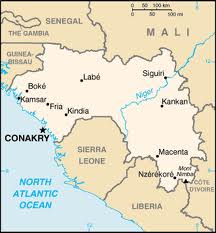
Guinea-Conakry
Broad-shouldered and handsome. Sékou Touré is as dynamic a platform performer as any in all Black Africa. He is the idol of his 2,500.000 people, and the shadow he casts over Africa stretches far beyond the borders of his Oregon-sized country. As the head of the only French territory to vote against De Gaulle‘s constitution and thus to choose complete independence, he has been suddenly catapulted into the forefront of the African scene. ….
Part dedicated idealist and part ruthless organizer-perhaps the best in Black Africa-Guinea’s Touré should have problems enough just coping with the disruption that inevitably came with independence. But he, too, has dreams as wide as a continent. “All Africa,” says he, “is my problem.”
Samori Toure holding the Coran
In a sense, he was born in the right place and with the right ancestry to favor a big role. Though Africa was, until the Europeans came, the continent that could not write, it had known its times of glory. Guinea was once part of the powerful Mali Empire that stretched from the French Sudan, on the upper reaches of the Niger, to just short of West Africa’s Atlantic Coast. When its 14th century ruler, the Mansa (Sultan) Musa, made his pilgrimage to Mecca, he traveled with a caravan of 60,000 men, and among his camels were 80 that each bore 300 lbs. of gold. … he turned the fabled city of Timbuktu into a trading center and a refuge for scholars. … But the legend lived on of the warrior Samory, whom Sékou Touré claims as his grandfather.
Sekou Toure, one of Samori Toure’s grandson
When De Gaulle stopped off at Conakry on his swift tour of Africa before the referendum, Touré thundered in his presence: “We prefer poverty in liberty to riches in slavery.” Angrily, De Gaulle canceled a diner in time he was to have had with Touré, and the split was final. A few weeks later, 95% of the people of Guinea voted no to the De Gaulle constitution.
We feared for our beloved Africa Cup of Nations (CAN) when Morocco, the host declined to host! It was like, what? Why wouldn’t you want to host an event you signed up to host years ago? Thankfully, Equatorial Guinea stepped in to host the 30th edition, CAN 2015, 2 months to the event. We raise our hats to the host country, Equatorial Guinea, because it is a real feat to organize such a continental event in such short notice. So, for the next month, we will all be vibrating to the rhythm of the African Cup of Nations. We will watch some of Africa’s most renowned teams, and some not so well-known, and some of the continent’s best players display their greatness. We hope that every game will be amazingly good, and that every single player on the field will give their very best for their country. Yes… the African Cup of Nations is truly an African event to showcase the grace, endurance, and play of Africans on their continent. What more to applaud?


















 African Heritage