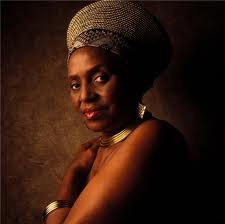
“I look at an ant and I see myself: a native South African, endowed by nature with a strength much greater than my size so I might cope with the weight of a racism that crushes my spirit.” Miriam Makeba


“I look at an ant and I see myself: a native South African, endowed by nature with a strength much greater than my size so I might cope with the weight of a racism that crushes my spirit.” Miriam Makeba
 Celui qui porte des souliers, ne craint pas les épines (Proverbe Ewe – Ghana, Togo).
 The one who wears shoes, does not fear thorns (Ewe proverb – Ghana, Togo)

This article is from the BBC. I had to share the article in its entirety. Celebrate the Ghana Satellite Earth Station. Check out also this article, and this very good one from The Telegraph.
==========
Ghana has successfully launched its first satellite into space.
GhanaSat-1, which was developed by students at All Nations University in Koforidua, was sent into orbit from the International Space Center.
Cheers erupted as 400 people, including the engineers, gathered in the southern Ghanaian city to watch live pictures of the launch. The first signal was received shortly afterwards.
It is the culmination of a two-year project, costing $50,000 (£40,000).
It received support from the Japan Aerospace Exploration Agency (JAXA).
The satellite will be used to monitor Ghana’s coastline for mapping purposes, and to build capacity in space science and technology.
Project coordinator Dr Richard Damoah said it marked a new beginning for the country.
“It has opened the door for us to do a lot of activities from space,” he told the BBC.
He said it would “also help us train the upcoming generation on how to apply satellites in different activities around our region.”
“For instance, [monitoring] illegal mining is one of the things we are looking to accomplish.”

It’s been a while since I saw this movie, but I had to share the South African rendition of the Lord’s prayer from the 1992 movie Sarafina!. The movie centered on the Soweto Uprisings of 1976, in opposition to the implementation of Afrikaans as the language of instruction in schools. I loved it then, and I still love it today! Enjoy!
Today, we will talk about Leopold II, the Belgian King, who killed millions of Congolese. Most people know about Hitler. Before Hitler, there was Leopold II. Very few know about this, but Leopold II should be known as a Hitler, or even worse than Hitler, but then again, that is if people consider Congolese (Black people) as people. He forced Congolese into hard labor, so hard that some died from exhaustion, and if they rebelled they were maimed, killed, or enslaved. It is said that he must have executed and maimed over 15 million people! Check out these websites: Leopold II, When you kill 10 million Africans you aren’t called Hitler, and this article from The Guardian.

Here are some selections (Chapters 4 – 6) from the final act of the Berlin Conference signed on 26 February 1885. For the entire document, find it here in English and French. For both of these versions, we thank the work of the South African History Online.
========
CHAPTER IV
ACT OF NAVIGATION FOR THE KONGO
Article XIII
The navigation of the Kongo, without excepting any of its branches or outlets, is, and shall remain, free for the merchant ships of all nations equally . . . the subjects and flags of all nations shall in all respects be treated on a footing of perfect equality . . . no exclusive privilege of navigation will be conceded to Companies, Corporations, or private persons whatsoever . . .
CHAPTER V
ACT OF NAVIGATION FOR THE NIGER
 Article XXVI
The navigation of the (River) Niger, without excepting any of its branches and outlets, is and shall remain entirely free for the merchant ships of all nations equally . . . [both Britain and France which had parts of the region of the Niger under protectorate status also undertook to apply the principle of free trade in their territories].
CHAPTER VI
REGARDING NEW OCCUPATIONS ON THE COASTS OF AFRICA
Article XXXIV
Any power which henceforth takes possession of a tract of land on the coasts of the African Continent outside of its present possessions, or which, being hitherto without such possessions, shall acquire them and assume a protectorate. . . shall accompany either act with a notification thereof, addressed to the other Signatory Powers of the present Act, in order to enable them to protest against the same if there exists any grounds for their doing so.

Article XXXV
The Signatory Powers of the present Act recognize the obligation to insure the establishment of authority in the regions occupied by them on the coasts of the African Continent sufficient to protect existing rights, and, as the case may be, freedom of trade and of transit under the conditions agreed upon.
Article XXXVII
The Powers signatory to the present general Act reserve to themselves the right of eventually, by mutual agreement, introducing therein modifications or improvements the utility of which has been shown by experience ………………………………..
Done at Berlin, the 26th day of February, 1885.

The 30 June 1960 marks the independence of the then Congo-Belge (Democratic Republic of the Congo (DRC)) from Belgium. We will celebrate DRC’s independence today with a poem by one of Congo’s proud sons, none other than its first democratically elected Prime Minister Patrice Lumumba, “Pleure, Ô Noir Frère bien-aimé (Weep, beloved black brother)”. This poem was published in the journal INDEPENDANCE, organe du M.N.C., en septembre 1959 (Cf. La pensée politique de Patrice LUMUMBA, textes et documents recueillis par Jean VAN LIERDE, Présence Africaine, 1963, p. 69-70). Translated to English by Lillian Lowenfels and Nan Apotheker.
| Pleure, O Noir Frère bien-aimé
O Noir, bétail humain depuis des millénaires
|
Weep, Beloved Black Brother
O black man, beast of burden through the centuries,
|
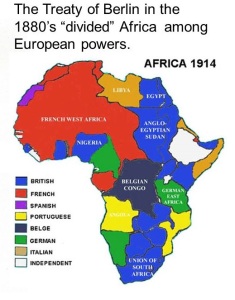
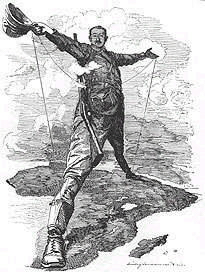
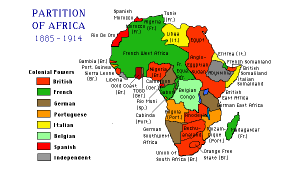
Today I would like to talk about the atrocity which divided Africa in 10,000 pieces… you know, the one known as the Berlin Conference. How the livelihood of millions of lives could be decided by some foreigners at some tables thousands of kilometers away is beyond me! In reality, the Berlin Conference drafted from 1884 to 1885 is still in action today, over 132 years later, and that is why it is important to talk about it today. This conference regulated European colonization and trade in Africa during the New Imperialism period. Organized by Otto von Bismarck, first Chancellor of Germany, its outcome, the General Act of the Berlin Conference, is seen as the formalization of the Scramble for Africa. This conference officialized European colonization, and eliminated or overrode existing forms of African autonomy and self-governance. I print here a selection from the final 1885 Berlin Act from Chapter 1-3, and I will print the rest later.
========
Selections from the 1885 Berlin Act
Her Majesty the Queen of the United Kingdom of Great Britain and Ireland, Empress of India; His Majesty the German Emperor, King of Prussia; His Majesty the Emperor of Austria, King of Bohemia, etc, and Apostolic King of Hungary; His Majesty the King of the Belgians; His Majesty the King of Denmark; His Majesty the King of Spain; the President of the United States of America; the President of the French Republic; His Majesty the King of Italy; His Majesty the King of the Netherlands, Grand Duke of Luxemburg, etc; His Majesty the King of Portugal and the Algarves, etc; His Majesty the Emperor of all the Russias; His Majesty the King of Sweden and Norway, etc; and His Majesty the Emperor of the Ottomans,
WISHING, in a spirit of good and mutual accord, to regulate the conditions most favourable to the development of trade and civilization in certain regions of Africa, and to assure to all nations the advantages of free navigation on the two chief rivers of Africa flowing into the Atlantic Ocean;
BEING DESIROUS, on the other hand, to obviate the misunderstanding and disputes which might in future arise from new acts of occupation…on the coast of Africa; and concerned, at the same time, as to the means of furthering the moral and material well-being of the native populations;
HAVE RESOLVED, on the invitation addressed to them by the Imperial Government of Germany, in agreement with the Government of the French Republic, to meet for those purposes in Conference at Berlin, and have appointed as their Plenipotentiaries, to wit:
Who, being provided with full powers, which have been found in good and due form, have successively discussed and adopted:
And deeming it expedient that all these several documents should be combined in one single instrument, they (the Signatory Powers) have collected them into one General Act, composed of the following Articles:
CHAPTER I
DECLARATION RELATIVE TO FREEDOM OF TRADE IN THE BASIN OF THE CONGO, ITS MOUTHS AND CIRCUMJACENT REGIONS, WITH OTHER PROVISIONS CONNECTED THEREWITH
Article I
The trade of all nations shall enjoy complete freedom….
Article II
All flags, without distinction of nationality, shall have free access to the whole of the coastline of the territories above enumerated, to the rivers there running into the sea, to all the waters of the Congo and its effluents, including the lakes, and to all the ports situated on the banks of these waters, as well as to all canals which may in future be constructed with intent to unite the watercourses or lakes within the entire area of the territories described in Article I. Those trading under such flags may engage in all sorts of transport, and carry on the coasting trade by sea and river, as well as boat traffic, on the same footing as if they were subjects.
Article III
Wares, of whatever origin, imported into these regions, under whatsoever flag, by sea or river, or overland, shall be subject to no other taxes than such as may be levied as fair compensation for expenditure in the interests of trade, and which for this reason must be equally borne by the subjects themselves and by foreigners of all nationalities.
All differential dues on vessels, as well as on merchandise, are forbidden.
Article IV
Merchandise imported into these regions shall remain free from import and transit dues….
Article V
No Power which exercises or shall exercise sovereign rights in the abovementioned regions shall be allowed to grant therein a monopoly or favour of any kind in matters of trade.
PROVISIONS RELATIVE TO PROTECTION OF THE NATIVES, OF MISSIONARIES AND TRAVELLERS, AS WELL AS RELATIVE TO RELIGIOUS LIBERTY
Article VI
All the Powers exercising sovereign rights or influence in the aforesaid territories bind themselves to watch over the preservation of the native tribes, and to care for the improvement of the conditions of their moral and material well-being, and to help in suppressing slavery, and especially the slave trade. They shall, without distinction of creed or nation, protect and favour all religious, scientific or charitable institutions and undertakings created and organized for the above ends, or which aim at instructing the natives and bringing home to them the blessings of civilization.
Christian missionaries, scientists and explorers, with their followers, property and collections, shall likewise be the objects of especial protection.
Freedom of conscience and religious toleration are expressly guaranteed to the natives, no less than to subjects and to foreigners. The free and public exercise of all forms of divine worship, and the right to build edifices for religious purposes, and to organize religious missions belonging to all creeds, shall not be limited or fettered in any way whatsoever….

CHAPTER II
DECLARATION RELATIVE TO THE SLAVE TRADE
Article IX
Seeing that trading in slaves is forbidden in conformity with the principles of international law as recognized by the Signatory Powers, and seeing also that the operations, which, by sea or land, furnish slaves to trade, ought likewise to be regarded as forbidden, the Powers which do or shall exercise sovereign rights or influence in the territories forming the Conventional basin of the Congo declare that these territories may not serve as a market or means of transit for the trade in slaves, of whatever race they may be. Each of the Powers binds itself to employ all the means at its disposal for putting an end to this trade and for punishing those who engage in it.
CHAPTER III
DECLARATION RELATIVE TO THE NEUTRALITY OF THE TERRITORIES COMPRISED IN THE CONVENTIONAL BASIN OF THE CONGO
Article XII
In case a serious disagreement originating on the subject of, or in the limits of, the territories mentioned in Article I, and placed under the free trade system, shall arise between any Signatory Powers of the present Act, or the Powers which may become parties to it, these Powers bind themselves, before appealing to arms, to have recourse to the mediation of one or more of the friendly Powers.
In a similar case the same Powers reserve to themselves the option of having recourse to arbitration….
IN TESTIMONY WHEREOF the several plenipotentiaries have signed the present General Act and have affixed thereto their seals.
DONE at Berlin, the 26th day of February, 1885
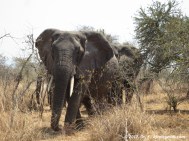
L’éléphant mange même les fruits du palmier borassus (Proverbe Mangbetu – République Démocratique du Congo (RDC)). – Un homme fort est capable de réaliser beaucoup.
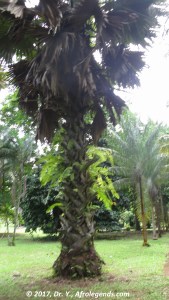
The elephant eats even the fruits from the Borassus palm tree (Mangbetu proverb – Democratic Republic of Congo (DRC)). – A strong man is able to achieve a lot.
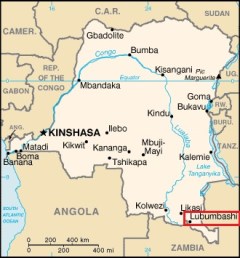
Have you ever wondered what the name of the second largest city of the Democratic Republic of the Congo (DRC), Lubumbashi, meant? Well, growing up, I always loved the sound of it as it rolled off the tongue: LU–BUM–BA–SHI: so full of power… so full of ummph, like thunder! So do you think the name has anything to do with power? or thunder?
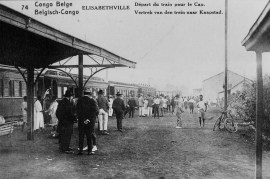
The area as it is known today has been inhabited for centuries, but the modern-day city itself was ‘founded’ by the Belgians in 1910 under the name of Élisabethville (sometimes Elizabethville, both in French, or Elisabethstad in Dutch), in honor of their queen Elisabeth, wife to king Albert I. It was affectionately referred to as É-Ville. It was the second city of the Belgian Congo, after Léopoldville. Élisabethville functioned as the administrative capital of the Katanga Province. It was also an important mining, commercial and industrial center, and a center of education and health services. The work and businesses related to the mines made Élisabethville the most prosperous region of the Congo during the final decade of Belgian rule. Today it is the mining capital of the entire country, with its production in copper, cobalt, zinc, gold, Tin, etc.

In 1965, Mobutu Sese Seko with his campaign to identify himself with African nationalism or “Zairianization” politics assumed power of Congo, which he renamed Zaïre. In this push, he renamed Élisabethville as “Lubumbashi” in 1966 and, in 1972 renamed the Katanga Province as “Shaba.” It was named Lubumbashi after the local river by the same name Lubumbashi. It is also called the copper capital. Copper mining in Katanga dates back over 1,000 years and mines in the region were producing standard sized ingots of copper for international transport by the end of the 1st Millennium AD.
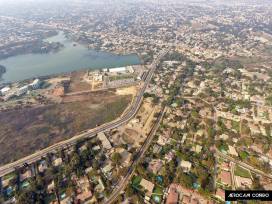
As was customary in sub-Saharan colonies, the city center of Élisabethville was reserved for the white (European-Only Neighborhoods in African Cities before Independence) population. This consisted mainly of Belgian nationals, but also British, Italian, and Jewish Greek communities. The black population lived initially in a so-called cité indigène called quartier Albert (now: Kamalondo), south of the city center and separated from the white city by a 700-metres-wide neutral zone. With population growth, new indigenous neighborhoods were created. These still form the main suburbs of present-day Lubumbashi: Kenia, Katuba, Ruashi. In addition to these 3, 4 more communes have been added to this day: Kamalondo, Kampemba, Lubumbashi, and la Commune Annexe.
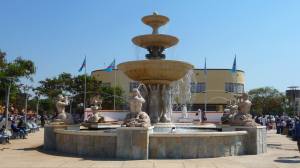
Today, the city of Lubumbashi is affectionately called by locals, L’shi or Lubum, and its inhabitants are known as the Lushois. French is the official language, but the main language spoken by most is Kiswahili. Lubumbashi lies at high altitude at about 1,208 meters (3,963 ft) above sea level, which gives rise to a cooler climate. It is a cosmopolitan city, with people from all over Congo, neighboring countries, and Europeans, Chinese, Americans, etc who mostly come for the mining industry; this has given rise to a gastronomical melting pot as well. The city is also host to one of Africa’s greatest soccer club: The TP Mazembe (Tout Puissant Mazembe). The club’s chairman is former Katanga governor Moïse Katumbi Chapwe. It is a vibrant city. To learn more about Lubumbashi, the cosmopolitan city named after its local river, check out the articles Lubumbashi urban mosaic, Presentation of Lubumbashi. Enjoy the video below on Lubumbashi, the mining capital of DRC!


 African Heritage