Africans, let us not Fall in the Trap of Democracy!

We have been reflecting on a word which has been used around the world to destabilize countries: the word “democracy.” This word has been used to impose treacherous regimes and sanctions upon “weaker” countries. By “weaker,” we basically mean those that used to be called “third-world” countries. The “global” world we are getting marched towards does not apply to all; there still needs to be some uniqueness which applies to local issues, needs, cultures, and people.
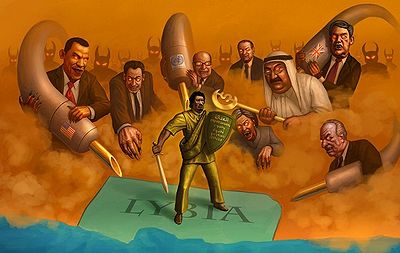
Libya, the Prey of the West

Over a decade ago, we wrote the article “Africans and the Trap of Democracy,” when NATO forces were bombing Libya. Reading it, almost every single word is still relevant today and can be applied to situations in so many countries on the African continent and beyond. Back then, we were shocked that so many Africans were applauding the actions of NATO using the word “democracy” … we hope that they can see what the destabilization of Libya has done to the rest of Africa, and that in reality the word “democracy” is used to fool Africans into hating those who actually work for Africa’s survival and its real independence. Libya under Khadafi was a prosperous country; Singapore, in Asia, under Lee Kuan Yew became one of the most successful economies in the world. There are so many dictatorships in Africa disguised under the name democracies where there are elections every few years and which are praised by the West because they serve their interests in Africa. Let us NOT fall into this trap called “democracy” in Mali, Niger, or Burkina Faso. Instead let us support our brothers of the Alliance of the Sahel (AES), and acknowledge that the continent with the first constitution in the world born in the Empire of Mali, the Kourougan Fouga, cannot learn about ways to govern itself from foreigners. The answer is within!

Enjoy! Africans and the Trap of Democracy

====

With the bombing of the presidential residence in Cote d’Ivoire by French forces for over a week, followed by the arrest of president Laurent Gbagbo, with the current intense bombing of Libya by NATO for the past 6 months, I cannot help but try to answer some of the same justifications used by Africans to approve the bombings by foreign troops on their neighbors’ countries, and ultimately on African soil. Any African who claimed and accepted that Cote d’Ivoire should be bombed by the French, shame on you! Any African who thought that the bombing of Libya was correct… shame on you! Any African who uses the same stupid phrase used by the West to abuse us: “… well Gbagbo had his day, he was in power for 10 years!… or Kadhafi was there 42 years!” Well my friend… Shame on you! Should democracy be imposed using bombs? Should democracy be imposed using warplanes, and Apache helicopters? Is it democracy to bomb the people you plan to help? Is it democracy to deliberately bomb civilian targets, hospitals, state televisions, homes, etc… to, like NATO said “protect civilians”? Was there not a peaceful solution? Was it so hard to re-count the votes in Cote d’Ivoire? Was it so hard to organize elections as Kadhafi asked? Why bomb? Why bomb? Why bomb?…

… I have not seen anywhere that the definition of democracy was “government imposed by external forces, for external forces, to crush the people of a country!” I am tired of this stupid debate the media-lies (CNN, BBC, France24, etc) always bring and which Africans always fall to: “this one is a democrat, and the other one is a dictator.” Please stop bothering people with the same rhetoric, and stop bothering people with your pseudo-democracies where nobody has the right to say anything. Frankly every other year when elections come around, don’t you ever wonder how come with all the bright politicians coming out of top schools, how come we always end up with only 2 (and somehow the worst of all)?

Burkina Faso’s Transition Government Gets a 5-year Confidence Vote by the People

Flag of Burkina Faso

Last Saturday, the people of Burkina Faso came out in a resounding form, via Civil society representatives, security and defence forces and lawmakers in a transitional assembly to approve a new charter which extends the transition government of Ibrahim Traoré, by 60 months starting on July 2, 2024. Thus, at the end of the 2-day national dialogue, Ibrahim Traoré has been given a vote of confidence for 5 more years, at the end of which he can also run for president when the elections take place. This charter also states that elections marking the end of the transition may be organized before this deadline if the security situation permits. As one can see, in a country which has been under attack by jihadist terrorists and whose territory is divided, security and territorial integrity is of utmost importance. [France to Withdraw Troops from Burkina FasoMali, Burkina Faso, and Niger Sign a Mutual Defence PactMali, Burkina Faso, and Niger all leave the ECOWASMali and Niger end Long-Standing Tax Treaties with France].

Now, Western media cry about democracy, and are calling this national dialogue consultation by the people of Burkina Faso, a slide away from democracy, yet they did not see a problem with Ukraine not holding elections given that it is currently a country at war.

Excerpts below are from Jurist News.

=====

Ibrahim Traore lays the foundation for the Thomas Sankara Mausoleum (Source: LeFaso.net)

Burkina Faso’s acting president Captain Ibrahim Traoré, who seized power following a 2022 coup, signed a new amended Transition Charter Saturday that extends the transition period to five years. The original charter called for the transition period to end in July 2024.

Article 22 of the new Transition Charter states that the duration of the transition is set at sixty months starting from July 2, 2024. The provision also states that elections marking the end of the transition may be organized before this deadline if the security situation permits. …

The amended Transition Charter in Burkina Faso also includes several new provisions. For instance, according to Article 5, Captain Traoré now holds the titles of President of Faso, Head of State, and Supreme Commander of the Armed Forces. Additionally, Traoré, along with the Prime Minister and the President of the Transitional Legislative Assembly, will be eligible to run in the presidential, legislative, and municipal elections organized to mark the end of the transition period.

Burkina Faso
Burkina Faso

An alarming pattern [alarming to the West] has emerged across West Africa where military forces have overthrown democratically-elected governments [more like puppet governments of the West], accusing them of breaking promises made to citizens. Burkina Faso has been caught up in this trend. In September 2022, the current military junta took power by ousting the previous military regime under Lt. Col. Paul Henri Sandaogo Damiba, which had itself seized control just eight months prior through a coup that removed President Roch Marc Kaboré from his elected position. Following the latest coup, Captain Traoré was appointed as the transitional president. …

The Vultures are Getting Ready

French flag

Today, we will introduce a new word: “Vulturing”! It is a word we thought of after the events of recent months, and let’s face it because of the New Scramble for Africa. The vultures are at it again, and honestly never stopped. About a month ago, on April 14 2024, a former Chief of Staff of the French army, General Francois Lecointre, announced in an interview to Le Figaro, that France and Europe, for their survival would have to proceed in an armed recolonization of Africa in the upcoming 10 years. To paraphrase, he said, “we cannot let these poor Africans live in chaos just on our doorstep… within a few years, Africans will have a population boom like no other continent [why do Africans having babies, bother them so much?] … Europe should act as a political entity that defends its own interests, including through military commitment… We must return and help these African countries [nobody asked for your help].”

The New Scramble for Africa (Source: Source: Dr Jack & Curtis for City Press, National Institute African Studies (NIAS))

Would we not call it “vulturing”? Why can’t the predator leave the prey? Do you know that France is 4th producer of gold, even though there are no gold mines in France, and the gold comes from Mali? Do you know that because of Niger’s coup, now France cannot have easy access to free uranium as in the past? Now that the AES, Mali – Burkina Faso – Niger, is no longer a part of the French zone of influence (Mali, Burkina Faso, and Niger all leave the ECOWASMali, Burkina Faso, and Niger Sign a Mutual Defence Pact), there has been a lot of shortfall that can be felt in France. For the French military bases that have been removed from Mali, Burkina Faso, and Niger… where would those French troops go? If they go back to France, there might be a government topple, then why not send them to another place at war, in Eastern Europe for instance, or try wars in Africa? It is no secret, that since Niger has asked for the Americans to remove their drone base (one of the world’s largest drone bases) from its soil, the Americans have been making deals to move troops and bases to neighboring countries surrounding the AES.

This is a WAKE UP call to Africans to unite and fight! It is not just for French speaking countries in Africa, but to all of Africa. Africa is the key to the world! There will be blood for Africa’s resources, and Africans have to be at the forefront of the battle for their own resources and take hold of what is theirs. Africans better wake up, the vultures are flying over!

Watch the interview of the General Lecointre to Le Figaro, and read a quick summary on APA News.

Proverbe Sénégalais sur la beauté / Senegalese Proverb on Beauty

African Venus, a sculpture by Charles-Henri Joseph Cordier 1851 (Source: Walters Art Museum)

Taar tigi ci jikko lay ne 

La vraie beauté se trouve dans le caractère (proverbe Wolof – Sénégal).

True beauty is found in one’s character (Wolof proverb – Senegal).

Les Vautours / The Vultures by David Mandessi Diop

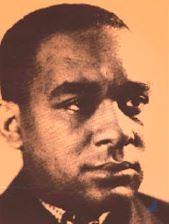
David Mandessi Diop

I found this gem of a poem by the great African poet David Mandessi Diop. Diop was born in France, of a Cameroonian mother from the royal Bell line with illustrious members such as Rudolf Duala Manga Bell and Ndumbe Lobe Bell (King Bell) both kings of the Duala people, and a Senegalese father. Although he died young, in a plane crash in 1960, he has left a strong imprint on African poetry. His most famous poem, Africa, has been one of my favorites growing up and was thought in schools throughout the continent. His work always focused on a condemnation of colonialism and slavery, while filled with hope for an independent Africa.

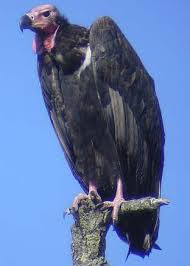
Vautour / Vulture

Thus, the poem Les Vautours (The Vultures) explores the horrors of colonialism and its impact on Africa. As one can guess, the Vultures are the colonizers who preyed on a fragile Africa, and exploited it with extreme violence. With the arrival of the Europeans, there was a clash of civilizations, Christianity was imposed upon our ancestors via machine guns as noted by the author’s reference to “monotonous rhythm of Pater-Nosters,” and slavery and later forced labor took a toll on them in the plantations or on the roads built referenced as “bloody monument.” When the author mentions “mutilated promises through machine guns,” it reminds us, for example, of the Thiaroye Camp where the tirailleurs were killed by French forces for simply asking for their pension after having served to free France from Nazi forces during World War II. As always, the author finishes on the high note of hope “Spring will put on flesh under our steps of light.” As one reads this poem, it appears that The Vultures are still at work on African soil, but the Spring is putting on flesh under Africans’ steps as we can see in the AES and more.

The original was published in Coups de pilon, Présence Africaine, 1956. Translated to English by Dr. Y., Afrolegends.com

=====

Les Vautours par David Mandessi Diop / The Vultures by David Mandessi Diop

Les VautoursEn ce temps là

A coups de gueule de civilisation

A coups d’eau bénite sur les fronts domestiqués

Les vautours construisaient à l’ombre de leurs serres

Le sanglant monument de l’ère tutélaire

En ce temps là

Les rires agonisaient dans l’enfer métallique des routes

Et le rythme monotone des Pater-Noster

Couvraient les hurlements des plantations à profit

O le souvenir acide des baisers arrachés

Les promesses mutilées au choc des mitrailleuses

Hommes étranges qui n’étiez pas des hommes

Vous saviez tous les livres vous ne saviez pas l’amour

Et les mains qui fécondent le ventre de la terre

Les racines de nos mains profondes comme la révolte

Malgré vos chants d’orgueil au milieu des charniers

Les villages désolés l’Afrique écartelée

L’espoir vivait en nous comme une citadelle

Et des mines du Souaziland à la sueur lourde des usines d’Europe

Le printemps prendra chair sous nos pas de clarté.

The VulturesIn that time

When civilization struck in a fit of anger

When holy water struck domesticated foreheads

The vultures built in the shadow of their claws

The bloody monument of the tutelary era

In that time

Laughter died away in the metallic hell of the roads

And the monotonous rhythm of Pater-nosters

Covered the screams on plantations run for profit

O sour memory of extorted kisses

Promises mutilated by machine-gun blasts

Strange men who were not men

You knew all the books you did not know love

Or the hands that fertilize the womb of the earth

The roots of our hands deep as the revolt

Despite your hymns of pride among graveyards

Villages laid to waste and Africa dismembered

Hope lived in us like a citadel

And from the mines of Swaziland to the heavy sweat of Europe’s factories

Spring will take shape under our steps of light.

Proverbe sur le riche / Proverb on the Wealthy

Arbre / Tree

Un arbre en fleur reçoit la visite des insectes (Proverbe Toucouleur – Sénégal, Mali, Mauritanie). – Le riche ne manque jamais de profiteurs.

A flowering tree receives the visit of insects (Toucouleur proverb – Senegal, Mali, Mauritania). – The wealthy never lacks profiteers.

Thousands take part in Annual re-plastering of the Great Mosque of Djenné in Mali

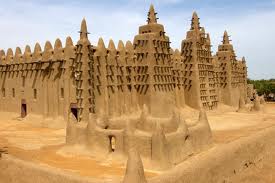
Great Mosque of Djenné

I love the togetherness that is embodied by Malians who live in the city of Djenné, who, every year come together to re-plaster the walls of the Great Mosque of Djenné, the largest mud-brick building in the world. This past Sunday, the whole town, young and old, men and women, poor and rich, worked together to preserve this centuries-old gift from their ancestors that is the Great Mosque of Djenné. This is a tradition passed on from generations to generations for centuries: men and boys are responsible for climbing the mosque and putting the new layer of mud on it, while women and girls are responsible for fetching water from the nearby river to mix with clay to make more of the mud needed for the walls. It is a great exercise in unity and peace for the preservation of an heritage that is dear to all. Since 2016, the Great Mosque of Djenné has been added to the UNESCO’s World Heritage Danger list, because of the jihadists’ attacks in northern Mali that have divided the country (Mali Forces Succeed in Kidal where France and Allies could not!At the United Nations, Outstanding Speech by Mali PM who Slams France, Praises Russia TiesMali, Burkina Faso, and Niger all leave the ECOWAS“Le Mali en miettes. A qui le tour?” de Chems Eddine Chitour)..

Please read below the article I wrote a few years back about the city of Djenné, and for this past Sunday’s re-plastering event, check out Africanews.

=====

Djenné
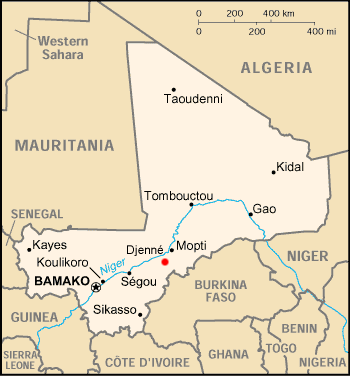
Map of Mali with Djenne in red

Djenné is a city of Mali whose history is closely linked to that of Timbuktu. It is well-renowned for its mud brick architecture, and today most of the city is considered a UNESCO World Heritage Site. In no place in the world do you have a civilization entirely built on mud! Maybe that is why Malians are so renowned for their work on mudcloth a.k.a. bogolan! The Djennenké say that nowhere in the world would you find people who can build in mud like Djenné’s masons: their work with mud is pure magic, as illustrated by the beautiful Great Mosque of Djenné. The masons’ family lines stretch back half a millenium! They mix the clay from the surrounding plains with the water from the Bani river, and bring to life an architecture purely from Djenné rising with splendor.

Djenné: the mud brick (adobe) city

Proverbe Congolais sur la tentation / Congolese Proverb on Temptation

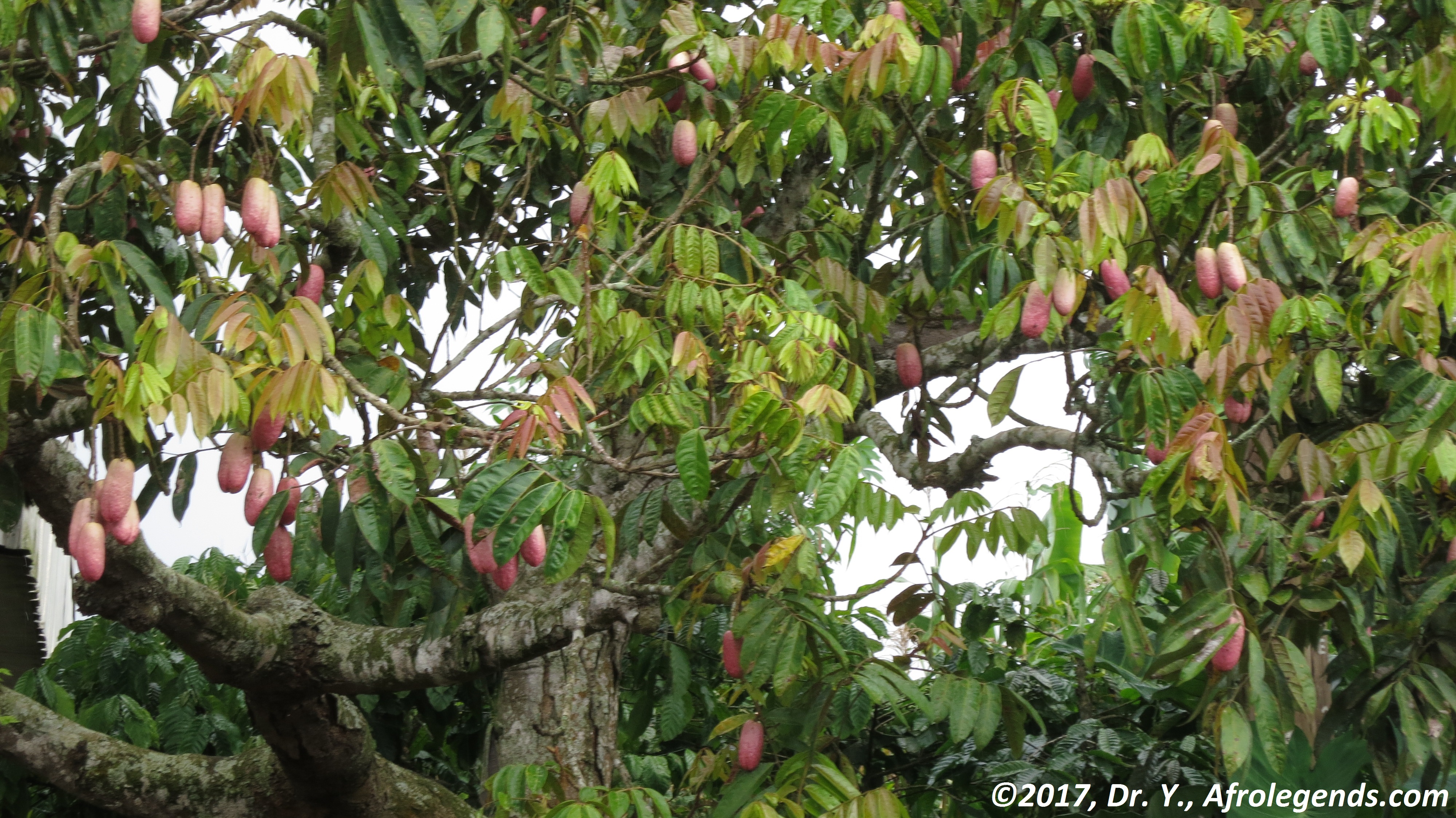
Safoutier / safou tree

Le safou mûr tente le chasseur (Proverbe Ngombe – République Démocratique du Congo (RDC)). – L’occasion fait le larron.

The ripe safou tempts the hunter (Ngombe proverb – Democratic Republic of Congo (DRC)). – Opportunity makes a thief.

Coincidence or Not? Coltan-rich Town Captured

Flag of the Democratic Republic of Congo

As the silent genocide in the east of the Democratic Republic of Congo (DRC) continues, under the complicit eyes of the “international” community, last Friday, the town with the one of the biggest coltan reservoirs in the world, Rubaya, … was captured by the M23 rebels. What is coltan? For those who just discover it, coltan is a dull black metal from which niobium and tantalum are extracted. Thus, the name coltan comes from col in columbite (the niobium-dominant mineral) and tan in tantalite(the tantalum-dominant mineral). It is the material at the heart of the mobile phone boom, and is found everywhere in the computer, automotive, and electronics industries. It has been classified by the US Defense department since World War 2 as a material key to the nation’s security.

Democratic Republic of Congo (DRC) mineral map (Source: Atlas du continent africain, Jeune Afrique et editions Jaguar, 2000)

It is no secret that the M23 rebels are backed by neighboring Rwanda, who is in turn supported by … . Why DRC one may ask? As discussed earlier, Congo is a geological scandal, a country rich with some of the most important minerals on earth.  When much of eastern Congo came under the control of Rwandan forces in the 1990s, Rwanda suddenly became a major exporter of coltan and many other minerals (a Rwandan I spoke to admitted, minerals Rwanda never thought possible are being “discovered” every day on “their soil”), benefiting from the turmoil and weakness of the Congolese government. According to a UN report, the soaring price and interest in coltan has “brought in as much as $20 million a month to rebel groups” and other factions trading coltan mined in northeastern DRC. Lastly, the government of DRC (The Democratic Republic of Congo Accuses Apple) recently threatened many big companies, including Apple, of illegally obtaining minerals including coltan, and therefore of supporting rebels group. Is it then a surprise that Rubaya was captured last Friday? 

Excerpts below are from the BBC. To learn more, please read article on Africanews, and The East African.

=====

A town at the heart of mining coltan, a key ingredient in making mobile phones, has been seized in eastern Democratic Republic of Congo by rebel forces, their spokesman has said.

Rubaya fell into the hands of M23 fighters on Tuesday following heavy clashes with government troops, Willy Ngoma [M23 spokesperson] said. 

The government has not yet commented, but a civil society activist confirmed that M23 had captured the strategic town.

It happened on the day France’s President Emmanuel Macron called on neighbouring Rwanda to “halt its support” for the M23 rebel group.

Mr Macron made his comments after holding talks with DR Congo’s President Félix Tshisekedi in France’s capital, Paris.

Rwanda has repeatedly denied backing the rebels, who have captured much territory in the mineral-rich east during fighting over the past 18 months.

DR Congo is the world’s second-biggest producer of coltan, with most of it coming from the mines around Rubaya in the Masisi district.

Coltan is used to make batteries for electric vehicles and mobile phones.

DR Congo’s government accuses Rwanda of backing the rebels to steal its mineral wealth, an allegation the government in Kigali denies.

….

The Democratic Republic of Congo Accuses Apple

Flag of the Democratic Republic of Congo

Early this week, we shared the “Einstein Letter” signed by the Nobel Prize of Physics Albert Einstein and  addressed to the President of the United States F. Roosevelt talking about Uranium and its place in the energetic plan of the United States. It also highlighted the important place of the Democratic Republic of Congo (DRC) in this plan, today more than ever, given that the DRC is what many call a “geological scandal”, as first termed by Belgian geologist Jules Cornet in 1892, with all its minerals, some of which can only be found there.

Democratic Republic of Congo (DRC) mineral map (Source: Atlas du continent africain, Jeune Afrique et editions Jaguar, 2000)

Last week, DRC’s president and its government threatened the technology giant Apple with a lawsuit, over “blood” minerals, illegally exploited. There is currently a real genocide in the DRC which has been ongoing for the past 30 years and which has claimed over 10 million lives; however it is a silent genocide given that the “international community” is complicit and has turned a blind eye. As the DRC government sends this out to Apple, where are the other tech giants? Where is Tesla, as we know that Tesla’s batteries cannot work without minerals from the DRC? Where are all the other companies/ multinationals?

Enjoy excerpts below from CBS News.

=====

The government of the Democratic Republic of Congo has threatened U.S. tech giant Apple with legal action over what it says are “illegally exploited” minerals from the impoverished nation in its products. U.S. and French lawyers representing the DRC’s government sent a letter to Apple on April 22 warning the company it could face legal action if it continues with the alleged practice.

The letter accuses Apple of purchasing minerals smuggled out of the DRC into Rwanda [we all know that Rwanda has zero minerals… the minerals reported of Rwandan origin are all pillaged from neighboring DRC], where their origin is allegedly obscured so they can find their way into the global technology supply chain. It makes clear that the DRC government intends to address the matter and is looking into legal options to do so.

The letter sent by the lawyers to Apple CEO Tim Cook includes a list of questions laying out the DRC’s concerns over alleged “blood minerals” in Apple’s supply chain, and it demands answers within three weeks. Similar letters, seen by CBS News, were also sent to two of Apple’s subsidiaries in France, demanding answers in the same timeframe.

Apple has affirmed that it verifies the origins of minerals it uses to manufacture its products,” the letter notes. “It says that the tin, tungsten, tantalum — the 3Ts — and gold that its suppliers purchase are conflict free and do not finance war. But those claims do not appear to be based on concrete, verifiable evidence.”

Amsterdam & Partners, the law firm representing the DRC government, has written a 53-page report outlining the claims against Apple, entitled “Blood Minerals: Everyone sees the massacres in Eastern Congo, but everyone is silent. The laundering of DRC’s 3T Minerals by Rwanda and by private entities.

In their letter to Apple, the lawyers said that in the process of preparing their report, “it has become clear to us that year after year, Apple has sold technology made with minerals sourced from a region whose population is being devastated by grave violations of human rights. The iPhones, Mac computers and accessories that Apple sells to its customers around the world rely on supply chains that are too opaque, and that are tainted by the blood of the Congolese people.”