Archaeologists Uncover Oldest Human Burial in Africa

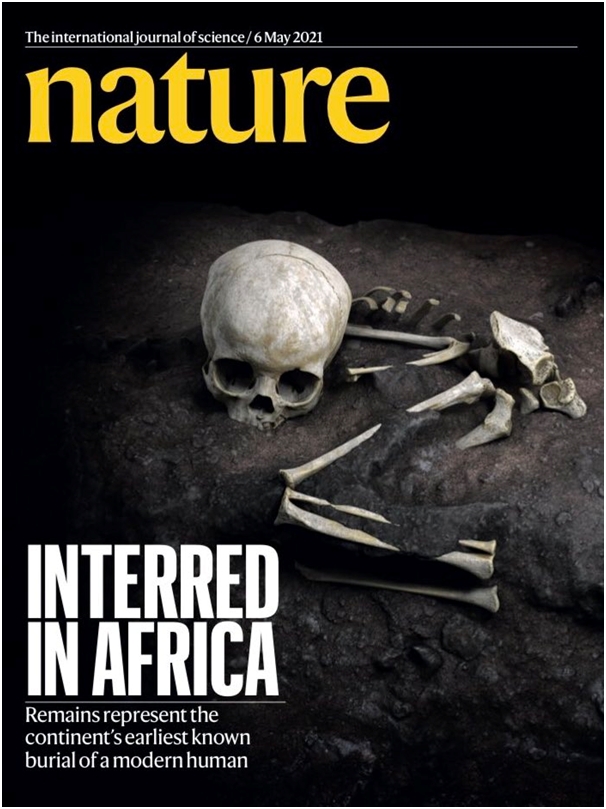
Oldest burial found in Africa of a 3-year-old boy (Source: Nature)

Archaeologists have uncovered the oldest human burial in Africa. It is the body of a 3-year-old boy who was buried 80,000 years ago. As always, it is good to note that even though Africa is the cradle of the human species, very little research has been conducted on the continent showing a real bias in research, but also highlighting the need for Africans to do their own studies: there is so much to find! There is so much wealth (in every field)! Excerpts below is from an article on the Guardian. Please check out the original article in Nature, and also the press release on the New York Times website.

=====

‘Quite spectacular’ discovery shows three-year-old child was carefully laid to rest nearly 80,000 years ago

Archaeologists have identified the oldest known human burial in Africa during field work that uncovered the remains of a child laid carefully to rest in a grave nearly 80,000 years ago.

The arrangement of the bones shows the three-year-old – named Mtoto after the Swahili word for child – was placed with legs tucked to chest, and perhaps wrapped in a shroud with their head on a pillow, before being gently covered in soil.

Researchers discovered the delicate and degraded bones while excavating the floor beneath a sheltered overhang at the mouth of the Panga ya Saidi cave in the tropical uplands of Kenya’s coastal plain about 10 miles from the shore.

This is quite spectacular,” said Michael Petraglia, a professor of human evolution and prehistory at the Max Planck Institute for the Science of Human History in Jena, Germany. “It is the oldest human burial in Africa. It tells us something about our cognition, our sociality and our behaviours and they are all very familiar to us today.”
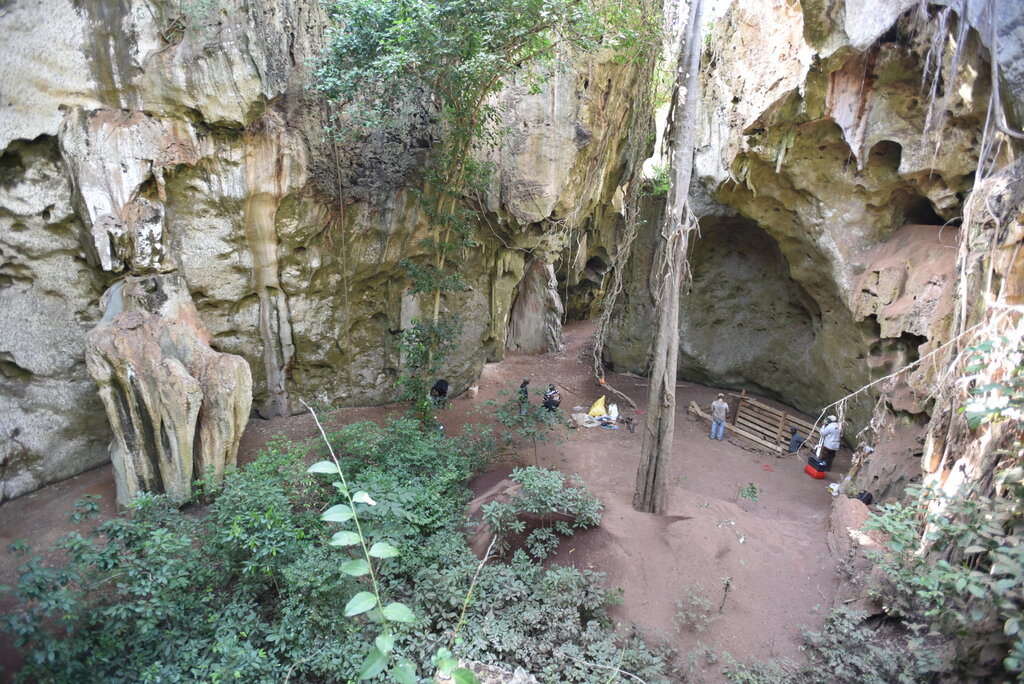
Overview of the cave of Panga ya Saidi. The boarded excavation on the right marks the locality where the burial was recovered. (photo by Mohammad Javad Shoaee).

… The team unearthed the edge of the grave and the first pieces of bone in 2013, but the fragments were so fragile they turned to dust when the scientists tried to remove them. Over the next four years, the researchers excavated the grave from above, revealing yet more bone, but even after applying resins to the material, it was still too weak to recover.

The researchers decided to dig around the circular pit, roughly 40 cm wide and 13 cm deep, and encase the whole grave in plaster so it could safely be lifted from the ground. The block was taken to the National Museum in Nairobi and on to a specialist lab in Spain where the material was excavated further and then imaged with 3D X-ray equipment.

Two small teeth found in the grave matched those of Homo sapiens and put the age of the child at two and a half to three years old. Further teeth were still embedded in the child’s lower jaw, discovered with the spine, ribs and other bones from the shoulder and limbs. Stone tools for scraping, boring and engraving were found in and around the grave, alongside stone points that may have been hafted on to wooden shafts to make spears.

The images show that the child was laid on their right side with knees tucked up towards the chest, while the position of the skull suggests that it lay on a headrest or pillow. The articulated bones, such as the spine, had not fallen apart in the grave, leading the researchers to suspect the body was wrapped tightly in a shroud before burial. Dating found the bones to be about 78,000 years old, according to the study published in Nature.

… “Early African burials are especially rare despite the fact that Africa is the birthplace of our species,” said Boivin. “This almost certainly reflects biases in where research has been done – the regions where earlier burials have been found have been much more extensively researched than Africa.


‘Catastrophic’: Sierra Leone Sells Protected Rainforest for Chinese Harbor

Flag of Sierra Leone

Hundred years after the “signing” of all these lands in Africa to Europeans (we all know it was not a consensual signing as there were threats of war, aggression from other tribes, sometimes bombings, etc), the scramble for Africa, colonization, and more, a new scramble has started again, with lands yet again being “signed” off to foreigners to the detriment of the locals. Below is the recent signing of hundreds of acres of protected land in Whale Bay, in Sierra Leone to Chinese companies. This is a catastrophic story, especially as it will cause an ecological disaster. This is not the only area where it is happening, it is not just in Sierra Leone, and it is not just Chinese companies, but many more … reminiscent of the 999 year land treaty in Kenya [Did You Know about the 999-year Lease granted to Europeans in Kenya ?]… We, Africans, need better laws, better governance, love of our own selves, patriotism, and less corruption. True, we need development, but it cannot be at the expense of ourselves. There are also several questions: is this a land sell, a lease, or what? Can it be overturned? Excerpts below are from The Guardian

====

A $55m (£39m) deal struck by the government of Sierra Leone with China to build an industrial fishing harbour on 100 hectares (250 acres) of beach and protected rainforest has been criticised as “a catastrophic human and ecological disaster” by conservationists, landowners and rights groups.

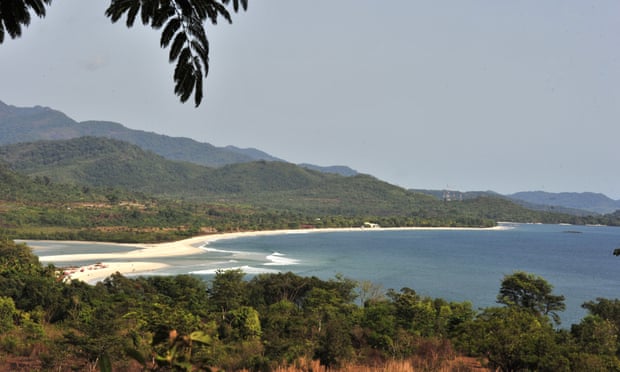
The gold and black sands of Black Johnson beach fringe the African nation’s Western Area Peninsula national park, home to endangered species including the duiker antelope and pangolins. The waters are rich in sardines, barracuda and grouper, caught by local fishermen who produce 70% of the fish for the domestic market.

After reports of a Chinese-backed fishmeal plant began circulating on social media, A statement that appeared to be from the Sierra Leonean fisheries ministry confirmed the deal, but denied the planned construction was a “fish mill”. The facility would be a harbour for tuna and “other bigger fishing” vessels exporting to international markets, it said. It would include a “waste-management component” to “recycle marine and other wastes into useful products”.

The beach earmarked for development fringes the Western Area Peninsula national park, home to endangered species including pangolins. (Source The Guardian: Issouf Sanogo/AFP/Getty)

The government said the beach, one of many along the nation’s 250-mile (400km) coastline, was the “most suitable place” for construction, and revealed the finance ministry had set aside a compensation package of 13.76bn leone (£950,000) for affected landowners. But the statement leaves more questions than answers, say those objecting to the plan.

… “Under the constitution, the government can sequester land if it is in the public interest,” Tonner said. “Even if this just a deep-water harbour, it is not in the public interest because it’s not a suitable site. There are fish breeding sites in the lagoon. It will wipe out the local fish people live on.”

… James Tonner, who owns land at Black Johnson with his mother, Jane Aspden Gbandewa, has written an open letter to the president, Julius Maada Bio, calling for him to intervene and stop the construction, which Tonner said would be “disastrous for the country and the planet”.

It would destroy pristine rainforest, plunder fish stocks and pollute fish breeding grounds and several ecosystems, Tonner said. The beach is on Whale Bay, so-named because whales and dolphins are seen there.

… “Under the constitution, the government can sequester land if it is in the public interest,” Tonner said. “Even if this just a deep-water harbour, it is not in the public interest because it’s not a suitable site. There are fish breeding sites in the lagoon. It will wipe out the local fish people live on.”

… “Our own fishermen won’t have a place to fish. Everything will be spoiled. Tourism will be finished.”

Dr Sama Banya, president emeritus of the Conservation Society of Sierra Leone, echoed Gbandewa’s comments, saying the proposed development would have a “disastrous” impact on tourism and “the very fish industry that it’s supposed to support”. …

Silence Chez Autrui /Silence in Unknown Places

Silence

En visite chez autrui, ouvrez les yeux, pas la bouche (Proverbe Bahaya – Tanzanie).

While visiting others, open your eyes, not your mouth (Bahaya proverb – Tanzania).