
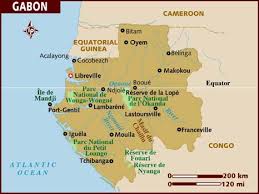
As we highlighted last week, Gabon was part of the five African countries invited to the White House last year by US President Donald Trump. Gabon was the only country invited to the summit which was not part of West Africa. Gabon is not only rich in oil but also rich in uranium and manganese, and has one of the world’s largest iron deposit. Gabon has significant iron ore reserves, particularly in the Belinga area, which is estimated to hold about one billion tons of iron ore. Since the visit, Gabon has unveiled several infrastructure deals including the Belinga–Boué–Mayumba railway (901 km) which will open up the north east areas of the country, a new deep-water port, the Boué hydroelectric dam, and a push for local processing of mineral resources.
Yesterday, the president of Gabon Brice Clotaire Oligui Nguema, while in visit in France to meet French President Macron, unveiled yet another project, this time in connection with the French mining group Eramet for the exploitation of Manganese; with hopes of opening the south east region by rehabilitating approximately 650 km of railway linking Owendo near the capital Libreville to Franceville in the east as part of the Trans-Gabon Railway, and the exploitation and transformation of 700,000 tons of manganese (Africanews). There will be three phases including the creation of a factory for the production of manganese oxide to be built in Libreville by 2028, the construction of a unique site in Moanda specially for the transformation of this mineral in Gabon, and lastly the building of new plant for the production of manganese alloys locally to be built in 2031.
The office of the Gabonese president stated that the agreement will help “generate greater added value within the country, support its industrialisation and boost the competitiveness of the national economy.” These will be followed by other agreements to cover security (maybe consolidating the defense part of The 11 Components of the French Colonial Tax in Africa? Not to forget that Oligui Nguema came to power via a coup) and water and energy sectors.
We applaud all these projects which mark a jump towards the industrialization of the country, and pray that these actually end up benefiting the people, as opposed to the countless other agreements signed over the years which have very little to show for. We still hope that African countries would unite to make stronger contracts/ agreements to get the best deals possible and bigger jumps toward development.


