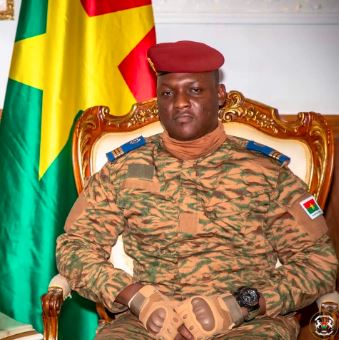
Capitaine President Ibrahim Traore (Source: sig.gov.bf)
In the wee hours of 2026, while our eyes were focused on Venezuela and the consequences of the American actions in the country, another event, just as earth-shattering was taking place on the African continent. There was another coup attempt on President Ibrahim Traoré in Burkina Faso which did not succeed. The government of Burkina Faso has announced that it has thwarted yet another plot aimed at killing the country’s leader, Captain Ibrahim Traoré, and disable a drone base. Burkinabes have taken to the streets in support of Traoré.
On January 6, Burkina Faso’s Minister of Security, Mahamadou Sana, disclosed that the planned coup, which was expected to be carried out late on January 3, was neutralized “thanks to the professionalism of the intelligence services.” The operation were to “[begin] with the neutralization of Comrade Captain Ibrahim Traoré, Head of State and President of Faso, either at point-blank range or through an operation to mine his residence,” … “there were to be efforts to put the drone base out of service, and a ground military intervention by external forces.” “Our intelligence services intercepted this operation in the final hours. They had planned to assassinate the head of state and then strike other key institutions, including civilian personalities,” Sana stated.
Flag of Burkina Faso
From what we have learned, the operation was financially supported from neighboring Côte d’Ivoire. The sophisticated plan had been hatched by Lt Col Paul Henri Sandaogo Damiba, the military officer and former transition president ousted by Traoré in September 2022, the security minister said in a late-night broadcast.
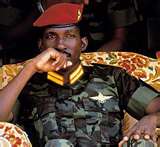
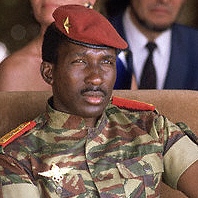
Capitaine Thomas Sankara
The western media say that Ibrahim Traoré and his government are lying, or fabricating this story to gain popularity; they talk of “alleged coup”, using verbs like “claim”, or like BBC wrote, “Plot to kill Burkina Faso leader foiled, says junta [why are they still calling it a junta after 4 years? When Damiba was there, they never called it such].” This would not be the first time that the government of Côte d’Ivoire would have hands in the destabilization of Burkina Faso. It was through the Côte d’Ivoire channel and government, with help from Liberia, that our brother Thomas Sankara was taken out by France. Now, it would seem to be coming from Damiba, via Côte d’Ivoire, Togo, for the interests of France; as we know Damiba is the front-man for the foreign forces who want to destabilize the country. The goal being to decapitate Burkina Faso, and therefore the AES alliance which includes Niger and Mali.
Capitaine President Ibrahim Traore (Source: sig.gov.bf)
For the past few weeks, the price of gold has hit a record high of $3400. Some of the places with some of the largest gold mines is in the Sahel, the AES. So it is no surprise that there was a recent coup against the president of Burkina Faso, one of the leaders of the AES a few weeks ago.
Ibrahim Traoré, president of Burkina Faso, escaped another coup attempt on his life. Coincidentally, this attempted coup happened the day after the American General Langley lied in front of the US congress saying that Traoré was embezzling the country’s funds for his personal security. It is quite preposterous to hear. Why doesn’t Langley mention Ouattara who has put Ivory Coast in debt and destroyed the country? Why doesn’t Langley mention Paul Biya of Cameroon who has been in power 43 years, and taken the country 60 years backwards? Why doesn’t Langley mention Sassou Nguesso of the Republic of Congo who has siphoned all the country’s money into his pockets and those of his family? Or Faure Eyadema who comes from the Eyadema dynasty? Moreover, how can someone like Ibrahim Traoré who has foregone his presidential salary embezzle money? Then how disgusting of this man to stand in front of congress and lie? It reminds me of another, a certain Colin Powell, who stood in front of the whole world and spoke of things which never existed in Irak?
Flag of Burkina Faso
Since coming to power, Ibrahim Traoré has bought over 400 tractors for farmers, 953 motorcycles, 710 motor pumps for water, 10,000 tons of fish food, 68,964 tons of fertilizer, 10,000 liters of products to name a few to try to empower the country’s agriculture. In the ministry of health, his accomplishments include buying 15 mobile clinics, 36 vehicles for hospitals, 3 oxygen units, 11 cold rooms, 835 tablets, 1,900 solar refrigerators. There was also the inauguration of a full tomato plant to enhance local productions, and now the plan for the largest Coca Cola plant in Africa.
A Escrava Isaura (Source: primetelenovelas.com)
This Langley dude reminds me of the slave/overseer Domato, in the Brazilian telenovela A Escrava Isaura who was always treating his slave brothers and sisters so much worse than the white master.
Burkina Faso’s military government has said it foiled a “major plot” to overthrow junta leader Capt Ibrahim Traoré, with the army alleging the plotters were based in neighbouring Ivory Coast [this is no secret, but BBC writes it as if the Burkinabe people were hallucinating].
Security Minister Mahamadou Sana said the coup attempt was led by current and former soldiers working with “terrorist leaders“. The intention was to attack the presidential palace last week, he added. The aim of the plan was to “sow total chaos, and place the country under the supervision of an international organisation“, Sana said on state television on Monday.
It is the latest of several claims of attempts to remove the junta leader who seized power in 2022 amid increasing militant attacks. …
=====
Burkina Faso
Thousands of people gathered at the Place de la Révolution in Ouagadougou on Wednesday 30 April to show their support to the President of the transition, Captain Ibrahim Traoré.
The demonstration happened after the US commander of AFRICOM, General Michael Langley, told the US Senate Armed Services Committee in early April that the military regime in power in Burkina Faso has taken advantage of the resources of the country, particularly the gold reserves [interesting, why does he mention only gold and no other resources?], for his own protection instead of the population. What General Langley told the US Senate provoked people to react in Burkina Faso and throughout the AES countries and even beyond the region. The government of Burkina Faso condemned the statement by the US military command, made with the ‘aim to spoil the country’s image.’
… The massive support for Burkina Faso’s military leader, Captain Ibrahim Traoré, comes at a time of growing tensions with Western powers. General Langley’s accusations of corruption leveled against the President of the transition, Captain Ibrahim Traoré, instead of weakening the regime in Burkina Faso, has reinforced the status and aura of the young military leader, whose popularity extends beyond national borders.
Alliance des Etats du Sahel (source: linfodusahel.com)
… Traoré quickly adopted an anti-imperialist stance, where he strongly criticized the interference of Western powers, particularly France. They see his decision to draw closer to new partners like Russia and Iran, and to leave certain regional cooperation frameworks (G5 Sahel, ECOWAS) as a stamping of his sovereignty. This geopolitical shift excites young people seeking political and economic independence happy.
… Captain Traoré has become a symbol of resistance to Western influence, particularly French influence, and this has gone positively with the predominantly young population. His revolutionary stance and commitment to African unity appeals to many Burkinabè, especially young people.
‘There is a third element for me: Ibrahim Traoré’s youth, his outspokenness and his imperialist stance which are inline with another Burkinabe president, Captain Thomas Sankara, whose popularity for almost 40 years after his death is in doubt‘ [says] Seidik Abba, President of the Centre international d’études et de réflexions sur le Sahel (CIRES).
The military regime in power in Burkina Faso is multiplying symbolic and even populist acts to boost its image. The decision to forego the presidential salary and opt for the modest income he receives as army leader also makes his popular with the public.
… Since taking power in 2022, Captain Ibrahim Traoré has undertaken a series of reforms that will strengthen the state’s control over mining resources, particularly gold, for the country’s main export.
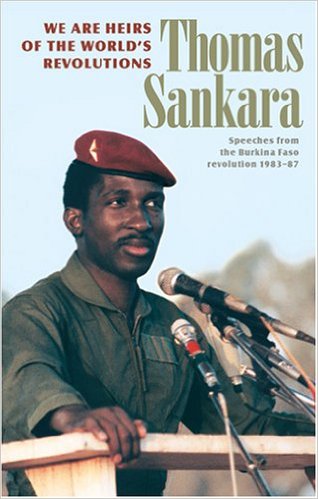
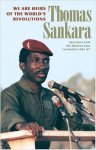
“We are heirs of the revolution” by Thomas Sankara
Today, we will end with the third point cited by President Thomas Sankara, last point for revolutionizing all sectors of Burkinabe society. Excerpts below are from “We are Heirs of the World’s Revolutions, Speeches from the Burkina Faso Revolution 1983-87” by Thomas Sankara, Pathfinder Press (2007) p. 50 – 53. Again, as you read, you can see that this is exactly what our leaders of the AES, and Ibrahim Traore of Burkina Faso in particular are applying. The main difference today is that the AES also faces terrorism and the repeated attacks of hordes fabricated by Western powers; so security is one of the major priorities.
=====
… The National Council of the Revolution is therefore aware that the construction of an independent, self-sufficient, and planned national economy requires the radical transformation of present society, a transformation that itself requires the following major reforms:
Thomas SankaraAgrarian reform
Administrative reform
Educational reform
Reform of the structures of production and distribution in the modern sector
The agrarian reform will aim to:
Increase labor productivity through better organization of the peasants and the introduction of modern agricultural techniques in the countryside.
Develop a diversified agriculture, together with regional specialization.
Abolish all the fetters that are part of the traditional socioeconomic structures that oppress the peasants.
Finally, make agriculture the basis for the development of industry.
Burkina Faso
All this is possible by giving real meaning to the slogan of food self-sufficiency, a slogan that now seems dated for having been proclaimed so often without conviction. First, this will be a bitter struggle against nature, which, by the way, is no more thankless for us than for other peoples who have conquered it magnificently on the agricultural level. … To the contrary, numerous small accomplishments in the agricultural system will allow us to transform our territory into one vast field, an endless series of farms.
Second, this will be a struggle against those who starve the people, the agricultural speculators and capitalists of all types. Finally, it will mean protecting our agriculture against domination by imperialism — with regard to its orientation, the plunder of our resources, and unfair competition from imports against our local products, imports whose only advantage is their packaging aimed at bourgeois afflicted with snobbishness. As for the peasants, sufficiently high prices and industrial food-processing facilities will guarantee them markets for their produce in any season.
Flag of Burkina Faso
… The reform should result in a less costly, more effective, and more flexible administration.
The educational reform aims to promote a new orientation for education and culture. It should result in transforming the schools into instruments at the service of the revolution. Graduates of the system should not serve their own interests and the exploiting classes, but rather the popular masses. The revolutionary education that will be taught in the new schools must imbue everyone with a [Burkinabe] ideology, a [Burkinabe] personality that rids the individual of blind mimicry. …
Burkina Faso
Culture in a democratic and popular society, should have a three-fold character: national, revolutionary, and popular. Everything that is antinational, antirevolutionary, and antipopular must be banished. To the contrary, our culture extols dignity, courage, nationalism, and the great human virtues.
… Our artists … should seize the opportunity before them to raise our culture to a world level. … Let musicians sing not only of our people’s glorious past, but also of their radiant and promising future.
The revolution expects our artists to be able to describe reality, portray it in living images, and express them in melodious tunes while showing our people the true way forward to a better future. It expects them to place their creative genius at the service of a national, revolutionary, and popular [Burkinabe] culture.
“We are heirs of the revolution” by Thomas Sankara
I love what Thomas Sankara, former president of Burkina Faso, said about women. I had previously published it here, Thomas Sankara in His Words. Did you know that Sankara had placed women at the center of his politics? He appointed females to high governmental positions, encouraged them to work, recruited them into the military, and granted pregnancy leave during education. During his time, he outlawed female genital mutilation, forced marriages and polygamy in support of Women’s rights. Excerpts below are from “We are Heirs of the World’s Revolutions, Speeches from the Burkina Faso Revolution 1983-87” by Thomas Sankara, Pathfinder Press (2007) p. 49 – 50.
=====
The weight of age-old traditions in our society has relegated women to the rank of beasts of burden. Women suffer doubly from all the scourges of neocolonial society. First, they experience the same suffering as men. Second, they are subjected to additional suffering by men.
African Woman
Our revolution is in the interests of all the oppressed and all those who are exploited in today’s society. It is therefore in the interests of women, since the basis of their domination by men lies in the system through which society’s political and economic life is organized. By changing the social order that oppresses women, the revolution creates the conditions for their genuine emancipation.
The women and men of our society are all victims of imperialist oppression and domination. … they wage the same battle. The revolution and women’s liberation go together. We do not talk of women’s emancipation as an act of charity or out of a surge of human compassion. It is a basic necessity for the revolution to triumph. Women hold up the other half of the sky.
… Until now, women have been excluded from the realm of decision making. The revolution, by entrusting women with responsibilities, is creating the conditions for unleashing women’s fighting initiative. … They will be involved in all the battles we will have to wage against the various shackles of neocolonial society in order to build a new society. … The final goal of this great undertaking is to build a free and prosperous society in which women will be equal to men in all spheres.
Burkina Faso
However, we must have a correct understanding of the question of women’s emancipation. It is not a mechanical equality between men and women, acquiring habits recognized as male – drinking, smoking, and wearing pants. That’s not the emancipation of women. Nor will acquiring diplomas make women equal to men or more emancipated. A diploma is not a free pass to emancipation.
The genuine emancipation of women is one that entrusts responsibilities to women, that involves them in productive activity and in the different fights the people face. The genuine emancipation of women is one that compels men to give their respect and consideration. Emancipation, like freedom, is not granted, it is conquered. It is for women themselves to put forward their demands and mobilize to win them.
Every October 15, we talk about Thomas Sankara, the father of the Burkinabe revolution. Today, we will bring back some of his words, from “We are Heirs of the World’s Revolutions, Speeches from the Burkina Faso Revolution 1983-87” by Thomas Sankara, Pathfinder Press (2007) p. 46 – 48. You will see that President Ibrahim Traoré in particular, and the leaders of the AES as a whole (Mali, Burkina Faso, and Niger Sign a Mutual Defence Pact), are following in Thomas Sankara’s footsteps in the defense of their homeland against foreign forces which have used terrorism to balkanize the region and terrorize the people for over a decade now. “Each citizen should work to revolutionize his sector of activity. … a conscious people cannot leave their homeland’s defense to one group of men, however competent they may be. Conscious people take charge themselves of their homeland’s defense.” Tomorrow, we will talk about points (2) and (3).
=====
Thomas Sankara
The August revolution does not aim to establish one more regime in Upper Volta [Burkina Faso]. It represents a break with all previously known regimes. Its ultimate goal is to build a new Voltaic [now Burkinabe] society, within which the [Burkinabe], driven by revolutionary consciousness, will be architect of his own happiness, a happiness equal to the efforts he will have made.
To do this, the revolution – whether the conservative and backward forces like it or not – will be a deep and total upheaval that will spare no domain, no sector of economic, social, and cultural activity.
Revolutionizing all domains and all sectors of activity is the slogan of the day. Strengthened by the guiding principles laid out here, each citizen should work to revolutionize his sector of activity, whether he finds himself.
The philosophy of revolutionary transformations is already affecting the following sectors: (1) the national army; (2) policies concerning women; and (3) economic development.
(1) The national army: its place in the democratic and popular revolution
Flag of Burkina Faso
According to the defense doctrine of the revolutionary Upper Volta, a conscious people cannot leave their homeland’s defense to one group of men, however competent they may be. Conscious people take charge themselves of their homeland’s defense. To this end, our armed forces constitute simply a detachment that is more specialized than the rest of the population for Upper Volta’s internal and external security requirements. …
The revolution imposes three missions on the national armed forces:
To be capable of combating all internal and external enemies and to participate in the military training of the rest of the people. This presupposes an increased operational capacity, making each soldier a competent fighter, unlike the old army, which was merely a mass of employees.
To participate in national production. Indeed, the new soldier must live and suffer among the people to which he belongs. The days of the free-spending army are over. From now on, besides handling arms, the army will work in the fields and raise cattle, sheep, and poultry. It will build schools and health clinics and ensure their functioning. It will maintain roads …
To train each soldier as a revolutionary militant. Gone are the days when the army was declared to be neutral and apolitical, while in fact serving as the bastion of reaction and the guardian of imperialist interests. Gone are the days when our national army conducted itself like a corps of foreign mercenaries in conquered territory. Those days are gone forever. Armed with political and ideological training, our soldiers, … will instead become conscious revolutionaries, at home among the people like a fish in water.
As an army at the service of the revolution, the National Popular Army will have no place for any soldier who looks down on, scorns, or brutalizes his people. An army of the people at the service of the people – such is the new army we are building in place of the neocolonial army, which was utilized to rule over the people as a veritable instrument of oppression and repression in the hands of the reactionary bourgeosie. …
The authorities of Mali, Burkina Faso, and Niger have announced simultaneously on 28 January 2024, their decision “incomplete sovereignty on the immediate withdrawal” from the regional economic bloc that is the Economic Community of West African States (ECOWAS). Mali, Burkina Faso, and Niger stated, ECOWAS “under the influence of foreign powers, betraying its founding principles, has become a threat to its member states and its population.” The three countries have accused the regional bloc of failing to support their fight against “terrorism and insecurity,” while imposing “illegal, illegitimate, inhumane, and irresponsible sanctions.” All three countries were founding members of ECOWAS over 50 years ago.
Burkina Faso
In reality, this comes as no surprise as it is the normal evolution of the state of things. After the coup in their respective countries, the ECOWAS has suffocated these countries by suspending all three countries and imposing heavy sanctions on Mali and Niger that have only served to exacerbate the populations’ sentiments that it is a puppet organization serving foreign interests. Niger even tried to amend the situations by inviting ECOWAS representatives to the country last week, but only the member from Togo showed up. Why should anybody remain a member of an organization that punishes the populations? Are they trying to pressurize the three landlocked countries? It is sad that we, Africans, have organizations that only work to serve the interests of others. It should not even be allowed for coastal countries to use sea access to landlocked ones as a pressure point! That is totally inhumane!
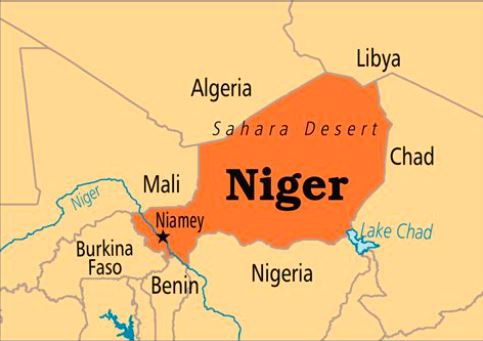
Map of Niger
We all joined these organizations thinking that they would serve common African goals…. unfortunately, under external orders, they instead impose heavy sanctions on sister states. It is about time that we, Africans, unite around the cause of Burkina Faso, Mali, and Niger, to free our continent. Their fight should be our fight, as they are fighting for our freedom, particularly that of Francophone Africa. Since the coup in Niger and rupture with France, Niger’s economy has been doing better even with all the sanctions, than since independence. Does that not tell us something? No wonder, all the European generals have been having meetings in West Africa in recent weeks, and even the American Secretary of State Anthony Blinken was in Cote d’Ivoire just a few days ago, while the populations are focused on the African Cup of Nations. We should not forget that now is the New Scramble for Africa, and Africans should not allow history to repeat itself!
Thomas Sankara a Ouagadougou
And of course, the Western media predict all doom to these countries. Freedom is not cheap, but it is best to be free of one’s destiny than being a slave at the mercy of someone else… Like Thomas Sankara said, “… the slave who is not capable of assuming his rebellion does not deserve that we feel sorry for himself. This slave will respond only to his misfortune if he is deluding himself about the suspect condescension of a master who claims to free him. Only struggle liberates …” [«… l’esclave qui n’est pas capable d’assumer sa révolte ne mérite pas que l’on s’apitoie sur son sort.Cet esclave répondra seul de son malheur s’il se fait des illusions sur la condescendance suspecte d’un maître qui prétend l’affranchir.Seule la lutte libère …»] Discours de Sankara à l’ONU le 4 octobre 1984 (texte intégral)
There was a lot to celebrate in Africa in 2023. Below are just a few in the sea of celebrations.
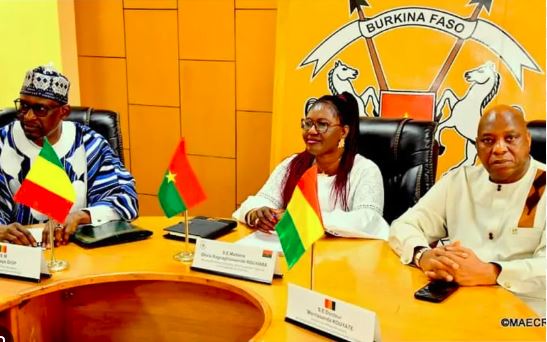
The different ministers of Mali, Guinea and Burkina Faso met to sign the agreement (Source: https://thenews-chronicle.com)
1. In January, Mali, Guinea, and Burkina Faso, three West African countries , all of whom have recently undergone military takeovers amid rising public national anger against France, have agreed to a Bamako-Conakry -Ouagadougou axis, with enhanced cooperation on matters ranging from trade to the fight against insecurity.
FESPACO 2023
2. The biennial African film festival, FESPACO, took place this year from 25 February to March 4. On March4, the winner, Tunisian Youssef Chebbi won the Golden Stallion of Yennenga (Etalon d’or de Yennenga) for his film ‘Ashkal‘ which centres on the investigation into the killing of a caretaker on a construction site in Carthage on the outskirts of his hometown. This year, women directors were celebrated and took home the second and third prizes, with Burkinabe filmwriter Apolline Traore, who picked up the Silver Stallion of Yennenga for the film ‘Sira‘, while the Bronze Stallion was awarded to Kenya’s Angela Wamai for ‘Shimoni.‘ FESPACO 2023: Tunisian Film ‘Ashkal’ Wins the Golden Stallion of Yennenga, and Women Filmmakers are Recognized
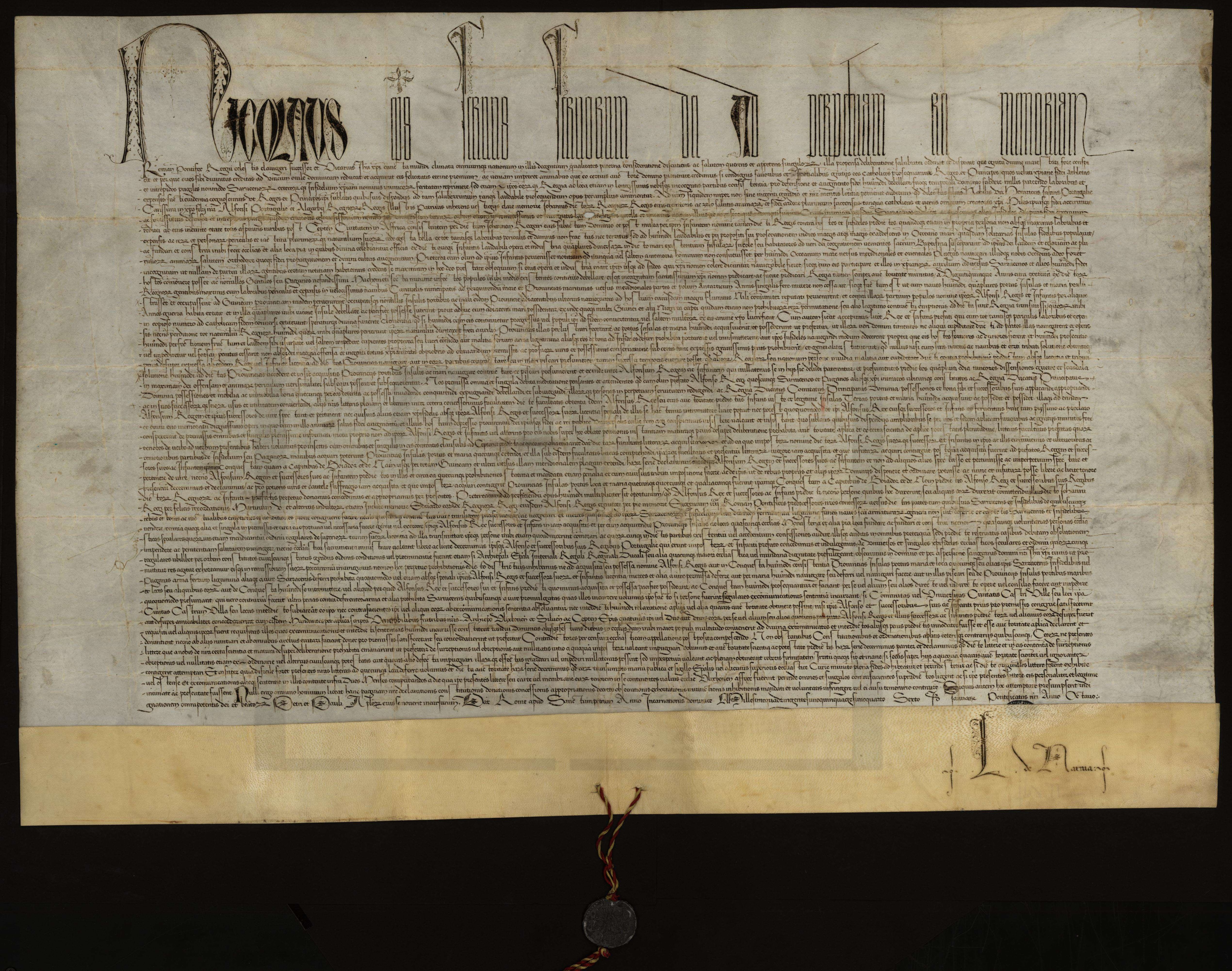
3. In March, the Vatican rejected the ‘Doctrine of Discovery’ used to Justify Colonial Quest and Theft of Land. A Vatican statement said the papal bulls, or decrees, “did not adequately reflect the equal dignity and rights of Indigenous peoples” and “therefore [the Vatican] repudiates those concepts that fail to recognize the inherent human rights of Indigenous peoples, including what has become known as the legal and political ‘doctrine of discovery.’” This is the first official acknowledgment of the Catholic Church for his first place participation in the enslavement of people around the globe, and particularly of Africans. We had published here Dum Diversas or The Vatican’s Authorization of Slavery, which highlighted the major role played by the Vatican in the slave trade of Africans over the centuries.
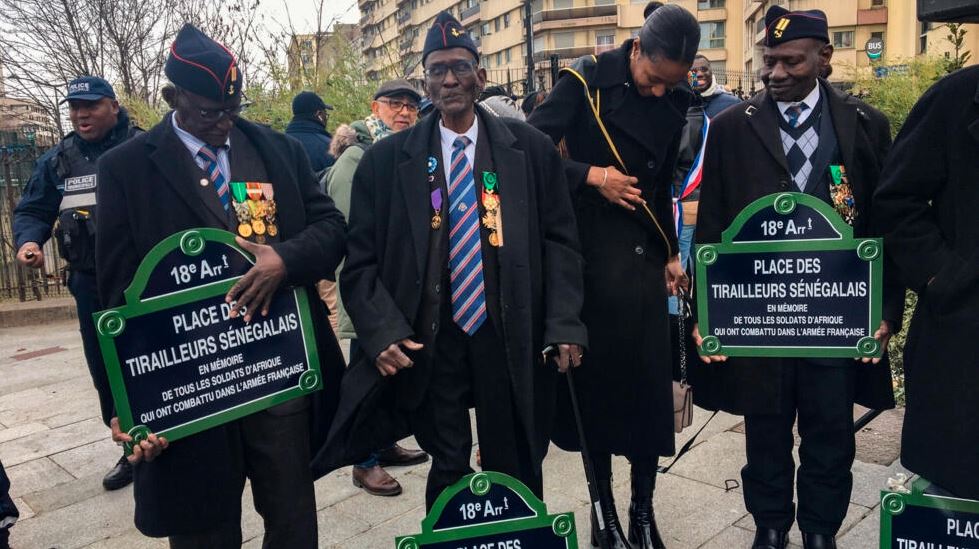
Inauguration of the Place des Tirailleurs-Sénégalais with Tirailleurs aged over 90-years-old on 10 March 2023 (Source: Sylvie Koffi, RFI)
4. Nine Senegalese tirailleurs, men who served for France for its liberation during the wars, have now won the right to receive their pension while living in Senegal. These men, aged 85 to 96 years, have served in the French army during the wars of Indochina and Algeria, and were forced to live in France at least 6 months per year to get their retirement pension! Can you imagine serving for a country that does not even want to pay you a dime for your services (remember Thiaroye?)? As a result, most of them never returned home. This year, they were able to finally go home. At Last: Senegalese Tirailleurs now allowed to receive their pension while living in Senegal
Zambian flag
5. Following months of talks, Zambia successfully agreed new repayment terms with its state creditors on up to $6.3bn (£5bn) debt, including over $4bn owed to China. … Although the details of the deal have not yet been released [as always, populations are kept in the dark, while their future is being signed over], it appears that Zambia will be granted an extended repayment time of over 20 years, including a three-year grace period with interest-only payments. In recent years, the economic debt of Zambia has been making the locals apprehensive; this is a positive step. Zambia breathes a Sigh of Relief after $6bn Debt Deal.
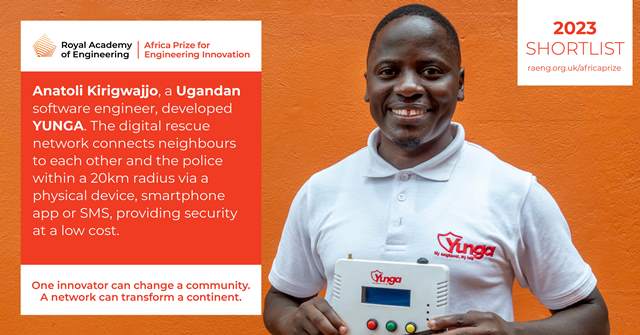
Anatoli Kirigwajjo (Source: 256businessnews.com)
6. Anatoli Kirigwajjo from Uganda, the founder and CEO of Yunga, a local digital security network that enhances neighbor-to-neighbor safety, was awarded “The Africa Prize for Engineering Innovation” dedicated to developing African innovators, an award, founded by the Royal Academy of Engineering in the UK. In a modern world where drums are no longer used to alert communities, it is imperative to find a solution that will be used to alert all neighbors within a community of some impending issue. His innovation is based on the ancestral drum tradition, and the “10,000 household model” – a traditional practice where people use drums to alert their community in case of an emergency. Ugandan Engineer takes Africa’s Top Innovation Award for His Safety Invention.
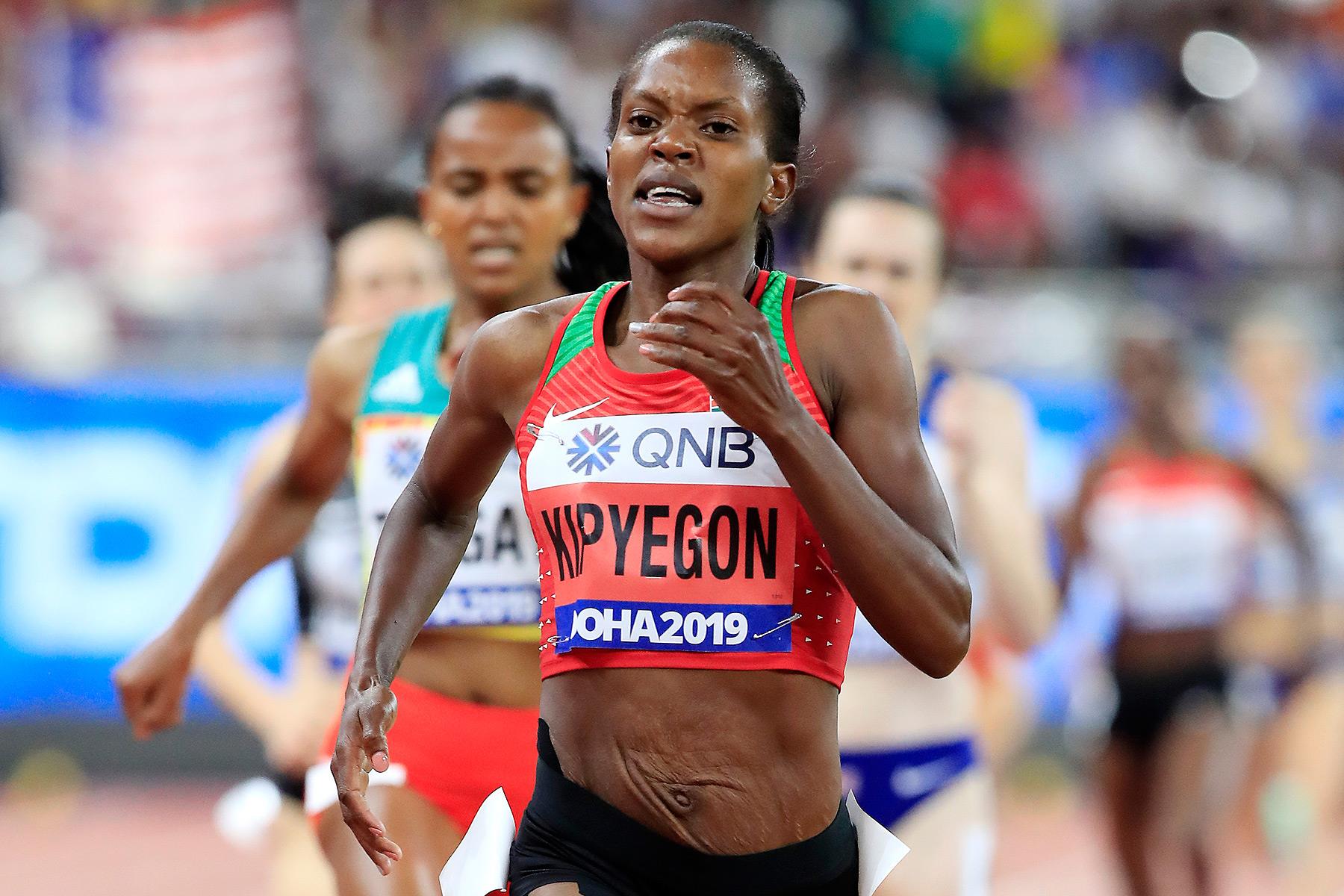
Faith Kipyegon (Source: WorldAthletics.org)
7. Africans made us Proud at the 2023 World Athletics Championships in Budapest, Hungary. There were so many outstanding contributions, and amazing firsts. Hugues Fabrice Zango of Burkina Faso who took home the gold medal in the men’s triple jump, thereby offering his country its first gold at the World Championships. Letsile Tebogo of Botswana made us proud by becoming the first African to win a silver medal at the World Championships ever in the men’s 100 m, and a bronze medal in the 200 m. Faith Kipyegonof Kenya delivered! There isn’t another athlete as consistently dominant over such a range as Kipyegon, and she was rightfully selected among the best African athlete of the year; at the world championships, she won gold medals in the women’s 1,500 m and 5,000 m in Budapest. Ladies Gudaf Tsegay, Letesenbet Gidey, and Ejgayehu Taye of Ethiopia dominated their events to give us a trio winning gold, silver, and bronze medals respectively in the women’s 10,000 m. Please check out the exhaustive list of winners.
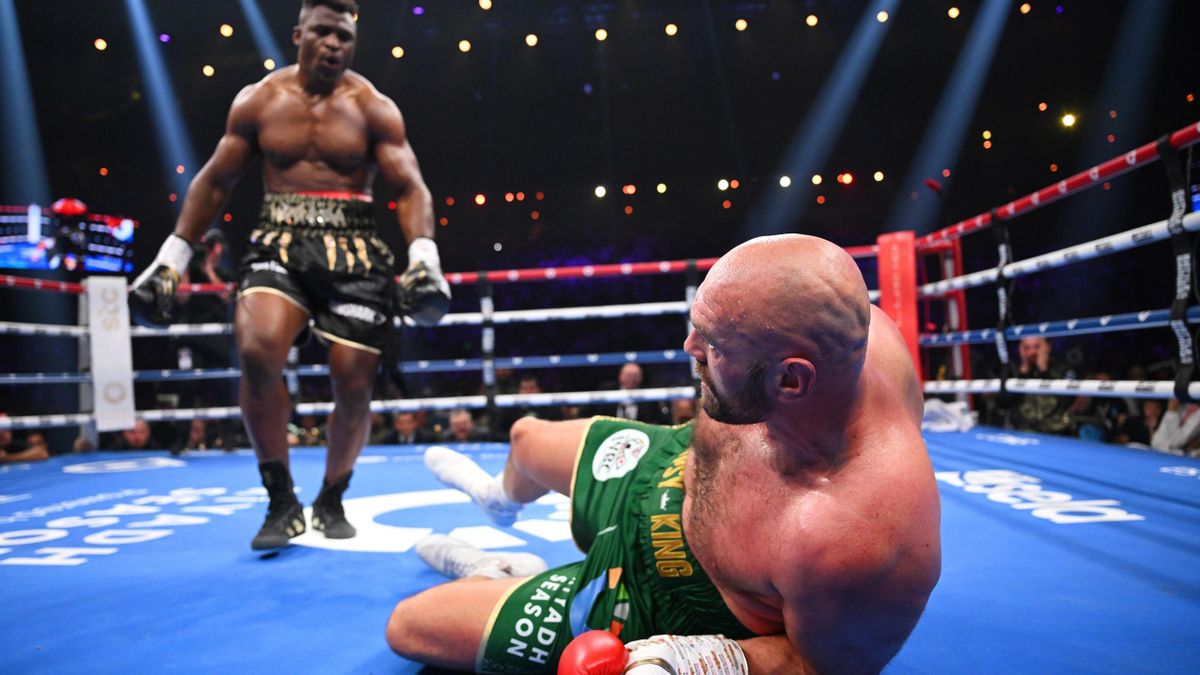
Francis Ngannou knocking down Tyson Fury in the 3rd round (Source: Eurosport)
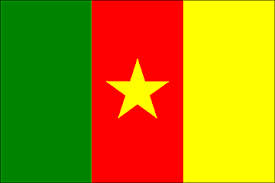
8. Francis Ngannou, professional mixed martial artist and professional boxer, of Cameroon made us proud in the “Battle of the Baddest” against the undefeated world heavyweight champion Tyson Fury, which place on October 28, 2023, in Riyadh, Saudi Arabia. Ngannou was able to knock down Fury in the third round, taking the fight all the way to the scorecards, in which the judges awarded Fury the victory in a controversial split decision. To many, not just Africans, the real winner was Ngannou.
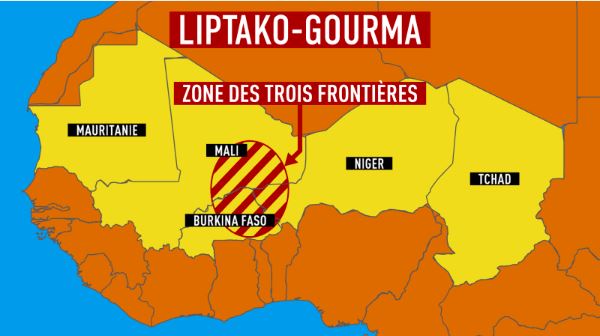
Map of Liptako-Gourma region (Source: aha-international.org)
9. Mali, Burkina Faso, and Niger signed a Mutual Defence Pact called the Liptako-Gourma Charter, to protect their countries, and fight effectively against terrorists which have been occupying the northern parts of their territories. The Liptako-Gourma Charter establishes the Alliance of Sahel States (AES), which aims to “establish an architecture of collective defence and mutual assistance for the benefit of our populations“, Colonel and leader of Mali, Assimi Goïta wrote on X. These countries have shown that we, Africans, can take care of ourselves, without the need of puppet organizations such as ECOWAS.
Ibrahim Traore, President of the Transition, raises the new plate renaming the boulevard after President Thomas Sankara (Source: LeFaso.net)
11. On the 36th anniversary of Thomas Sankara’s assassination, Burkina Faso renamed Boulevard in Honor of Thomas Sankara; the boulevard, one of the main streets of the capital Ouagadougou, was previously known as General Charles de Gaulle Boulevard. Thus, Burkina Faso has replaced the country’s former colonial ruler with its very own leader and inspiration to the nation, Thomas Sankara. We applaud Burkinabes for doing this, and hope to see many African countries follow in their tracks, as many streets and cities still wear the names of European men who wiped out entire peoples (Brazzaville, Port-Gentil, etc).
Woppa Diallo and Mame Bougouma Diene (Source: The Caine Prize/Guardian)
12. Senegalese couple, Mame Bougouma Diene and Woppa Diallo, has made history this week by winning the Caine Prize for African Writing [Senegalese Couple Makes History by Winning Literary Caine Prize for African Writing]. It is the first time in the history of the prize that it is awarded to a couple. Diallo is a lawyer and activist while French-Senegalese American Diene is a humanitarian and a short-story writer. There were also lots of African writers who published acclaimed work this year.
Map of Mali with its capital Bamako
13. Mali military forces succeeded in Kidal where France and Allies could not! The forces were able to liberate the city of Kidal from terrorist groups where France and its allies and the MINUSMA could not. They succeeded in a few days, where it took years for France and co. On November 14 2023, president Assimi Goïta of Mali announced the liberation of Kidal, stronghold of terrorist groups for the past few years. The news was so stunning that even the BBC who has been calling the Mali government, ‘the junta’ and all sorts of names, and always showing ugly pictures of Assimi Goïta, had to, begrudgingly write the article and for once showed him in a decent image :).
Ibrahim Traore, President of the Transition, raises the new plate renaming the boulevard after President Thomas Sankara (Source: LeFaso.net)
On the 36th anniversary of Thomas Sankara’s assassination, Burkina Faso rulers have officially renamed one of the main streets of the capital Ouagadougou, previously known as General Charles de Gaulle Boulevard, replacing the country’s former colonial ruler with its very own leader and inspiration of the nation, Thomas Sankara.
The event took place on October 15 at the Thomas Sankara Memorial in Ouagadougou. Attendees included relatives of the late leader, the president of the transition, Ibrahim Traore, and government officials were in Ouagadougou. During this ceremony, President Thomas Sankara was elevated to the rank of hero of the nation.
“We are heirs of the revolution” by Thomas Sankara
“Article 1. The late Captain Thomas Isidore Noël Sankara is recognised as a Hero of the Nation […] The day of homage to the late Captain Isidore Thomas Noël Sankara is to be celebrated every 15th of October in Ouagadougou,” Bassolma Bazié, Minister of the Civil Service of Burkina Faso said.
The President of the transition, captain Traoré, laid the foundation stone for the Thomas Sankara mausoleum. The mausoleum will be built on the very site of the assassination of Thomas Sankara and of 12 of his companions. The Memorial complex will contribute to the strengthening of national unity, the valorization of history and collective memory, the revival of tourism in Burkina Faso, the revitalization of cultural and creative industries, the blossoming of science productions and education.
Ibrahim Traore lays the foundation for the Thomas Sankara Mausoleum (Source: LeFaso.net)
The boulevard, previously known as Boulevard Charles de Gaulle, adjoining the memorial, has been renamed after the panafricanist icon and former president Thomas Sankara.
“Today the Boulevard has been named Boulevard Thomas Sankara instead of Boulevard Charles de Gaulle. So today we’re very proud. Because if the Boulevard had been named after imperialists, today we think that we also have heroes, we also have valiant Burkinabe [after whom we] can name these Boulevards or streets […]” [Africanews]
Recently, I was having a conversation with a friend about leadership in Africa: the endless complaints about our poor leadership, or the killing of our good leaders, and then my friend said talking about Mali, “I wish we had more Assimi Goïta, Choguel Maïga, Abdoulaye Maïga, … on the continent.” Although my heart warmed at this statement, it reminded me that the fight starts at the bottom with each of us. We have to be the leader we want to see; we have to be the Assimi we want to have as a leader. Leadership starts with us, at the individual level. We cannot leave all the task to Assimi or whoever is at the head, we have to do our part; that is the only way to move forward. Otherwise, if something happens to the leader, what will become of our cause? In the article “How do We Continue the Fight when the Head has been Cut Off?”, I wrote, “the prize of freedom is too great to lay on the shoulders of one man, one leader, or a few… we do not follow men, we follow ideas… we are not fighting for men, we are fighting for our right to dignity, our right to humanity, our liberty.“
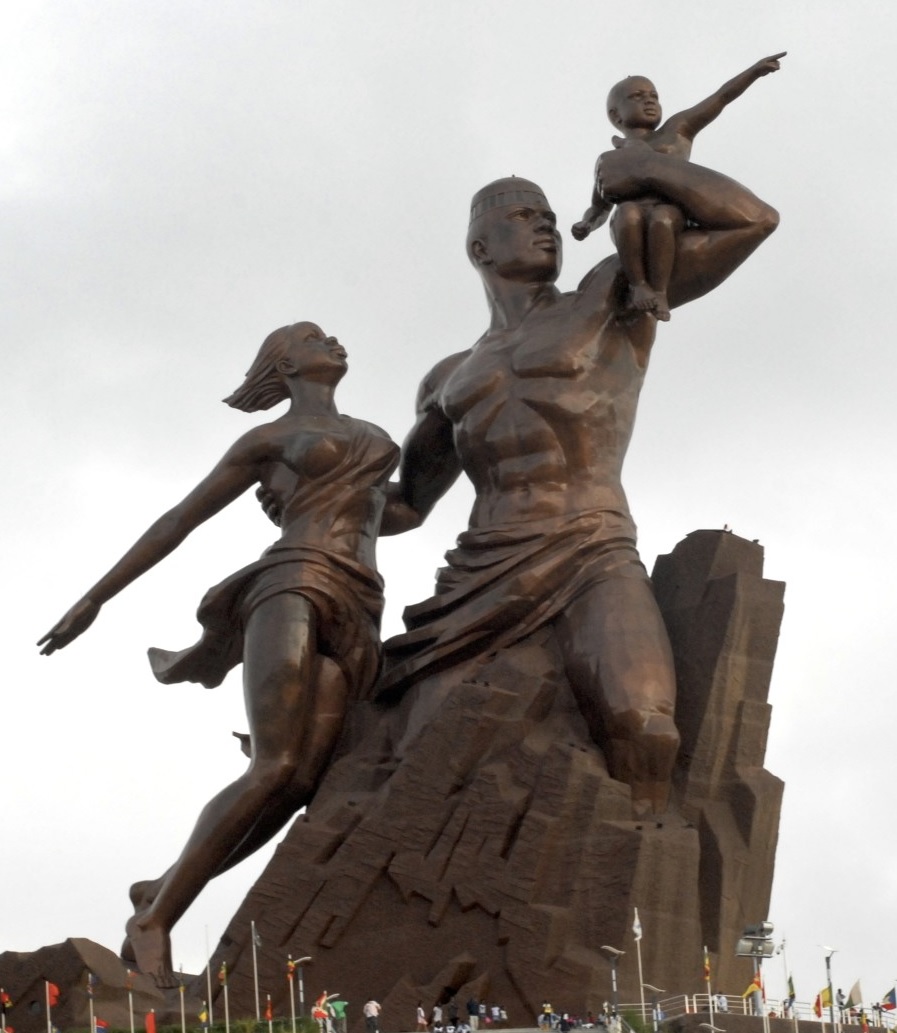
African Renaissance Monument in Dakar (Wikipedia)
Very often it is said among Africans, that we have the leaders we have because that is, at the root, who we are. When you have watched Thomas Sankara, Amilcar Cabral, Patrice Lumumba, Samora Machel, Modibo Keita, Kwame Nkrumah, Ruben Um Nyobe, Felix Moumie, Sylvanus Olympio, Ernest Ouandie, Barthelemy Boganda, Mehdi Ben Barka, Muammar Kadhafi, and many others get assassinated by or in conjunction with foreign forces because of their vision for their countries, it is easy to cower away, and just bend the heads and accept whatever comes in silence. However, cowering in silence, perpetuates the problem endlessly. People often say, we all come on earth and will have to leave at some point, why not leave with dignity? Why cower away? If we start at our level, getting involved in our communities, doing our part (whatever our talents are), being there for each other, do you really think corruption will persist? Let us not wait for Messiahs (and we know how rare those are), but let us start laying the bricks to the foundation of the home we want to live in. If you are an educator, make sure to lay the foundation for the best education possible; if you are a brick layer, do your work with integrity; if you are an okada driver, drive with integrity; if you are a housewife, raise the next leader; if you are a business man, make sure honesty is at the core of your business; if you are a student, arm yourself to be the next leader; … If you want to be led by honest people, then deal with honesty in your daily encounters; if you want to have a transparent government, start with transparency at your level, etc. As my favorite quote by Dr. Martin Luther King Jr goes, “If you are called to be a street sweeper, sweep streets even as Michelangelo painted, or Beethoven composed music or Shakespeare wrote poetry. Sweep streets so well that all hosts of heaven and earth will pause to say, “Here lived a great sweeper who did his job well.” ” We all play a part in this whole that is our homeland, and each one of us is needed!
Thomas Sankara once said in one of his interviews, “if you kill Sankara, you will have a million Sankaras.” Let’s have a million Assimi Goïta, a million Choguel Maïga! Let us have millions of African leaders! Let us have a billion exemplary leaders and more!
“We are heirs of the revolution” by Thomas Sankara
Almost 4 decades after Thomas Sankara and his 12 companions were treacherously murdered, they are given a burial at the memorial erected in Sankara’s honor in front of the place where they were assassinated, at the Conseil de l’Entente. His family has boycotted the ceremony because, as they say, how can you bury such a hero in the place where he was murdered? In a press release, they said, “We believed and continue to believe that it is fundamental that a space be found that allows to gather and appease hearts, and not to divide and increase resentment,” the Sankaras added in their statement on Sunday, calling the place chosen by the government “conflictual and controversial”. I know that Thomas Sankara now belongs to the entire nation of Burkina Faso, and even to the continent of Africa, but shouldn’t his family have a say as to where he is buried?
At the time of Thomas Sankara and companions’ murders in 1987 ordered by Blaise Compaore and his croonies, Sankara and his comrades were buried in some common fields with no names. Later, their bodies were exhumed in 2015 for legal proceedings.
What do you think? Is it okay to bury Thomas Sankara, our true panafricanist and anti-imperialist revolutionary, who fought for our freedoms, in the place where he was murdered?
As Sankara always said, Homeland or death, we shall overcome!


















 African Heritage