Sad Moments in Mali : Fallen Brothers and the Black Winter


Map of Mali with its capital Bamako

Over the past week, there have been severe confrontations/battles in Mali between the government forces backed by the proud people of Mali and the jihadists forces funded by the West. These intense attacks culminated on April 25, 2026, with the deaths of the Malian Defense Minister, General Sadio Camara, members of his family, and countless soldiers and civilians. We have learned that the attacks were complex, coordinated, and simultaneous.

General Assimi Goita

As always, the Western media celebrated, and wondered where the Malian president was, and told us that the rebels were now in total control of Kidal. On Tuesday, President General Assimi Goïta, addressed the nation, and told us that, “A violent halt was put to the attackers who sought to establish a climate of violence.” These attacks, as President Assimi Goïta shared, were “coordinated [and] of an extreme gravity.”
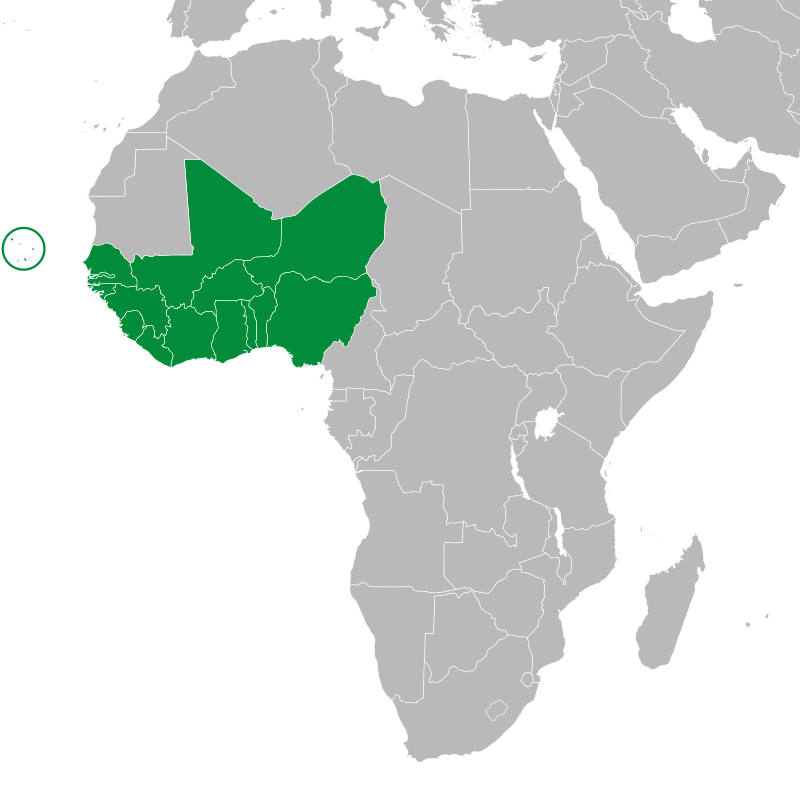
ECOWAS Members – old map

The attacks were quite complex, as they were very sophisticated; the bandits were no longer thugs driving simple motorcycles, but advanced military vehicles instead, had high technology, missiles, and even satellite access for such coordination, and much more. As you can see, common bandits cannot have access to such high tech or intelligence: where do they get the money? It is clear that they are funded by the West, with France at the forefront, Ukraine, the E.U. and thus NATO, and the ECOWAS countries which are governed by puppets of France (Côte d’Ivoire, Nigeria, Benin, Algeria, Mauritania). Remember that American general who lied about Ibrahim Traoré last summer visited several of these countries to establish other centers for the AFRICOM (What are American Troops doing in Nigeria ?)? This time, the jihadists hit almost simultaneously the cities of Gao, Kidal, Mopti, and Kati. You can see that this is an army, and not just ‘rebels’ as labelled by the western media, directly financed by the West with France in the front. It is said that they are numbering several thousand men.
Flag of Mali
Flag of Mali

President Goïta said, “Thanks to the promptness and professionalism of the armed and security forces, the attackers – whose objectives was to instill a climate of widespread violence in the affected localities –were  dealt a decisive blow. Thanks to the calm of the personnel deployed and the maintenance of a cohesive chain of command, the enemy’s nefarious plot was thwarted, resulting in the neutralization of a significant number of attackers. As I speak to you now, security measures have been reinforced; the situation is under control, and operations involving combing, search, intelligence gathering, and security consolidation remain ongoing.”
 

AES Logo

This, as you can see, is the black winter (dark winter), President Ibrahim Traoré of Burkina Faso referred to at the beginning of the year. However, what the enemy has forgotten is that Assimi Goïta, Ibrahim Traoré, Abdourahamane Tchiani are all proud descendants of the great Mali Empire, Songhai Empire, Kanem-Bornu Empire, and offspring of the mighty Sundiata Keïta, Kankan MusaSamori Touré, and so many others; these are men whose ancestors have been fighting for their freedom for generations (like Malians fighting the French forces at the battle of Sikasso). The fight for freedom did not start yesterday in 2020, but has been ongoing for centuries. As President Goïta said, “Our people have made the choice, the choice of sovereignty and dignity. The choice is the expression of a national will, fully embraced and boldly asserted. It comes at a price, and we are fully aware of it. This choice is the only path worth taking if we wish to offer our children a future that is free, just, and prosperous.” As president Goïta told us in 2022, No Sacrifice is too Big for this Country.

The Griot, the Preserver of African Traditions

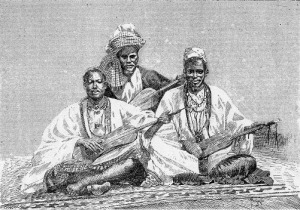
Senegal_Wolof griot 1890
Wolof griot in Senegal, c 1890

Africa has a strong, deep, and rich oral tradition. In many countries across West Africa, this tradition is often preserved by the griots, who are historians, storytellers, praise singers, poets, and/or musicians. Often, the griot is the preserver of the history of a family, a clan, and sometimes of the nation. This is done by narrating how the family/clan/tribe/nation was founded and its outstanding achievements. In essence, the griot is a repository of the oral tradition, and is often seen as a societal leader due to his or her traditional position as advisor to kings and leaders.  The griot’s praises centers around the leader of the clan, of the tribe, and of the nation. Thus, great kings throughout history had griots: Sundiata KeitaKankan Musa, and many others.

The Mali Empire (Malinke Empire), at its height in the middle of the 14th century, extended from central Africa (today’s Chad and Niger) to West Africa (today’s Mali and Senegal). The empire was founded by Sundiata Keita, whose exploits remain celebrated in Mali today. In the Epic of Sundiata, King Naré Maghann Konaté offered his son Sundiata a griot, Balla Fasséké, to advise him in his reign. Balla Fasséké is considered the founder of the Kouyaté line of griots that exists to this day.

MALI_empire
Mali Empire (Wikipedia)

Each aristocratic family of griots accompanied a higher-ranked family of warrior-kings or emperors, called jatigi. Moreover, most villages and prominent clans also had their own griot, who told tales of births, deaths, marriages, battles, hunts, affairs, and hundreds of other things.

The Cameroonian author Francis Bebey writes about the griot in his book African Music, A People’s Art (Lawrence Hill Books): “The West African griot … knows everything that is going on… He is a living archive of the people’s traditions… The virtuoso talents of the griots command universal admiration. This virtuosity is the culmination of long years of study and hard work under the tuition of a teacher who is often a father or uncle. The profession is by no means a male prerogative. There are many women griots whose talents as singers and musicians are equally remarkable.

Mali_Griots of Sambala king of Medina Fula people 1890
Griots of Sambala with the King of Medina (Fula people of Mali) c.1890

In Mande society, the jeli was an historian, advisor, arbitrator, praise singer (patronage), and storyteller. Essentially, these musicians were walking history books, preserving their ancient stories and traditions through song. Their inherited tradition was passed down through generations. Their name, jeli, means “blood” in Mandinka language. They were said to have deep connections to spiritual, social, or political powers as music is associated as such. Speech is said to have power as it can recreate history and relationships.

Youssou NDour_1
Youssou N’Dour (Source: fanart.tv)

In addition to being singers and social commentators, griots are often skilled musicians. Their instruments include the kora, the khalam (also spelled xalam), the goje (called n’ko in the Mandinka language), the balafon and the ngoni.

Griots can be found throughout Africa and bear different names from country to country. A world-renowned singer and grammy award winner descending from a family of griots is Senegalese singer, Youssou N’Dour. Below is the trailer to the movie Griot. Enjoy!

Kouroukan Fouga, la Constitution de l’Empire du Mali – la plus vieille constitution republicaine au monde?

Soundiata Keita a l'Assemblée constitutive de l'empire du Mandé avec les chefs de guerre (Source: Wikipedia.fr)
Soundiata Keita a l’Assemblée constitutive de l’empire du Mandé avec les chefs de guerre (Source: Wikipedia.fr)

Le Kouroukan Fouga fut la constitution de l’Empire du Mali (1235 – 1645), et officiellement la plus vieille constitution républicaine en Afrique, et au monde.  Le Kouroukan Fouga réuni officiellement la fédération des clans Mandingues sous un seul et unique gouvernement.  Cette constitution régit la vie de l’empire à travers des lois auxquelles tout le monde doit obéir.  Mansa (Empereur) Soundiata Keïta présenta ce document en 1236 après la célèbre bataille de Kirina, dans l’actuel cercle de Kangaba, et dès lors cette constitution a été léguée de générations en générations par les griots ou djeli. Les griots ont conservé une grande partie de l’histoire de l’empire du Mali, y compris ses rois, les batailles, et le système gouvernemental.  Decouvrez avec moi la première constitution républicaine mondiale, et appréciez le génie de nos ancêtres. Si seulement nous, africains, pouvions tous adaptés celle-ci, et non perdre le temps avec ces constitutions importées de l’occident. (For English, click here).

Article 1er : La Société du grand Mandé est divisée en seize (16) porteurs de carquois, cinq (5) classes de marabouts, quatre (4) classes de Nyamakalas (1) une classe de serfs (esclaves) (Mofé molu)

Chacun de ces groupes a une activité et un rôle spécifiques

Article 2 : Les Nyamakalas se doivent de dire la vérité aux chefs, d’être leurs conseillers et de défendre par le verbe les règles établies et l’ordre sur l’ensemble du royaume.

Article 3 : Les Morikandas lolu (les cinq classes de marabouts) sont nos maîtres et nos éducateurs en islam. Tout le monde leur doit respect et considération.

Article 4 : La société est divisée en classe d’âge. A la tête de chacune d’elles est élu un chef. Font de la classe d’âge les personnes (Hommes ou Femmes) nées au cours d’une période de trois années consécutives.

Les Kangbès (Classe internationale entre les jeunes et les vieux) doivent être conviés pour participer à la prise des grandes décisions concernant la société.

Assemblée constitutive de l'empire du Mandé (Source: Wikipedia.fr)
Assemblée constitutive de l’empire du Mandé lors de la charte du Kouroukan Fouga (Source: Wikipedia.fr)

Article 5 : Chacun a le droit à la vie et à la préservation de son intégrité physique. En conséquence, tout tentation d’enlever la vie à son prochain est punie de la peine de mort.

Article 6 : Pour gagner la bataille de la prospérité, il est institué le Kongbèn Wölö (un mode de surveillance) pour lutter contre la paresse et l’oisiveté.

Article 7 : Il est institué entre les Mandenkas, le Sanankuya (cousinage à plaisanterie) et le tanamanyoya (forme de totémisme. En conséquence, aucun différent né entre ces groupes ne doit dégénérer, le respect de l’autre étant la règle.

Entre Beaux-frères et Belle-sœur, entre grands parents et petits, tolérance et le Chahut doivent être le principe.

Article 8 : La Famille est désigné famille régnante sur l’empire

Article 9 : L’éducation des enfants incombe à l’ensemble de la société. Continue reading “Kouroukan Fouga, la Constitution de l’Empire du Mali – la plus vieille constitution republicaine au monde?”