Last week, the government of Ghana made history by granting citizenship to 524 Afro-descendants, as part of the “Beyond the Return,” program aimed at reconnecting the diaspora with their ancestral roots. This is part of Ghana’s attempt to market itself as a mecca for African descendants in the diaspora to visit and return back to the continent. Over five centuries, millions of Africans were taken into slavery from the shores of the continent, many passing through the Elmina Castle (Reclaiming African History: Elmina Castle – West Africa’s Oldest Slave Fort) in Ghana. Granting citizenship in an African country to these Afro-descendants is a major step in embracing our brothers and sisters of the diaspora and recognizing and acknowledging that all of Mama Africa’s offspring are needed and welcome. During the citizenship ceremony, President Akufo-Addo of Ghana told all present, “Your presence here is already making a difference… “You are human bridges connecting us to both sides of the Atlantic.” … “Your ancestors left these shores under tragic and inhumane circumstances. Today, we reclaim that connection by welcoming you as part of our Ghanaian family,”
Quoting icons of Pan-Africanism, including Marcus Garvey and Peter Tosh, the President underscored the shared heritage that unites all people of African descent. “Africa is your home, and Ghana welcomes you with open arms. This is not just a ceremony—it is a powerful affirmation of our collective identity and destiny,” he concluded.
In November 2023, while on his first visit to Kenya as a monarch, King Charles gave one of those empty speeches in which he acknowledged the past atrocities committed by Great Britain and its colonial legacy. He said there were ‘no excuses‘ for it, yet did not apologize! He told guests that “the wrongdoings of the past are a cause of the greatest sorrow and the deepest regret.” (No Apology from King Charles III in Kenya). This year, at the Commonwealth Summit which took place last week in in Samoa, the leaders of the Commonwealth somehow expected an apology from the King of Great Britain about slavery, the part that Great Britain played in the slave trade, and possible reparations. Has anything changed in a year? It would seem that these Commonwealth leaders had not paid attention to the King’s visit to Kenya, or maybe they thought it was going to be different? If King Charles III had not apologized for the atrocities committed by the British during the colonial era in Kenya, what made them think that he was going to apologize for slavery? or that they could now talk about reparations?
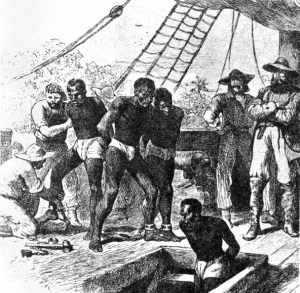
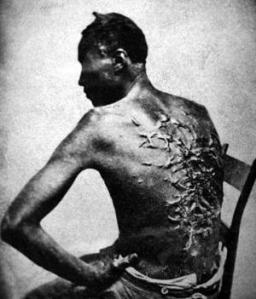
The back of a slave
This year, the King of the British made another empty speech at the Commonwealth Summit, telling everyone how the “most painful aspects of our past continue to resonate“, as if we did not know, for our ancestors were on the receiving end, their pains still resonate with us. He added, “None of us can change the past. But we can commit, with all our hearts, to learning its lessons and to finding creative ways to right inequalities that endure.” What does this even mean? What is Britain going to commit to, with all its heart? Learning its lessons? Which lessons? What lessons can one learn when one’s coffers have been filled to the brim from others’ pain? What lessons can one learn when because of the slave trade, one has become one of the richest empires in the world? Those lessons are definitely different from the ones the enslaved and the victims have learned. From this, it is clear that the British monarch is truly mocking us!
Below is an excerpt from the BBC telling us, why King Charles III cannot quite apologize for slavery!
=====
The “most painful aspects of our past continue to resonate“, King Charles III said this week to Commonwealth leaders in Samoa, as arguments about reparations and apologies over the slave trade rumbled once again.
That’s become an occupational hazard for the Royal Family, as it can’t shake off questions about the long shadow of historic links to slavery.
It’s even more pointed in a forum such as the Commonwealth summit, with leaders representing some of the countries most affected by the legacy of colonialism and slavery.
But even if the King had a personal belief that there should be a symbolic apology or a commitment to reparations, he wouldn’t have been able to deliver it [as if he could think otherwise, when his family and entire kingdom has benefited from it]. Monarchs speak on the advice of ministers – and on a question of such political sensitivity, his speeches will have to stay within the boundaries of government policy. In other words, he has to stick to the script.
… “None of us can change the past,” the King said diplomatically, neatly aligning with Prime Minister Keir Starmer’s line that we “can’t change our history”.
… As head of state, the King is the symbolic focus of calls for such redress, whether that’s financial reparations or some other ways addressing of historic wrongs. That’s not going to go away.
That’s awkward but he’ll take that in his stride, as it’s a political decision that he can’t change and reparations for the past seem unlikely when current UK budgets are under intense stress. [their coffers were filled from your pain, now that you ask for something, their budgets are under stress].
But there’s also the more complicated question of how much the monarchy, as both a family and an institution, might have a closer responsibility.
For example, the Royal African Company, founded in the 17th Century under royal patronage, has been claimed as transporting more enslaved people from Africa across the Atlantic than any other company.
But history, like people, can be full of contradictions. When it came to Britain’s pioneering efforts to abolish slavery, in the early 19th Century, research by historian Prof Suzanne Schwarz found the Royal Family itself was divided. The nephew of George III, the Duke of Gloucester, was one of the most important campaigners to abolish slavery – a tireless opponent of the cruel trade and a supporter of the Royal Navy’s efforts to intercept slave ships. But before the royals feel the clouds lifting, George III’s son, the future William IV, was one of the most enthusiastic defenders of slavery.
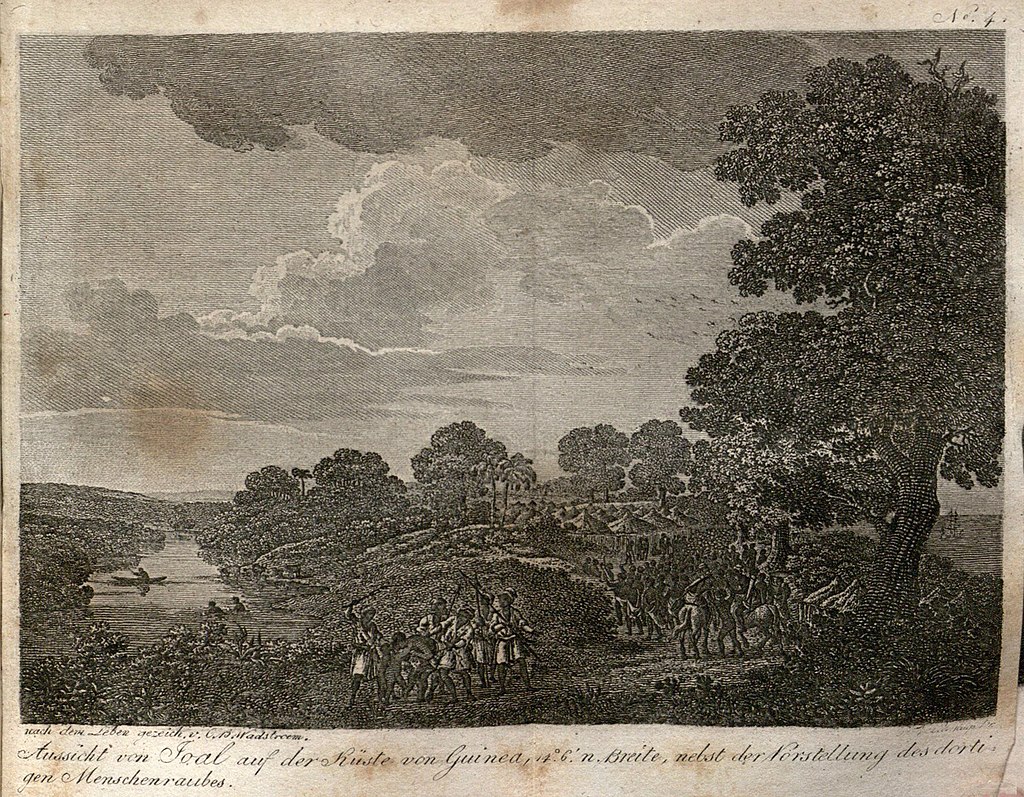
An African King who was called King of Almamany [Dalmanny] “had entirely prohibited the Slave trade throughout his whole Kingdom, so that they could no longer contact the French slave traders anchored in the mouth of the Senegal [river].” He also banned the sale of alcohol. However, the Senegal Company [Compagnie du Sénégal], a French company which administered the territories of Saint-Louis and Gorée island as part of French Senegal, initially attempted to bribe the King to change his policy on the trade in people, but he refused their presents. Consequently, the Senegal Company resorted to bribing the lighter-skinned Moors to attack and kidnap Dalmanny’s subjects. The Company supplied the Moors with the necessary arms, gunpowder and ammunition to carry out the raids [does it not remind of something today in West Africa with all these jihadists? History repeats itself]. Many of his subjects were made prisoners and taken into slavery. Wadstrom himself had seen a few in the enclosures. They were chained two by two by the ankles; wounded in combat, they did not receive any kind of care. There were also individual kidnappings. Wardstrom said that “Negroes never venture to go out into the fields unless very well armed.”
From Bwemba Bong, Quand l’Africain etait l’or noir de l’Europe. L’Afrique: actrice ou victime de la traite des noirs? MedouNeter (2022), p. 165; George Kay, La Traite des Noirs, Robert Laffont (1968) p.129
I knew that the Catholic Church via the Pope had authorized slavery in the 1400s, but I didn’t know that they had authorized the eradication, subjugation, etc, of African people. Somehow I never connected the two.
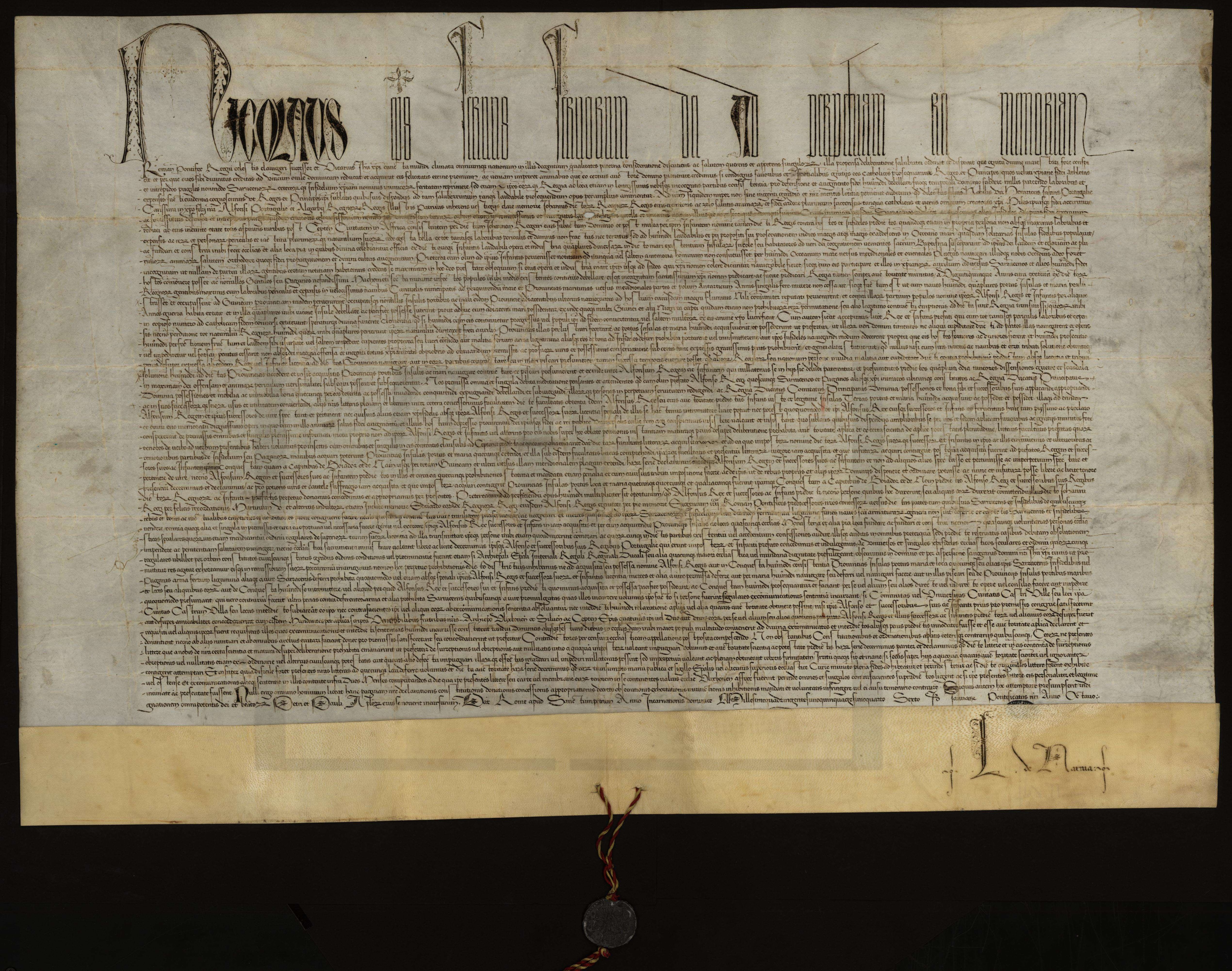
The bull, Pope Nicholas V‘s decree, of 1452 was addressed to Afonso V and conceded Portugal’s right to attack, conquer and subjugate Saracens and pagans; this is also known as Dum Diversas. A papal bull is a document through which a pope of the Roman Catholic Church issues an important public decree, letters patent, or charter.
Pope Nicholas V
“We grant you [Kings of Spain and Portugal] by these present documents, with our Apostolic Authority, full and free permission to invade, search out, capture, and subjugate the Saracens and pagans and any other unbelievers and enemies of Christ wherever they may be, as well as their kingdoms, duchies, counties, principalities, and other property […] and to reduce their persons into perpetual servitude.”
These clearly refers to the lands along the coast of West Africa. By these decree, Pope Nicholas V conceded to the King of Portugal Afonso V and Prince Henry and all their successors, all their conquests of Africa, and reduction to perpetual servitude of all people deemed non-believers and enemies of Christ, and all their properties.
A significant subsequent concession given by Nicholas V in a brief issued to King Alfonso in 1454 extended the rights granted to existing territories to all those that might be taken in the future. Together with a second reference to some who have already been enslaved, this has been used to suggest that Nicholas sanctioned the purchase of black slaves from “the infidel”: “… many Guineamen and other negroes, taken by force, and some by barter of unprohibited articles, or by other lawful contract of purchase, have been … converted to the Catholic faith, and it is hoped, by the help of divine mercy, that if such progress be continued with them, either those peoples will be converted to the faith or at least the souls of many of them will be gained for Christ.”
This bull is currently conserved at the Institute of the National Archives of Torre do Tomba in Lisboa, Portugal, under the reference PT/TT/BUL/0007/29 and is fully translated to French in the book “le Péché du pape contre l’Afrique” (The Sin of the Pope against Africa) (éd. Al qalam, Paris, 2002) de Assani Fassassi, P. 10 – 21.
Please find below the Papal bull by Pope Nicholas V.
Sculpture of Queen Mary in Copenhagen (Source: NY Times – Nick Furbo)
If you are like me, you probably did not know that Denmark (and Norway) was involved in slavery in Africa, and that Denmark had several colonies, and forts in Africa, and exported slaves to its colonies in the Americas. Just last week, Denmark erected its first public statue of a Black woman, a rebel Queen, in Copenhagen; this was the statue of Queen Mary, a Black slave who led the slave uprising in the Virgin islands. The sculpture was inspired by Mary Thomas, known as one of “the three queens.” Thomas , along with two other female leaders Agnes and Matilda, unleashed an uprising in 1878 called the “Fireburn.” Fifty plantations and most of the town of Frederiksted in St. Croix were burned, in what has been called the largest labor revolt in Danish colonial history.
Fort Christiansborg (now Osu Castle in Ghana)
Denmark was one of the Signatory Powers to the Berlin Act of26th February, 1885 (No. 17), as well as to the Brussels Act of 2nd July, 1890 (No. 18); she has also entered into Treaty Arrangements with the Congo Free State (No. 45).
By a Convention dated 17th August, 1850, ‘the Danish forts and Possessions on the Gold Coast were ceded to Her Britannic Majesty for the sum of £10,000.
The following are extracts from that Convention:—
Preamble.
“ HIS Majesty the King of Denmark having offered to cede to Her Majesty the Queen of the United Kingdom of Great Britain and Ireland all the forts and Possessions belonging to the Crown of Denmark, situated on that part of the coast of Africa which is called the Gold Coast, or the Coast of Guinea, and Her Britannic Majesty having resolved to accept that offer, their said Majesties have named as their Plenipotentiaries to conclude a Convention for carrying such cession into effect, that is to say :”
[Here follow the names of the Plenipotentiaries.]
Cession of Danish Forts and Territorial Rights on the Gold Coast, or Coast of Guinea.
Fort Kongensteeen
“ART. I. In consideration of the sum of£10,000sterling, to be paid by Her Majesty the Queen of the United Kingdom of Great Britain and Ireland to His Majesty the King of Denmark, on the exchange of the Ratifications of the present Convention,+‘
Fort Prindsensteen
His Danish Majesty cedes to Her Britannic Majesty, to be possessed by Her Britannic Majesty, her heirs and successors, in full property and Sovereignty, all the forts belonging to the Crown of Denmark, which are situated on that part of the Coast of Africa called the Gold Coast or the Coast of Guinea, and which comprise Fort Christiansborg,1Fort Augustaborg,2Fort Fredensborg,3 Fort Kongensteen,4 and Fort Prindsensteen,5 with their appurtenances and all the guns and stores contained therein, together with all other Possessions, property, and territorial rights whatever belonging to His Danish Majesty on the said coast.” The exact extent of the Possessions thus ceded was not at that time clearly defined; but, on the9th May, l887, the Kings and Chiefs of the country of Aquamoo signed a Declaration acknowledging that they and their country formed part of the Protectorate of Her Majesty the Queen of Great Britain and Ireland on the Gold Coast, and that they were subject to the jurisdiction and authority of Her Majesty, and declaring that they had that belief inasmuch as their country of old enjoyed similar protection from His Majesty the King of Denmark, who, they said, they understood had ceded his right and title to their country to the British Crown in1850.
Fort Augustaborg
On the1st July, 1890, an Agreement was entered into between Great Britain and Germany, for defining their respective spheres of influence on the Gold Coast and in other parts of Africa (No. 129); and on the14th April, l893, a further agreement was entered into between the two countries for defining the limits of their respective spheres from the Gulf of Guinea into the Interior (No. 131).
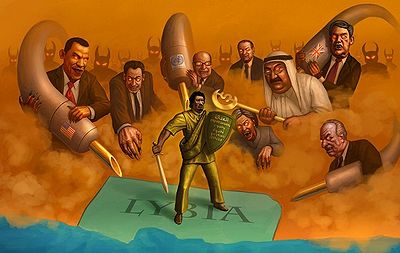
For several weeks now, we have seen many people scream loud about the enslavement of Black people in Libya. I have seen Claudy Siar, whom I love, stand up outraged about the treatment of Black people in Libya, yet, I did not see him outraged when Libya was being bombed by NATO; I did not see him this outraged when migrants drowned in the Mediterranean Sea; I have not seen him outraged because Martinique, Guadeloupe (where his family is from), and French Guiana, have been deprived of independence and are still Overseas territories of France today. I saw Samuel Eto’o and other footballers come out outraged, yet… I never saw Eto’o outraged that there are no roads to go to his village in Cameroon, I never saw him outraged that international companies exploit huge plantations in Cameroon without paying taxes (was he outraged when Lapiro de Mbanga was imprisoned for asking those companies to pay some little taxes?). I never saw these big footballers outraged that African youths are unemployed largely due to their presidents working hand-in-hand with European interests. Faure Gnassingbé, president of Togo even raised his voice against the enslavement of Africans in Libya, and was outraged! Are you serious, when he inherited the throne, presidency of Togo, after 38 years of Gnassingbé Eyadéma, his father’s reign? Alpha Blondy never said a word when Côte d’Ivoire was being bombed by France in 2011, yet today he opens his mouth for Libya, and wants the migrants to take up arms! Seriously?
Libya, the Prey of the West
I do not understand why we always act like sheep without a shepherd! Back in the middle of the 2000s, we were served with the genocide in Darfur, when Hollywood stars such as George Clooney came out in numbers claiming to care about the plight of the Black man, and saying that the Black people of DarfurSudan were enslaved by their lighter skinned Sudanese brothers. This led to the creation of South Sudan, and Darfur, well… nothing happened in Darfur… so it had all been a scheme to split Sudan into 2, and take away its rich southern oil fields from the nation itself!
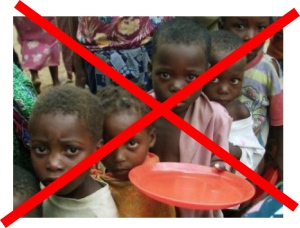
Children begging
Do you think that African youths, if they had jobs in their countries, will not stay home? Do you think that if the FCFA was not this tax imposed on African countries (The 11 Components of the French Colonial Tax in Africa), they will not be developed? This outrage I hear should not be taken out on Libyans who had no say when their country was bombed by the Coalition that is NATO, but rather against our presidents who continue to stay in the FCFA zone (FCFA: France’s Colonial Tax on Africa), who continue to give at least 50% of our economies to France! France gets $500 Billions every year from 14 countries in Africa just from the currency, plus of course the free uranium of Niger, the free gold of Mali, the free plantations of Cameroon, the free cocoa of Côte d’Ivoire, etc. This has to stop! Our outrage cannot be taken out on Libyans, but rather on NATO, and now more than ever on those puppets that we call our presidents, who serve the interests of the Hexagon. Get out of the FCFA zone, and create jobs! Stop importing pencils, pens, and food, when you can grow and make your own and become sustainable economies to serve your youths! Africa is the continent with the youngest population, and with so many resources, and thus so much to develop! Africa is the future!
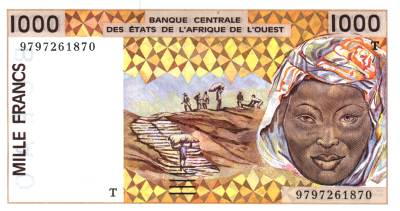
500 Fcfa_BEAO
Yesterday, I heard a talk by Robert Bourgi who was the adviser to so many African presidents, good servants of Imperialist forces: Mobutu, Omar Bongo, etc; and he said that, what Africans were asking for was governmental alternance, i.e. election of new presidents. NO, we do not need new presidents who are just puppets of the West like Macky Sall or Alassane Ouattara who will sign off our future to the IMF and World Bank. We need a definite change, we want to be in charge of our economic destiny; we want to have our own currency, we do not want to pay a colonial tax when our forefathers died in WWI and WWII to liberate the French and the whole of Europe, when our ancestors were taken into slavery by Europeans to the Americas where their sweat was used to build Western economies. We want economic freedom to decide on our own terms whether we live or die. We will rather be poor with our own currency, than be a happy slave with a fake currency pegged to the Bank of Paris, which used to take 85% of our revenues and now takes 50%. All the same, We have had enough! So our outrage should not be at our Libyan brothers, because we do know that our true Libyan brothers will never do that, Khadafi fought for us Africans to be free from imperialist forces, but to our presidents, to our elites, who refuse to free us, who refuse to stand up and seize the moment! We, the people, want freedom, economic freedom!No More FCFA!
In my series on Reclaiming African History, I came across this article by Ama Biney on Pambazuka about reparations for slavery, which I found very pertinent. I decided to share parts of it. I particularly liked the ending paragraph, “… in addressing the issue of reparations, we must also address transforming the system of capitalism which slavery gave birth to. A rupture with this unequal and exploitative system is fundamental in eliminating oppression that remains with us in the twenty-first century in reconfigured forms“. For the full article, go to Pambazuka.
=============
… what should reparations entail?
… Acknowledging the atrocity and enormity of this experience is necessary in an official apology. Commentators have observed how the Maoris received an apology from the British Queen in 1995. [2] In 2008 the Australian Prime Minister Kevin Rudd apologized in parliament to all Aborigines for laws and policies that “inflicted profound grief, suffering and loss”. [3] It appears when it comes to Africans our lives, bodies and history do not matter. Racism will find various rationalizations (or excuses) to deny that enslavement of Africans merits an apology and reparations. Yet, we cannot erase the collective historical memory and experiences of enslavement that was wrought on people of African descent and continues with the covert and overt forms of racial discrimination that they still experience in the 21st century. …
Slave ships
Whilst it is the case that no amount of financial compensation can address the psychological and emotional scars of enslavement of people of African descent, nor the horrors of the Middle Passage, nor those who remain buried in the Atlantic Ocean as a consequence of suicide, nor the 132 Africans deliberately thrown overboard in 1786 on the slave ship Zong — in order that the ship owners could claim the insurance — a comprehensive economic package needs to address the fact that the current economic and technological underdevelopment of Africa and the Caribbean is symptomatic of the impact of 400 years of enslavement. This enslavement was followed by the brief but no less damaging interlude of colonialism and must be recognized as central to any form of reparations.
… There are those who refuse to accept the fact that the economic wealth of Europe was built on the sweat, blood and toil of African people to the detriment of Africa. Yet, let us be clear that the trans-Atlantic slave trade was not a “trade.” The meaning of “trade” supposes equal benefit to both parties. It was not “trade” but the looting of Africa in which Europe benefited at the expense of Africa as Walter Rodney graphically illustrates in his acclaimed book, “How Europe Underdeveloped Africa.” The consequence for Africa was and remains that “the African economy taken as a whole was diverted away from its previous line of development and became distorted.” [4]
Slaves on board a ship
Reparations is therefore a quest to repair the economic damage of underdevelopment wrought by the process of enslavement and colonialism. This economic redress will be symbolic for it may run into trillions of dollars, for one can never place an economic value on the millions of Africans whose lives were lost in the slave raids, or as they died in the long march to the forts on the coast. How many died on such journeys? Can we account for those enslaved women who secretly aborted or killed their child to prevent them from experiencing slavery? And should we not include the medical experimentations carried out on the bodies of enslaved African women graphically documented in the books From Midwives to Medicine and Medical Apartheid? [5]
… Also, it is important for us to remember that on the ending of slavery in the British colonies, the British government were able to compensate the slave owners £20 million (£20 billion in today’s money). There was no compensation for the former enslaved African men and women. In the USA there were pledges to the freed men and women of “forty acres and a mule” that never materialized across the board. [6]
… What should reparations for slavery entail? It should address the following:
First, an apology to all continental Africans and people of African descent for the immorality of slavery, for merely stating “regret” — as the former British Prime Minister Tony Blair did in 2007 — is mere cant. [7] …
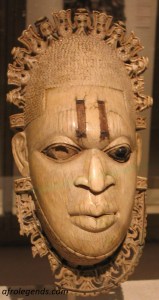
Pendant Ivory mask representing Queen Idia, Iyoba of Benin City (16th Century)
Second, we must demand that all Western governments instruct Western museums and citizens to hand over to African countries illicitly acquired African artifacts languishing both publicly and privately in their hidden vaults. They must also provide the training and facilities for African countries to host, display and conserve these returned items. This includes thousands of artifacts, among them being the more famous and well known 400 Ethiopian treasures looted by British soldiers during the 1868 Magdala expedition. [9] There are also the Benin bronzes looted in the British invasion of the Nigerian kingdom of Benin in 1896. [10] …
Third, as mentioned above, the brain drain of African and African Caribbean professionals should be halted by offering these professionals the same salaries to voluntarily return to Africa and the Caribbean in order to assist in the building of new schools, universities, hospitals and clinics that would be set up and financed by a comprehensive reparations economic program.
Debt cancellation would free up these critical funds to address the real needs of African citizens.
Fourth, cancellation of all debt incurred by the Caribbean and African nations on the grounds that they are odious and were not incurred by the ordinary citizens of Africa and the Caribbean but rather their ruling classes. … In short, aid is simply a paltry and ineffective band aid that keeps African economies in a continued process of economic subordination to neoliberal capitalism under the illusion that there will be “trickle down growth.” …
… Ultimately, in addressing the issue of reparations, we must also address transforming the system of capitalism which slavery gave birth to. A rupture with this unequal and exploitative system is fundamental in eliminating oppression that remains with us in the twenty-first century in reconfigured forms.
Goree Island: Fort of Nassau and Orange, 17th century (Wikipedia)
Today I will be talking about the island of Gorée, in Senegal. Located less than 4 km from the city of Dakar, Gorée island offers a sure route for ships. Since the 15th century, it has been the center of rivalries between diverse European nations which used it for slave trading. Locally known as “Beer” or “Ber” or “Bir” in Wolof, it was first named “La Palma” by Portuguese in 1444, with some ancient maps also showing the name “Beseguiche” for it. The Dutch navy named it “Goede Reede” or “Good Harbor” in 1588. In 1677, the island was occupied by the French.
Map of Goree (Wikipedia)
Before I dive further into the atrocities of human trading on the island, I would like to address ideas circulated by some stating that the island of Gorée was never really used for slave trading and that slave trading had been done in Saint Louis in the north or south in Gambia. These claims were so outrageous that the Senegalese government sponsored an international conference on the history of the island, and researched and found original archives from the French Port of Nantes showing that between 1763 and 1775 alone, one port had traded more than 103,000 slaves from Gorée; this thus shows that Gorée was indeed at the epicenter of slave trading, and stating otherwise is an attempt at falsifying history. The first slaves were taken from Gorée in 1536, and the trade continued at least until 1848.
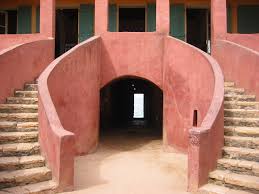
House of Slaves (Wikipedia)
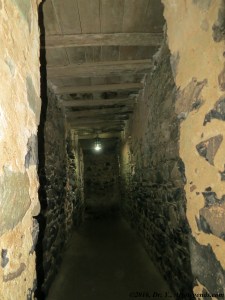
Now back to the island itself. One of the most important if not the main stop on the island is the house of slaves. Of Reddish/pinkish color, this house was first built by the Dutch in 1776, and is the last standing slave house on the island. At the end of the 18th century, the island was a prosperous crossroad of merchants, soldiers, and administrators, with at its center slave trade. Today, it serves as a museum and a memorial to humanity. The upper part of the building like most slave houses was used by the Europeans who lived there; while the bottom part was used to house slaves packed on top of each other in humid, sordid, and disgusting rooms built for 15-20 people but housing sometimes over 100people, while waiting to be taken to the Americas. On the bottom floor, there is a room used to pack young women among which the slave traders would come every night and choose those who will be used for their sexual pleasures; if any of these women were found pregnant from these traders’ visits, they were freed on the island or sent to Saint Louis. There were also rooms to house strong men, children, and women. There was also a dark tiny room where the most defiant ones were stacked on top of each other, and salty water was seeped through the walls to force dehydration and later death. The value of a man depended on his weight and muscles; the minimum weight was 60 kg. The value of a child depended on his/her denture, while that of a woman on her breasts.
Cell for young girls in the House of Slaves
The small size of the island made it easy for merchants to control their captives. The surrounding waters are so deep that any attempt at escaping would mean sure drowning. With a 5kg metal ball permanently attached to their feet or necks, a captured African who ever tried running away would surely drown in deep sea.
From the door of no return, the slaves were loaded onto ships which took them across the Atlantic. This was their last time on African soil.
Entire families were captured and brought to Gorée, but their destinations were seldom the same: the father could be shipped to America, while the Mother to Brazil, and the child to Haiti or the West indies. Separation was irrevocable.
Cell in the House of Slaves
Not too far from the house of slaves is the castle which was used as a warehouse for millions of captured slaves.
After the abolition of slavery in 1848, the island’s population declined, with many moving to Dakar. Since 1978, the island is a UNESCOWorld Heritage Site.
Today the island of Gorée is a memorial to all those who were separated from their loved ones, their lands, their society, their culture, uprooted and sold like cattle across the globe. It serves as a reminder of humanity’s ugly past, and what it is capable of for capital gain, hatred, and greed. Gorée is and should remain all of that, but also a true reminder to future generations that mankind should be loved, and a man’s life is precious, not to be sold like cattle. Attempts by some to absolve themselves from their ugly pasts should not stop those who were hurt from remembering, for celebrating the lives of those who perished, who were uprooted, and those who survived. Truth is truth whether beautiful or not, it is truth, and remembering is acknowledging all the good those who lost their lives, those who survived, gave to the world, because America will not be America without the Slaves’s lives and hard labor; Brazil will not be Brazil without the blood of those slaves; France will not be France, or Great Britain will not be Great Britain without the sweat and blood of African slaves. So Gorée is a reminder of all of that, and should be cherished for it.
Yesterday, David Olusoga of BBC Two published a documentary on Britain’s Slave Owners part 1: Profit and Loss. His work was very profound, and was of course very painful, as it dealt with slavery. Here is the synopsis, from BBC Two website:
“In 1834 Britain abolished slavery, a defining and celebrated moment in our national history. What has been largely forgotten is that abolition came at a price. The government of the day took the extraordinary step of compensating the slave owners for loss of their ‘property’, as Britain’s 46,000 slave owners were paid £17bn in today’s money, whilst the slaves received nothing.
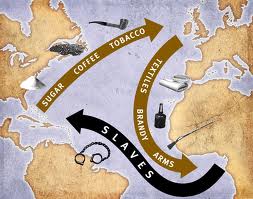
The Transatlantic slave trade
For nearly 200 years, the meticulous records that detail this forgotten story have lain in the archives virtually unexamined – until now. In an exclusive partnership with University College London, historian David Olusoga uncovers Britain’s Forgotten Slave Owners. Forensically examining the compensation records, he discovers the surprising range of people who owned slaves and the sheer scale of the slavery business.
Slaves on board a ship
What the records reveal is that the slave owners were not just the super-rich. There were widows,clergymen and shopkeepers; ordinary members of the middle-classes who exploited slave-labour in distant lands. Yet many of them never looked a slave in the eye or experienced the brutal realities of plantation life.”
Check out the BBC Two website which has an interactive view of it. I also liked the video link below about some instruments of torture used in Jamaica to punish slaves. I invite you to find this outstanding documentary by David Olusoga. Below is an interview he gave.
The Cape Coast Castle is one of the 30 slave forts of Ghana. In 2009, the US president Barack Obama and his family, made a point to visit the Cape Coast Castle. So why should you learn about it?
Well, it took 50 years to build the three-story building that forms today’s Cape Coast Castle. It was originally built by the Swedes (the Swedish Africa Company), starting in 1653 (it was then known as Fort Carlsborg or Carolusborg) for timber and mineral exportation, and then taken over by the Dutch before the British wrestled it away. The original cannons, cannon balls, and mortars used to defend the fort can still be seen today, facing the Atlantic Ocean.
Cape Coast Castle in 1682
The brick courtyard of the castle, which Ghanaians commonly refer to as Cape Coast Dungeon, has two 18-foot water wells and four graves. The first grave is for the Rev. Phillip Quarcoo, the first black Anglican pastor in the area. Beside him lies C.B. Whitehead, 38-year old British soldier who was killed by a Dutch soldier in the courtyard. Besides them are the graves of Letitia Elizabeth Landon, and her husband George MacLean, the British governor of Cape Coast from 1830 to 1844. I am not sure how a woman could possibly live next to such atrocities; maybe by rationalizing that the people being imprisoned, were not human beings?
The open auditorium on the top floor of the former administration building now hosts an exhibit chronicling the history of slavery on Ghanaian shores.
Cape Coast Castle in 1890 (National Archives UK – Wikimedia)
During the 17th and 18th centuries, the Cape Coast slave fort imprisoned about 1000 men and 300 women for any given 3 months period, before they were crammed into ships bound for a life of slavery in the Americas. Its corridors are full of dungeons where only dim light coming from tiny windows let the light and air in. 200 males will be kept in space meant for 50 people or less, where they will spend over 23h a day for three months, and will only be brought briefly out to eat. Ironically, Christian services were held in the fort while these poor souls were screaming for their lives underneath.The majority of captives ranged between 15 and 35 years of age.
Women were locked in 2 similar dungeons, 150 of them per chamber. They will be raped daily by the British soldiers, who would come into the cells and select the ones to spend the night with. Any slave who challenged the authorities was thrown into the condemned cell, which held 30 – 50 in a room no bigger than most walk-in closets. There, they would die deprived of food, water, light, and oxygen, clawing the brick walls and floors as they suffocated.
Cape Coast Castle (WZM – Wikipedia)
To descend into the exposed brick castle feels like entering the depth of the underworld (I can only imagine how those captives felt going through there). There are five dungeon chambers for men. The strongest ones were separated during branding, when hot iron rods were used to mark their chests, and then chained and shackled together in the first chamber. The last cell has a hole in the wall, which leads into a deep dark tunnel which was used to take slaves underneath the castle’s courtyard, leading them to the “door of no return.” Cape Coast Castle was once the most active slave trading hub in West Africa.
Slavery was not just a European affair, but an African one as well, since many African chiefs traded slaves (rarely their own people – but people from other nations) to the Europeans in exchange for goods. Thus, the Ghana House of Chiefs – a body comprising all the country’s traditional kings and chiefs- has placed a plaque on one of Cape Coast castle’s walls, asking for forgiveness to the souls of those who were sold. When will European nations also ask for forgiveness?


 Quoting icons of Pan-Africanism, including Marcus Garvey and Peter Tosh, the President underscored the shared heritage that unites all people of African descent. “Africa is your home, and Ghana welcomes you with open arms. This is not just a ceremony—it is a powerful affirmation of our collective identity and destiny,” he concluded.








 Fourth, cancellation of all debt incurred by the Caribbean and African nations on the grounds that






 African Heritage