Reclaiming African History : Fortaleza de São Miguel – Angola’s Largest Slave Fort

The Transatlantic slave trade

In March, the United Nations (UN) recognized the Transatlantic Slave Trade as the gravest crime against humanity. The fact that it took centuries to reach this acknowledgment speaks volumes about those who benefited from the trade, and about how deeply some countries and institutions resist accountability. Despite its scale, the Transatlantic Slave Trade is rarely discussed with the same global urgency as the Holocaust, even though it claimed over “15 millions” African lives (and we know the math is not math-ing) and reshaped continents. Many Africans can name European concentration camps, yet very few can name the African slave forts where millions were imprisoned before crossing the Atlantic.
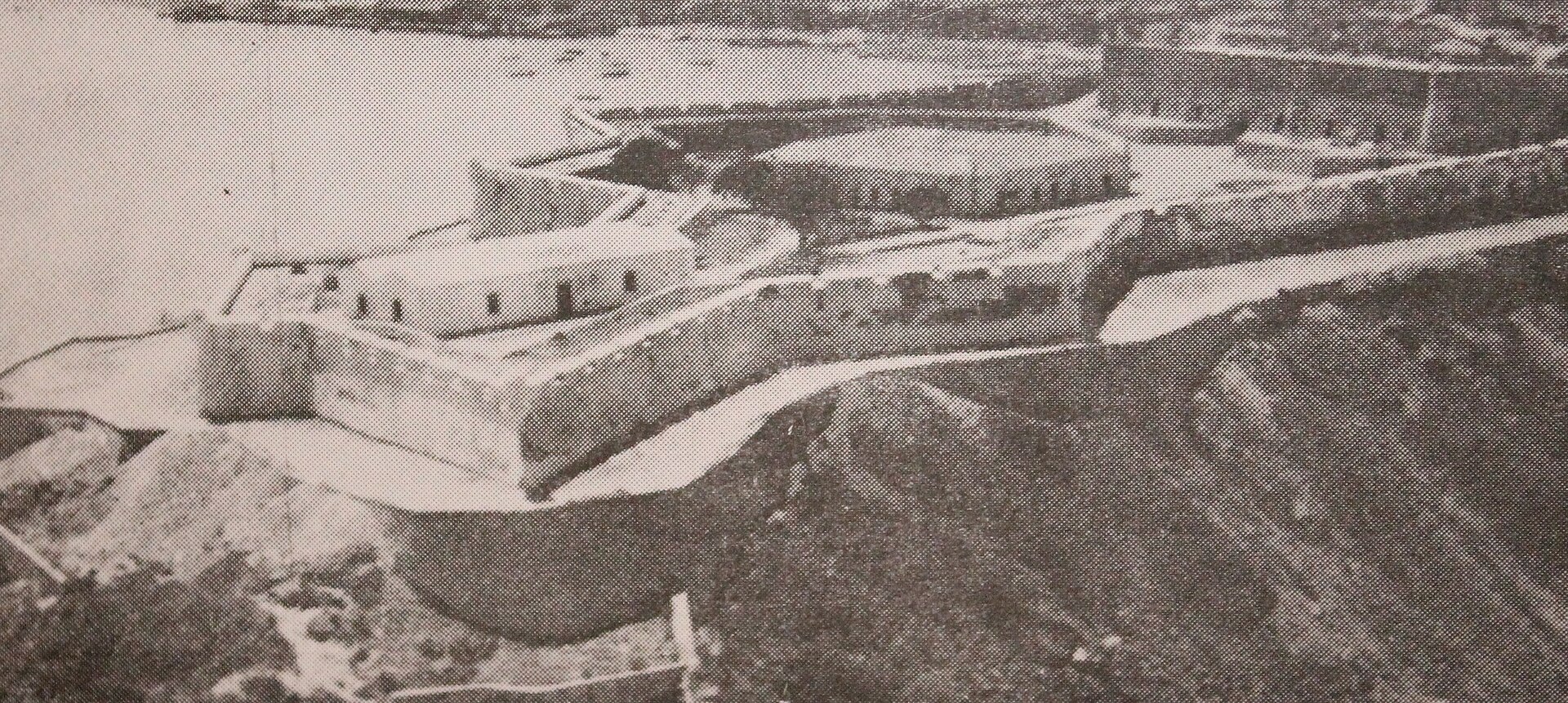
Aerial view of Fortalesa de Sao Miguel ca 1950s

If you are like me, you may have heard of Elmina Castle, Cape Coast Castle, Ouidah, Gorée Island, the sites most commonly referenced in West African history. But far fewer people know about Fortaleza de São Miguel, the largest and most politically significant slave fort in Angola. Perched high above Luanda Bay, the Fortaleza de São Miguel or Fort Sao Miguel is one of Angola’s most important historical landmarks which has survived the test of times. It was built in 1576 by the first governor of Angola Paulo Dias de Novais, the grandson of the explorer Bartolomeu Dias; yes that explorer they used to burst our ear drums with in school, the one who rounded the Cape of Good Hope proving that there was a sea route from the Atlantic to the Indian Ocean. It was the first major Portuguese stronghold in Angola and Central Africa, and the beating heart of colonial power for nearly three hundred years.

Queen Nzingha of Angola

From the late 1500s through the mid‑1800s, São Miguel became a central node in the transatlantic slave trade. Captives from the interior: Kongo, Ndongo, Mbundu, Ovimbundu, Lunda, Chokwe, and others, were funneled through a network of inland routes toward Luanda. Don’t be fooled by its whitewashed walls made of thick basalt and its cute polygonal design! These were tailored to the hilltop terrain as a defensive fort to guard against any rival foreign invaders, like the Dutch, or local African kings. Among those taken to the new world, it is said that the most traded ethnic groups were the Mbundu and Ndongo people, and we can understand why, when we remember that Queen Nzingha: Great Queen of Angola opposed a strong fight against the enslavement of her people and tirelessly fought the Portuguese for almost a century!

The Cuanza River corridor was the most infamous route: people were funneled through inland forts like Massangano and Muxima (Pope Leo XIV gave his Last Blessing in Angola at an Old Slave Trade Hub), chained in canoe convoys or forced along riverbanks toward the coast. At São Miguel, they were registered, taxed, and imprisoned before being loaded onto ships bound for Brazil, especially Bahia and Rio de Janeiro. São Miguel was thus the seat of Portuguese power, but also a place where human lives were reduced to cargo manifests for colonial profit. Governors lived within its walls; while soldiers and bureaucrats managed the colony from its ramparts. The Dutch seized the fort briefly in 1641, renaming it Fort Aardenburgh, but Portugal reclaimed it 7 years later in 1648, restoring its dominance in the area.
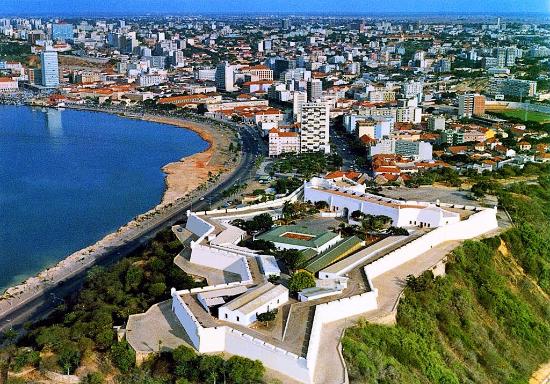
Fortaleza de Sao Miguel in Angola (Source: WelcometoAngola.co.ao)

When Angola gained independence in 1975, São Miguel was transformed into the Museum of the Armed Forces. Today, it houses exhibits on: colonial wars, the struggle for independence, the Angolan civil war, and national heroes and military history. If you are ever in Luanda, remember to visit this site which hosts so much history, history of our tears, pain, exploitation, determination, strength, and resilience.

The UN Recognizes the Transatlantic Slave Trade as the Gravest Crime against Humanity

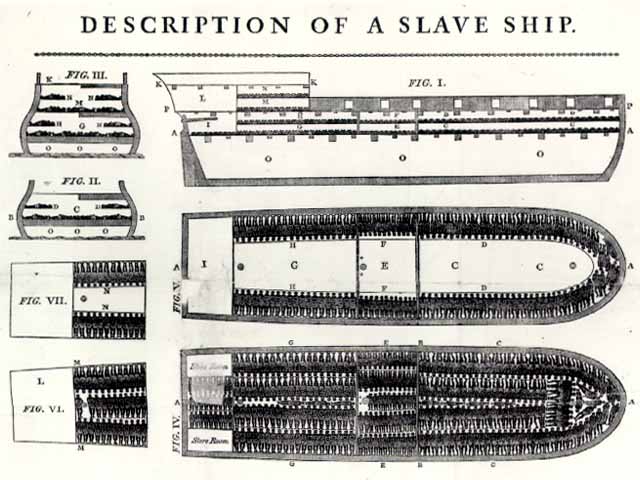
Slaves on board a ship

On Wednesday, the United Nations passed a resolution recognizing the transatlantic slave trade as “the gravest crime against  humanity.” The resolution was started by Ghana’s president John Mahama who rallied the world to ratify a landmark vote against the transatlantic slave trade. The decision has been welcomed throughout Africa. It is believed that over 15 million people were deported from the continent, moved across the globe and enslaved in totally inhumane conditions for over 4 centuries. Some question the numbers: how could the transatlantic slave trade show numbers like 15 millions over 4 centuries when we all know that a ship carried about 250 to 400 people, and that at the height of the trade, 30,000 people per year were taken from Elmina castle alone (Reclaiming African History: Elmina Castle – West Africa’s Oldest Slave Fort), that’s 3 million people in one century from Elmina alone; now do the math, and add all the other slave forts across Africa! … you would agree that the math is not math-ing.  And to think that it took so long to be recognized! Now that it is recognized, what does this mean? Is it just an empty “we recognize the wrong we did to you…” and nothing else?

Slave capture

By the way, guess which countries voted against the resolution? Argentina, Israel, and the USA. Guess who abstained? Most European countries!

Excerpts below are from the Guardian.

======= 

… On Wednesday, less than two years after completing a remarkable comeback as Ghana’s president…, [John Mahama] rallied the world to ratify a landmark vote against transatlantic chattel slavery, despite major opposition from the same western entities that drove it for centuries.

The resolution to declare the practice as “the gravest crime against humanity” passed with a decisive majority at the UN general assembly and has been largely welcomed across Africa. Yet the details of the tally reveal a world still deeply divided on the gravity of the sin of enslaving more than 15 million people as chattel over the course of 400 years.

Inner courtyard at Elmina Castle (Source: Ghana.nl)

Thus, the 123 states who voted for it were just as noteworthy as those that did not. Most of the assembly was in support including Africa, Asia, the Caribbean, most of Latin America, all former victims, as well as the Arab world, who themselves have the dark history of trans-Saharan slavery under their belt. Russia called it a “long overdue recognition”.

Perhaps because of their history of subjugation of Indigenous people and perpetuation of chattel slavery, the western bloc of Australia, Canada, the UK and the EU states all abstained in the vote, electing to postpone their day of atonement.

The three states to publicly vote against the resolution were Argentina, where two-thirds of the value of all imports arriving at the port of Buenos Aires between 1580 and 1640 were enslaved Africans; Israel and the US, where 11 states seceded rather than obey the Emancipation Proclamation freeing enslaved Africans.

Reclaiming African History: Slavery and its Ugly Head

Slave ships
Slave ships

I am going to start a series on reclaiming our history. I will be talking about slave forts across Africa. There were over 30 slave forts in Ghana only. How many in other countries? We will find out through this exercise. These fortified trading posts were built between 1482 and early 1800s by Portuguese, British, Swedish, English, Danish, Dutch, and French traders that plied the African coast. Initially, they had come in search of gold (in Ghana), ivory (in Ivory Coast), pepper (along the Pepper Coast) and then later, they discovered cheap labor: thus was born the slave trade. There was intense rivalry between those European powers for the control of the West African coast from Senegal, to as far south as Angola.

Slave capture
Slaves marching after capture

It is estimated that over 20 million Africans were sold into slavery during the Atlantic slave trade; this does not account for those who died during the trip aboard the ship (about 1/3), and those who were killed during the capture. Slaves were taken to North America, the Caribbeans, and Brazil. Moreover, this is an estimate for the transatlantic slave trade only, but did you know that slaves were also taken by Arabic sailors from the East Coast of Africa, to places like Saudi Arabia and as far as India?

The Transatlantic slave trade

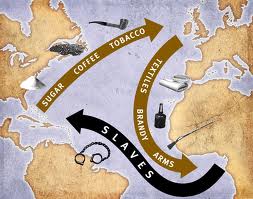
The Portuguese began dealing in black slaves from Africa in the 15th century. Initially, they purchased slaves from Islamic traders, who had established inland trading routes to the sub-Sahara region. Later, as the Portuguese explored the coast of Africa, they came upon the Senegal River, and found that they could purchase slaves directly from Africans. The European slave trading activity moved south along the African coast over time, as far south as Angola. On the east coast of Africa and in the Indian Ocean region, slaves were also taken from Mozambique, Zanzibar and Madagascar. Many of the slaves were from the interior of Africa, having been taken captive as a result of tribal wars, or else having been kidnapped by black slave traders engaged in the business of trading slaves for European goods. These slaves would be marched to the coast to be sold, sometimes traveling hundreds of miles. Many perished along the way. The captured Africans were held in forts or slave castles along the coast. They remained there for months crammed in horrible conditions inside dungeons for months before being shipped on board European merchant ships chained at the wrists and legs with irons, to North America, Brazil, and the West Indies.

Slaves on board a ship

Some African rulers were instrumental in the slave trade, as they exchanged prisoners of war (rarely their own people) for firearms which in turn allowed them to expand their territories. The slave trade had a profound effect on the economy and politics of Africa, leading in many cases to an increase in tension and violence, as many kingdoms were expanding.

Inspection of slave for sale

The slave trade was responsible for major disruption to the people of Africa. Women and men were taken young, in their most productive years, thus damaging African economies. The physical experience of slavery was painful, traumatic and long-lasting. We know this from the written evidence of several freed slaves. Captivity marked the beginning of a dehumanizing process that affected European attitudes towards African people. Can you imagine losing 1/3 or more of your active population? It is hard to fathom what crippling effect that will have on any country’s progress. That is why, in upcoming months, I will be talking and trying to identify slave forts in Africa, in an attempt to reclaim our history. I know this is a touchy subject, but it is history: the bad, the ugly, the beautiful, the joyous. It is important to know history in order to be able to claim the future fully, without any baggage.