King Moshoeshoe I: The First King of the Kingdom of Lesotho

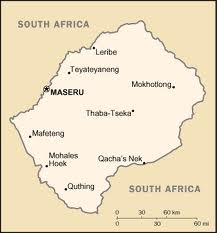
Map of Lesotho

Back in March 2025, the country of Lesotho was suddenly thrown in the spotlight when American President Donald Trump made a dismissive remark during a speech to Congress, saying « nobody has ever heard of » Lesotho while criticizing U.S. foreign aid spending. The comments sparked backlash from Lesotho’s government and prompted many to visit the country, or talk about the country. President Trump was not totally wrong… let’s be honest, before his remark, how many had heard about the country ?… maybe those who visit Afrolegends and who had read about its capital city of Maseru. Unknowingly, President Trump has most likely prompted added tourism to this beautiful landlocked country the size of Belgium entrenched within the country of South Africa.
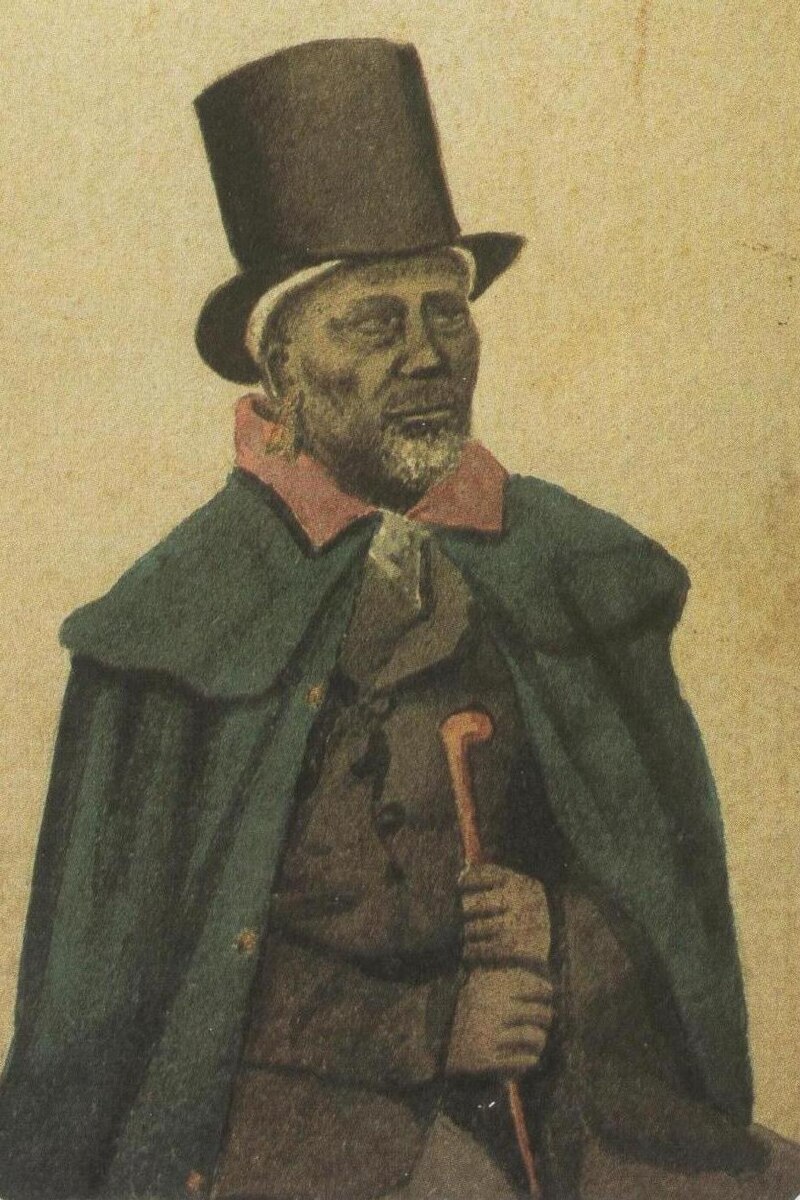
King Moshoeshoe I of Basutoland during a visit to Prince Alfred of England in 1860

Today, we will talk about King Moshoeshoe I, the first king of Lesotho. 

King Moshoeshoe I was the founder and first monarch of Lesotho, known for his diplomatic genius, military leadership, and ability to unite diverse clans into a single nation. He ruled from 1822 until his death in 1870.

King Moshoeshoe I was the first king of Lesotho. At birth, he was named Lepoqo, which means Dispute, because of accusations of witchcraft which were levied on a man in Menkhoaneng around the time of his birth, between 1780 to 1794, where 1786. He was the first son of King Mokhachane, a minor chief of the Bamokoteli sub-clan of the Basotho people and his first wife Kholu, who was the daughter of the Bafokeng clan chief Ntsukunyane. Unlike Shaka Zulu, he had a happy childhood which he always referred to in adult life.

After his initiation ceremony in 1804, he took the name of Letlama, the Binder, and later chose the name Moshoeshoe, a name inspired by the sound of shaving – symbolizing his skill in cattle raids and leadership. It is said that it was chosen after a successful raid in which he had sheared the beards of his victims – the word ‘Moshoeshoe’ representing the sound of the shearing.
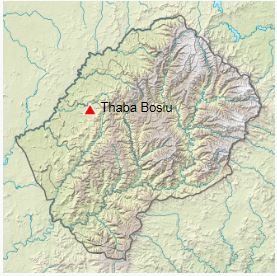
Thaba Bosiu on the map of Lesotho

In 1820, Moshoeshoe succeeded his father and formed his own clan and settled at Butha-Buthe Montain, and later moved to the mountain he named Thaba Bosiu  or “Mountain at Night” because his people arrived at night, a natural fortress that became the heart of the Basotho Kingdom. Thaba Bosiu served as the capital of the new Basotho nation. One can still find ruins from the 19th century of King Moshoeshoe I’s reign at the top of the mountain; it overlooks iconic Mount Qiloane, an enduring symbol of the nation’s Basotho people.

In 1810, Moshoeshoe married Mamabela, daughter of the Bafokeng chief, Seephephe, who was chosen for him by his father. She became his senior wife assuming the name ’MaMohato (Mother of Mohato – name that she took after the birth of her first son Letsie) with whom he had four sons including Letsie, MolapoMasopha and Majara as well as a daughter named Mathe. Their relationship was described by visiting British missionaries as deeply affectionate.  MaMohato died in 1838. Moshoeshoe practiced polygamy and is known to have had 30 wives in 1833 and close to 140 wives by 1865. After MaMohato, Moshoeshoe considered himself to be a widower. Only the children from his marriage to MaMohato constituted the royal line of descent. 
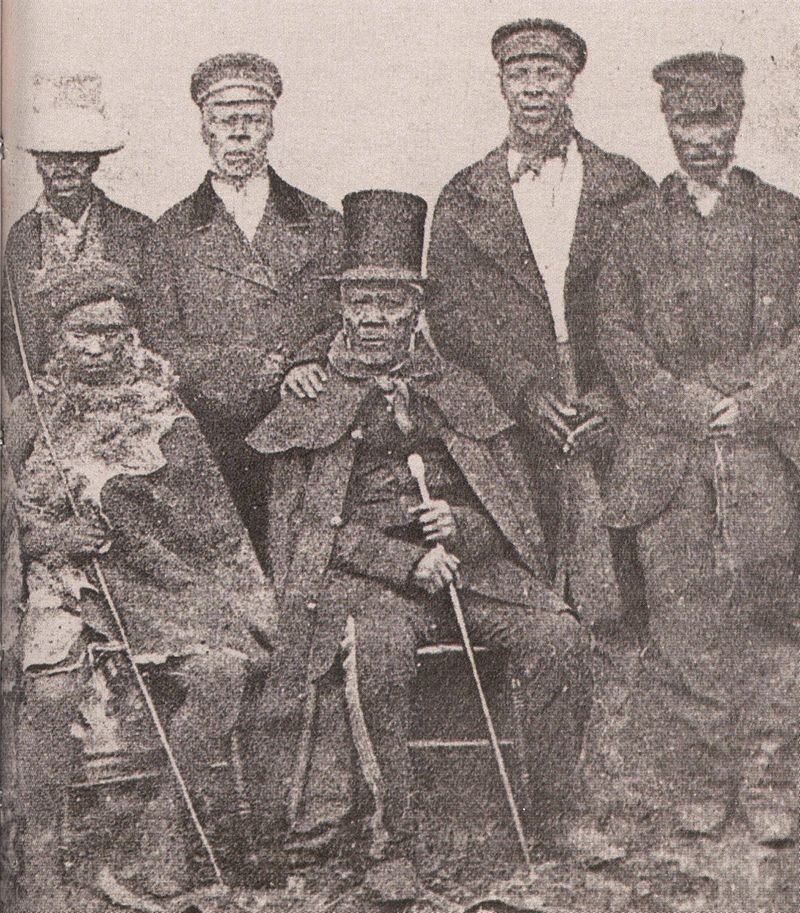
King Moshoeshoe I and his ministers

He was known for his generosity toward enemies, often integrating defeated groups into his kingdom. He united various displaced groups during the Mfecane (a period of widespread chaos and warfare in southern Africa), offering protection and forging a strong, centralized state. He also skillfully navigated threats from the Boers, British, and neighboring African groups, often using diplomacy to preserve his people’s autonomy. Due to constant hostilities and encroachments from Boers and wars, he signed an agreement with Queen Victoria of Great Britain to make Basutoland a British protectorate in 1868; the kingdom then became a crown colony in 1884, achieving independence in 1966 at which point the name was changed to Lesotho. Moshoeshoe died on 11 March 1870 and was succeeded by his oldest son Letsie I.

March 11, the day of his death , is celebrated throughout the kingdom as Moshoeshoe Day, a national holiday in Lesotho. The South African-made shweshwe fabric is named for King Moshoeshoe I who once received a gift of it and then popularized it throughout his realm.

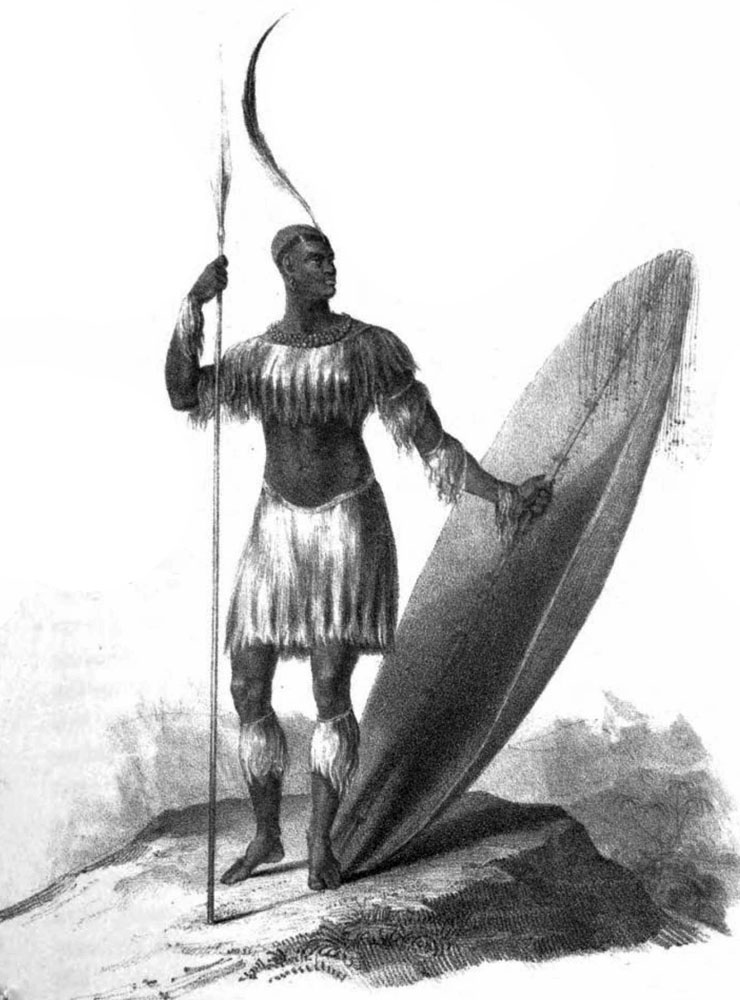
King Shaka’s Warriors

Sketch of King Shaka from 1824 (found in Nathaniel Isaacs’ book ‘Travels and Adventures in Eastern Africa,’ published in 1836)

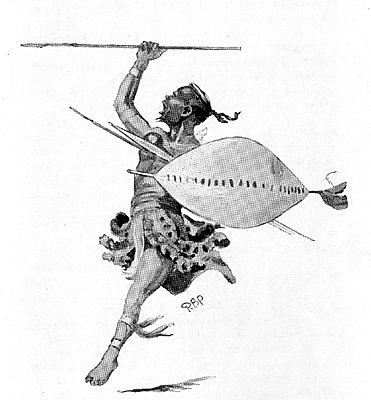
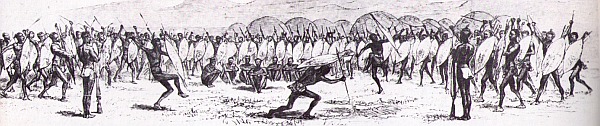
Below is a description of King Shaka’s warriors. King Shaka is known for the military and social innovations he brought to the Zulu people unifying them into a formidable empire admired by some, and feared by others. What stands out is the great discipline of his warriors.  The Zulu army or Zulu impi was the most powerful war machine the British ever faced in Southern Africa.  The Zulu combat strategy was perfected by King Shaka himself, who added great organization and discipline to the traditional qualities of courage and mobility cultivated within African armies.  During the battle, the Zulu army would organize itself as an arc facing the adversary. This arrangement was known as the “bull horn” formation. At the center (known as the chest in Zulu) were found the most seasoned regiments; on the wings (or horns) were found the regiments of younger warriors.  The latter used their speed and agility to outflank the enemy by attacking him on the flanks while trying to encircle him, while the chest warriors engaged him in the front.  Behind the chest, and with their back turned so as to keep their calm, were the veteran regiments (also known as the kidneys) who will wait as reserves, intervening only to switch the battle to victory. Every man knew his place, moves, and maneuvers with extreme precision. Shaka’s methods reached their high point during the Zulu victory at Isandhlwana against the British forces in 1879.

Zulu warrior in 1913

Although Isaacs’ account below of his visit to Shaka’s palace is a biased view from a European who saw everything African, Black, as inferior, it is still good to note the number, the order of the troops, the strength of the king (who was not just complacent, but an active member of his troops), and much more. This also gives a better idea of the dressing of the warriors and girls, as well as the living structure in the kraal. This account can be found in N. Isaacs, Travels and Adventures in Eastern Africa volume 1.

=====

Reception of the Zulus for Chaka from Isaacs’s book Travels and Adventures in Eastern Africa. Descriptive of the Zulus, their manners, customs, with a sketch of Natal.

This morning three regiments of boys arrived to be reviewed. There appeared to be nearly 6000, all having black shields. The respective corps were distinguished by the shape and ornament of their caps. One regiment had them in the shape of Malay hats, with a peak on the crown about six inches high, and a bunch of feathers at the top. Another wore a turban made of otter-skin, having a crane’s feather or two on each side ; and the third wore small bunches of feathers over the whole head, made fast by means of small ties. Thus accoutred and distinguished, they entered the gate, ran up the kraal, halted in front of the palace, and saluted the king.

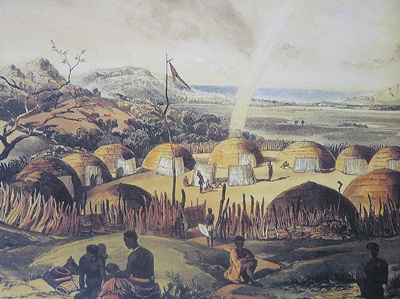
Zulu kraal near Umlazi in Natal 1849

One boy stepped in front and made a long harangue. When the orator had concluded, the whole of his comrades first shouted, and then commenced running over the kraal, trying to excel each other in feats of agility and gesture, regardless of order, regularity, or discipline. After this exhibition, which lasted three hours, a regiment of men arrived with white shields, having on them one or two black spots in the center; they saluted Shaka, then retired to put away their shields, and assembled again in one body to dance. They formed a half circle; the men in the center and the boys at the two extremities. The king placed himself in the middle of the space within the circle, and about 1500 girls stood opposite to the men three deep, in a straight line, and with great regularity. His majesty then commenced dancing, the warriors followed, and the girls kept time by singing, clapping their hands, and raising their bodies on their toes. The strange attitudes of the men exceeded anything I had seen before.

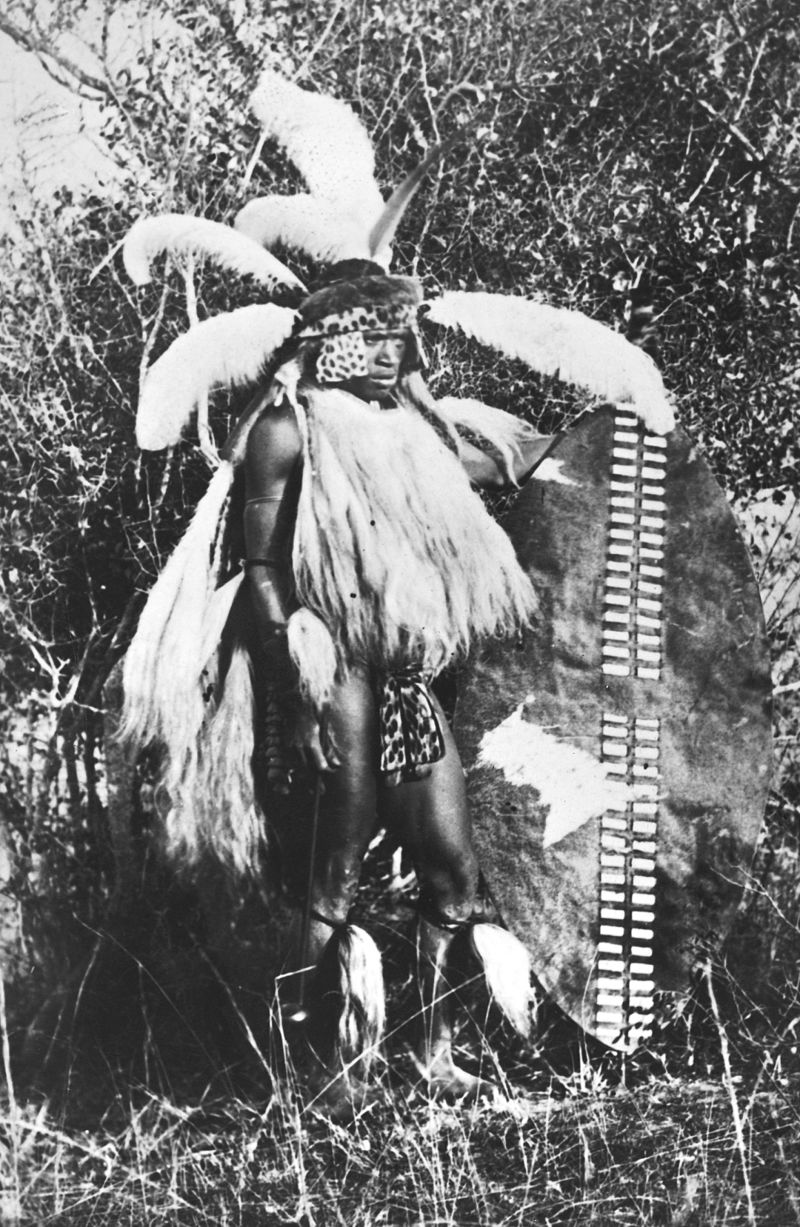
Zulu warrior in full regalia 1860: carrying the large isihlangu war shield. The upper body is covered in cow tails, the kilt is of spotted cat, genet or civet skin and the shins are decorated with cowtails. The elaborate headdress consists of a browband and face-framing flaps of leopard skin with another band of otter skin above. There are multiple ostrich feather plumes and a single upright crane’s feather.

The king was remarkable for his unequaled activity, and the surprising muscular powers he exhibited. He was decorated with a profusion of green and yellow glass beads. The girls had their share of ornaments, in addition too they had each of them four brass bangles round their necks, which kept them in an erect posture, and rendered them as immovable as the neck of a statue. This ceremony was performed with considerable regularity, from the king- giving, as it were, the time for every motion. Wherever he cast his eye, there was the greatest effort made, and nothing could exceed the exertion of the whole until sunset, when Shaka, accompanied by his girls, retired within the palace, and the warriors to their respective huts. Many, however, first went to the river and performed their evening ablutions.

A Praise to the Great King Shaka, the Founder of the Zulu Empire

Sketch of King Shaka from 1824 (found in Nathan Isaacs’ book ‘Travels and Adventures in Eastern Africa,’ published in 1836)

To celebrate South Africa’s Heritage Day which used to be known as ‘Shaka Day‘ before 1996, we share with you this beautiful praise for the great king. KwaZulu (“Place of the Zulu” in Zulu)-Natal is an important province of South Africa, and the birthplace of the Zulu kingdom.  It is the second-most populous province in South Africa, after Gauteng, and the land of the Zulu people. Before 1996, 24 September was known as Shaka Day, in commemoration of the Zulu King, Shaka, on the presumed date of his death in 1828. Shaka kaSenzangakhona (Shaka, son of Senzangakhona) was the Zulu King who played an important role in uniting disparate Zulu clans into a cohesive nation; he is known as the founder of the Zulu Empire. . Each year people gather at King Shaka’s grave to honor him on this day.

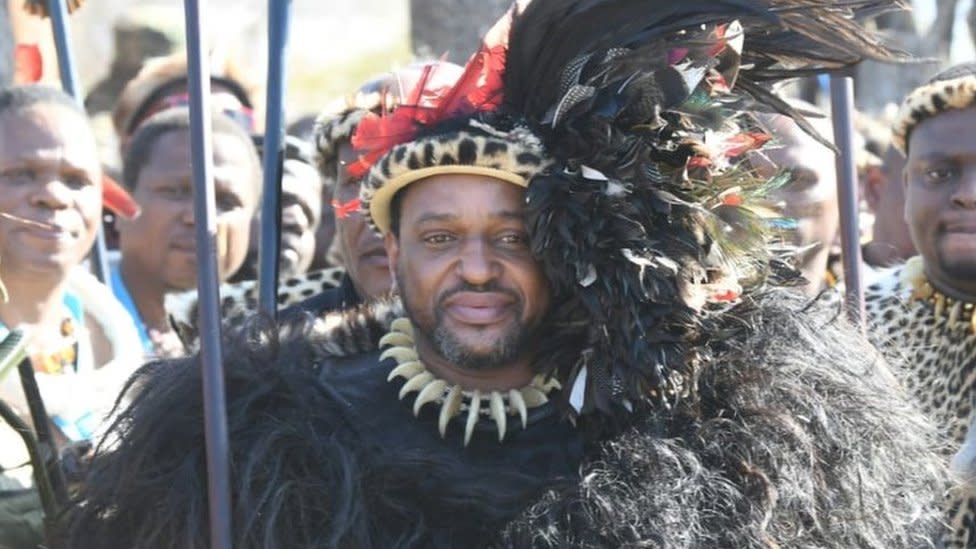
King Misuzulu ka Zwelithini (Source: yahoo news)

King Shaka was murdered by his two half-brothers Dingane and Mhlangana at kwaDukuza in 1828—one date given is September 24. Dingane assumed the throne after the assassination. Thus, September 24 is known as Shaka Day, and nowadays has become ‘Heritage Day’. This year’s celebration will mark the official public coronation of the new Zulu King, Misuzulu Siqonbile ka Zwelithini, who inherited from his father, King  Goodwill Zwelithini ka Bhekuzulu (Traditional Coronation of a New Zulu King).

Shaka Zulu

He is Shaka the unshakeable,
Thunderer-while-sitting, son of Menzi
He is the bird that preys on other birds,
The battle-axe that excels over other battle-axes in sharpness,
He is the long-strided pursuer, son of Ndaba,
Who pursued the sun and the moon.
He is the great hubbub like the rocks of Nkandla
Where elephants take shelter
When the heavens frown…

Traditional Zulu praise song, English translation by Ezekiel Mphahlele

Portrait of Shaka, the Great Zulu King

Sketch of King Shaka from 1824 (found in Nathaniel Isaacs’ book ‘Travels and Adventures in Eastern Africa,’ published in 1836)

King Shaka, Shaka kaSenzangakhona (Shaka son of Senzangakhona), or Shaka Zulu, is known today as the founder of the Zulu Empire or Zululand. He ruled from 1816 to 1828, and was one of the most influential monarchs of the Zulu, responsible for re-organizing the Zulu military into a formidable force via a series of wide-reaching and influential reforms; thus he was responsible for uniting small Zulu clans to form an impressive Empire which was a real threat to European advances in the region. Shaka was a master military strategist who revolutionized the Zulu military by dividing his army into components, sometimes on the basis of age and fighting strength. For example, he tasked young boys, perhaps in their early teens, with transporting military supplies. This allowed his fighting machine to move very quickly during raids or conquests. When Shaka first became king, the Zulu were a cluster of tribes of less than 2000 people; by the end of his reign, the population was 250,000 people, an impressive growth for a 12-year reign.

Nathaniel Isaacs, a British explorer met King Shaka. Below is a portrait he made of King Shaka found in N. Isaacs, Travels and Adventures in Eastern Africa Vol I, 1836.

=====

Reception of the Zulus for Chaka from Isaacs’s book Travels and Adventures in Eastern Africa. Descriptive of the Zulus, their manners, customs, with a sketch of Natal.

“In the evening, at the request of the king, we joined in their amusements, and could not … avoid singing: we commenced with ‘God save the King.’ On our explaining its literal meaning, Chaka was highly pleased; in fact, there was nothing but good humour to be observed in the countenances of every one present. The party broke up at a late hour; and, as is usual, in the morning we paid the king an early visit. We now expressed a wish to see him in his war dress; he immediately retired, and in a short time returned attired: his dress consists of monkeys’ skins, in three folds from his waist to the knee, from which two white cows’ tails are suspended, as well as from each arm; round his head is a neat band of fur stuffed, in front of which is placed a tall feather, and on each side a variegated plume. He advanced with his shield, an oval about four feet in length, and an umconto, or spear, when his warriors commenced a war song, and he began his maneuvres. Chaka is about thirty-eight years of age, upwards of six feet in height, and well proportioned: he is allowed to be the best pedestrian in his country, and, in fact, during his wonderful exercises this day he exhibited the most astonishing activity.”

Great Quote on Shaka Zulu by Miriam Makeba

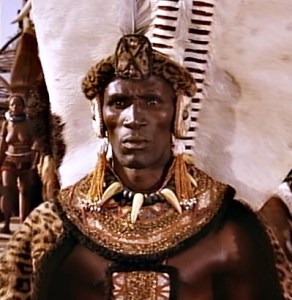
Shaka-Zulu
King Shaka, of the Zulu people

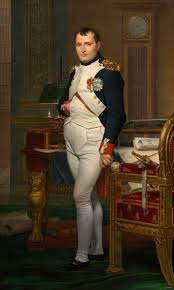
The British often talk of Shaka Zulu as the ‘Black Napoleon’, but I think that Napoleon was a white Shaka!” Miriam Makeba

Napoleon
Napoleon

Les Britanniques parlent souvent de [Chaka Zoulou] comme du ‘Napoléon noir’, mais je dis que Napoléon était un Chaka blanc.” Miriam Makeba