Who/What did We Say Goodbye to in Africa in 2025 ?

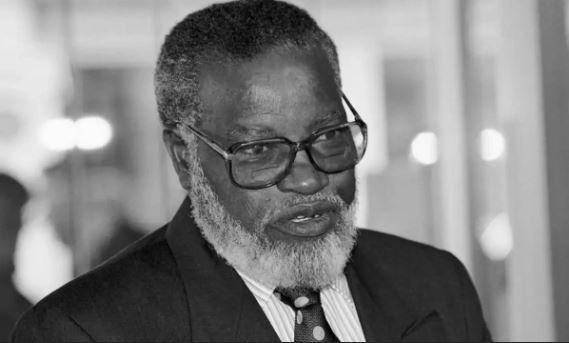
Sam Nujoma (Source: newscentral.africa)

2025 is coming to an end, and there are a few people we said goodbye too, and situations as well. Below are some of them:

  1. This February, on Saturday, February 8 2025Sam Nujoma, Namibia’s first president and founding father passed away at the age of 95. Nujoma led the long fight for independence from South Africa for many years, which culminated with independence on 21 March 1990 of South West Africa, as the country was formerly known. So Long to Sam Nujoma, Namibia’s First President.
  2. In April, Amadou, of the Malian duo Amadou and Mariam passed away at their home in Bamako, Mali. The Grammy-nominated duo Amadou & Mariam was a blind duo from Mali. They both met at the Institute for the young blind in Bamako in 1976 and their song “Je pense a toi” helped them get world fame. So Long to Malian Singer, Member of Duo Amadou & Mariam
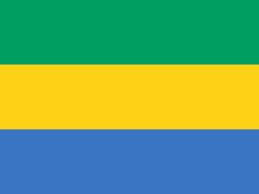
  3. Flag of Gabon

    Brice Oligui Nguema of Gabon, the coup leader who kicked Ali Bongo out of power, the one the West lauds so much, traded his military fatigues for a suit and won the elections by a landslide with a score worthy of a Banana Republic, 90.35%! and Yes, he got all the accolades of the West! This was a total imposture! Recall that Oligui Nguema took the power when the populations protested the presidential elections when Ali Bongo was declared winner instead of the rightful winner who was Albert Ondo Ossa; thus Nguema should have stepped in to right the wrong by putting on the one the people had voted for; instead he took over under the applause of the “international community”. Gabon and the Double Standards of the International Community, and Gabon Oligui Nguema Wins by Landslide.

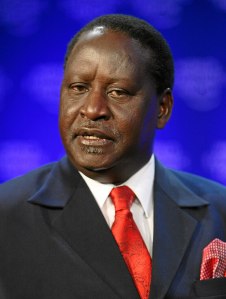
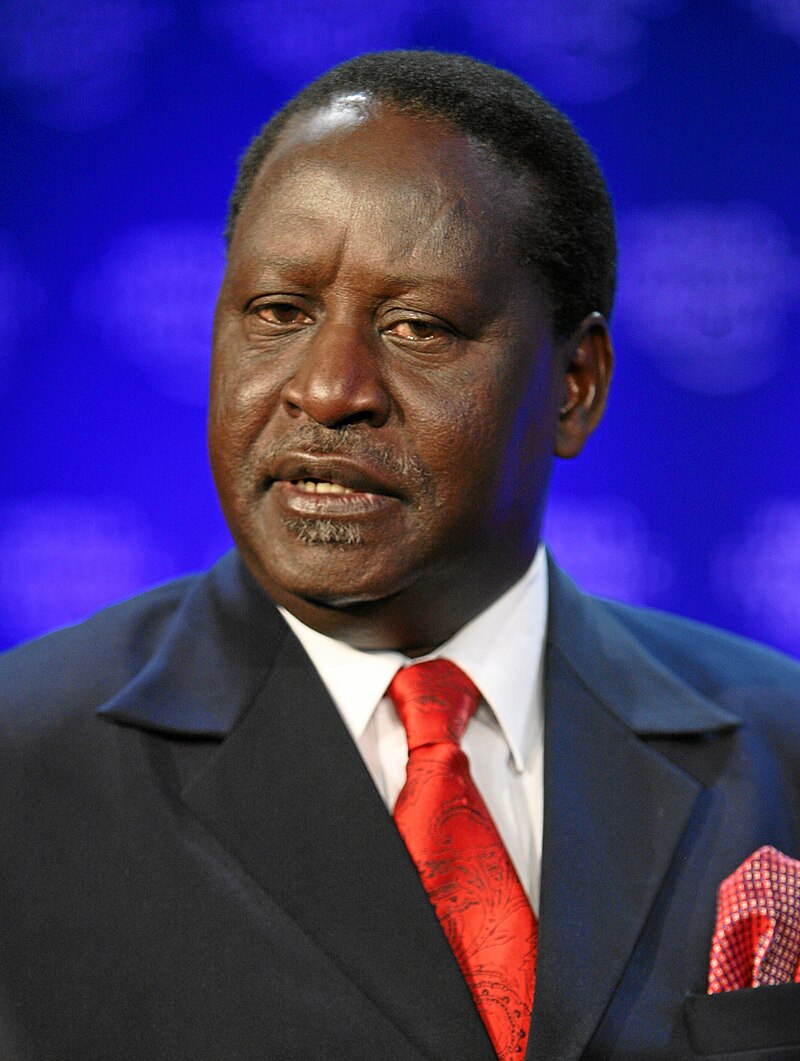
  4. Raila Odinga (Source: World Economic Forum)

    This year Kenya, and the whole of Africa said goodbye to Raila Odinga, the inevitable and greatest opposition leader and fighter to the end for Kenyan democracy. Raila Odinga had been a dominant unavoidable force in Kenyan politics for over 30 years. He was a baobab in Kenya’s political scene, who has always fought for the freedom and democracy in Kenya. Out of the past 5 elections, 1997, 2007, 2013, 2017, and 2022, he had always contested, came second, and even narrowly won to the point that there have always been disputes which have gone as far as civil unrest as in 2007… even the last elections which saw Ruto win were tight with the presence of Odinga. So Long to Raila Odinga, Fighter to the End for Kenyan Democracy, and Raila Odinga in His Own Words.

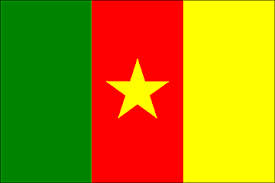
  5. Flag of Cameroon

    Cameroonians saw another weird presidential elections. Not sure if what happened there was a real election. Paul Biya was reelected for a 7th term after 43 years as president of the country, with 20 before as minister and prime minister. This would mark 43 years of walking backwards for Cameroon… no electricity, no water in most places, and major cities overflowing with refuse.  After a magic trick in the 11th hour, where by a switch of a virtual pen, the best and strongest opponent, Maurice Kamto, was removed from the presidential election contest; then the elections took place with another opponent who barely 2 months before was a minister to the regime Issa Tchiroma. To be honest, after 43 years, there is no doubt that anybody would win against the incumbent. Cameroon – Where Self-Hate is used to Keep a Country in Bondage, and Cameroon – History Repeats Itself ? Since then, there have been protests in the country.

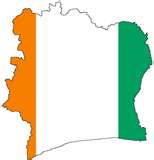
  6. La Cote d'Ivoire
    La Cote d’Ivoire

    Alassane Ouattara, president of Cote d’ivoire, was reelected for a 4th term he was not supposed to be able to run for (in view of the country’s constitution), after selectively eliminating some of the major contenders like Laurent Gbagbo and Tidjane Thiam, leaving only a few such as Simone Gbagbo, Jean-Louis Billon, Ahoua Don Mello, and Henriette Lagou Adjoua. He won the elections with another Banana Republic-type score of 91.2%. Wow! The hijacking of the constitution and Ivorian freedom continues! Given that he serves well Western interests, he was congratulated for his reelection.

  7. Flag of Tanzania

    President Samia Suhulu Hassan of Tanzania was elected under shady circumstances and protests. The protests were suppressed in blood; it has been said that since the October 29 elections, there have been more than 2,000 detained, vehicles and buildings burned, and hundreds of deaths. Even the lady was inaugurated under tight security. Recall that she was never elected, but rather came to power after President John Magufuli passed away in office (So Long to President John Magufuli of Tanzania: The Bulldozer). She won with another kafkaesque score of 97%, after the country’s two main opposition parties were barred and the main opposition leader, Tundu Lissu, was imprisoned. Only seen on our continent! This is a clear hijacking of the freedom of Tanzanians; which we will go as far as calling it a coup against the people’s will.

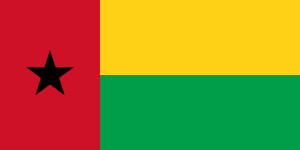
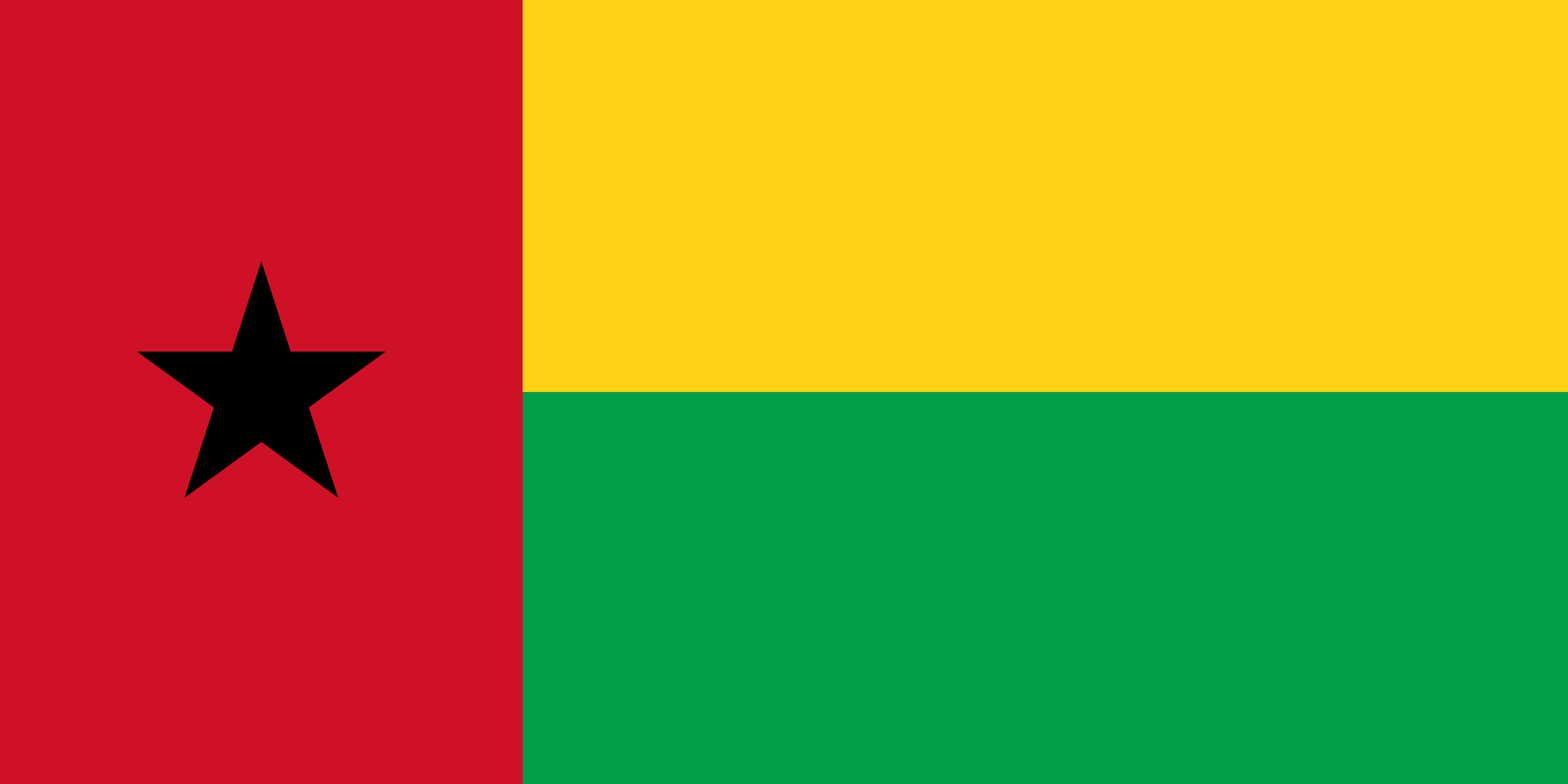
  8. Flag of Guinea Bissau

    There was a coup d’etat in Guinea-Bissau, which looks more like a fake coup. Unlike other places, the coup d’etat was not condemned by ECOWAS or other places; and nobody was called junta by the West. Thus, Guinea Bissau traded Umaro Sissoco Embalo for a general he chose. Recall that he was not even supposed to run for elections, and violated his country’s constitution. He first ran into exile in Senegal, but later moved to the Republic of Congo; he has been accused by opposition and international figures such as former Nigerian president and election monitor Goodluck Jonathan of staging the coup to avoid losing the election against Fernando Dias da Costa. Since it was staged, nobody has called the newcomers, led by Horta Inta-A Na Man, as junta like for the Sahel.

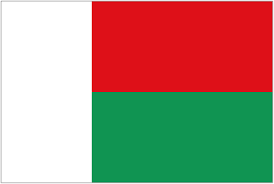
  9. Flag of Madagascar

    There was a coup in Madagascar (2025 Malagasy coup d’état) which saw the fall of President Andry Rajoelina, the DJ who had previously been installed by France, and had also come into power after a coup against Marc Ravalomanana who was not accepted by the West. Macron and France helped fly Rajoelina out to safety in Dubai where he now resides. The new man in charge is general Michael Randrianirina. This coup started by the protests of the populations against power cuts and water outages which have been very common nationwide especially in the capital Antananarivo… they were met with violence from the government police… then it went on, until the army stepped up, and took Rajoelina out. Goodbye to Rajoelina, and welcome to Randrianirina … we hope that he will work for the Malagasy people.

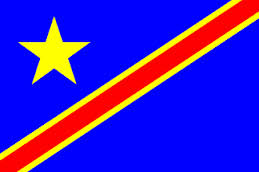
  10. Flag of the Democratic Republic of Congo

    The Democratic Republic of Congo (DRC) signed a “peace” agreement with Rwanda. It started The Declaration of Principles between the Democratic Republic of Congo (DRC) and Rwanda signed in June by DRC and Rwanda foreign affairs ministers including the American Secretary of State. This was later ratified in December by both presidents Felix Tshisekedi of DRC and Paul Kagame of Rwanda in presence of the American President Donald Trump. As we had pointed out, how could a peace agreement with DRC be signed which does not clearly state that Rwanda is the aggressor of the DRC? How can there be a peace agreement, if Rwanda does not admit to its crimes against the Congolese people? Why is there no mention of the close to 10 million dead Congolese from this 30-year-old conflict? What sort of a peace is that if there is no justice? Well, to prove us right, new conflicts started in the region immediately after the signature of the agreement, or rather they never stopped. Peace Agreement between the Democratic Republic of Congo (DRC) and Rwanda: Is this for Real? Thus, the DRC is still under attack. We should tell all these Congolese and African politicians to stop signing documents in fear… nothing good comes out of negotiating from a position of fear!

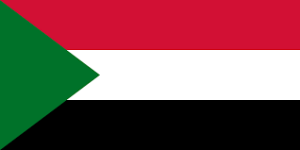
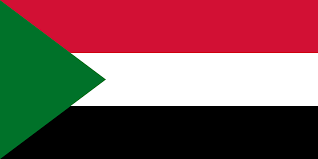
  11. Flag of Sudan

    As the year closes, the civil war is still ongoing in Sudan, all of that under the eyes of the “international” community. Sudan’s brutal civil war has dragged on for over years, displacing millions and killing in excess of 150,000 people. This is now among one of the deadliest conflict in the world today. Our hearts go out to our Sudanese brothers and sisters.
Their Blood Waters Our Freedom

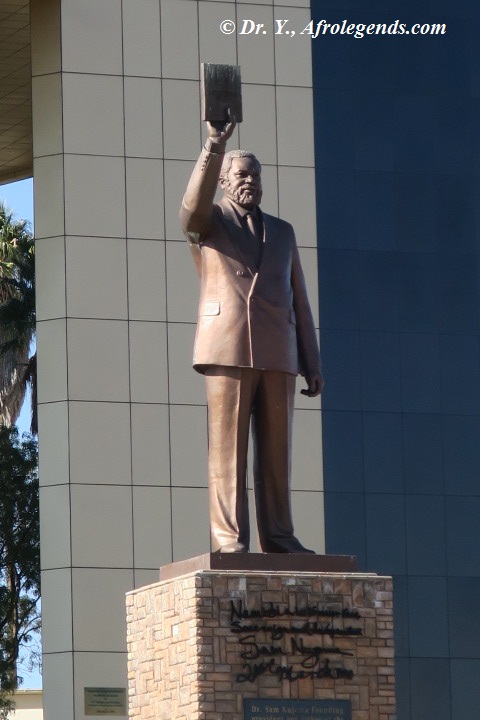
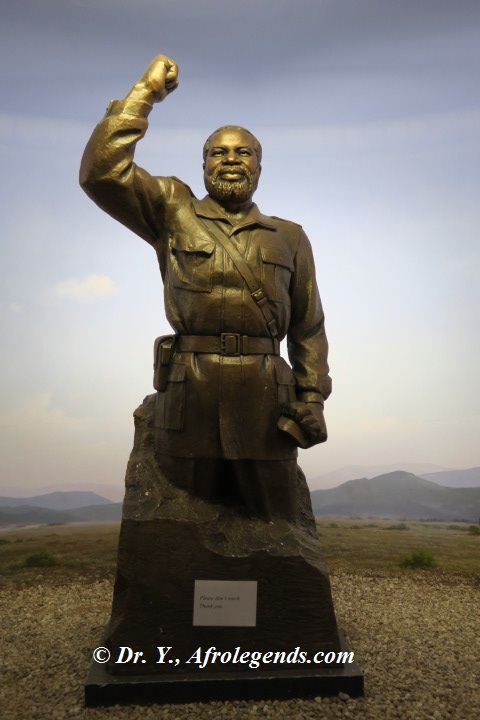
We owe a lot to those who lost their lives for us to enjoy amazing freedoms. In Windhoek, the capital of Namibia, there is a monument, The Genocide Memorial, erected to celebrate those who went before, who lost their lives for us to be free. The Genocide Memorial can be found south of the Sam Nujoma statue on Independence Museum in Windhoek, Namibia. On the monument, is written, “Their blood waters our freedom.” On the inner plaque, whether on the back or front of the statue, are found images of the Herero and Nama people of Namibia who were almost entirely exterminated by the Germans, Germany in Namibia: the First Genocide of the 20th Century. At the top of the monument, are a man and woman in an embrace who have broken their shackles of the South African military occupation. The couple stands atop a rendering of a traditional Namibian dwelling.

So wherever we are, it is important to know that our ancestors gave their blood and sweats for us to stand tall today, and it is our duty to continue to battle for the next generations. Their blood waters our freedom!!!

“Their Blood Waters Our Freedom” Monument at the Independence Museum, in Windhoek, Namibia
“Their Blood Waters Our Freedom,” back of the monument

So Long to Sam Nujoma, Namibia’s First President

Sam Nujoma (Source: newscentral.africa)
This past Saturday, February 8 2025, Sam Nujoma, Namibia’s first president and founding father passed away at the age of 95. The ancestors are greeting this illustrious brother who fought for the independence of his country. Nujoma led the long fight for independence from South Africa for many years, which culminated with independence on 21 March 1990 of South West Africa, as the country was formerly known. Nujoma helped found Namibia’s liberation movement known as the South West Africa People’s Organisation (SWAPO) in the 1960s. After independence, Nujoma became president in 1990 and led the country until 2005.
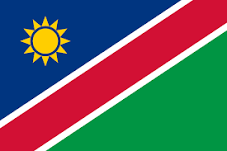
Flag of Namibia
Samuel Shafiishuna Daniel Nujoma was born at Etunda, a village in Ovamboland, on 12 May 1929, to Daniel Uutoni Nujoma and Helvi Mpingana Kondombolo, an Uukwambi princess. From his mother, he inherited his strong charismatic influence during his political career.  He was the oldest of 11 children. His childhood was spent taking care of his siblings, tending to the family’s cattle, and farming.
Statue of Sam Nujoma in front of the Independence Museum in Windhoek, Namibia
At the age of 17, Nujoma moved to the harbor town of Walvis Bay, where he slowly learned about the plight of Black people under white-minority rule; he also worked at a general store and later at a whaling station. In 1949, Nujoma moved to Windhoek where he worked as a railway sweeper for the South African Railways (SAR), while he went to night school. It was there that he was introduced to the Herero tribal chief Hosea Kutako, who was lobbying to end apartheid rule in Namibia, then known as South West Africa. Kutako took the young Nujoma under his wing, and mentored him as he became politically active among Black workers in Windhoek who were resisting a government order to move to a new township in the late 1950s. First, he joined with the Ovamboland People’s Congress (OPC) co-founder Jacob Kuhangua to start a Windhoek branch; at its first congress, he was elected president. At Kutako’s request, Nujoma began life in exile in 1960, first to Bechuanaland (now Botswana), then Bulawayo in then Southern Rhodesia (Zimbabwe), and later ending in Tanzania where he was welcomed by President Julius Nyerere. The same year, he was elected president of the South West Africa People’s Organization (SWAPO) in abstencia. The problem of South West Africa, similar to Kamerun, was that they were former German colonies, which had been placed under League of Nations mandate of South Africa in the case of South West Africa, and France and Great Britain for Kamerun; thus the country should have been independent a while back. Nujoma spent a few years asking the United Nations to ensure that the occupying power that was South Africa released control of South West Africa. After many unsuccessful tries, while shuttling from capital to capital in quest for support, he authorized the launch of armed resistance in 1966 against South African forces. The attack marked the beginning of the Namibian War of Independence, which would last more than 25 years.
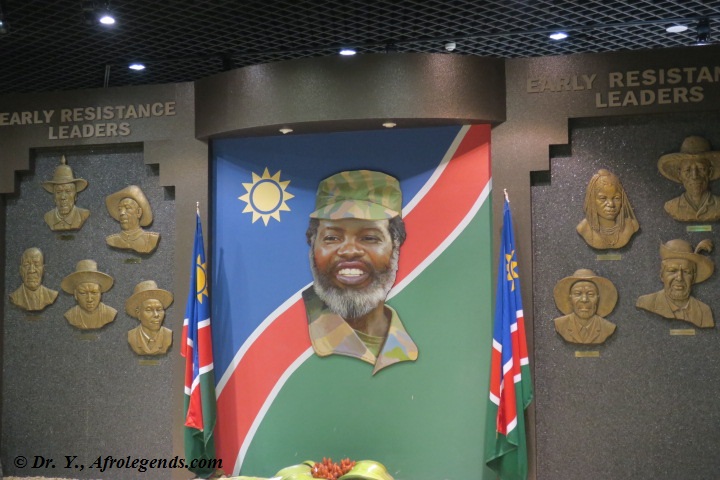
Sam Nujoma on a plaque to Early Resistance Leaders inside the Independence Museum in Windhoek, Namibia
On 19 March 1989, the signing of the cease-fire agreement with South Africa took place. After 29 years in exile, Nujoma returned to Namibia in September 1989 to lead SWAPO to victory in the UN-supervised elections that paved the way for independence. Nujoma was elected first president of the new nation which became independent on 21 March 1990. He was re-elected in 1994 and 1999, and stepped down in 2005. The current president of Namibia, President Nangolo Mbumba said of Sam Nujoma, He “inspired us to rise to our feet and to become masters of this vast land of our ancestors,” … “Our founding father lived a long and consequential life during which he exceptionally served the people of his beloved country.” Namibia’s Vice-President Netumbo Nandi-Ndaitwah, who is due to be inaugurated as president in March after leading SWAPO to victory in elections, said his “visionary leadership and dedication to liberation and nation-building laid the foundation for our free, united nation“.
Bust of Sam Nujoma, inside Independence Museum, in Windhoek, Namibia
South Africa’s President Cyril Ramaphosa said the former Namibian president was an “extraordinary freedom fighter” who played a leading role in not only his country’s fight against colonialism, but also in the campaign that led to the end of the apartheid regime in South Africa in 1994. “President Nujoma’s leadership of a free Namibia laid the foundation for the solidarity and partnership our two countries share today – a partnership we will continue to deepen as neighbours and friends.” South African President Cyril Ramaphosa said Nujoma led Namibia’s independence movement “against the seemingly unshakeable might of colonial and apartheid authorities and forces” and spurred the anti-apartheid movement in South Africa on its own final steps to freedom. “Sam Nujoma inspired the Namibian people to pride and resistance that belied the size of the population,” Ramaphosa said. “Namibia’s attainment of independence from South Africa in 1990 ignited in us the inevitability of our own liberation.”

Robert Mugabe and His Contribution to Africa

Robert Mugabe Ave in Namibia_3
Robert Mugabe Avenue, next to the Parliament, in Windhoek, Namibia

Namibia’s Founding President Sam Nujoma has described the late Zimbabwean President Robert Gabriel Mugabe as one of the continent’s most iconic leaders who fought for the liberation of his country and that of Africa at large. “He will be remembered as one who stood firm when others wavered. He was an iconic Pan-Africanist,” Nujoma said.

Robert Mugabe_7
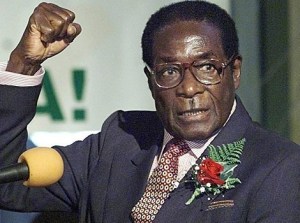
Zimababwe’s President Robert Mugabe chants Zanu PF slogans with supporters gathered at the Harare International Conference Centre in Harare, Wednesday May 3, 2000. Mugabe launched the Zanu PF’s election manifesto which bears the slogan “Land is the Economy and the Economy is Land”. (AP Photo/Christine Nesbitt)

Robert Mugabe’s contribution to the freedom of Namibia, and all of Southern Africa and Central Africa is so immense that there are streets named after him throughout the region; for instance, an avenue bears his name in downtown Windhoek, the capital of Namibia. He worked tirelessly for the liberation of most of Southern Africa, including his very own country of Zimbabwe. Many countries such as Mozambique, Namibia, South Africa (with the fall of the Apartheid regime), Angola, owe their freedom to his unwavering support. Even in the  Democratic Republic of the Congo, (DRC), his support, sending troops there, helped avert total chaos. Joseph Kabila, former president of the DRC said, “We will forever remember the worthy son of Africa, who came to our rescue when our country was victim of a foreign aggressor. The continent has lost one of its pan-African leaders, a hero of independence.

Don’t agree with everything you read online, in the Western newspapers. When an African leader stands for his people and is fighting for their freedom, the western press calls him a dictator, a heretic: Laurent Gbagbo, Muammar KadhafiKwame Nkrumah at the end of his life, Sekou TouréPatrice Lumumba, … When he serves western interests in pillaging his country, he is a democrat and a friend: Paul Biya, Omar BongoAlassane Ouattara,  Mobutu Sese Seko, and countless others. Pay attention and you will see… and since the media are controlled by the west, we get a different version, very far from reality.

Robert Mugabe - Fidel Castro in Namibia1
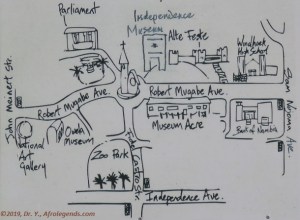
Map of Windhoek’s city center on the plate of the National Museum of Namibia, showing the Robert Mugabe Ave and the Fidel Castro St., as well as the Sam Nujoma Ave.

Everybody is stricken by some amnesia and forgets that the economic problems of Zimbabwe stemmed from economic sanctions imposed on them by Western powers such as the UK, US, and Europe. Before Mugabe fought for land restoration, he was knighted by the Queen of England, when he asked for the land of his forefathers to be returned to their rightful owners, he became a dictator. Go figure!

No wonder, Julius Malema of the EFF said “We must not allow our enemies to tell us how to remember [Robert Mugabe]; we know our heroes.”