There was a lot to celebrate in Africa this year. Below are just a few:
Alliance des Etats du Sahel (AES) (Source: Alliance-sahel.org)
In January, Mali, Burkina Faso, and Niger left the ECOWAS creating a major seismic shift in the organization. Mali, Burkina Faso, and Niger all leave the ECOWAS. This came as no surprise given that the coup to topple puppet governments in their respective countries, the ECOWAS had suffocated these countries by suspending all three countries and imposing heavy sanctions on Mali and Niger that exacerbated the populations’ sentiments that it is a puppet organization serving foreign interests. Niger even tried to amend the situations by inviting ECOWAS representatives to the country, but only the member from Togo showed up. Why should anybody remain in an organization that punishes its member populations?
In January, Ghanaian artifacts were returned home for the first time in 150 years, on a “loan”. Ghana Artefacts “Return” Home 150 years later … on Loan. It is a disappointment that African governments can only get “loans” for what is dutifully theirs from those institutions which have amassed millions over the year from the exhibition of stolen African artefacts.
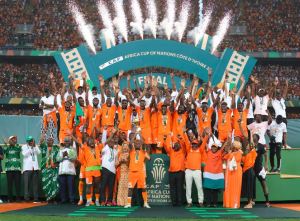
The Elephants are winners of the Africa Cup of Nations 2023 (Source: CAFonline.com)
In February, the Elephants of Cote d’Ivoire gave us a thrill from being redeemed in the knockout stage with 2 defeats (among which a 4-0 loss against Equatorial Guinea) that left them open to elimination, and a redemption that came from being one of the four best 3rd-placed team, a coach sacking, and a coach change, to lift the trophy of the Africa Cup of Nations. It was a real “Coup du Marteau” (Tam Sir, we are talking about your special song!) The Ivorians added to their previous Nations Cup wins of 1992 and 2015 (Côte d’Ivoire wins the 2015 Africa Cup of Nations) and became the first tournament hosts to triumph since Egypt lifted the trophy in 2006. CAN 2023: the Elephants of Côte d’Ivoire are the New Champions
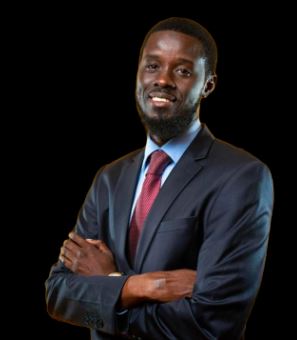
Bassirou Diomaye Faye (Source: Seneweb.net)
In March, Bassirou Diomaye Faye was elected president of Senegal, making him the youngest African president at 44. This was a joyous moment for the Senegalese people who stood to have their democratic system and constitution upheld. Faye is very unconventional, as the youngest with no political background (he was previously a tax officer), he is also the first Senegalese president to openly have two wives. With his friend and Prime Minister Ousmane Sonko, we hope for better governance for Senegal. Senegal Presidential Elections: Bassirou Diomaye Faye is set to be the next president. Either way, the Senegalese have demonstrated once again, that although their democracy is young, it is not to be messed with!
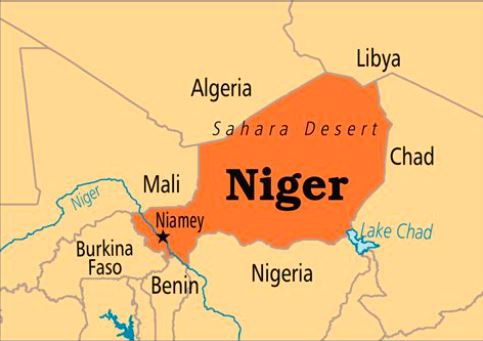
Map of Niger
In mid-March, Niger suspended military “cooperation” with the USA, with immediate effect. Operating from years of condescending treatments of those deemed inferior, particularly of Africans, the Americans had decided to dictate their will, like the French before, to Niger people and deny their sovereign rights to choose their own partnerships in their fight against terrorism. The spokesman of Niger’s government, Colonel Amadou Abdramane, exposed the fact that the military “cooperation” with the US was not even a real one, i.e. the US had installed their largest drone base in Africa, and possibly in the world, in Niger via a verbal agreement only, and the Niger people had to pay for the American base in their country, while the Americans never raised a hand to help Niger fight against terrorist attacks that were maiming their citizens [Bye Bye to French Troops in Niger, France set to Withdraw Troops and Ambassador from Niger]. Niger suspends military “cooperation” with the US, effective immediately.
Alliance des Etats du Sahel (source: linfodusahel.com)
Mali, Niger, and Burkina Faso’s leaders met on July 6, 2024 in Niamey, Niger, as part of the first summit of the Alliance des Etats du Sahel (AES – Alliance of the Sahel States). During the summit, the three leaders signed a confederation treaty aimed at strengthening the links between the three nations in terms of defence, and other aspects such as the economy, infrastructures, and more. They reinforced their mutual defence pact.
Right before the Paris Olympics, brother Biniam Girmay of Eritrea made history by becoming the first African to win a stage at the Tour de France, and two more stage victories which helped him capture the green jersey for the highest points scorer – a first for anyone from the continent.
Faith Kipyegon winning historic 3rd gold medal at the Paris 2024 Olympics (source: Kelly Ayodi for Olympics Kenya – EastleighVoice.co.ke)
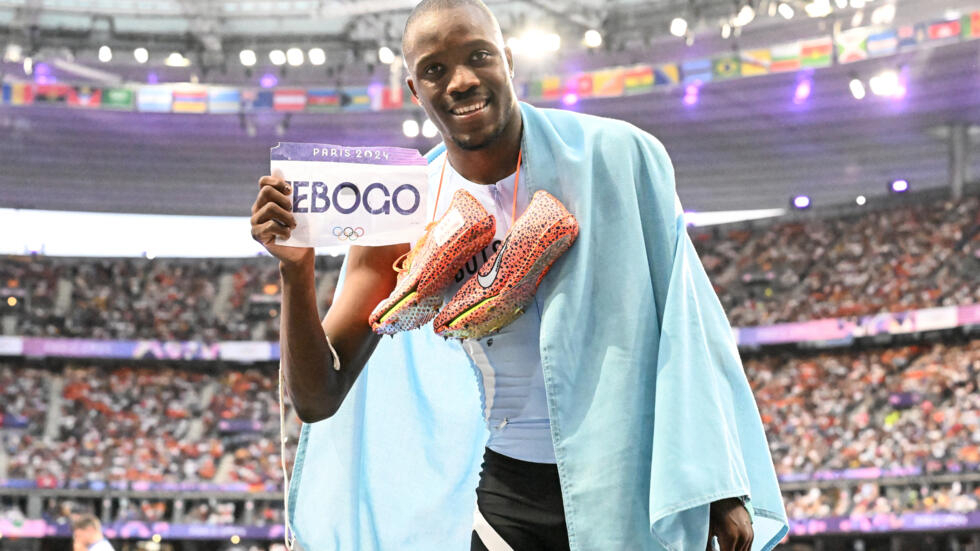
The Paris 2024 Olympics ended with a strong show from African athletes who shined in various disciplines, and represented many countries including outside of Africa. They made us proud and served us joy, endurance, and passion. We will list just a few. We had a lot of firsts, like our Kenyan sister Faith Kipyegon who won her 3rd successive Olympic gold in the women’s1500 m, making her the first African athlete to ever win gold in the same event 3 times in a row. Our brother Letsile Tebogo of Botswana earned the top most place in the Men’s 200 m thus giving Botswana and Africa as a whole its first ever olympic gold medal in the 200 m; Tebogo also led the Botswana’s team to a silver medal in the
Letsile Tebogo after winning gold in 200m (Source: Onuaonline)Men’s 4x400m relay, again a first for any African country ever. Ugandan brother JoshuaCheptegei delivered on his promise for his last Olympics to be memorable by winning gold in the Men’s 10,000 m, and landing Uganda its first gold at the games. Tatjana Smith of South Africa made her country proud by winning gold and silver medals in the Women’s 200m and 100m breaststroke events. Akani Simbine and South African track team delivered us silver in the Men’s 4 x 100 m relay, again a first for South Africa, and for Africa as a whole. Kaylia Nemour gave Algeria and Africa its very first victory ever in gymnastics with a gold in the Women’s Uneven bars in artistic gymnastics. Tamirat Tola, who was just added to the Ethiopian Olympics’s team 2 weeks prior, took home the gold medal in the Men’s Marathon. AhmedElgendy won the first gold medal for Egypt at any Olympics, becoming the first African and person to win in the new discipline of Men’s Modern Pentathlon. Cabo Verde got its very first medal at the Olympic games through David de Pina who won bronze in the Men’s 51 kg Boxing. Zambian Muzala Samukonga won the bronze medal in the Men’s 400m, giving his country its very first Olympic medal.
Aliko Dangote, Africa’s richest man, has built one of the world’s largest oil refineries in Nigeria, Africa. The refinery opened its doors last year, and in May shipped out its first boat of refined jet fuel to the Netherlands. Since then, the refinery has gotten into agreements with the Nigerian governments and neighboring ones as well.
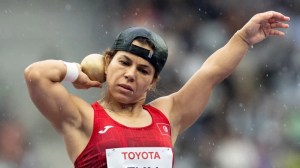
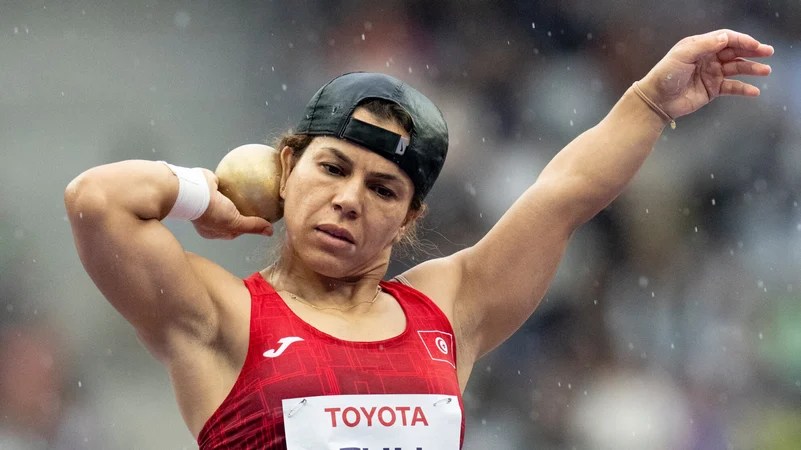
Paris Paralympics 2024 (Source: https://www.paralympic.org/paris-2024)Africa shone at the Paralympics, winning 64 medals, with Morocco getting the most medals with 15 medals, but Algeria topped the continent’s medal table thanks to its 6 gold medals vs. 3 gold for Morocco. Most medals were won in para-athletics and para-powerlifting disciplines. Veteran RaouaTlili of Tunisia cemented her place as a legend in the F41 discus throw and shot put, winning 2 gold medals this year, giving her a total of 8 gold medals for her country, having competed in each Olympics since
Raoua Tlili (Source: Outlook India)
Beijing 2008. Nigeria’s Mariam Eniola Bolaji became the first African to win an Olympic or Paralympic medal in Badminton. Yovanni Philippe gave Mauritius its first medal ever by securing a bronze medal in the men’s T20 400m; while Annaba native, Brahim Guendouz won gold in para-canoeing’s KL3 class over 200m, giving Algeria its first ever medal in a discipline outside of para-athletics, para-judo, and para-powerlifting.
Gael Faye and his book Jacaranda
African authors made great wins and firsts: they won the most important literary awards in French literature: the Goncourt prize, which was awarded to Kamel Daoud for his third novel titled «Houris», and the Renaudot prize awarded to Gaël Faye for «Jacaranda». Daoud’s novel is currently in a controversy. Africans win the Goncourt and Renaudot 2024 Literary Prizes.
AndakiaA Senegalese startup, Andakia, has just introduced the very first African AI: AWA. AWA is a Wolof-speaking artificial intelligence system; it is the brainchild of Alioune Badara Mbengue. In an interview to TRT Afrika, Mbengue said, “AWA is the first AI that understands and speaks perfect Wolof. Our vision is to extend AWA to other African languages, enabling Africa to become a leader in digital innovation and ensure technological sovereignty tailored to its needs.” Users need to simply engage in a spoken exchange with the AI interface in Wolof, seeking general information or asking it to perform tasks such as ordering a taxi, ordering a meal, or carrying out financial and other transactions. This is revolutionary as it addresses the needs of the population. We applaud the amazing work of our brother and his team, and truly the sky is the limit.
Last week, Orano, the French nuclear company which until now controlled the mining of uranium in Niger, has announced that the Niger government had taken control of its Somair uranium mining. Orano owns about 63 % of the mine. Orano claims that the government had been stopping them from resuming exports and operation, when we know that the degradation (Niger and Orano: Disagreement) is in part because they were trying to force the government to go through Benin whose border has remained closed, previously due to ECOWAS blockage (fueled by France), and now given that it hosts French military bases. The media tell us that Niger is not that important and Orano, France, and the EU have been able to find alternative suppliers in Canada, Uzbekistan, Australia, Namibia, and others… if that is the case, then why do they persist in Niger? Why not leave Niger alone? Is it because the uranium from Niger was dirt cheap, and now paying from it at regular prices from those other sources hurts the pocket book? The BBC admits that “the timing could hardly be more awkward, as Western countries struggle to meet the challenge of climate change and cut their carbon emissions from electricity generation.” Overall, the West is unhappy that Niger is now seeking other partners such as Russia, China, and others.
Flag of Niger
The Western mainstream media, in a case of absolute double standard keeps calling the government of Niger, “military junta“, while calling the Syria terrorists “liberators.” These same media are all up in arms in the case of Niger, Mali, and Burkina Faso. Today, the BBC received a 3-month ban in Niger, while the Nigerien government is filing suits against RFI for spreading fake news that could destabilize the social peace and inciting war propaganda against the local government.
In the latest sign of a dramatic deterioration in relations, Niger’s military rulers appear increasingly determined to drive France out of any significant sector in their economy – and particularly uranium mining. This week the French state nuclear company Orano announced that the junta … had taken operational control of its local mining firm, Somaïr. …
… the crisis facing Orano in Niger represents a significant practical challenge for French energy supply. With 18 nuclear plants, totalling 56 reactors, which generate almost 65% of its electricity, France has been ahead of the game in containing carbon emissions from the power sector. … So, over the past decade or so, [France] has imported almost 90,000 tonnes – a fifth of which has come from Niger. … Last year, as West African neighbours responded to the coup in Niger by imposing a trade blockade that paralysed uranium exports, other suppliers readily stepped into the breach. The European Union’s imports of the mineral from the country plunged by a third, but these were largely replaced by Canada.
… After last year’s coup, Orano itself tried to stay out of the diplomatic row, keep a low profile and carry on operating normally. But the Ecowas trade blockade prevented it from exporting the output from the Somaïr mine, near Arlit, in the Sahara Desert. And even after the sanctions were lifted in late February, the usual uranium export route, via Benin’s port of Cotonou, remained blocked, because the junta kept the border closed in an ongoing political row with Benin…. In June the junta cancelled the French company’s rights to develop a new mine at the large Imouraren deposit, which had been seen as the uranium sector’s principal new hope for future growth. Meanwhile, the export blockage was pushing Somaïr, which by November was sitting on 1,150 tonnes of blockaded stocks of uranium concentrate worth $210m (£165m), into financial crisis.
… Niger’s junta feels no need to make concessions to Orano because it is now buoyed by a sharp rise in oil exports, thanks to a new Chinese-built pipeline. With that financial cushion, the regime appears prepared to bear the cost of paralysing and probably dismantling the traditional uranium partnership with France – now its main international opponent.
France is the biggest electricity seller in the world, and this because of Niger who contributes up to 15% (probably more – they don’t want to tell us). Niger is the third uranium provider of the European Union. At one point, France was paying Niger 0.80 Euro/kg of uranium, while paying Canada 200 Euro/kg for the exact same quality; and this has been going on for decades! Is this not pillaging a country?
Map of Niger
Orano, previously known as Areva, has been in Niger for over 70 years. Yet in 70 years, they have not built a single school, roads, or even hospital for the locals (Mali and Niger end Long-Standing Tax Treaties with France). These French companies have similar behaviors in all of their previous colonies, in Cameroon for example, Safacam has been there 130 years, but the road there is impracticable – they can grab everything, without even giving simple things like roads to the locals! Moreover, many do not pay taxes in the local countries, but back to their home countries. Such contempt! How are the locals supposed to develop themselves? And then if one adds the FCFA scheme (The 11 Components of the French Colonial Tax in Africa) and it is game over!
Well, good riddance to bad rubbish… goodbye to Orano. The French thought that by having the Benin-Niger border closed via ECOWAS sanctions, that Niger, a landlocked country, will suffocate. When Benin realized that their sanction was affecting their own economy via the Benin port, given that Niger’s exports were no longer going through Benin, they back-pedaled trying to bring Niger in. However, it has been proven via intelligence, that there are French military bases in Benin and so Niger has refused to reopen their border with Benin. They have reopened all other borders with neighboring countries but Benin. Recall that Benin also tried to stop Niger oil going through the Niger-Benin Oil pipeline (at 1950 km, it is the longest oil pipeline in Africa) on Benin territory, until the Chinese government gave Talon a small tap on the back questioning his poor judgement to stop crude oil, forcing Talon to reopen the tap for oil.
To learn more, please check out RFI, and VOA. Excerpts below are from the VOA.
=====
NIAMEY, NIGER — Niger’s military junta is disputing a decision by French nuclear fuel firm Orano to halt uranium production, according to a document from a state partner in the venture seen Friday by Agence France-Presse.
Orano announced last month that it was stopping production as of Thursday, owing to what it termed increasingly difficult operating conditions in the country and financial issues.
… The French lamented the withdrawal by the junta in June of a permit for one of the largest uranium deposits in the world, Imouraren, and the impossibility of exporting the raw material with Niger’s border with Benin closed for what Niamey says are security reasons.
“Despite its status as a co-shareholder, Sopamin was not consulted on this serious decision” to halt production, the company, which has operated for half a century in the country’s north, said in a document dated Thursday.
The Nigerien firm complained that the decision “lacks transparency” and “violates a number of principles and practices essential to governance and commitments between stakeholders.”
… The ruling [government], which took power last year in a July coup, says it will revamp rules regulating the mining of raw materials by foreign companies in what is the world’s seventh-largest uranium producer.
… In September, Niger’s Council of Ministers adopted a draft decree creating a state entity, “Timersoi National Uranium Company,” abbreviated to TNUC
Today, we will talk about the capital of the great country of Niger, Niamey. Growing up, I often pondered on the name of the capital of Niger: was it a name that had something to do with Niger? Did it have to do with the fact the city is located on the banks of the Niger River, the third longest river of Africa, which has its source in Guinea near the Sierra Leone border, and runs in a crescent shape through Mali, Burkina Faso, Niger, Benin, and Nigeria? What is the origin of the name Niamey?
Niamey in 1930 – in the center is the house of the French governor (Source: Photo by Walter Mittelholzer – Dec 1930)
The region of Niamey has been inhabited by local populations for as long as forever; the Songhay , Gurma, Hausa are some of its inhabitants. Niamey is said to have been founded by the Maouri, a subgroup of the Hausa people, who came from Matankari (the historic capital of the Arewa) towards the end of the 19th century. From local folklore, they first settled on the island called Neni Goungou (pronounce Neni Gungu) which faces the actual city of Niamey, before settling on the left bank of the Niger river, near a tree. This gave rise to the name Niame, from Niathe name of the tree, and mein the Zarma language which means ‘shore where water is drawn from.’ There is another legend, less likely in my opinion, which claims that the chief of a Kalle (subgroup of the Zarma people) clan would have exclaimed, talking to his slaves: Wa niammané, meaning “take this country.” The first version seems more likely.
Aerial view of Niamey in 2021 (Source: Adrien Barbier / AFP / Getty Images)
Niamey started expanding from a village to a city in the year 1900 in a place which was previously a crossroad between several villages Foulani Koira, Gaweye, Kalley, Maourey, Zongo, Gamkalé, and Saga. The city grew on the left bank of the river as it meanders from west to east. European explorers arrived in the area quite late. Thus, European explorers who traveled through West Africa, such as Heinrich Barth and Charles Monteil never made it to the area. It is only in 1898 that the name of Niamey appears in the reports of the Hourst expedition, named after the French officer Émile Auguste Léon Hourst who was directing a hydrographic expedition. Thus, in 1901, Niamey was a village numbering 600 inhabitants at the arrival of the French mission Lenfant. Niamey replaced Zinder as the capital of Niger on 28 December1926, because of its strategic position closer to major cities of French colonies, Upper Volta/Burkina Faso and Dahomey/Benin, contrary to Zinder which was closer to Nigeria a British colony. During the colonial period, Niamey also served as an important connection point in overland trade of agricultural goods. Niger is still a major provider of agricultural goods to neighboring countries, uranium, and more recently with oil discovery.
Niamey in 2020 (Source: NigerHeritage.org)
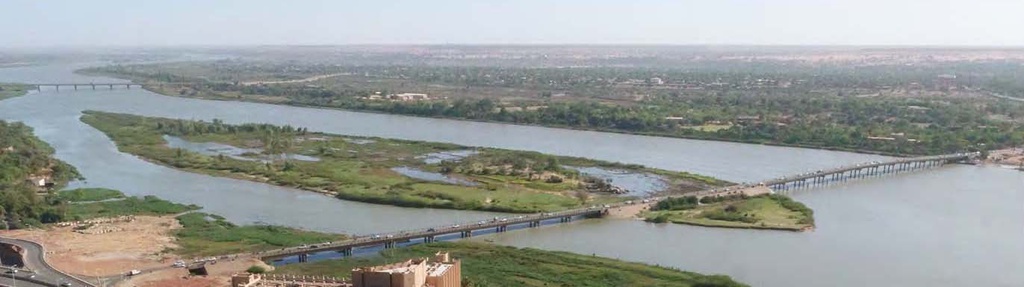
Today in Niamey, the vast majority of the population and government and commercial buildings are located on the eastern bank of the Niger river. The city center contains a number of wide boulevards linking roundabouts. Two bridges connect the two sides of the city – the Kennedy Bridge and the Friendship Bridge. The western bank area consists mainly of residential areas such as Gaweye, Saguia, Lamorde, Saga, and Karadje, as well as Abdou Moumouni University. This year, the government renamed major streets of the city after local heroes, as it should normally be. Over the years, the population has grown significantly and today Niamey counts almost 1 million inhabitants.
View of the Isle of Gaweye and the Kennedy Bridge (Source: NigerHeritage.org)
If you ever visit Niamey, do not forget to visit the Niger National Museum, which incorporates a zoo, a museum of vernacular architecture, a craft center and exhibits including dinosaurskeletons and the Tree of Ténéré, which was until 1973, one of the few remaining trees in the Sahara Desert and one of the most isolated trees on earth used as a landmark by caravans through the Ténéré region of northeast Niger. Other places of interest include the seven major market centers, the most popular being the large Niamey Grand Market, a traditional wrestling arena, the Great Mosque, and a horse racing track. Most of the colorful pottery sold in Niamey is hand made in the nearby village of Boubon. As you walk through the city, try to see if you can find that tree at the origin of the name Niamey, and enjoy the well-renowned Nigerien’s hospitality.
Mali, Niger, and Burkina Faso’s leaders met on July 6, 2024 in Niamey, Niger, as part of the first summit of the Alliance des Etats du Sahel (AES – Alliance of the Sahel States). During the summit, the three leaders signed a confederation treaty aimed at strengthening the links between the three nations in terms of defence, and other aspects such as the economy, infrastructures, and more. They reinforced their mutual defence pact. This is a pivotal moment whih marks a new era, and we rejoice for Mali, Niger and Burkina Faso, and the whole of Africa.
The military leaders of Burkina Faso, Mali and Niger have hailed a newly signed treaty as a step “towards greater integration” between the three countries, in the latest showing of their shift away from traditional regional and Western allies.
During a summit in the Nigerien capital of Niamey on Saturday, the three leaders signed a confederation treaty that aims to strengthen a mutual defence pact announced last year, the Alliance of Sahel States (AES).
The signing capped the first joint summit of the leaders – Niger’s General Abdourahmane Tchiani, Burkina Faso’s Captain Ibrahim Traore, and Mali’s Colonel Assimi Goita – since they came to power in successive coups in their bordering West African nations.
… Speaking at the summit on Saturday, Tchiani called the 50-year-old ECOWAS “a threat to our states”.
… “We are going to create an AES of the peoples, instead of an ECOWAS whose directives and instructions are dictated to it by powers that are foreign to Africa,” Tchiani said.
Flag of Burkina Faso
Burkina Faso’s Traore also accused foreign powers of seeking to exploit the countries. The three nations have regularly accused former colonial ruler France of meddling in ECOWAS.
“Westerners consider that we belong to them and our wealth also belongs to them. They think that they are the ones who must continue to tell us what is good for our states,” he said.
“This era is gone forever. Our resources will remain for us and our population’s.”
… For his part, Mali’s Goita said the strengthened relationship means an “attack on one of us will be an attack on all the other members”.
… The Niamey summit also came a day before the United States is set to complete its withdrawal from a key base in Niger, underscoring how the new military leaders have redrawn security relations that had defined the region in recent years.
… French troops completed their withdrawal from Mali in 2022, and they left Niger and Burkina Faso last year.
Meanwhile, US Air Force Major General Kenneth Ekman said earlier this week that about 1,000 military personnel would complete their withdrawal from Niger’s Air Base 101 by Sunday.
The US is also in the process of leaving a separate, $100m drone base near Agadez in central Niger, which officials have described as essential to gathering intelligence about armed groups in the region.
We have been reflecting on a word which has been used around the world to destabilize countries: the word “democracy.” This word has been used to impose treacherous regimes and sanctions upon “weaker” countries. By “weaker,” we basically mean those that used to be called “third-world” countries. The “global” world we are getting marched towards does not apply to all; there still needs to be some uniqueness which applies to local issues, needs, cultures, and people.
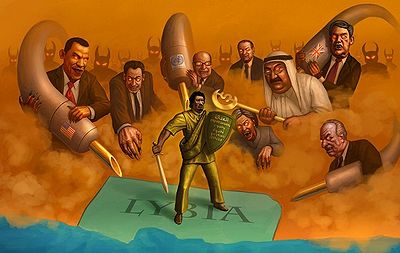
Libya, the Prey of the West
Over a decade ago, we wrote the article “Africans and the Trap of Democracy,” when NATO forces were bombing Libya. Reading it, almost every single word is still relevant today and can be applied to situations in so many countries on the African continent and beyond. Back then, we were shocked that so many Africans were applauding the actions of NATO using the word “democracy” … we hope that they can see what the destabilization of Libya has done to the rest of Africa, and that in reality the word “democracy” is used to fool Africans into hating those who actually work for Africa’s survival and its real independence. Libya under Khadafi was a prosperous country; Singapore, in Asia, under Lee Kuan Yew became one of the most successful economies in the world. There are so many dictatorships in Africa disguised under the name democracies where there are elections every few years and which are praised by the West because they serve their interests in Africa. Let us NOT fall into this trap called “democracy” in Mali, Niger, or Burkina Faso. Instead let us support our brothers of the Alliance of the Sahel (AES), and acknowledge that the continent with the first constitution in the world born in the Empire of Mali, the Kourougan Fouga, cannot learn about ways to govern itself from foreigners. The answer is within!
With the bombing of the presidential residence in Cote d’Ivoire by French forces for over a week, followed by the arrest of president Laurent Gbagbo, with the current intense bombing of Libya by NATO for the past 6 months, I cannot help but try to answer some of the same justifications used by Africans to approve the bombings by foreign troops on their neighbors’ countries, and ultimately on African soil. Any African who claimed and accepted that Cote d’Ivoire should be bombed by the French, shame on you! Any African who thought that the bombing of Libya was correct… shame on you! Any African who uses the same stupid phrase used by the West to abuse us: “… well Gbagbo had his day, he was in power for 10 years!… or Kadhafi was there 42 years!” Well my friend… Shame on you! Should democracy be imposed using bombs? Should democracy be imposed using warplanes, and Apache helicopters? Is it democracy to bomb the people you plan to help? Is it democracy to deliberately bomb civilian targets, hospitals, state televisions, homes, etc… to, like NATO said “protect civilians”? Was there not a peaceful solution? Was it so hard to re-count the votes in Cote d’Ivoire? Was it so hard to organize elections as Kadhafi asked? Why bomb? Why bomb? Why bomb?…
… I have not seen anywhere that the definition of democracy was “government imposed by external forces, for external forces, to crush the people of a country!” I am tired of this stupid debate the media-lies (CNN, BBC, France24, etc) always bring and which Africans always fall to: “this one is a democrat, and the other one is a dictator.” Please stop bothering people with the same rhetoric, and stop bothering people with your pseudo-democracies where nobody has the right to say anything. Frankly every other year when elections come around, don’t you ever wonder how come with all the bright politicians coming out of top schools, how come we always end up with only 2 (and somehow the worst of all)?
About a month ago, we saw the government of Niger revoke military accords with the United States, and ordering the US withdrawal of its military personnel and drone base from Niger [Niger suspends military “cooperation” with the US, effective immediately]. Among Niger’s grievances, were the non-respect of Niger, but above all was a treaty imposed upon Niger by the US to implant their largest drone base in the country. The spokesman of Niger’s government, Colonel Amadou Abdramane, exposed the fact that the military “cooperation” with the US was not even a real one, i.e. the US had installed their largest drone base in Africa, and possibly in the world, in Niger via a verbal agreement only, and the Niger people had to pay for the American base in their country, while the Americans never raised a hand to help Niger fight against the terrorist attacks that were maiming their citizens.
We have previously discussed here, on Afrolegends.com, other treaties signed during colonial era in the Liptako, Zinder, and Gaya regions of Niger between the French and the local kingdoms (mostly under duress). We have found the above-mentioned treaty between Niger and the US, and it is only about 13-pages long, more like 10, and really reminiscent of colonial era treaties that have no respect for the local governments and impose upon them unfair rules.
Flag of the United States of America
In the July 6, 2012 treaty between the US and Niger, US citizens are subject to American laws, and the government of Niger has no power over them on Niger soil, so if for instance, an American citizen hurts or kills a Niger citizen on Niger’s soil, s/he will face no retribution about this from Niger. They do not pay taxes to the country. While reading, it is understood that this document was unilaterally and entirely written by the American side; no accord, agreement/discussion went in front of the Niger parliament. By the way, guess who was the Niger counterpart who signed this traitorous document? Mohamed Bazoum who was, back then under President Mahamadou Issoufou, Minister of Foreign Affairs… Both puppets signed the document … do you understand now why all these foreign powers have been screaming and begging for the return of Bazoum to office?
In the document, the American army makes Niger foot the bills for all American army vehicles and planes that enter the Niger’s airspace. There is no sharing of information with the Niger government who does not know the exact number of American troops on its soil, or the number of its drones, or the equipment, etc. More importantly, there is no obligation of support from the US to Niger in its fight against the terrorism that has engulfed Niger’s northern territories for several years.
In summary, someone installs a base on your territory, you have no say about it; as one of the poorest countries on earth, you have to foot the bills for his planes entering your territory; this someone is not subject to your laws, taxes, and looks the other way as you are mired in a conflict for your survival; yet this someone has installed a military force or your soil! How is this not reminiscent of colonial treaties? How fair is it? As you read this treaty, what is Niger’s gain in it? Are these treaties always outrageous like that, or is it just in Africa?
The Embassy of the United States of America presents its compliments to the Ministry of Foreign Affairs, Cooperation, African Integration, and Nigeriens Abroad of the Republic of Niger, and has the honor to refer to recent discussions between representatives of, our two Governments regarding issues related to United States military and civilian personnel …
… As a result Of these discussions, the Embassy proposes that United States personnel be accorded the privileges, exemptions, and immunities equivalent to those accorded to the administrative and technical staff of a diplomatic mission under the Vienna Convention on Diplomatic Relations of April 18, 1961.
… The Government of the Republic of Niger … authorizes the Government of the United States to exercise criminal jurisdiction over United States military personnel while in the Republic of Niger.
… The Embassy further proposes that the United States Department of Defense and United States personnel shall not be liable to pay any tax or similar charge assessed within the Republic of Niger and that the United States Department’of Defense and United States personnel may import into, export out of, and Use in the Republic of Niger any personal property, equipment, supplies, materiel, technology, training, or services in connection with activities under this Agreement. Such importation, exportation, and use shall be exempt from any inspection, license, other restrictions, customs, duties, taxes, or any other charges assessed within the Republic of Niger.
… The Embassy proposes that vehicles operated by or, at the time, exclusively for the United States Department of Defense may enter, exit, and move freely within the territory of the Republic of Niger, and that such vehicles (whether self-propelled or towed) shall not be subject to the payment of overland transit tolls. Aircraft owned or operated by or, at the time, exclusively for the United States Department of Defense shall not be subject to the payment of landing or parking fees at facilities owned and operated by the Government of the Republic of Niger. Aircraft owned and operated by or, at the time, exclusively for the United States Department of Defense shall not be subject to payment of navigation, overflight, terminal, or similar charges When in the territory of the Republic of Niger.
… Further, the Embassy proposes that the Parties waive any and all claims (other than contractual claims) against each other for damage to, loss, or destruction of the other’s property or injury or death to personnel of either Party’s armed forces or their civilian personnel arising out of the performance of their official duties in connection with activities under this Agreement.
…
Embassy of the United States of America
Niamey, July 6, 2012.
The authorities of Mali, Burkina Faso, and Niger have announced simultaneously on 28 January 2024, their decision “incomplete sovereignty on the immediate withdrawal” from the regional economic bloc that is the Economic Community of West African States (ECOWAS). Mali, Burkina Faso, and Niger stated, ECOWAS “under the influence of foreign powers, betraying its founding principles, has become a threat to its member states and its population.” The three countries have accused the regional bloc of failing to support their fight against “terrorism and insecurity,” while imposing “illegal, illegitimate, inhumane, and irresponsible sanctions.” All three countries were founding members of ECOWAS over 50 years ago.
Burkina Faso
In reality, this comes as no surprise as it is the normal evolution of the state of things. After the coup in their respective countries, the ECOWAS has suffocated these countries by suspending all three countries and imposing heavy sanctions on Mali and Niger that have only served to exacerbate the populations’ sentiments that it is a puppet organization serving foreign interests. Niger even tried to amend the situations by inviting ECOWAS representatives to the country last week, but only the member from Togo showed up. Why should anybody remain a member of an organization that punishes the populations? Are they trying to pressurize the three landlocked countries? It is sad that we, Africans, have organizations that only work to serve the interests of others. It should not even be allowed for coastal countries to use sea access to landlocked ones as a pressure point! That is totally inhumane!
Map of Niger
We all joined these organizations thinking that they would serve common African goals…. unfortunately, under external orders, they instead impose heavy sanctions on sister states. It is about time that we, Africans, unite around the cause of Burkina Faso, Mali, and Niger, to free our continent. Their fight should be our fight, as they are fighting for our freedom, particularly that of Francophone Africa. Since the coup in Niger and rupture with France, Niger’s economy has been doing better even with all the sanctions, than since independence. Does that not tell us something? No wonder, all the European generals have been having meetings in West Africa in recent weeks, and even the American Secretary of State Anthony Blinken was in Cote d’Ivoire just a few days ago, while the populations are focused on the African Cup of Nations. We should not forget that now is the New Scramble for Africa, and Africans should not allow history to repeat itself!
Thomas Sankara a Ouagadougou
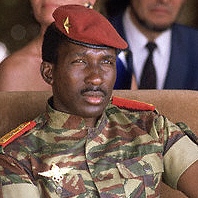
And of course, the Western media predict all doom to these countries. Freedom is not cheap, but it is best to be free of one’s destiny than being a slave at the mercy of someone else… Like Thomas Sankara said, “… the slave who is not capable of assuming his rebellion does not deserve that we feel sorry for himself. This slave will respond only to his misfortune if he is deluding himself about the suspect condescension of a master who claims to free him. Only struggle liberates …” [«… l’esclave qui n’est pas capable d’assumer sa révolte ne mérite pas que l’on s’apitoie sur son sort.Cet esclave répondra seul de son malheur s’il se fait des illusions sur la condescendance suspecte d’un maître qui prétend l’affranchir.Seule la lutte libère …»] Discours de Sankara à l’ONU le 4 octobre 1984 (texte intégral)
At the beginning of the month, Mali and Niger jointly put an end to two long-standing tax treaties with France. We know that French companies in Mali or Niger (and in other of the zone Franc countries) do not pay taxes in the African countries, but rather back in France, even though the generated revenues come 100% from the host African country. Imagine the economic losses for these countries? In most of these countries, the French companies will extract, say in the case of mining, the resources, without as much as building a single road or hospital for the local populations. One can thus understand the logic behind Mali and Niger governments’ actions. Some news media (mostly western ones) claim that now Malians or Nigeriens leaving in France will be subject to double taxation… but how many billion-euros generating Malian or Nigerien companies are there in France? The answer is ZERO! There goes that pointless argument about a few (granted there are a few) Malian citizens in France having to pay taxes, while Orano (old Areva) makes billions in Niger without paying taxes to the Niger government! Such an unfair treaty really needed to go!!!
In a significant shift in fiscal and diplomatic relations, Mali and Niger have taken a stand against France by revoking two long-standing tax cooperation treaties. Dating back to 1972, these agreements were initially crafted to circumvent double taxation, fostering mutual assistance in tax matters.
The decision, outlined in a joint statement from the governments of Mali and Niger, hinged on France’s ‘persistent hostile attitude’ towards both nations and the ‘unbalanced character’ of the agreements. These treaties, according to the statement, have led to substantial financial deficits for both West African countries.
This move signals a potential reconfiguration of the international tax landscape and geopolitical alignments in the region, particularly between these nations and France. The revocation of these treaties also depicts a wider discontent with France’s influence in West African affairs.
Niger’s junta has also scrapped two key military agreements with the European Union aimed at combating violence in Africa’s Sahel region. Moreover, Mali, Burkina Faso, and Niger have withdrawn from the G5 anti-jihadist force, further intensifying the region’s security concerns.
French troops have started withdrawing from Niger this week. The first convoy of French soldiers was escorted by Niger troops out of the country; they are moving to neighboring Chad where they are planning to stay. The French ambassador to Niger has already left the country, after defiantly ignoring the the numerous requests from the Niger government for him to leave (France set to Withdraw Troops and Ambassador from Niger). To this day, the Western media and the West still call the Niger government “junta leaders” or “mutinous soldiers” while they praise the Gabon military coup leader; such double standards! Niger’s government has also given 72 hours to the UN resident coordinator in Niger to leave the country; citing “underhanded maneuvers” by the U.N. secretary-general to prevent Niger’s full participation at last month’s General Assembly in New York, given that Niger’s representative was denied attendance (can you imagine: a nation belonging to the UN has a conflict with another member state, and the UN (organization supposed to serve all nations) refuses it a chance to talk at its tribune?). The US has now called the deposed president (puppet Bazoum), and suspended aid to Niger, while still maintaining their military drone base in Niger… All Niger people should remain on high alert!!!
French soldiers have started to withdraw from their bases in Niger, with the first convoy of troops escorted out of the country by Niger’s military as it travelled in the “direction of Chad”, authorities in the capital Niamey said.
Pick-up trucks and armoured personnel carriers laden with French soldiers drove through the dusty outskirts of Niamey on Tuesday, marking a departure demanded by Niger’s military rulers who seized power in July.
In a statement read on state television, Niger’s military called on citizens to cooperate with the troop movements, which it said would involve some of the 1,500 French soldiers leaving Niger by road to Chad, a journey of hundreds of kilometres through sometimes insecure territory.
“The troops based in Ouallam have left their base today. These are the operations for the departure of the first ground convoy in the direction of Chad, escorted by our defence and security forces,” the military said.
In addition to the departure by land, “three special flights” have been registered at the airport in Niamey, two for the departure of “97 special forces elements” and one “dedicated to logistics.”
… Approximately 1,000 French troops were stationed in Niamey, with another 400 deployed at two forward bases in the northwest, near Mali and Burkina Faso, ….
Flag of Niger
Niger’s military rulers, which assured the withdrawal will take place in “complete safety”, said remaining French forces would continue to leave on “a timetable agreed to by both parties”.
The United States on Tuesday also formally declared that Niger’s democratically-elected president was removed in a military coup, which results in officially suspending assistance to Niger [what else is new?]. Though there are no plans to change the US troop presence in the country, senior administration officials said….
There are now about 1,000 US defence department personnel in Niger, according to the officials. …