Africa: Think Ahead, Strategize!

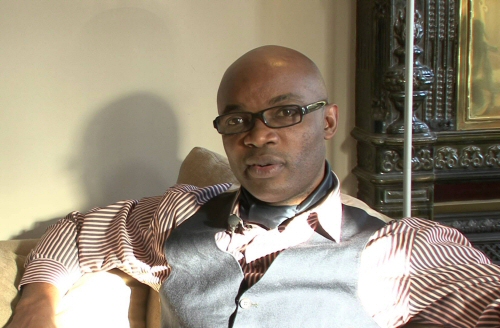
Charles Onana

A few years ago, after the horrors of the electoral crisis in Cote d’Ivoire and the bombing of its presidential palace with the capture of President Laurent Gbagbo and First Lady Simone Gbagbo, I watched a video interview of the Franco-Cameroonian journalist Charles Onana who was talking about his book “Côte d’Ivoire : le coup d’État, Duboiris, 2011 (with a preface by Thabo Mbeki).” At the end of the interview, Onana stated, “… Quand vous avez un pays riche qui est convoité par des multinationales, par des groupes mafieux, par des états, etc, vous devez décupler votre intelligence pour défendre votre pays. … En face vous avez des équipes de think-tanks qui sont là pour penser comment destabiliser le pays, donc les Africains ne peuvent pas faire l’économie d’un travail acharné, d’un travail surhumain pour s’en sortirPendant que la crise se calme ou s’apaise, les autres continuent de travailler pour vous destabiliser, ils refléchissent à d’autres stratégies, mais il faut que [les Africains] apprennent à refléchir à differentes stratégies de manière à ce que le Président de la République ne se retrouve pas toujours seul à penser à tout, seul à reflechir à tout, …” [When you are a rich country that is coveted by multinationals, by mafia groups, by states, etc, you must increase your intelligence tenfold to defend your country. …  On the other side, you have think-tank teams that are thinking ways to destabilize the country, so Africans cannot avoid hard work, superhuman work to be freeWhen the crisis calms down or subsides, others continue to work to destabilize you, they think other strategies, but Africans too need to think different strategies so that the President of the Republic does not always find himself thinking not the only one think all by himself, …]

The New Scramble for Africa (Source: Source: Dr Jack & Curtis for City Press, National Institute African Studies (NIAS))

With the New Scramble for Africa, African countries should have think-tanks, the enemy has think-tanks strategizing over decades, how come we, Africans, do not? Even in times of peace, we should be strategizing… as we heard the French general, it is clear that they are already planning the defeat of Africa, and the return of Africans into their fold in 10 years… how come? When Sekou Toure said NO to the General De Gaulle and Guinea gained independence, not only were the French busy destabilizing his regime politically, militarily, arming his local opponents, but they even flooded his economy with fake currency to destroy his own free Guinean Franc (as he had said NO to the slave currency that is FCFA); the attacks were non stop for several decades, and honestly, are still going on. Thus, Africans, we need to gain our independence, and for our independence to be complete, we need to have strategies for the immediate day-to-day events, but also long-term, over 20-50 or even 100 years. It took China 100 years to get back Hong-Kong and Macau from Great Britain and Portugal… that happened because of a clear vision and strategy of defense against the enemy and reclaiming of lands.

The Vultures are Getting Ready

French flag

Today, we will introduce a new word: “Vulturing”! It is a word we thought of after the events of recent months, and let’s face it because of the New Scramble for Africa. The vultures are at it again, and honestly never stopped. About a month ago, on April 14 2024, a former Chief of Staff of the French army, General Francois Lecointre, announced in an interview to Le Figaro, that France and Europe, for their survival would have to proceed in an armed recolonization of Africa in the upcoming 10 years. To paraphrase, he said, “we cannot let these poor Africans live in chaos just on our doorstep… within a few years, Africans will have a population boom like no other continent [why do Africans having babies, bother them so much?] … Europe should act as a political entity that defends its own interests, including through military commitment… We must return and help these African countries [nobody asked for your help].”

The New Scramble for Africa (Source: Source: Dr Jack & Curtis for City Press, National Institute African Studies (NIAS))

Would we not call it “vulturing”? Why can’t the predator leave the prey? Do you know that France is 4th producer of gold, even though there are no gold mines in France, and the gold comes from Mali? Do you know that because of Niger’s coup, now France cannot have easy access to free uranium as in the past? Now that the AES, Mali – Burkina Faso – Niger, is no longer a part of the French zone of influence (Mali, Burkina Faso, and Niger all leave the ECOWASMali, Burkina Faso, and Niger Sign a Mutual Defence Pact), there has been a lot of shortfall that can be felt in France. For the French military bases that have been removed from Mali, Burkina Faso, and Niger… where would those French troops go? If they go back to France, there might be a government topple, then why not send them to another place at war, in Eastern Europe for instance, or try wars in Africa? It is no secret, that since Niger has asked for the Americans to remove their drone base (one of the world’s largest drone bases) from its soil, the Americans have been making deals to move troops and bases to neighboring countries surrounding the AES.

This is a WAKE UP call to Africans to unite and fight! It is not just for French speaking countries in Africa, but to all of Africa. Africa is the key to the world! There will be blood for Africa’s resources, and Africans have to be at the forefront of the battle for their own resources and take hold of what is theirs. Africans better wake up, the vultures are flying over!

Watch the interview of the General Lecointre to Le Figaro, and read a quick summary on APA News.

Mali, Burkina Faso, and Niger all leave the ECOWAS

Map of Mali with its capital Bamako

The authorities of Mali, Burkina Faso, and Niger have announced simultaneously on 28 January 2024, their decision “in complete sovereignty on the immediate withdrawal” from the regional economic bloc that is the Economic Community of West African States (ECOWAS). Mali, Burkina Faso, and Niger stated, ECOWAS “under the influence of foreign powers, betraying its founding principles, has become a threat to its member states and its population.” The three countries have accused the regional bloc of failing to support their fight against “terrorism and insecurity,” while imposing “illegal, illegitimate, inhumane, and irresponsible sanctions.” All three countries were founding members of ECOWAS over 50 years ago.

Burkina Faso
Burkina Faso

In reality, this comes as no surprise as it is the normal evolution of the state of things. After the coup in their respective countries, the ECOWAS has suffocated these countries by suspending all three countries and imposing heavy sanctions on Mali and Niger that have only served to exacerbate the populations’ sentiments that it is a puppet organization serving foreign interests. Niger even tried to amend the situations by inviting ECOWAS representatives to the country last week, but only the member from Togo showed up. Why should anybody remain a member of an organization that punishes the populations? Are they trying to pressurize the three landlocked countries? It is sad that we, Africans, have organizations that only work to serve the interests of others. It should not even be allowed for coastal countries to use sea access to landlocked ones as a pressure point! That is totally inhumane!

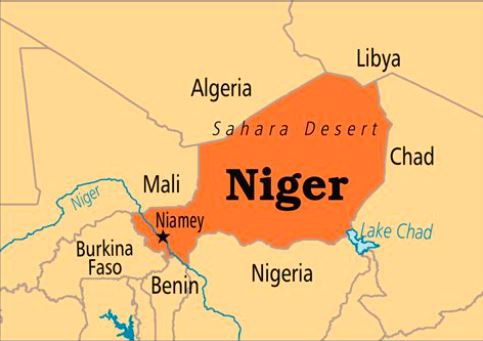
Map of Niger

We all joined these organizations thinking that they would serve common African goals…. unfortunately, under external orders, they instead impose heavy sanctions on sister states. It is about time that we, Africans, unite around the cause of Burkina Faso, Mali, and Niger, to free our continent. Their fight should be our fight, as they are fighting for our freedom, particularly that of Francophone Africa. Since the coup in Niger and rupture with France, Niger’s economy has been doing better even with all the sanctions, than since independence. Does that not tell us something? No wonder, all the European generals have been having meetings in West Africa in recent weeks, and even the American Secretary of State Anthony Blinken was in Cote d’Ivoire just a few days ago, while the populations are focused on the African Cup of Nations. We should not forget that now is the New Scramble for Africa, and Africans should not allow history to repeat itself!

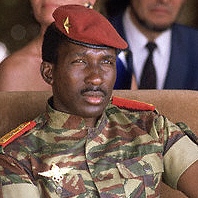
Thomas Sankara
Thomas Sankara a Ouagadougou

And of course, the Western media predict all doom to these countries. Freedom is not cheap, but it is best to be free of one’s destiny than being a slave at the mercy of someone else… Like Thomas Sankara said, “… the slave who is not capable of assuming his rebellion does not deserve that we feel sorry for himself. This slave will respond only to his misfortune if he is deluding himself about the suspect condescension of a master who claims to free him. Only struggle liberates …” [«… l’esclave qui n’est pas capable d’assumer sa révolte ne mérite pas que l’on s’apitoie sur son sort. Cet esclave répondra seul de son malheur s’il se fait des illusions sur la condescendance suspecte d’un maître qui prétend l’affranchir. Seule la lutte libère »] Discours de Sankara à l’ONU le 4 octobre 1984 (texte intégral) 

Japan’s Prime Minister tours Africa

Flag of Japan

Amidst the news of chaos in Sudan, it is easy to forget other news happening at the same time across the continent. When it comes to Africa, the Western media have a chic to make us focus only on the worst things on the continent, and rarely the good. After all, if anybody watches the news, they would not think that there is joy and happiness, prosperity, and abundance in Africa; not everything is as portrayed in the news. This week, Japan’s Prime Minister, Fumio Kishida, is touring Africa. The tour started last Sunday in Egypt, followed by Ghana, then Kenya, and Mozambique (Japanese banks are among the international banks financing the multi-billion dollar deal involving the French firm Total in Mozambique (Who/What did we say goodbye to in Africa in 2020?)). In this tour, Japan has vowed to give 500 million dollars in financial support to Africa over the next three years to promote stability and peace on the continent. The New Scramble for Africa is on… are Africans awake? Excerpts below are from AfricaNews.

====

Flag of Egypt
Flag of Egypt

Japan’s Prime minister is on an African tour. He arrived Monday (May. 1st) in Ghana, the day before he was in Egypt. He is set to visit Kenya and Mozambique.

The Prime Minister of Japan arrived at the Kotoka International Airport in Accra, Ghana and is expected to hold a bilateral discussion with President Nana Akufo-Addo.

Egypt’s president Abdel Fatthah al-Sissi welcomed Sunday (Apr. 30), Fumio Kishida.

After a meeting with the Secretary-General of the Arab League at the institution’s headquarters in Cairo, Kishida held talks with Egypt ‘s leader.

Map and Flag of Ghana

Al Sissi detailed the topics per the agenda during a press conference.

We reviewed the challenges the international arena is witnessing today, in particular the massive economic repercussions left by the Ukrainian crisis on developing countries that exceeded what the coronavirus pandemic caused in terms of a rise in inflation rates, energy and food prices, and expectations of a decline in the growth rate.”

The discussions came as Japan is to host the G7 Summit scheduled on 19-25 May.

We discussed many regional issues of common concern, especially the Palestinian issue and the situation in Libya. Developments in Sudan occupied an important aspect of the talks“.

….

Unrest in Sudan

Flag of Sudan

A few weeks ago, we talked about The New Scramble for Africa. Our hearts go out to our brothers and sisters in Sudan as unrest rises in the country. Those who think that this is a “simple” feud between two generals, or two “brothers” as portrayed in the news, must look deeper. Why are US troops getting deployed there? In the early 2000s, people around the globe were bombarded non-stop with information about the genocide in Darfur and “slavery” in Sudan; we were all told that Northern Sudanese were “white” who treated poorly their Southern Sudanese brothers who were “Black” which is a very simplistic and exaggerated way of looking at Sudan (remember Libya and Slavery: Sheep without a Shepherd in recent years?). Hollywood stars such as George Clooney came out in numbers claiming to care about the plight of the Black man, and saying that the Black people of Darfur Sudan were enslaved by their lighter skinned Sudanese brothers.To all who know the tactic of divide-and-conquer, and know social conflicts in Africa, we are always manipulated into thinking that every conflict in Africa is about this tribe vs. that tribe, this group vs. group; thus neighbors become enemies, when in reality, it is a diamond mine or oil field coveted by external forces which is at the core of the issue (Northern Mozambique today). The conflict in Sudan led to the split of Sudan, which was then Africa’s largest country, into Sudan with capital in Khartoum, and South Sudan with capital in Juba. Many forget that the southern part of then-Sudan was rich in oil fields, and that this split diminished Sudan’s oil output to the detriment of the newly created South Sudan (in passing, wasn’t the Pope in South Sudan in February? The Pope Visits the Democratic Republic of Congo and South Sudan), thus putting a big dint on Sudan’s partnerships with China (Sudan was providing more than 10% of China’s oil needs and a Chinese presence on the horn of Africa). After the split, the world’s attention which was on Darfur moved on, Darfur which was supposedly the goal of Western interventions was never resolved, but South Sudan with the oil fields was detached from Sudan.

The New Scramble for Africa (Source: Source: Dr Jack & Curtis for City Press, National Institute African Studies (NIAS))

The cold war between the West and the East took place mostly in other countries like Angola, Mozambique, Congo, Afghanistan, Nicaragua in Africa, Asia, Latin America with many coups d’état and conflicts around the globe. Similarly today, the new kind of war has started yet again, but this time, it is on African soil with The New Scramble for Africa as the world moves toward energy-“conscious” policies.

How do we, Africans, stop from having our lands be a theater for others’ wars? How can we independently make learned decisions for our people without being dragged in others’ conflict?