Mangi Meli’s Grandchildren Continue the Search for His Skull

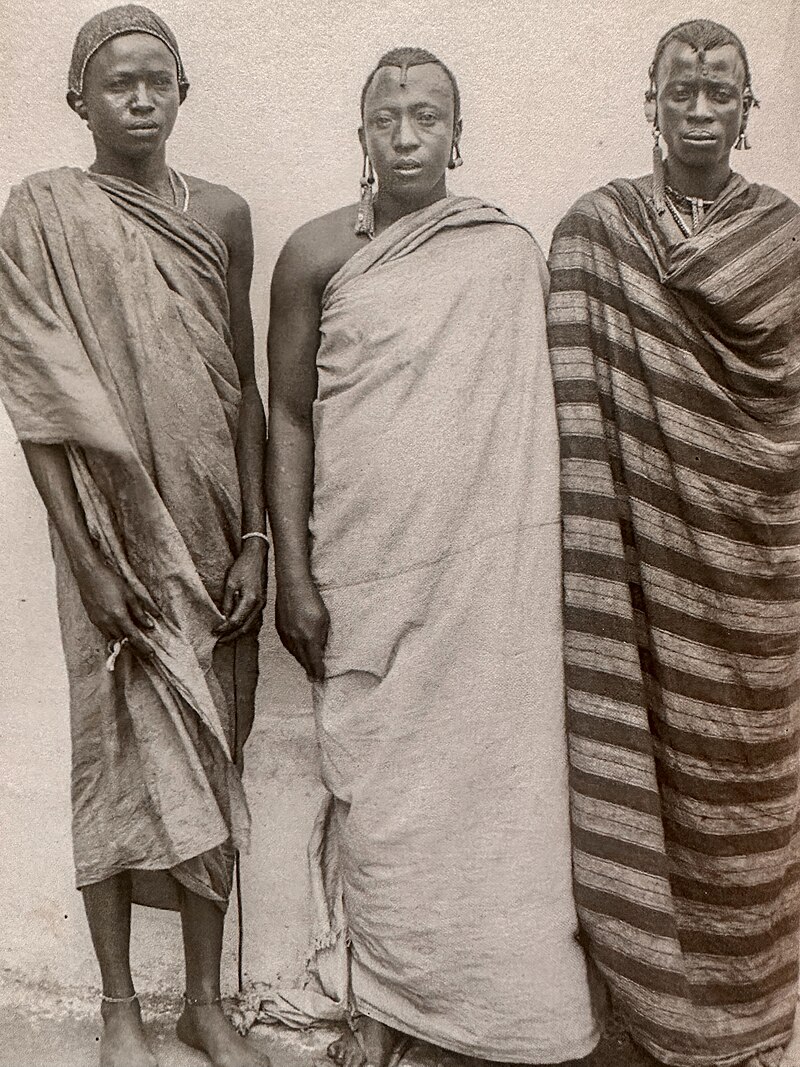
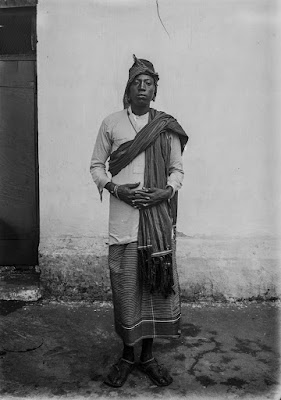
Mangi Meli of the Chagga of Moshi, ca 1890s (Source: Deutsche Fotothek)

Last week, the German President apologized for colonial past in Tanzania just a few days after the grandson of Mangi Meli reiterated his demand for the return of his grandfather’s skull. The story was published in the BBC. To us, Africans, it is a painful read: how can someone decapitate your father, and then take away his skull is inconceivable. It has been over 120 years; and some ask us to forgive, forgive when words are not followed by actions?

Excerpts below are from the BBC.

=====

Isaria Anael Meli has been looking for his grandfather’s remains for more than six decades.

He believes the skull ended up in a Berlin museum after his grandfather, Mangi Meli, along with 18 other chiefs and advisers, was hanged by a German colonial force 123 years ago.
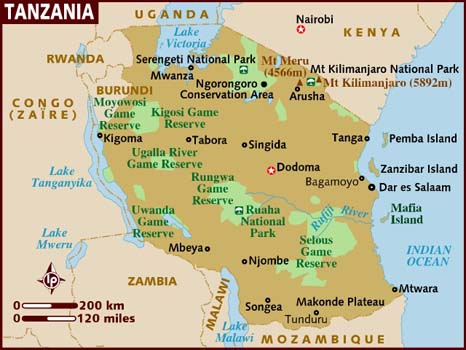
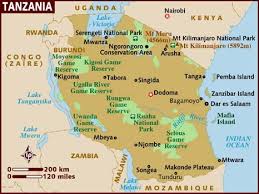
Map of Tanzania

After all this time, a German minister has told the BBC the country is prepared to apologise for the executions in what is now northern Tanzania.

Other descendants have also been searching for the remains and recently, in an unprecedented use of DNA research, two of the skulls of those killed have been identified among a museum collection of thousands [Germany Matches DNA from African Skulls looted during Colonial Era].
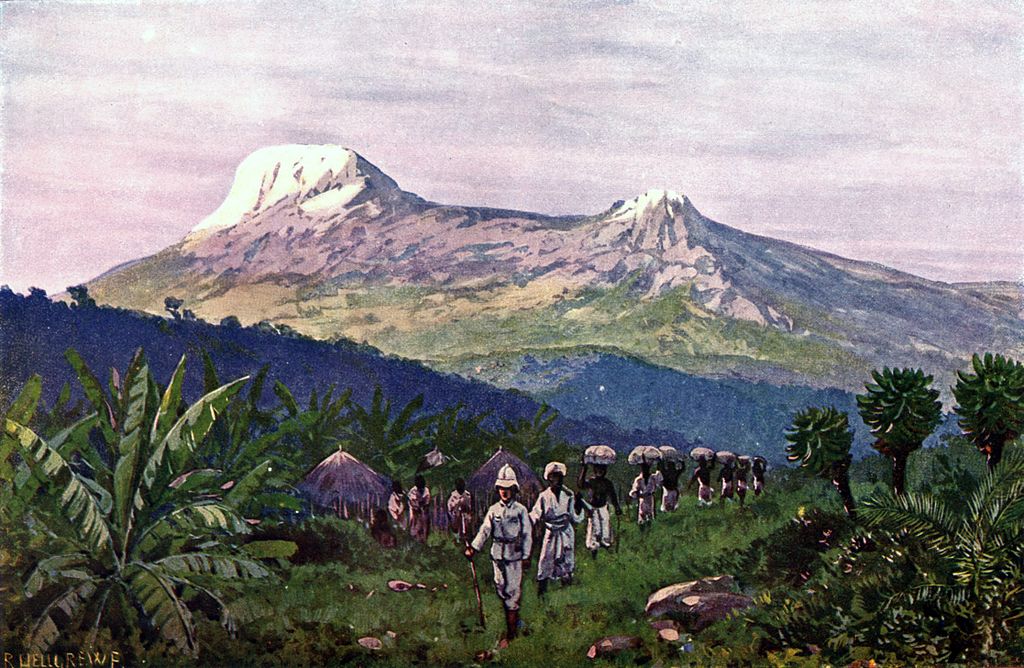
Mt Kilimanjaro in 1911

It is rare to find an acacia tree on the lower slopes of Mount Kilimanjaro. Its twisting branches reach above the steep road and stand out among the denser lush vegetation.

At one time, it shaded a market for the villagers of Tsudunyi, a part of what is now called Old Moshi, who lived off the fertile land and enjoyed the cooler temperatures that the higher altitude brought.

But this focal point for the community became the scene of a great tragedy. Despite the peace of the natural surroundings today, its impact has reverberated down the decades.

It was here on 2 March 1900 that, as the descendants tell it, one-by-one the 19 men were hanged. They had been hastily tried the day before, accused of plotting to attack the German colonial forces.

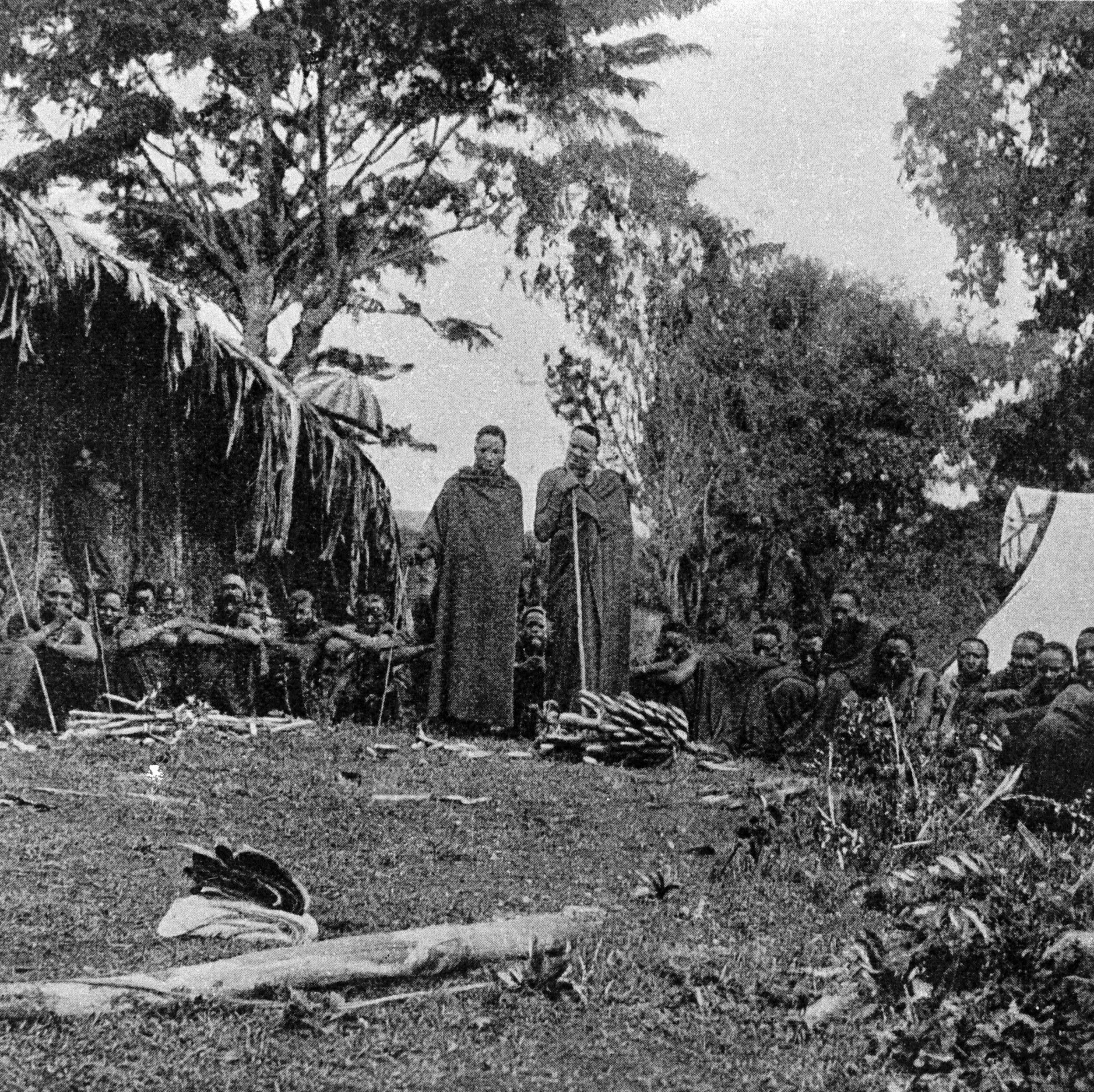
Mangi Meli and his Njama 1890s at the German Moshi Boma (Source: Deutsche Fotothek)

 Mangi Meli, the most prominent mangi, or chief, among those who were killed, had in 1892 successfully defeated the German forces. That success was later reversed and by the end of the 19th Century, the Europeans were keen to stamp their authority on this part of what was known as German East Africa.

They wanted to make an example of Mangi Meli and other local leaders who may have been planning an uprising.

The humiliation did not end there. While most of the torsos are believed to be buried in a mass grave somewhere near the tree, their heads were at some point removed, packed up and sent 6,600km (4,100 miles) to the German capital. In some cases the complete skeletons were shipped.

When speaking about what happened to his grandfather, Mr Meli does not sound angry, but there is a sadness in his voice and a sense of bewilderment that this was allowed to happen.

The lively 92-year-old was told about the killing of Mangi Meli by his grandmother, who he says was forced to watch the execution, and explains that the chief came to him at night telling him that he would return one day.

Always, always, always he was coming to me in my dreams,” he says.

His floppy sun hat and twinkling eyes when he smiles disguise his tenacious personality.

Since at least the 1960s, Mr Meli had been writing to the German and Tanzanian authorities urging them to look for the remains of his grandfather.

Flag of Tanzania

He says officials tried to put him off by telling him that relevant records had been destroyed during World War Two. But Mr Meli was not deterred.

Visitors are always crying: ‘Tell all the people of Germany to return the skull.’

They kept it somewhere just because they thought the Mangi Meli family were small people – believing that they could do what they wanted. But remember that this skull is needed by the whole country – not me, myself, only.”

There is a sense of profound loss that goes beyond the idea that this was a historical injustice.

Mangi Meli, the Chagga Leader Who Resisted the Germans in 1890s

Mangi Meli of the Chagga of Moshi, ca 1890s (Source: Deutsche Fotothek)

Last September, we talked about a German museum which was able to match the DNA from looted African skulls to their descendants today. One of the skulls had a single word inscribed “Akida” who was believed to be a high-ranking advisor to Mangi Meli, a ruler of the Chagga people. It is no secret the fate that this advisor must have found, given that Mangi Meli had been hanged and decapitated by the Germans for leading an uprising against German invaders in 1900, along with 18 other ChaggaMeru, and Arusha leaders; it is not a far guess that Akida must have been hanged with King Meli.

Who was Mangi Meli?

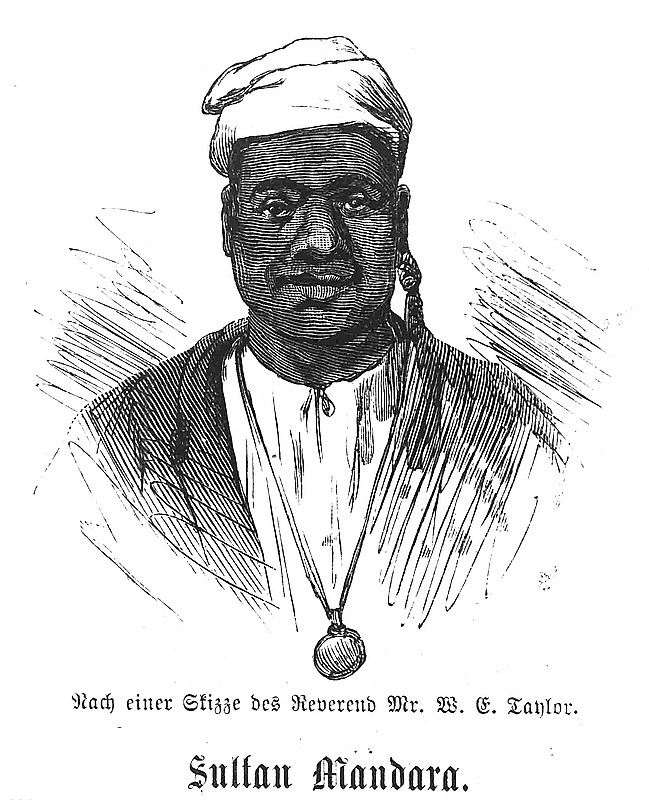
Sultan Mandara of the Moshi in 1888

Mangi (King) Meli was a ruler of the Chagga people of Moshi, one of the sovereign Chagga states, in the 1890s. He was the first son of Mangi Rindi Mandara from his second wife Sesembu. Born in 1866, he ascended his father’s throne in 1891. It is said that he was smart, exuberant, and extremely valiant.

Meli is hailed as one of the heroes of the former Tanganyika colony which was part of German East Africa which encompassed Rwanda, Burundi (Ruanda-Urundi), modern-day Tanzania (except Zanzibar), and part of the Kionga triangle in Mozambique. Meli has been prominent in the fight against colonial encroachment on the slopes of Mount Kilimanjaro.

Mangi Meli and his Njama 1890s at the German Moshi Boma (Source: Deutsche Fotothek)

At the time when he became Mangi, the Germans were trying to lay hold on African territories, and every means were used. In 1892, there was an incident involving a young girl who the German forces wanted to capture, and when the Mangi of Moshi refused, the German troops fired, and the Moshi retaliated, killing one Askari (African serving in the German colonial forces). The German troops, led by Lt von Bulow, attacked, but were successfully defeated by Mangi Meli. This victory of the Meli made the Germans back down for 51 days.

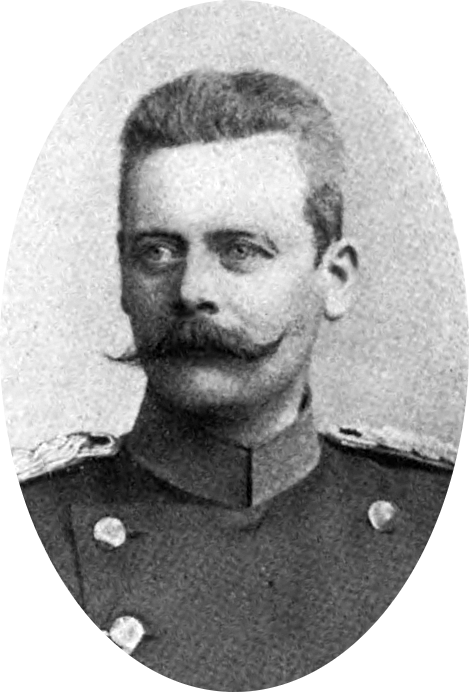
Friedrich von Schele

Based on the lie of a “Chagga revolt” orchestrated by a neighboring king, Mangi Marealle of Marangu who had made pacts with the Germans including the notorious murderer explorer Carl Peters, Col. Friedrich von Schele, the deputy governor, led the Germans as they moved back to Kilimanjaro on July 31, 1892, launching an effort to seize Meli of Moshi, destroying and plundering Meli’s lands. Yet they could not capture Mangi Meli. They occupied his lands and started enslaving his people. However, bidding his time to strike back, Mangi Meli united over following years with other Mangis of neighboring Chagga states, forming alliances with other Meru and Arusha kings as well. However, his plan was betrayed by an informant from Mangi Marealle. This plan culminated on 02 March 1900, when the Germans called the Chagga kings whom they accused of fomenting rebellion.

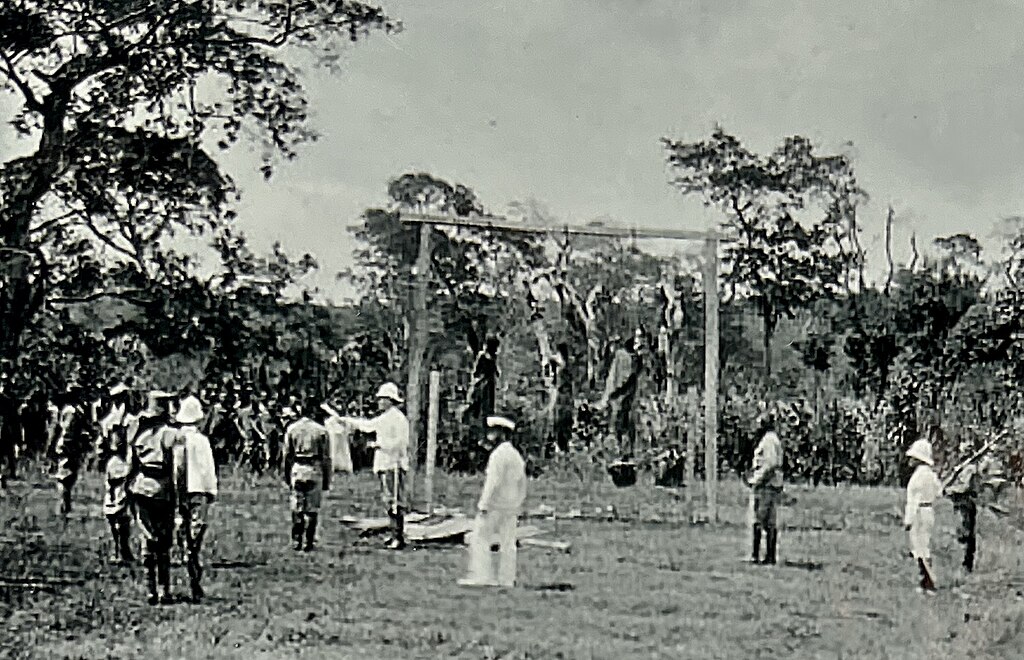
Hanging of Chagga men by the German Colonial Government ca 1890s – 1900

After his capture, Meli was convicted of rebellion and was hanged alongside 18 other kings and noblemen of ChaggaMeru, and Arusha; one of these kings was Mangi Ngalami of the Siha Kingdom, one of the numerous Chagga states. Their execution was public. However, when Meli was hanged, he did not die immediately; it is said that he hung on the tree for 7 hours alive until he was shot by a soldier. Following his death, the German colonial administration ordered his head be severed from the body; this was the fate for many executed on that day. The skulls are believed to have been sent to Berlin to Felix von Luschan, an anthropologist and curator at the Royal museum of Ethnology of Berlin, who requested them to Lt. Col. Moritz Merker who was second in command at the German military outpost of Moshi.

Mangi Ngalami, King of Shira, with another chief and their entourage. Reproduction from Johannes Schanz/ H. Adolphi, Am Fuße der Bergriesen-Ostafrikas, and published with the permission of the Evangelisch-Lutherisches Missionswerk Leipzig (Source: The Dial)

Today, descendants of both Mangi Meli and Mangi Ngalami and others are searching for the skulls of their ancestors. The grandson of Mangi Meli, Isaria Meli, has founded a foundation to search for the skull of Mangi Meli and turned to Stiftung Preußischer Kulturbesitz (SPK, Prussian Cultural Heritage Foundation) in 2016 to identify the remains of his grandfather, to no avail. Efforts are being made to recover his remains (and those of the other kings) and return them for proper burial in Tanzania. In Chagga culture, and many African cultures, the burial of a body after death is an essential ritual; without a proper funeral and resting place, the soul cannot find peace. Many of the skulls and remains ended up in different museums of Berlin, or in private collections (I cannot fathom why someone would want someone’s skull in their private collection ???). There are cases where entire skeletons were shipped to Germany. This was the case when in 1902, the whole skeleton of Mangi Lobulu of the Meru, another leader executed at the same time as Mangi Meli and Mangi Ngalami, was sent to Germany by Merker; over the decades, it eventually made its way to the American Museum of Natural History in New York City where it was located by German researcher Konradin Kunze 100 years later. 

Please check out Flinn Works production “Mangi Meli Remains,” and read the article in the Dial

As you think of Mangi Meli, remember his bravery, and celebrate his spirit for the freedom of the Chagga people, and others, on the slope of Mount Kilimanjaro.

Germany Matches DNA from African Skulls looted during Colonial Era

Flag of Tanzania

Authorities of the SPK Museum, Berlin’s Museum of Prehistory and Early History, have announced this week that they have been able to trace living relatives to ancient skulls pillaged by German forces in East Africa during the colonial era, using DNA analysis.

Map of Tanzania

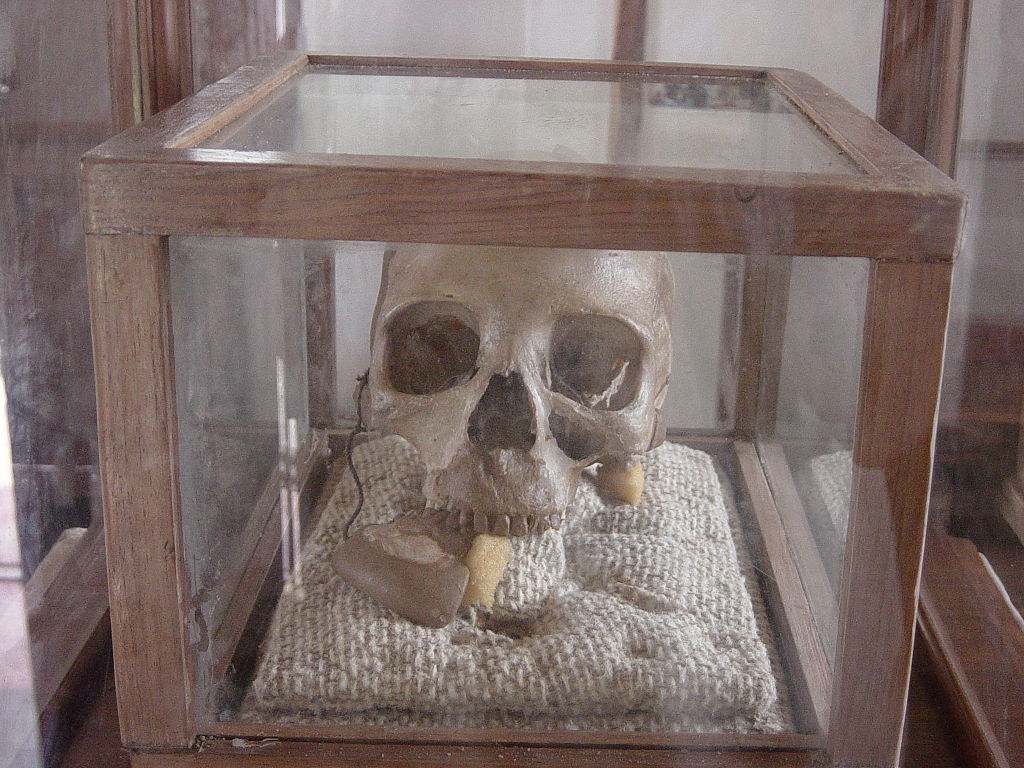
This is no easy fit, and the museum’s director has lauded it as a “small miracle.” Why? Well because from a study of at least 1,100 skulls found in the 7,700 skulls collection acquired from the Berlin’s Charité Hospital Museum, SPK museum researchers were able to gather enough information on 8 skulls to make a search for specific descendants. A complete genetic match was established between one of the skulls and a man still alive today. The clue: a single word inscribed on the skull “Akida,” who is believed to have been a high-ranking advisor to Mangi Meli, a ruler of the Chagga people in the 1890s in the Kilimanjaro Region of Tanzania. It is no secret the fate that this advisor must have found, given that Mangi Meli was hanged and decapitated by the Germans for leading an uprising against German invaders in 1900, along with 19 other Chagga, Meru, and Arusha leaders; one can only guess that the Akida must have been hanged with King Meli. This raises an important question: where are the skulls of Mangi Meli, and the other Chagga, Meru, and Arusha leaders? We all remember that King Mkwawa’s skull was part of the Treaty of Versailles’s negotiation; so it will be no surprise that other kings’ skulls are found somewhere in the basements of German museums.

Skull of King Mkwawa

The SPK collection is controversial because of its origins: at the end of the 19th century and the beginning of the 20th century, the German empire took thousands of skulls from its colonies for research into racial classification, many of the skulls were from colonial victims, and part of loots. I still have a hard time understanding why, as part of a loot, invaders will take skulls of the defeated, unless it is for more than just a racial study? A few years ago, the SPK returned 20 skulls to Namibia; those skulls were thought to belong the Nama and Herero tribes who suffered a genocide at the hands of Germans at the beginning of the 20th century (Germany Returns Skulls of Namibians Genocide Victims, the first genocide of the 20th century).

Excerpts below are from DW. Enjoy!

=====

Flag of German East Africa

A Berlin museum said on Tuesday it had established a clear link between three skulls taken to Germany during the colonial era and living relatives in Tanzania.

The German capital’s Museum of Prehistory and Early History carried out DNA analysis on hundreds of skulls with the aim of returning the remains to descendants.

Berlin’s SPK museum authority said in a statement that it was the first time that DNA research had provided a clear link between such remains and living descendants.

The relatives and the government of Tanzania will now be informed as soon as possible,” the statement said.

… Museum researchers gathered enough information on eight of the skulls to make a search for specific descendants viable, the SPK said. Saliva samples were taken from possible descendants.

A complete genetic match for one of the skulls was found with a man still alive today.

The skull was marked with the title “Akida” which already indicated that it belonged to a known senior adviser to Mangi Meli (1866-1900), a powerful leader of the Chagga people.