Tensions Escalating in Mali

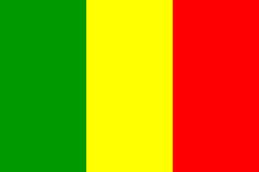
Flag of Mali
Flag of Mali

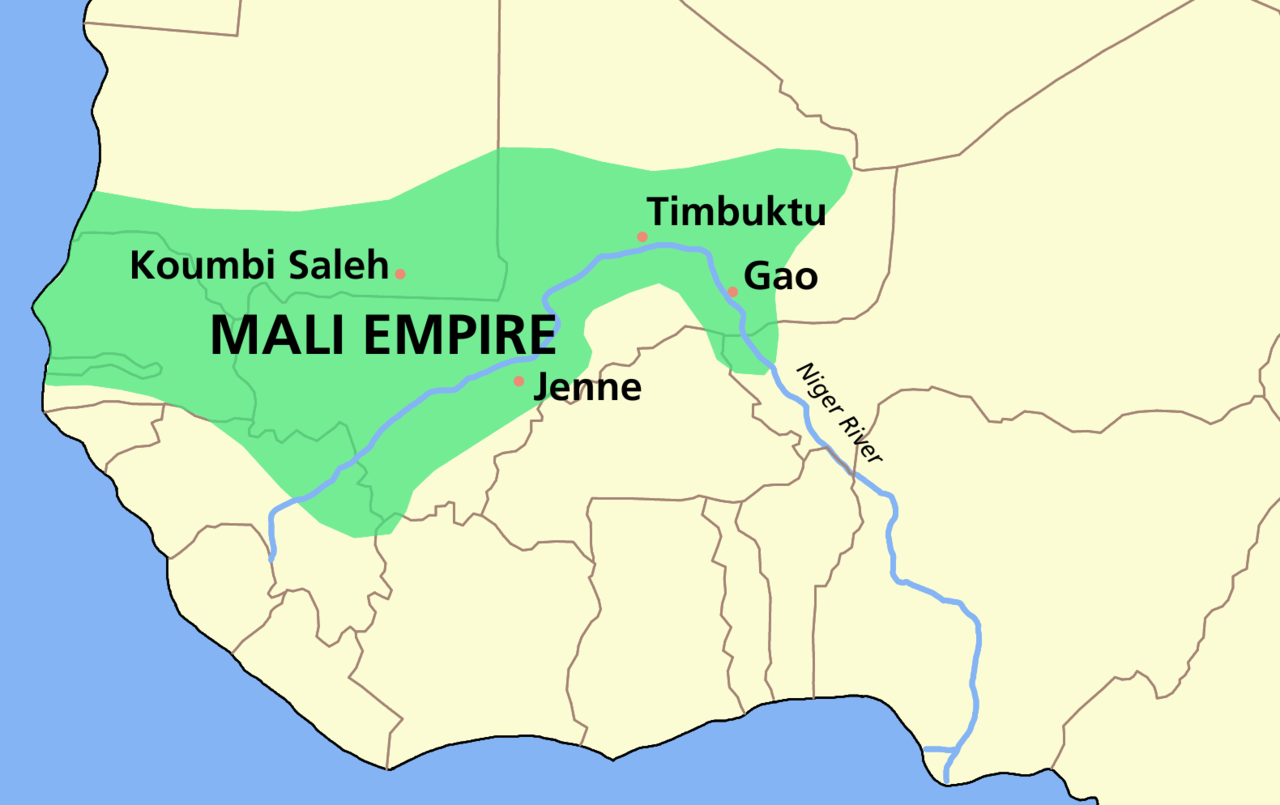
Tensions are escalating between France and Mali as the French ambassador was expelled from Mali and given 72 hours on Monday to leave the country. How did we get here? In reality, Mali has been in disarray since Libya fell in 2011… and has never recovered since then (“Le Mali en miettes. A qui le tour?” de Chems Eddine Chitour – “Mali in pieces. Who is next?” by Chems Eddine Chitour). France came in to “offer” her support to fight the djihadists in the north of the country. Today, as a result, the country is split into pieces, countless Malians have died, and France is now world producer of gold… mind you that France does not have an ounce of gold on her territory, but rather has been pillaging the mines of Mali, disrupting the peace in the region, and getting the “International community” to support her efforts in the plundering of the golden Mali (Africa is funding Europe!). Remember that Emperor Kankan Musa of the Empire of Mali, which encompassed part of modern-day Mali, distributed so much gold during his pilgrimage to Mecca in 1324 that it took a decade for the Egyptian economy to recover.

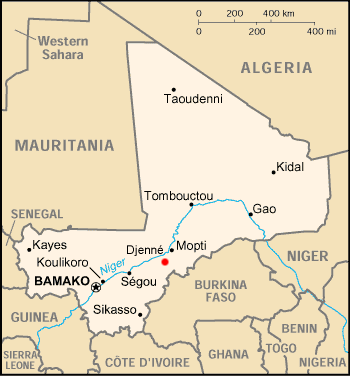
Map of Mali with its capital Bamako

Mali has been in pieces… after the coup that got rid of France’s puppet IBK (Bye Bye IBK: Mali Coup), and the military coup that brought the Colonel Assimi Goita to power. Faced with 80% of its territory occupied by foreign forces and terrorists, and in order to regain the sovereignty of its lands, Mali has sought the partnership of Russia, which France has screamed against – remember The 11 Components of the French Colonial Tax in Africa which denies Africans the right to other military or economic partners without France’s approval? Well, France is angry that Mali has turned to Russia for help in regaining its territory… The time for us being doormats is over France… We have the right to our dignity! We have the right to choose the partners that can help us in our visions, a vision which seeks the well-being of our communities.

Mali conflict map

Just last week, France’s puppet organization that is ECOWAS (CEDEAO) placed unbelievable sanctions on Mali, closing borders, banking, etc… How can an African organization act in such a way against a sister country, if it is not serving the interest of the enemy?  

I live you here with a more recent timeline published on Al-Jazeera. Bear in mind that it is not told from the eyes of a Malian or an African, so it is biased. For the full timeline, please go to Al-Jazeera

====

Colonel Assimi Goita

On August 18, 2020, a group of Malian soldiers led by Colonel Assimi Goïta overthrew elected President Ibrahim Boubacar Keïta, who was facing angry protests over the government’s failure to stem the violence. The coup is seen as a blow to French President Emmanuel Macron, who had supported Keïta and sought to improve relations with former colonies in Africa.

On March 30, 2021, in a rare criticism of French forces in Mali, United Nations investigators accused the French military of being responsible for the killing of at least 19 civilians at a wedding party in central Mali in an air raid three months before. France denied the findings, saying its forces targeted an “armed terrorist group” and that it had “numerous reservations about the methodology used” in the UN investigation.

On May 25, Goïta pushed out a civilian-led government appointed to oversee a transition period, plunging the country into further uncertainty. He was named interim president on May 28.

In reaction to the power grab, France suspended its joint military operations with Malian forces on June 3 “awaiting guarantees” that civilians return to positions of power.
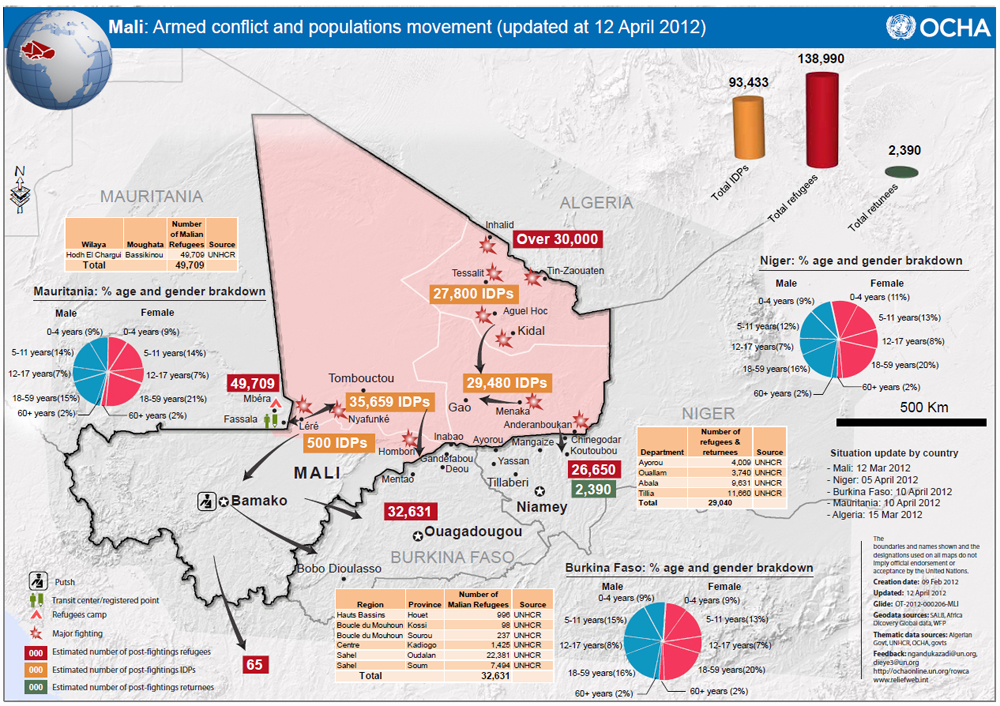
Conflict map of Mali with internally displaced populations (blog.amnestyusa.org)

On June 10, French President Emmanuel Macron announced a major “transformation” and drawdown of France’s military presence in the Sahel where about 5,100 soldiers – across Burkina Faso, Chad, Mali, Mauritania and Niger – operate under its Barkhane operation [no wonder France can afford to have 35-hour week for its workers, or even confine them forever… their riches come from Africa].

France decided on July 3 to resume its military operation in Mali, as well as its advisory missions.

On September 14, France warned Mali against a deal with Wagner as reports emerged the country’s military government was close to hiring 1,000 mercenaries.

A spokesperson for the Malian defence ministry said his country wanted to “diversify its relationships” on security grounds.

French flag

On October 5, Macron called on Mali’s military to restore state authority in large areas of the country. “It’s not the role of the French army to fill in for the ‘non-work’, if I may describe it, of the Malian state,” he told French media. …

Mali’s Prime Minister Choguel Kokalla Maiga said on October 8 that he had evidence that France was training “terrorist” groups operating in the country. Maiga said French troops had created an enclave in Kidal, a town in the desert region of northern Mali, and handed it over to a “terrorist group” known as Ansar al-Din, allegedly linked to al-Qaeda.

On December 15, French forces left the city of Timbuktu, marking the scaling down of France’s intervention in northern Mali which had started in 2013 when it helped beat back groups advancing towards Bamako.

France and more than a dozen countries condemned on December 24 the deployment of Wagner mercenaries [i.e. the international community = gang of thieves] – one of the first official acknowledgements by Western capitals of the stationing of fighters from the Russian firm. Mali’s government has denied this, saying the Russian troops are in the country as part of a bilateral agreement.

… On January 7, Russian soldiers were deployed to Timbuktu to train Malian forces at the base vacated earlier by French troops.

On January 9, the Economic Community of West African States (ECOWAS) imposed a trade embargo on Mali after the military government postponed elections for up to five years, despite promising to hold a vote by February [ECOWAS = puppet arm of France in Africa].

Two days later, on January 11, France, the United States and the European Union backed the West African bloc’s sanctions [of course… the United Nations of thieves]. With borders closed, the military government branded the sanctions an “extreme … and illegal embargo against our people” and organises mass protests. …

Denmark sent 105 military personnel to Mali on January 18 to join a European special forces mission, known as Takuba, that was set up to help Mali tackle armed groups [see… International Gang of Thieves]. It said its troops had deployed after a “clear invitation” from Mali.

On January 24, the Malian government called on Denmark to “immediately” withdraw its contingent of special forces deployed alongside French and international troops. Denmark’s withdrawal was a headache for France, which had staked much on “Europeanising” its Sahel intervention.

On January 27, French Foreign Minister Jean-Yves Le Drian lashed the [Mali] military transitional cabinet’s “irresponsible” decision, calling it “illegitimate”. And in remarks published on January 30 in the Journal du Dimanche newspaper, the French foreign minister accused the Wagner group of plundering Mali’s resources in exchange for protecting the military government [the pot calling the kettle black]. “Wagner uses the weakness of certain states to implant itself … to reinforce Russia’s influence in Africa,” Le Drian added.

But Mali’s Foreign Minister Abdoulaye Diop hit back saying France was not defending democracy and was angry only because “we have hurt their interests” [we have dared go against The 11 Components of the French Colonial Tax in Africa].

On January 31, Mali said it was expelling the French ambassador because of “hostile statements” by French officials.

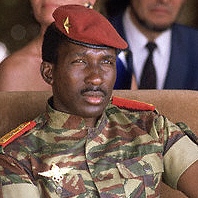
Thomas Sankara’s Murder Trial on Hold

Thomas Sankara
Thomas Sankara a Ouagadougou

The trial to find Thomas Sankara‘s murderers (Who killed Thomas Sankara? The Trial starts in Burkina Faso) has been halted because of last week’s coup in Burkina Faso which saw the removal of president Roch Kaboré (2022 Burkinabé coup d’état). This adds to the fragility of the entire region, where the métropole (France) is impoverishing and destroying the countries it claims to be helping. As always, the ghostly/nonsensical organization that is ECOWAS (CEDEAO) with its nonsensical rules that only favor the old colonial powers came out with some ‘sanctions’. Below are excerpts from the article on ABC News.

====

BurkinaFaso6
Flag of Burkina Faso

The trial has been paused until the constitution is reestablished, a lawyer for the prosecution said Monday.

The suspension comes one week after a military junta overthrew President Roch Marc Christian Kaboré, suspended the constitution and dissolved the national assembly.

Prosper Farama, one of the lawyers for the Sankara family called the suspension a good thing that would respect everyone’s rights. “We have to be patient until the constitution is reestablished for things to be legal,” he said.

… Fourteen people are being charged for Sankara’s killing, including former President Blaise Compaore, who ousted Sankara in a 1987 coup. Compaore is charged with complicity, undermining state security and concealing corpses, according to military documents seen by The Associated Press. He’s being tried in absentia, as he has been in exile in Ivory Coast since he was toppled in 2014.

… “As young Sankarists, we are very worried about the suspension of the trial,” said Passamde Occean Sawadogo a singer and activist. “We remain vigilant so that nothing can jeoparidze the trial’,” he said.

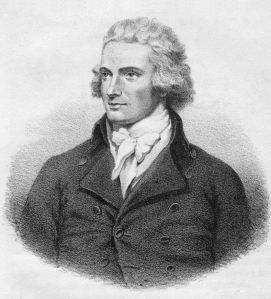
Mungo Park describes Ségou in 1795

Mungo Park
Portrait of the Scottish explorer Mungo Park

Below is a description of the great city of Ségou (pronounce Segu) in Mali by the Scottish explorer Mungo Park in 1795. Here he describes the city’s population density, dynamism, architecture, and even their ways of life. He amply describes the roominess and surprised sturdiness of Ségou’s canoes which could host 4 horses. Mungo Park is simply astounded by the greatness of the civilization he encounters there, and concludes, “the crowded population and the cultivated state of the surrounding country, formed altogether a prospect of civilization and magnificence, which I little expected to find in the bosom of Africa.” Note that the city is surrounded by high mud walls probably similar to the Tata of Sikasso: an African Fortifying Wall.

=====

Mali_Ségou_La Mosquée (AOF)
The Mosque in Segou at the beginning of the 20th century

Sego, the capital of Bambarra, at which I had now arrived, consists, properly speaking, of four distinct towns ; two on the northern bank of the Niger, called Sego Korro, and Sego Boo and two on the southern bank, called Sego Soo Korro and Sego See Korro. They are all surrounded with high mud walls ; the houses are built of clay, of a square form, with flat roofs ; some of them have two storeys, and many of them are whitewashed.

Mali_Segou_Palais d'Ahmadou Tall
Entrance to Ahmadu’s palace in Segou-Sikoro published in the 1868 edition of the book by Eugene Mage Voyage dans le Soudan occidental (Sénégambie-Niger), Paris: Hachette

Besides these buildings, Moorish mosques are seen in every quarter ; and the streets, though narrow, are broad enough for every useful purpose, in a country where wheel-carriages are entirely unknown. From the best enquiries I could make, I have reason to believe that Sego contains altogether about thirty thousand inhabitants. The king of Bambarra constantly resides at Sego See Korro ; he employs a great many slaves in conveying people over the river, and the money they receive (though the fare is only ten cowrie shells for each individual) furnishes a considerable revenue to the king in the course of a year. The canoes are of a singular construction, each of them being formed of the trunks of two large trees, rendered concave, and joined together, not side by side, but end ways ; the junction being exactly across the middle of the canoe ; they are therefore very long and disproportionably narrow, and have neither decks nor masts ; they are, however, very roomy ; for I observed in one of them four horses, and several people crossing over the river. When we arrived at this ferry, with a view to pass over to that part of the town in which the king resides, we found a great number waiting for a passage ; they looked at me with silent wonder, and I distinguished, with concern, many Moors among them. There were three different places of embarkation, and the ferrymen were very diligent and expeditious ; but, from the crowd of people, I could not immediately obtain a passage ; and sat down upon the bank of the river, to wait for a more favourable opportunity The view of this extensive city ; the numerous canoes upon the river ; the crowded population and the cultivated state of the surrounding country, formed altogether a prospect of civilization and magnificence, which I little expected to find in the bosom of Africa.


Mungo Park, Travels in the Interior Districts of Africa: Performed Under the Direction and Patronage of the African Association, in the Years 1795, 1796, and 1797.

Sego = Ségou

Bambarra = Bambara

Sego Boo = Ségou-Bou

Sego Korro = Ségou-Koro

Sego See-Korro = Ségou-Sikoro

*The four cities mentioned here are actually on the southern shore, but there are on the northern shore some neighborhoods to which Mungo Park attributed excessive importance.

The Sahara was Home to World’s Largest Sea Creatures

Sahara_ancient sea creatures
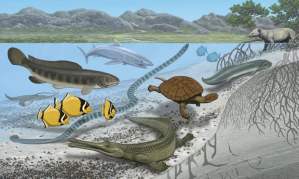
Some of the sea creatures that lived underwater in the location where the Sahara desert is today. (Source: American Museum of Natural History 2019)

Given that Africa is the cradle of humanity, it totally makes sense that it would also be the place where some the world’s largest sea creatures hail from. The excerpt below from the Guardian reveals that the Sahara was home to some of the world’s largest sea creatures. Enjoy!

=====

Scientists reconstruct extinct species using fossils found in northern Mali from ancient seaway

Some of the biggest catfish and sea snakes to ever exist lived in what is today the Sahara desert, according to a new paper that contains the first reconstructions of extinct aquatic species from the ancient Trans-Saharan Seaway.

Mali4
Map of Mali with its capital Bamako

The sea was 50 metres deep and once covered 3,000 sq km of what is now the world’s biggest sand desert. The marine sediment it left behind is filled with fossils, which allowed the scientists who published the study to build up a picture of a region that teemed with life.

Between 100 m and 50 m years ago, today’s arid, boulder-strewn northern Mali “looked more like modern Puerto Rico”; the sun shone on some of the earliest mangroves, and molluscs lined the shallow seabed, according to Maureen O’Leary, the palaeontologist who led the study.

Sahara_ancient sea creatures_1
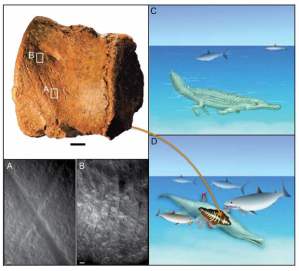
Reconstruction of sharks feeding on a dyrosaurid crocodily form. (Source: American Museum of Natural History 2019)

The study also formally named the geological units, literally putting the area on the geological map for the first time, showing how the sea ebbed and flowed over its 50 m years of existence, and building up information about the K-Pg boundary, the geophysical marker of one of Earth’s five major extinction events, in which the non-avian dinosaurs became extinct.

With 1.6 m catfish, 12.3 m sea snakes and 1.2 m pycnodonts – a type of bony fish – O’Leary and the other scientists developed the idea that in the late Cretaceous and early Paleogene period, the animals were experiencing gigantism.

Evolutionary biologists have long talked about the phenomenon of island gigantism, where species that live on small islands can sometimes develop very large bodies, possibly because they have more resources or there are few predators, or both.

… 

Why the name: Bamako?

Map of Mali with its capital Bamako

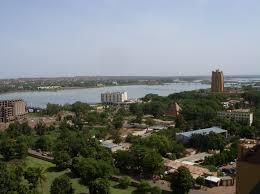
What does Bamako have in common with London, Paris, Amsterdam, Berlin, or Madrid? Of course it is the capital of a country, Mali, like all those other cities. However, the real similarity, is that it is located on the banks of a major river (like all those cities): the third largest river on the African continent, the Niger River, also known as Joliba (or the river of blood), near the rapids that divide the upper and middle Niger valleys in the southwestern part of the country. The city first grew on the north banks of the river, and later spread to the south banks as well.

Flag of Mali
Flag of Mali

The name Bamako comes from the Bambara word Bàmakɔ̌ meaning “river of crocodile“. It was founded at the end of the 16th century by the Niaré people, also called Niakaté, who are Sarakolés. The crocodile being the fetish of Bamako, in the olden days, a virgin girl was offered to it every year… however this tradition was abandoned a long time ago. A hunter from Lambidou (Kayes region) by the name of Simballa Niakaté chose the city’s site. However, it was his eldest son Diamoussa Niakaté who founded the city Bamako. The 3 crocodiles which symbolize Bamako found their origin in the 3 creeks that crossed Bamako: Lido, Diafarana, and Bèlèsôkô. The creeks come together in the city to flow into the Niger river. Just as the city’s symbol is 3 crocodiles, and so 3 creeks/rivers, it also comprises 3 major bridges which link both banks of the Niger River.

Mali Empire (Wikipedia)

The area of the city has been continuously inhabited since the Palaeolithic era for more than 150,000 years. The fertile lands of the Niger River Valley provided the people with an abundant food supply and early kingdoms in the area grew wealthy as they established trade routes linking across West Africa, the Sahara, and leading to northern Africa and Europe. The early inhabitants traded gold, ivory, kola nuts, and salt. By the 11th century, the Empire of Ghana (this will be the subject of a post soon) became the first kingdom to dominate the area. Bamako had become a major market town, and a pathway to Timbuktu the center of knowledge via the Niger river. Later, the Mali Empire grew during the early Middle Ages and replaced the Empire of Ghana as the dominant kingdom in West Africa, dominating Senegal, Gambia, Guinea, Mali, and Mauritania. In the 14th century, the Mali Empire became increasingly wealthy because of the trade of cotton and salt. It was eventually succeeded by the Songhai Empire.

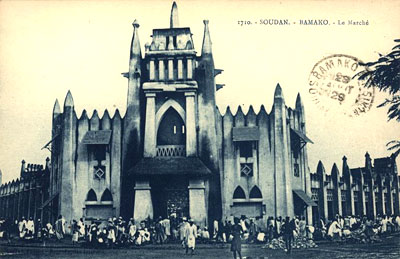
The Pink Market (Le Marche Rose) in Bamako ca 1900s

By the late 19th century, the French dominated much of western Africa, and in 1883, present-day Mali became part of the colony of French Sudan, and was its capital in 1908. Cotton and rice farming was encouraged through large irrigation projects and a new railroad connected Bamako to Dakar on the Atlantic coast. Mali was annexed then into French West Africa, a federation which lasted from 1895 to 1959. Bamako remained the capital of Mali after independence in 1960.

Bamako on the banks of the Niger River (Wikipedia)
Bamako, on the banks of the Niger River (Wikipedia)

Bamako is known as the crossroads of West Africa, since it is located 1000 km from Dakar (Senegal) and Abidjan(Côte d’Ivoire), 850 km from Ouagadougou (Burkina Faso), and 120 km from the border with Guinea. With a population of 1.8 million, Bamako is viewed today as the fastest growing city in Africa and sixth-fastest in the world. It is a buoyant city full of life. Enjoy a visit to the “river of crocodiles,” the crossroad of West Africa, and don’t forget to bathe in the centuries’ old history of great West African kingdoms in Mali, and its rich traditions.

“Le Mali en miettes. A qui le tour?” de Chems Eddine Chitour

Flag of Mali
Flag of Mali

J’ai trouvé cet article sur Cameroon Voice du Pr. Chems Eddine Chitour assez interessant. Depuis que les occidentaux se sont lançés a une reconquête du monde: Côte d’Ivoire, Libye, Syrie, et maintenant Mali… on se pose bien des questions. Les questions fondamentales demeurent: à qui le tour? Pourquoi cette politique de la gâchette facile? pourquoi acquérir ce gain si facile, pourquoi tant de paresse? Les Occidentaux devraient reconnaitre que leur systeme capitaliste a bel et bien été la faute de leur chute… et beaucoup de pays tels la France et les Etats-Unis devraient le reconnaître, et faire une réforme de leur système, règler leur dette, et non mettre le reste du monde à feu et à sang, et ensuite prétendre que la Chine est l’ennemi du monde. Franchement… c’est assez difficile de comprendre une intervention aérienne française au Mali, un pays du tiers-monde où les gens n’arrivent même pas à joindre les 2 bouts. C’est assez difficile d’accepter que des petits rebelles pourraient constituer une menace pour la France qui aurait même besoin du support militaire américain. Les attentats récents en Algérie contre des ressortissants américains semblent présenter l’Algérie comme le prochain pays sur la ligne de mire des sanguinaires français qui ont toujours rêvé de mettre l’Algérie à genoux en y commettant les plus grands genocides de l’histoire de l’humanité. Que le bon Dieu nous garde des paresseux, et des envieux! Ces derniers feraient mieux de se mettre au travail comme les Chinois!

========

Djenné
Map of Mali

Ça y est! Comme nous l’avons prédit dans un article précédent, l’Afghanisation du Mali est en marche! Pourquoi l’engouement des redresseurs de tort de l’Empire et de ses vassaux pour un pays qui, en théorie, est un désert au sens qu’il ne contient rien de comestible à moins que nous n’ayons pas toute l’information sur les réelles potentialités de ce pays voisin. […]

Curieusement, ces dernières semaines notamment avec les accords de Ansar Eddine et du Mnla à Alger, qui devaient ensuite être reçus par les responsables de la Cédéao pour une solution négociée, avaient fait miroiter une possible paix sans intervention militaire. Tout s’est précipité. Une résolution fut arrachée aux Nations unies le 20 décembre 2012, elle autorise une intervention en cas d’échec de la diplomatie. Cette diplomatie qui n’a pas eu à faire ses preuves puisque trois semaines après, la France intervenait pour stopper les mouvements se revendiquant d’un Islam fondamentaliste, sans accord du Conseil de sécurité. [surprenant comme ce scenario ressemble a celui de la Libye avec les Nations Unies qui sortent des resolutions suivies des frappes aériennes franco-americaines]. […]

L’intervention au Mali a été engagée après le forcing français pour l’adoption, le 20 décembre 2012, de la résolution 2085 par le Conseil de sécurité de l’ONU. Pour autant, aucune résolution de l’ONU n’autorise (ni n’interdit du reste) l’intervention française. […] Continue reading ““Le Mali en miettes. A qui le tour?” de Chems Eddine Chitour”

Francafrique: Raison d’Etat

After the joke of elections held in Egypt this past month, and with all the turmoil in Libya, Mali, and Côte d’Ivoire, I thought it will be best to watch this great documentary by Patrick Benquet which stirred thoughts across French Africa since December 16, 2010, date of its official diffusion.  It tells you all about the tricks, and machiavelism of France (Africa’s policeman) in Africa, and of course the effect of the cold war on African leaders and countries. Enjoy the first part titled the Francafrique Reason of State (Raison d’Etat) and share with others! It is important to know!

La Charte du Mandé: Première déclaration de droits de l’Homme au Monde?

L'Empire du Mali a son apogee (1230 - 1545)
L’Empire du Mali à son apogée (1230 – 1545)

J’ai été admirablement surprise de lire la charte du Manden (Mandé), qui semble être la première déclaration des droits de l’homme au monde.  Elle fut prononcée lors de l’intronisation de Soundiata Keïta comme empereur du Mali en 1222.  Imaginez-vous ma joie: première declaration des droits de l’homme au monde, érigée en Afrique? en 1222? plusieurs siècles (7 siècles) avant la fameuse déclaration des droits de l’homme de l’ONU? Waou…! Et après on vous dira qu’il n’ya jamais rien eu en Afrique. Lisez, et rejouissez-vous, car au Mali, du temps de l’empereur Soundiata Keïta, il y avait le concept du droit de l’homme et l’amour de l’être humain.

===========

La Charte du Manden (Mandé)

Soundiata Keita a l'Assemblée constitutive de l'empire du Mandé avec les chefs de guerre (Source: Wikipedia.fr)
Soundiata Keïta a l’Assemblée constitutive de l’empire du Mandé avec les chefs de guerre (Source: Wikipedia.fr)

1. Les chasseurs déclarent :

Toute vie (humaine) est une vie.

Il est vrai qu’une vie apparaît à l’existence avant une autre vie,

Mais une vie n’est pas plus “ancienne“, plus respectable qu’une autre vie,

De même qu’une vie n’est pas supérieure à une autre vie.

2. Les chasseurs déclarent :

Toute vie étant une vie,

Tout tort causé à une vie exige réparation.

Par conséquent,

Que nul ne s’en prenne gratuitement à son voisin,

Que nul ne cause du tort à son prochain,

Que nul ne martyrise son semblable.

Assemblée constitutive de l'empire du Mandé (Source: Wikipedia)
Assemblée constitutive de l’empire du Mandé (Source: Wikipedia)

3. Les chasseurs déclarent :

Que chacun veille sur son prochain,

Que chacun vénère ses géniteurs,

Que chacun éduque comme il se doit ses enfants,

Que chacun “entretienne”, pourvoie aux besoins des membres de sa famille.

4. Les chasseurs déclarent :

Que chacun veille sur le pays de ses pères.

Par pays ou patrie, faso,

Il faut entendre aussi et surtout les hommes ;

Car “tout pays, toute terre qui verrait les hommes disparaître de sa surface

Deviendrait aussitôt nostalgique.”

Assemblée constitutive de l'empire du Mandé (Source: Wikipedia.fr)
Assemblée constitutive de l’empire du Mandé (Source: Wikipedia.fr)

5. Les chasseurs déclarent :

La faim n’est pas une bonne chose,

L’esclavage n’est pas non plus une bonne chose ;

Il n’y a pas pire calamité que ces choses-là,

Dans ce bas monde.

Tant que nous détiendrons le carquois et l’arc,

La faim ne tuera plus personne au Manden,

Si d’aventure la famine venait à sévir ;

La guerre ne détruira plus jamais de village

Pour y prélever des esclaves ;

C’est dire que nul ne placera désormais le mors dans la bouche de son semblable

Pour allez le vendre ;

Personne ne sera non plus battu,

A fortiori mis à mort,

Parce qu’il est fils d’esclave.

le Manding, berceau de l'empire du Mali (photo: Olivier Epron)
le Manding, berceau de l’empire du Mali (photo: Olivier Epron)

6. Les chasseurs déclarent :

L’essence de l’esclavage est éteinte ce jour,

“D’un mur à l’autre”, d’une frontière à l’autre du Manden ;

La razzia est bannie à compter de ce jour au Manden ;

Les tourments nés de ces horreurs sont finis à partir de ce jour au Manden.

Quelle épreuve que le tourment !

Surtout lorsque l’opprimé ne dispose d’aucun recours.

L’esclave ne jouit d’aucune considération,

Nulle part dans le monde.

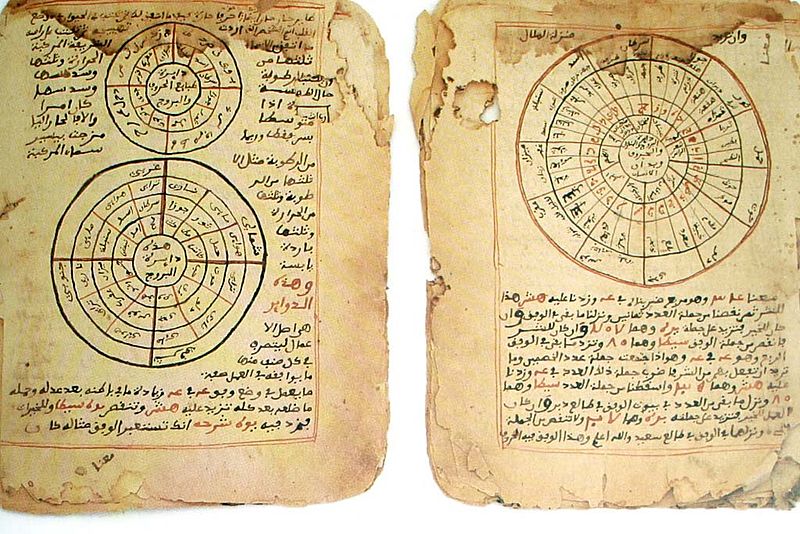
Manuscripts a Tombouctou (Mali) montrant de l'astronomie et mathematique
Manuscripts à Tombouctou (Mali) montrant de l’astronomie et mathématique

7. Les gens d’autrefois nous disent :

“L’homme en tant qu’individu

Fait d’os et de chair,

De moelle et de nerfs,

De peau recouverte de poils et de cheveux,

Se nourrit d’aliments et de boissons ;

Mais son “âme”, son esprit vit de trois choses :

Voir qui il a envie de voir,

Dire ce qu’il a envie de dire

Et faire ce qu’il a envie de faire ;

Si une seule de ces choses venait à manquer à l’âme humaine,

Elle en souffrirait

Et s’étiolerait sûrement.”

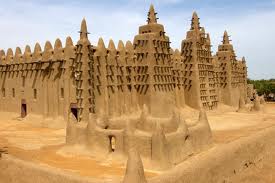
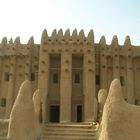
La grande mosquee de Djenne (Mali - heritage du grand empire du Mali)
La grande mosquée de Djenné (Mali – héritage du grand empire du Mali)

En conséquence, les chasseurs déclarent :

Chacun dispose désormais de sa personne,

Chacun est libre de ses actes,

Chacun dispose désormais des fruits de son travail.

Tel est le serment du Manden

A l’adresse des oreilles du monde tout entier.

Youssouf Tata Cissé

Texte réécrit par Youssouf Tata Cissé dans “Soundjata, la Gloire du Mali”, éd. Karthala, ARSAN, 1991

Djenné: the mud brick (adobe) city

Djenné
Map of Mali with Djenné

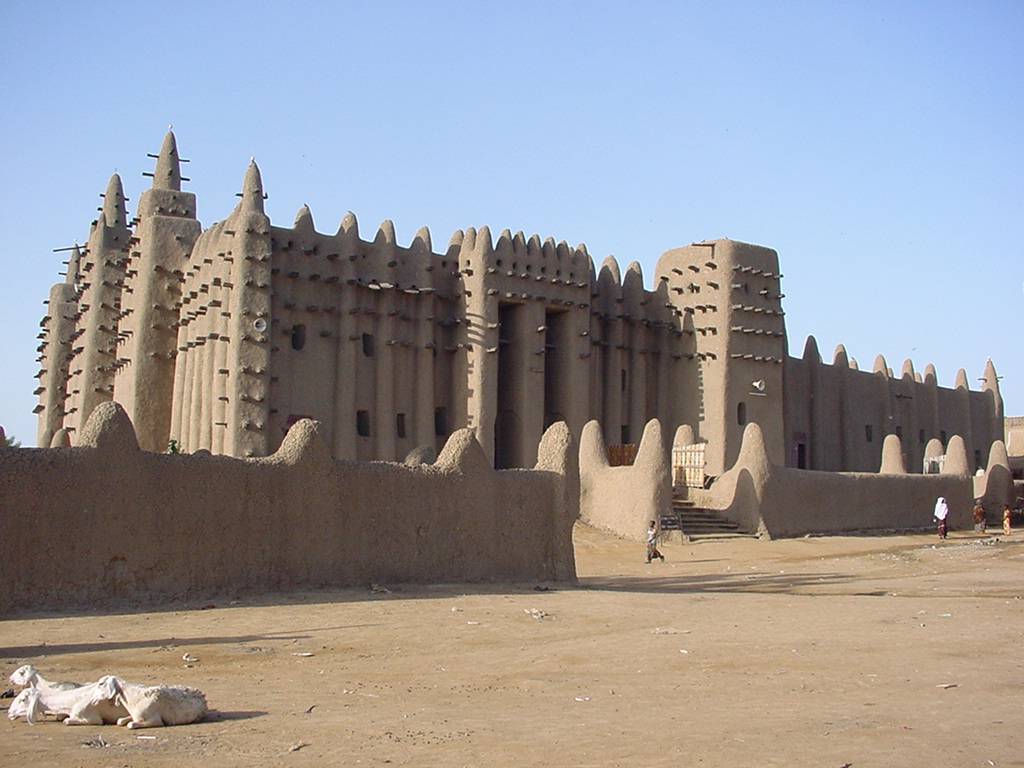
Djenné is a city of Mali whose history is closely linked to that of Timbuktu. It is well-renowned for its mud brick architecture, and today most of the city is considered a UNESCO World Heritage Site. In no place in the world do you have a civilization entirely built on mud! Maybe that is why Malians are so renowned for their work on mudcloth a.k.a. bogolan! The Djennenké say that nowhere in the world would you find people who can build in mud like Djenné’s masons: their work with mud is pure magic, as illustrated by the beautiful Great Mosque of Djenné. The masons’ family lines stretch back half a millenium! They mix the clay from the surrounding plains with the water from the Bani river, and bring to life an architecture purely from Djenné rising with splendor.

Great Mosque of Djenné

Djenné has fallen victim of time, erosion, and particularly rain which deteriorates the mud structure. Recently, as part of protecting this UNESCO world heritage, restoration started. For this process, Djenné masons divide up the work according to whose ancestors originally built the houses, the families that inhabit them, and themselves: dirt from old brick is reused only within the dwelling which it came from, since it is believed to carry a blessing which cannot be transferred; this is a practice whose roots date back to 250B.C.. Before the arrival of the French in 1900s, Djenné’s masons built using the technique of Djennefere or the art of building with cylindrical bricks, as opposed to rectangular bricks introduced by the French. Recently, a Malian-American team of archaeologists found in the base of wall fragments, from about A.D. 1400, of a type of bowl Djennenké still place in foundations for protection; another fragments with Arabic inscriptions dating back to A.D.

Great Mosque of Djenné
Entrance

1118. This is important, since before Djenné, there was Jenné-Jeno (before 200 B.C.), the “city without a citadel” which had no royal palace or ruler with an army, but was made up of different tribes or clans with different specialties which formed a sort of democracy where they came together to trade and decide community affairs. After 1100, Jenné-Jeno shrank, and by the 14th century, it felt and a new city, Djenné, grew from the trans-saharan trade in salt and gold. Djenné was later on invaded by Arab traders who introduced islam to the city. Later, Djenné was part of the great Mali Empire, the Songhai empire, the Ségou Kingdom, the Macina Empire, and the Toucouleur Empire. In essence, in Djenné, the old and the new merged, the mud from the earth grew, and the learning was passed on from generations to generations, making Djenné, the city built on mud rising from the splendors and knowledge of the past!

Map of Djenné
Map of Djenné

Both Djenné and Jenné-Jeno are UNESCO World heritage sites. You can learn about them on the UNESCO WHC website, as well as on Wikipedia, Architecture in Mali, and Djenne Patrimoine. Enjoy:

Timbuktu, one of the world’s first and oldest university

Timbuktu
Timbuktu

Oh wow… I always knew Timbuktu (Tombouctou in Mali) because of the story of the great emperor of the kingdom of Mali, Mansa Kankan Musa. I knew it was the center of his empire, but it is only lately that I realized that it was one of the world’s first and oldest thriving university! Students came from all over the world to study at Timbuktu. Imagine that, students from the middle east, and Europe coming to Africa to study! oooohhhh … Goodness Gracious, that sight only would make me proud! Well, to those who say Africa only has an oral tradition, go and check out the 700,000 manuscripts at the great Sankore University in Timbuktu, and tell me what you think! Oh la la…

In one documentary, the speaker mentions that they translated one of the manuscript on Algebra from Arabic to

Sankore University in Timbuktu

French, and sent it to France to be evaluated educationally; well, that manuscript revealed that the mathematics it contained was currently studied in 2nd year of university in France, and the speaker then says “and that was taught at universities in Timbuktu before the 16th century“!  Wow… my Goodness!

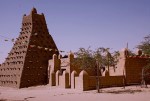
Timbuktu also houses some of the world’s oldest mud mosques, and every year the people of the city unite to re-do the walls of the mosque. It was added to the UNESCO world’s heritage list in 1988  (http://whc.unesco.org/en/list/119/).

Read about it on Wikipedia: http://en.wikipedia.org/wiki/Timbuktu