

Two Cameroonian women, Sabine Adeline Fanta Yadang, a doctor of neuroscience, and Hadidjatou Daïrou, a doctor of cellular physiology, have won the prestigious L’Oréal-Unesco Young Talent Award for Women in Science for their work on the power of medicinal plants. They were chosen among 30 scientists in sub-Saharan Africa to win the award on November 8 at a ceremony held in Botswana.
Their work focuses on the use of traditional medicinal plants in Cameroon for treating cardiovascular disease and alzheimer. Daïrou’s work centers around the use of kola nut (Garcinia Kola) to improve cardiovascular health, while Yadang’s focuses on tigernut milk which is extracted from a plant with centuries-old medicinal virtues to slow alzheimer. Both scientists work together in the laboratory of the Institute for Medical Research and the Study of Medicinal Plants (IMPM) in Yaoundé, the capital. They also hail from the rural north of Cameroon where education for women, and particularly a career in science is rare.
Excerpts below are from VOA.
=====
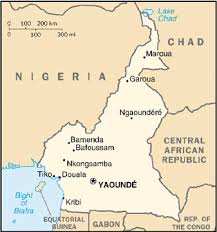
In Cameroon’s rural north, very few girls go on to enjoy careers in science. But Sabine Adeline Fanta Yadang, a neuroscience doctor, and Hadidjatou Dairou, PhD student of cellular physiology, have smashed through the glass ceiling.
They have been recognized for the quality of their research, along with 28 others from sub-Saharan Africa, by the L’Oreal-UNESCO for Women in Science Young Talents program.
UNESCO says the program supports “young women researchers around the world to pursue scientific careers at home or abroad.”
Both women were distinguished for their research into the potential of Cameroon’s traditional herbal medicines in the treatment of heart disease and Alzheimer’s.
They work in a laboratory at Yaounde’s Institute for Medical Research and Medicinal Plant Studies, IMPM.
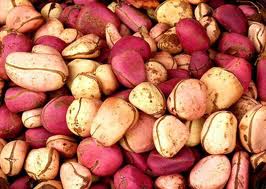
… Dairou’s interest in herbal medicine goes back to her years as a pharmacology student at the public University of Ngaoundere, in the country’s north. “I’ve seen what a plant extract does to the human body and how that can help people I know,” she says. The UNESCO program picked out her research into the “potential of the indigenous Garcinia Kola plant for treatment of cardiovascular disease.”
Fanta Yadang … likes to be known as a Moundang, a community from Cameroon’s Far North region, where her grand-parents took herbal cures. “I wanted to become a doctor, but I didn’t get good enough marks. I wanted to help my fellow people so I became interested in medicinal plants,” she says.
… For Dairou, the bark of the bitter Garcinia Kola — a grain that looks like a nut eaten across Africa to ease all kinds of problems — may improve cardiovascular health.
“In particular atherosclerosis, one of the major causes of heart attacks,” she explained.
…
.


