
On April 19, 2026, Pope Leo XIV gave the last blessing of his Angolan trip at a place which used to be pivotal in the slave trade! The irony is not lost on us. Can you imagine? The church that authorized and condoned the slavery of the African race, denying it of its humanity, now comes to bless the continent at an ancient slave fort? In 1452, the church authorized the eradication, subjugation, and enslavement of African people. Who told the pope that this was okay? Dum Diversas or The Vatican’s Authorization of Slavery, Vatican rejects ‘Doctrine of Discovery’ used to Justify Colonial Quest and Theft of Land.
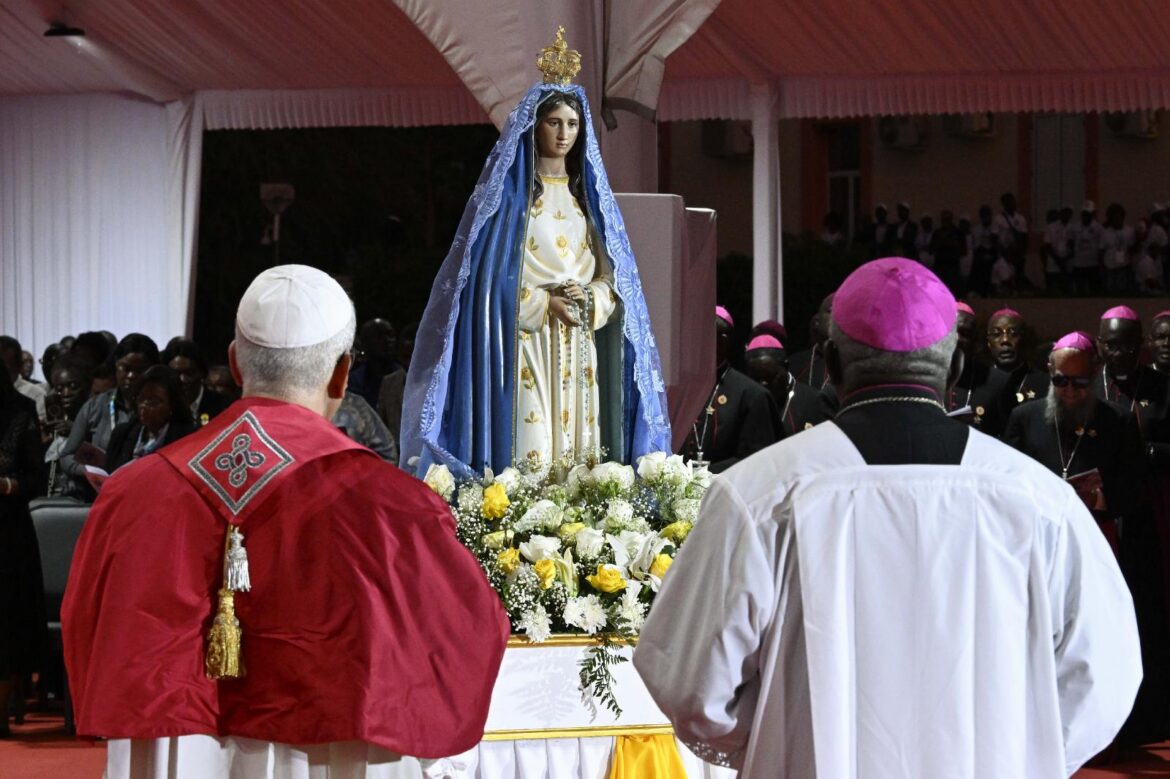
Pope Leo XIV visited Africa last month: visiting Algeria (first time for a pope to visit the predominantly Muslim country), Cameroon, Angola and Equatorial Guinea. While in Angola, he delivered a message of peace and reconciliation at the Sanctuary of Mama Muxima in Angola, a revered Catholic site that once served as a hub of the trans-Atlantic slave trade !!!
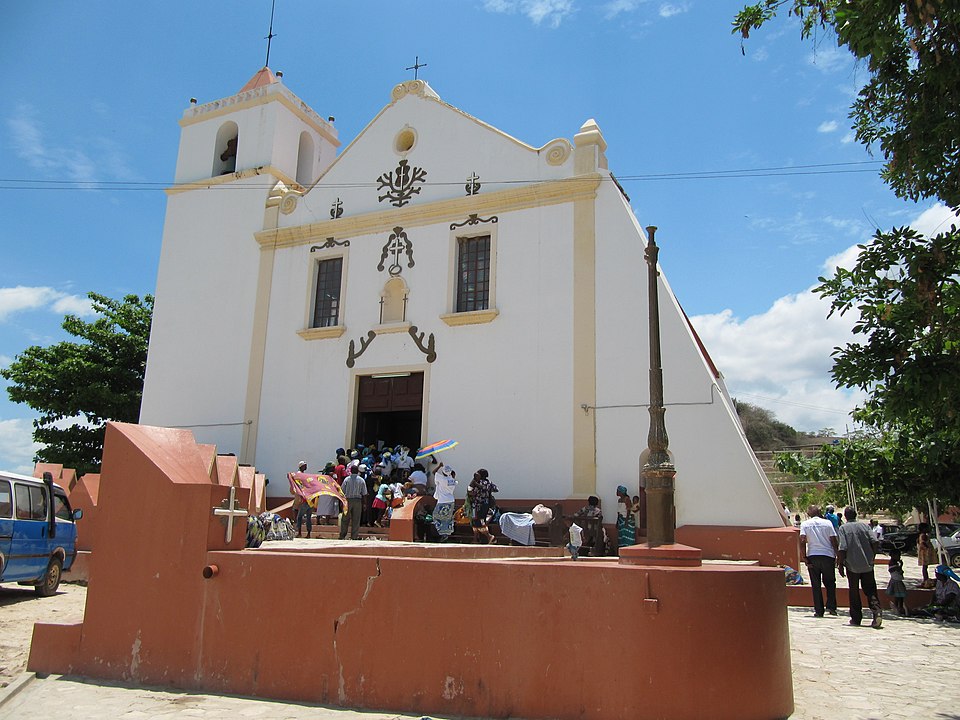
The Church of Nossa Senhora da Conceição da Muxima was founded in the village of Muxima in the 16th century. It stands on the left bank of the Kwanza River and is a contemporary of the Fortress of Muxima. Muxima was occupied by the Portuguese in 1589 and ten years later in 1599, the fortress was founded and the church was built with a prayer invoking the intercession of Nossa Senhora da Muxima – Muxima means ‘heart’ in Kimbundu. It was an important center in the Portuguese slave trade in Angola, protected by the fortress, and the church played an important role as it is where slaves were baptized before being deported. Picture this, a subhuman getting baptized to get his soul purified to be deported to another continent to be tortured and enslaved (didn’t even know that subhumans or things had souls!) ! The church was a hub of the Atlantic slave trade. Today, it has become the most important place of pilgrimage in Angola, getting over one million visitor from August 31 to September 1. It became a place of pilgrimage for Marians in the 19th century because of a suspected apparition of the Virgin Mary in 1833. In 1924, the church was listed as a historical monument and was later added to the UNESCO World Heritage Tentative List in 1996. Is this freaking serious? Why, oh why are Africans so gullible? A place where our brothers and sisters were sold to slavery, where our ancestors lost their lives, a slave trade hub, is now a place of pilgrimage for Africans, because there were apparitions of the virgin Mary there? And you believe? Those ‘apparitions’ must have been the spirits of those who were sold into slavery and deported! And a century later, the same church who relegated us to below human beings, comes to talk of peace and reconciliation where they used to baptize these same subhumans to be sold out? And we go there? No matter what anyone says… we have to admit that there is something unpalatable with this picture!
Excerpts below are from Africanews.
Pope prays for healing at Angola shrine marked by slave trade history | Africanews
=====
Pope Leo XIV on Sunday delivered a message of peace and reconciliation at the Sanctuary of Mama Muxima in Angola, a revered Catholic site that once served as a hub of the trans-Atlantic slave trade.
Set along the Kwanza River, the sanctuary became a pilgrimage destination after reported Marian apparitions in the 19th century.
Yet the Church of Our Lady of Muxima was originally built by Portuguese colonizers in the late 16th century as part of a fortress linked to slavery.
Enslaved Africans were gathered there, baptized by priests, and forced to march more than 100 kilometers to Luanda before being shipped to the Americas.
… “It is love that must triumph, not war,” Leo said in a prayer invoking the Virgin Mary, urging believers to act as “messenger angels” spreading compassion and blessing [Compassion? on a site which was the hub of slave trade in Angola?].
Praying the Rosary inside the modest church, he recalled centuries of “sorrow and great suffering” endured by Angolans, without directly referencing slavery. [of course… how could he? When they visit other continents they acknowledge it, but in Africa… silence].


