On the black woman. “I believe that black has been oppressed by white; female by male; peasant by landlord; and worker by lord of capital … the black female worker and peasant is the most oppressed. She is oppressed on account of her color like all black people in the world; she is oppressed on account of her gender like all women in the world; and she is exploited and oppressed on account of her class like all workers and peasants in the world. Three burdens she has to carry.” Wizard of the Crow
On unity. In A Grain of Wheat, Ngũgĩ stressed the importance of unity of resisting tyranny, “Our fathers fought bravely. But do you know the biggest weapon unleashed by the enemy against them? It was not the Maxim gun. It was division among them. Why? Because a people united in faith are stronger than the bomb.”
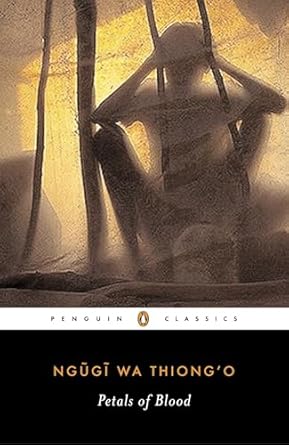
Petals of Blood by Ngũgĩ wa Thiong’o
Like Sengat-Kuo in his poem “Ils sont venus“, Ngũgĩ highlighted in Petals of Blood the holy trinity of the Bible, the guns, and commerce to conquer and oppress Africans, “He carried the Bible; the soldier carried the gun; the administrator and the settler carried the coin. Christianity, Commerce, Civilization: the Bible, the Coin, the Gun: Holy Trinity.“
Language as a weapon. In his groundbreaking book Decolonising the Mind: The Politics of Language in African Literature, he championed the use of the mother tongue, arguing, “To speak one’s language is to celebrate one’s identity, … but to impose a language is a way to divide people – it is to practice tribalism of another kind.”
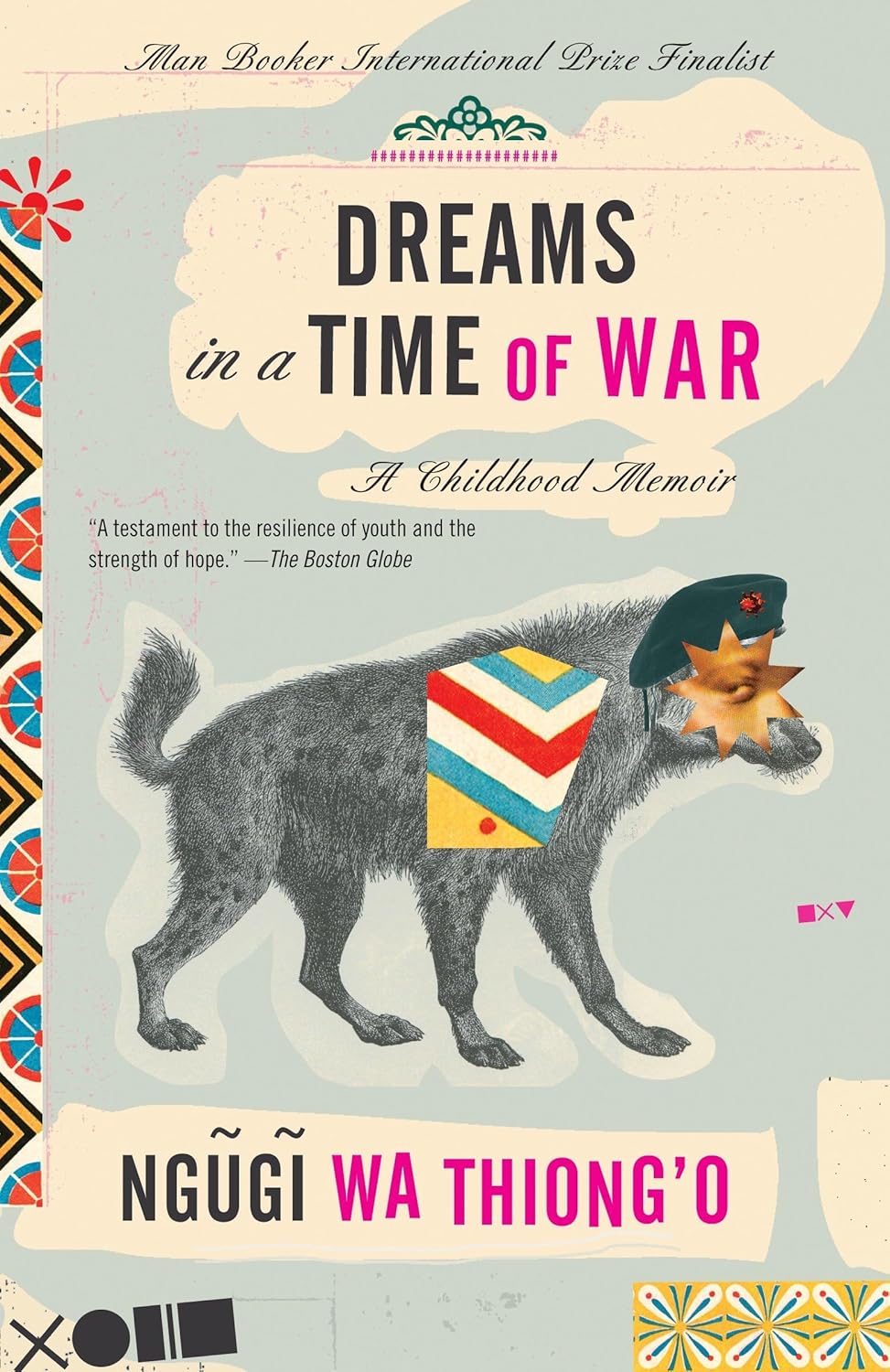
Dreams in a Time of War: A Childhood Memoir by Ngũgĩ wa Thiong’o
On Women condition. In Wizard of the Crow, Ngũgĩ said, “The condition of women in a nation is the real measure of its progress.“
On self-validation. in Dreams in a Time of War, he added “Belief in yourself is more important than endless worries of what others think of you. Value yourself and others will value you. Validation is best that comes from within.“
A few weeks ago, the son of Africa’s revered writer, Ngugi wa Thiong’o: world acclaimed Kenyan writer, took to X and wrote about his father being an abusive husband, “My father Ngugi wa Thiong’o physically abused my late mother. He would beat her up. Some of my earliest memories are of me going to visit her at my grandmother’s where she would seek refuge.” The tweet went viral, and took everyone by surprise. Surprise, because human tendency makes it so that we tend to place our heroes on pedestal as if they were no longer human; surprise, because Ngugi wa Thiong’o alongside Chinua Achebe is one of Africa’s greatest writers worthy of the Nobel prize of literature; surprise, because Ngugi wa Thiong’o work has been denouncing colonialism, imperialism, nepotism, neo-colonialism, and African governments’ repression and mismanagement, but never has he denounced the conditions of the African woman; lastly, surprise because, in Africa, and in Kikuyu culture particularly, it is not so common to air one’s dirty laundry in public, particularly against an elder. Sure enough, the son, Mukoma wa Ngugi responded to the backlash, “We cannot use African culture to hide atrocities,” he wrote on X. “My father beat up my mother. What is African about that?”
I, like so many, am against violence in general, and violence against women in particular. As we digest the news about Ngugi wa Thiong’o, is it not time for our acclaimed African writer who is in his twilight years to give us one masterpiece which focuses on patriarchy, women condition, and women in general, as an atonement? Is it not time for this to open up a dialogue?
Below is an excerpt from Al Jazeera. Enjoy, it is a nice read!
=====
Ngugi wa Thiong’o (Source: TTbook.org)
On March 12, Mukoma wa Ngugi, the Kenyan American poet and author, who is the son of Ngugi wa Thiong’o, the famed writer widely seen as a giant of African literature, took to X, formerly Twitter, to allege that his father was an abusive husband. “My father Ngugi wa Thiong’o physically abused my late mother. He would beat her up. Some of my earliest memories are of me going to visit her at my grandmother’s where she would seek refuge.”
Mukoma’s tweet went viral and solicited hundreds of responses that exposed the long, dark shadow patriarchy continues to cast over many African societies. Sure, many commentators thanked Mukoma for sharing his account of a man who is not only his father, but an African cultural icon. Others, however, were less complimentary and appeared to be gravely offended by his openness. They accused him of embarrassing his father and seeking validation from Westerners.
… Ten days after his initial statement, on March 23, Mukoma responded to the criticism he received for speaking up for his mother. “We cannot use African culture to hide atrocities,” he wrote on X. “My father beat up my mother. What is African about that?” In another post, he described the culture of violence against women that underpins Kenyan society as a “patriarchal cancer”.
Chinua Achebe (Source: AP Photo)
Ngugi is a literary genius, a storyteller par excellence and a respected revolutionary. Before there was the internet, video on-demand platforms, TV or even radio in most households, two African giants dominated African literature: Chinua Achebe, the Nigerian author, and, of course, Ngugi. From the 1960s, AchebeandNgugiarticulated African identity and consciousness amid the anti-colonial struggle. They stood up for the human rights of Africans with their words.
Through novels like Things Fall Apart and Arrow of God, to name a few, Achebe chronicled the impact of colonialism on Igbo culture, religion and sociopolitical systems. And in a Man of the People, he explored the failings of postcolonial leadership and states.
“Weep not Child” by Ngugi wa Thiong’o
Ngugi, who went by the name James early in his career, also focused on African opposition to colonial rule. Weep not Child, for instance, deals with the so-called Mau Mau Uprising, while A grain of wheatlooks at the state of emergency in Kenya’s struggle for independence (1952–60). Through these and other novels, Ngugi advocated for resistance against colonial oppression and repression in the independence era. In 1978, he was arrested and detained for a year without trial by the administration of former Kenyan President Jomo Kenyatta over a play titled Ngahlika Ndenda (I will marry when I want). Over the years, Ngugi was regularly harassed and victimised by authorities in Kenya for voicing his opposition to corruption, misrule and the abuse of power. He has stayed the course and today, at the age of 86, continues to advocate for freedom from neocolonialism and political oppression. With 13 honorary degrees from institutions around the world, as well as countless awards, including the 2022: PEN/Nabokov Award for Achievement in International Literature, Ngugi is a certified literary genius. But, for all of his achievements in the last 60 years, the famed author appears to have failed where it counted most: protecting African women.
He produced many timeless literary classics, and became a leading voice in the fight against colonialism and post-colonial repression, but according to his own son, could not liberate his dear wife, sons and daughters from the extreme ravages of toxic masculinity and domestic violence. Of course, in the wake of Mukoma’s public disclosures, Africans could choose to label Ngugi a flawed genius. He is, after all, human. They could – as many tried to do in lashing out at [Mukoma] – brush his alleged abuse of his wife under the carpet in the name of protecting his literary and revolutionary legacy. This would be an easy and convenient position to take.
But it wouldn’t be right.
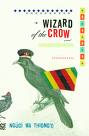
“The wizard of crow” by Ngugi wa Thiong’o
… Ngugi, it seems, wanted women to experience liberty from colonialism and post-colonial subjugation, but remain bonded to the steely constraints of Kikuyu culture. … To his mind, it seems, there were limits to women’s human rights. For a long time, under the guise of tradition, African men have been allowed and even encouraged to discipline “their women” and children with violence [this does not apply to all African men]. Thus, many argue Ngugi is just a product of his times and what he is said to have done to his late wife should not be judged through a 21st-century progressive lens.
… Ngugi’s alleged violence is, unfortunately, a window to a continental(and, frankly global) problem. Hence, his son’s revelations should not become a point of contention. This should instead be a teaching moment.
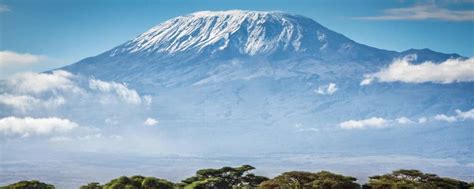
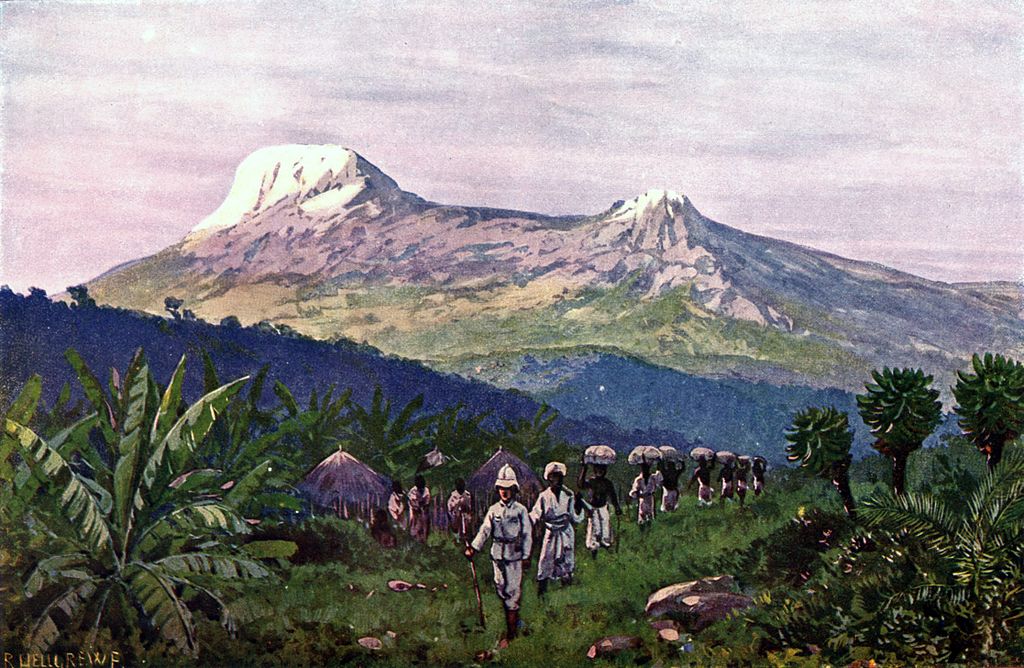
Have you ever dreamed of climbing Africa’s tallest mountain, Mt. Kilimanjaro? Of watching its snow-capped peaks under the tropics, near the equator? Mount Kilimanjaro rises to an elevation of 5,895 m above sea level and about 4,900 m above its plateau base in Tanzania; it is the largest and tallest free-standing mountain rise in the world, meaning that it is not part of a mountain range. The majestic Mount Kilimanjaro is an inactive snow-capped stratovolcano that extends for about 80 km from east-west and is made up of three principal volcanic cones namely Mawenzi, Kibo, and Shira. The highest summit of Kilimanjaro is located on the crater rim of Kibo volcano and has been named the Uhuru Peak, where ‘Uhuru’ means ‘freedom’ in the native Swahili language. Scientists estimate the glaciers may be completely gone in 50 years. Mount Kilimanjaro is often referred to as the “Roof of Africa”. Thus one can imagine what poet B. Tejani, and anyone who reaches the 4th tallest peak in the world, must have felt after ascending the mountain… on top of Africa, which is the title of Tejani’s poem about the joy of ascending Mt Kilimanjaro. Bahadur Tejani is a Kenyan author and poet, born of Gujarati parents in Kenya. He studied at the Makerere University in Uganda, Cambridge University, and the University of Nairobi. He later taught at the University of Nairobi in Kenya, as well as the University of Sokoto in Nigeria. As you read the poem, you are really transported to the slopes of the majestic mountain. As you watch the snow, ‘an ageless majesty‘ fills you. As you reach the summit, there is definitely at that moment ‘no great triumph in thesoul‘, after the ‘agonied 20,000 steps upwards and onwards‘. Truly, only when the ordeal is finished ‘I shall remember the dogged voice of conscience self-pity warring with will‘. This poem is part of Poems from East Africa, ed. by D. Cook and D. Rubadiri (1971), p. 176. Enjoy!,
====
Mt Kilimanjaro in 1911
‘On Top of Africa‘ by B. Tejani
Nothing but the stillness
of the snow
and an ageless majesty
matched
by those enduring horizons that bridge the heights of you and me.
The phosphorescent sun gliding from the dark cloud under us
This really good article by the Kenyan writer Binyavanga Wainaina on ‘How to Write about Africa‘ was recently shared with me. It was published by Granta magazine. One will be surprised to see that this is exactly the way Africa is depicted in Western televisions, magazines, news, and books. Such an interesting read, very satirical, and yes very thought-provoking. This is not the Africa I know, but this is the Africa sold on Western media. The entire article can be found on Granta.com.
==========
Always use the word ‘Africa’ or ‘Darkness’ or ‘Safari’ in your title. Subtitles may include the words ‘Zanzibar’, ‘Masai’, ‘Zulu’, ‘Zambezi’, ‘Congo’, ‘Nile’, ‘Big’, ‘Sky’, ‘Shadow’, ‘Drum’, ‘Sun’ or ‘Bygone’. Also useful are words such as ‘Guerrillas’, ‘Timeless’, ‘Primordial’ and ‘Tribal’. …
Never have a picture of a well-adjusted African on the cover of your book, or in it, unless that African has won the Nobel Prize. An AK-47, prominent ribs, naked breasts: use these. If you must include an African, make sure you get one in Masai or Zulu or Dogon dress.
Africa
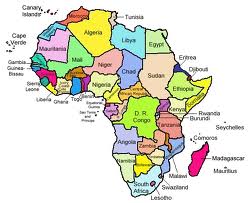
In your text, treat Africa as if it were one country. It is hot and dusty with rolling grasslands and huge herds of animals and tall, thin people who are starving. Or it is hot and steamy with very short people who eat primates. Don’t get bogged down with precise descriptions. Africa is big: fifty-four countries, 900 million people who are too busy starving and dying and warring and emigrating to read your book. The continent is full of deserts, jungles, highlands, savannahs and many other things, but your reader doesn’t care about all that, so keep your descriptions romantic and evocative and unparticular. […] Continue reading “How to Write about Africa, by Binyavanga Wainaina”→






 African Heritage