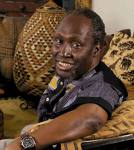
Ngugi wa Thiong’o, Kenyan Literary Baobab, is no Longer

Ngugi wa Thiong'o
Ngugi wa Thiong’o

World acclaimed Kenyan writer Ngũgĩ wa Thiong’o is no longer. Millions of school children in Africa grew up reading his first books Weep not child (1964), the first novel in English published by an East African, followed by The river between (1965) and A Grain of Wheat (1967). A Cameroonian friend of mine used to love reading The river between, and could recite almost every line. Weep not child explored the impact of the Mau Mau rebellion on a young boy’s family and education, The river between focused on the cultural clash between traditional Gikuyu society, while A Grain of Wheat focused on the disillusionment of the post-independence era.

Chinua Achebe (Source: AP Photo)

Like the venerated Chinua Achebe, Ngũgĩ wa Thiong’o was counted among the baobabs of modern African literature, as the author of several novels, plays, short stories, critical pieces, and children books. Like Achebe, he was tipped several times to win the Nobel Prize for Literature, leaving fans dismayed each time the medal slipped through his fingers. We are counted among those fans who each time hoped, but were always disappointed… it’s like the real African authors never get rewarded. This is a lesson for all that we need to reward our own, create awards and celebrate our own, instead of waiting for others to celebrate them. His daughter Wanjiku wa Ngũgĩ who announced his passing on May 28, 2025, said, “He lived a full life, fought a good fight. As was his last wish, let’s celebrate his life and his work.”

“Weep not Child” by Ngugi wa Thiong’o

Ngũgĩ reached fame writing in English, and then decided to write in Gikuyu, his mother-tongue. Today, his books are written in Gikuyu, and then translated into English; he was a strong proponent of African languages and was adamant about expressing his art in Gikuyu. Like so many East African leaders, he attended the prestigious Makerere University in Uganda, and later the University of Leeds in the UK. Upon his return to Kenya, he taught at the University of Nairobi where he worked to “decolonize the minds,” campaigning to decolonize the curriculum by prioritizing African literature and languages. He was instrumental in the abolition of the English Literature Department in favor of a broader, African-centered literary program. The 1970s decade also saw him drop his patronym James Ngugi, to be fully known as Ngũgĩ wa Thiong’o.
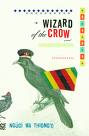
The wizard of crow
“The wizard of crow” by Ngugi wa Thiong’o

His work spanned over six decades, documenting the transformation of his country, Kenya, from a colony of Great Britain to a democracy with all its issues. He fought the government and was arrested several times, and spent a year at a maximum security prison where he wrote his novel Devil on the Cross (Caitaani mũtharaba-Inĩ), the first modern novel in Gikuyu, written on prison toilet paper. Once out of prison, faced with constant harassment from the government, he went into exile and taught at some of the world’s best universities, including Yale University, New York University, Northwestern University, and the University of California, Irvine where he was a Distinguished Professor of English and Comparative Literature and served as first director of the International Center for Writing and Translation.

Ngugi wa Thiong’o (Source: TTbook.org)

His was a unique voice, a voice which never stopped to urge for the decolonization of the minds. To this effect, he wrote Decolonising the Mind: The Politics of Language in African Literature (1986) which advocates for linguistic decolonization of Africa; the book became one of his best known non-fiction work. In his speech at Wits University in Johannesburg in 2017, titled ‘Secure the base, decolonise the mind, Ngũgĩ spoke about the ‘power relationship between the language of the conqueror and the language of the vanquished’, and asked whether, after fifty years, we have ‘regained the cultural and intellectual independence that we had lost to colonialism’, adding ‘I have always argued that each language, big or small, has its unique musicality; there is no language, whose musicality and cognitive potential, is inherently better than another,’ he said [The Johannesburg Review of Books]. Ngũgĩ is survived by 9 children of whom 4 are also authors like himself.

To learn more, please check out The Johannesburg Review of Books, Nyakundi Report, Pulse Kenya, and the BBC. So long to our Kenyan giant of literature… we will not weep, but keep celebrating Ngũgĩ wa Thiong’o ‘s life!

No Apology from King Charles III in Kenya

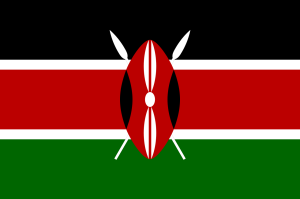
Flag of Kenya

King Charles III landed in Kenya on Tuesday October 31, 2023. On his first official visit to Kenya as monarch, the king of the British gave a speech in which he acknowledged the past atrocities committed by Great Britain and its colonial legacy. He said there were ‘no excuses‘ for it, yet did not apologize! He told guests that “the wrongdoings of the past are a cause of the greatest sorrow and the deepest regret.” He recognized the “abhorrent and unjustifiable acts of violence committed against Kenyans” in their struggle for statehood adding, “there can be no excuse.” Today, he held a private meeting with the family of Kenyan freedom fighter Dedan Kimathi murdered by the British colonial regime, and whose remains are still to be found to this day; the British High Commission said that the meeting was an “opportunity for the king to hear firsthand about the violence committed against Kenyans during their struggle for independence.” Are we supposed to clap for the king? Why does it have to be a private meeting? Kimathi no longer just belongs to his family, but to the whole of Kenya as he led the rebellion to liberate the whole country; thus whatever concerns him, concerns ALL Kenyans!

Are we surprised? NO… we are used to these useless kings and presidents of the former colonial powers parading in our countries with nothing to show for… walk and expect to be treated well by us, when they have not even given us the decency of burying our dead or returning the skulls of our ancestors, let alone recognize the genocides committed by their forces on our lands, or even the trauma caused, or even our lands confiscated, futures destroyed, and our resources to this day stolen away. (France Admits Murder of Algerians … A Step Forward?In Madagascar, People remember one of the deadliest French colonial wars in history,  French President Acknowledges French Genocide in Cameroon, Belgian King Expresses ‘Deepest Regrets’ for Colonial Past in Congo). It is just saddening that African leaders empty coffers for these parades.

Excerpts below are from the Washington Post.

=====

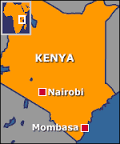
Map of Kenya with its capital Nairobi

NAIROBI — In his first public remarks as monarch on colonial atrocities, during his first visit as king to a Commonwealth country, King Charles III said there were “no excuses” for the “abhorrent and unjustifiable acts of violence committed against Kenyans” during their struggle for independence from Britain, but he did not offer the full apology that many people in Kenya have called for.

Speaking at a state banquet Tuesday, Charles hewed closely to the British government line, saying he felt “the greatest sorrow and the deepest regret” for the wrongdoings of the past. He steered clear of any language that might open a broader conversation about reparations.

Nonetheless, Britain, like other former colonial powers, is in a period of reckoning, and the king has been under pressure to address the legacy of decades of British rule in East Africa.

Britain-Kenya relations at the “official level are very good,” said Nick Westcott, a professor of diplomacy at SOAS University of London and former director of the Royal African Society, but “that’s not to say there’s not some difficult issues that go back to the colonial period.”

… There have been calls for Charles to acknowledge, in particular, the violent suppression carried out by British authorities in Kenya during the early reign of his mother, Queen Elizabeth II. In the 1950s, British officials responded to what was known as the Mau Mau revolt — a movement to reclaim land and independence — with a brutal crackdown on the broader population. Thousands were killed and significant numbers imprisoned and tortured…

When the Kilimanjaro Leads to Happy Corals !

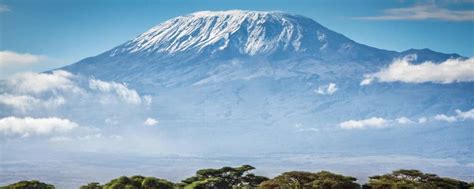
Mt Kilimanjaro (Source: KidsKonnect.com)

What does the Kilimanjaro, the tallest mountain on African soil, have to do with corals in the ocean? Well, it turns out that there are channels of cool water that developed millions of years ago under the Mt Kilimanjaro, and these end in the Indian ocean off the coast of Mombasa. With the recent warming of the oceans, this cool water meets the ocean right on the coast to create a sort of marine sanctuary for corals, dolphins, and even species taught to be extinct. Enjoy excerpts below from the article at the Guardian!

======

Scientists have discovered a climate crisis refuge for coral reefs off the coast of Kenya and Tanzania, where species are thriving despite warming events that have killed their neighbours.

The coral sanctuary is a wildlife hotspot, teeming with spinner dolphins and boasting rare species, including prehistoric fish and dugongs. Researchers believe its location in a cool spot in the ocean is helping to protect it and the surrounding marine life from the harmful effects of the climate crisis.

[Tim] McClanahan, the lead scientist for the Wildlife Conservation Society, who lives and works in Mombasa, Kenya, said he had an “epiphany” when he realised why the reef was so rich in wildlife. The coastline has the highest density of dolphins in east Africa, and coelacanths, fish once believed extinct, swim in its deep waters. “I thought ‘why are all the animals here?’ And I realised it was because of Kilimanjaro,” he said.

The coral refuge, which stretches from Shimoni, 50 miles south of Mombasa, in Kenya to Dar es Salaam in Tanzania, is fed by cool water from deep channels formed thousands of years ago by glacial runoff from Mt Kilimanjaro and the Usambara mountains.

Local African Sellers Growing Some Profits from Lockdowns

Kenya_map
Map of Kenya

In this era of the coronavirus and social distancing, many local vendors in some countries of Africa are seeing bigger profits than ever because of the slower competition from imported products. This should be the time to encourage local economies, and rebuilt local industries. In the article below, you will be appalled to find out that Kenya was importing fish from China (which has probably been fished on African coasts anyway) when they have a fishing industry! Why not eat local products? Why are our governments allowing these imported products to be cheaper than the local ones (it is true of Senegal and countless other African countries with products from France and the EU)? Why are foreign products not taxed properly so as to allow for the local industry to grow? I know this time is short, but it is always important to start somewhere. It is important to take advantage of these uncertain times to strengthen ourselves as all other countries are doing!  This article is from the  BBC: Fishermen cash in as Chinese imports drop.

=====

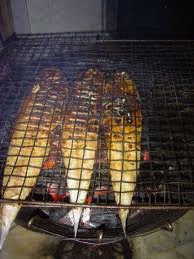
Grilled fish on a charcoal stove / du poisson braise sur un rechaud a charbon

Sales of fresh fish in Kenya have risen as imports from China have dropped amid the coronavirus pandemic.

Sellers in Dunga Beach on the shores of Lake Victoria report a jump in trade of about 40% over two weeks.

The fishermen are really now smiling at the Lake Victoria region because we are receiving more visitors. Dunga is really crowded with a lot of the residents of Kisumu coming to buy the fresh fish because people fear the Chinese boxed fish due to the coronavirus,” says Maurice Misodhi, a fisherman and leader at the Dunga Beach Management Unit.

Local fish costs about twice as frozen fish from China, of which Kenya imported more than $23m (£19m) worth in 2018.

Chinese fish used to make up about 50% of the market but this has fallen since imports stopped in November and the virus outbreak later took hold.

Before the coronavirus outbreak, local fishermen complained that cheap imports harmed local trade so much that they often resorted to eating their catch themselves or giving much of it away.

Kenya_flag
Flag of Kenya

But the scarcity of Chinese fish isn’t good news for everyone. Caroline Ochieng, a fish seller says she is struggling to make a decent profit because Chinese fish is cheaper than local lake fish.

That is the reason we want the China fish to be in supply as well as that from our own lake – so that as we do business we don’t feel the burden.

There are worries that local fishermen won’t be able to keep up with new demand for fresh fish. But for now at least, they are making the most of the surge in trade.

Why the name: Nairobi?

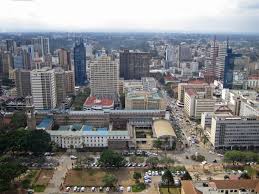
Nairobi in 2010
Nairobi in 2010

Have you ever fallen in love with a name? with a place? well… that is the feeling… when you hear the name Nairobi (the capital of Kenya) for the first time, it is like some beautiful girl you were always attracted to but could never get.  Well, the name Nairobi is quite far from that: it comes from the Maasai Enkare Nyrobi which means the place of cool waters, which is also the name for the Nairobi River which lent its name to the city.  Today, it is popularly known as the Green city in the sun… probably because of its lush-ness.

Flag of Kenya
Flag of Kenya

Nairobi hosts a natural reserve protected, the Nairobi National Park, within its borders.  It is also the capital hosting the most species of birds in the world.  Nairobi was originally built at the beginning of the 1900s as a railway link between Mombasa (on the coast of Kenya) and Kampala (Uganda) by the rail company Kenya Uganda Railway.  It was completely rebuilt in the early 1900s after an outbreak of plague and the burning of the original town.  Its location was chosen because of its central position between Mombasa and Kampala; it was also chosen because its network of rivers which could supply the British camp with water and its elevation which would make it cool for the British residential purposes.

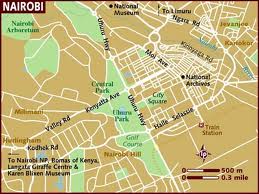
Map of Nairobi
Map of Nairobi

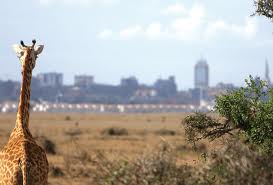
Nairobi from Nairobi National Park
A girafe looking onto Nairobi, from Nairobi National Park

In 1905, Nairobi replaced Mombasa as capital of the British protectorate, and from then on grew tremendously around tourism, administration, and big game hunting.  Britons came to live in Nairobi for for game hunting.  In those times, the city quickly became the commercial centre for the colony’s coffee, tea, and sisal industry. Today, Nairobi is one of the most populous cities in Africa known for its beauty, for its versatility, and also for its slum Kibera.  The city of Nairobi is located on the eastern edge of the Rift valley, with the Ngong Hills located to the west of the city, and Africa’s two tallest mountains, Mount Kenya and Mount Kilimanjaro are located to the north and towards the southeast, respectively.  It was also the birthplace of Kenya’s first president, Jomo Kenyatta.

Enjoy the great Congolese singer M’Bilia Bel (she is also a beauty) singing about the beautiful Nairobi, Nakei Nairobi, a song written and composed by Tabu Ley Rochereau.

Have you ever been to Nairobi? What were your impressions?