Sad Moments in Mali : Fallen Brothers and the Black Winter


Map of Mali with its capital Bamako

Over the past week, there have been severe confrontations/battles in Mali between the government forces backed by the proud people of Mali and the jihadists forces funded by the West. These intense attacks culminated on April 25, 2026, with the deaths of the Malian Defense Minister, General Sadio Camara, members of his family, and countless soldiers and civilians. We have learned that the attacks were complex, coordinated, and simultaneous.

General Assimi Goita

As always, the Western media celebrated, and wondered where the Malian president was, and told us that the rebels were now in total control of Kidal. On Tuesday, President General Assimi Goïta, addressed the nation, and told us that, “A violent halt was put to the attackers who sought to establish a climate of violence.” These attacks, as President Assimi Goïta shared, were “coordinated [and] of an extreme gravity.”
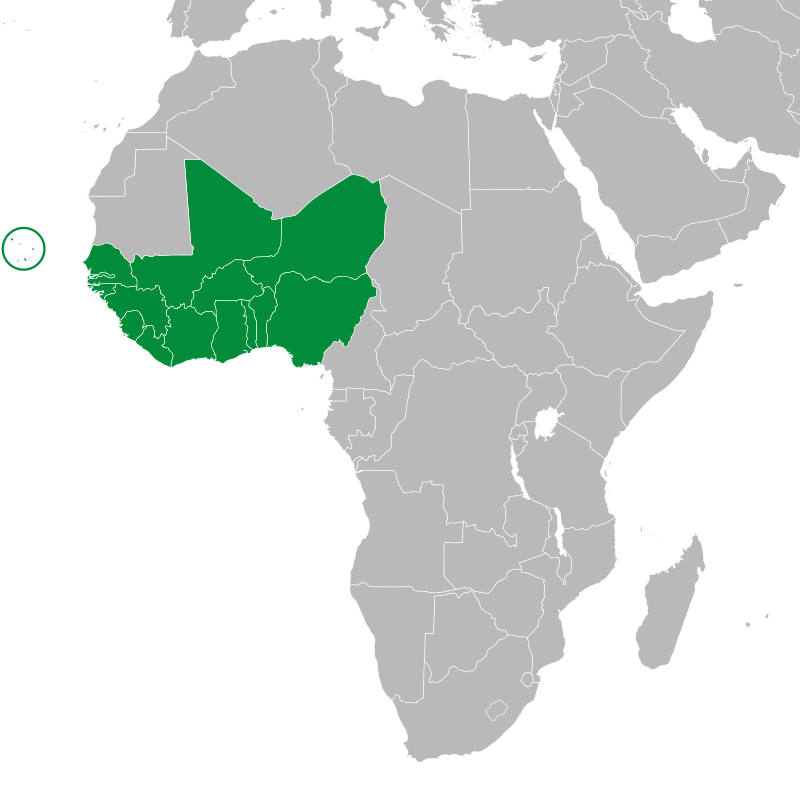
ECOWAS Members – old map

The attacks were quite complex, as they were very sophisticated; the bandits were no longer thugs driving simple motorcycles, but advanced military vehicles instead, had high technology, missiles, and even satellite access for such coordination, and much more. As you can see, common bandits cannot have access to such high tech or intelligence: where do they get the money? It is clear that they are funded by the West, with France at the forefront, Ukraine, the E.U. and thus NATO, and the ECOWAS countries which are governed by puppets of France (Côte d’Ivoire, Nigeria, Benin, Algeria, Mauritania). Remember that American general who lied about Ibrahim Traoré last summer visited several of these countries to establish other centers for the AFRICOM (What are American Troops doing in Nigeria ?)? This time, the jihadists hit almost simultaneously the cities of Gao, Kidal, Mopti, and Kati. You can see that this is an army, and not just ‘rebels’ as labelled by the western media, directly financed by the West with France in the front. It is said that they are numbering several thousand men.
Flag of Mali
Flag of Mali

President Goïta said, “Thanks to the promptness and professionalism of the armed and security forces, the attackers – whose objectives was to instill a climate of widespread violence in the affected localities –were  dealt a decisive blow. Thanks to the calm of the personnel deployed and the maintenance of a cohesive chain of command, the enemy’s nefarious plot was thwarted, resulting in the neutralization of a significant number of attackers. As I speak to you now, security measures have been reinforced; the situation is under control, and operations involving combing, search, intelligence gathering, and security consolidation remain ongoing.”
 

AES Logo

This, as you can see, is the black winter (dark winter), President Ibrahim Traoré of Burkina Faso referred to at the beginning of the year. However, what the enemy has forgotten is that Assimi Goïta, Ibrahim Traoré, Abdourahamane Tchiani are all proud descendants of the great Mali Empire, Songhai Empire, Kanem-Bornu Empire, and offspring of the mighty Sundiata Keïta, Kankan MusaSamori Touré, and so many others; these are men whose ancestors have been fighting for their freedom for generations (like Malians fighting the French forces at the battle of Sikasso). The fight for freedom did not start yesterday in 2020, but has been ongoing for centuries. As President Goïta said, “Our people have made the choice, the choice of sovereignty and dignity. The choice is the expression of a national will, fully embraced and boldly asserted. It comes at a price, and we are fully aware of it. This choice is the only path worth taking if we wish to offer our children a future that is free, just, and prosperous.” As president Goïta told us in 2022, No Sacrifice is too Big for this Country.

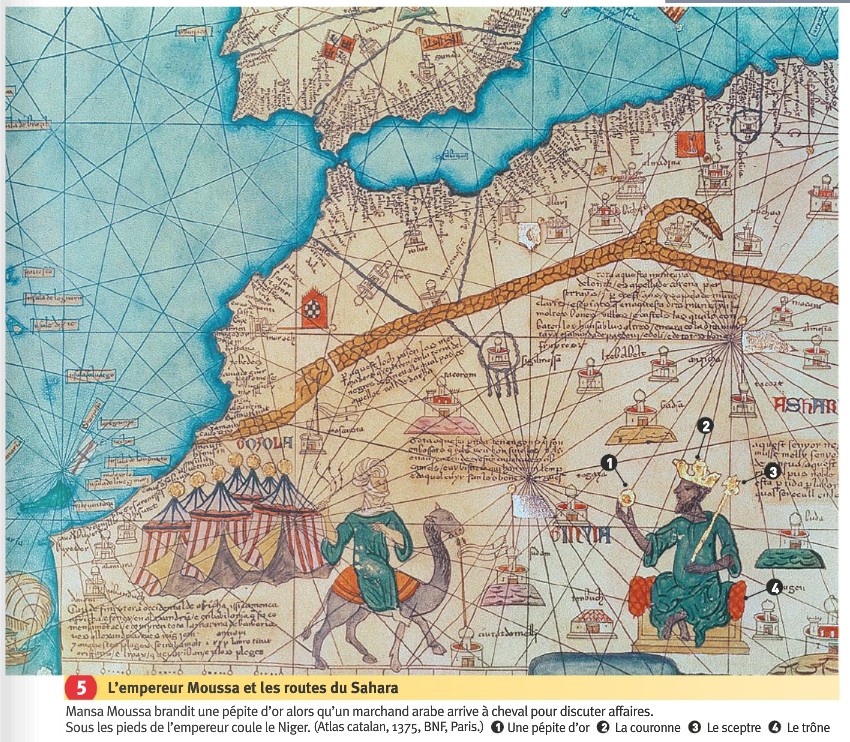
Kankan Musa: The Richest Man in World History

Kankan Musa (Source: Atlas Catalan, 1375)

Today, I would like to talk about the richest man planet earth has ever seen… yes, you heard me right, the richest man whose fortune was estimated to be over 400 billion dollars, or 310 billion euros. Did you guess who that was ? If you thought Bill Gates, I am sorry to disappoint you. It is the great Emperor of Mali, Kankan Musa, also written Kankan Moussa, or Mansa Musa, or Mansa Moussa, or Kankou Moussa.

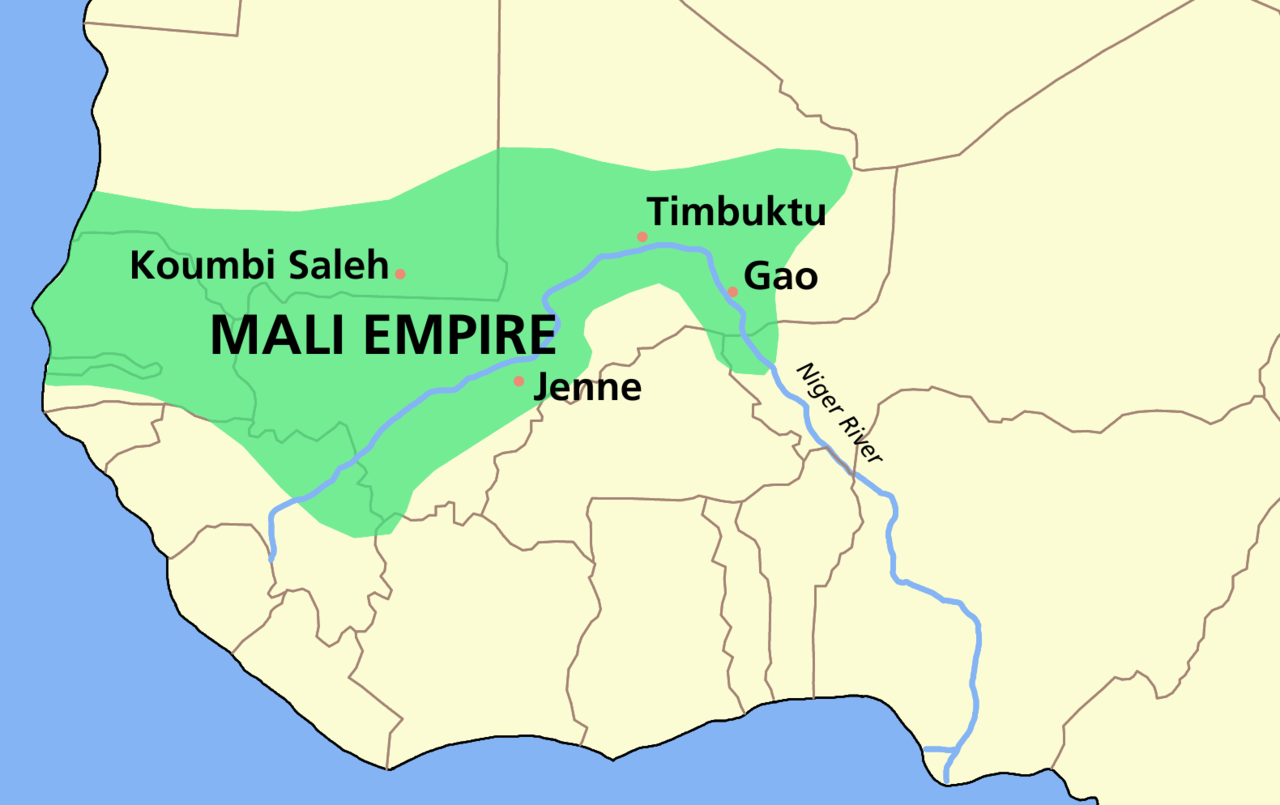
Kankan Musa was the tenth Mansa, King of Kings, or Emperor of the great Empire of Mali from 1312 to 1337. At the time of Musa’s accession to the throne, the Empire of Mali consisted of territories which had belonged to the Empire of Ghana and Melle, and surrounding areas.

Emperor Kankan Musa
Emperor Kankan Musa

His name, Kankan Musa or Kanga Musa meant « Musa, son of Kankou Hamidou », in reference to his mother (In those days, the Mandinka people were a matriarcal society). Kankan Musa is often referred to, in literature, as Mali-koy Kankan Musa, Gonga Musa, and Lion of Mali. He had lots of titles, including Emir of Melle, Lord of the Mines of Wangara, Conqueror of Ghanata, Fouta Djallon (also written Futa Jallon), and at least a dozen other areas.

Empire of Mali (Wikipedia)

He took the Empire of Mali to its peak, from the Fouta Djallon to Agadez (in northern Niger), including the ancient Ghana, and Songhai Empires. He established diplomatic relationships with Portugal, Morocco, Tunisia, and Egypt. His reign corresponds to the golden era of the Malian Empire.

Assemblée constitutive de l'empire du Mandé (Source: Wikipedia.fr)
Assemblée constitutive de l’empire du Mandé (Source: Wikipedia.fr)

Kankan Musa’s pilgrimage to Mecca made him popular in North Africa, and in the Middle East. Musa made his pilgrimage to Mecca in 1324, with a procession of 60,000 men, 12,000 servants who each carried four pounds of gold bars, heralds dressed in silks who bore gold staffs, organized horses and handled bags. Also in the train, were 80 camels, which carried between 50 and 300 pounds of gold dust each (Gold was the currency in Mali). He gave away gold to the poor along his route. Musa not only gave gold to the cities he passed on his way to Mecca, including Cairo and Medina, but he also traded gold for souvenirs. Moreover, he would also build a new mosque every Friday in any city he so happened to pass by. Musa’s journey was documented by several eyewitnesses along his route, who were in awe of his wealth and extensive procession, and records exist in a variety of sources, including journals, oral accounts and histories. Musa’s visit with the Mamluk sultan Al-Nasir Muhammad of Egypt in July 1324 is well-recorded.

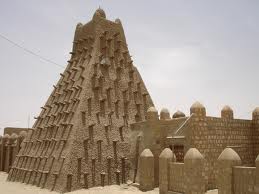
Sankore Mosque in Timbuktu

Musa’s generosity, however, inadvertently devastated the economy of the region. In the cities of Cairo, Medina and Mecca, the sudden influx of gold devalued the metal for the next decade. Prices on goods and wares greatly inflated. To rectify the gold market, Musa borrowed all the gold he could carry from money-lenders in Cairo, at high interest. This is the only time recorded in history that one man directly controlled the price of gold in the Mediterranean. Imagine a single man controlling the economy of not only one country, but of an entire region!

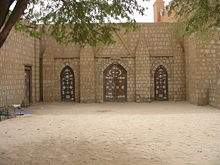
Sankore University in Timbuktu

Mansa Musa was a great builder. He had several mosques and madrasas built in Timbuktu and Gao. The most important of its constructions is the University of Sankore. In Niani, his capital, he built an Audience Hall, a building communicating directly with the royal palace through an interior door.  It was “an admirable Monument” surmounted by a dome, adorned with arabesques of striking colours. The windows of the upper floor were plated with wood and framed with silver, while those of a lower floor were plated with wood, framed in gold. This palace no longer exists. Like the Great Mosque, the Hall was built in cut stone. The Italian art and architecture scholar Sergio Domian said: “At the height of its power, Mali had at least 400 cities, and the interior of the Niger Delta was very densely populated.” Can you imagine that? In this day and age, how many countries in this world can boast 400 densely populated cities? Yet, the Mali of Kankan Musa claimed it all.

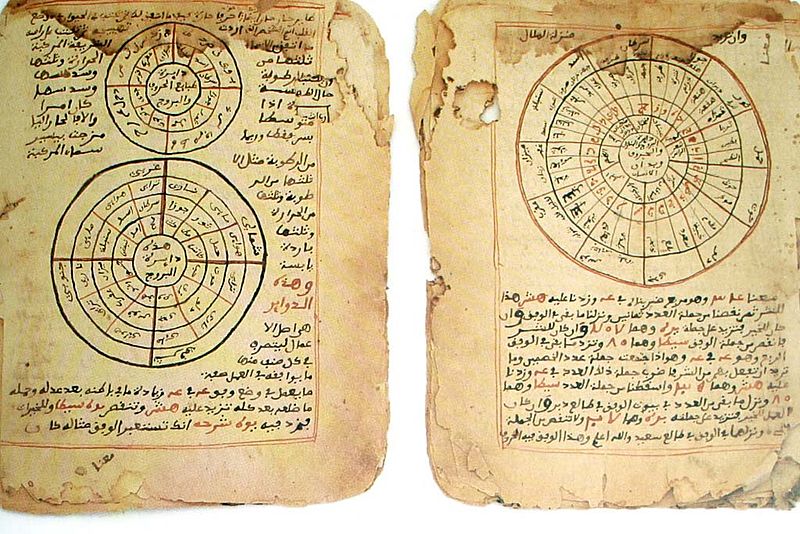
Manuscripts a Tombouctou (Mali) montrant de l'astronomie et mathematique
Manuscripts a Tombouctou (Mali) montrant de l’astronomie et mathematique

At the end of his life, in 1332 or 1337, the Empire of Mali limits were from the Atlantic Ocean to the Eastern shores of the Niger River, and to the forests of Taghaza in the middle of the Sahara. Kankan Musa was not only a rich man who gave to all, built mosques, and great places of worship, he was also a just conqueror, and a great builder. He took the Empire Mali to its peak, and made it the talk of places as far as the Middle East and Europe. Many Europeans and Middle Easterns would send delegations of architects, merchants, writers, astronomers, mathematicians and teachers, to study in his great university at Timbuktu. So next time someone asks you who was the richest man on planet earth, remember to tell them that before Bill Gates, there was Kankan Musa!