So Long to Raila Odinga, Fighter to the End for Kenyan Democracy

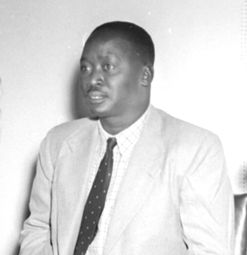
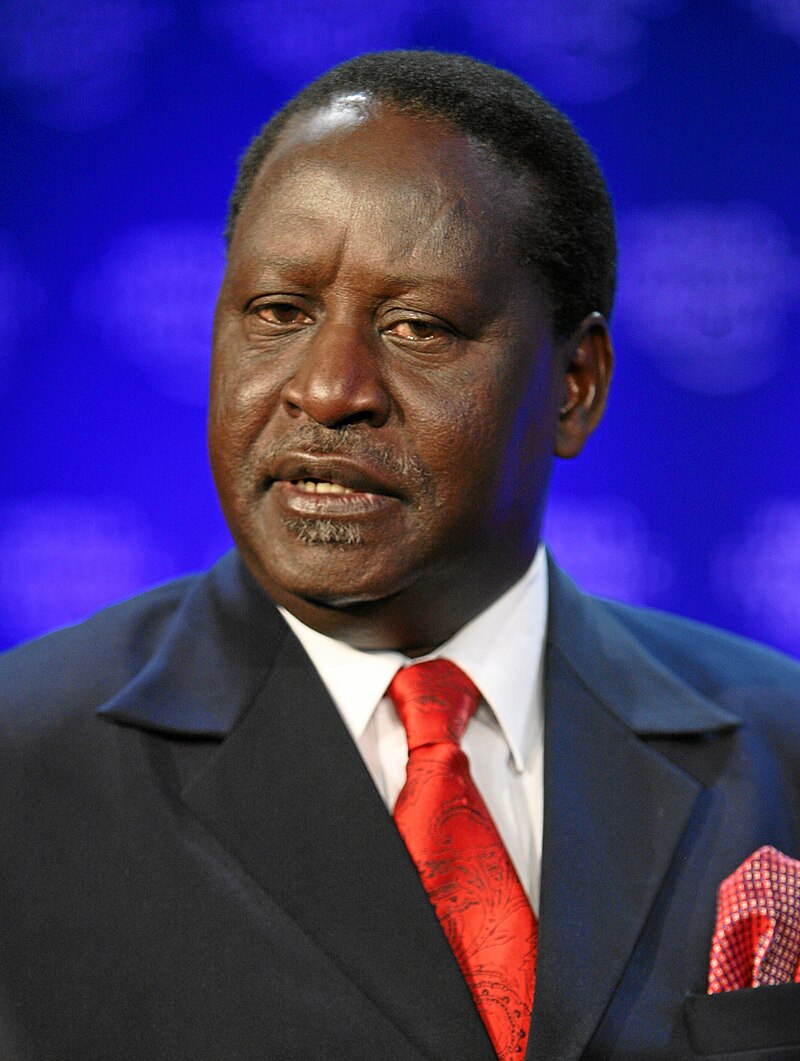
Raila Odinga (Source: World Economic Forum)

It is with sadness that we heard about the news of Raila Odinga‘s passing yesterday, on October 15th. It makes one wonder if, when one fights for the true freedom of Africa, one dies without ever getting in power? or killed in power for their principles? Is one just supposed to accompany democracy?

Raila Odinga has been a dominant unavoidable force in Kenyan politics for the past 30 years, and even longer, given that his father, Jaramogi Oginga Odinga, was the first vice-president of Kenya alongside Jomo Kenyatta, Kenya’s first president. Thus, Raila Odinga has been a baobab in Kenya’s political scene, who has always fought for the freedom and democracy in Kenya. Out of the past 5 elections, 1997, 2007, 2013, 2017, and 2022, he has always contested, has come second, and even narrowly won to the point that there have always been disputes which have gone as far as civil unrest as in 2007, when Odinga contested elections against Mwai Kibaki, which led to the biggest crisis in Kenya’s history resulting in 1200 deaths and about 600,000 people forced to flee their homes. The crisis was resolved in a peace brokering by UN Kofi Annan which saw Kibaki emerge as president and Odinga as the nation’s prime minister. After the 2017 elections, he was vindicated by Kenya’s highest court after the 2017 elections when the court annulled Uhuru Kenyatta‘s victory and ordered fresh polls; however, Odinga boycotted the run citing frauds. 

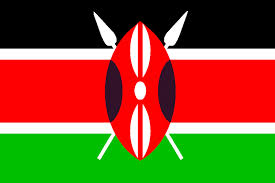
Flag of Kenya

Odinga always found a way to put peace ahead of his own person, and reconciled with the incumbent; his love for Kenyans made it hard for him to stay angry or be selfish; he always placed Kenya first. He was affectionately called “Baba” (Father), “Agwambo” (Act of God), and “Tinga” (Tractor) – drawn from his party’s symbol during the 1997 elections. He was a former political prisoner, and holds the record for being Kenya’s longest serving detainee. He was detained twice from 1982 to 1988, and 1989 to 1991 when he fought against the one-party rule of Daniel Arap Moi

Mr. Oginga Odinga, a distinguished African leader of the Kenya Colony was one on a short visit to India in March, 1953, giving a broadcast talk at the New Delhi Station of All India Radio, during his visit to the Station.

Initially, Odinga, a native of Kisumu, a city on the shores of Lake Victoria, studied engineering in East Germany before returning home in the 1970s where he taught at the University of Nairobi and started a range of successful businesses. He found his way into politics when he was linked to a failed coup against Arap Moi in 1982; accused of treason, and though the charges were later dropped, he spent most of the decade in and out of jail.

To many, he is known as the founding father of Kenya’s multiparty democracy, a master strategist, and a great mobilizer, bringing in together huge crowds and people of all walks of life. To many, Odinga had been under political persecution for his strength, and his wish for a better Kenya. After fighting for so many years, being so close all the time, with one’s victories getting stolen, how does one reconcile it in the end? Are the Western puppets always the winners, while the strong-willed true lovers of their people always second? 

So long Baba Odinga! Thank you for your love, for your great political acumen, and for your strength, never giving up over the years. You have been and remain an example for our struggle for the freedom and betterment of Africa; we will never give up and like you, never back down!!!

‘Ils Sont Venus’ de François Sengat-Kuo / ‘They Came’ by François Sengat-Kuo

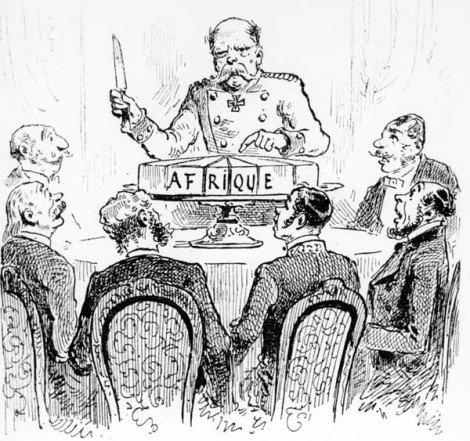
Le partage de l'Afrique a la Conference de Berlin de 1884
Le partage de l’Afrique à la Conférence de Berlin de 1884

As we talk about neo-colonialism, and the new scramble for Africa, I thought about sharing this poem ‘They Came‘ by Cameroonian writer François Sengat-Kuo published in Fleurs de Latérite, Heures Rouges Éditions Clé, 1971. I had previously shared this poem here.  In the poem, Sengat-Kuo talks about colonization and how Africans were fooled by European missionaries who were always preceding European explorers and armies.  I particularly like the sentence: “they came, … bible on hand, guns behind.” Jomo Kenyatta, first president of Kenya, said it slightly differently, “When the missionaries came to Africa they had the Bible and we had the land. They said ‘Let us pray.’ We closed our eyes. When we opened them we had the Bible and they had the land.” (Nobel Peace prize Laureate, Desmond Tutu, of South Africa, is said to have popularized the quote). How true! In the days of colonization, Europeans claimed to be bringing civilization and Christianity to pagans across the globe.  Today, they bring development, globalization, and democracy…  same ol’ thing → submission and slavery to the people.  Enjoy!

Ils sont venus

au clair de lune

au rythme du tam-tam

ce soir-là comme toujours

l’on dansait

l’on riait

brillant avenir

ils sont venus

civilisation

bibles sous le bras

fusils en mains

les morts se sont entassés

l’on a pleuré

et le tam-tam s’est tu

silence profond comme la mort


They came

by the light of the moon

to the rhythm of the tam-tam

that night as always

we were dancing

we were laughing

brilliant future

they came

civilization

bibles under the arm

guns in hand

the dead bodies piled up

we cried

and the tam-tam was silenced

profound silence like death

“Blind” by Joseph Kariuki

Broken heart

Let’s end the week with the poem “Blind” by Kenyan writer Joseph Kariuki. Trained like many of the older East African generation at the prestigious Makerere University in Uganda, Kariuki is renowned for his poem celebrating the first president of Kenya, Jomo Kenyatta, “Ode to Mzee.” Today, we will explore the poem “Blind” which in essence describes a heartbreak and the regret of having made the mistake of loving an ‘ingrate’ or more generally the wrong person. One could call it an awakening: the lover is blinded by the fires of love, and after the romance fails, realizes the deception, and that there were no reason to cry over the loss of the other, for whom one were infatuated. Although short, the poem is quite deep, as it clearly describes a failed romance and heartbreak, the ensuing sadness, and the eventual realization that one was poorly matched, and loved someone who was an ingrate, or a lousy choice for a lover. The title “Blind” fits so well with the proverb ‘love is blind.’ Enjoy! It was published in Poems from East Africa, ed. David Cook and David Rubadiri (Nairobi: East African Educational Publishers, 1971), P. 69.

BLIND by Joseph Kariuki

When you left
Without a word,
My heart wept–

Not so much
For lost love
(And a touch),

But the more
For the blinkers
Which I wore

For so long.
For so late
Did I worship
Such an ingrate?

Why the name: Nairobi?

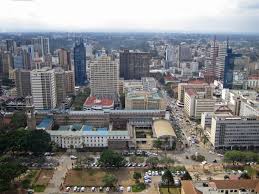
Nairobi in 2010
Nairobi in 2010

Have you ever fallen in love with a name? with a place? well… that is the feeling… when you hear the name Nairobi (the capital of Kenya) for the first time, it is like some beautiful girl you were always attracted to but could never get.  Well, the name Nairobi is quite far from that: it comes from the Maasai Enkare Nyrobi which means the place of cool waters, which is also the name for the Nairobi River which lent its name to the city.  Today, it is popularly known as the Green city in the sun… probably because of its lush-ness.

Flag of Kenya
Flag of Kenya

Nairobi hosts a natural reserve protected, the Nairobi National Park, within its borders.  It is also the capital hosting the most species of birds in the world.  Nairobi was originally built at the beginning of the 1900s as a railway link between Mombasa (on the coast of Kenya) and Kampala (Uganda) by the rail company Kenya Uganda Railway.  It was completely rebuilt in the early 1900s after an outbreak of plague and the burning of the original town.  Its location was chosen because of its central position between Mombasa and Kampala; it was also chosen because its network of rivers which could supply the British camp with water and its elevation which would make it cool for the British residential purposes.

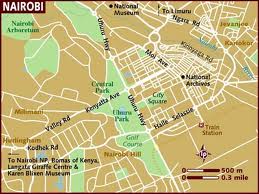
Map of Nairobi
Map of Nairobi

Nairobi from Nairobi National Park
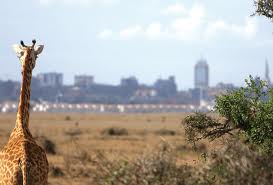
A girafe looking onto Nairobi, from Nairobi National Park

In 1905, Nairobi replaced Mombasa as capital of the British protectorate, and from then on grew tremendously around tourism, administration, and big game hunting.  Britons came to live in Nairobi for for game hunting.  In those times, the city quickly became the commercial centre for the colony’s coffee, tea, and sisal industry. Today, Nairobi is one of the most populous cities in Africa known for its beauty, for its versatility, and also for its slum Kibera.  The city of Nairobi is located on the eastern edge of the Rift valley, with the Ngong Hills located to the west of the city, and Africa’s two tallest mountains, Mount Kenya and Mount Kilimanjaro are located to the north and towards the southeast, respectively.  It was also the birthplace of Kenya’s first president, Jomo Kenyatta.

Enjoy the great Congolese singer M’Bilia Bel (she is also a beauty) singing about the beautiful Nairobi, Nakei Nairobi, a song written and composed by Tabu Ley Rochereau.

Have you ever been to Nairobi? What were your impressions?

The British Government apologizes for Mau Mau atrocities

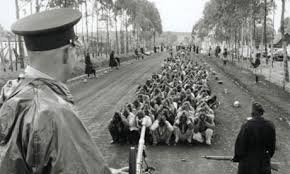
In a prison camp during the Mau Mau rebellion (Source:The Guardian)
In a prison camp in Kenya during the Mau Mau rebellion (Source:The Guardian)

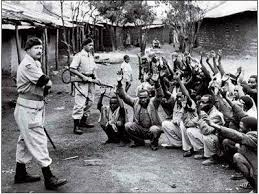
The British government finally recognized its wrong-doings in Kenya, during the Mau Mau uprising, and publicly apologized for it.  The British colonial forces thoroughly tortured and murdered thousands of people during the Mau Mau revolt against British rule in Kenya in the 1950s.  The British foreign secretary admitted last Thursday (06/06/2013) that: … ” on behalf of Her Majesty’s government, that we [the British government] understand the pain and grievance felt by those who were involved in the events of the emergency in Kenya.”… “The British government recognizes that Kenyans were subject to torture and other forms of ill-treatment at the hands of the colonial administrationThe British government sincerely regrets that these abuses took place and that they marred Kenya’s progress towards independence.”

Under British guns, during the Mau Mau rebellion in Kenya
Under British guns, during the Mau Mau rebellion in Kenya in the 1950s

So today’s surviving victims, 5228 people will receive a payment of £19.9m for compensation.  The compensation amounts to about £3,000 per victim and applies only to the living survivors of the abuses that took place.  As I read this… first I was happy that after so many years (over 60 years), the British government could finally acknowledge their atrocities in Kenya, and I think this opens the door for other colonial powers to openly recognize atrocities they perpetrated in their colonies: such as the massacre and genocides perpetrated by the French in Cameroon, Algeria, and Madagascar during the colonial era and after independence.  However, when I read the amount given to every victim, I gasped in shock: 3000 pounds per person? what is that? Is that a joke? What would £3,000 do to somebody who has been tortured, raped, and beaten to death? Would it erase the debilitating pain, and all those years spent fighting for the British to acknowledge their wrongdoings? Finally what is money compared to the pain? What is the British government doing to ensure that no such thing would ever happen again? As we know, paying quickly so that nobody bothers you is easy, but has anything been put in place for this never to occur again? Or would other citizens of the world have to fight 50 or 100 years from now for yet another apology?

Enjoy the documentary below on the Mau Mau rebellion… no amount of money can erase this! The case in court used some of the work by Harvard professor Caroline Elkins.