Niger Leads the Way and Leaves the ICP

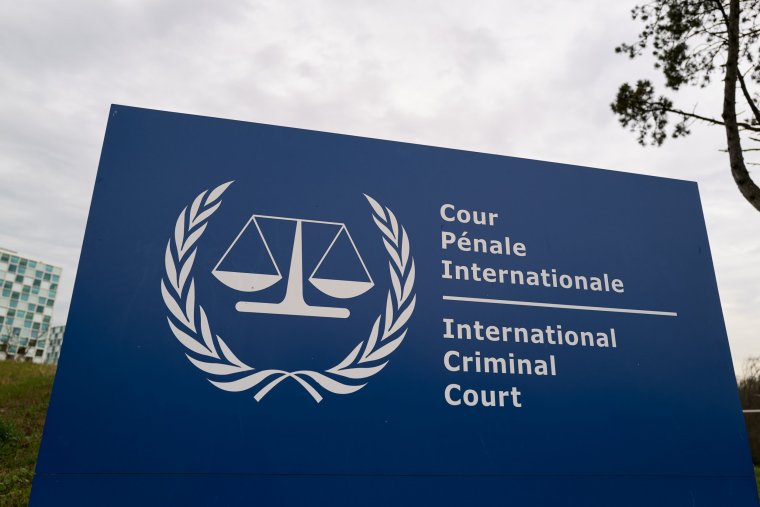
The International Criminal Court in the Hague (Source: inews.co.uk)

At last, another African country leaves that racist and prejudicial institution that is the International Criminal Court of Justice. It is no secret that the ICC only indicts mostly African leaders: Joseph Kony of Uganda, Laurent Gbagbo and Charles Blé Goudé of Côte d’Ivoire, Charles Taylor of Liberia, Jean-Pierre Bemba of the Democratic Republic of Congo (DRC), Omar al-Bashir of Sudan, Uhuru Kenyatta and William Ruto of Kenya, Muammar Gaddafi of Libya, and the list goes on. Out of the 17 situations currently under investigations by the ICC, 10 of them are on African countries. Since the ICC’s creation in 1998 up until around 2021, 100% of people indicted by the ICC were Africans, while today 60 – 75% of those indicted are Africans. In view of this, it would seem as if there is only one continent on planet earth: Africa! and the ICC only sees crime in Africa! The ICC has an African bias! I am not saying that some of these people do not deserve to be judged, but when we compare to leaders around the world who have committed major atrocities or authorized horrendous things, why are they not at the ICC too? Why the bias?

Flag of Niger

Today, Niger is the third country to leave the ICC joining the Philippines and Burundi. It is about time! Niger has accused the ICC of selective justice. In a letter submitted on Monday to the United Nations, another organization which only serves the West, Niger’s authorities said “While the court had raised great hopes among peoples who cherish peace and justice, it has been misused and exploited.” We, Africans, should leave all these institutions that devalue us, and serve those who continue looting our continent with impunity. Shouldn’t we strengthen our own judiciary systems to handle our very own matters? Why should we let some people located thousands of kilometers in some of the countries that are often bombing us like in the case of Libya, judge our leaders? How fair could they possibly be?

Excerpts below are from Yahoo.News

=====

Niger has officially submitted its request to withdraw from the International Criminal Court (ICC), nine months after announcing its intent to leave.
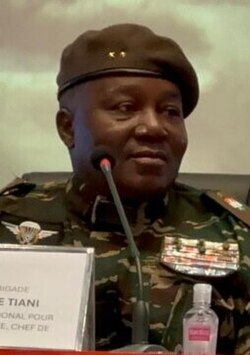
President Abdourahamane Tiani of Niger

In September 2025, Niger, along with allies Mali and Burkina Faso – which are all under military rule – issued a joint statement saying they would not recognise the ICC’s authority, calling it an “instrument of neo-colonialist repression“.

The court said it had received an “instrument of withdrawal” on 18 June, according to a statement seen by the AFP news agency. Withdrawal takes effect one year after notification. The ICC added that Niger must honour its obligations to the court until that date. The ICC – based in The Hague in the Netherlands – was set up in 2002 to pursue cases of genocide, crimes against humanity, war crimes and aggression.

The court’s statement on Tuesday did not make any mention of Mali or Burkina Faso.

When announcing their withdrawal, the three Sahel states said they wanted to set up “indigenous mechanisms for the consolidation of peace and justice“.

Who/What did we Celebrate in Africa in 2018

Who or what did we celebrate in 2018 in Africa. Here are 10 people, events and things, which marked the year 2018 (if there are some other you would like to share, please send them in):

Zewde_Ahmed
Sahle-Work Zewde, Ethiopia’s first female president, with the Prime minister Abiy Ahmed, on the day she was elected

1. Abiy Ahmed Ali became prime minister of Ethiopia this year, and brought in a wave of new measures. He is particularly noted for ending decades of border disputes between Eritrea and Ethiopia, bringing in the 2 sisters back together, releasing thousands of political prisoners and for having half of his government made up of women, some in key positions including the ministry of defense.

2. Ethiopia welcomed its first female president in the person of Sahle-Work Zewde. Mrs. Zewde was unanimously elected president by members of the Federal Parliamentary Assembly on 25 October 2018. Sahle-Work’s appointment makes her the first female Ethiopian head of state since Empress Zewditu.

3. Peace between Eritrea and Ethiopia. Peace at last with the end of the border dispute in June and July of this year, marking the end to decades of tension between the 2 sisters.

4. The release from jail of Simone Gbagbo. The former first lady of Côte d’Ivoire was released on 8 August 2018, after 7 years in prison. We are so grateful; it took us 7 years, but Simone is free at last. Free at Last: Simone Gbagbo Liberated.

Mukwege
Denis Mukwege, 2018 Nobel Peace Prize winner

5. First person of Somali descent elected in American congress, Ilhan Omar.On November 6, 2018, Omar became the first Somali American elected to the United States Congress, representing Minnesota’s 5th congressional district

6. The Nobel peace was attributed to the Congolese doctor Denis Mukwege, for saving women victims of war in the Great Lakes region in the Democratic Republic of the Congo.  Mukwege is a Congolese gynecologist and Pentecostal pastor, who founded and works in Panzi Hospital in Bukavu, where he specializes in the treatment of women who have been raped by armed rebels. His work was recognized with the 2018 Nobel Peace Prize.

7.  Jean-Pierre Bemba, Congolese politician who had even won the presidential elections, has been released from jail at the International Criminal Court, after almost 10 years at the Hague. Many believe he was released because he was better contender for the presidency of the Democratic Republic of the Congo against Joseph Kabila or anybody chosen by  Kabila.

8. The new Secretary General of Organisation internationale de la Francophonie (OIF) is a lady from Rwanda,  Louise Mushikiwabo; she comes after the Haitian-Canadian Michaëlle Jean. Mrs. Mushikiwabo becomes the first African woman to serve as president of the francophonie.

MCN_2
Musee des Civilisations Noires (MCN) in Dakar, Senegal

9. Senegal inaugurated its Museum of Black Civilizations (Musée des Civilisations noires (MCN)) in Dakar: Senegal unveils Museum of Black Civilizations, and Sprawling Museum of Black Civilizations Opens in Senegal. Senegal, like many other African countries, would like the restitution of all the looted African arts taken by Europeans and still hosted in European museums.

10. Not sure whether to applaud this or not: Major museums across Europe have agreed to loan important artifacts back to Nigeria for a new museum the country plans to open in 2021 (Europe’s Largest Museums to “Loan” Looted Benin (Nigerian) Artifacts back to Nigeria). How someone can loan you something they stole from you is beyond me! They should just return it!