George Washington Williams: The Man Who Exposed King Leopold II for his Crimes Against Humanity in Congo

George Washington Williams

The world came to know the truth about King Leopold II, the Belgian King who killed millions of Congolese, thanks to George Washington Williams, an African American missionary, lawyer, and writer, who visited the Congo. It is said that King Leopold II must have executed and maimed over 15 million Congolese people!

Painting of George Washington Williams addressing the Ohio State Legislature. Williams was the first African-American elected to the Ohio State Legislature, serving one term 1880 to 1881 (Source: Ohio Statehouse, Wikipedia)

George Washington Williams is an unsung hero who in today’s terms would be called a whistle blower. He was born free in 1849 in the state of Pennsylvania in America to free African American parents. He ran away at an early age and served in the Union Army during the Civil War. He was an American soldier, historian, Baptist clergyman, politician, lawyer, and lecturer. He served in the Ohio General Assembly from 1880 to 1881, becoming the first African American to be elected to the Ohio State Legislature. He was the first person to write an objective, researched history of Blacks in America. His first book, History of the Negro Race in America (1882), is one of the most important contributions any American has made to the field, as he showed African American participation and contributions from the earliest days of the colonies. He wrote other books on the history of the United States Colored Troops and African-American participation in the American Civil WarA History of Negro Troops in the War of Rebellion (1887).
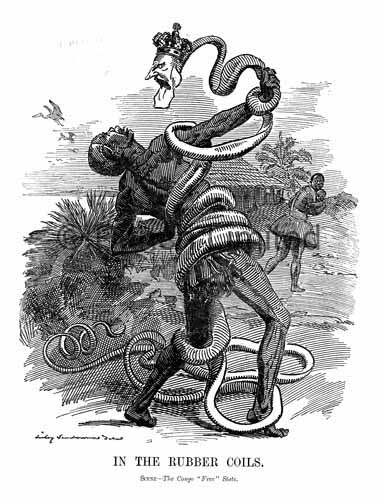
In The Rubber Coils. Scene - The Congo 'Free' State" Linley Sambourne depicts King Leopold II of Belgium as a snake entangling a congolese rubber collector
In The Rubber Coils. Scene – The Congo ‘Free’ State” Linley Sambourne depicts King Leopold II of Belgium as a snake entangling a congolese rubber collector

In the late 1880s, after meeting King Leopold II of Belgium in Europe and being impressed by his ‘benevolent enterprise’ in the Congo, Williams traveled to the Congo Free State, then a property of the King, in 1890. He was shocked by the widespread brutal abuses, atrocities, forced labor, torture, murder, kidnapping, physical mutilation, and slavery imposed on the Congolese for the rubber quota. The king employed a private militia to enforce rubber production, back then rubber was like gold. What Williams witnessed was so outrageous that he wrote “An Open Letter to His Serene Majesty Leopold II, King of the Belgians and Sovereign of the Independent State of Congo” on July 18, 1890 about the suffering of the Congolese people. In his letter, he used the term “crimes against humanity,” term used for the first time, and it became a catalyst for an international outcry against the brutality of King Leopold II. He followed the open letter by “A Report Upon the Congo-State and Country to the President of the Republic of the United States.” In the letter, he mentioned the role played by explorer Henry Morton Stanley in deceiving and maltreating the local Congolese; to think that some places were even named after Stanley such as Stanleyville – now Kisangani and Stanley Falls – now Boyoma Falls! Williams reminded the King that the crimes committed were all committed in his name, making him as guilty as the perpetrators. He appealed to the international community of the day to “call and create an International Commission to investigate the charges herein preferred in the name of Humanity …“.

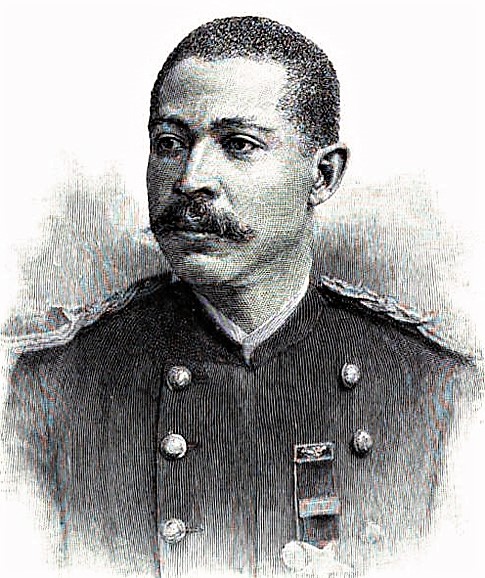
George Washington Williams (Source: Wikipedia)

Like with all whistle blowers in history, King Leopold II and his supporters tried to discredit Williams, but Williams continued to speak out about the abuses in the Congo Free State, helping to generate actions in Belgium and the international community.  Unfortunately, George Washington Williams died just a year after, in 1891, while traveling from Africa to England. However, the seeds he planted with his open letter led the Belgian government to take over supervising the Congo Free State and to try to improve treatment of the Congolese. The Congo Free State was then reconstituted as a new territory, the Belgian Congo, which as history goes did not fare much better.

100 years later, the successor to Leopold II, Belgian King Expressed ‘Deepest Regrets’ for Colonial Past in Congo, and two years later, King Philippe of Belgium’s Visited the Democratic Republic of Congo (DRC). Today, not much has changed in Congo: armed thugs still run the place, people are still brutalized and enslaved, fortunes are still being made by international corporations. Back then it was rubber, today it is coltan, gold, cobalt,  diamonds, and much more. The Geological Scandal that is the Democratic Republic of Congo (DRC), and Congo is still at the heart of the New Scramble for Africa.

Check out these websites: Leopold IIWhen you kill 10 million Africans you aren’t called Hitler, and this article from The Guardian. To learn more about George Washington Williams, read out from the Ohio Statehouse, PostNews, and We’re History.  Immense thanks to John Hope Franklin, who wrote the biography of George Washington Williams restoring his place in history, Franklin, John HopeGeorge Washington Williams: A BiographyChicagoUniversity of Chicago Press, 1985; Reprint, Durham, N.C.Duke University Press, 1998.

Mirambo: the Black Napoleon

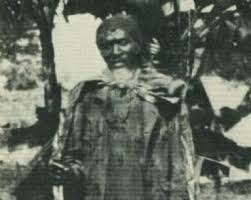
Mirambo, towards the end of his life

Today, I will talk about Mirambo, the man the explorer Henry Morton Stanley first referred to as a bandit, and later on as the Napoleon of Africa for his military prowess.  Who was Mirambo?

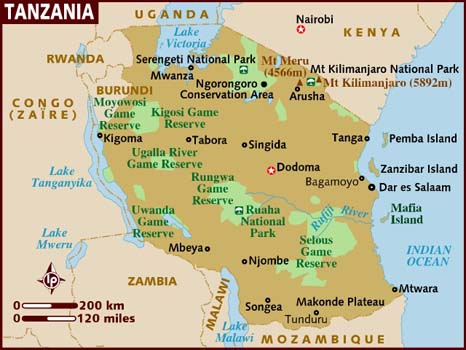
Map of Tanzania
Map of Tanzania

Born Mbula Mtelya, Mirambo is the man who revolutionized nineteenth century Tanzania, and made it hard for the Germans to conquer the region: he united the numerous Nyamwezi tribes, and gained control over Swahili-Arab trade routes.  Mirambo was the leader of the Nyamwezi people on a 200,000 km2 territory south of Lake Nyanza (Lake Victoria), and east of Lake Tanganyika.  He was not a vulgar chief of brigands as the Arab traders made Stanley believe in 1871, but his links to different families of Ntemi (kings) were a little bit blurred as many historians had mixed up dynastic and genealogical lineages, different in a matrilineal system such as that of the Nyamwezis.  In 1858, Mirambo managed to inherit the chiefdom of Uyowa from his father, Kasanda, who was a renowned warrior; he was only 18 years old.  In 1860, he joined two chiefdoms located 100 km west of Tabora, in the kingdom of Unyanyembe.  He learned the Ngoni language (Ngoni people trace their origin to the Zulu people of KwaZulu Natal), as well as their military techniques.  Later in 1860, he conquered the neighboring territory of Ulyankuru.

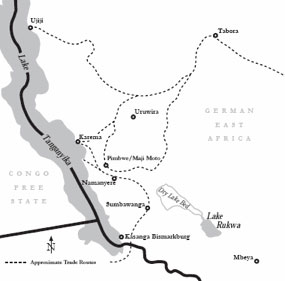
Map of Mirambo's kingdom
Map of Mirambo’s kingdom

He then moved his capital to Iseramagazi where he built a Boma, a fortified residence, with walls made up of dry bricks, retrenchments and hedges of euphorbia flowers.  From his father and mother, he was a descendent of Mshimba (lion), the last ruler of the legendary kingdom of Usagali, and Mirambo was thus recreating the old empire.  Thus in 1860, he created a new Nyamwezi state, the Urambo, from the name he had adopted for himself, ‘corpses‘ in kinyamwezi, Mirambo.  From 1860 to 1870, he strengthened his authority along the banks of the river Gombe, i.e. on the road to Ujiji, thereby threatening to block the Arab commerce in the area.  In 1871, he defeated the Arab traders at Tabora.  The Sultan of Zanzibar, Barghash bin Said, retaliated by sending 3000 soldiers (2000 Swahili, and 1000 Balutchi).  Mirambo’s resistance was one of the most fierce: Nyamwezi’s fighters would go as far as melting their copper bracelets to make bullets for their guns.  A compromise was made to keep commerce flowing with the coast: caravans could pass after paying a tax (hongo) to Mirambo.

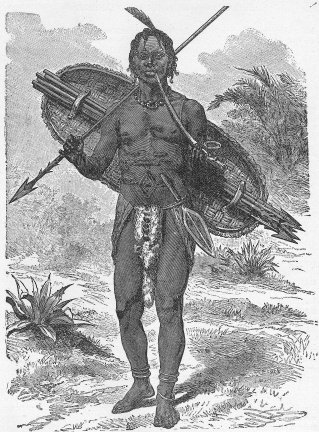
Illustration of the Ntemi of Urambo, Mirambo (from James William Buels Heroes of the Dark Continent (1890))

Every year, during the dry season, Mirambo would dispatch his ruga-ruga in all directions to continue the expansion of his territory.  From 1876 to 1878, the territory was expanded to the north, up to the southern banks of Lake Victoria.  From 1879 to 1881, expansion to the west toward Uvinza, for the control of Lake Tanganyika.  The Muhambwe of King Ruhaga fell under Nyamwezi domination, and the Ruguru of King Ntare had to seek protection from Mirambo and agree to the presence of a ruga-ruga post on the eastern border of his kingdom.  In 1879, there was also the expansion towards Burundi.  His alliance with the Ngoni fell apart in the early 1880sHe was greatly hated by the Arabs who used to dominate the commerce in the region, and other neighboring kings who feared him, and the Europeans who saw in him as a powerful adversary.  After 1881, the Arabs managed to convince the International African Association (AIA – Association Internationale Africaine), a European power created under King Leopold II’s initiative to inflict an embargo on arms and munitions on Mirambo (yup… European unions already inflicted embargo on arms back then).  The goal of the AIA was to “open up central Africa to civilization.”  At first Mirambo’s army succeeded in entering Burundi by surprise using a feud between the local king and his brother, but in 1884, his army was defeated by Burundi warriors (aided by Ngoni warriors).  After his defeat in Burundi, and another defeat against the alliance of the Arabs and the Ntemi of Bukune, Mirambo’s troops were led by Mpandashalo as he was increasingly sick.  Mirambo died on 2 December 1884.

Flag of Tanzania
Flag of Tanzania

Mirambo was a strong and ambitious leader.  He expanded his authority and influence over a number of Nyamwezi chiefs.  One of his challenges was to devise a political system that would allow him to consolidate his power, while ever expanding his territory.  For that, he made sure not to change the structure of the Nyamwezi’s society: once in power, he would usually choose a successor from the same family.  As long as the new chiefs pledged allegiance to him, they would be left to go about their political duties.  The conquered chiefs had to provide troops at all times.  His greatest strength was military.  He used surprise as a tactical ployHis capital was both a military and economic center.  He had two residences: Iseramagazi from 1879, and Ikonongo from 1881.

Mirambo was actually a simple man, deeply rooted in his culture and traditions, but also very curious of the world.  He was a man of order and progress, who will set the price of commodities in the capital’s markets, and regulated the consumption of alcohol in his kingdoms (he thought that alcohol weakened societies – just like Gungunyane), and meditated on the decadence of Africa in the 19th centuryHe was nostalgic of the magnificent ancient African capitals, and kingdomsIn essence, Mirambo had 4 faces: the traditional king, the warrior leader, the state builder, and the modernizer. To learn more, go to: ThinkAfricaPress.com, BlackPast.org, and Les Africains, Vol. 6, editions J.A, C.-A. Julien, P. 127-157, (1977).

Why the name: Kinshasa?

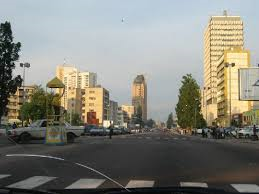
Boulevard of 30 June, in Kinshasa

Today I would like to talk about Kinshasa, the capital and largest city of the Democratic Republic of the Congo (DRC).  It is located on the Congo River, which happens to be Africa’s largest river, the deepest river in the world, and the third largest in the world by the volume it discharges.  Kinshasa is a city of over 9 million inhabitants and directly faces Brazzaville, the capital of the Republic of the Congo: these two sister cities are separated only by the river Congo (the only place in the world where two capitals of two countries face each other). Residents of Kinshasa are known as Kinois.

When did it all start? Well, Kinshasa was founded in 1881 as a trading post by the explorer Henry Morton Stanley who named it Leopoldville in honor of the Belgian king Leopold II, who controled the immense territory of DRC as his private property and not just as a colony.  Prior to 1920, all goods arriving by sea in Congo were carried by porters from Matadi (the main port city of Congo), and Leopoldville over 150 km from the coast.  From 1886 to 1926, Boma (located on the Congo estuary) was the capital of the Belgian Congo; but after 1926, Leopoldville became the capital.

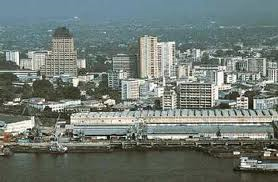
Kinshasa, seen from the Congo river

In 1965, Joseph-Desire Mobutu who had risen to power after coups d’etat against Patrice Lumumba in 1960, and a second one in 1965,  renamed the city Kinshasa in an effort to africanize the names of the people and places in the country.  Kinshassa was the name of a village which used to be near the site of the present city.  In Kikongo, Kinshasa means “the salt market“:nshasa = salt” and locator ‘ki‘.

The region of Pool Malebo, where Kinshasa is located, has been inhabited since at least the first millenium before our era.  However, before colonization, different Bantu groups have occupied the area.  During the 16th and 17th centuries, the region of Pool Malebo became a major commercial hub between the river basin and the coastal regions.  The Bobangis (also called Bangala, or people of the river) managed the major part of the commerce with the equatorial forest by navigating the river up to the Téké villages of Pool.  During the 18th and 19th centuries, more villages develop themselves in the area, which became known as the Batéké plateau.  The principal Téké villages were Nsasa with almost 5,000 inhabitants, and Ntambo with at least 3,000.  By the time Henry Morton Stanley reached the area on 12 March 1878, the region was already home to 66 villages, and a total population of over 30,000 inhabitants.  Stanley chose this location as it was the area where the Congo river became navigable.

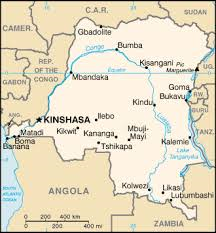
Map of the DRC
Map of the DRC

By the time the city changed its name from Leopoldville to Kinshasa in 1966, the city rapidly grew due to rural exodus of people coming from all parts of the country in search of a better life.  In 1974, Kinshasa hosted ‘The Rumble in the Jungleboxing match, a historic match between Muhammad Ali and George Foreman, in which Ali defeated Foreman to regain the World Heavyweight title.  This has been one of Ali’s most famous matches: if you watch the movie Ali, you can see scenes of Kinshasa there.

Situated in an area belonging to the Batéké and Bahumbu people, the lingua franca of the city is the Lingala, while the administrative language is French.  Kinshasa is also a province of DRC (a bit like the district of Columbia in the US), and is the second largest francophone city in the world, after Paris.  Its current population is 9 million inhabitants, making it Africa’s second largest cities after Lagos in Nigeria.  Please check out the website for the city of Kinshasa, and Kinshasa-Congo travel to learn about the great city of music and art; I also liked the blog kosubaawate which goes through the evolution of Kinshasa then and now (i.e. before independence and now).  Enjoy the video below which I enjoyed for its quality, music, and of course its great content.