Strategies to Destabilize a Country : the Case of Guinea

Sekou Toure, Cover Time Magazine, Feb. 16, 1959

The Guinea of Sekou Toure was the first country to say ‘NO’ to the General de Gaulle. Sekou Touré, proud descendent of one of the great African leaders who fought colonialism, Samori Touré, said, on 25 August 1958, Sekou Touré said: “Il n’ya pas de dignité sans liberté. Nous préférons la liberté dans la pauvreté à la richesse dans l’esclavage.” [There is no dignity without freedom. We prefer freedom in poverty to wealth in slavery].

After Sekou Toure said ‘No‘, De Gaulle did not take it lightly and reacted harshly to crush the new Guinean state, and ensure that no other African countries followed the Guinean example.  The Washington Post back then, observed how brutal the French were in tearing down all what they thought was their contributions to Guinea: “In reaction, and as a warning to other French-speaking territories, the French pulled out of Guinea over a two-month period, taking everything they could with them. They unscrewed light bulbs, removed plans for sewage pipelines in Conakry, the capital, and even burned medicines rather than leave them for the Guineans.” Imagine that, they unscrewed light bulbs! It is said that they even poured cement on water pipes!… the French reacted like a really angry boyfriend who had been thrown out.
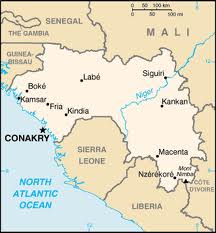
Guinea-Conakry
Guinea-Conakry

Maurice Robert, head of the African cell for the Service de documentation extérieure et de contre-espionnage (SDECE), France‘s external intelligence agency from 6 November 1944 to 2 April 1982 said in an interview, « Nous devions déstabiliser Sékou Touré, le rendre vulnérable, impopulaire et faciliter la prise du pouvoir par l’opposition. Une opération de cette envergure comporte plusieurs phases : le recueil et l’analyse des renseignements, l’élaboration d’un plan d’action à partir de ces renseignements, l’étude et la mise en place des moyens logistiques, l’adoption de mesures pour la réalisation du plan. Avec l’aide d’exilés guinéens réfugiés au Sénégal, nous avons aussi organisé des maquis d’opposition dans le Fouta-Djalon. L’encadrement était assuré par des experts français en opérations clandestines. Nous avons armé et entraîné ces opposants guinéens pour qu’ils développent un climat d’insécurité en Guinée et, si possible, qu’ils renversent Sékou Touré. Parmi ces actions de déstabilisation, je peux citer l’opération Persil, par exemple, qui a consisté à introduire dans le pays une grande quantité de faux billets de banque guinéens dans le but de déséquilibrer l’économie. » [“We had to destabilize Sékou Touré, make him vulnerable, unpopular and facilitate the seizure of power by the opposition. An operation of this scale involves several phases: the collection and analysis of information, the development of an action plan based on this information, the study and implementation of logistical means, the adoption of measures to implement the plan. With the help of Guinean exiles who had taken refuge in Senegal, we also organized opposition groups in Fouta-Djallon. Supervision was provided by French experts in clandestine operations. We have armed and trained these Guinean opponents so that they develop a climate of insecurity in Guinea and, if possible, overthrow Sékou Touré. Among these destabilizing actions, I can cite Operation Persil, for example, which consisted of introducing a large quantity of counterfeit Guinean banknotes into the country with the aim of unbalancing the economy.”]
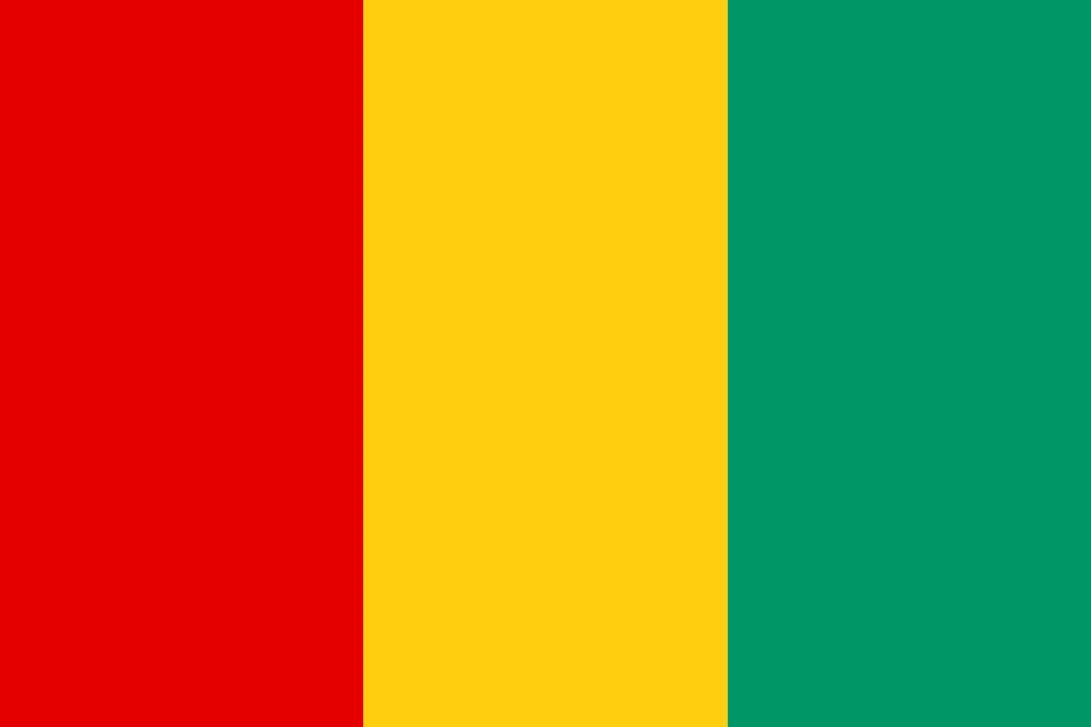
Flag of Guinea

Thus, the strategies to destabilize Guinea were, among others, 1) Make Sekou Toure weak and impopular by financing and arming his opponents; 2) using exiled Guineans in neighboring Senegal, training them militarily to create zones of insecurities in the country to eventually topple off Sekou Toure’s government; 3) economically weaken the country by using fake currency.

There are numerous examples of how these strategies were used in recent years: in Cote d’Ivoire during the presidency of Laurent Gbagbo with the armed rebellion financed from external forces, terrorist forces’ attacks in the AES countries, and much more…

Africa: Think Ahead, Strategize!

Charles Onana

A few years ago, after the horrors of the electoral crisis in Cote d’Ivoire and the bombing of its presidential palace with the capture of President Laurent Gbagbo and First Lady Simone Gbagbo, I watched a video interview of the Franco-Cameroonian journalist Charles Onana who was talking about his book “Côte d’Ivoire : le coup d’État, Duboiris, 2011 (with a preface by Thabo Mbeki).” At the end of the interview, Onana stated, “… Quand vous avez un pays riche qui est convoité par des multinationales, par des groupes mafieux, par des états, etc, vous devez décupler votre intelligence pour défendre votre pays. … En face vous avez des équipes de think-tanks qui sont là pour penser comment destabiliser le pays, donc les Africains ne peuvent pas faire l’économie d’un travail acharné, d’un travail surhumain pour s’en sortirPendant que la crise se calme ou s’apaise, les autres continuent de travailler pour vous destabiliser, ils refléchissent à d’autres stratégies, mais il faut que [les Africains] apprennent à refléchir à differentes stratégies de manière à ce que le Président de la République ne se retrouve pas toujours seul à penser à tout, seul à reflechir à tout, …” [When you are a rich country that is coveted by multinationals, by mafia groups, by states, etc, you must increase your intelligence tenfold to defend your country. …  On the other side, you have think-tank teams that are thinking ways to destabilize the country, so Africans cannot avoid hard work, superhuman work to be freeWhen the crisis calms down or subsides, others continue to work to destabilize you, they think other strategies, but Africans too need to think different strategies so that the President of the Republic does not always find himself thinking not the only one think all by himself, …]

The New Scramble for Africa (Source: Source: Dr Jack & Curtis for City Press, National Institute African Studies (NIAS))

With the New Scramble for Africa, African countries should have think-tanks, the enemy has think-tanks strategizing over decades, how come we, Africans, do not? Even in times of peace, we should be strategizing… as we heard the French general, it is clear that they are already planning the defeat of Africa, and the return of Africans into their fold in 10 years… how come? When Sekou Toure said NO to the General De Gaulle and Guinea gained independence, not only were the French busy destabilizing his regime politically, militarily, arming his local opponents, but they even flooded his economy with fake currency to destroy his own free Guinean Franc (as he had said NO to the slave currency that is FCFA); the attacks were non stop for several decades, and honestly, are still going on. Thus, Africans, we need to gain our independence, and for our independence to be complete, we need to have strategies for the immediate day-to-day events, but also long-term, over 20-50 or even 100 years. It took China 100 years to get back Hong-Kong and Macau from Great Britain and Portugal… that happened because of a clear vision and strategy of defense against the enemy and reclaiming of lands.

Mali – Burkina Faso – Guinea Agree to form a Tri-Country Axis

Map of Mali with its capital Bamako

It is no secret that 14 African countries today are still under the French colonial tax (The 11 Components of the French Colonial Tax in Africa), and that every year, France takes home upwards of 500 billion dollars (Africa is funding Europe!) from its currency imposed upon those countries. After all, France has no gold mines on its soil but yet is the 4th world producer of gold, gold coming from Mali, while Mali is among the world’s poorest countries on the planet. It is also no secret that Mali has been trying to free itself from this colonial tax (The French Colonial Tax at the Heart of Mali-France Tensions), and has been working tirelessly to revoke at least 8 of the 11 rules. With the unrest in Burkina Faso brought by the Jihadists from the north who were well protected by the French army brought in to protect Burkinabe interests, but who instead have created further unrest in the area, it is no surprise that Burkina Faso has joined forces with Mali, and now Guinea, to create a strategic axis which will focus on military and trade agreements between the 3 countries. Although we do not particularly trust the Guinean leader, we applaud the union between the two brothers Mali and Burkina Faso, faced with sanctions from the puppet organization that is ECOWAS. We also applaud this ‘federation’ which will give Mali and Burkina Faso access to the sea via Guinea, thus opening up these land-locked territories to further trade. Enjoy excerpts below from the People’s Dispatch; check out also the write-up on AfricaNews.

Like Thomas Sankara said, “La patrie ou la mort, nous vaincrons!

====

Burkina Faso
Burkina Faso

The three West African countries, all of whom have recently undergone military takeovers amid rising public anger against France, have agreed to a Bamako-Conakry -Ouagadougou axis, with enhanced cooperation on matters ranging from trade to the fight against insecurity.

As France is getting ready to withdraw its troops from Burkina Faso by the end of the month, signs of a possible realignment in the region are emerging with a tripartite meeting between the foreign ministers of Burkina Faso, Mali, and Guinea—Olivia Ragnaghnewendé, Morissanda Kouyate, and Abdoulaye Diop—held in Burkina Faso’s capital Ouagadougou on February 8 and 9.

The leaders discussed a range of issues, “in particular the success of the transition processes leading to a return to a peaceful and secure constitutional order,” and, importantly, the “revitalization of the Bamako-Conakry-Ouagadougou axis” to make it a “strategic and priority area” on matters including trade and economic exchanges, mining, transport, roads and railway links, and the “fight against insecurity.”

Guinea-Conakry
Guinea-Conakry

The communique issued following last week’s tripartite meeting condemned the “mechanical imposition of sanctions which often fail to take into account the deep and complex causes of political change,” adding that these measures “affected populations already battered by insecurity and political instability,” “undermine sub-regional and African solidarity,” and “deprive ECOWAS and the AU of the contribution of the three countries needed to meet their major challenges.”

While calling for “technical, financial, concrete, and consistent support” for security efforts and the return to a normal constitutional order, the three countries have agreed to “pool their efforts and undertake joint initiatives for the lifting of the suspension measures and other restrictions.”

Sekou Touré: Vive l’Indépendance (Time Magazine 16 Feb. 1959)

Sekou Toure, Cover Time Magazine, Feb. 16, 1959

I had to share with you this Feb. 16, 1959 Time Magazine gem of an article on President Sekou Toure of Guinea, the first country to say ‘NO’ to France. As you will see, even the so-called ‘dictators’ of the world have graced the cover of Time Magazine when they were still ‘deemed’ good. Some of the article is a bit a mockery of Africans for wanting independence from their colonial masters, as it is referred to as ‘haste’ in the article (could you really have faulted Africans for wanting freedom?). Enjoy! The full article can be found at: WebGuinee.net. Below are a few words.

==============

Finally, Sékou Touré, 37 President of the new Republic of Guinea, a trim figure in a European busine suit, rose and raised his arm.
Vive l’indépendance!” he shouted, and three times the crowd roared back, “Vive l’indépendance!” “Vive l’Afrique!” he shrieked in a voice close to frenzy. Once again, the cry was three times repeated. There was no reason for Touré to do more. The crowd had seen and heard him, and that was enough.

Guinea-Conakry
Guinea-Conakry

Broad-shouldered and handsome. Sékou Touré is as dynamic a platform performer as any in all Black Africa. He is the idol of his 2,500.000 people, and the shadow he casts over Africa stretches far beyond the borders of his Oregon-sized country. As the head of the only French territory to vote against De Gaulle‘s constitution and thus to choose complete independence, he has been suddenly catapulted into the forefront of the African scene. ….

Part dedicated idealist and part ruthless organizer-perhaps the best in Black Africa-Guinea’s Touré should have problems enough just coping with the disruption that inevitably came with independence. But he, too, has dreams as wide as a continent. “All Africa,” says he, “is my problem.”

Samori Toure holding the Coran

In a sense, he was born in the right place and with the right ancestry to favor a big role. Though Africa was, until the Europeans came, the continent that could not write, it had known its times of glory. Guinea was once part of the powerful Mali Empire that stretched from the French Sudan, on the upper reaches of the Niger, to just short of West Africa’s Atlantic Coast. When its 14th century ruler, the Mansa (Sultan) Musa, made his pilgrimage to Mecca, he traveled with a caravan of 60,000 men, and among his camels were 80 that each bore 300 lbs. of gold. … he turned the fabled city of Timbuktu into a trading center and a refuge for scholars.   … But the legend lived on of the warrior Samory, whom Sékou Touré claims as his grandfather.

Sekou Toure
Sekou Toure, one of Samori Toure’s grandson

When De Gaulle stopped off at Conakry on his swift tour of Africa before the referendum, Touré thundered in his presence: “We prefer poverty in liberty to riches in slavery.” Angrily, De Gaulle canceled a diner in time he was to have had with Touré, and the split was final. A few weeks later, 95% of the people of Guinea voted no to the De Gaulle constitution.


“Ôde à la Guinée” de Aimé Césaire

Aimé Césaire
Aimé Césaire

Aimé Césaire, le grand écrivain et poète Martiniquais, présente ici son Ôde à la Guinée… ce chant qui s’élève et embrasse la Guinée, ce pays si cher qui était le premier en Afrique francophone à reclamer son indépendance à la France, ce pays-là qui nous a montré à tous Africains, que comme disait si bien Sékou Touré: ‘nous préférons la pauvreté dans la dignité à l’oppulence dans l’esclavage.‘ C’est bien pour cela que Aimé Césaire a chanté pour la Guinée!

=========

Ôde à la Guinée

Et par le soleil installant sous ma peau une usine de force et d’aigles
et par le vent sur ma force de dent de sel compliquant ses passes les mieux sues
et par le noir le long de mes muscles en douces insolences de sèves montant
et par la femme couchée comme une montagne descellée et sucée par les lianes
et par la femme au cadastre mal connu où le jour et la nuit jouent à la mourre des eaux de sources et des métaux rares
et par le feu de la femme où je cherche le chemin des fougères et du Fouta-Djallon
et par la femme fermée sur la nostalgie s’ouvrant
JE TE SALUE
Guinée dont les pluies fracassent du haut grumeleux
des volcans un sacrifice de vaches pour mille faims
et soifs d’enfants dénaturés
Guinée de ton cri de ta main de ta patience
il nous reste toujours des terres arbitraires
et quand tué vers Ophir ils m’auront jamais muet
de mes dents de ma peau que l’on fasse
un fétiche féroce gardien du mauvais oeil
comme m’ébranle me frappe et me dévore ton solstice
en chacun de tes pas Guinée
muette en moi-même d’une profondeur astrale de méduses.

Aimé Césaire

======

Guinea-Conakry
Guinea-Conakry

Ode to Guinea” by Aimé Césaire

And by the sun installing a power and eagle fac­tory under my skin
and by the wind elab­o­rat­ing the passes it knows best over my power of tooth of salt
and by the black ris­ing along my mus­cles in sweet sap-like effron­ter­ies
and by the woman stretched out like a moun­tain unsealed and sucked by lianas
the woman with the lit­tle known cadas­tre where day and night play mora for spring­head waters and
rare met­als
and by the fire of the woman in which I look for the path to ferns and to Fouta Jal­lon
and by the closed woman open­ing on nostalgia

I HAIL YOU

Guinea whose rains from the cur­dled height of vol­ca­noes shat­ter a sac­ri­fice of cows for a thou­sand
hungers and thirsts of dena­tured chil­dren
Guinea from your cry from your hand from your patience
we still have some arbi­trary lands
and when they have me, killed in Ophir per­haps and silenced for good,
out of my teeth out of my skin let the make
a fetish a fero­cious guardian against the evil eye
as your sol­stice shakes me strikes me and devours me
at each one of your steps Guinea
silenced in myself with the astral depth of medusas

from The Col­lected Poetry of Aimé Césaire, trans­later by Clay­ton Esh­le­man and Annette Smith.

Guinea: the country who dared say ‘NO’ to France

Guinea-Conakry
Guinea-Conakry

Dear all,

Last week was the second turn of elections in Guinea, and it only made sense to talk about Guinea. Well… Guinea is a country in West Africa whose capital is Conakry… it is a country rich in minerals such as bauxite, gold, diamonds, magnesium, etc. It is well-known for his first president Sekou Toure, who was the first to say ‘NO’ to France in 1958. In his own words, he said: “It is better to be poor and free, than to live in opulence and be a slave.” Guinea, thus became the only nation in French Africa to say ‘NO’  to the General de Gaulle and France. It was seen as a treason and an affront… and France never forgave Guinea, destroying files when leaving, withdrawing abruptly, destroying infrastructures, and breaking political and economic ties. I will not say much, but the video below says it all… Sekou Toure and the people of Guinea dared to say ‘NO’, and for that we, from French Africa, are forever thankful!

Sekou Toure
Sekou Toure

Je lance un appel à tous les Guinéens d’aller sur Wikipedia corriger l’histoire de leur pays. La définition sur Wikipedia est très incomplète! Nul part est-il mentionné le fait que la Guinée était le seul pays en Afrique Francophone à dire ‘NON’ à la France; et à cause de cela, ils ont été persécutés!