African Countries are Uniting to Pass a Resolution to have Colonial Era Crimes Recognized

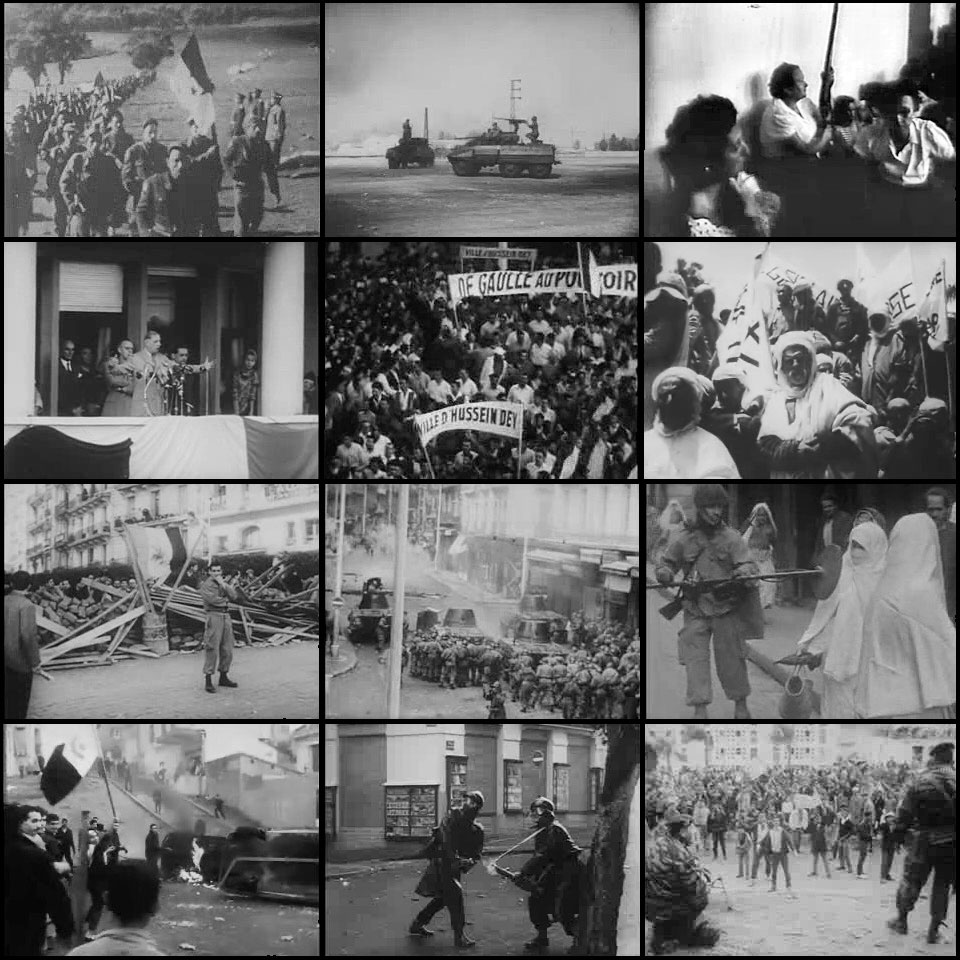
Algerian War Collage (Source: Wikipedia)

This is a recurring issue, but this time, African countries, are uniting to challenge the status quo, and ask for justice and reparation for victims of colonialism. They met in Algiers, the capital of Algeria this past week to pass a resolution to recognize the colonial era hurts. The choice of Algeria as a summit holder is no coincidence, as French forces committed some of the worst atrocities in the country during the colonial era, including nuclear tests which decimated entire villages; Algerians fought a bloody war which lasted 8 years between 1954 to 1962 to win independence. The death toll is estimated at over 1.5 million Algerians who lost their lives due to the barbary of France.

As stated before, African countries need to become stronger for their voices to be heard, and one way for this to happen is to present a strong united front. 

Excerpts below are from The Guardian.

=====
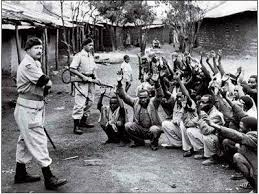
Under British guns, during the Mau Mau rebellion in Kenya
Under British guns, during the Mau Mau rebellion in Kenya in the 1950s

African leaders are pushing to have colonial-era crimes recognised, criminalised and addressed through reparations.

At a conference in the Algerian capital, Algiers, diplomats and leaders convened to advance an African Union resolution passed at a meeting earlier this year calling for justice and reparations for victims of colonialism.

Algerian foreign minister Ahmed Attaf said Algeria’s experience under French rule highlighted the need to seek compensation and reclaim stolen property.

A legal framework, he added, would ensure restitution is seen as “neither a gift nor a favour”.

Africa is entitled to demand the official and explicit recognition of the crimes committed against its peoples during the colonial period, an indispensable first step toward addressing the consequences of that era, for which African countries and peoples continue to pay a heavy price in terms of exclusion, marginalisation and backwardness,” Attaf said.
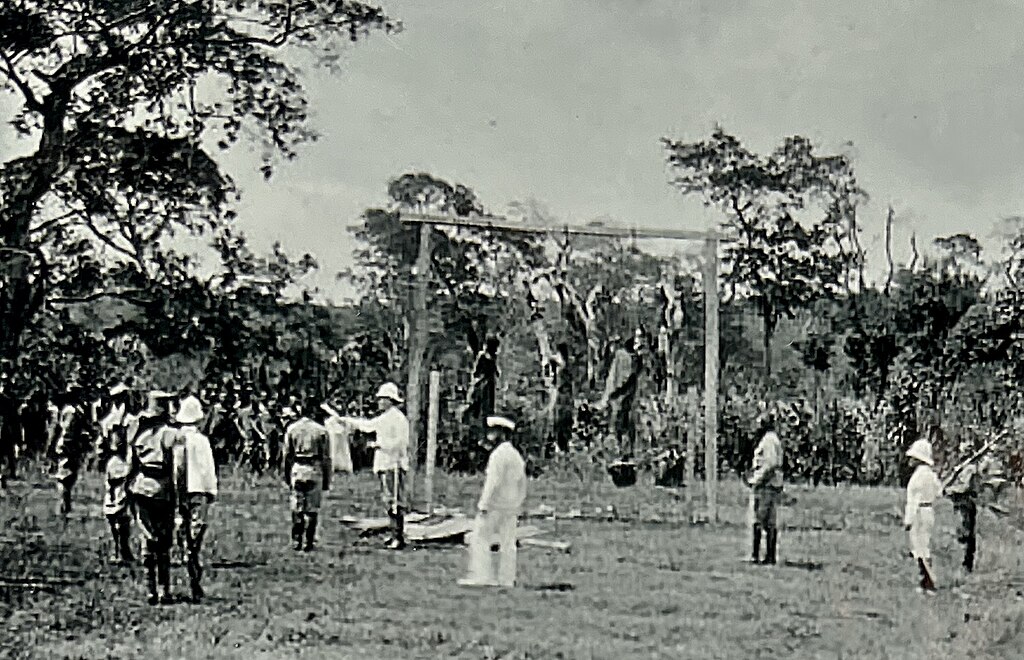
Hanging of Chagga men by the German Colonial Government ca 1890s – 1900 (Source: Wikipedia)

… [At] the African Union’s February summit, … leaders discussed a proposal to develop a unified position on reparations and formally define colonisation as a crime against humanity [about time!].

The economic cost of colonialism in Africa is believed to be staggering, with some estimates in the trillions. European powers extracted natural resources often through brutal methods, amassing vast profits from gold, rubber, diamonds and other minerals, while leaving local populations impoverished.

… Earlier in November, … Caribbean governments have also been calling for recognition of the lasting legacy of colonialism and enslavement, and for reparative justice from former colonisers, including a full formal apology and forms of financial reparations.

Denouncing a Genocide : The Case of Rosa Luxemburg on Namibia

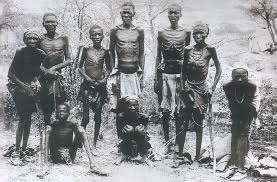
Survivors of the Herero genocide (Wikimedia)

I found this Jacobin article which focuses on Rosa Luxemburg, a Polish Jewish revolutionary activist who exposed Germany’s genocide in what was then German South West Africa. She said, in her essay “Proletarian Women” (1912):

The workshop of the future requires many hands and hearts. A world of female misery is waiting for relief. The wife of the peasant moans as she nearly collapses under life’s burdens. In German Africa, in the Kalahari Desert, the bones of defenseless Herero women are bleaching in the sun, hunted down by a band of German soldiers and subjected to a horrific death of hunger and thirst. …

Three years later, she again recalled the litany of colonial crimes in her famous Junius Pamphlet:

The present world war is a turning point in the course of imperialism . . . The “civilized world” that has stood calmly by when this same imperialism doomed tens of thousands of Hereros to destruction; when the desert of Kalahari shuddered with the insane cry of the thirsty and the rattling breath of the dying . . . when in Tripoli the Arabs were mowed down, with fire and swords, under the yoke of capital while their civilization and their homes were razed to the ground.

Please check out the article on the Jacobin website to read more about this woman activist who at a time when very few could talk, she denounced the genocide perpetrated by German forces in Africa, particularly in Namibia. She pointed out that the “civilized world” stood by when atrocities were committed in Namibia… it seems like history has repeated itself around the globe for the past century with atrocities perpetrated in many places, while the civilized world or international community has stood by doing nothing or sometimes lending a hand to those perpetrating it. Like Rosa Luxemburg, let’s not turn a blind eye… let’s be part of the solution, and not the problem.

One of the Last International Acts of President Geingob: Support Against Genocides

Flag of Namibia

A few weeks ago, the Namibian government then represented by President Hage Geingob issued one of the strongest expressions of solidarity to the Palestinians facing the blows of Israel’s ongoing destruction of Gaza on January 13, in support of South Africa’s case bringing the charge of genocide against Israel to the International Court of Justice. It issued the following statement in response to the German government’s decision to officially support Israel’s denial of these charges [Namibia criticizes Germany]:

Namibia rejects Germany’s support of the genocidal intent of the racist Israeli state against innocent civilians in Gaza. Germany committed the first genocide of the twentieth century in 1904–1908, in which tens of thousands of innocent Namibians died in the most inhumane and brutal conditions . . . President [Hage] Geingob appeals to the German Government to reconsider its untimely decision to intervene as a third-party in defense and support of the genocidal acts of Israel before the International Court of Justice.

The German Government is yet to fully atone for the genocide it committed on Namibian soil…

Survivors of the Herero genocide (Wikimedia)

It is no secret that the first genocide of the 20th century was perpetrated by Germany on African soil, in Namibia. It was extremely brutal and almost wiped out all Nama and Herero people. It was a campaign of racial extermination and collective punishment that the German Empire undertook in German South-West Africa (modern-day Namibia) against the Herero and Nama people [Germany in Namibia: the First Genocide of the 20th CenturyGermany Returns Skulls of Namibians Genocide VictimsNamibia Rightfully Rejects 10 million Euros Compensation for Genocide].

Germany rules out financial reparations for Namibia genocide

Survivors of the Herero genocide (Wikimedia)

It is no secret that the first genocide of the 20th century was committed by Germany in Namibia [Germany in Namibia: the First Genocide of the 20th Century]… yet to this day Namibians have never gotten reparations, nor an apology. This terrible page of history is usually absent from history books, and all people know is the genocide against the Jews who were compensated. So to hear now that Germany is planning to “offer aid and an apology” is outrageous! Germany says it does not want to set a precedent… yet for Auschwitz there was no question of setting precedents right? They are probably afraid that more genocides will be uncovered, not just for them, but for all those European countries which took part in the scramble for Africa, and they will all be forced to pay… so now they want to give aid… no one wants their aid! After 400 years of slavery, and almost 100-200 years of colonization and neo-colonization, there is a reason why Africa is on its knees… so we do not want “AID,” plus usually this “aid” always comes as “poisoned cakes” with so many clauses and more debts to be repaid… Remember how Germany wanted to pay the Namibian government 10 million Euros [Namibia Rightfully Rejects 10 million Euros Compensation for Genocide]? while Greece is asking for 289 billion Euros? Excerpts from the article below is from the Guardian.

=====

Flag of Namibia

Germany has categorically ruled out financial reparations forming part of a planned formal apology to Namibia for colonial atrocities at the start of the 20th century, amid fears such payments could set a legal precedent for further claims.

… The talks are nearing completion, with broadcaster Deutschlandfunk reporting this week on plans for the president, Frank-Walter Steinmeier, to ask for forgiveness for the genocide in front of the Namibian parliament.

As part of the reconciliation agreement, which has been submitted to both governments, Germany is also to make additional aid payments towards infrastructure, healthcare and job-training programmes in areas of Namibia populated by the descendants of the Herero and Nama tribes.

… “Reparations or individual compensations are not subject of the negotiations,” the report says. “After 100 years they would be unprecedented. The definition of injustice set up by the 1948 convention on the prevention and punishment of genocide does not apply retrospectively and cannot be the basis for financial claims.”

… Yet countries such as Greece and Poland, which were not part of the 1990 agreement, have since repeatedly reiterated their demands to be compensated for economic and human losses sustained at the hands of German forces in the first half of the 20th century.

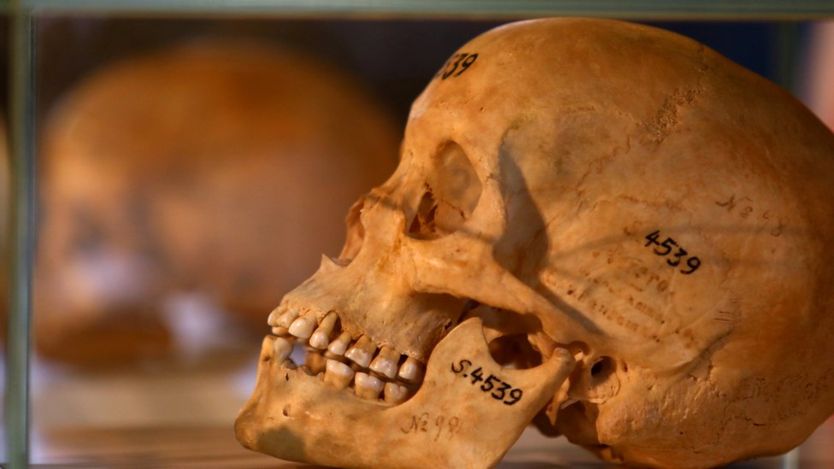
Namibian skulls (Reuters)

The Greek government of the conservative prime minister, Kyriakos Mitsotakis, most recently repeated its wish for negotiations relating to damages worth €289bn on the 80th anniversary of Nazi Germany’s invasion of Greece this April.

Many of the descendants of the Herero and Nama victims continue to reject structural aid and demand direct reparations from Germany. In a joint statement issued this week, the Ovaherero Traditional Authorities and Nama Traditional Leaders Association called the reconciliation agreement a “public relations coup by Germany and an act of betrayal by the Namibian government”.

Germany in Namibia: the First Genocide of the 20th Century

Herero
Survivors of the Herero genocide (Wikimedia)

How many think that the first big genocide of the 20th century happened during world war II, and was the holocaust? If you thought so, then think again. The Holocaust was not Germany’s first genocide. The very first genocide of the 20th century occurred in Namibia, on the African continent. It was perpetrated by Germans on the Herero and Nama people of Namibia. It was extremely brutal and almost wiped out all Herero people. It was a campaign of racial extermination and collective punishment that the German Empire undertook in German South-West Africa (modern-day Namibia) against the Herero and Nama people. It took place between 1904 and 1907 during the Herero Wars. Today it is known as the Namibian genocide or the Herero and Namaqua genocide. For the longest time, the German government denied it until 2004 when they finally acknowledged and recognized for the atrocities they perpetrated to wipe out an entire race. However, they ruled out financial compensation for the victims’ descendants. They still refuse to officially name these actions as “genocide”.

Herero_chained
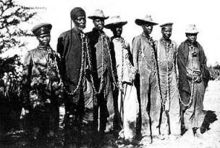
Chained Herero men

In total, between 24,000 and 100,000 Herero and 10,000 Nama died. The genocide was characterized by widespread death from starvation and dehydration due to the prevention of the retreating Herero from leaving the Namib Desert by German forces. Some sources also state that the German colonial army systematically poisoned desert water wells. Moreover, the Germans also tested the very first use of concentration camps on the Herero and Nama people.

Before the genocide, the tribe numbered 80,000; after it, only 15,000 remained. Enjoy the video below which tells it all.