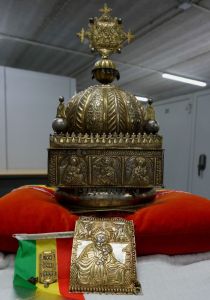
The crown is currently being stored in a highly secured facility in the Netherlands (Source: BBC/AFP/Getty)
This was a good news and had to be shared. Enjoy! It is from the BBC.
=====
An 18th Century Ethiopian crown will finally be returned home after being hidden in a Dutch flat for 21 years.
Ethiopian Sirak Asfaw, who fled to the Netherlands in the late 1970s, discovered the crown in the suitcase of a visitor and realised it was stolen.
The management consultant has protected it until he felt safe to send it back.
“Finally it is the right time to bring back the crown to its owners – and the owners of the crown are all Ethiopians,” he told the BBC.
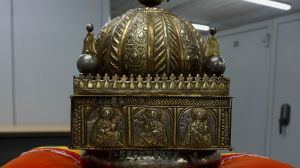
18th Century Ethiopian crown with depictions of Jesus Christ (Source: SkyNews)
The crown is thought to be one of just 20 in existence. It has depictions of Jesus Christ, God and the Holy Spirit, as well as Jesus’ disciples, and was likely gifted to a church by the powerful warlord Welde Sellase hundreds of years ago.
It is currently being stored at a high security facility until it can be safely returned.
… “I want this crown to be a symbol of unity and togetherness,” Mr Sirak said. “The crown will be celebrated by all of us Ethiopians, even Africans.”
A crown from the Maqdala exhibition at the V&A in south-west London. (Source: V&A Museum)
I was stunned by the title of this article on the Guardian, and the preposterous thought that a country whose treasure it is, Ethiopia, would have to be loaned its own treasures which were looted by the British and taken to Great Britain. It is just so outrageous that such a thought could even be uttered! Below are snippets of the article. For the full article, go to The Guardian.
===
” Victoria and Albert Museum director says artefacts could be sent to Africa on long-term loan.
Treasures including a gold crown and a royal wedding dress, which were taken from Ethiopia by the British 150 years ago, could be returned to Africa by the Victoria and Albert Museumon long-term loan.
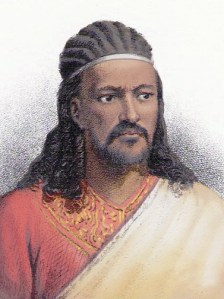
Emperor Tewodros II
Ethiopialodged a formal restitution claim in 2007 for hundreds of important and beautiful manuscripts and artefacts being held by various British institutions, all plundered after the 1868 capture of Maqdala, the mountain capital of Emperor Tewodros II in what was then Abyssinia.
That request has been refused. But in the run-up to a Maqdala display opening this week at the V&A, a compromise has been offered bythe museum’s director, Tristram Hunt, who said: “The speediest way, if Ethiopia wanted to have these items on display, is a long-term loan … that would be the easiest way to manage it.”…
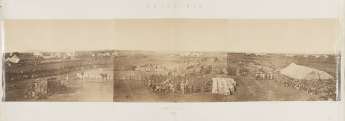
British Camp at Zoola, Abyssinia expedition 1868-9 (Source: Victoria and Albert Museum, London)
They have never been on public display because of their religious importance and can only be seen, even by a curator, with the agreement of the Ethiopian Orthodox church.
Other objects are on display but the British Museum argues the value of them being seen by the public is in a global context. A spokeswoman said the museum would consider any loan request from Ethiopia.




 African Heritage